5 min read

Amalek Crossed Four Hundred Parasangs to Kill

Amalek skipped five nations and rode four hundred parasangs to strike Israel. Moses' hands grew heavy as water jugs while God warred by His Name alone.

Curated by Arthur · Told by Maggid ·
Table of Contents
  1. Four Hundred Parasangs of Hate
  2. Hands Heavy as Water Jugs
  3. Aaron and Hur Hold the Weight
  4. The Lord Is a Man of War
  5. What Crossed the Distance

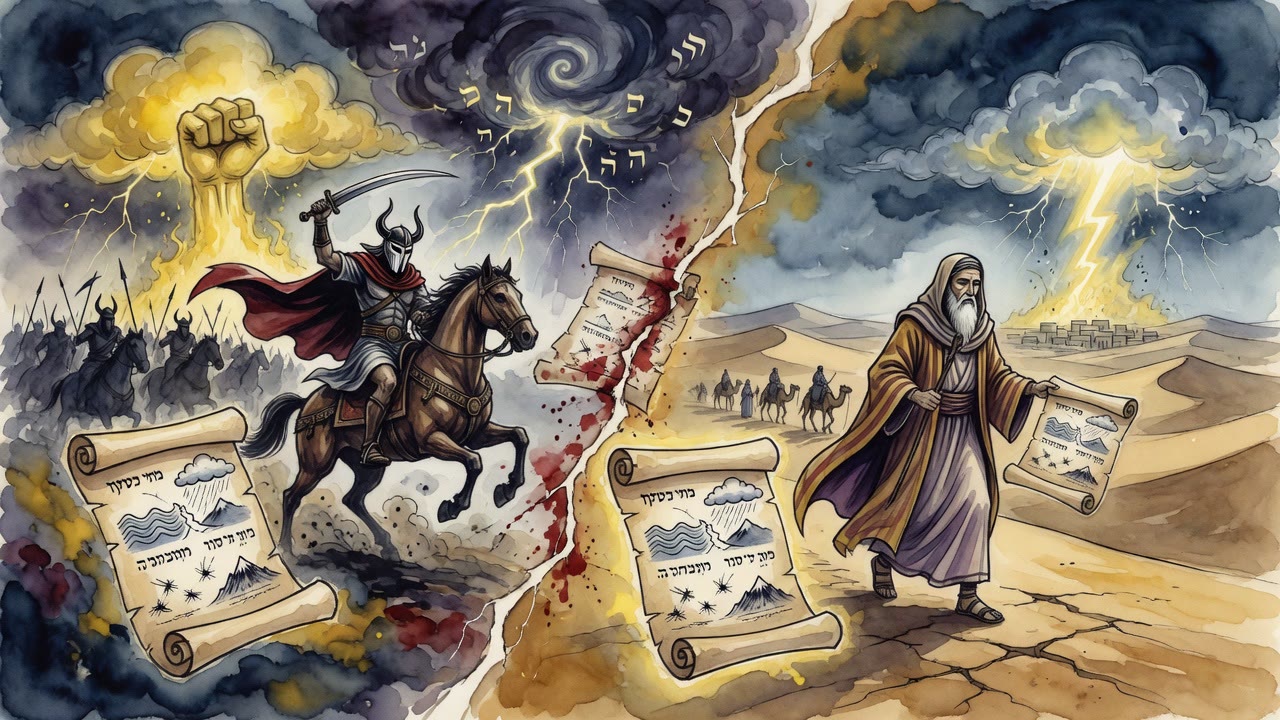
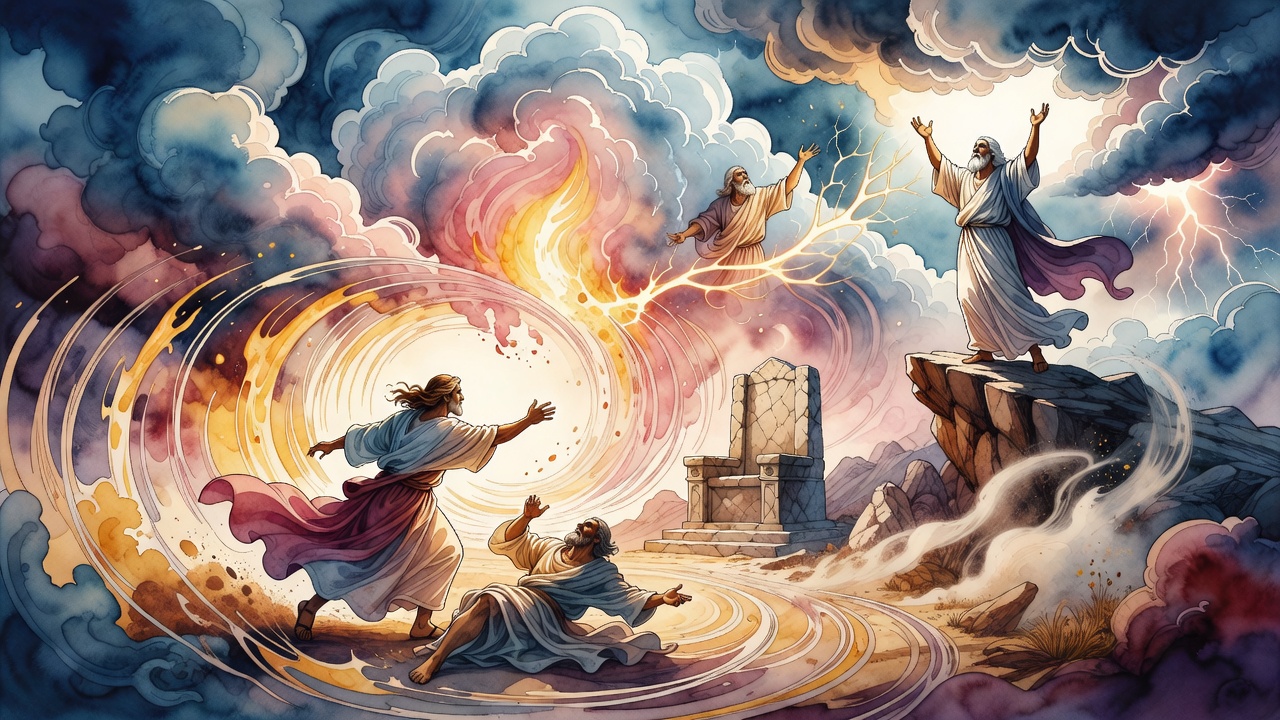
Amalek did not stumble into a border fight. Rabbi Yehudah teaches that he bypassed five nations to reach Israel. He crossed the lands of the Hittites, the Hivites, the Jebusites, the Emorites, and the Canaanites before he could set his teeth in the camp at Rephidim.

Amalek Crossed Four Hundred Parasangs to Kill Click for full size

The map itself accuses him. "Amalek dwells in the southland; the Hittites, the Hivites, the Jebusites, and the Emorites dwell in the mountain; and the Canaanites dwell by the sea" (Numbers 13:29). Amalek was the most distant, the innermost of the listed peoples. He had to skip past everyone else to reach the one people he wanted dead. Geography was an obstacle he treated as an invitation.

Four Hundred Parasangs of Hate

Rabbi Nathan makes the journey worse. Amalek came from the mountains of Seir, crossing four hundred parasangs, an enormous distance, specifically to wage war against Israel. This was no quarrel over wells or pasture. He traveled hundreds of miles with a single purpose written in dust and hoofprints.

Other enemies fought Israel when Israel entered their territory. Amalek went looking for the fight. He passed five nations that posed him no threat and struck at the one people he was determined to destroy. That is why the Torah singles him out for eternal remembrance. Distance was not an obstacle. Distance was fuel. The farther he rode, the clearer the hate became.

Scouts on Israel's edge saw dust on a horizon that should have been empty. The dust had a name older than the camp's tents.

Hands Heavy as Water Jugs

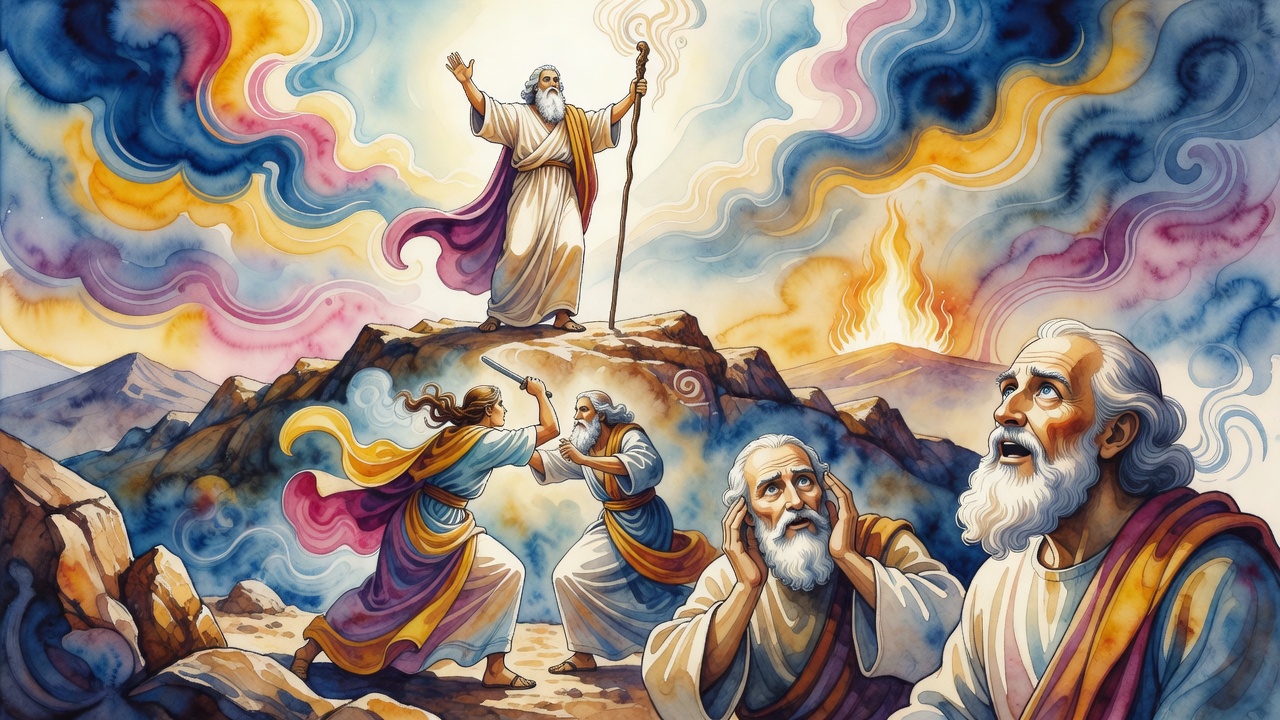
On the hill, Moses raised his hands, and Israel prevailed. When his hands fell, Amalek rose. Then Scripture records a detail the Mekhilta will not release. "And the hands of Moses became heavy" (Exodus 17:12).

Why heavy? If Moses had not delayed in dispatching Joshua, if he had not said "Choose men for us" instead of acting at once himself, his hands would not have been wearied this way. The heaviness was a consequence of hesitation. The rabbis say his hands grew as heavy as if two pitchers of water hung upon them. The greatest prophet stood with arms that felt like water jugs while his people lived or died by the height of those arms above the dust.

Amalek had crossed continents without resting his purpose. Moses paid for a single pause with flesh that would not stay light.

Aaron and Hur Hold the Weight

They seat him on a stone. Aaron and Hur hold up his hands, one on each side, until the sun goes down. The body of the prophet becomes a flagpole the community must brace. Amalek came four hundred parasangs. Moses can barely keep his own wrists above his heart without help from brothers who will not let the signal drop.

The cost cuts past the battlefield. Never be lax in performing a commandment. A small delay, saying "you go" instead of going, can compound into a burden heavier than the original task. Amalek's speed meets Moses' pause, and the pause has a physical price measured in trembling muscle and two men who refuse to let go.

Below, Joshua's line holds or breaks with every inch of those upheld arms. The hill and the valley speak to each other in the language of raised and fallen hands.

The Lord Is a Man of War

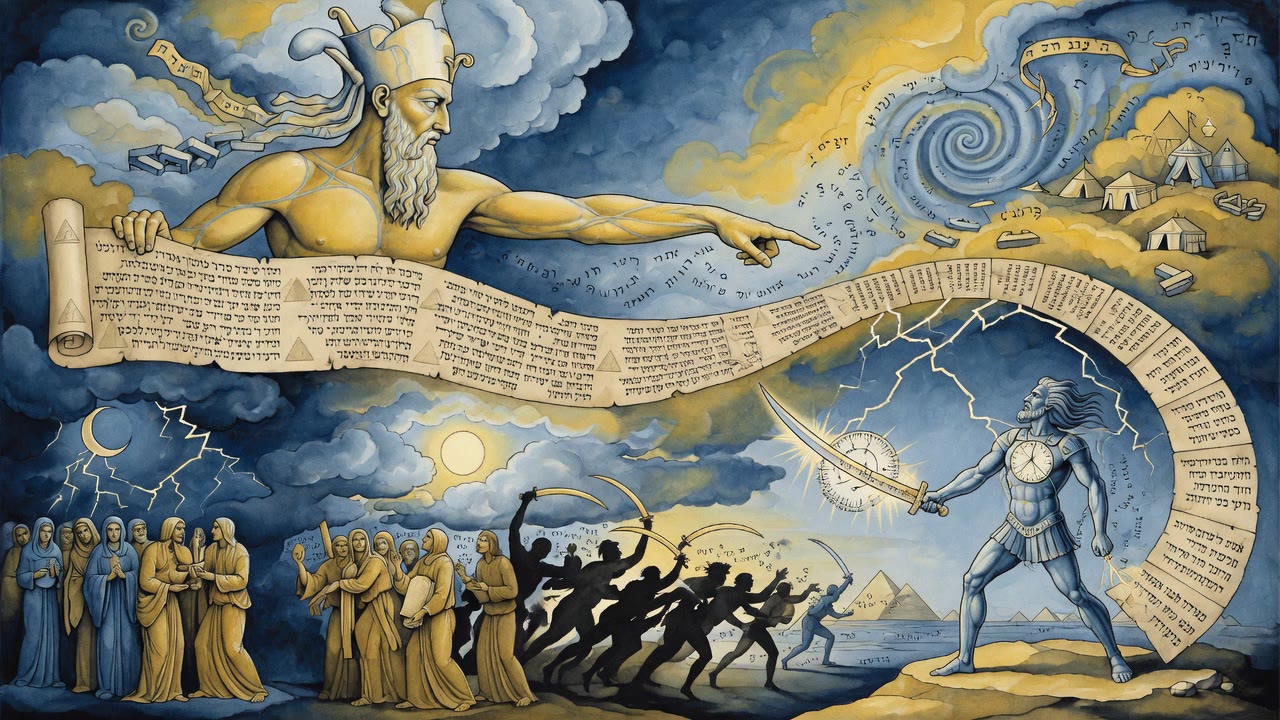
"The Lord is a man of war; the Lord is His name" (Exodus 15:3). One might think God requires sword, shield, spear, armor, chariot. The Mekhilta cuts that thought down without mercy. It is with His name that He wars, and not with any of these appurtenances. No armory in heaven needs restocking.

When God went to war against Egypt at the sea, no sword was drawn, no arrow loosed. The Name alone shattered Pharaoh's army and drowned his chariots. On the hill against Amalek, the raised hands of Moses point the camp toward that same Name. The prophet's heavy arms are not a magic trick. They are a public leaning on the only weapon Heaven needs, while Amalek's iron does what iron always does when it meets a purpose older than metal.

A human warrior may own every blade and still lack power, strength, stratagem, and wisdom. God owns the war itself. The Name is sword and shield and chariot in one word the camp can only point toward.

What Crossed the Distance

Amalek crossed half a continent to erase a people resting from Egypt. Israel held a hill and a pair of arms that needed two brothers to stay aloft until evening. Between them stands a God who wars by Name, not by iron. The first hate that ran toward Israel without cause meets a victory that cannot be stored in an armory or counted in captured chariots.

Remember Amalek, the Torah says. Remember the four hundred parasangs. Remember the water-jug hands. Remember that the war belonged to the Name when the hands finally stayed up until the sun went down and the dust of Seir blew back the way it came.


← All myths
From the tradition

Sources

3 sources

The texts behind this telling. Some cards carry a translation of the source; others are our own retelling of it, and each card says which. Every card links out to the original.

Mekhilta Tractate Amalek 1:5Mekhilta DeRabbi Yishmael

Retold in our words. Read the original at the link below.Mechilta, translated by Rabbi Shraga Silverstein · CC-BY

Amalek's attack on Israel was not a matter of geography or convenience. Rabbi Yehudah teaches that Amalek actually bypassed five other nations to reach the Israelites. He had to cross through the territories of the Hittites, the Hivites, the Jebusites, the Emorites, and the Canaanites before he could engage Israel in battle.

The proof comes from a later description of the land's inhabitants: "Amalek dwells in the southland; the Hittites, the Hivites, the Jebusites, and the Emorites dwell in the mountain; and the Canaanites dwell by the sea" (Numbers 13:29). Amalek was the most distant, the "innermost" of the nations. He had to skip past everyone else to reach the Israelite camp.

Rabbi Nathan makes the journey even more dramatic. Amalek came from the mountains of Seir, crossing four hundred parasangs, an enormous distance, specifically to wage war against Israel. This was no border skirmish or territorial dispute. Amalek traveled hundreds of miles with a single purpose: to attack God's chosen people.

The Mekhilta uses these details to establish that Amalek's hatred was unique among the nations. Other enemies fought Israel when Israel entered their territory. Amalek went looking for the fight. He crossed half a continent, passed five nations that posed no threat to him, and struck at the one people he was determined to destroy. That is why the Torah singles out Amalek for eternal remembrance.

Full source
Mekhilta Tractate Amalek 1:29Mekhilta DeRabbi Yishmael

Retold in our words. Read the original at the link below.Mechilta, translated by Rabbi Shraga Silverstein · CC-BY

(Exodus 17:12) records a detail that the Mekhilta found deeply instructive: "And the hands of Moses became heavy." Why did his hands grow heavy during the battle with Amalek? The rabbis drew a moral lesson about procrastination in the performance of commandments.

The Mekhilta explains: if Moses had not delayed in dispatching Joshua to fight, if he had not said (Exodus 17:9) "Choose men for us" instead of acting immediately himself, his hands would not have been wearied in this way. The heaviness was a consequence of his initial hesitation. By delegating the task rather than seizing the moment, Moses introduced a delay that came back to burden him physically.

The rabbis painted a vivid picture of just how heavy Moses' hands became. They said his hands grew as heavy as if two pitchers of water were hung upon them. This is not a casual metaphor, it conveys genuine physical suffering. The greatest prophet in Israel's history stood on a hilltop with arms that felt like they were weighed down with water jugs, struggling to maintain the posture that kept his people alive in battle.

The lesson extends far beyond Moses. The Mekhilta derives a general principle: one should never be lax in performing commandments. Every moment of delay carries consequences. What seems like a minor hesitation, saying "you go" instead of going yourself, can compound into a burden that is far heavier than the original task would have been.

Full source
Mekhilta Tractate Shirah 4:3Mekhilta DeRabbi Yishmael

Retold in our words. Read the original at the link below.Mechilta, translated by Rabbi Shraga Silverstein · CC-BY

The Torah declares, "The Lord is a man of war; the Lord is His name" (Exodus 15:3). This verse, from the Song of the Sea, prompted the Mekhilta to address a potential misunderstanding. When Scripture calls God a "man of war," one might think God requires the normal equipment of battle: a sword, a shield, a spear, armor, a chariot.

The Mekhilta emphatically rejects this idea. "It is with His name that He wars, and not with any of these appurtenances." God needs no weapons. The divine Name alone is sufficient to defeat any enemy, overthrow any army, and reshape the physical world.

This teaching carries enormous theological weight. Ancient Near Eastern religions commonly depicted their gods as warriors wielding physical weapons. Storm gods carried lightning bolts. War gods brandished swords. The imagery of divine combat was thoroughly material. The Mekhilta insists that the God of Israel operates on an entirely different plane. God's power is not channeled through objects. It emanates from God's very being, expressed through the Name.

The verse itself makes this point by its structure. "The Lord is a man of war" could be misread as reducing God to a human warrior. But the second half, "the Lord is His name," immediately corrects that reading. God's identity as warrior is inseparable from God's identity as the bearer of the ineffable Name. The Name is the weapon. The Name is the shield. The Name is the chariot. When God went to war against Egypt at the sea, no sword was drawn, no arrow was loosed. The Name alone shattered Pharaoh's army and drowned his chariots in the deep.

Full source