5 min read

Amalek Gathered Nations and Moses Told Joshua to Choose Men

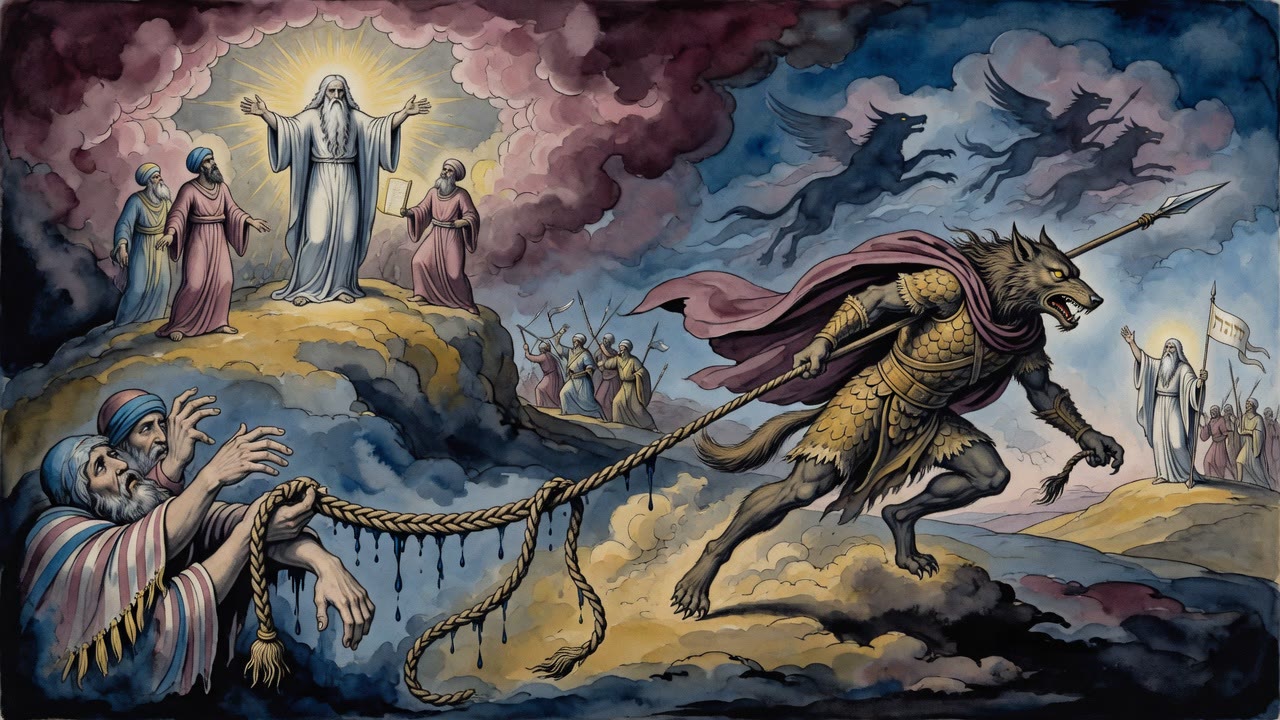
The rod Moses carried up the hill had already broken Egypt and split the sea. Below, an army that came to fight found it could not move.
Curated by Arthur · Told by Maggid ·
Table of Contents
  1. The Dog After the Water
  2. Choose for Us Men
  3. Still as a Stone
  4. What Honor Does in a War
Amalek Gathered Nations and Moses Told Joshua to Choose Men Click for full size

The Dog After the Water

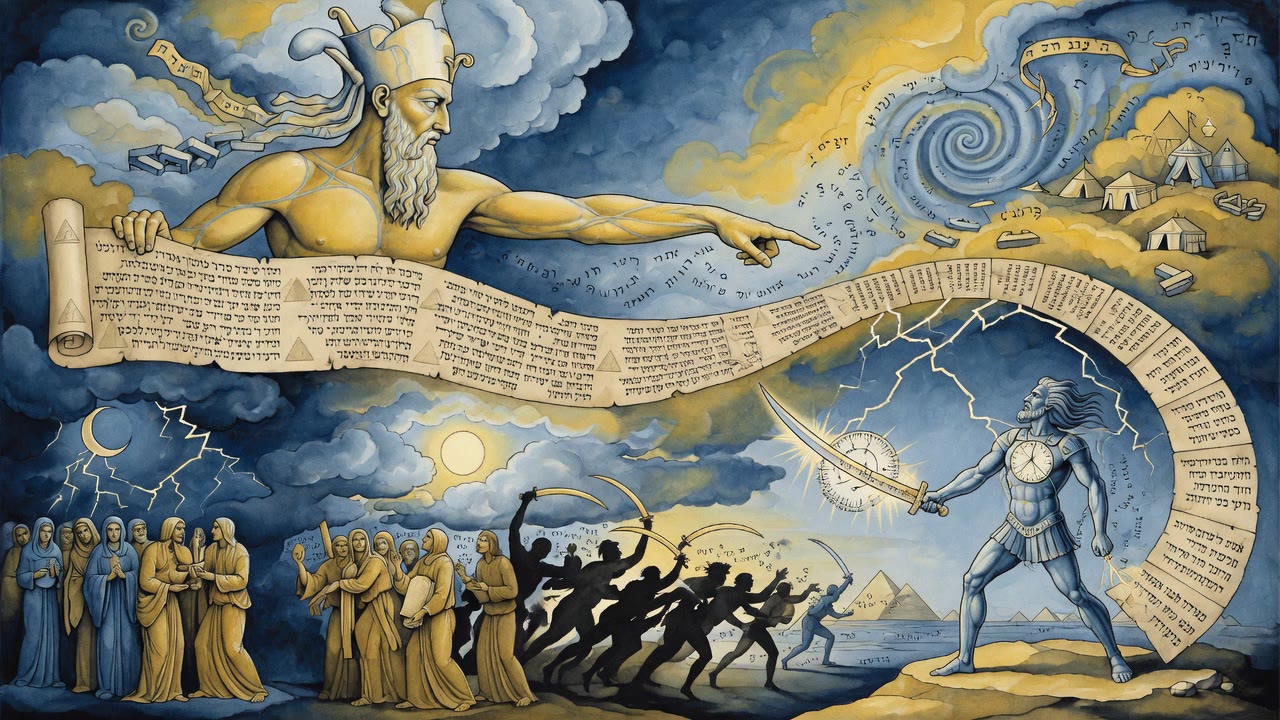
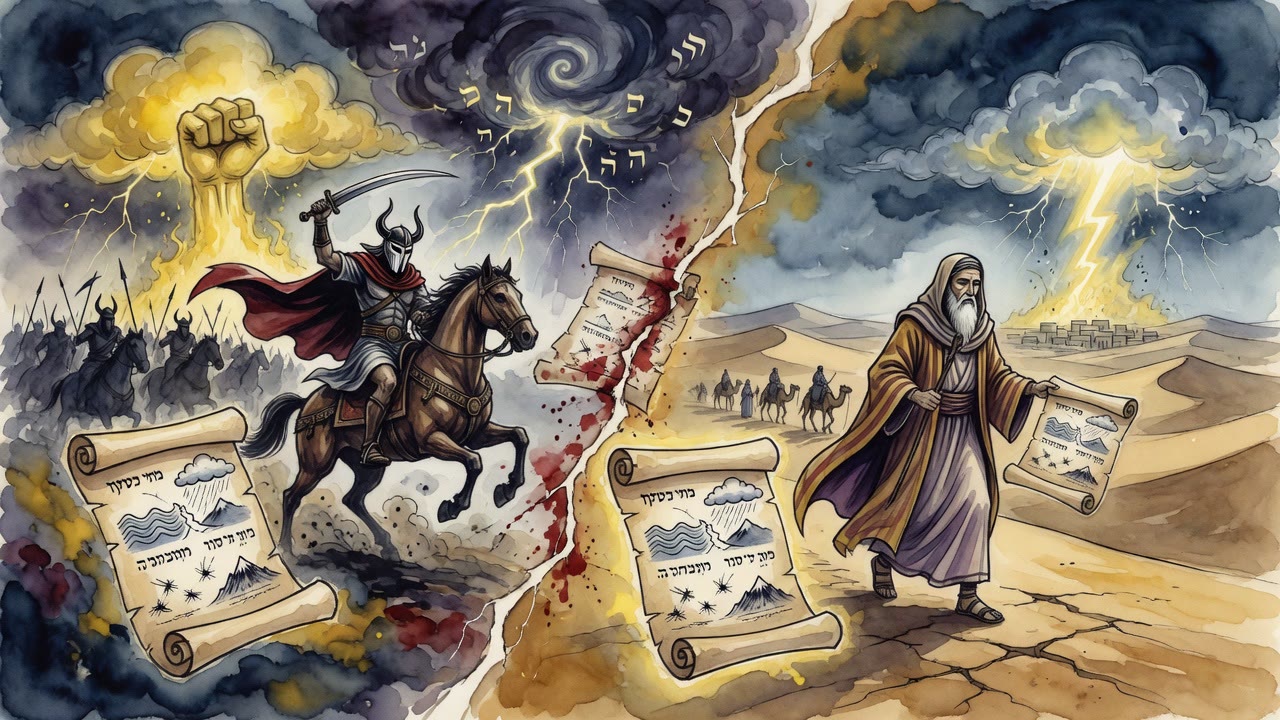
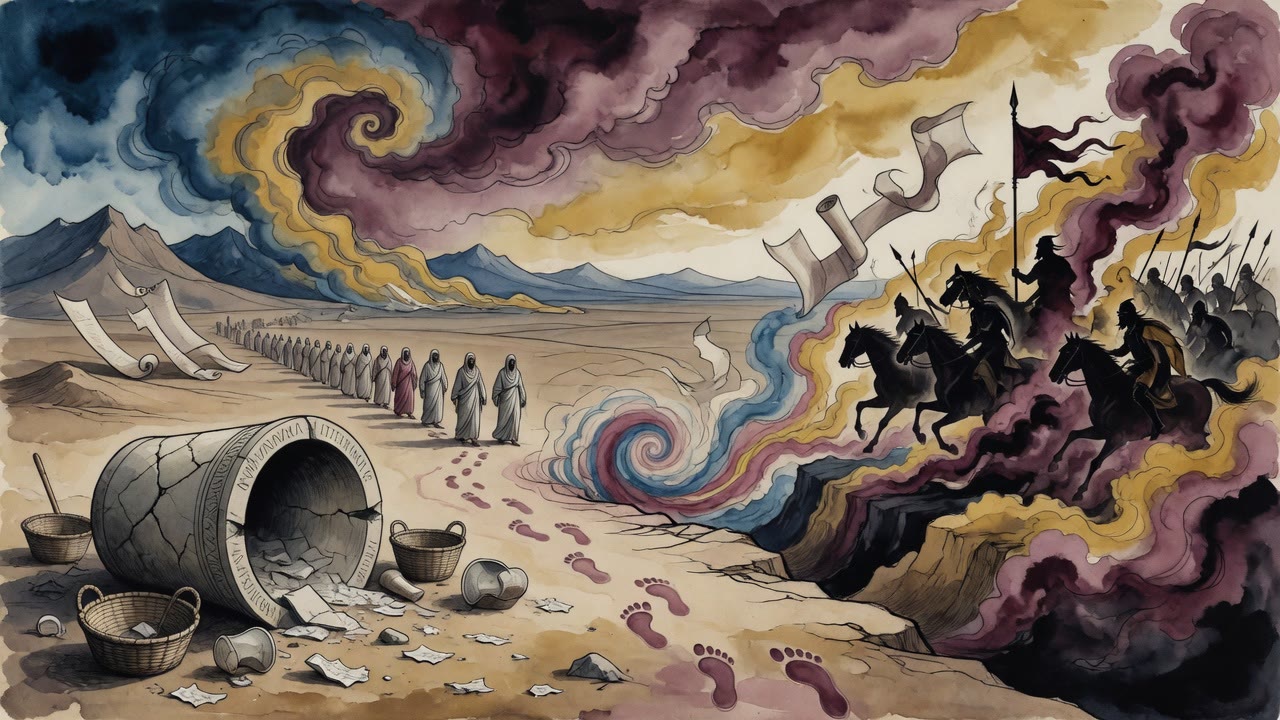
Amalek did not wait for Israel to finish tasting freedom. The people were still raw from desert dust and sea salt when he gathered every nation he could pull into a single strike. The first war after the crossing was meant to be crowded and quick.

Behind the attack sat a deeper insult. At Massah and Meribah the camp had already asked whether the LORD was among them, as if the shoulders that carried them through the market of miracles were empty. The midrash names Amalek as the dog that bites the child set down for that question. Conditional faith had opened a door. Amalek walked through it with allies.

Choose for Us Men

Moses turned to Joshua and chose one small word with care. He did not say choose for me men. He said choose for us men, lifting his student to stand beside him as an equal before the fight began.

The sages hear a ladder of honor in that pronoun. Honor your fellow as you revere your teacher. Honor your teacher as you revere Heaven. Aaron, older and a brother, still called Moses "my lord." Joshua defended Moses' authority as if the teacher's word carried the weight of God's own decree. The cautionary shadow is Gehazi, who later grabbed a master's power as if it were private property. Moses did the opposite. He shared the "us" before blood was spilled.

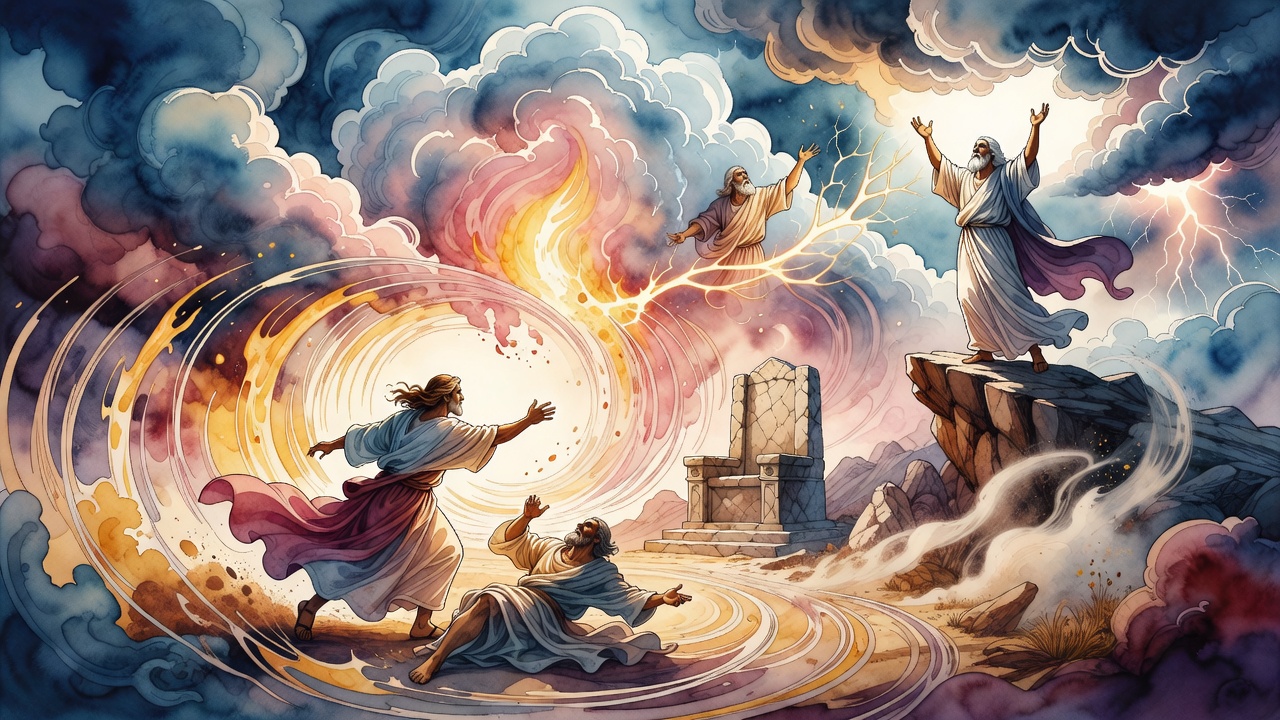
What kind of soldiers should Joshua pick? Rabbi Joshua says mighty men. Rabbi Elazar of Modi'in says men who fear sin, because courage without conscience loses wars. When Moses promised to stand on the hilltop, one voice heard a literal height. Another heard the merit of the ancestors: the top as the deeds of the fathers, the hill as the deeds of the mothers. The rod in Moses' hand was no tourist's stick. It was the same rod that broke Egypt and split the sea, lifted now for one more deliverance.

Still as a Stone

Below, the coalition made noise. Above, Moses prayed.

The song later called the enemies still as a stone, and the sages ask which moment earned that phrase. One answer lands here. The decisive force was not a sword line but a praying body. The boldness that had pulled nations together drained out of them at once. Where there had been the clatter of a gathered host, there was the silence of dead rock. God's arm did not need to appear as a visible weapon. It appeared as men who came to make war and found they could not move.

Joshua's chosen men fought inside that silence. The "us" Moses had spoken held. Student and teacher shared the hour: one on the hill with the ancient staff, one in the dust with soldiers who feared sin as much as they feared spears.

What Honor Does in a War

Wars usually shrink language. Commanders claim the army as mine. Moses widened it to ours. The midrash treats that widening as the real strategy under the strategy. A student who is honored fights differently than a student who is used. A teacher who stands in prayer rather than in panic teaches the camp what kind of power they are betting on.

Amalek had gathered a world. Israel answered with a shared pronoun, a staff that had already rewritten nature, and a stillness that fell on the enemy like stone. The dog that came to bite found its jaws locked open on nothing.

When the noise finally died, the people had a new memory to set beside the sea: not only water that stood, but nations that could not.

Joshua moved through the ranks with the new pronoun still ringing. For us. Not for the master's private glory. Men who feared sin checked their hands as carefully as their blades. Men of might checked the man next to them and found, for once, that conscience was part of the armor.

On the hill Moses' arms burned. The staff did not grow lighter because it was holy. Holiness here was weight held up until the noise below broke. Joshua saw a flank buckle, then stiffen, then go oddly quiet, as if the enemy's courage had been poured out on the sand. He did not waste the stillness. He drove into it.

Afterward, when the dead were counted and the living drank, someone asked who had won the hour. Moses pointed at prayer. Joshua pointed at the shared word. The midrash keeps both answers, because a war against Amalek is never only spears and never only speech. It is a people learning, under pressure, what "us" costs.

Amalek had wanted a massacre of the newly free. He got a freeze and a student elevated beside his teacher. That humiliation would outlast the day's dust.


← All myths
From the tradition

Sources

3 sources

The texts behind this telling. Some cards carry a translation of the source; others are our own retelling of it, and each card says which. Every card links out to the original.

Yalkut Shimoni on Torah 251:16Yalkut Shimoni on Torah

Translation of the source text.Torat Emet (Yalkut Shimoni) · CC-BY-NC

"By the greatness of Your arm they were still as a stone." When Israel came out of the sea, Amalek gathered all the nations of the world and came and made war against Israel. And Moses prayed on behalf of the people, and in that hour they all fell silent as a stone. Therefore it is said, "By the greatness of Your arm they were still as a stone."

Full source
Yalkut Shimoni on Torah 264:1Yalkut Shimoni on Torah

Translation of the source text.Torat Emet (Yalkut Shimoni) · CC-BY-NC

"And Moses said to Joshua, Choose for us men" (Exodus 17:9). From here we learn that Moses treated him as his equal. Let all the world learn from Moses proper conduct: he did not say to Joshua, "Choose for me men," but "Choose for us men" - from here, that he made him as his equal. And from where do we learn that the honor of one's fellow should be as dear to him as the reverence of his teacher? As it is said, "And Aaron said to Moses, Please, my lord" (Numbers 12:11). Now was he not his brother, and greater than he? And what does Scripture teach by saying "Please, my lord"? He made him as his teacher. And from where that the honor of a man's teacher should be as dear to him as the reverence of Heaven? As it is said, "And Joshua son of Nun, the servant of Moses from his youth, answered and said, My lord Moses, restrain them" (Numbers 11:28) - he said to him: our teacher Moses, just as the Omnipresent restrains them, so do you restrain them.

And likewise you find with Gehazi: at the hour Elisha said to him, "Gird up your loins and take my staff in your hand," and so on, he began to lean on his staff and went. They said to him: Where are you going, Gehazi? He said to them: To revive the dead. They said to him: Can you revive the dead? Is it not the Holy One, blessed be He, who kills and gives life, as it is said, "The LORD kills and gives life" (1 Samuel 2:6)? He said to them: My master too kills and gives life.

"Choose for us." Rabbi Joshua says: men - meaning mighty ones. Rabbi Elazar of Modi'in says: "Choose for us" those who fear sin. "And go out, fight against Amalek." Rabbi Joshua said: Moses said to him, Joshua, go out from under the cloud and fight Amalek. Rabbi Elazar of Modi'in says: he said to him, Joshua, your head - for what are you guarding it, if not for the crown? Go out from under the cloud and fight Amalek. "Tomorrow I will stand on the top of the hill" - tomorrow we shall be ready and standing. "On the top of the hill" - according to its plain meaning, the words of Rabbi Joshua. Rabbi Elazar of Modi'in says: tomorrow we shall decree a fast and be ready upon the deeds of the fathers. "Top" - these are the deeds of the fathers; "the hill" - these are the deeds of the mothers. "And the rod of God in my hand" - Moses said before the Omnipresent: Master of the universe, with this rod You brought Israel out of Egypt, with this rod You split the sea, with this rod You did miracles and mighty deeds, with this rod You will do for them miracles and mighty deeds at this hour.

Full source
Yalkut Shimoni on Torah 261:20Yalkut Shimoni on Torah

Translation of the source text.Torat Emet (Yalkut Shimoni) · CC-BY-NC

"Behold, I stand before you" (Exodus 17:6) (it is written in the verse "and wash your feet"). The Holy One, blessed be He, said to him: Every place where you find the mark of a man's feet, there I am before you. "And you shall strike the rock" (Exodus 17:6). From here Rabbi Yose ben Zimra used to say: This staff was of sapphire, as it is said, "and you shall strike the rock" [literally, in the rock]. Of the rock it does not say so, but rather "and you shall strike in the rock."

"And he called the name of the place Massah and Meribah" (Exodus 17:7). Rabbi Joshua says: Moses called it Massah and Meribah, as it is said, "And he called the name of the place Massah and Meribah." Rabbi Eleazar of Modiin says: The Holy One, blessed be He, called it Massah and Meribah, as it is said, "And he called the name of the place Massah and Meribah." From here we learn that the Great Court is called "the Place."

"Because of the quarreling of the children of Israel" (Exodus 17:7). Rabbi Joshua says: Israel said, If He is the Master of all worlds, then just as He is Master over us we will serve Him, and if not, we will not serve Him. Rabbi Eliezer says: They said, If He supplies our needs we will serve Him, and if not, we will not serve Him. Therefore it is said, "because of the quarreling of the children of Israel."

It is written, "Strike the scorner and the simple will become prudent" (Proverbs 19:25). "Strike the scorner" refers to Amalek; "and the simple will become prudent" refers to Jethro. When Amalek came to make war with Israel, what is written? "And Amalek came and fought with Israel in Rephidim" (Exodus 17:8), because they had let their hands grow slack from the Torah and the commandments, for Scripture says, "And he called the name of the place Massah and Meribah." The Holy One, blessed be He, began to cry out over the quarreling of the children of Israel and over their testing of the LORD.

Rabbi Levi said: To what were Israel like? To a man who had a son and set him upon his shoulder and carried him through the marketplace. The son would see a desirable thing and say to his father, Buy it for me, and he would buy it for him, a first time, a second, and a third. The son saw a certain man and said to him, Have you seen my father? His father said to him: Fool, you are riding on my shoulder, and whatever you ask I buy for you, and yet you say to this man, Have you seen my father? What did the father do? He cast him down from his shoulder, and a dog came and bit him. So too when Israel went out of Egypt, the Holy One, blessed be He, surrounded them with seven clouds of glory, as it is said, "He encircled him, He cared for him" (Deuteronomy 32:10). They asked for manna, He gave it to them. Once He had given them all their needs they began to doubt and to say, "Is the LORD among us or not?" (Exodus 17:7). The Holy One, blessed be He, said to them: You have doubted Me; by your lives I will make it known to you. Here the dog comes and bites you. And who is this? This is Amalek, as it is said, "And Amalek came." It flew like this swarm.

Full source