Amalek Strikes Where Israel's Hands Go Slack
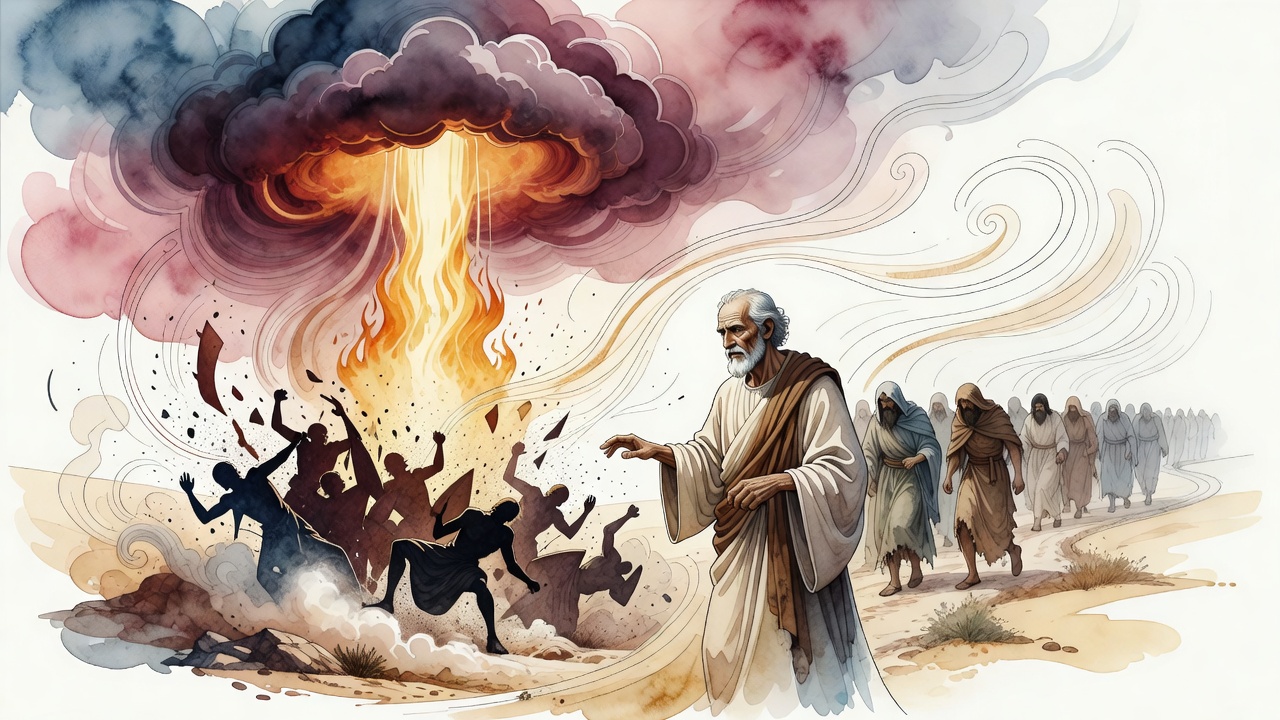
Scrolls lay closed in the tents at Rephidim. Then Amalek came in from the rear, and Moses had to have his arms held up until sundown.
Table of Contents
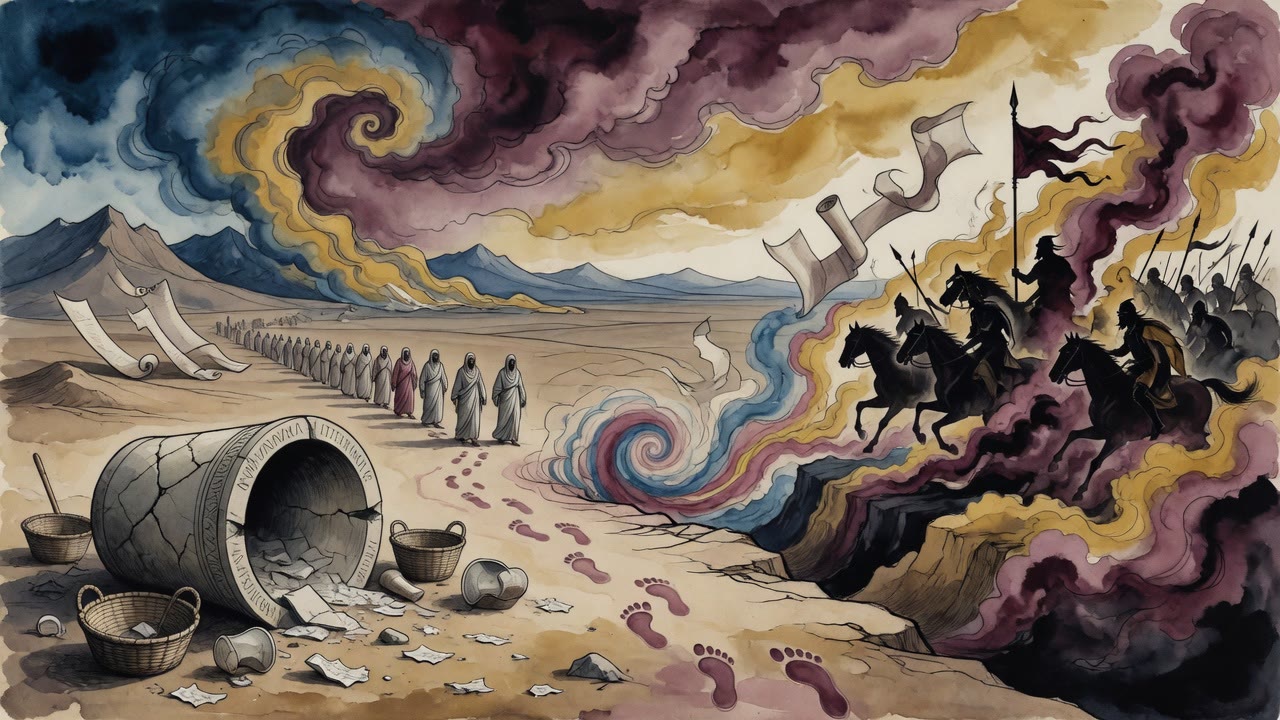
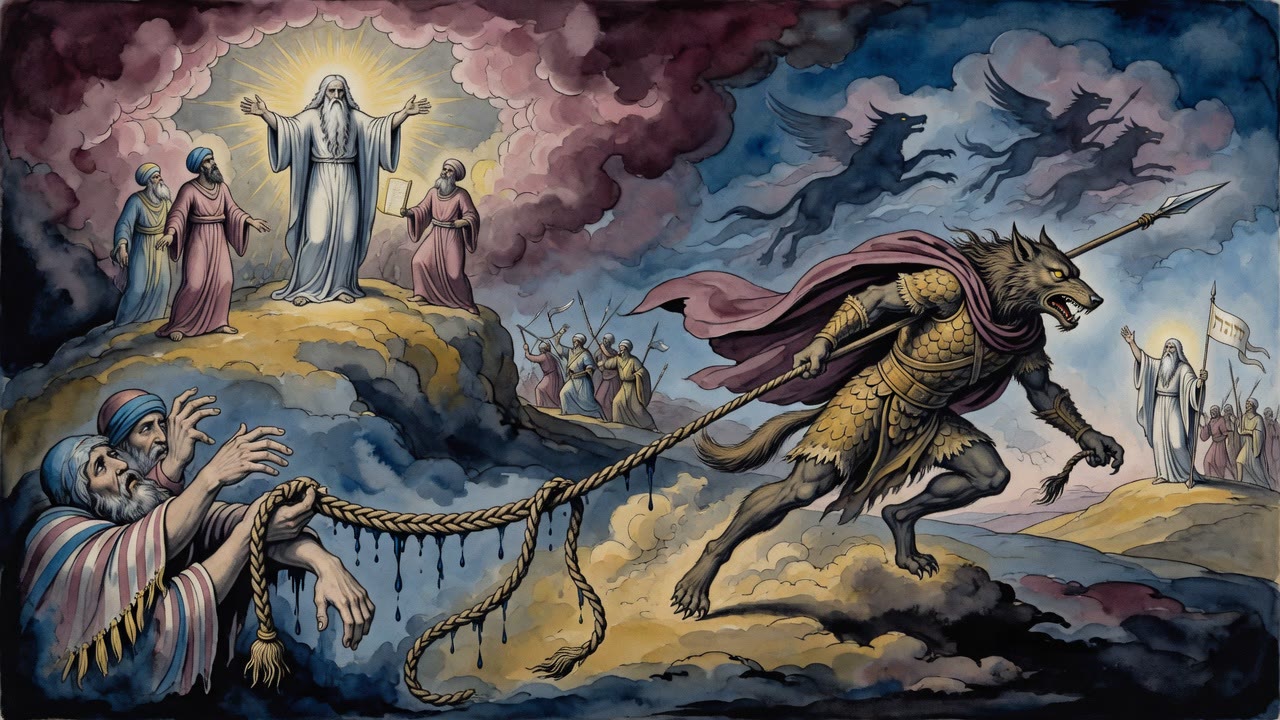
Amalek came in at the rear, where the slow walkers were, and the camp at Rephidim was not ready. The tired, the stragglers, the ones whose hands had already dropped whatever they had been holding. He did not meet the front of the column. He ate the edge.
 Click for full size
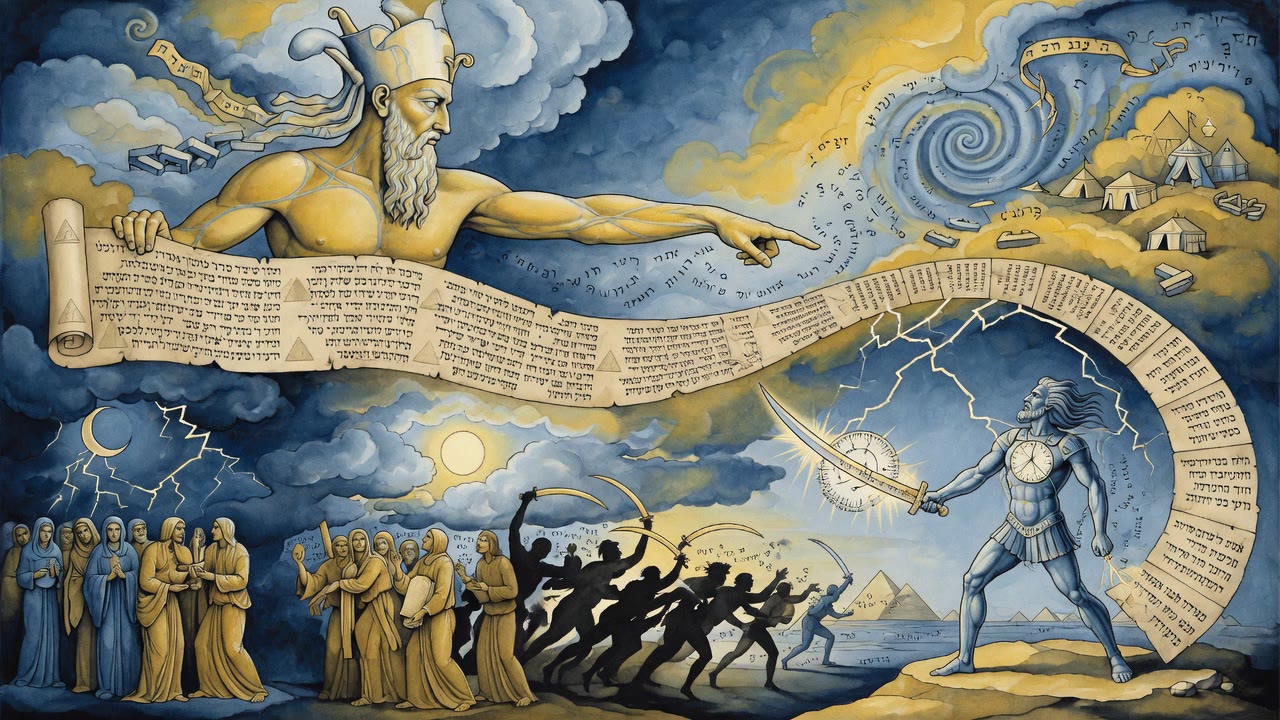
Inside the tents, scrolls lay closed. People had been too worn to open them. The grip that should have been on Torah had gone soft, and the scavenger at the edge of a tired camp does not need a better reason than that.
Amalek Hit the Rear
Dust. Shouting. A woman pulled a child under a wagon. Men grabbed what weapons they had and ran the wrong way first, toward the noise instead of into a line. Moses heard it from the front and turned. Joshua was already drawing a sword.
Enemies do not always strike at random. They press the seam where the grip has already loosened. Rephidim was a place on the map. It was also a diagnosis the camp would have to live with after the blood dried. Hands that had left the words were the hands that could not hold a perimeter.
Amalek is not a rival god. No host in the skies can array battle against the Lord. Amalek is a scavenger. When Israel's hands hold Torah, he finds less meat. When the hands hang, he does not need to win an argument. He only needs a soft rear.
The Hands Had Already Dropped
Someone in a tent tried to open a scroll after the first scream and found his fingers would not close. Days of walking had done part of it. Neglect had done the rest. Study had felt like a luxury on a dry plain. Amalek treated that luxury as a hole in the wall.
Joshua fought below in ordinary blood. The camp learned in an hour what slack costs. A closed book is not a private failure when a wolf is counting the tents.
Moses did not stay in the noise. He climbed.
Aaron and Hur Held the Hill
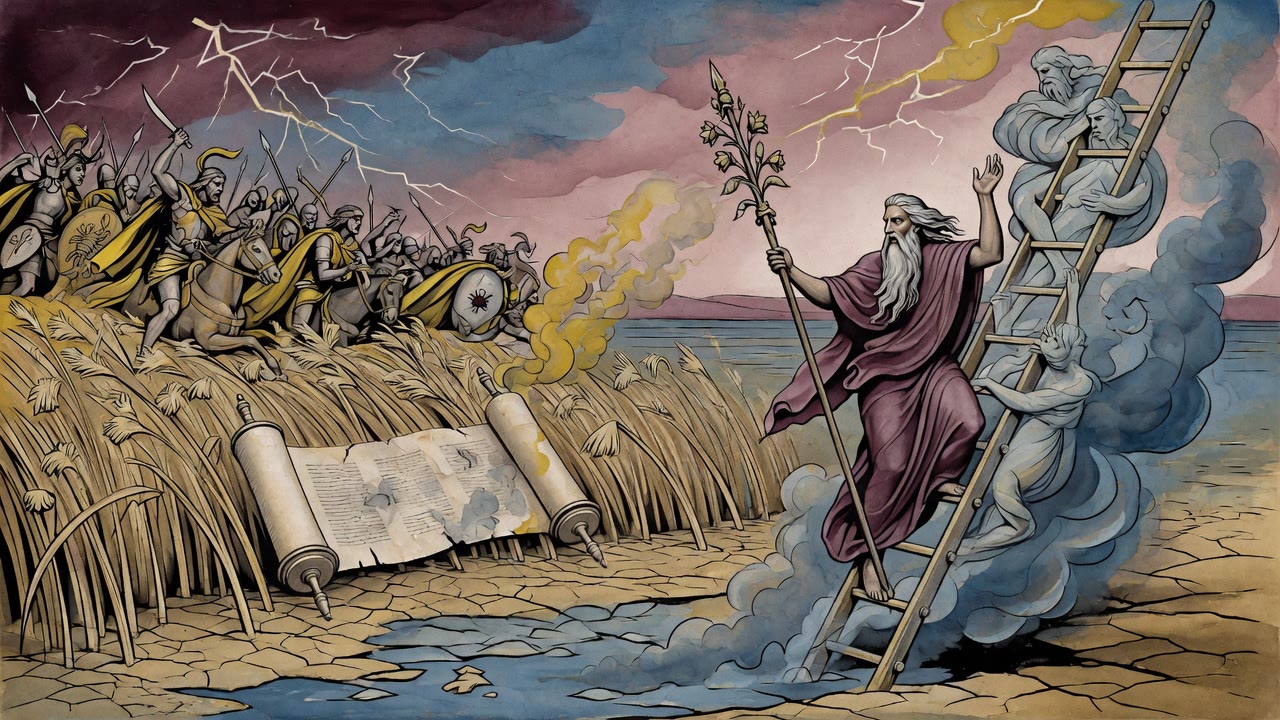
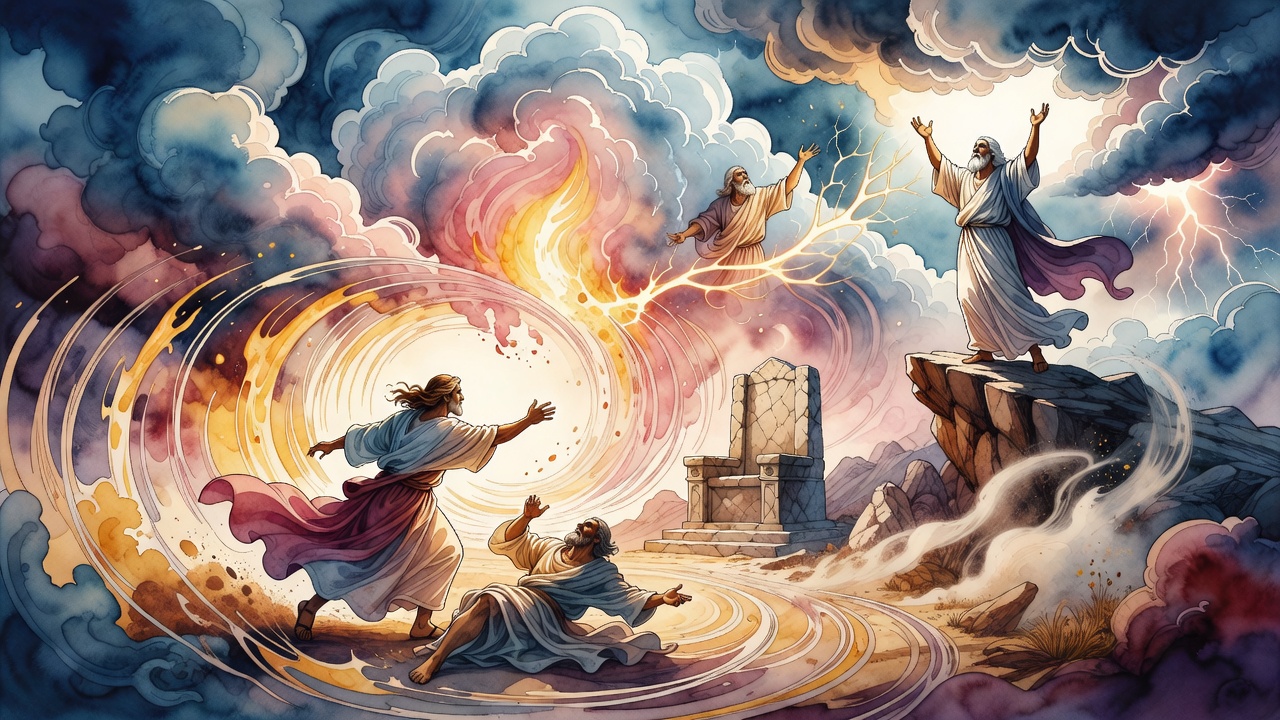
On the hill above the battle, Moses raised his hands, and Israel below held. His arms grew heavy. The hands began to drop. When they fell, Israel fell with them.
Aaron took one arm. Hur took the other. They held him that way until the sun went down, three men making one pole on a hill, because the camp's own grip had already failed and the leader's body had to become the flag the people had dropped.
Below, Joshua's sword did bloody work. Above, the sight line back to heaven had to be propped open by friends. Moses' arms trembled. Aaron's shoulder locked. Hur shifted his feet in the gravel and did not let go.
At sundown the scavenger was pushed back. The diagnosis of Rephidim remained. Hands that have gone slack must be taught to close. The battle's end did not automatically restore study.
Moses Sent Messengers First
Years later, on another border, God told Moses to fight Sihon, to block his water, to take the field without a speech. Moses sent messengers instead (Deuteronomy 2:26). Terms of peace, before the sword. God said he had done fittingly.
Moses had done two other things heaven later signed. He refused to let children die for fathers' sins. He broke the tablets rather than carry a whole law down to a camp already dancing around gold. The third was this opening. When you approach a town to attack it, you shall offer terms of peace (Deuteronomy 20:10). Not a false calm that never returns. An opening a city can walk through.
Rephidim sat earlier on the road. There the issue was not how to open a siege. It was how a free people loses its edge. Amalek does not wait for terms. He waits for slack. Moses' later insistence on peace first is the long repair of a nation that must fight without becoming a scavenger itself.
In the camp that night after Rephidim, someone opened a scroll again with fingers that still shook. Mothers counted children. Joshua cleaned a blade. Moses sat with arms that remembered the weight of being held up. Amalek had been pushed back. The closed books of the afternoon remained an open fact.
← All myths