Amalek Came Because Israel Had Let Its Torah Go Dry
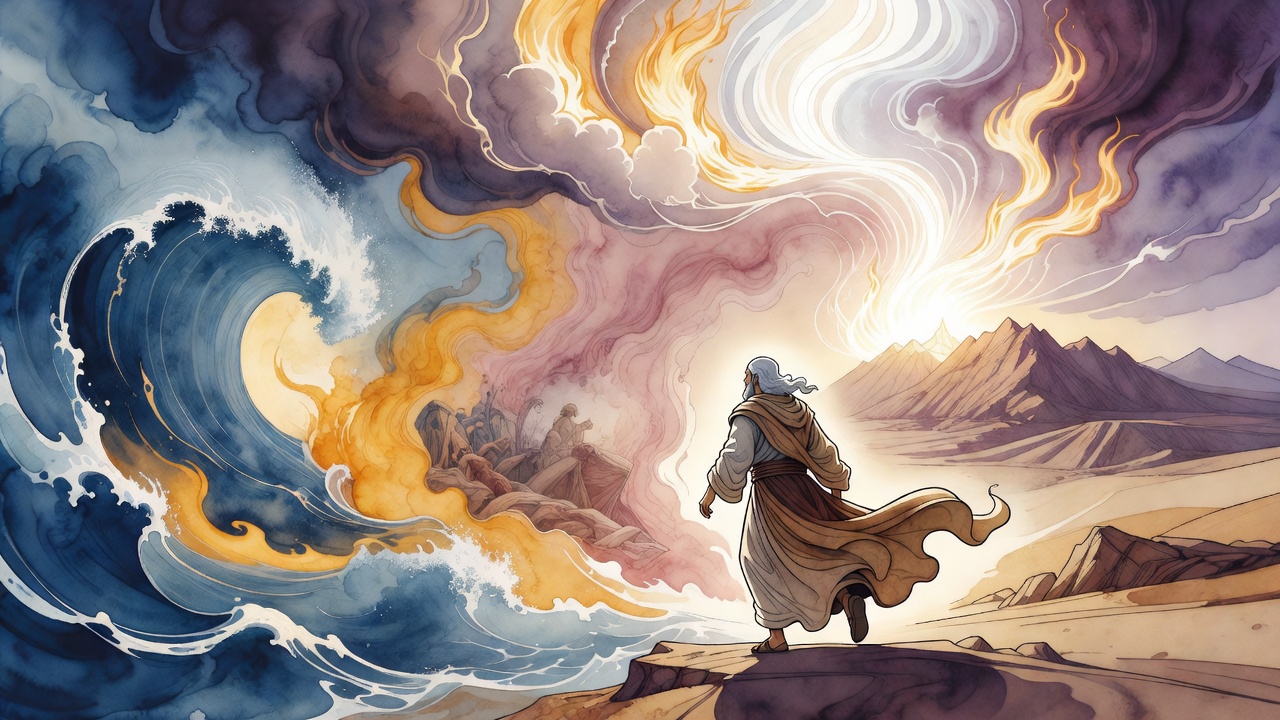
The well at Rephidim had gone dry. By morning an army stood on the sand, and Moses had only the staff that once split the sea.
Table of Contents
The well at Rephidim gave out in the night. By first light the skins hung slack, children cried against their mothers' legs, and the men had stopped arguing because there was nothing left to argue over. Then the dust on the southern track thickened, and it was not weather.
 Click for full size
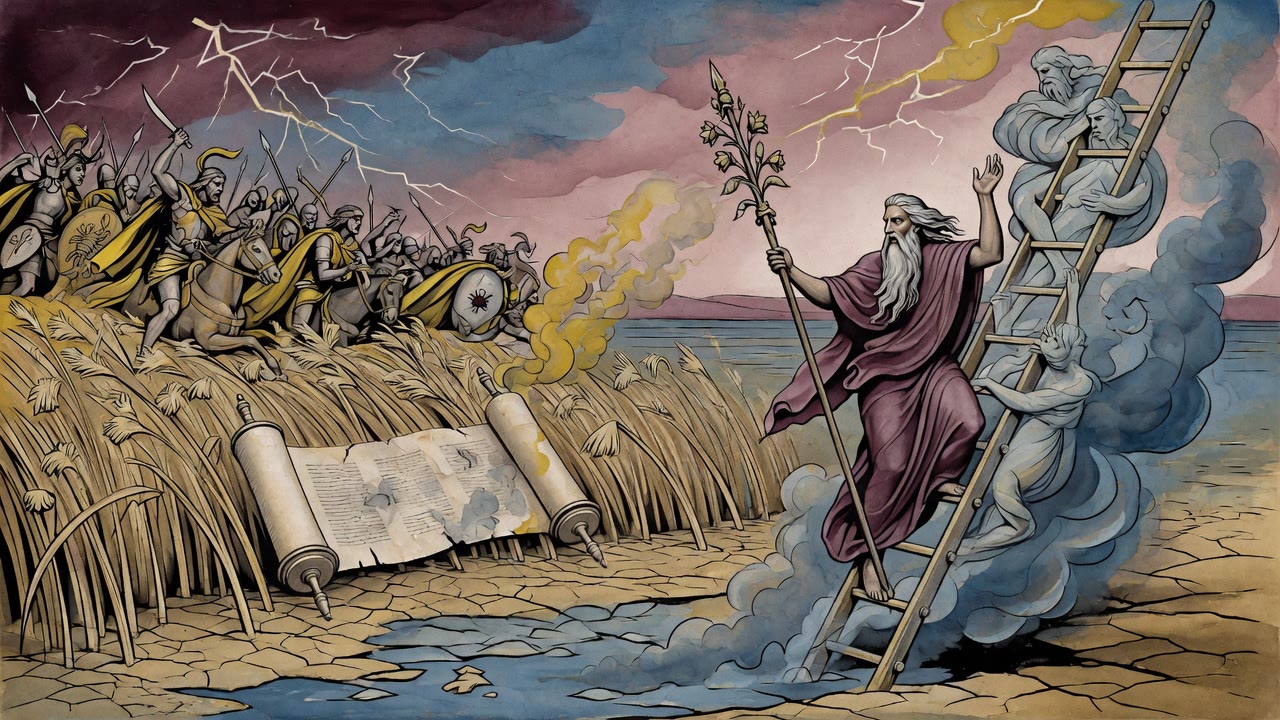
Amalek came. No embassy. No demand for water or passage. No herald with a grievance and a price. The people had a dry well one day and an army the next (Exodus 17:8).
The Camp Had Already Opened the Door
Thirst was only the surface. Under it the words had gone quiet. No one sat with a scroll. No boy repeated a verse. A man kicked an empty trough and walked away from it, and nobody called him back to study. The people of Israel had let Torah go dry, and an enemy does not invent his opening. He walks through the one already standing.
Moses stood at the edge of the camp and looked from the slack skins to the ridge. A reed does not grow without swamp. Grass does not come up without water. He knew the swamp had been drained before a single Amalekite spear showed on the skyline.
Joshua found him there. "They are already at the rear," he said. Amalek liked the stragglers. The tired. The ones who had stopped carrying anything but their own thirst.
Moses Climbed the Hill of His Dead
Moses gave Joshua his orders and told him where to look. Choose men. Go out and fight Amalek. "Tomorrow I will stand on the top of the hill with the staff of God in my hand" (Exodus 17:9).
Joshua picked them by the dry troughs. He took men who could still run. He left the rest with the skins and the children. At dawn he led the chosen out onto the sand, and Moses turned his face toward the slope.
The hill was not a lookout. Under his sandals lay the deeds of Abraham, Isaac, and Jacob. Under those, holding up the whole slope, lay the deeds of Sarah, Rebecca, Rachel, and Leah. Moses climbed his own dead and stood on them. The staff that had split the sea rode in his fist, dry wood against a dry sky.
The Staff Made Its Case
He held the staff where the valley could see it and spoke as a man setting proof on a table, one piece at a time.
"Lord of the universe. With this staff You brought Israel out of Egypt."
"With this staff You split the sea for them."
"With this staff You worked miracles and mighty acts for them."
"With this staff You will work miracles and mighty acts for them at this hour."
Three of those sentences were precedent. The fourth was the request. He was not decorating a prayer. He was arguing that a rescue granted three times, through the same piece of wood, cannot be refused a fourth time because the people have gone slack. Down below, Joshua's line bent and recovered, and the wood in Moses' hand did not shake yet.
Aaron and Hur Held His Arms Until Sundown
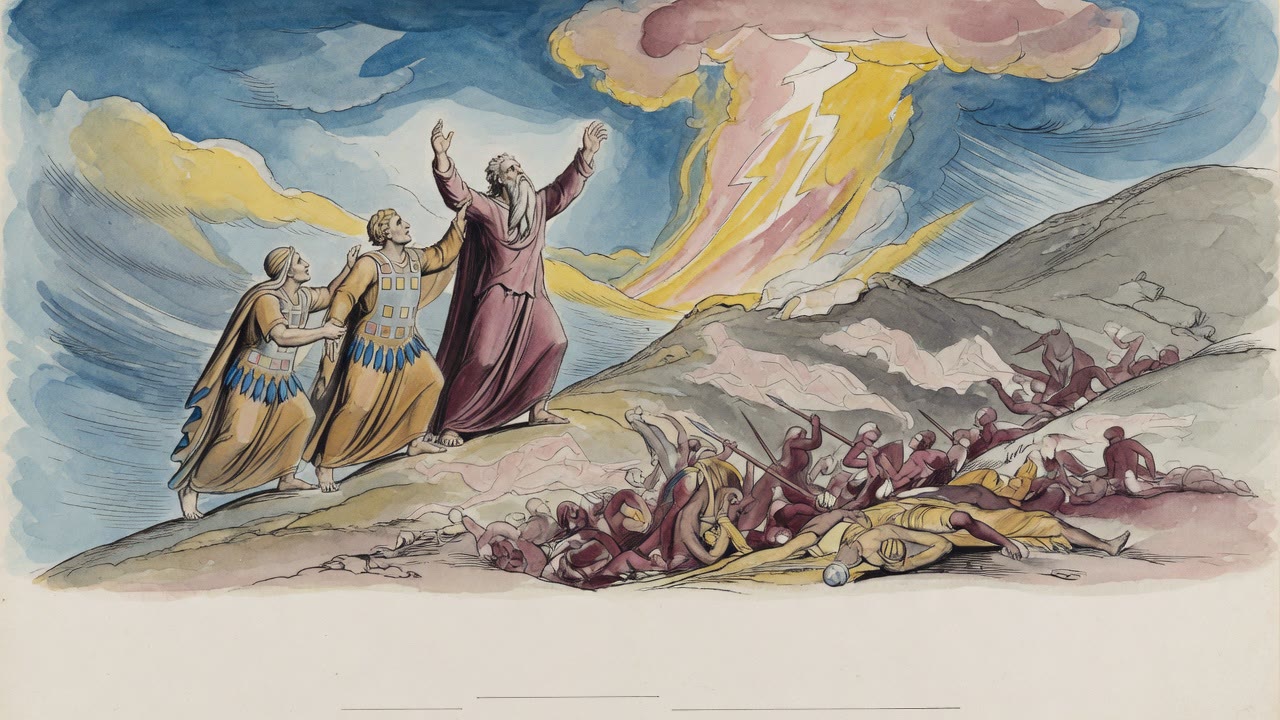
On the sand it worked like a lever, and everybody could see it working. When his hand was up, Israel was winning. When it came down, Amalek was winning. Men died in the gaps. A boy at the rear went down in one of those gaps, and the column heard it.
His arms went to lead. Aaron and Hur shoved a stone under him so he could sit, then took a side each and held his hands up, and they held them steady until the sun went down (Exodus 17:11-13). One tired shoulder on that rock meant more bodies at the back of the column, where Amalek liked to work.
Joshua's men learned the rhythm the hard way. Raise. Hold. Do not let the wood dip. The sun took its time. Aaron's palms slicked on Moses' wrist. Hur locked his jaw and did not speak. The staff stayed in the air until the light went red and the last Amalekite line broke.
Write the Name You Mean to Erase
When the field went quiet, God gave Moses a sentence with the verb doubled. "For erase I shall erase the remembrance of Amalek from under the heavens" (Exodus 17:14).
The first erasing is this world. The second is the world to come. Nothing left here and nothing left there. No sons. No border. No reputation a later century can polish into something worth admiring.
"The remembrance" already had a face on it. Centuries out, in a Persian palace, Haman would cast lots for the date on which every Jew in the empire would die, and he came down out of this line. Rabbi Yehoshua read the doubling a second way: erase him and his descendants, erase him and his families. Neither reading leaves room for a partial job.
Then God told Moses to write it in a book, which is the strange part. A people marked for total erasure has to be written down and remembered by name, or nobody will know whom to blot out. Moses sat on the same stone Aaron had pushed under him, took the scroll, and wrote. Forgetting was never on the list. The well was still dry. The staff still had blood-salt on the grain. The name was on the page.
← All myths