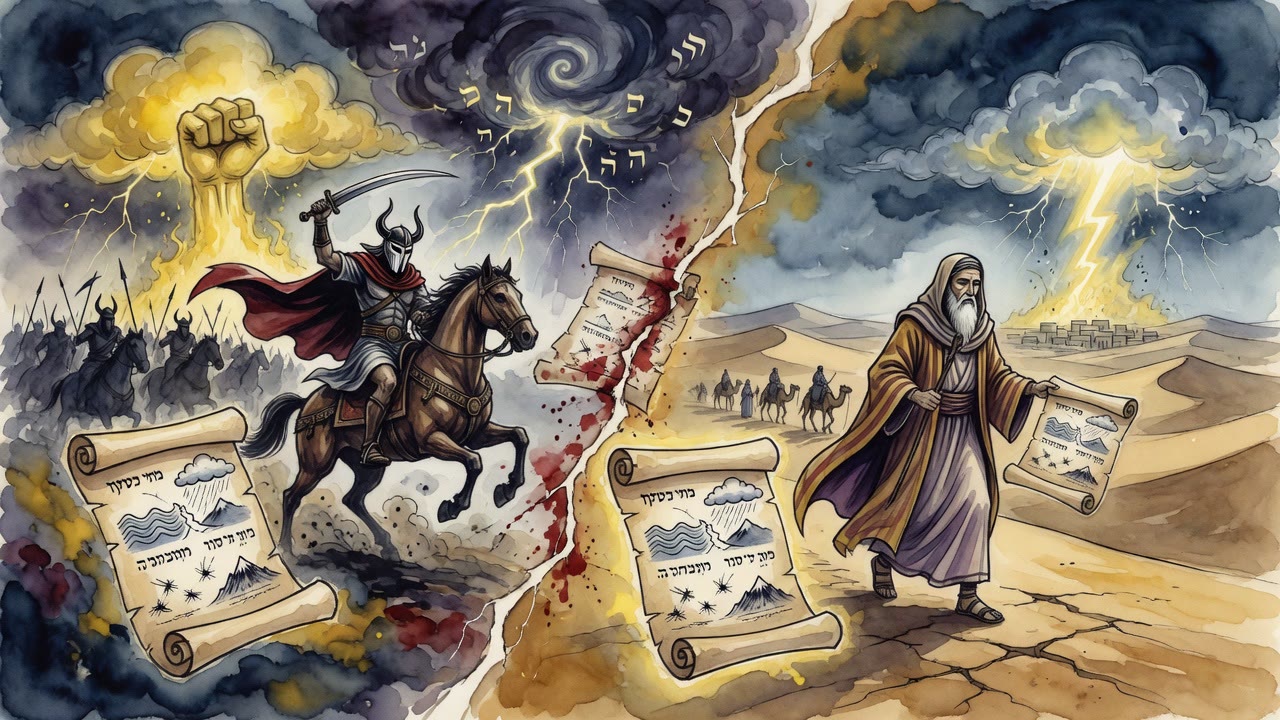
Amalek Leaped 1600 Miles Overnight to Attack Israel at Rephidim
Amalek came from the far south and covered sixteen hundred miles in a single night, driven by a grudge that ran back to Esau and Jacob in the womb.
Table of Contents
 Click for full size
The Name of the Place and What It Meant
Water had stopped at Rephidim. The camp was thirsty and angry, and the people turned on Moses with the kind of fury that comes from bodies that have been pushed too far. In the Hebrew text of Exodus 17, the water crisis is logistical: there is no water, the people quarrel, Moses strikes the rock at Horeb, water comes. The crisis resolves.
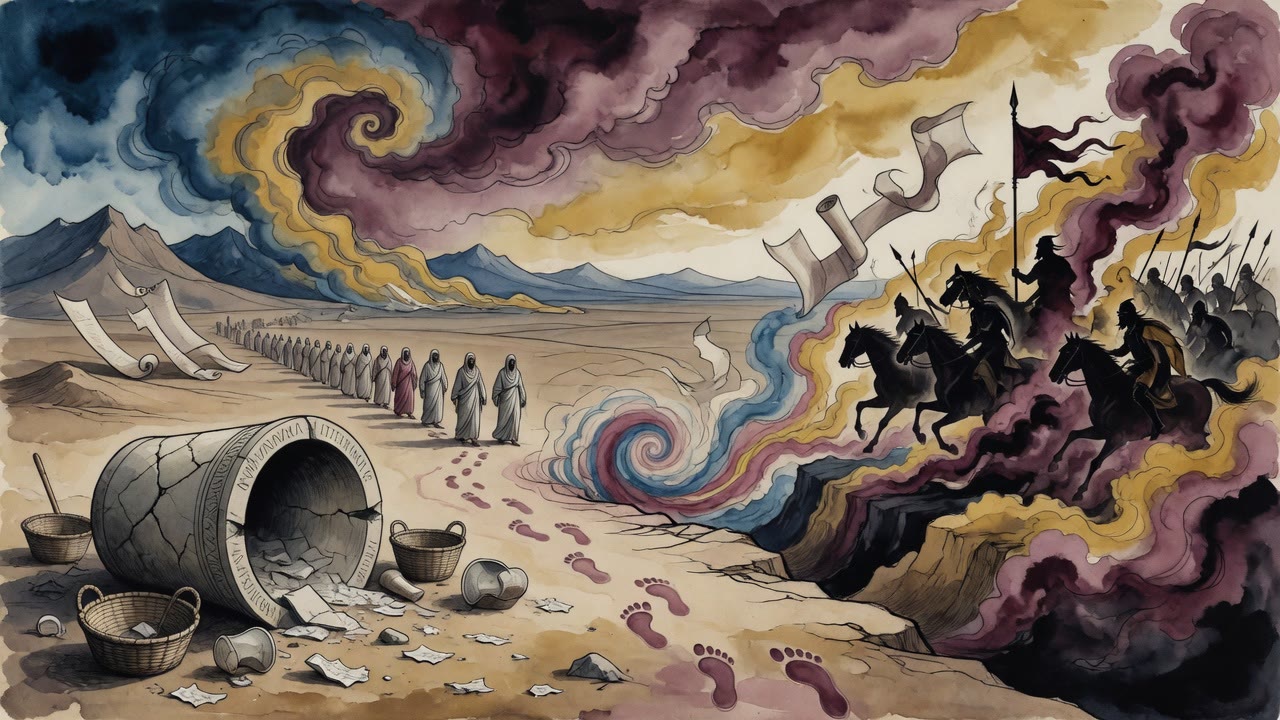
Targum Jonathan on Exodus 17, the Aramaic Torah paraphrase shaped in Palestine between the second and seventh centuries CE, reads the name Rephidim differently. The name becomes a moral diagnosis: this is a place where the hands grew weak in the commandments of the Torah. The word rephidim contains the root for weakness, rafeh, and the Targum makes this visible. The water did not fail because of geography. The water failed because of what the people were not doing. A camp with slack hands in the work of Torah is a camp that dries out. The springs follow the practice.
The Army That Came From a Thousand Miles Away
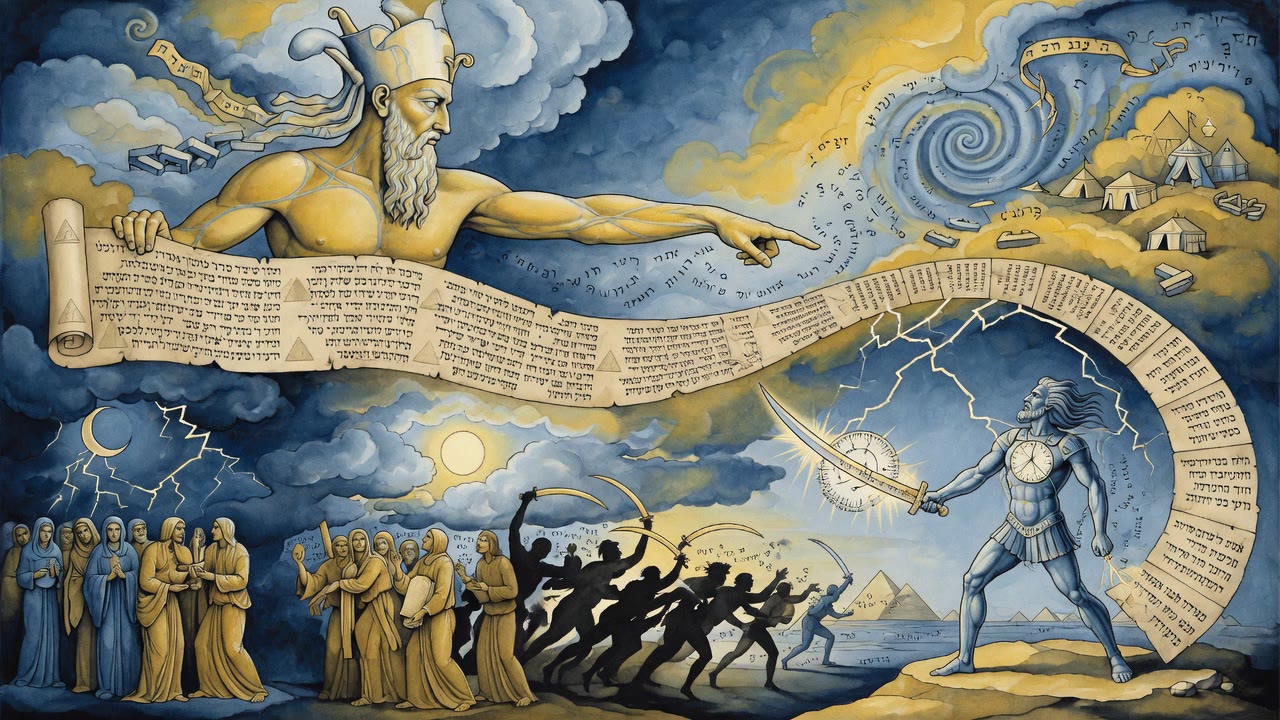
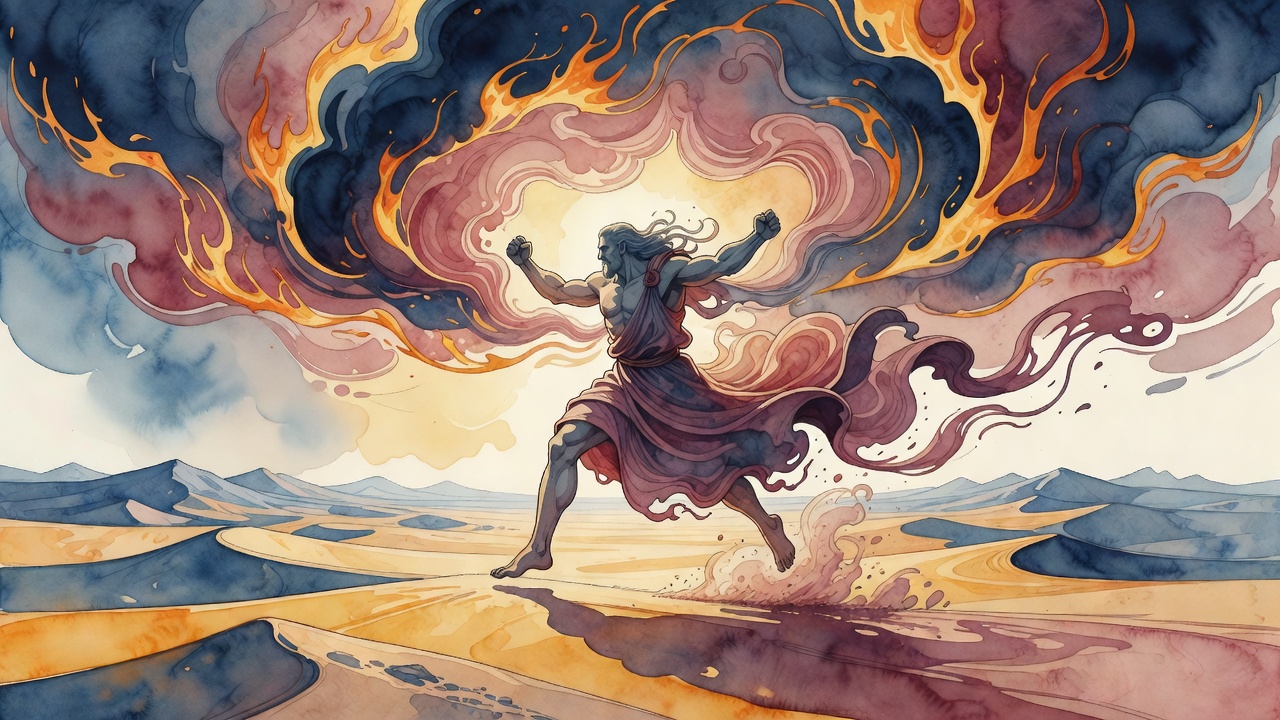
While Israel's hands were weak, something was already moving. Amalek came from the land of the south. The distance from Amalek's territory to Rephidim, according to the Targum, was sixteen hundred miles. He covered it in one night. This is not a military march. Nothing with supply lines and infantry squares covers sixteen hundred miles by morning. This is something else, a supernatural act of aggression, the kind that happens when ancient hatred concentrates itself into one sprint.
The Targum names the source of that hatred. Amalek descended from Esau. Israel descended from Jacob. The twins had been at war in Rebekah's womb, and that original pressure had never fully resolved. Esau had sold his birthright, and Jacob had received the blessing Esau believed was his. The children of Esau had been waiting for an opportunity, and they found it at the moment Israel's hands went slack.
How Moses Held His Arms Up
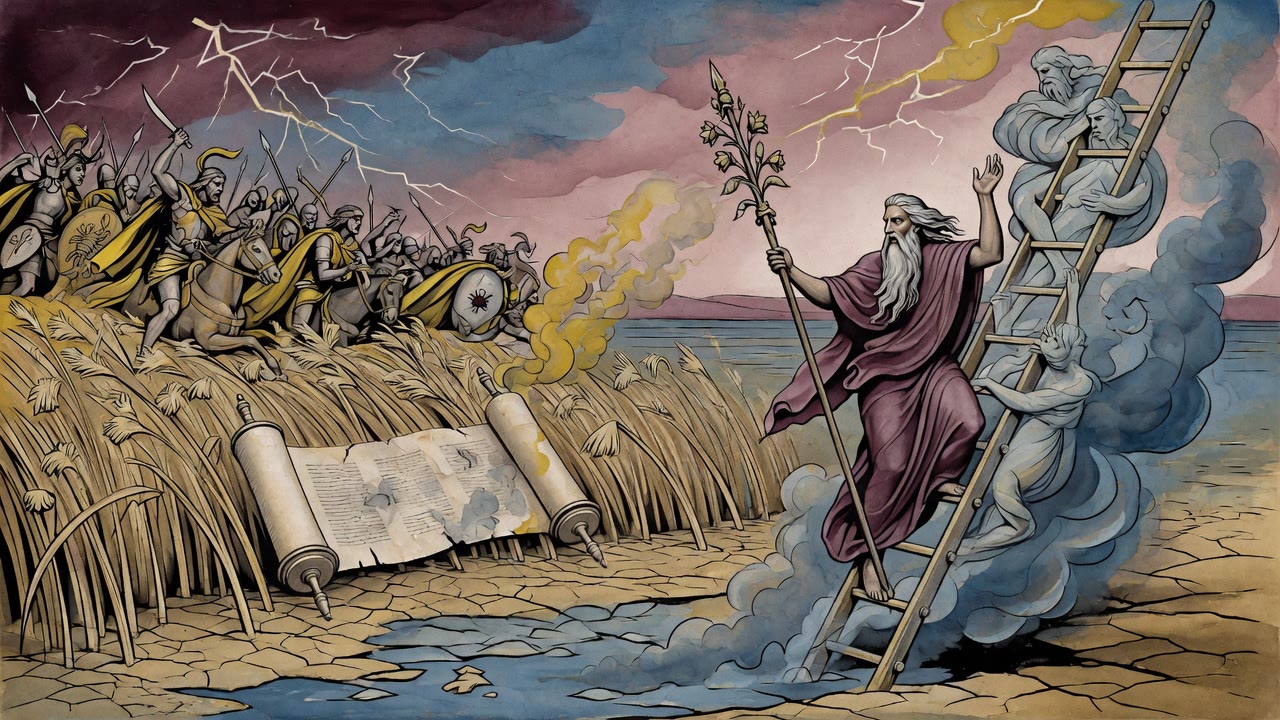
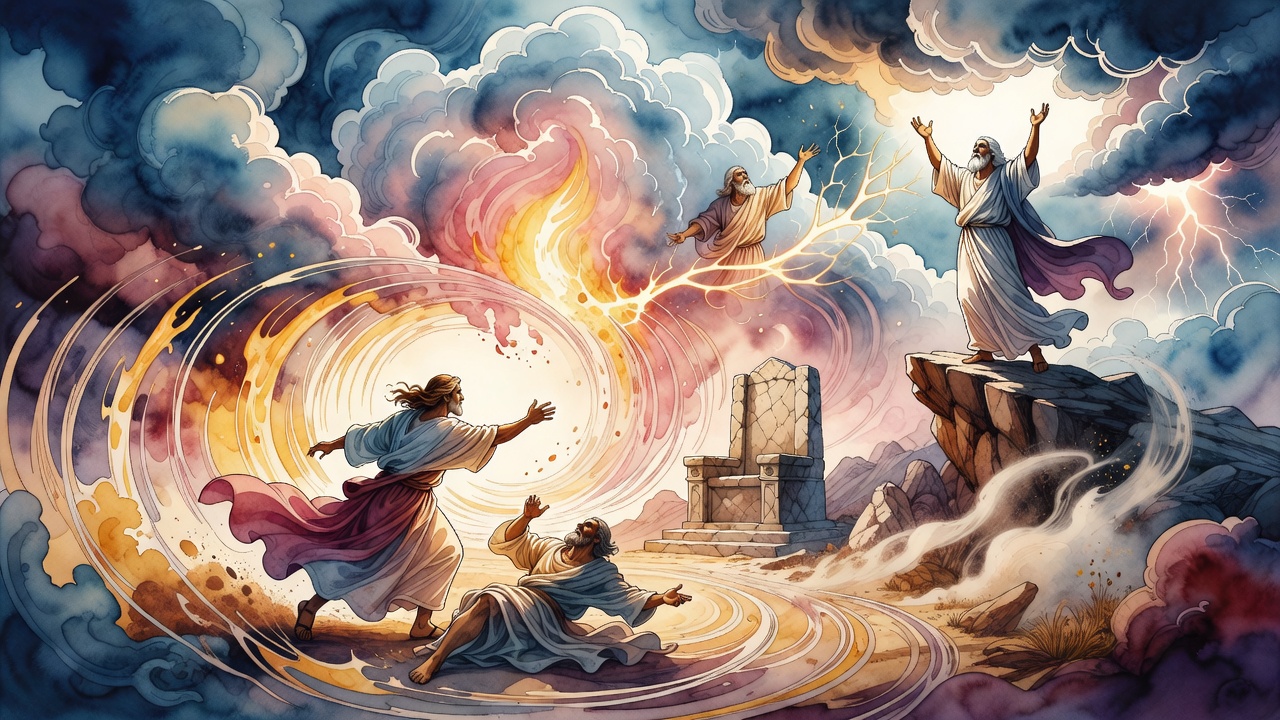
The battle was fought on two levels simultaneously. On the plain, Joshua commanded the Israelite army against Amalek's forces. On the hill, Moses stood with the rod raised. When his arms were up, Israel prevailed. When his arms dropped with exhaustion, Amalek prevailed. Aaron and Hur found a stone for Moses to sit on and stood on either side holding his arms up through the whole of the day.
The Targum reads Moses's raised hands not as military strategy but as theology. It was not the hands that won the battle. It was the direction of the hands: when Israel looked up at the hands and pointed their hearts toward heaven, they prevailed. When they did not, they fell. The battle is a mirror. The war on the plain reflects the condition of the camp's inner orientation. Weak hands in Torah brought the enemy sixteen hundred miles overnight. Raised hands toward heaven sent him back.
Three Ages of War
The Book of Chronicles of Jerahmeel, a twelfth-century Hebrew chronicle preserving older traditions, traces the consequences of this enmity forward to the Persian court. Haman descended from those same Amalekites and nursed the same grudge against the same people. Mordecai descended from the tribe of Benjamin, the tribe of Saul, who had destroyed the Amalekites from Havilah to Shur but spared their king Agag, the decision that cost Saul his throne and left a line of Amalekite survivors to produce the man who would stand at the Persian king's gate and demand that the whole Jewish people bow.
The Legends of the Jews, Louis Ginzberg's synthesis of rabbinic tradition published 1909-1938, notes that if Moses had been paying full attention, he might have ended the Amalekite threat completely at Rephidim. Joshua was chosen to conduct the battle specifically to teach the next generation what this enemy was, so that when the command to erase Amalek's memory came through later generations, it would be understood as continuous work, not a single punitive action.
← All myths