Jethro Shot an Arrow into the Camp Cloud
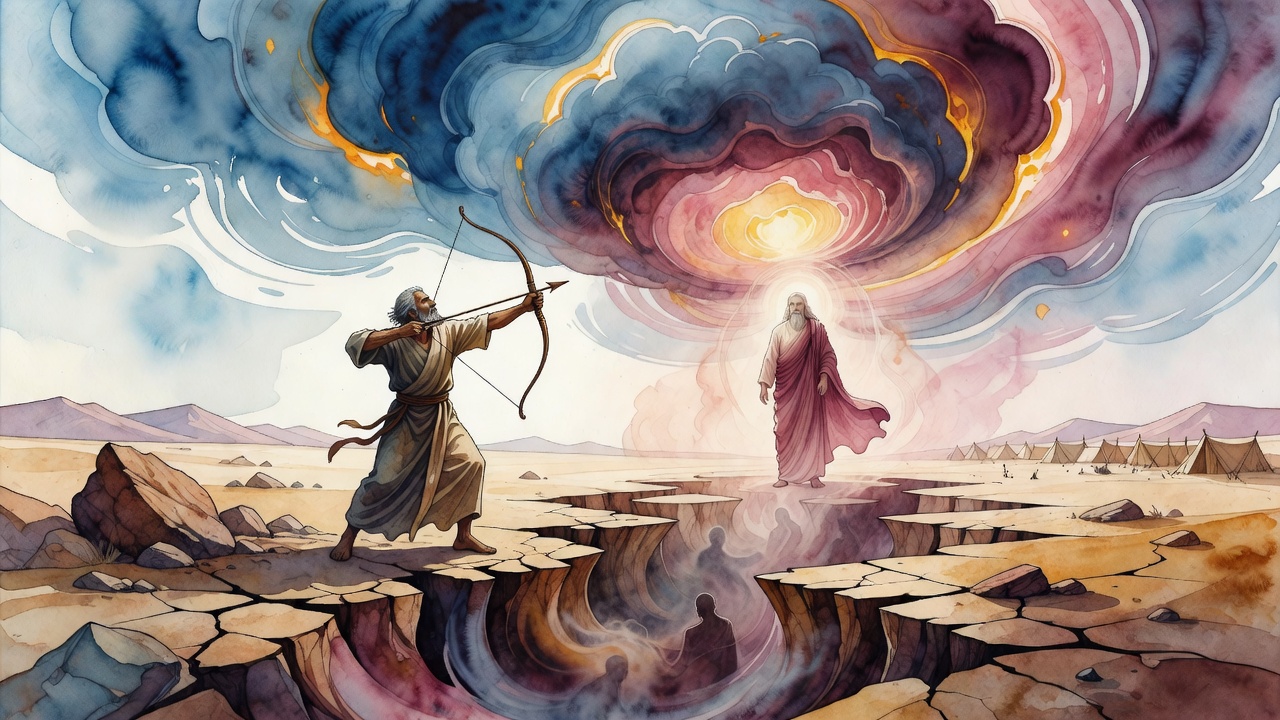
Jethro brought Zipporah, whom Moses had divorced, and her two sons to a camp the cloud had sealed. He tied his letter to an arrow and shot it inside.
Table of Contents
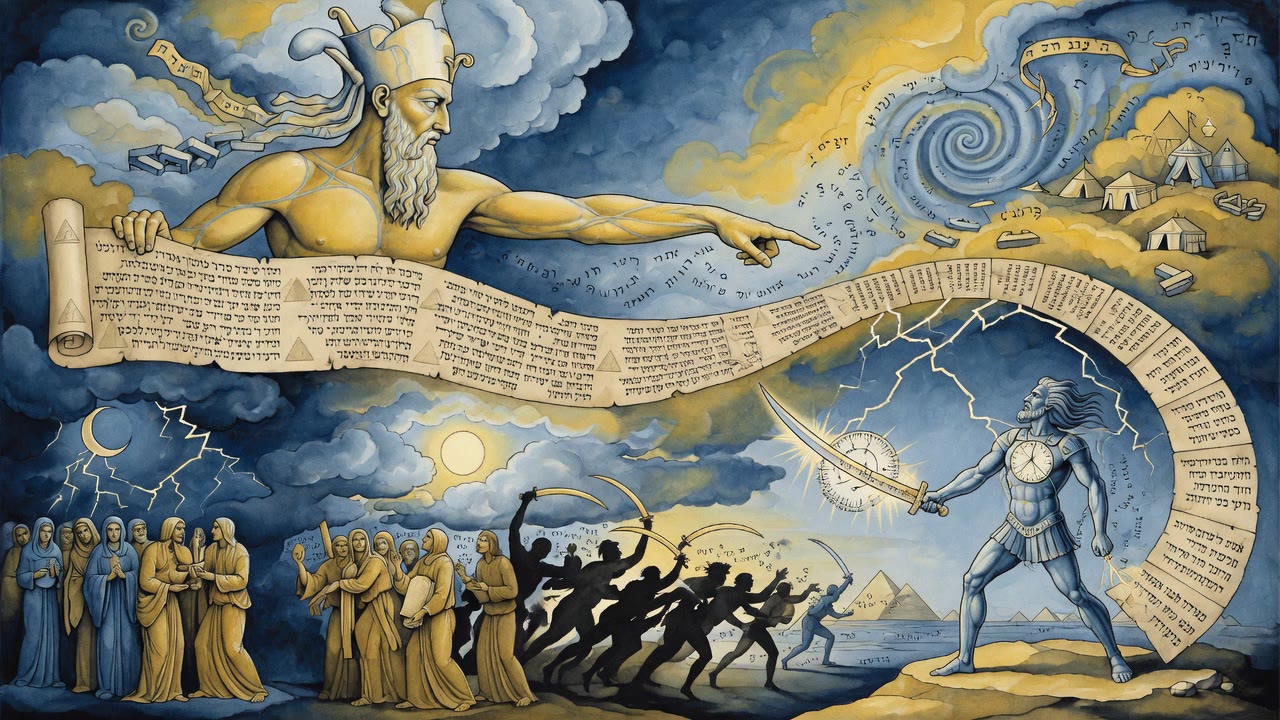
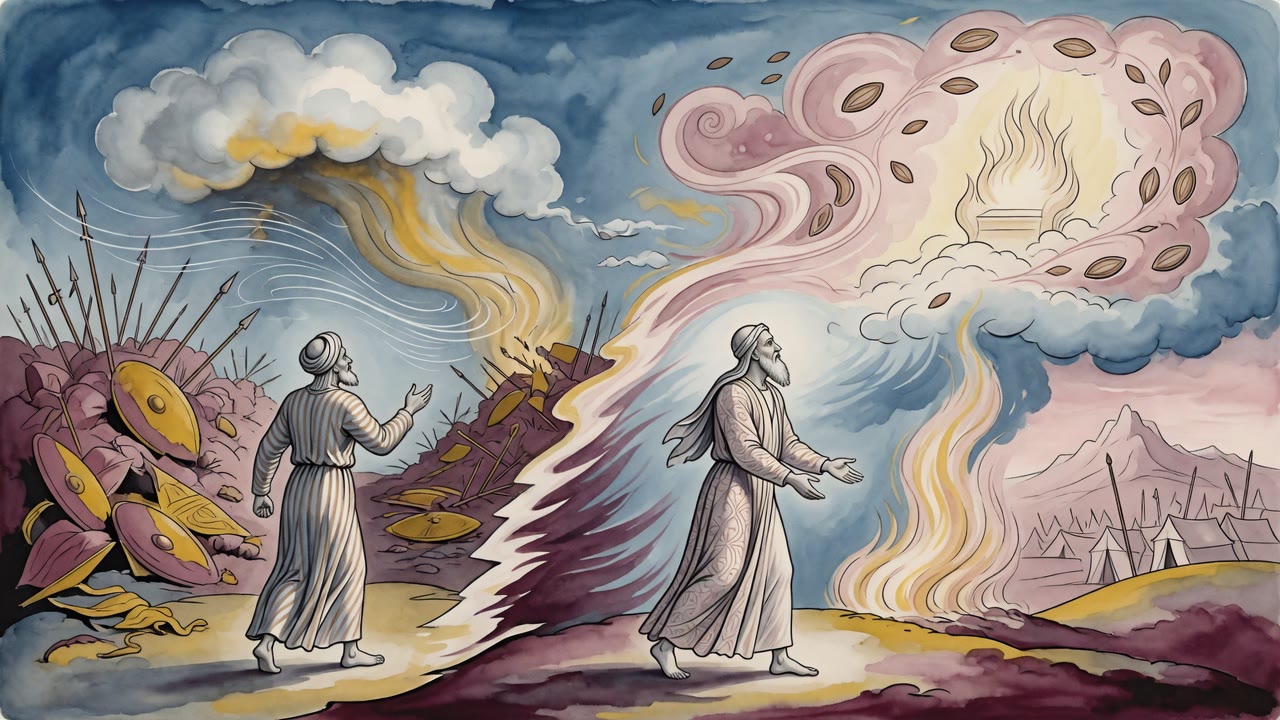
Jethro watched Amalek lose more than a battle. The scorner fell in this world and the next, and the man who had once stood in the same plot felt the ground shift under his own feet. He had wealth. He had honor. He had also helped incite Pharaoh against Israel. When Amalek's ruin landed, Jethro did not polish his titles. He said, "There is nothing left to me but to go over to the God of Israel," and he set his face toward the desert where Moses led a people under cloud.
 Click for full size
Moses had already built an altar after the victory. God named it "My Miracle," because Israel's joy was God's joy and Israel's enemy crushed was a victory counted in heaven as well as on the sand. The scorner smitten warned the simple. Jethro took the warning into his bones and left home.
The Cloud Would Not Open
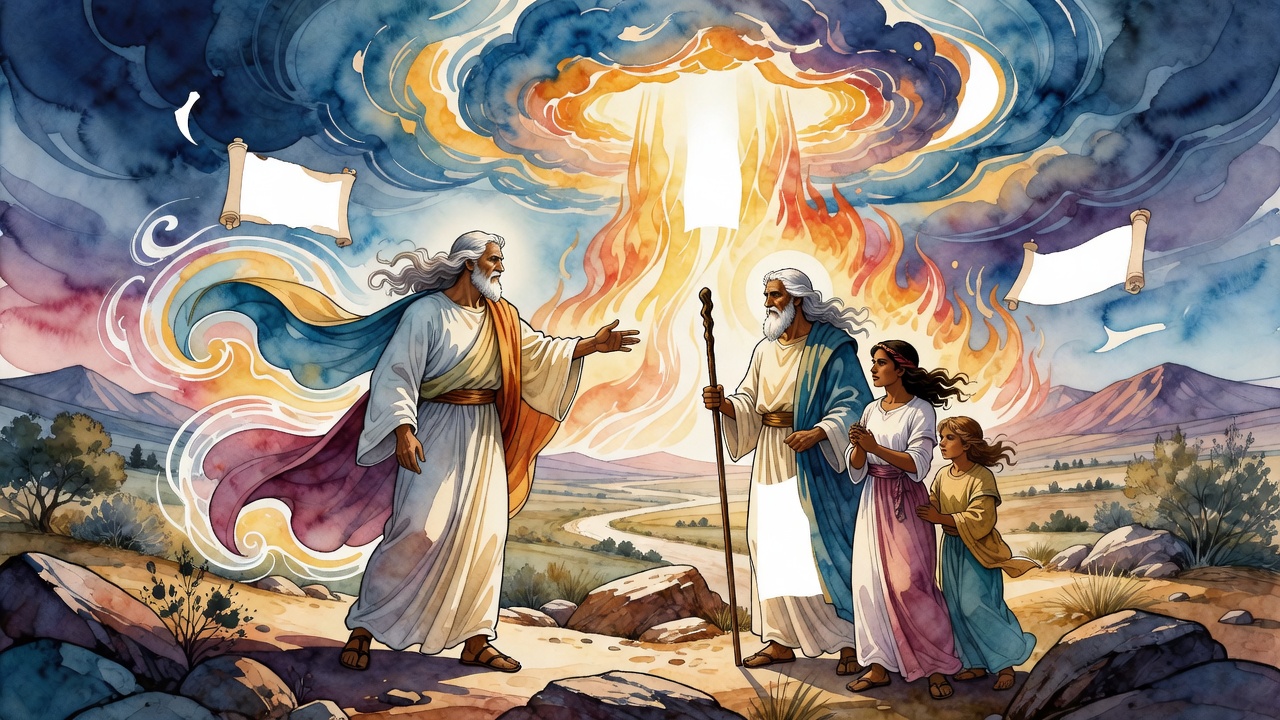
He reached the camp with more than a private conscience. He brought Zipporah, from whom Moses had been divorced, and her two sons, the only children of that marriage, for she had taken no other husband after the separation. Jethro wanted entry, reconciliation, and a place under the God he had chosen. What blocked him was not a guard with a spear. A cloud wrapped the camp so that none could pierce it.
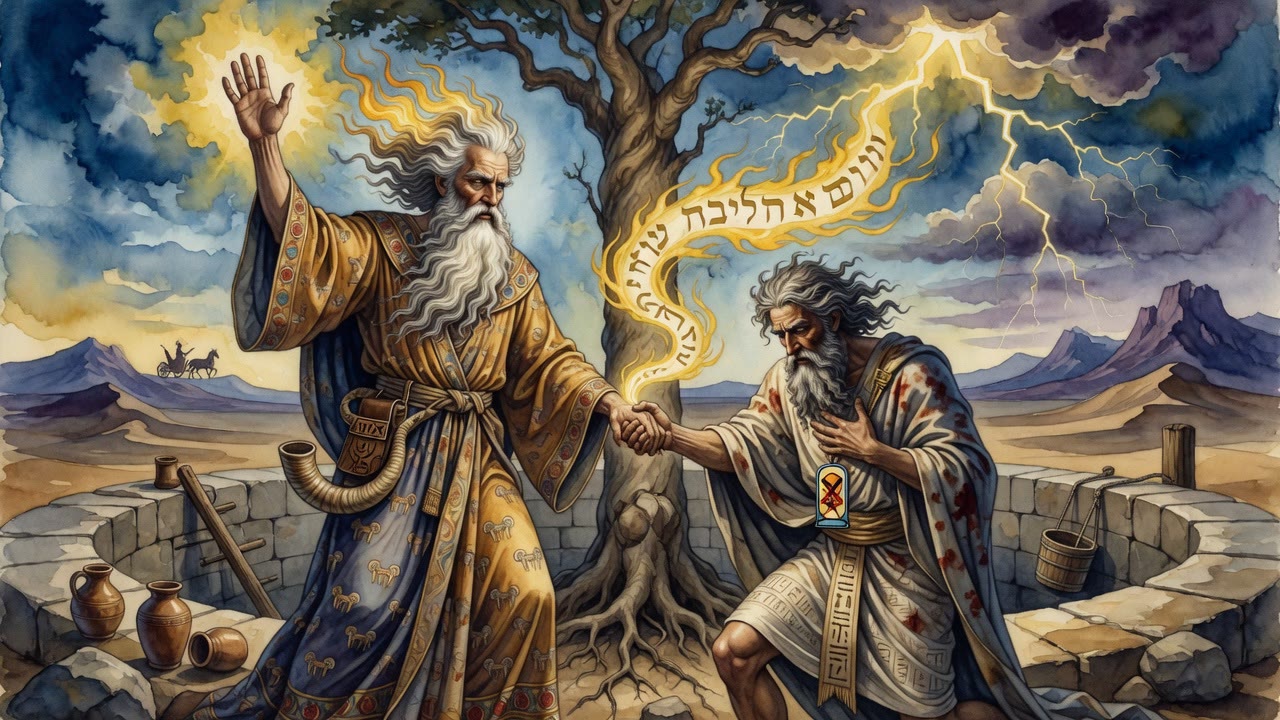
He wrote a letter. He did not wait for a polite messenger schedule. He set the letter on an arrow and shot it so that the shaft fell inside the sealed circle of Israel. Paper and feather and iron carried a father's plea across a barrier no foot could cross.
The Letter Named Sons and God
"I adjure thee, by thy two sons and by thy God, to come to meet me and receive me kindly," the letter said. "If thou wilt not do it for my sake, do it for thy wife's sake; and if thou wilt not do it for her sake, do it for thy sons' sake."
Every line pressed Moses where a leader's private life and public office touch. Meet me. Receive me. If not for me, for Zipporah. If not for her, for the boys. Jethro stood outside the cloud with his life already spent on the road. Moses had to decide whether the man who once shared Amalek's counsel would now be welcomed as kin under the Name.
The arrow had done what speech at the edge could not. It forced a face-to-face reckoning inside a camp that had just tasted Amalek's defeat and God's claim on the miracle.
After the Earth Closed on Korah
Later another pressure found Moses. Korah and his company had gone down, the ground sealing over rebellion. Peace did not follow. On the very next day a fiercer rising broke out. The people now believed nothing happened without God's will. They also believed God was doing all of it for Moses' sake alone.
"He brought this anger on us," they said in effect, blaming not the wickedness of the swallowed but the leader who, they claimed, had excited divine revenge to protect his brother's priesthood. Kinsmen of the dead fanned the heat. They urged Israel to curb Moses' love of power. Public welfare, they insisted, demanded a leash on the man who stood between them and heaven.
God Told Moses to Step Aside
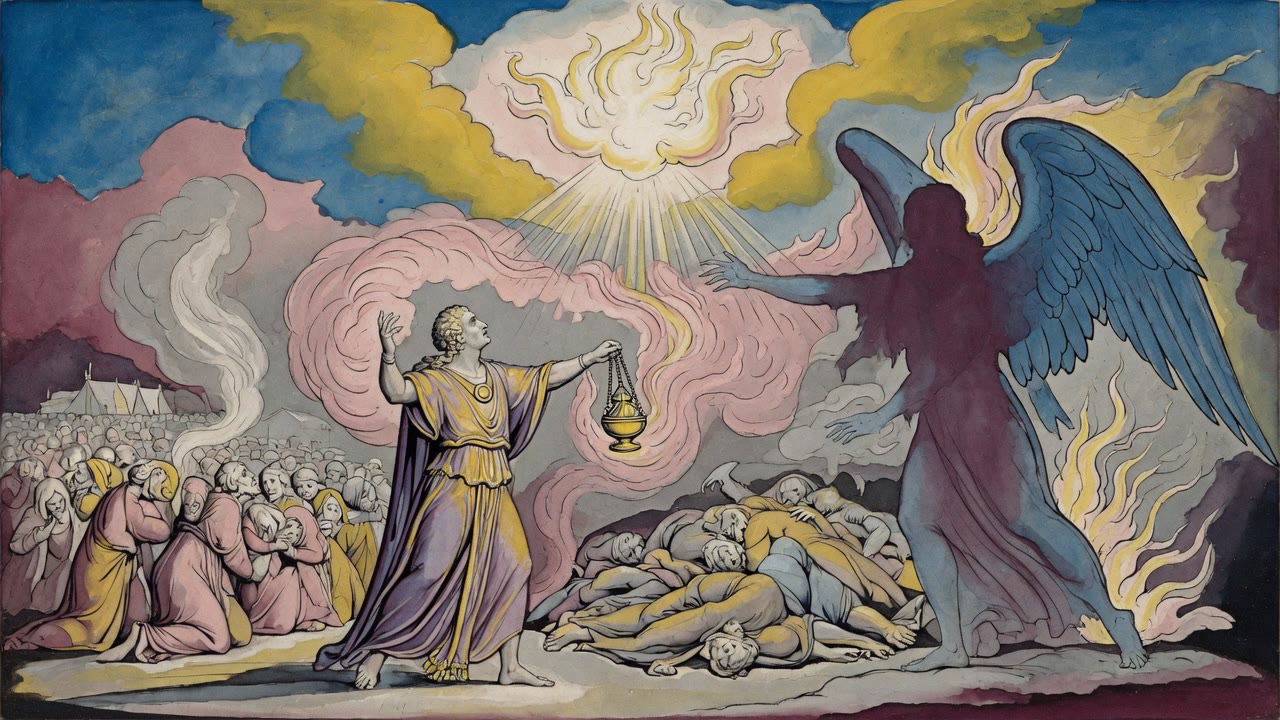
The speeches did not tire. Incorrigible perverseness after a miracle of judgment pushed wrath to a new edge. God told Moses and Aaron to go away from the congregation so that ruin could fall at once on the whole people. The leader who had received an arrow through a cloud now stood ordered to abandon the camp to destruction. He wanted Israel to live. What blocked him was a nation that had turned the death of rebels into a brief against his office, and a decree that began with "leave them to Me."
Jethros arrow had asked Moses to open a door. The post-Korah crowd asked heaven to close every door on Israel. Between those two demands Moses remained a body under command, first pulled toward a father-in-law and a returned wife outside the mist, then pushed to step back while God prepared a broader end. The cloud that once blocked Jethro had been a boundary of holiness. The later rebellion tried to turn holiness into a weapon against the man God had set over the people. Moses had welcomed a penitent through an arrow and a letter. Now he stood ordered to abandon the people who refused to welcome the justice that had saved them from Korah. He stayed in the pressure of both doors, one opening outward toward Zipporah and the boys, one slamming shut on a nation that would rather blame its leader than own its mutiny.
← All myths