5 min read

Jethro Heard Amalek Fall and Walked Toward Israel

The same report of Amaleks ruin hardened the scoffer and converted Jethro, while Heaven swore no seed of Amalek would be welcomed to draw near.

Curated by Arthur · Told by Maggid ·
Table of Contents
  1. One Report, Two Hearers
  2. An Oath on Hand and Throne
  3. David and the Amalekite Boast
  4. Who Blots the Name
  5. Jethro Crosses the Line Amalek Would Not
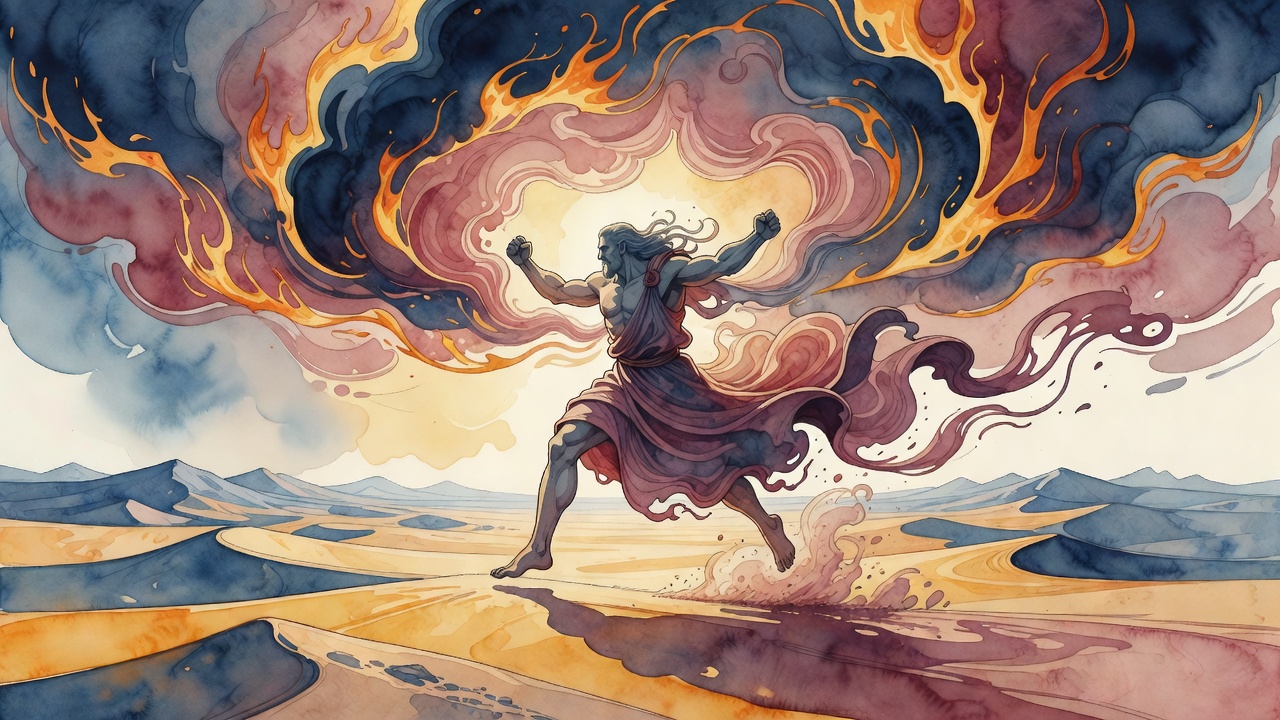
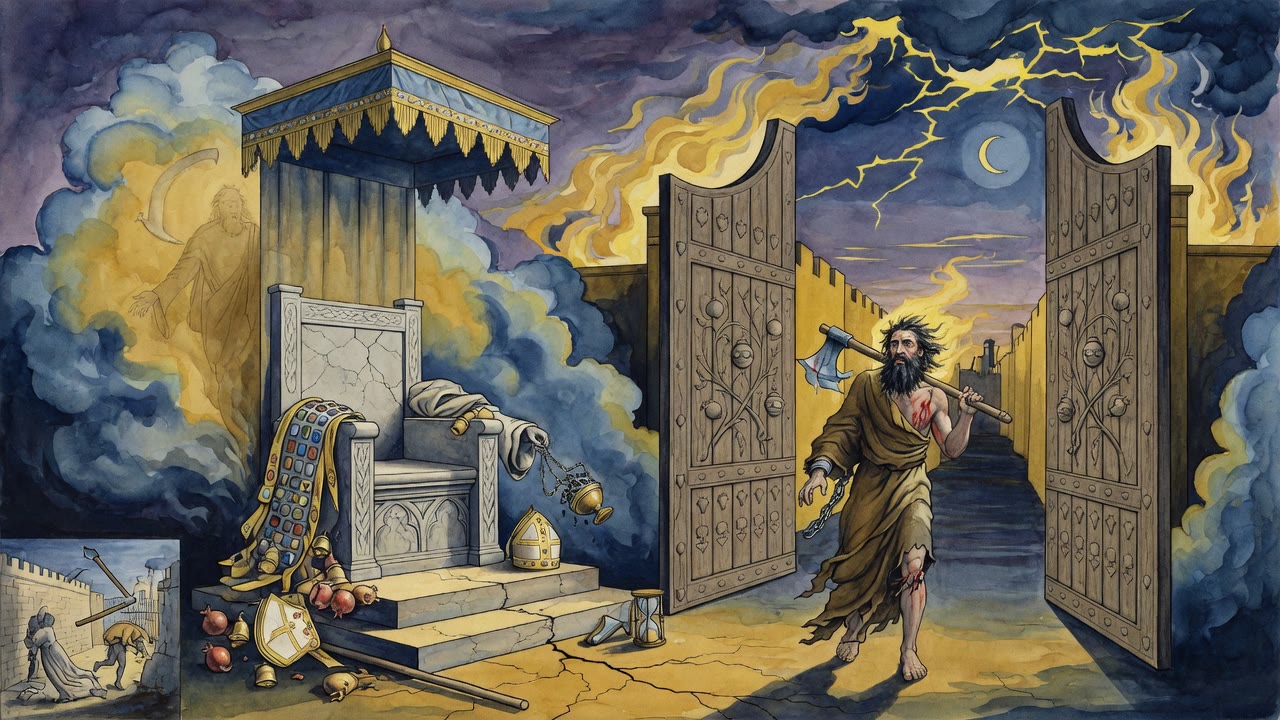
Jethro Heard Amalek Fall and Walked Toward Israel Click for full size

One Report, Two Hearers

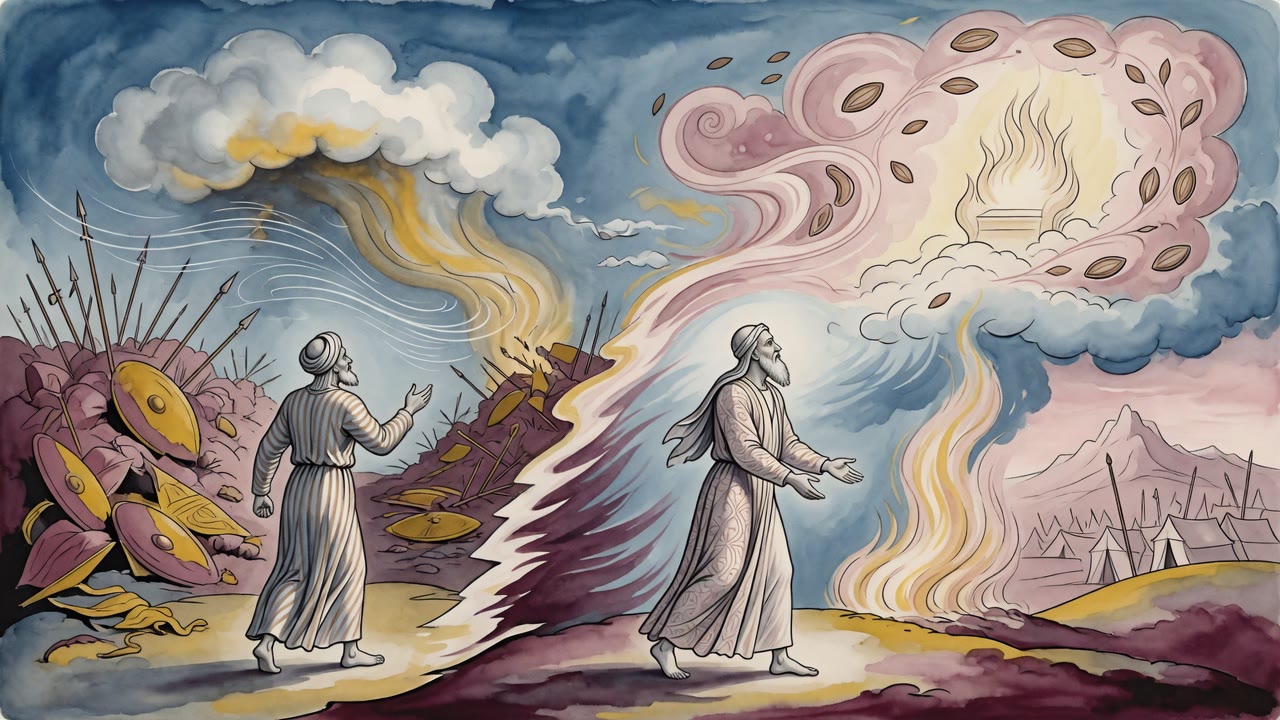
Joshua's sword fell upon Amalek, and the verse does not stop at the nation alone. "And Amalek" gathers in wife and sons. "And his people" gathers the multitudes who marched out to ambush Israel in the wilderness, striking the weak at the rear. The blow was total. News of what the Holy One, blessed be He, had done ran the desert roads like heat shimmer over stone.

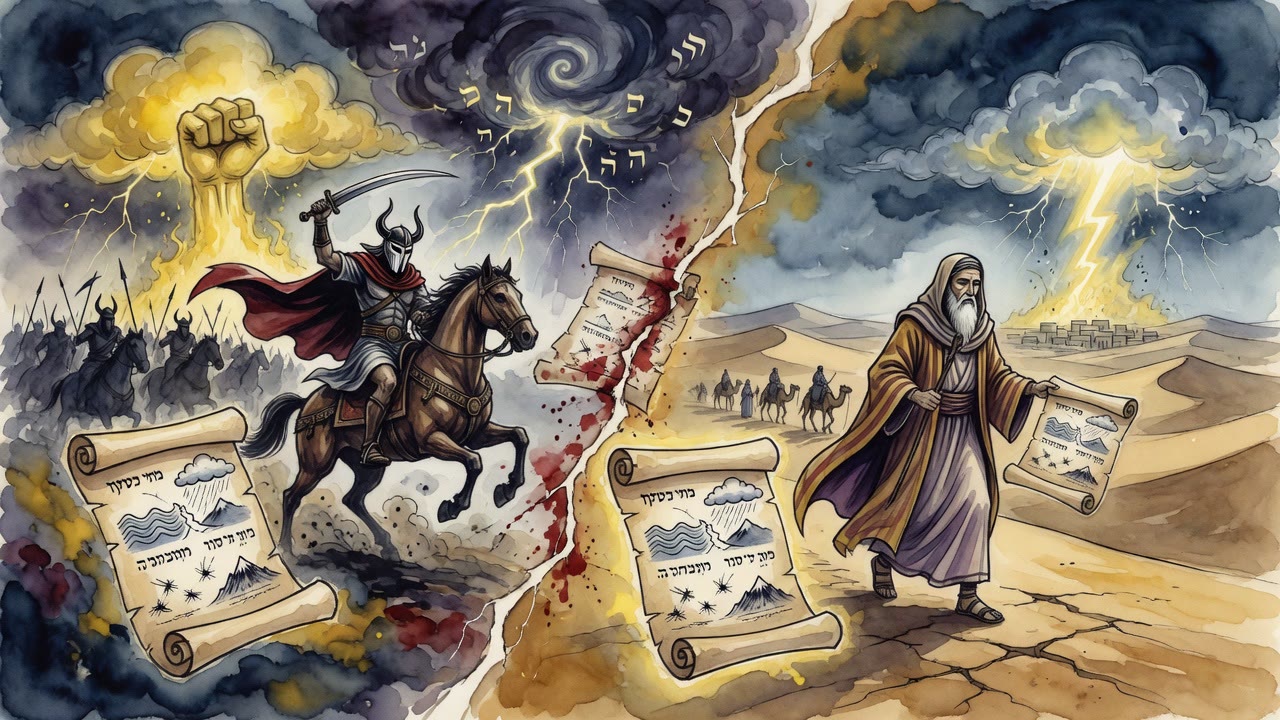
Two men heard the identical report. Amalek's house heard and hardened, and was struck down. Jethro heard and rose, left Midian, and walked toward the camp of Israel to become a convert. Strike the scoffer, says the proverb, and the simple one will become clever. The scoffer destroyed is Amalek. The simple one who grows wise is Jethro. One report. Two souls. Everything depended on what each did with what he heard when the messenger finished speaking.

An Oath on Hand and Throne

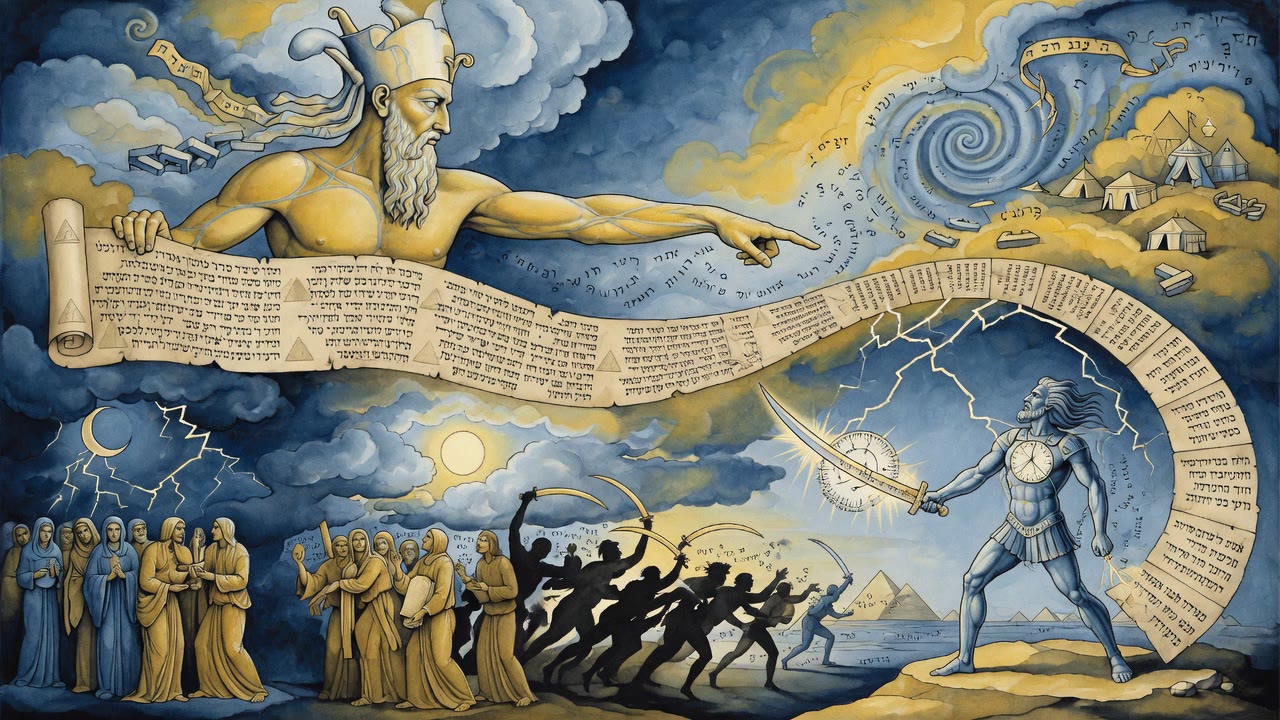
When Moses raised his hands against Amalek, he proclaimed a war that would span every generation. Why so eternal a hatred? Rabbi Eleazar taught that the Holy One swore upon His own glory. My right hand, My right hand! My throne, My throne! Should any of the nations of the world come seeking to draw near, I will receive them. From the seed of Amalek I will accept no one. The door of nearness opens wide and then names one barred line.

Welcome is wide. The bar is narrow and named. Amalek is not a vague enemy for poems. It is the line Heaven refuses at the door of nearness, the memory that must be blotted because it made war on the tired and the straggling when no court of nations was watching the rear of the camp.

David and the Amalekite Boast

David ruled by the same measure generations later. A young man came boasting that he had struck down Saul. David asked, From where are you? The youth answered, I am the son of an Amalekite sojourner. Rabbi Isaac names the stain behind the boast: the son of Doeg the Edomite, whose tongue had brought ruin upon the priests of Nob until blood ran in a city of service.

David did not hesitate. Your blood be upon your own head. The verse hints at more: "your bloods," in the plural, for that house had spilled much blood in Nob, the city of the priests. From the line of Amalek, no welcome; from the line of Doeg, only the verdict his deeds had earned. Boast and bloodline met a king who had learned the old oath by living under its shadow.

Who Blots the Name

Two verses stand side by side and refuse a simple ownership of the eraser. Israel is commanded: you shall blot out the remembrance of Amalek. God declares: I will utterly blot out the remembrance of Amalek. Who wields the tool? Both, in their season. Before Amalek stretched hands against the throne of Heaven, the duty fell to Israel. Once those hands reached for the throne itself, the Holy One claimed the task.

Can flesh stretch a hand against the throne? The midrash answers with Jerusalem. They shall call Jerusalem the throne of the Lord. The hand that razed the city grasped at Heaven's seat. For that reach, the verse no longer leaves the work only to mortals. Memory becomes a joint labor of command and divine claim.

Jethro Crosses the Line Amalek Would Not

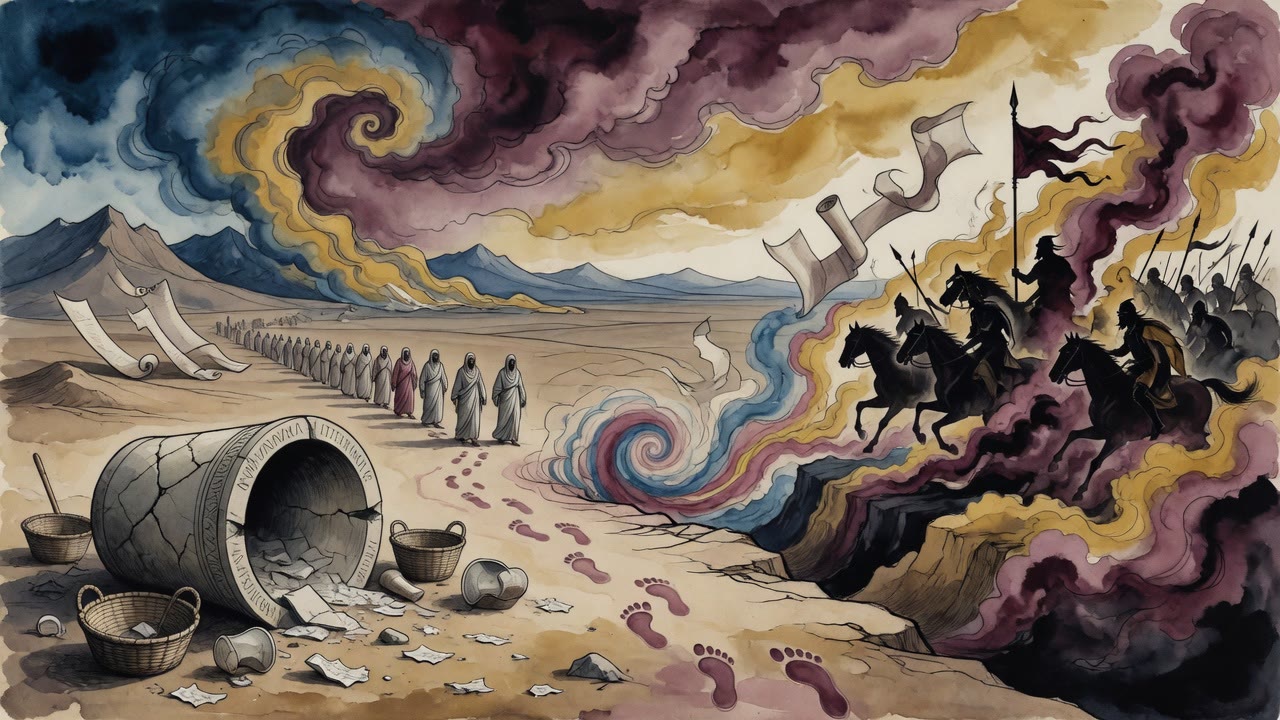
Jethro's feet answer Amalek's fists. One house hears of Israel's God and grabs for more violence. One priest of Midian hears and walks toward covenant with gifts and a confession that the LORD is greater than all gods he once served. The oath that bars Amalek's seed does not bar the nations; it clarifies the one line that made war on the weak and, in the long telling, on the throne's city.

Choose, then, what you do with the report of Heaven's victories. Harden, and become the scoffer the proverb strikes. Soften, and become the guest who crosses the desert toward a people still camping under a name older than your fear. The same news can be a wall or a door, and Jethro's journey is the midrash's proof that hearing is never neutral.

The midrash keeps the scene close to the body on purpose. Names move. Choices cost. Heaven writes while people still think they have more time to finish what fear postponed.

Midian still had its idols when Jethro packed for the journey. The midrash does not pretend conversion is a mood. It is feet on a road after a report has broken an old certainty. He would arrive with Zipporah and the boys, with burnt offerings and a confession spoken in the hearing of Moses and Aaron, a guest who became a teacher of judges after he first became a hearer of news.

Amalek's story ends in blotting. Jethro's story begins in arrival. The same desert holds both endings because Heaven reads the heart that receives the report, not only the sword that made the report true.


← All myths

From the tradition

Sources

3 sources

The texts behind this telling. Some cards carry a translation of the source; others are our own retelling of it, and each card says which. Every card links out to the original.

Midrash Tanchuma Buber, Yitro 4:5Midrash Tanchuma Buber, Yitro

Translation of the source text.Midrash Tanchuma (Buber), Public Domain, on Sefaria · CC-BY-SA

"(And Joshua weakened) Amalek" (Exodus 17:13), according to its plain meaning. "And [Amalek]", these are his wife and his sons. "And his people", these are the multitudes who came with him. Therefore, when Jethro heard of the miracles that the Holy One, blessed be He, performed against Amalek, he immediately came and converted. This is the meaning of "Strike the scoffer" (Proverbs 19:25), this is Amalek; "and the simple one will become clever" (Proverbs 19:25), this is Jethro.

Full source
Midrash Tanchuma Buber, Ki Teitzei 18:1Midrash Tanchuma Buber, Ki Teitzei

Translation of the source text.Midrash Tanchuma (Buber), Public Domain, on Sefaria · CC-BY-SA

(Exodus 17:16:) "And he said: Because a hand is upon the throne of the LORD, the LORD has a war with Amalek from generation to generation." It is taught in the name of Rabbi Eleazar: The Holy One, blessed be He, swore an oath and said, "My right hand, my right hand; My throne, My throne! If gentiles come from any of the nations, I will accept them; but from the seed of Amalek I will not accept."

And David also acted thus, as it is said (in II Samuel 1:13): "And David said to the young man who told him: From where are you? And he said: I am the son of an Amalekite sojourner." Rabbi Isaac said: He was the son of Doeg the Edomite. And David said to him (in II Samuel 1:16): "Your blood be upon your own head." ["Your bloods" is written.] Much blood you spilled in Nob, the city of the priests.

Full source
Midrash Tanchuma Buber, Ki Teitzei 17:3Midrash Tanchuma Buber, Ki Teitzei

Translation of the source text.Midrash Tanchuma (Buber), Public Domain, on Sefaria · CC-BY-SA

Rabbi Joshua ben Levi said in the name of Rabbi Alexandri: One verse says, "You shall blot out the remembrance of Amalek" (Deuteronomy 25:19), and another verse says, "For I will utterly blot out the remembrance of Amalek" (Exodus 17:14). How can these two verses be reconciled? Before they stretched out their hands against the throne, "You shall blot out"; once they stretched out their hands against the throne, "I will blot out." Is it possible for flesh and blood to stretch out his hand against the throne of the Holy One, blessed be He? Rather, it is through the one who destroyed Jerusalem, as it is written, "For at that time they shall call Jerusalem the throne of the Lord" (Jeremiah 3:17). Therefore it is written, "For I will utterly blot out."

Full source