Horeb Drew Its Sword Before Moses Left Them
On the edge of Nebo, Moses scolded Israel harder than Sinai had. The mountain once called sword watched him finish the work.
Table of Contents
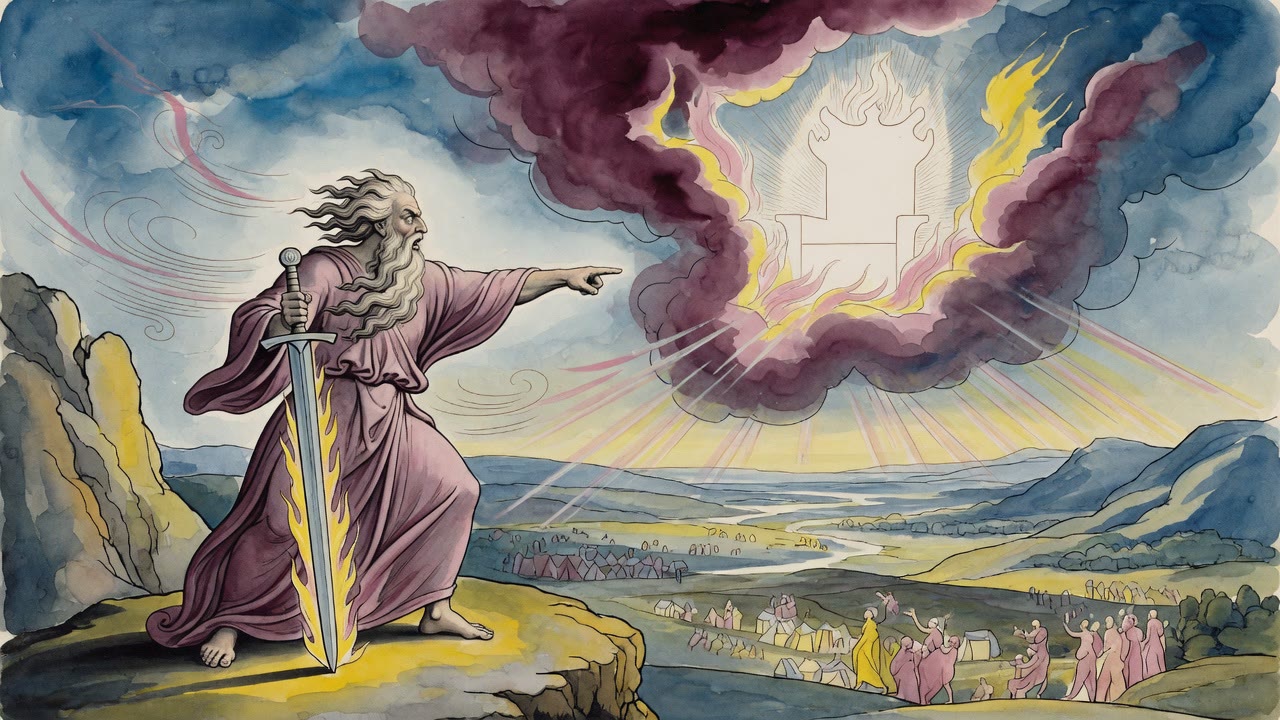
Moses stood where the people could see the lines in his face and the staff he no longer needed for miracles. Beyond the last campfires, Mount Nebo waited. He had walked them out of Egypt, through the sea, past the golden calf, through forty years of dust. Now the road stopped for him alone.
 Click for full size
He did not open with comfort. He opened with the list of every time they had slipped.
The Mountain That Carried Six Names
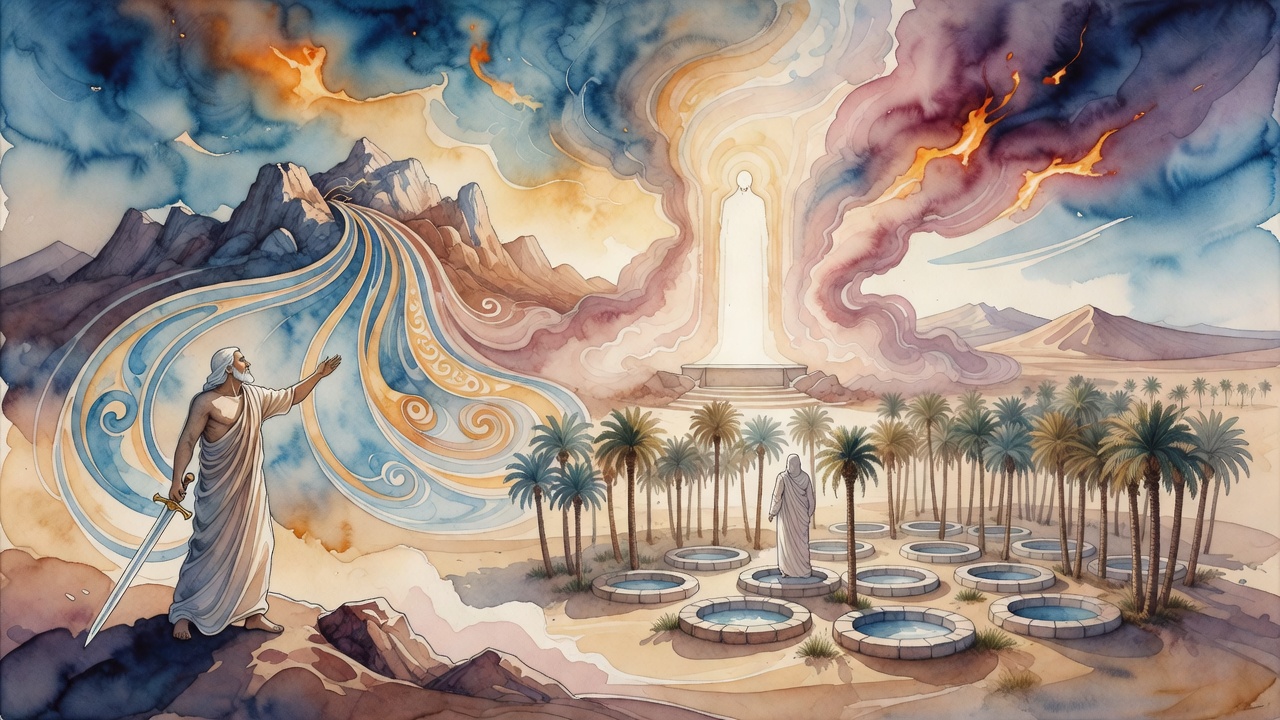
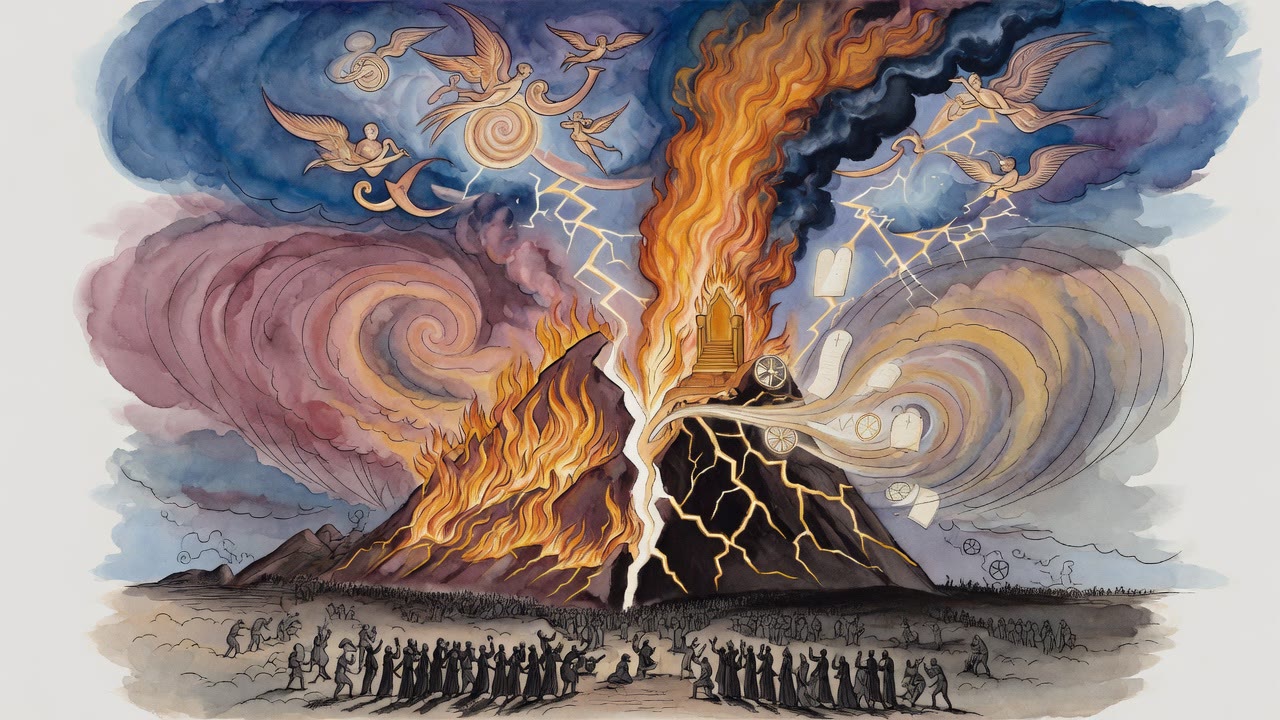
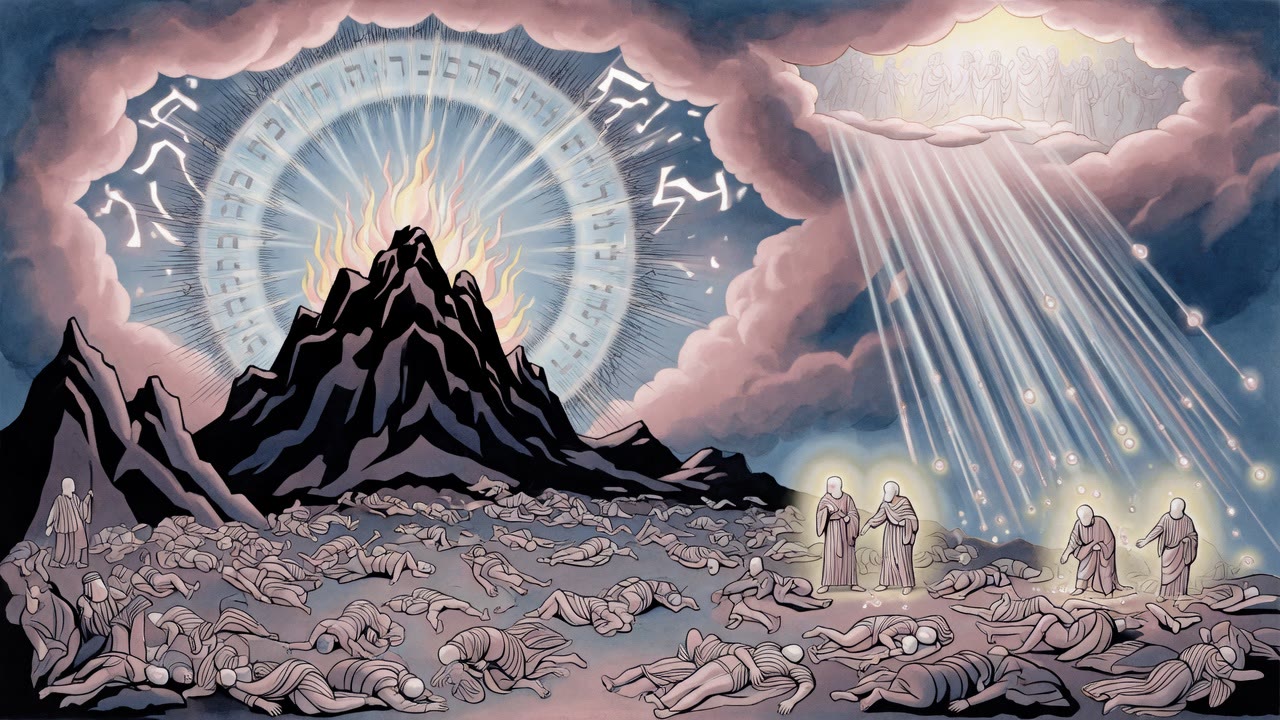
Behind them, far to the south, the ridge still held its names. The tradition that gathered these legends called it first the mountain of God, then Basban, the place where God came down. It was a mountain of humps, because every other peak had been judged unfit, bent and crookbacked like an animal barred from the altar. It was the mountain of abode, the height God desired for dwelling. It was Sinai, where the law cut a line between Israel and the nations. And it was Horeb, which means sword, because there the blade of the law was drawn against the sinners who broke what they had just sworn.
Moses still tasted that sword. He had seen the tablets shatter. He had seen the people dance and then weep. He had climbed and pleaded and come down again with a face that shone so hard they could not look at him without a veil. The mountain had six names. His body carried one job left: to put the covenant back into their mouths before he climbed Nebo and did not return.
The Admonition Heavier Than Fire
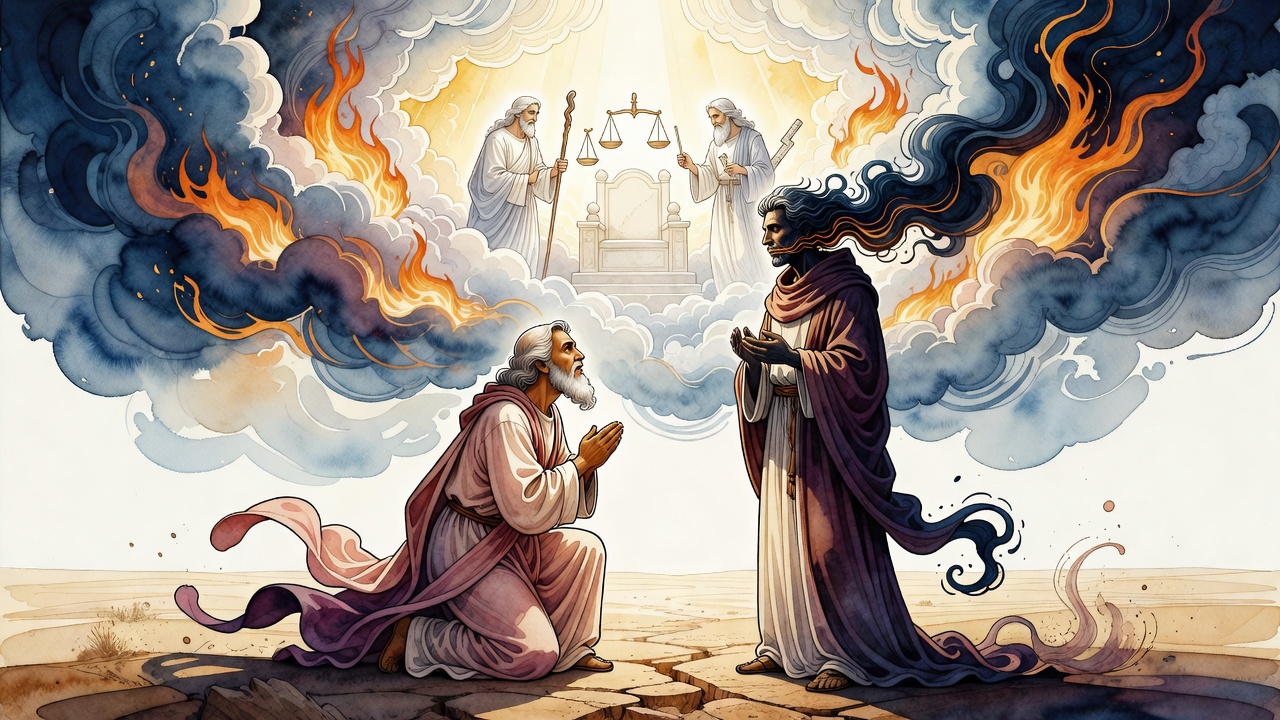
Abraham had spoken last words to Isaac. Isaac had spoken to Jacob. Jacob had gathered his sons and poured a final map of blessing and warning into the tent. Moses took that same form and turned it toward a nation. His speech was tokhehah, admonition, not a soft farewell.
He reminded them of the calf. Fresh from the thunder, they had said they would do all they had heard, then cast a god of gold before the ash of the mountain cooled. The revelation of the Aseret haDibrot, the Ten Commandments, had not held them. Fire and smoke had not held them. The voice that split rock had not held them.
So Moses pressed closer than the mountain had. He named their hunger, their grumbling, their fear of giants, their longing for Egypt's pots. He did not spare his own fatigue. He stood between them and the land he would never enter and spoke as a man who had already been told the door was shut.
The people went quiet in a way they had not gone quiet at Sinai. At Sinai they had shouted and then broken. Here they listened as if the ground under their heels might open if they looked away.
When the Words Sank Deeper Than Sinai
The camp went still in a way the fire on the peak had never finished. The legends say the final admonition worked harder than the first revelation. The calf had come after the commandments. Repentance came after Moses's last rebuke. Hearts that had danced around gold turned back toward the Torah while the man who carried it still stood among them.
God answered that turn. He did not only accept the return. He set a reward on Moses's mouth. Because those words of exhortation had brought Israel to follow Him again, God said He would mark the speech as Moses's own, even though Moses had spoken it under command. The sentences would wear Moses's name. The man barred from the land would keep ownership of the warning that fixed the people for the crossing.
Moses heard that and did not soften. He kept pressing. He knew how thin a vow can become once the speaker is gone. He had buried a generation in the sand. He had watched Miriam die and Aaron climb a mountain he did not walk back down. The sword of Horeb still hung over anyone who treated the covenant as weather that would pass.
The Path Up Nebo Alone
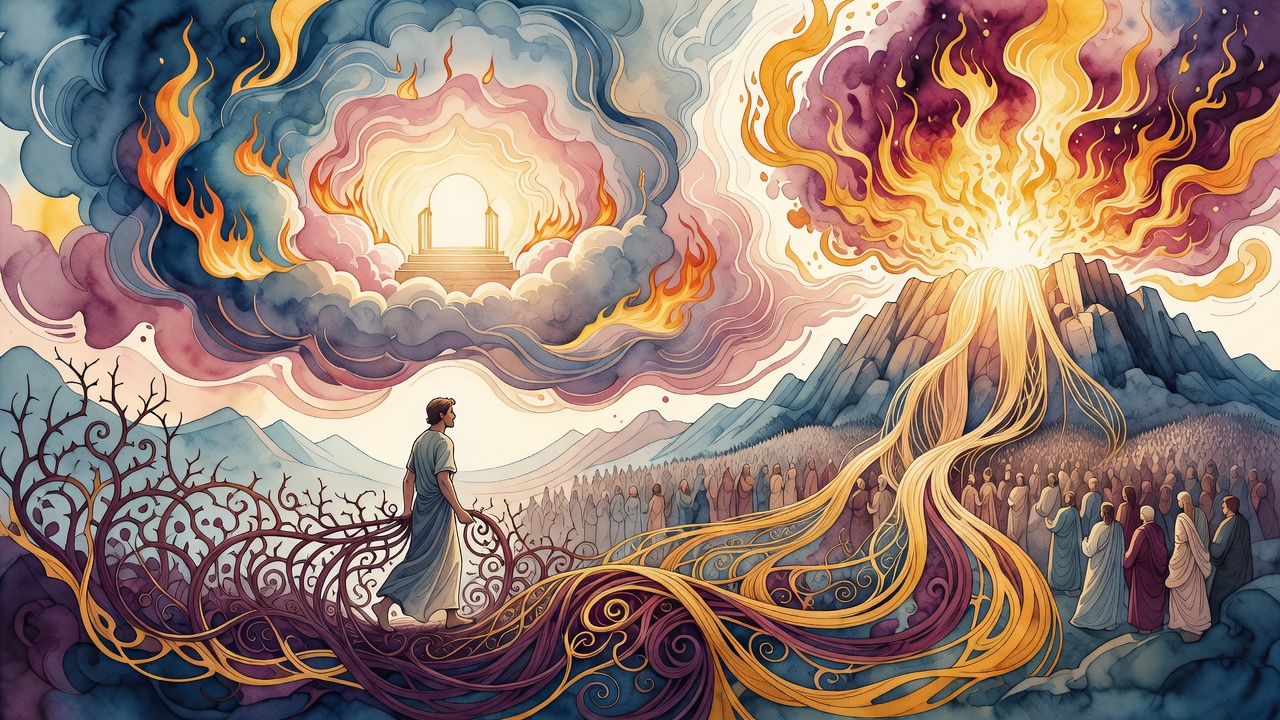
When the speech was spent, the camp did not rush him with gifts. They stood in the shape of a people who finally understood that the voice in the center of their lives was about to climb out of earshot. Moses set his hands where blessing belonged. He looked once toward the ridge that had been mountain of God, mountain of abode, Sinai, Horeb. The sword had done its work twice: once in fire, once in a tired man's last public fury.
Then he turned his face to Nebo. No brother walked at his right. No son of Aaron filled the left. The people who had been held by his final words watched him go, held at last by language that outlived the man who spoke it.
Dust rose under his sandals. The campfires stayed behind. The land he had been shown and denied waited past the summit, green and closed.
← All myths