Six Hundred Thirteen Commands Landed on Every Limb at Sinai
She set the last jar down and checked herself again. This time the blood was there. Rabban Gamliel went white in the doorway.
Table of Contents
The last jar was still in her hands when she felt it.
 Click for full size
The maidservant of Rabban Gamliel had spent the afternoon carrying the household's pure vessels from one house to another. Clay against her palms. Doorways. A second threshold, then a third. Between every jar she stopped and examined herself, because a single unnoticed stain would ruin the lot.
At the last one she found the blood.
She Stopped at Every Jar
Rabban Gamliel went white in the doorway. He had watched her all afternoon. Every load she had set down in the new house sat there waiting to be used, and now he saw the whole stack as lost.
He called her in. "Were you not examining yourself?"
"By your life, my lord, I examined myself at every single jar. It was only at this last one that I found it."
He looked at the one ruined vessel, then at the rest. "Had this woman been lazy," he said, "every pure thing in this house would be unclean right now."
Slack hands, and the roof beams sink. Hands hanging down, and the house drips (Ecclesiastes 10:18).
She had not been lazy. One jar was lost. The rest of the house stood.
Hands That Went Slack at Rephidim
Weeks later, on the road, the same two words turned around and struck a whole camp.
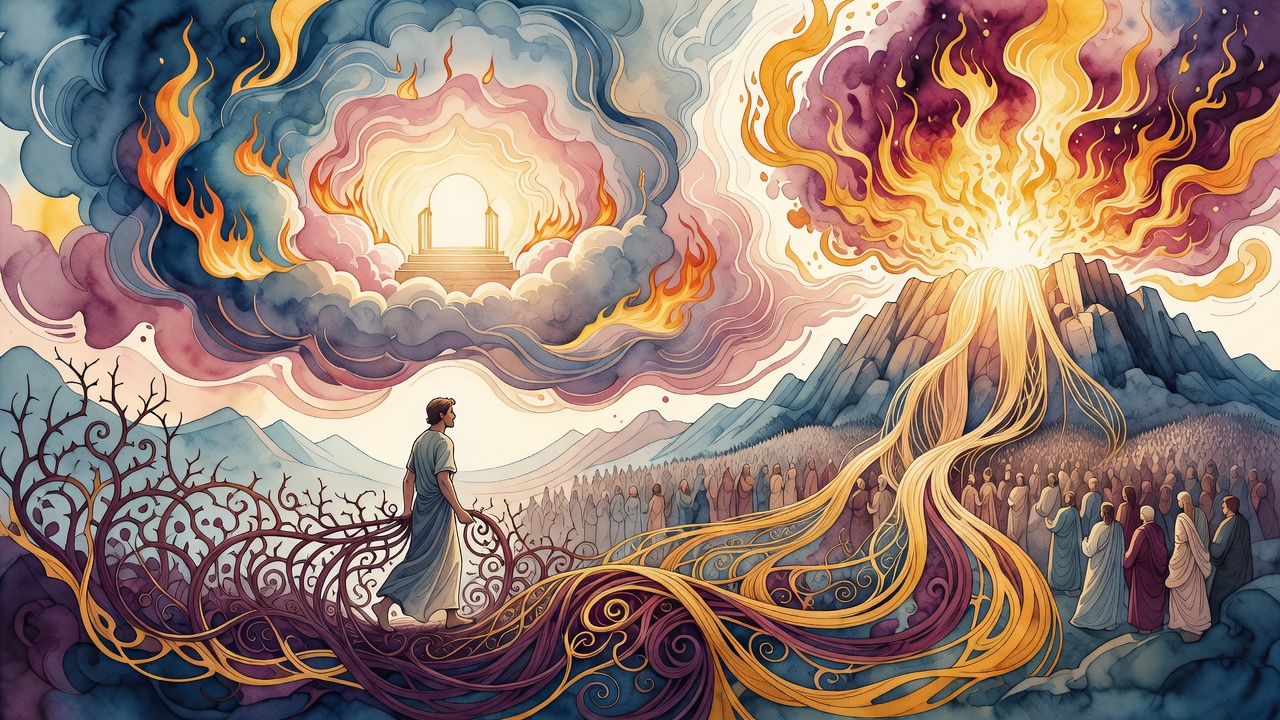
Israel pulled up from Rephidim and came into the wilderness of Sinai (Exodus 19:1). The place kept the name of what their hands had done there. They let them hang. What fell out of them was sin.
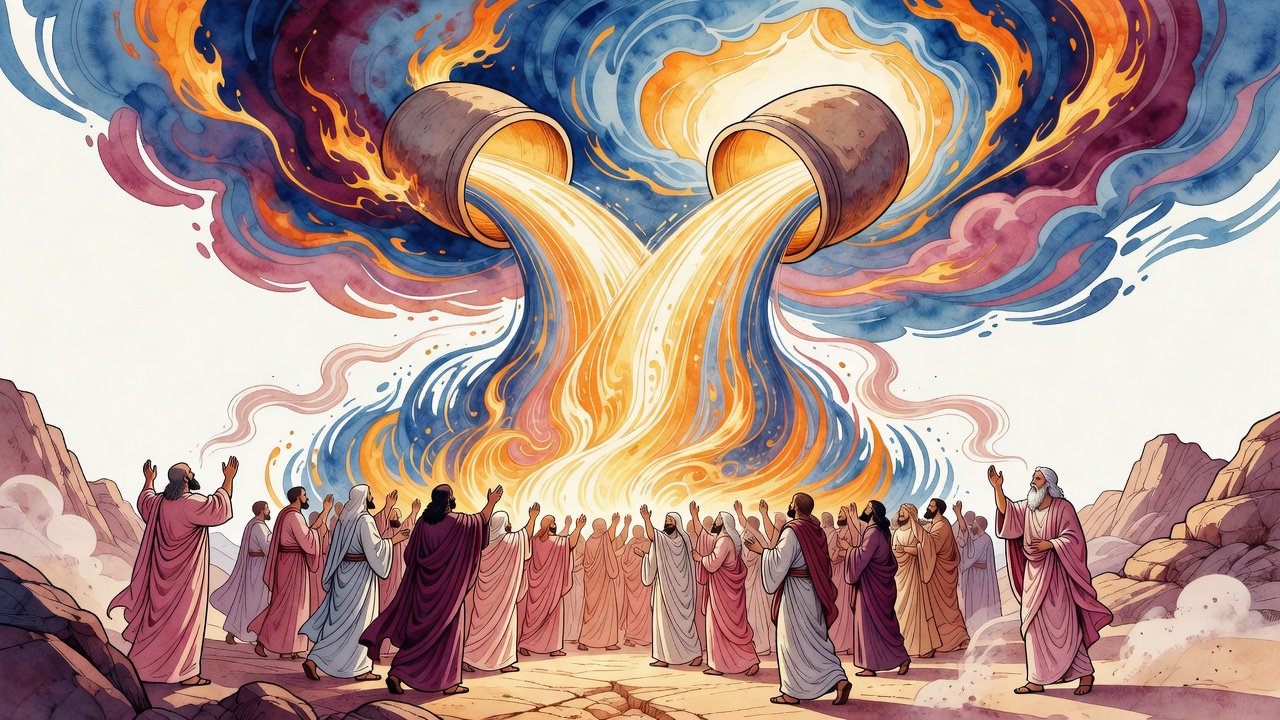
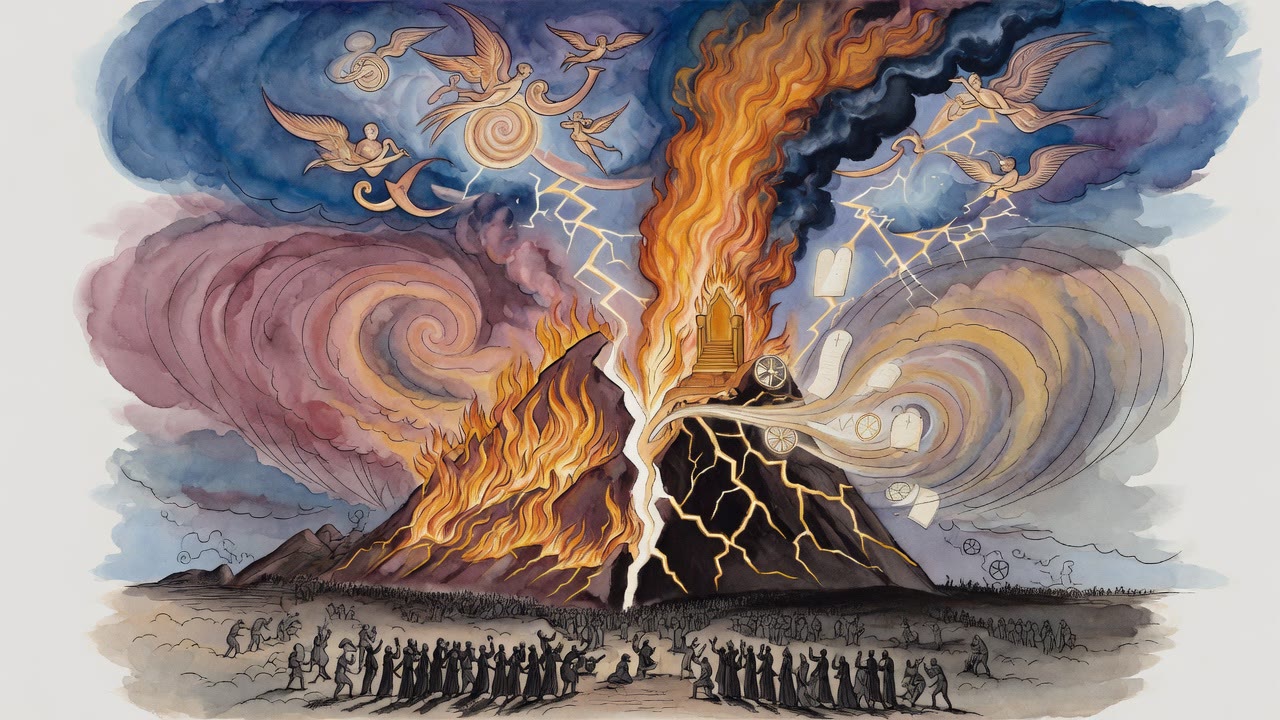
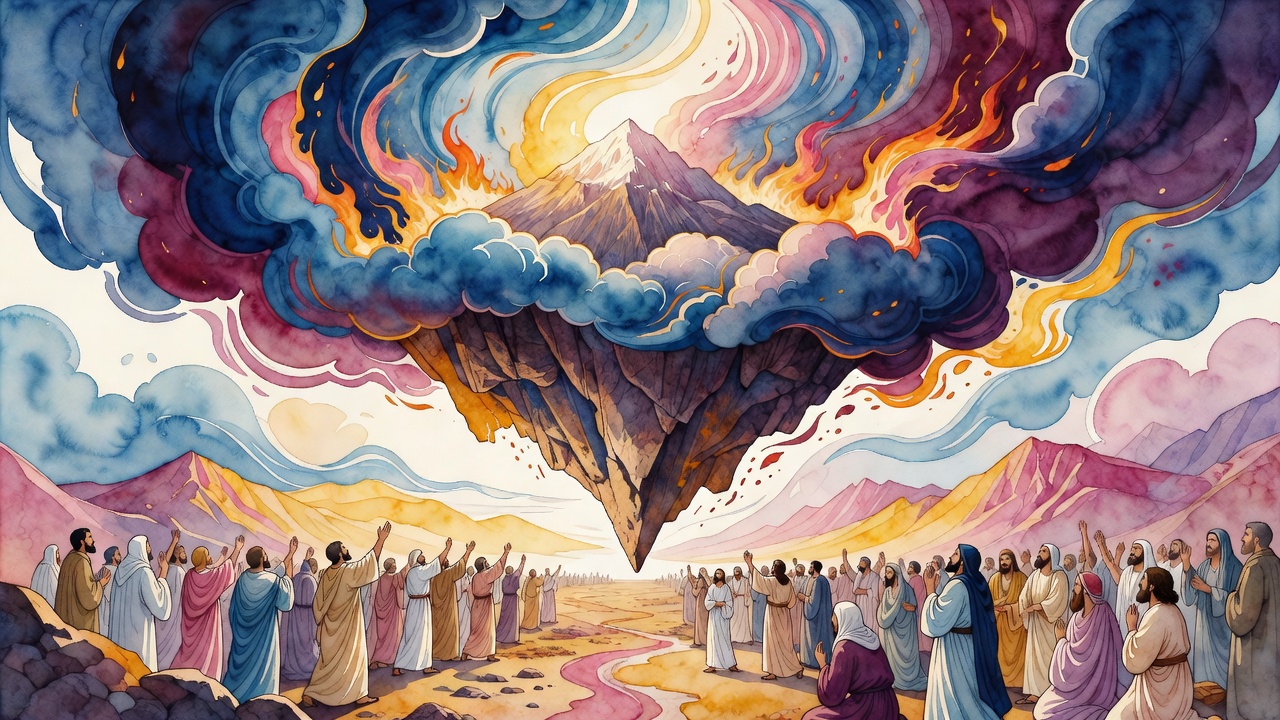
Slack hands, and the roof came down: God came down on Mount Sinai, onto the top of the mountain. Hands hanging low, and the house dripped: the earth shook, the heavens dripped, the clouds poured water.
One house nearly lost every jar in it. One nation stood under a sky that opened. The difference was what the hands had put down, and what they had kept checking.
Adam Walked Out With Six Laws
Rabbi Judah son of Simon began with a line in praise of a woman. Many daughters have done well, and you have gone past all of them.
Adam walked out of the garden carrying six laws, all of them packed inside one sentence God had spoken to him about eating from the trees (Genesis 2:16). The opening verb held idolatry. The Name held blasphemy. The word for God held the courts and the judges. Over the man held bloodshed. Saying held the unions that were not his to take. From every tree of the garden held theft.
Noah stood on wet ground after the flood and received a seventh: no limb torn from a living animal. Abraham was given circumcision. Isaac was the first to receive it on the eighth day. Jacob came away from the ford with a limp and the sinew of the thigh. Judah was given the duty of a man to his dead brother's widow.
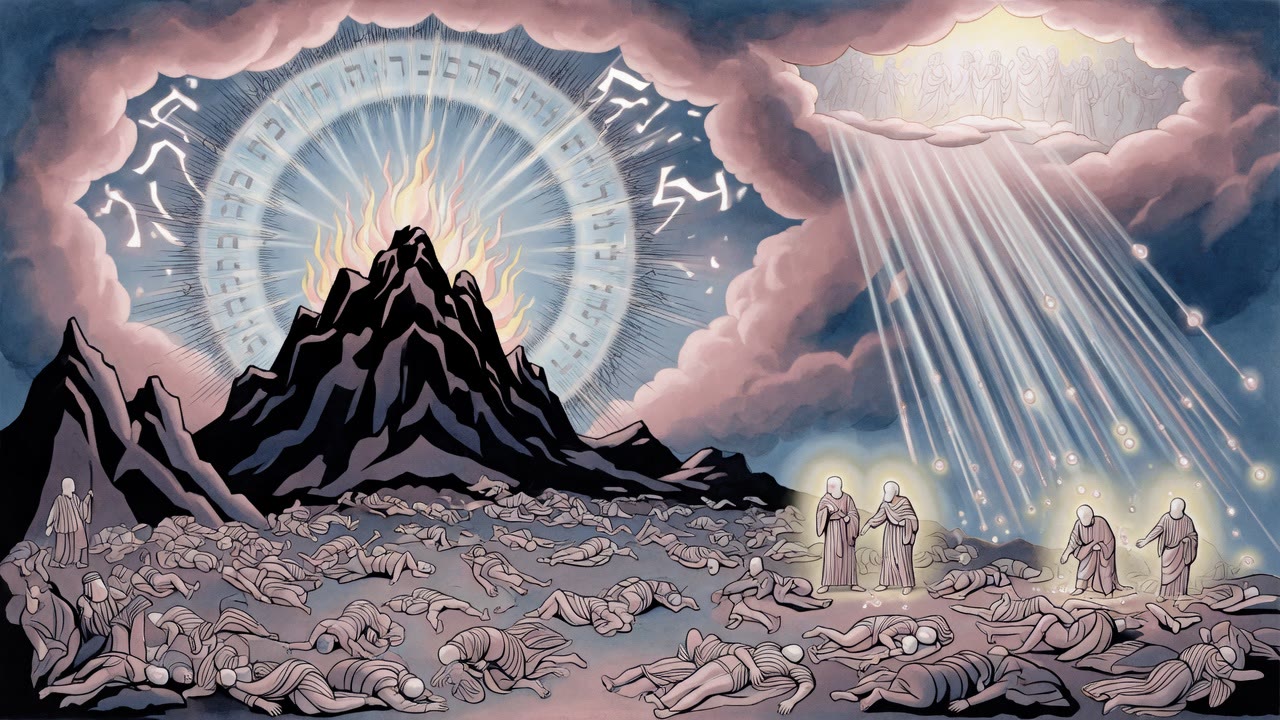
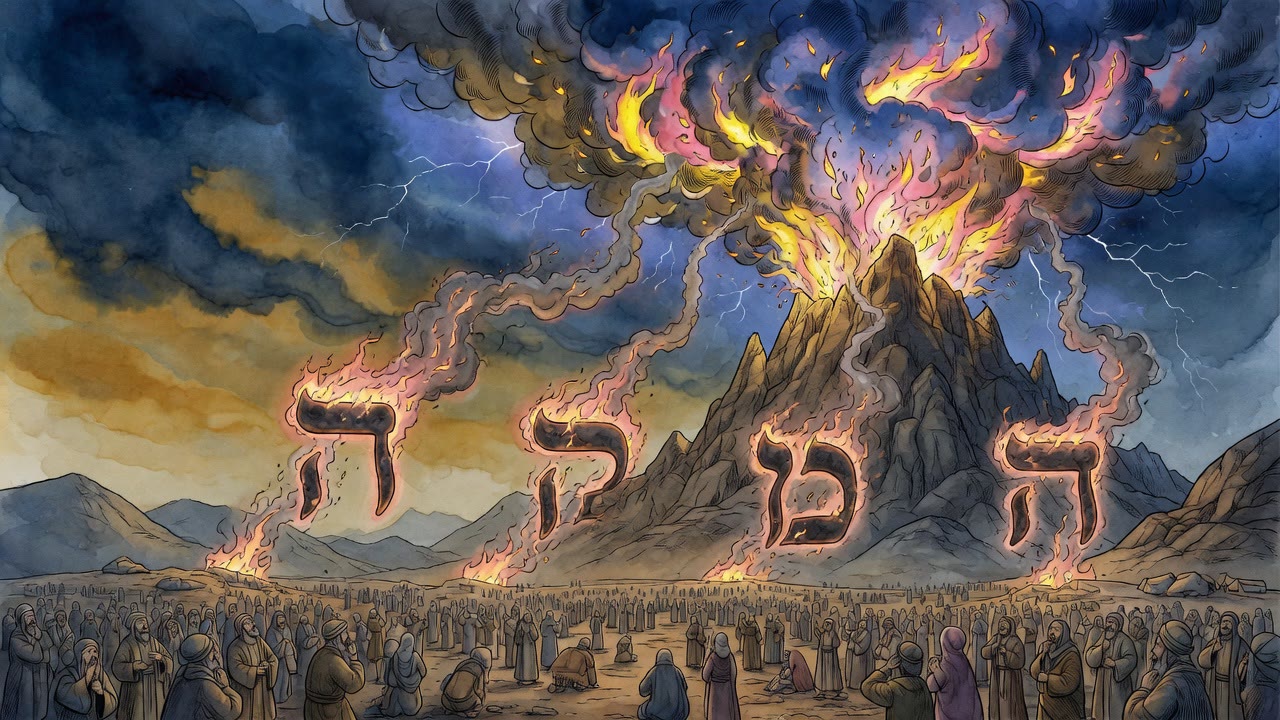
Each of them held one splinter and handed it on. Then six hundred and thirteen landed on one people in one morning.
Every Limb Asked for a Commandment
A man sat up in the dark and his own body started asking.
Two hundred and forty-eight of the commands are things to do, and a person has two hundred and forty-eight limbs, and each limb says to the man it belongs to: please, do this one through me.
Three hundred and sixty-five of them are things not to do, and the sun's year has three hundred and sixty-five days, and each day says to the man walking through it: please, do not commit this one on me.
So he wakes already being asked, from inside his wrists and from the calendar over his head.
They said the ball of Adam's heel used to dim the disk of the sun, and if that was the heel, nobody wanted to guess about his face. A man who makes two platters, one for himself and one for a servant, makes his own the beautiful one. Adam was made for the use of the Holy One. The sun was made for everybody else.
Three Commands Waited at the Border
Rabbi Judah son of Ilai, handed down through Rabbi Azariah and Rabbi Judah son of Simon, counted three more that were waiting at the edge of the land and could not be given anywhere else. Appoint a king. Build the Chosen House. Blot out the memory of Amalek.
None of the three works in sand. A king needs a country. A sanctuary needs a place to stand. Amalek was already there, on the far side of the border, waiting for a people who had hands again.
God said to Israel: my children, read this passage out loud every year, and I will credit it to you as though you were standing in front of Mount Sinai taking the Torah again.
When. In the third month after they came out of Egypt.
The maidservant had checked at every jar. The nation that let its hands hang received a law for every limb, so the house would not drip again.
← All myths