Samael Stopped Eleazar's Mouth for Moses
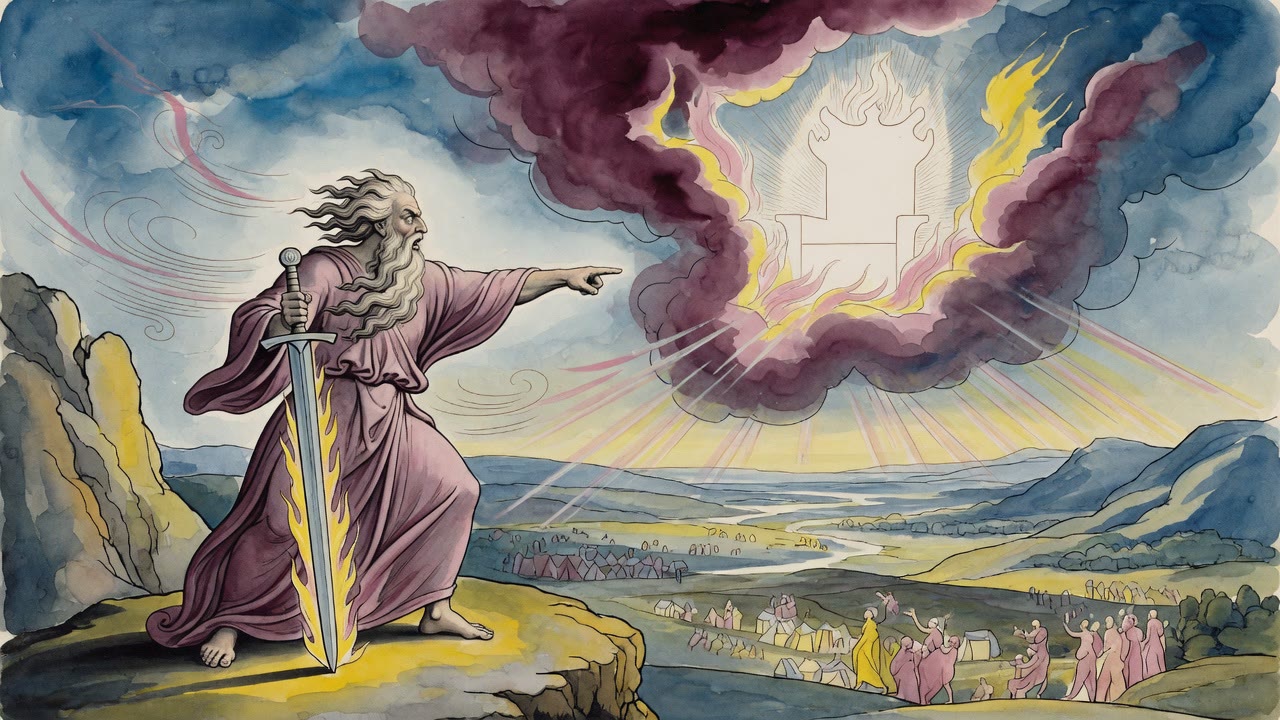
Eleazar opened his mouth to pray his uncle into the land. The Accuser put a hand over the priest's lips and left them shut.
Table of Contents
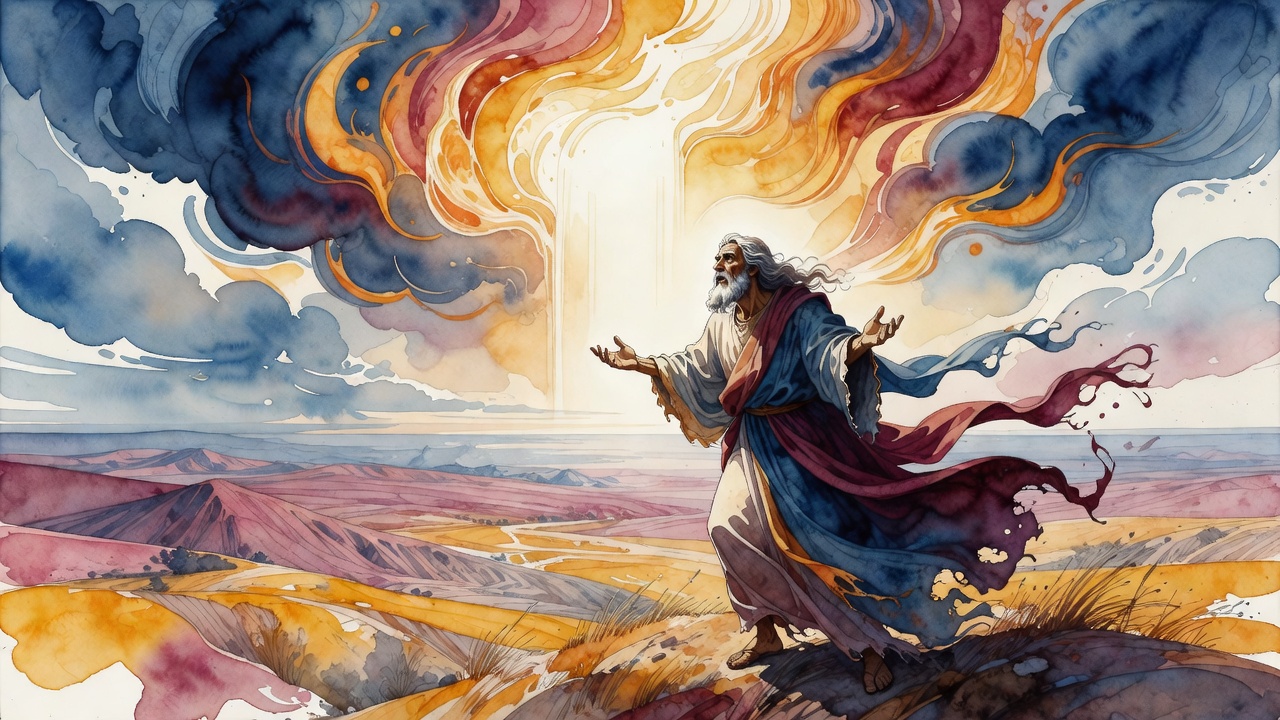
Moses knew the decree before he climbed the last argument. The land waited on the far side of a river he would not cross. He went to Eleazar, son of Aaron, and did not speak like a general. He spoke like a man calling in a debt of mercy.
 Click for full size
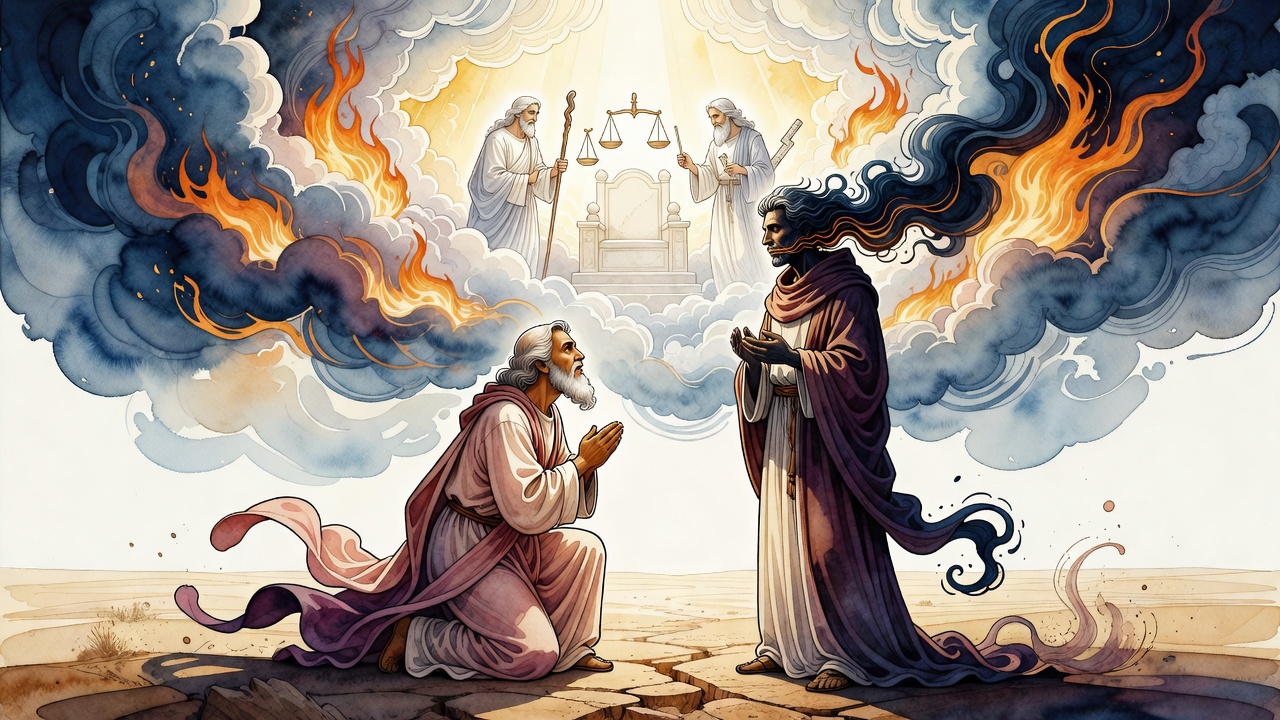
"O my son," Moses said, "be mindful of the days when God was angry with your father on account of the Golden Calf, and I saved him through my prayer. Pray now for me. Perhaps God will take pity and let me enter the land of Israel."
The Prayer That Died in the Throat
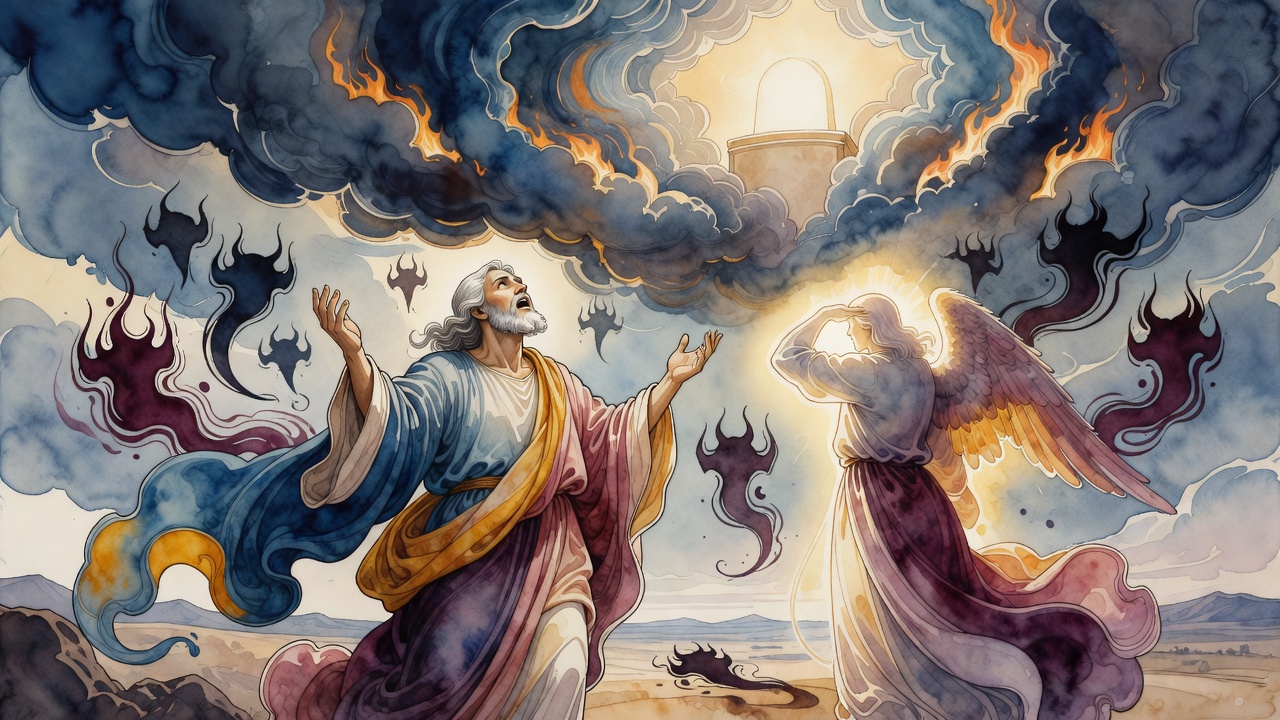
Eleazar opened his mouth. The words were forming. Samael appeared and stopped it. The Accuser did not arrive as a rebel. He arrived as a prosecutor who loved a verdict already written.
"How can you think of disregarding God's command?" the angel said.
Eleazar's lips failed. The prayer died in the throat that had been trained to bless Israel. Heaven can close a mouth as tightly as it opens a sea.
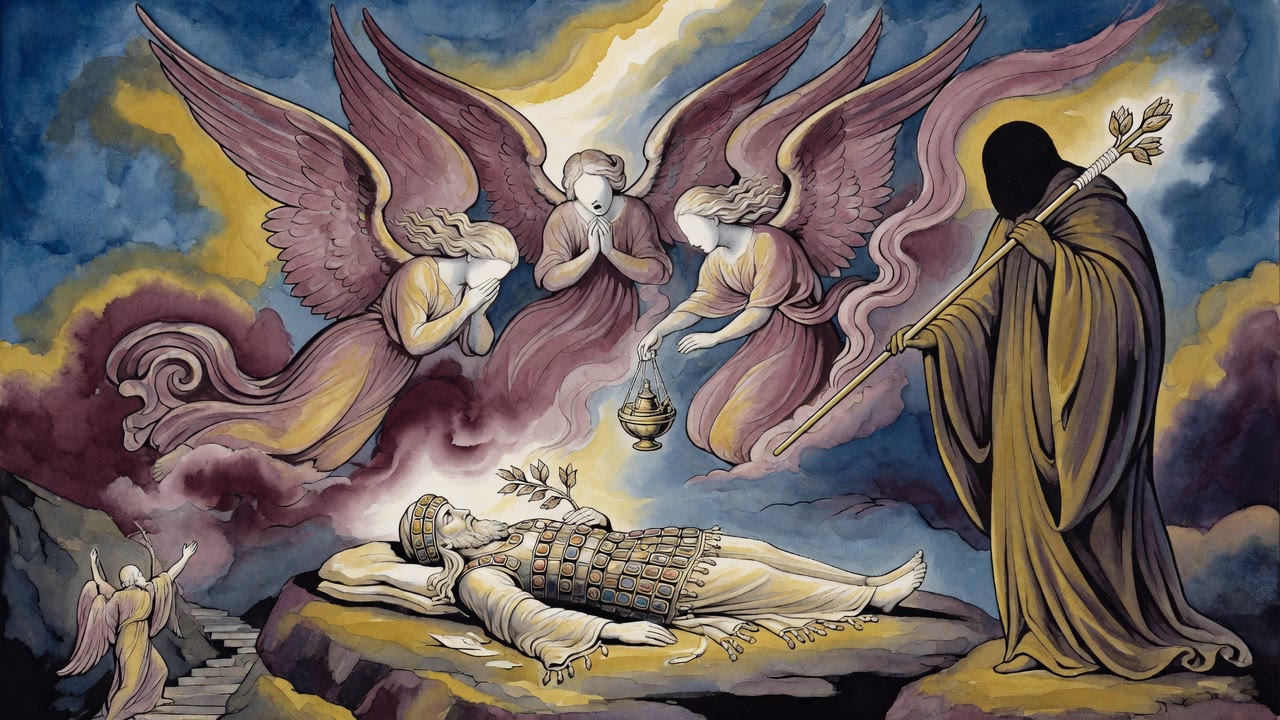
He went back to Moses and reported that he could not pray for him. The man who had stood between Aaron and destruction now stood without an intercessor of his own blood. Moses heard the report without theater. He had argued with God before, bargained for cities, demanded to see glory. This time the road ended in a nephew's sealed lips.
The Last Rebuke Hit Harder Than Sinai
Before the end, Moses still had one weapon that did not require a petition. He called Israel to account the way Abraham had spoken to Isaac, Isaac to Jacob, Jacob to his sons. He did not leave the world without a reckoning.
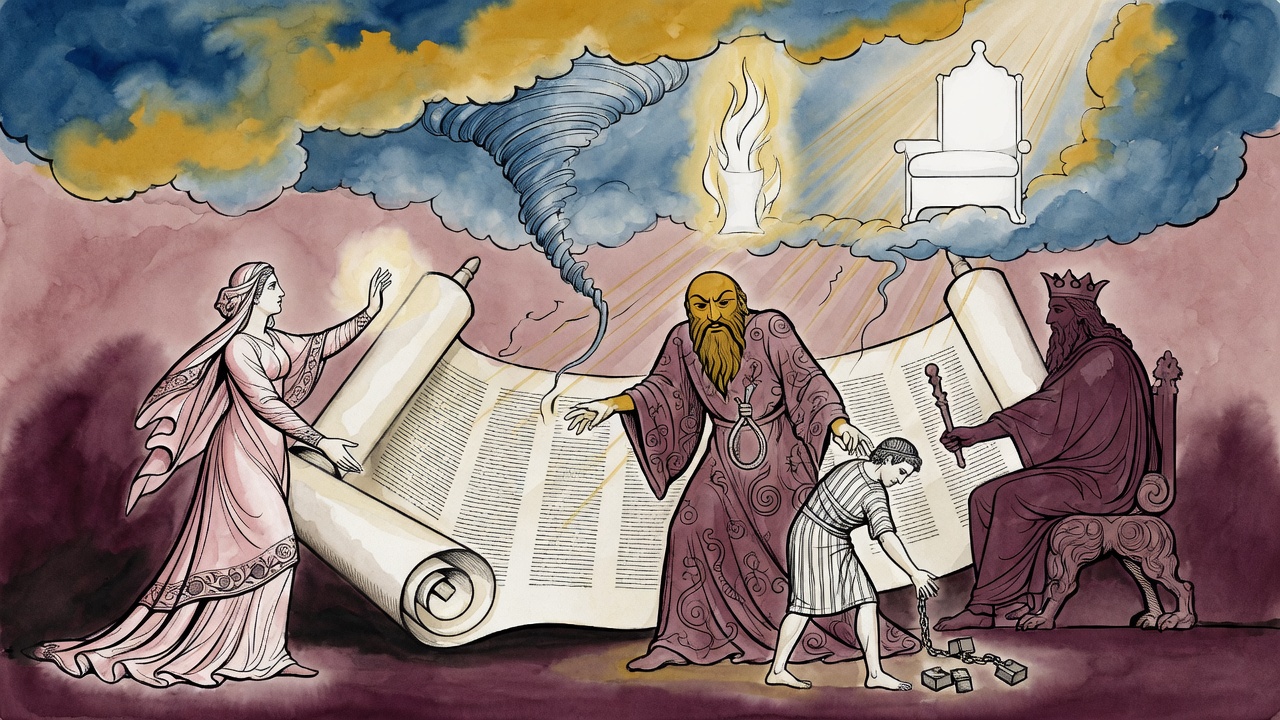
The speech of admonition struck harder than the revelation of the Decalogue at Sinai. At Sinai Israel had said, "We shall do according as we have heard," and then danced around a calf of gold. Moses' last words restored them to God and to Torah with a force the first thunder had not kept.
God said that as a reward for that exhortation, the words would be designated as Moses' own, even though he spoke them only in execution of the divine command. The dying teacher was allowed to own the rebuke that saved his people.
The camp listened differently when the speaker was a man walking toward his own grave. Rebuke from a survivor of forty years of their failures lands like rain on cracked ground. They did not build another calf that day.
Jacob Claimed the Angel
"I am greater than you," Jacob said in the heights where the righteous measure one another, "for I wrestled with the angel and conquered him."
Moses answered, "You wrestled with the angel upon your territory. I mounted to the angels in their own territory, and still they feared me."
"I am greater than you," Joseph said, "for my master's wife could not tempt me to sin."
Moses replied that Joseph restrained himself from a strange woman, while he abstained even from his own wife so he could stand ready before the Presence. The contest was a ranking of costs. Who paid more to stay near the fire?
Jacob's hip still remembered the blow. Joseph's locked chamber still remembered the refused hand. Moses' distance from ordinary marriage and ordinary death sat on the same ledger. Heaven is not polite about the tally.
The Brass Serpent and the Flight of Angels
Adam died because the serpent seduced him. Moses fashioned a serpent of brass, and all who looked upon it after a snakebite recovered. Noah offered a sacrifice God accepted, yet Noah was not admitted to the divine presence. When Moses offered sacrifice in Israel's name, God promised to dwell with them twice daily.
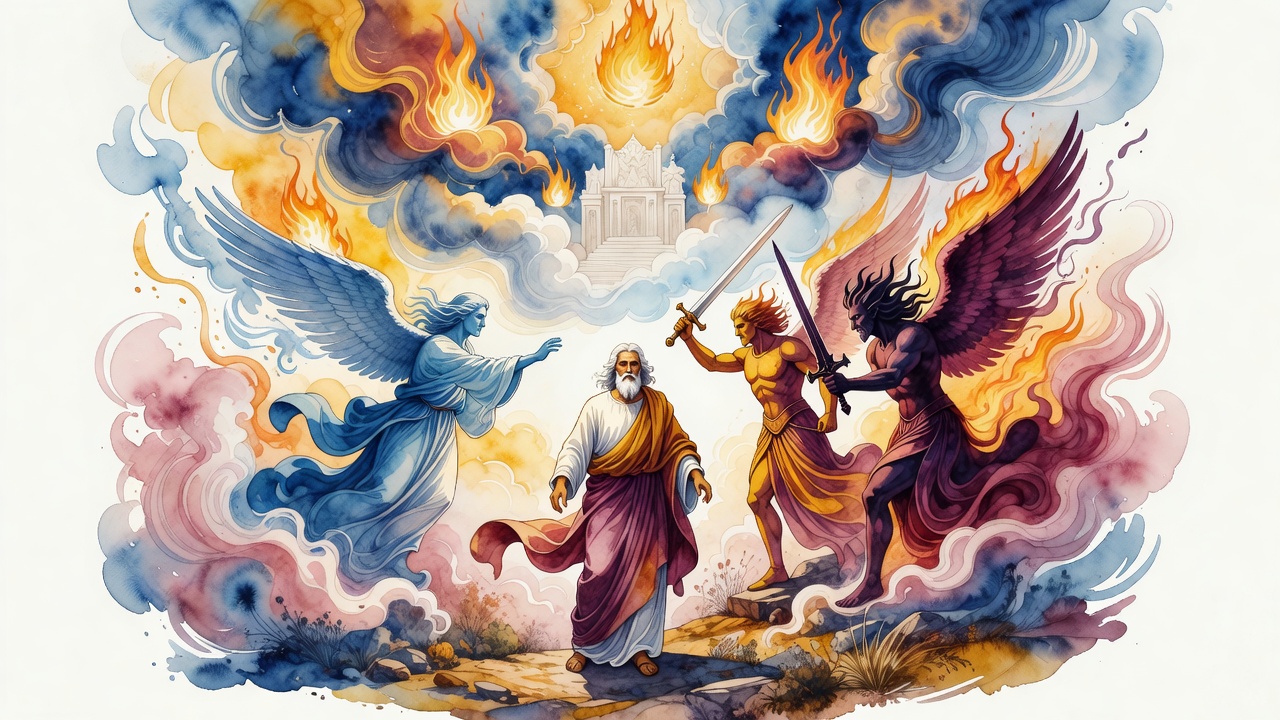
Abraham's fearful question about inheriting the land had opened a road toward bondage. Moses opened the road out. Jacob conquered an angel and limped forever. Moses entered heaven and the angels fled at the sight of him.
The same man who could not pry open Eleazar's sealed mouth still outranked the patriarchs in the ledgers heaven keeps. The land refused him. The angels did not.
Samael won the small war at the edge of prayer. Moses won the long war of stature. Israel kept both memories: the blocked petition, and the last rebuke that brought them home to the covenant without him.
← All myths