Parshat Vaetchanan5 min read

Moses Begs to Enter the Land as a Corpse, and God Refuses Him

From the ridge Moses sees the whole land and the final day. He bargains to enter as a commoner or as a corpse. Heaven answers no.

Curated by Arthur · Told by Maggid ·
Table of Contents
  1. The Ridge and the Land He Can Almost Touch
  2. Commoner, Corpse, King, None of Them
  3. The Final Day Unfolds Across the Sea
  4. Eyes That Will Not Dim
  5. The Promise Holds Without His Footprint
Moses Begs to Enter the Land as a Corpse, and God Refuses Him Click for full size

The Ridge and the Land He Can Almost Touch

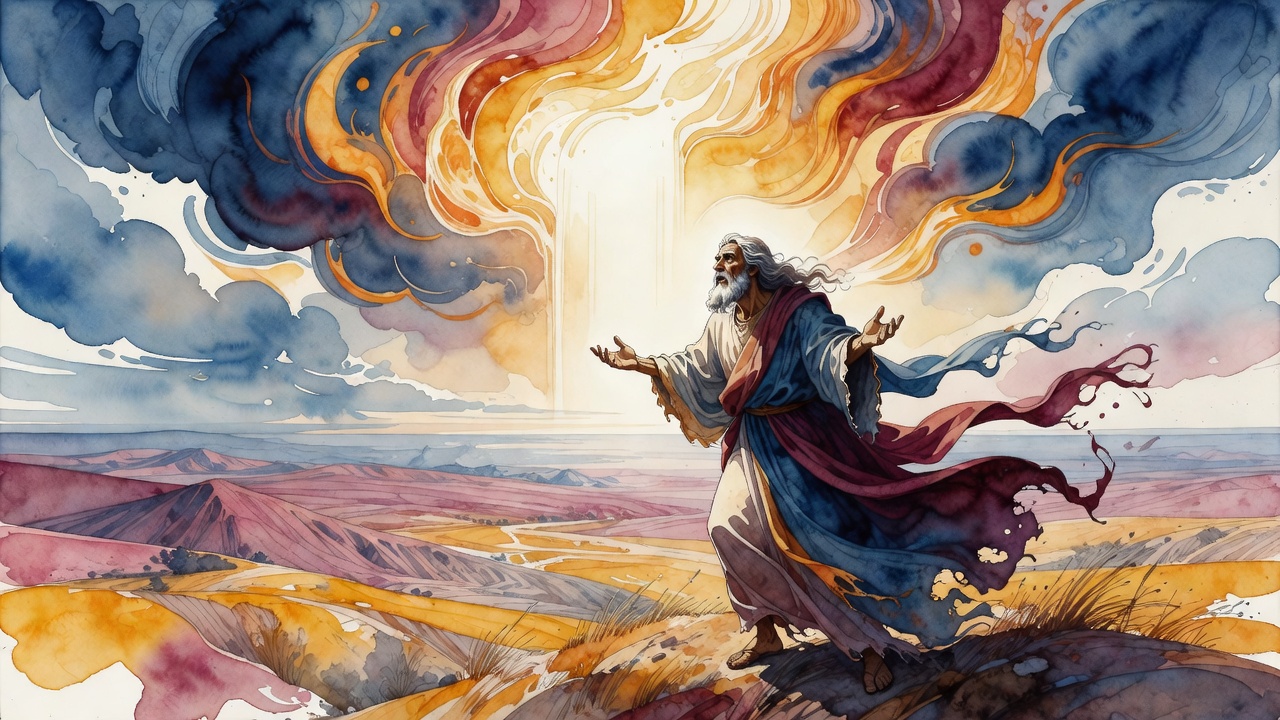
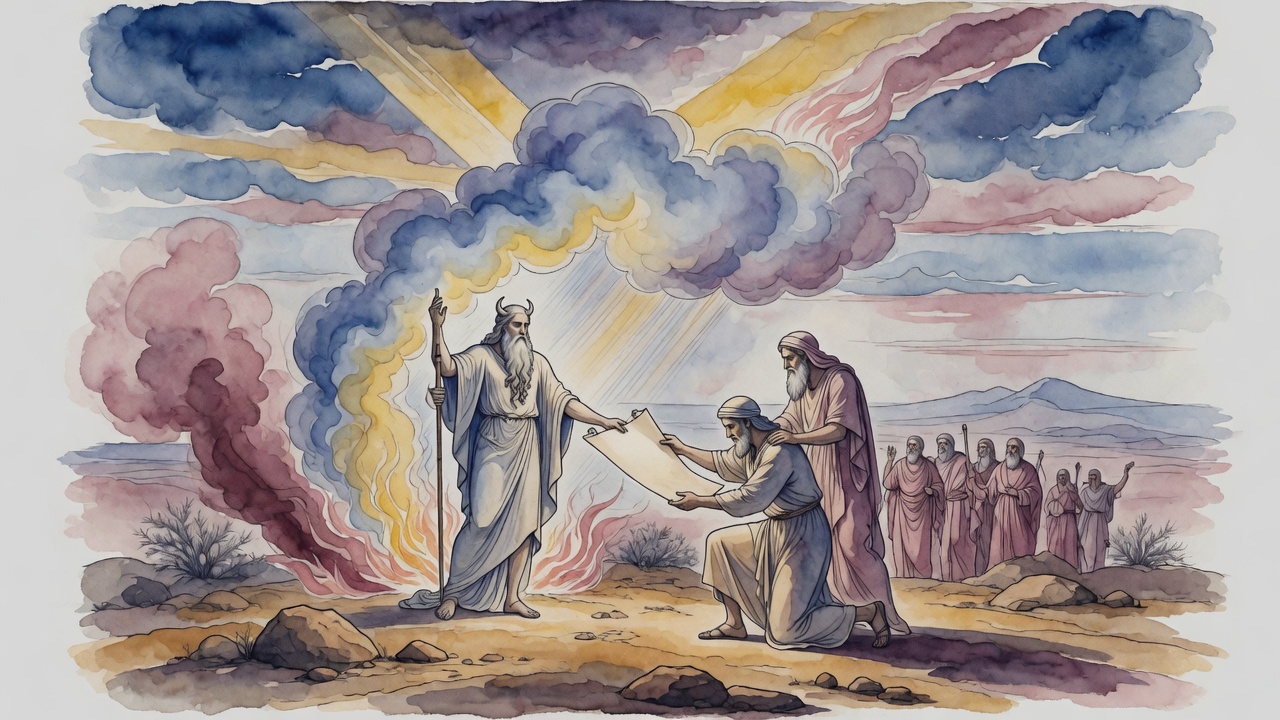
Moses stands on the last high ground east of the river and the land fills his eyes the way water fills a dry mouth. Hills layered in late light. Valleys soft with green. The western sea a hard line at the edge of the world. He can almost feel the dust of it on his tongue. For forty years he has named this soil in the dark of the tent. He has carried this people out of brick and out of the sea, and now the promise sits one breath away.

The staff that once struck rock hangs quiet at his side. His knees remember every climb. His mouth remembers every plea he made for a stubborn nation. None of that buys a single footstep across the line.

Then the voice he has known since the bush speaks without softness.

"This is the land that I swore to Abraham, Isaac, and Jacob. To the fathers I swore it with an oath. To you I show it before your eyes, and there you shall not pass."

The show is not a gift. It is a sentence with a window.

Commoner, Corpse, King, None of Them

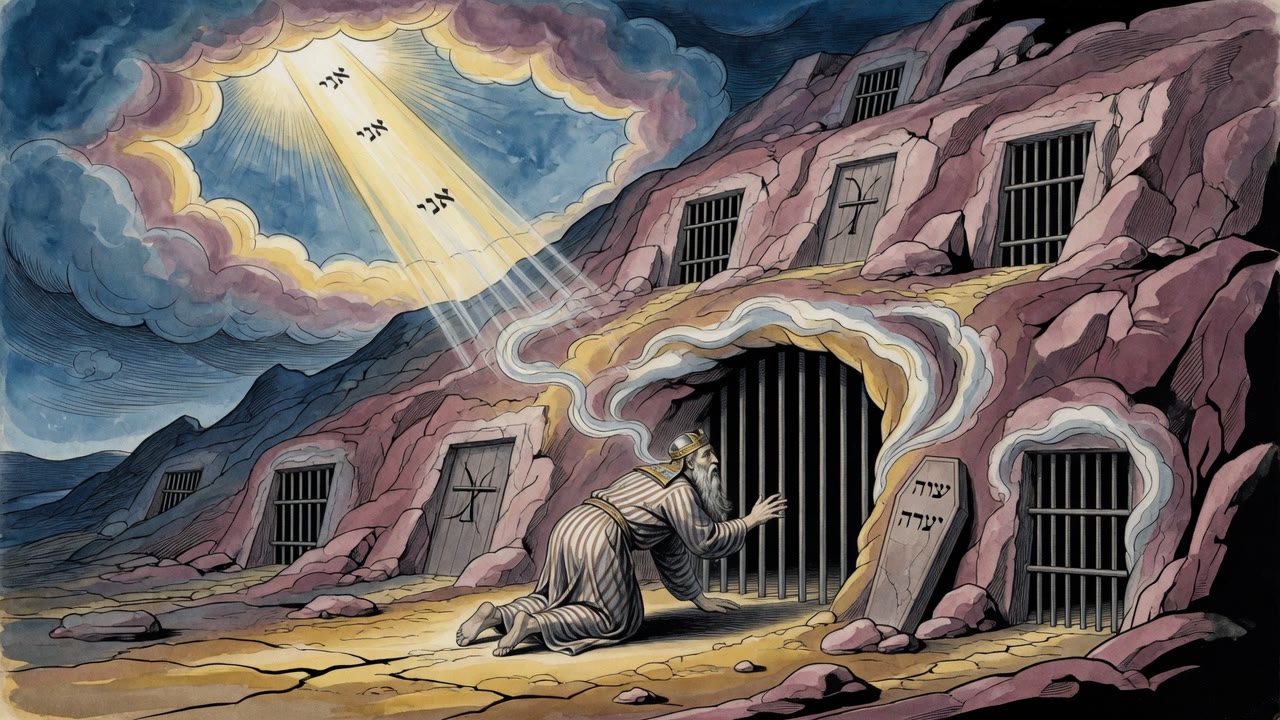
Moses does not open with the rock. He bargains the threshold. "If I cannot enter as a king," he says, "let me enter as a commoner." No crown. No staff. No seat at the gate of judgment. Only a foot on the dirt he has described to children who never saw Egypt.

The answer comes back absolute. Not as a king. Not as a commoner. He shall not come.

He presses harder, voice rough with the dust of the ridge. "If I cannot enter alive, let me enter dead." Even as bones. Even as a body carried by other hands. Even if the nation must bury him inside the promise instead of on this foreign height. Let the grave be in the land if the life cannot be.

"And there you shall not pass." Alive or dead. The decree has no side door.

Only then does the rock rise in his mind. The day he was told to speak and struck instead. Water came anyway, cold and plentiful, and the people drank, and the cost waited like a debt with no due date until this mountain. One hard blow where a soft word was ordered. The land he can see will not accept his corpse as payment.

The Final Day Unfolds Across the Sea

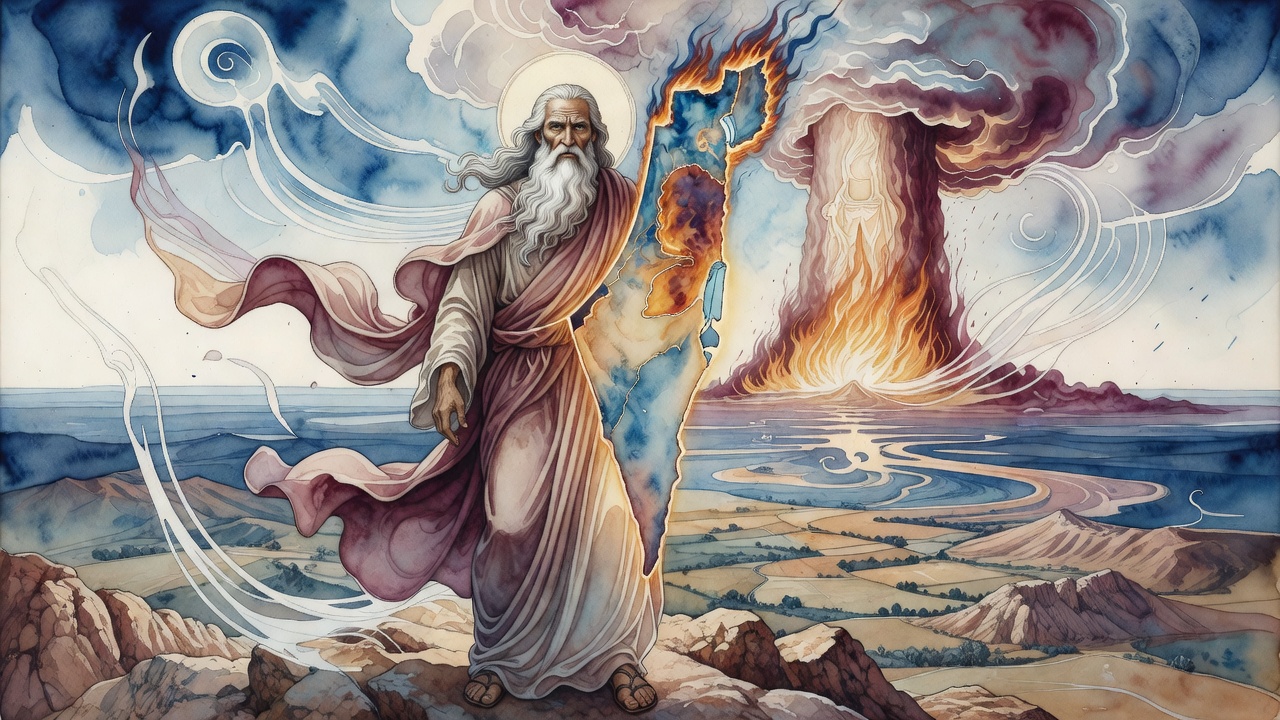
God does not leave him with only the refusal. The view deepens until geography becomes time. What Scripture names the western sea can also be heard as the final day, and Moses is shown more than borders. He is shown the stretch from the first morning of creation to the day of resurrection. Peace folds over the fields, then oppression. Quiet years, then boots. Harvests, then famine. The whole ledger of the land moves past him while his own feet stay fixed on stone that will never be home.

The southland opens as more than a compass point. He sees the cave of Machpelah, the dark mouth where Abraham and Sarah, Isaac and Rebecca, Jacob and Leah wait under rock. He sees oppressors later trampling ground that once lay quiet around that cave. He is forced to know the roots of the people and the future of the soil in one long looking.

He is the man who will not cross, and the man who is made to know exactly what he is missing. The vision is larger than the bargain. That does not soften the bargain.

Eyes That Will Not Dim

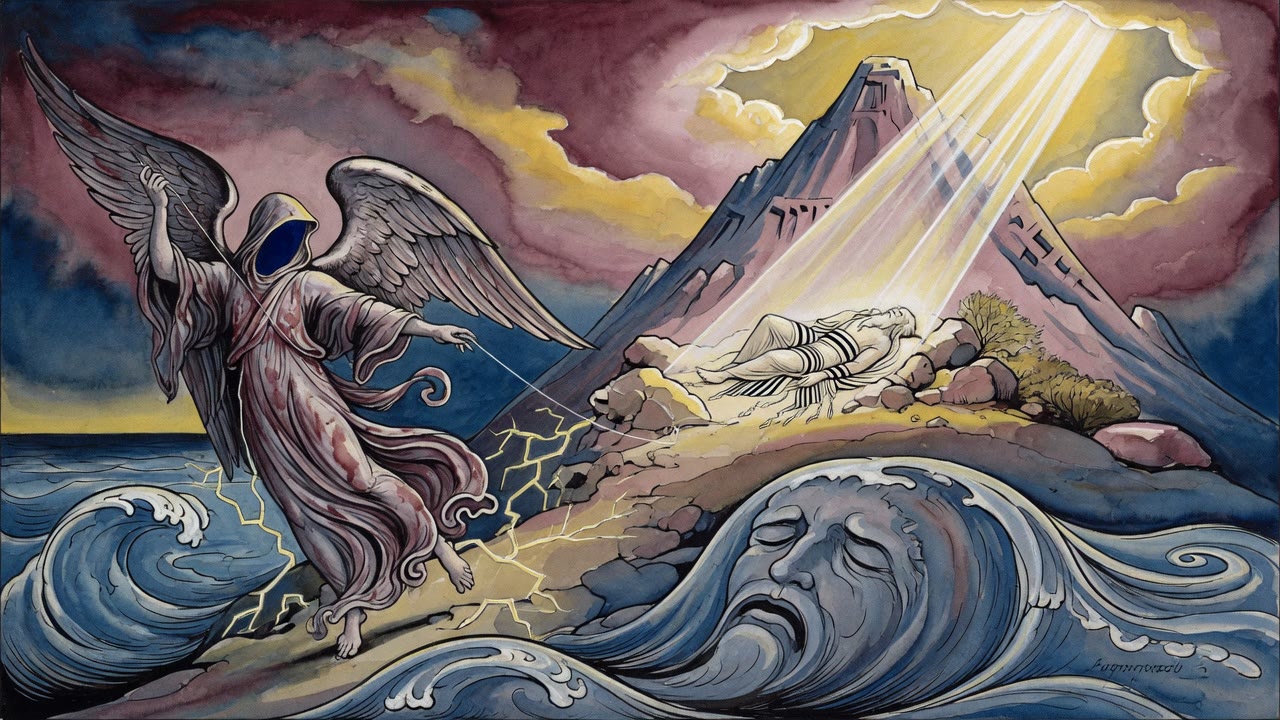
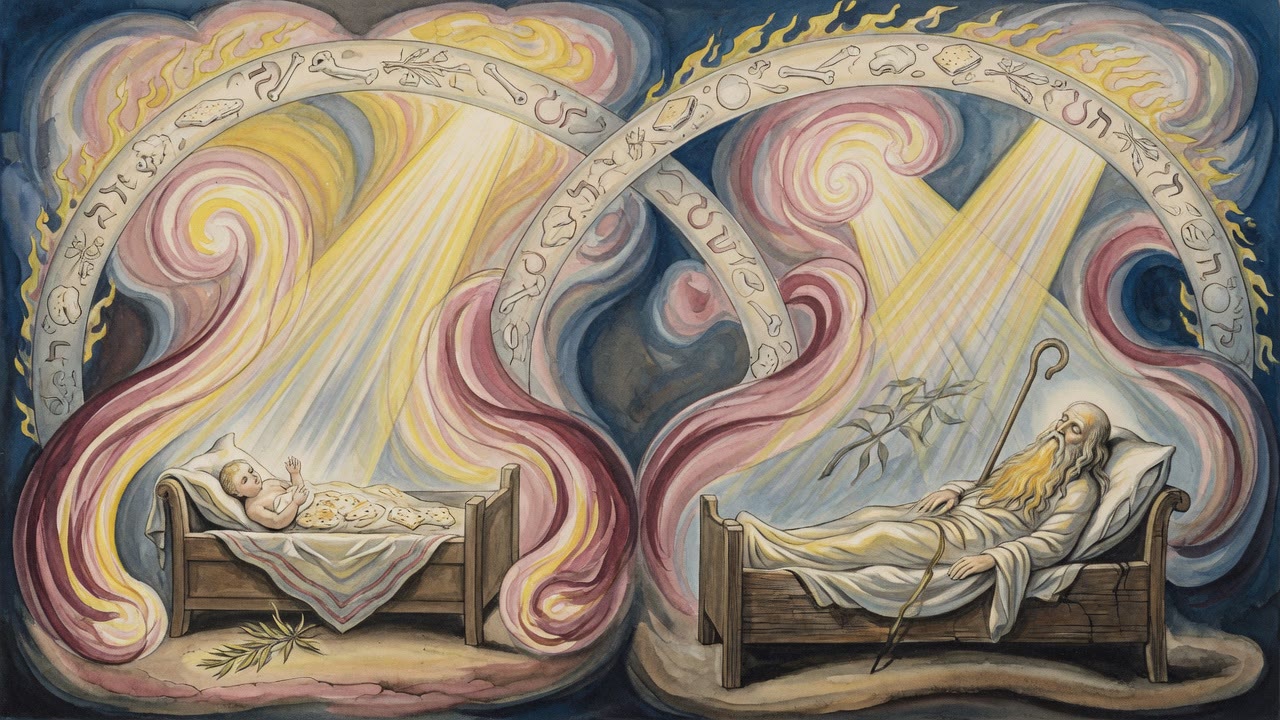
When death finally comes for him, it does not come the way it comes for other flesh. His eye does not dim. The light that watched the bush, the sea, the tablets, and the plague of serpents stays clear in the sockets. Moisture does not leave him the way moisture leaves the dead. One reading says it does not depart even now, as if touch could still raise dew from that sealed body, a vitality that refuses ordinary corruption.

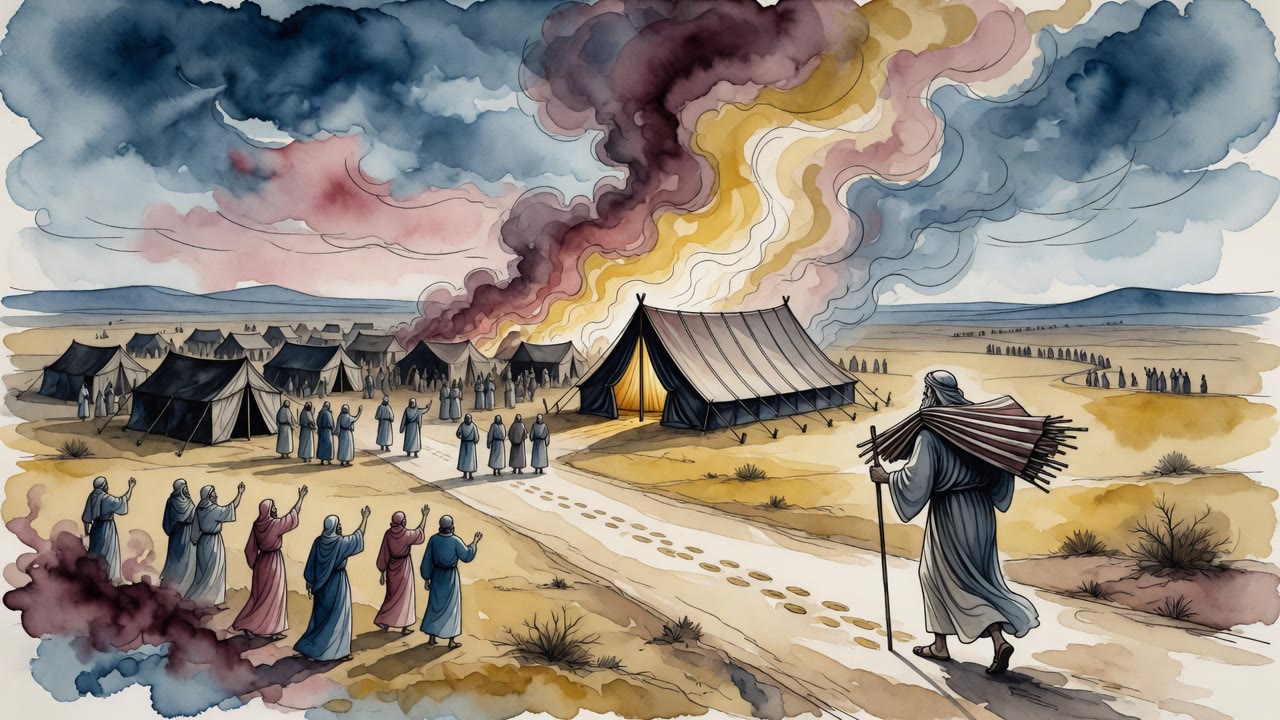
Israel weeps in the plains of Moab. Days of weeping. Days of mourning. The structure of grief is counted carefully because even the nation's loss must keep form. Two days for weeping. Three for mourning. The man who bargained for a corpse's entry is buried where only God knows the place, eyes still bright, land still on the far side of the line he was not allowed to erase.

Joshua will walk where Moses may not. The people will carry the song and the law that Moses pressed into their ears on the last days. Heaven and earth will remember the covenant he sealed before he died. Houses and vines will rise on soil he only saw from a height.

The Promise Holds Without His Footprint

On the ridge the bargain is finished. The greatest prophet in Israel asked for the least possible entry and was refused. He asked to be small. He asked to be dead. He asked for anything that still counted as arrival. Heaven kept the window open for his eyes and closed for his feet.

The vision remains. The border remains. The eyes do not dim. Somewhere west of the river the land keeps its oath to the fathers without needing the footprint of the man who loved it most from the wrong side of the water.


← All myths
From the tradition

Sources

3 sources

The texts behind this telling. Some cards carry a translation of the source; others are our own retelling of it, and each card says which. Every card links out to the original.

Sifrei Devarim 357:27Sifrei Devarim

Retold in our words. Read the original at the link below.Sifrei by Rabbi Shraga Silverstein · CC-BY

You can almost feel his anticipation, his heart swelling with hope.

Then… the hammer drops.

"This is the land that I swore to Abraham, Isaac, and Jacob," God tells Moses, as we read in Sifrei Devarim (Deuteronomy, Ibid. 4). "To the fathers I swore it with an oath; to you I show it before your eyes." He can see it, he can almost touch it, but then comes the devastating blow: "and there you shall not pass."

Why? Because of a moment of disobedience, a moment where Moses struck the rock instead of speaking to it to bring forth water (Numbers 20:1-13). A seemingly small infraction with monumental consequences.

The text then intensifies the tragedy. Moses, ever the advocate for his people, pleads his case. He bargains with the Almighty. "If I cannot enter as a king," Moses argues, "let me enter as a commoner." He just wants to set foot on the soil he’s yearned for. But God’s decree is absolute: "and there you shall not come" (at all!).

Desperate, Moses persists. "If I cannot enter alive," he begs, "let me enter dead." Even in death, he wants to be a part of this land. But the answer remains the same, unyielding and heartbreaking: "and there you shall not pass", not as a king and not as a commoner, neither alive nor dead.

It’s a stark reminder of the weight of our actions, the finality of certain decisions. The Torah doesn't shy away from showing us even the greatest figures in Jewish history facing limitations, mortality, and the consequences of their choices.

What does this passage leave us with? Perhaps it's a call to appreciate the journeys we undertake, even if we don't reach the destination exactly as we envisioned. Moses never entered the land, but his legacy lives on, woven into the very fabric of Judaism. And maybe, just maybe, there's a lesson in accepting what we cannot change, while striving to make the most of the path we are on.

Full source
Sifrei Devarim 357:20Sifrei Devarim

Retold in our words. Read the original at the link below.Sifrei by Rabbi Shraga Silverstein · CC-BY

Sifrei Devarim turns to Until the Western Sea - Moses Sees Peace and Oppression.

That’s not all.

There's another interpretation, a play on words, a drash that opens up a whole new perspective. Instead of reading "hayam ha'acharon" ("the western sea"), we can read it as "hayom ha'acharon" ("the final day"). With this slight shift, the text reveals that God showed Moses the entire world, from the very first day of creation to the day of resurrection. The whole cosmic drama, unfolding before his eyes!

What about "the southland"? Again, Sifrei Devarim offers multiple layers of meaning. The first, like with the western sea, is simple: Moses saw the southland in its tranquility, followed by its oppressors. But the second is particularly poignant.

The text suggests that "the southland" is a reference to the Machpelah cave in Hebron, the burial place of our forefathers. How do we know? Well, the text connects the phrase "and the southland" here with its usage in (Numbers 13:22), "They ascended to the south and he arrived in Hebron." This connection implies that Moses wasn’t just seeing land; he was seeing the resting place of Abraham, Isaac, and Jacob, the foundation of the Jewish people.

Why is this so powerful? Because it connects Moses’ vision to the very roots of our heritage. As he stands on the precipice of his own death, he’s shown not just the future, but also the past, the source from which the future springs. He sees the land promised to his ancestors, the land he himself will never enter.

It's a profound reminder that our lives are part of something bigger than ourselves. That we are connected to a chain of history, a legacy that stretches back to the beginning and extends into eternity. Moses' vision wasn't just about geography; it was about time, about destiny, and about the enduring power of faith.

Perhaps it's an invitation to look beyond our own immediate concerns, to consider the long arc of history, and to remember the generations that came before us, whose struggles and sacrifices paved the way for our present.

Full source
Sifrei Devarim 357:36Sifrei Devarim

Retold in our words. Read the original at the link below.Sifrei by Rabbi Shraga Silverstein · CC-BY

When we look to our sacred texts, sometimes we find the answers are…surprising. Take Moses, for example.

The familiar version gives us Moses. The guy who led the Israelites out of Egypt, parted the Red Sea, and received the Ten Commandments on Mount Sinai. Pretty impressive resume. But what happened to him after he died?

The Book of Sifrei Devarim, a collection of legal interpretations on the Book of Deuteronomy, gives us some fascinating insights into Moses's final moments and beyond. It all hinges on a seemingly simple verse: “his eye did not dim.” What does that even mean?

Well, the Sifrei Devarim tells us that this phrase is significant because, unlike everyone else who has ever lived (or will live), the eyes of the dead do dim. But not Moses's. His eyes remained bright, clear, full of…what? Life? Memory? Something beyond our understanding?

And it gets even weirder. The text continues, commenting on the phrase "and his moisture lo nas." Lo nas – a Hebrew phrase that can be interpreted in two different ways. It can mean "his moisture did not depart," suggesting that even in death, Moses retained a certain…vitality. But Rabbi Eliezer ben Yaakov offers a radical re-reading. He suggests we read it not as "did not depart," but as "does not depart" – present tense! Even now, centuries after his death, Moses's moisture "does not depart." According to this interpretation, touching his flesh, even today, would cause moisture to "blossom" from it. A kind of eternal, almost supernatural dew clinging to the memory – the very essence – of Moses.

What does this imply about Moses's unique status? Was he simply a great leader? Or was there something fundamentally different about him, something that transcended the boundaries of life and death?

But the text doesn't just focus on the physical aspects of Moses's passing. It also touches on the mourning period. "And the children of Israel mourned Moses in the plains of Moab thirty days: and 'and the days of the weeping of the mourning of Moses ended.'" Now, the Sifrei Devarim breaks this down with striking precision. "The days of weeping": two. "Mourning": three. This seemingly small detail highlights the structured nature of Jewish mourning practices, even in the face of such a monumental loss.

So, what are we left with? A leader whose eyes never dimmed, whose moisture never faded, and whose passing was marked by carefully defined periods of grief. It’s a portrait of a man who not only shaped a nation but also defied the very laws of nature, even in death. Is it literal? Metaphorical? A bit of both? The text leaves us to ponder the mysteries of life, death, and the enduring legacy of a truly extraordinary human being. And, perhaps, to wonder what "moisture" might "blossom" from our own lives, long after we're gone.

Full source