Moses Begs at the Gate He Once Commanded
The man who once moved the Ark with a word now lay on his face at a closed gate. The land was still in his mouth as a name.
Table of Contents
 Click for full size
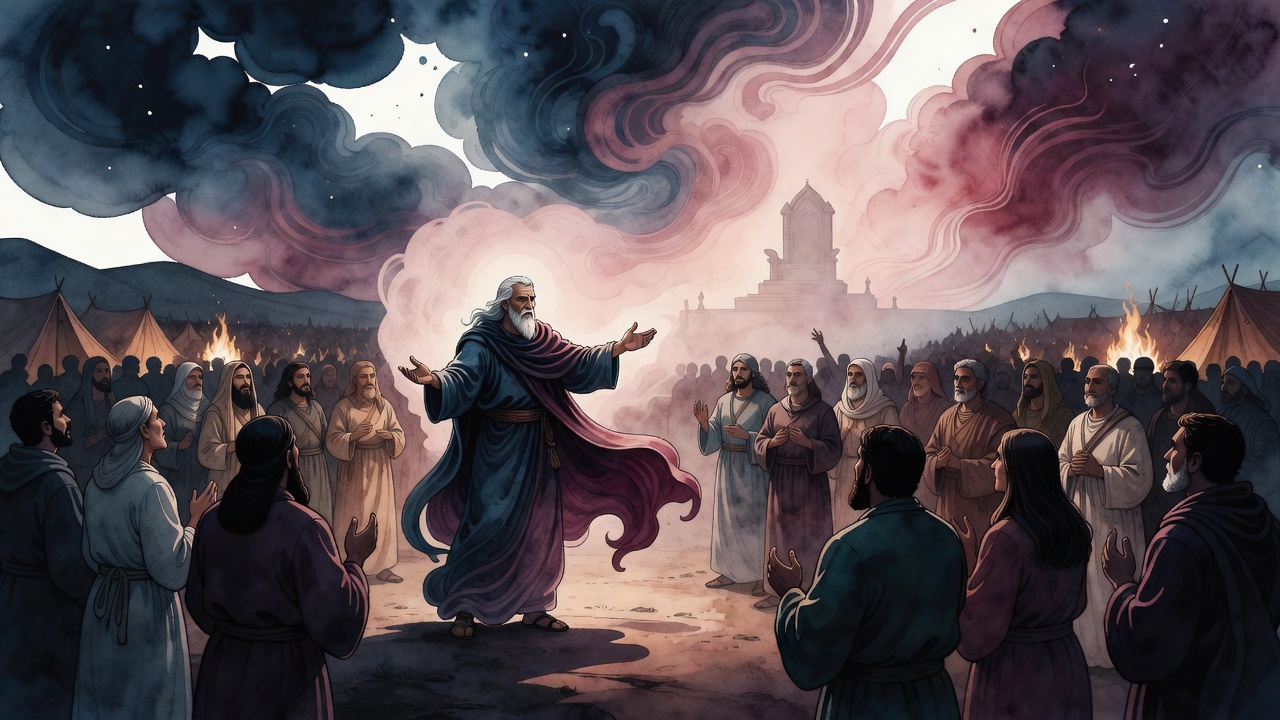
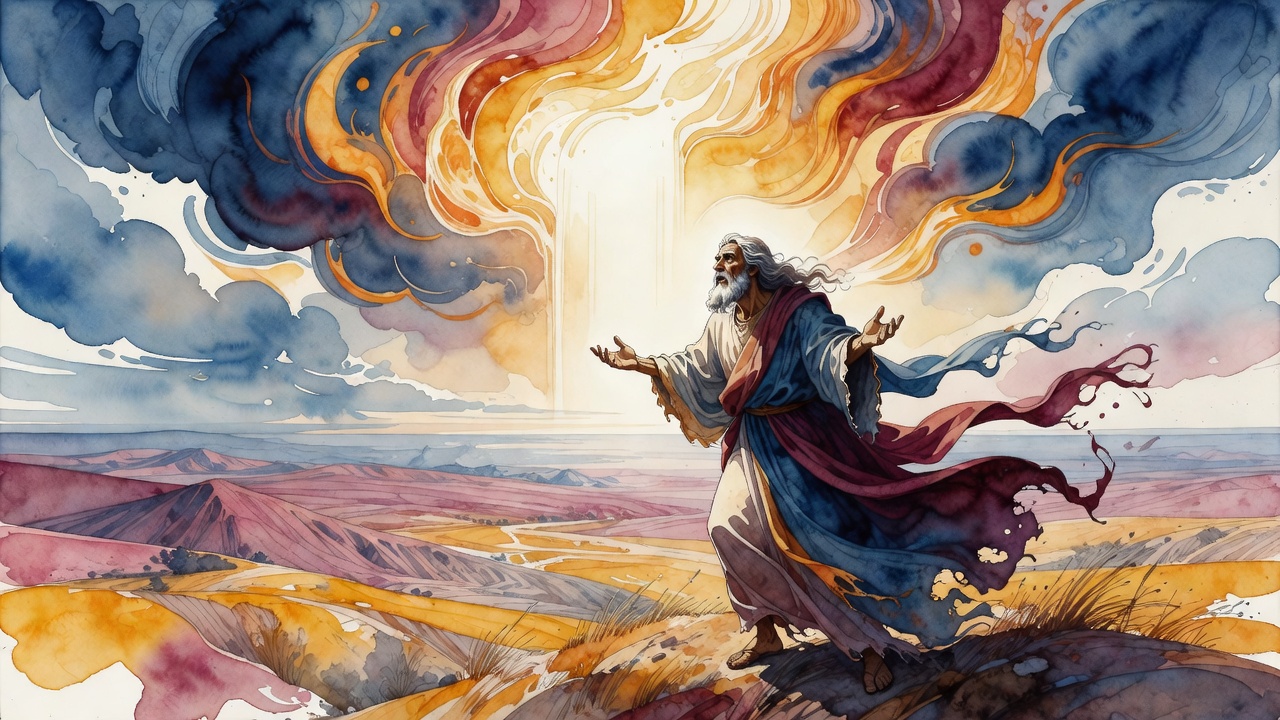
Moses on His Face at the Gate
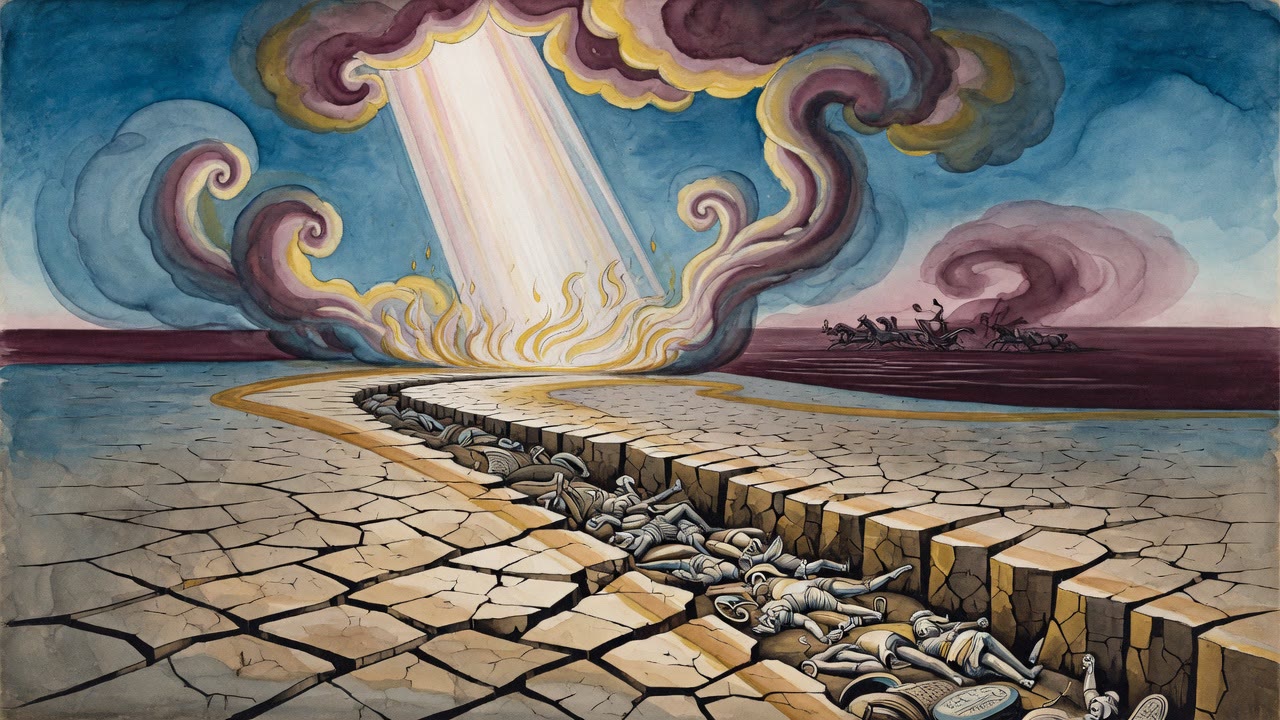
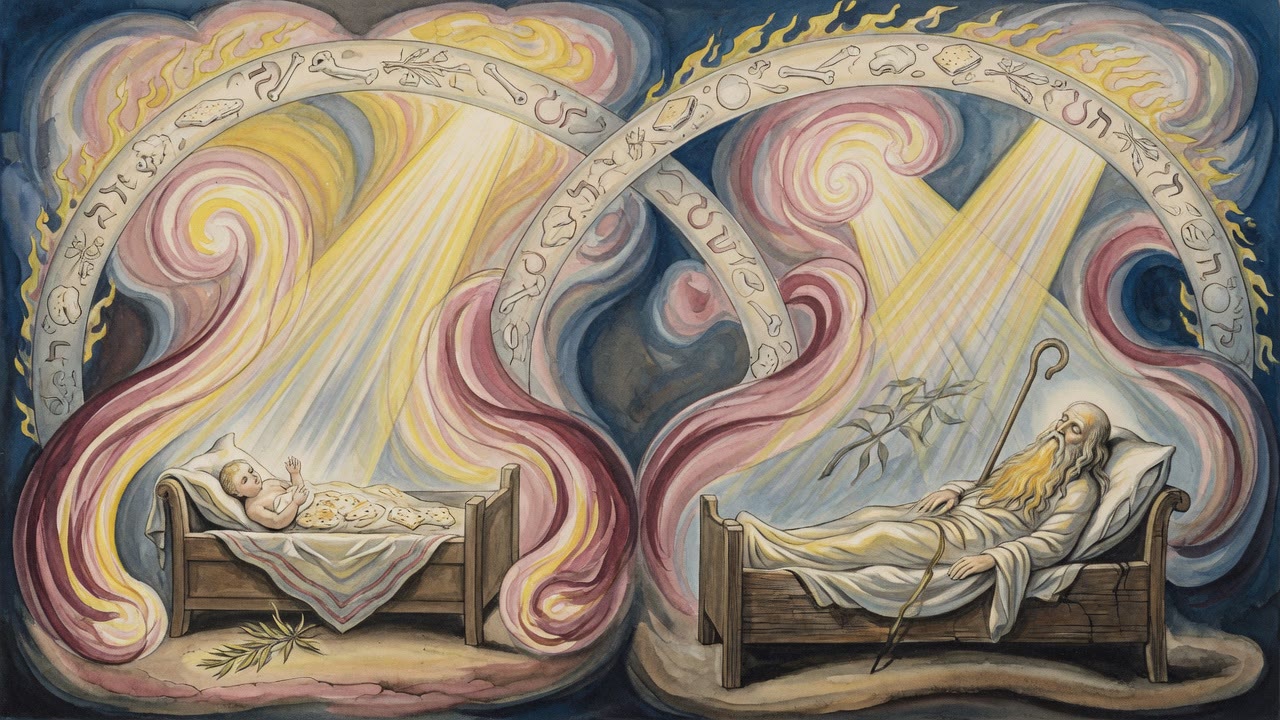
Moses lay on his face at the edge of the camp with the land still in his mouth. He had said, "Arise, O Lord," and "Return, O Lord," and the Ark had moved as if the camp itself were a body obeying a pulse (Numbers 10:35-36). He had asked for a new mouth in the earth under Korah, and if Creation had not left an opening, he had asked God to create one on the spot (Numbers 16:30). Decrees left his lips and heaven treated them as work orders.
Now he begged to enter the land (Deuteronomy 3:23). He wanted to see the good land across the Jordan with his own eyes, not only with borrowed sight from a ridge. The gate he had once commanded did not open.
The camp watched a leader on the ground. They had seen him get water from rock and law from fire. They did not yet know they were watching a season close.
The Friend Who Appointed Generals
Rabbi Avin told it as a palace story, because a palace is what the camp had been for Moses. A king's friend appointed generals, governors, commanders. Doors opened when he breathed near them. Then a day came when that same man stood outside, pleading with a gatekeeper for a simple step across a threshold he used to cross without knocking.
The gatekeeper refused.
People stared. Yesterday he had named officers. Today he could not get past the door. Someone asked how power thins into begging. The answer was not a speech about sin. The answer was a clock. His time has passed.
Moses knew that math in his bones. The same mouth that had moved the Ark now asked for a crossing and was told the hour was over. Authority had been real. It had also been timed. God changes times and seasons. The hand that granted is the hand that schedules the end of granting.
Eleven Days That Stretched
From Horeb to the edge should have been eleven days of ordinary walking (Deuteronomy 1:2). The book stamps the fortieth year beside that fact like a scar that will not fade (Deuteronomy 1:3). God did not lead them the short way. The long way was the mercy, and the cost.
Moses walked that road as shepherd, judge, and intercessor. He buried a generation one grave at a time. He did not receive the short path as a personal reward at the end, as if forty years of carrying them entitled him to a private gate.
He argued anyway. Prayer stacked on prayer. He named the land the way a thirsty man names water. The answer held. The season that had let him split seas was not the season that would let him cross a river.
The King Who Could Not Be Consoled
A king whose children were taken, some dead in captivity, rescues the living and still cannot be fully consoled. Joy and unfinished grief share the same throne room. He smiles at the saved and cannot stop seeing the missing.
Israel came out of Egypt damaged in spirit as well as body. A straight road into inheritance might have shattered what the long road could slowly rebuild under manna and quarrel and law. God did not lead them. He also could not be fully comforted over the ones who had already died in the brick yards and in the sand.
Moses carried that unfinished grief in his own back. Forty years of leading damaged children through a classroom of sand had used him up in ways conquest would not refund. The people still needed a leader who could finish the war and the allotment of fields. His last strength went into speech, into the words of Deuteronomy, not into conquest.
Joshua Will Cross
Joshua would cross with the people. Moses would climb a mountain and look, then lie down in a grave no man would tend. The man of decrees became the man of farewell addresses delivered with a throat that still worked and feet that would not cross.
Somewhere behind him, the wilderness kept its dead. Somewhere ahead, figs and vines waited for other feet and other hands. Between them stood a gate that would not open for the friend who once ran the palace of miracles.
He turned from the door with the land still in his mouth like a name he was not allowed to pronounce as owner. The gatekeeper, in Rabbi Avin's palace, does not hate the friend. He only knows the hour. Moses learned the hour the hard way, after a lifetime of moving hours for everyone else.
He stood up. Dust was on his forehead. The Jordan was still a line in the distance. He picked up the words he had left and went to speak them to a people who would walk where he would not.
← All myths