Parshat Korach5 min read

Earth Opens Like a Funnel for Korah's Camp

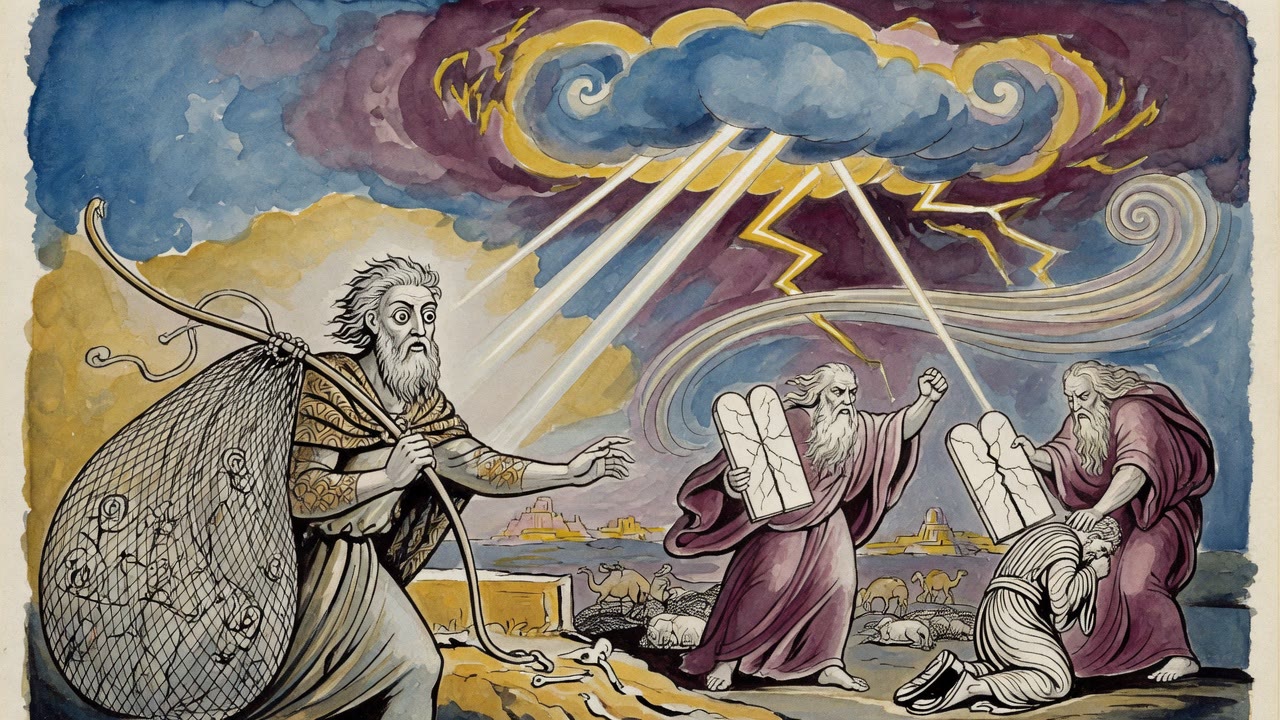
Korah came at Moses through the family gate. When the ground finally tilted it took his tents, his flocks, and a needle he had lent out.

Curated by Arthur · Told by Maggid ·
Table of Contents
  1. The Cousin Who Already Had the Keys
  2. Two Hundred Fifty Censers at Dawn
  3. If They Die the Death of All Men
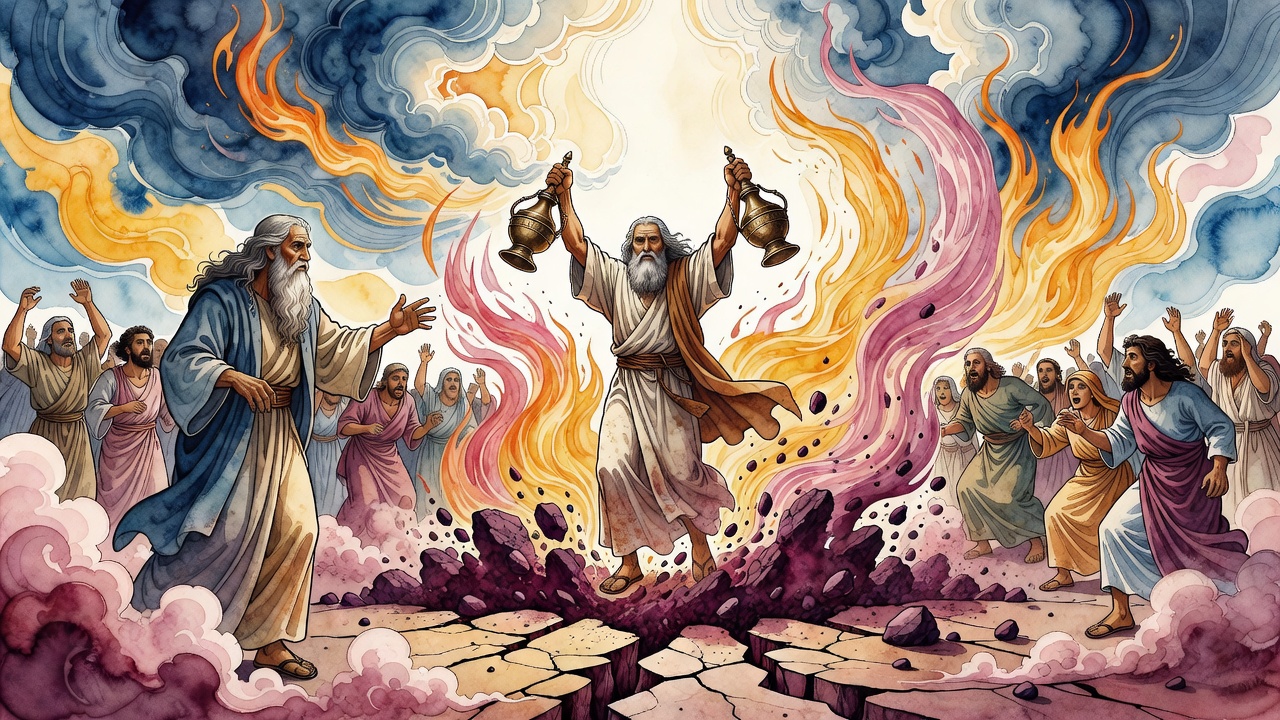
  4. The Ground Became a Funnel
  5. Even the Needle He Had Lent Out
Earth Opens Like a Funnel for Korah's Camp Click for full size

The Cousin Who Already Had the Keys

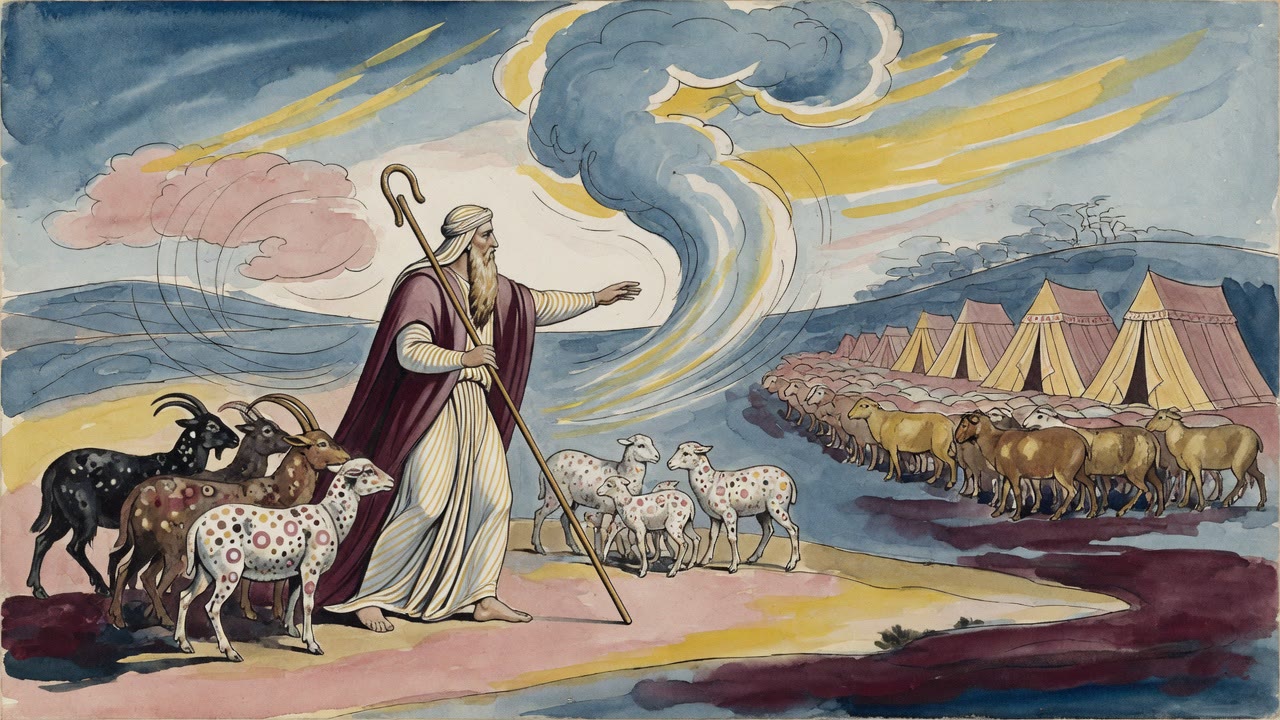
Korah son of Izhar carried the holy things of the sanctuary on his shoulder. So did his cousins. That was the whole trouble. A walled city can be held against an enemy camped outside it, but a brother who turns has already been handed the keys, and Korah knew which tent flaps opened after dark and which men in Levi were still counting the honors that had gone to somebody else.

He went first to Datan and Aviram, sons of Eliav, who came out of Reuben carrying a grievance older than the wilderness. On son of Pelet walked in with them and, at some hour nobody wrote down, walked out again. Then came two hundred fifty chieftains of the assembly, men with names, men summoned to the council. By the time they reached Moses the complaint had been polished until it shone like piety.

"The whole community is holy, every one of them, and the Lord is among them," Korah said. "Why do you raise yourselves above the assembly?"

Moses went down on his face in the sand.

Two Hundred Fifty Censers at Dawn

He stood up with a test. Every man was to take his fire pan, lay incense on the coals, and carry it to the door of the Tent in the morning, and the Lord would choose between them. Then Moses turned on the Levites standing in the crowd and asked whether it was a small thing to be drawn near and trusted with the carrying of God's dwelling, that they wanted the priesthood on top of it.

He sent messengers down to Datan and Aviram. The messengers came back with five words that went through the camp like cold water. "We will not come up." Egypt was the land flowing with milk and honey, the two of them said, and Moses had hauled them out of it to bury them in a desert, and had given them no field and no vineyard. Moses was very angry. "I have not taken one donkey from them," he said. "I have not wronged a single one of them."

At first light the censers came. Two hundred fifty men stood holding fire in their hands at the door of the Tent, and Korah gathered the whole congregation to watch them do it.

If They Die the Death of All Men

Moses put his own office on the table. If these men died the way every man dies, of fever or of age or of a fall, then the Lord had not sent him, and the camp could say so out loud and be right. But if the Lord made something the world had not seen before, and the ground opened its mouth and swallowed them with everything that was theirs, and they went down alive, then Israel would know exactly whom these men had spurned.

He had barely finished the sentence.

The Ground Became a Funnel

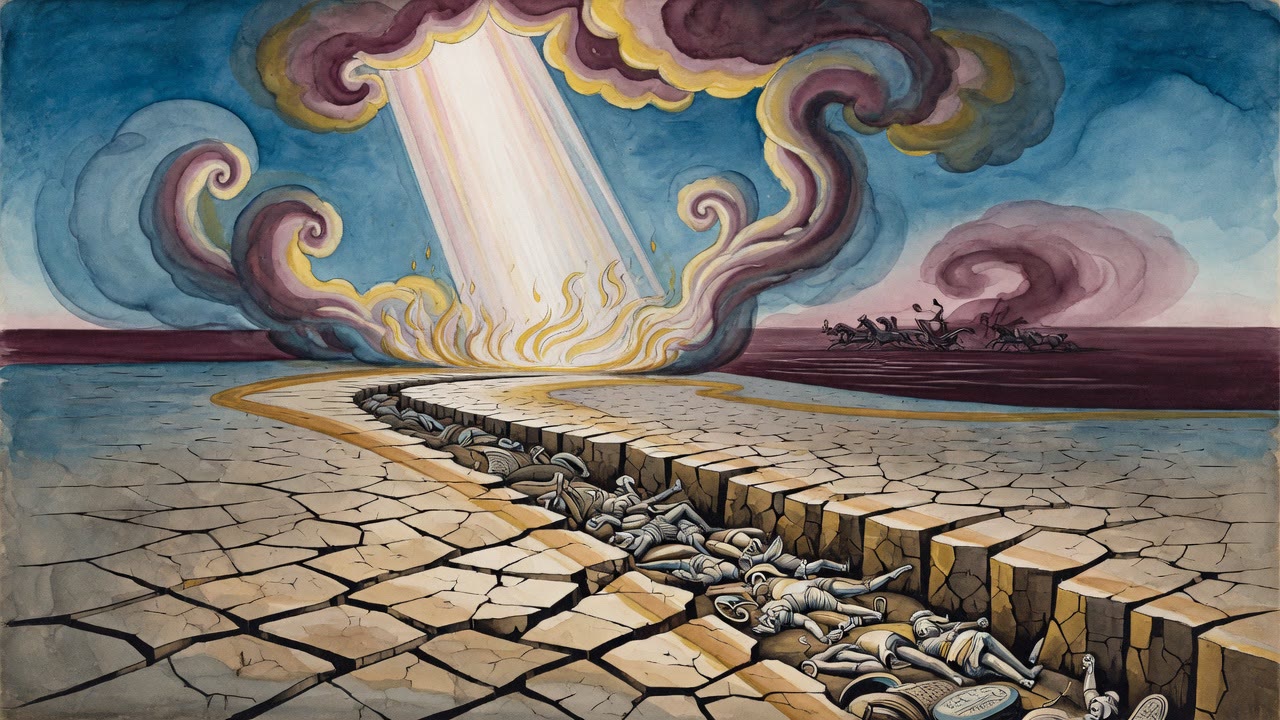
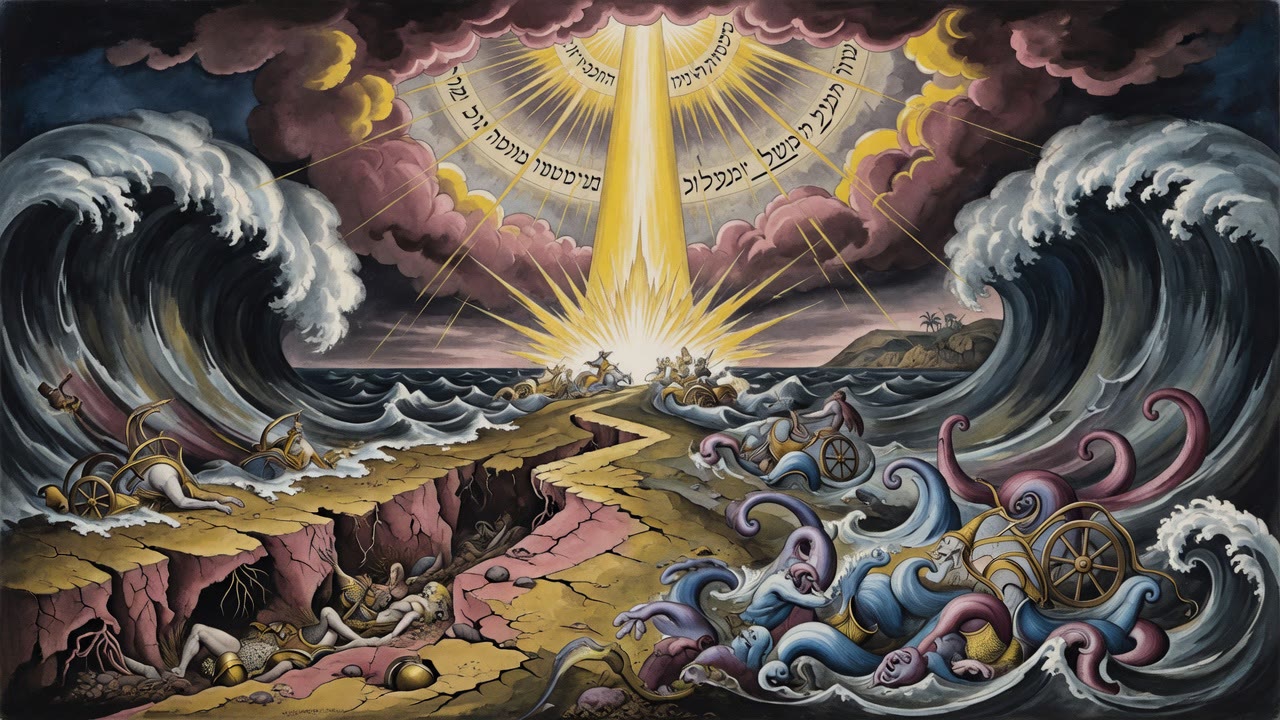
The doors of the deep drew their bolts back. Rabbi Yehuda said the earth opened in many places at once, since the tearing ran through the middle of all Israel and Korah's people were scattered across the camp. Rabbi Nehemya answered him that Scripture says mouth, one mouth, and then gave a worse picture. The ground tilted. Wherever one of them happened to be standing the soil sloped away under him, and he rolled, and the rolling carried him to the one opening. A man could run and the running took him downhill.

They went down alive. That is what the camp could not unsee afterward. Not bodies lowered with honor and covered over, but men still breathing, still shouting, watching the sky narrow to a strip and then to a seam, while Israel stood on the rim and then fled from the sound they made.

Even the Needle He Had Lent Out

The earth took the property too, the tents and the flocks and the household goods that stand a man on his feet. Then the rabbis pushed the accounting further than the verse. A cloak of Korah's left at the launderer's, streets away and in another man's hands, rolled out of the basket and went. Rabbi Shmuel bar Nahmani said even a needle. One needle, borrowed by some Israelite who had nothing to do with any of it, lying in a stranger's sewing that morning, lifted itself and went down after its owner.

Fire came out and ate the two hundred fifty who were still holding their censers.

Centuries later Rabbi Yehuda ben Beteira refused to let the seam be the end of them. They were lost from the midst of the assembly, he said, and lost is the word David chose when he asked to be sought like a straying sheep. Whatever is lost is going to be looked for. And Hannah at Shiloh, singing over the son she had begged out of heaven, prayed for them without ever knowing their names: the Lord kills and gives life, He lowers to the pit and He raises up.


← All myths
From the tradition

Sources

2 sources

The texts behind this telling. Some cards carry a translation of the source; others are our own retelling of it, and each card says which. Every card links out to the original.

Bamidbar Rabbah 18:1Bamidbar Rabbah

Retold in our words. Read the original at the link below.The Sefaria Midrash Rabbah, 2022 · CC-BY

It all starts in (Numbers 16:1): “Koraḥ, son of Yitzhar son of Kehat son of Levi, and Datan and Aviram, sons of Eliav, and On, son of Pelet, sons of Reuben, took…” Took what, you ask? Well, that's where the trouble begins. The verse is intentionally vague, hinting at the taking of something far more dangerous than mere objects: power, resentment, and ultimately, lives.

The Rabbis, in Bamidbar Rabbah, see this verse as echoing (Proverbs 18:19): "A treacherous brother is worse than a fortified city." Who is this treacherous brother? According to the Midrash (rabbinic interpretive commentary), it's none other than Koraḥ. He's the insider, the one you should be able to trust, who betrays from within. And what does that treachery look like? It looks like rebellion.

The Hebrew word for "treacherous" in (Proverbs 18:19) is nifsha. The Midrash connects nifsha to another Hebrew word: pasha, which means "rebellion." Where do we find pasha? In II (Kings 3:7): "The king of Moav rebelled [pasha] against me." See how the Rabbis are weaving these connections, showing us that Koraḥ’s actions aren’t just a disagreement – they are a full-blown revolt! He wasn't just questioning authority; he was actively trying to undermine it.

It doesn’t stop there. (Proverbs 18:19) continues, "And strife is like the bolts of a palace [armon]." Now, armon means palace, but in this context, the Midrash sees it as referring to something far more profound: God and Moses. Koraḥ's strife wasn't just against Moses, the human leader; it was against the very structure of divine authority.

The Midrash paints a vivid picture: the earth itself reacts to Koraḥ's sin. The "bolts" of the earth, the very foundations of the world, are loosened. The earth opens up to swallow him and his followers. It’s a terrifying image, a cosmic consequence for challenging divine order. The earth itself, groaning under the weight of injustice, opens up. It’s a powerful metaphor for the destructive force of unchecked ego and the consequences of betraying trust. Koraḥ’s story isn’t just an ancient tale; it’s a timeless warning about the dangers of internal conflict and the importance of respecting authority, both human and divine.

Full source
Bamidbar Rabbah 18:13Bamidbar Rabbah

Retold in our words. Read the original at the link below.The Sefaria Midrash Rabbah, 2022 · CC-BY

Bamidbar Rabbah turns to Korah's Transgression of Rabbis.

How did this actually happen? The Rabbis of the Midrash (rabbinic interpretive commentary), in Bamidbar Rabbah, explore the specifics. Rabbi Yehuda suggests the earth didn't just open in one place, but in multiple spots. After all, (Deuteronomy 11:6) says the earth opened its mouth "in the midst of all Israel." So, how could one opening swallow so many?

Rabbi Nehemya offers an alternative image. He asks, if the Torah says, "The earth opened its mouth," how do we reconcile that with the phrase "in the midst of all Israel?" His answer? Wherever Korah's followers stood, they were drawn, pulled, rolled into this single, gaping maw. A terrifying image. It allowed everyone to be swallowed while still fulfilling both phrases, according to Bamidbar Rabbah.

It wasn’t just people. It was their stuff too. (Deuteronomy 11:6) continues, "And all the yekum [that was at their feet]." Now, yekum can be understood as "property." But the Rabbis play with the word. They expound yekum as though it were yakim, which means “it causes one to stand.” In other words, property is what sustains a person.

Our Rabbis in Bamidbar Rabbah go even further. Even clothes at the launderer's shop? Gone. Sucked into the earth. Rabbi Shmuel bar Nahmani adds an even more unsettling detail: even a borrowed needle, a she'ula, in the hands of another Israelite was swallowed if it belonged to one of Korah's people. As it says, “They and everything that was theirs descended alive into the abyss [sheola]” (Numbers 16:33).

Why such extreme measures? The Midrash suggests it was because Korah entered into a dispute with the Holy One, blessed be He. You don't just challenge God's chosen leaders without serious consequences.

But here's where the story takes a surprising, and perhaps comforting, turn. Despite this cataclysmic end, Rabbi Yehuda ben Beteira teaches that they have a portion in the World to Come! How can this be? He points to the verse: “They were lost from the midst of the assembly” (Numbers 16:33). Lost from the assembly, yes, but not lost from the World to Come.

It's a powerful idea. Even in the face of such profound destruction, the door to redemption remains open. The Midrash draws a parallel to David, who says, "I have strayed like a lost sheep. Seek Your servant, as I have not forgotten Your mitzvot (commandments)" (Psalms 119:176). Just as the lost sheep of David is destined to be found, so too, these lost souls have a chance at being sought out.

And Hannah, in her prayer, echoes this sentiment: "The Lord puts to death and brings to life; He lowers to the abyss and elevates" (I Samuel 2:6). Sheol, the abyss, isn't necessarily the end. It can be a temporary state before elevation.

So, what does this all mean? Perhaps it's a reminder that even when we feel swallowed by our mistakes, by our rebellions, by the sheer weight of the world, there's always a possibility of return. Maybe the earth opens, but so too does the potential for ascent. It's a challenging, and ultimately hopeful, message buried within this ancient story.

Full source