5 min read

Korah Keeps His Mouth Shut Against Moses

Moses pleads. Korah answers with nothing, fearing soft words will bend him. Dathan and Abiram spit Egypt back as paradise, then refuse to come up.

Curated by Arthur · Told by Maggid ·
Table of Contents
  1. The Mouth That Would Not Open
  2. We Will Not Come Up
  3. An Offended Brother
  4. The Name That Stops at Levi
  5. Down Alive
Korah Keeps His Mouth Shut Against Moses Click for full size

The Mouth That Would Not Open

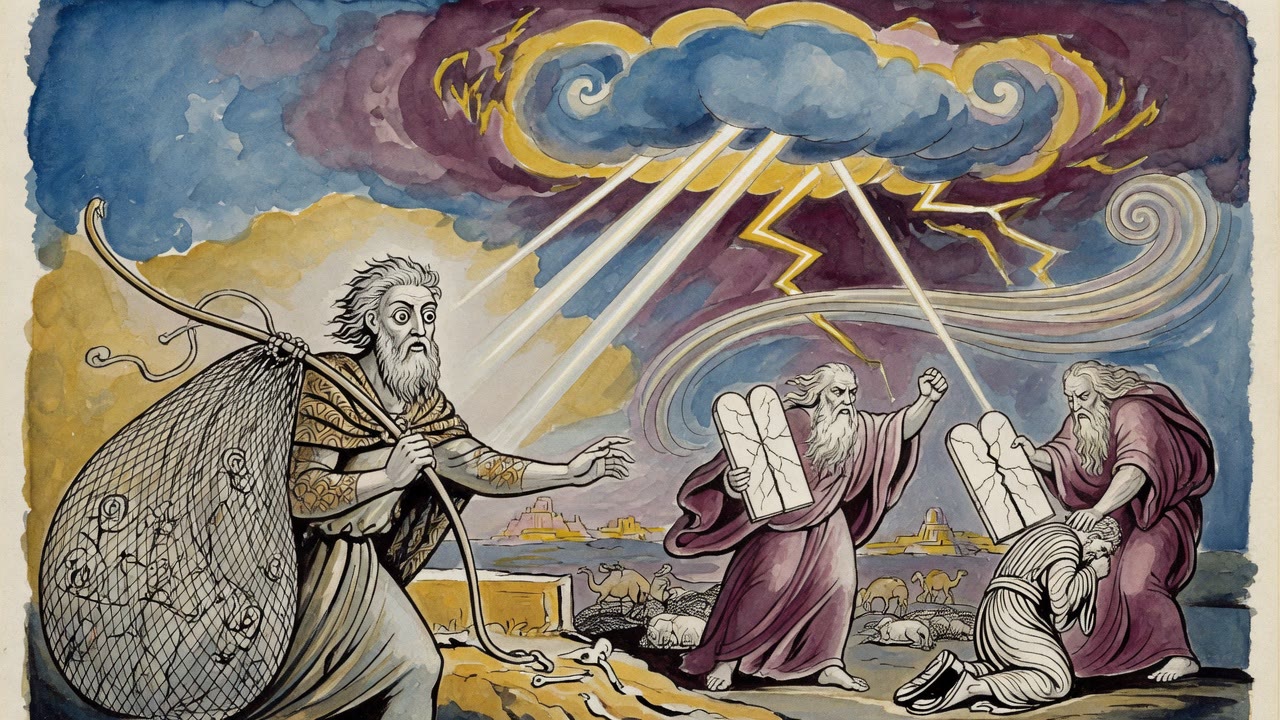
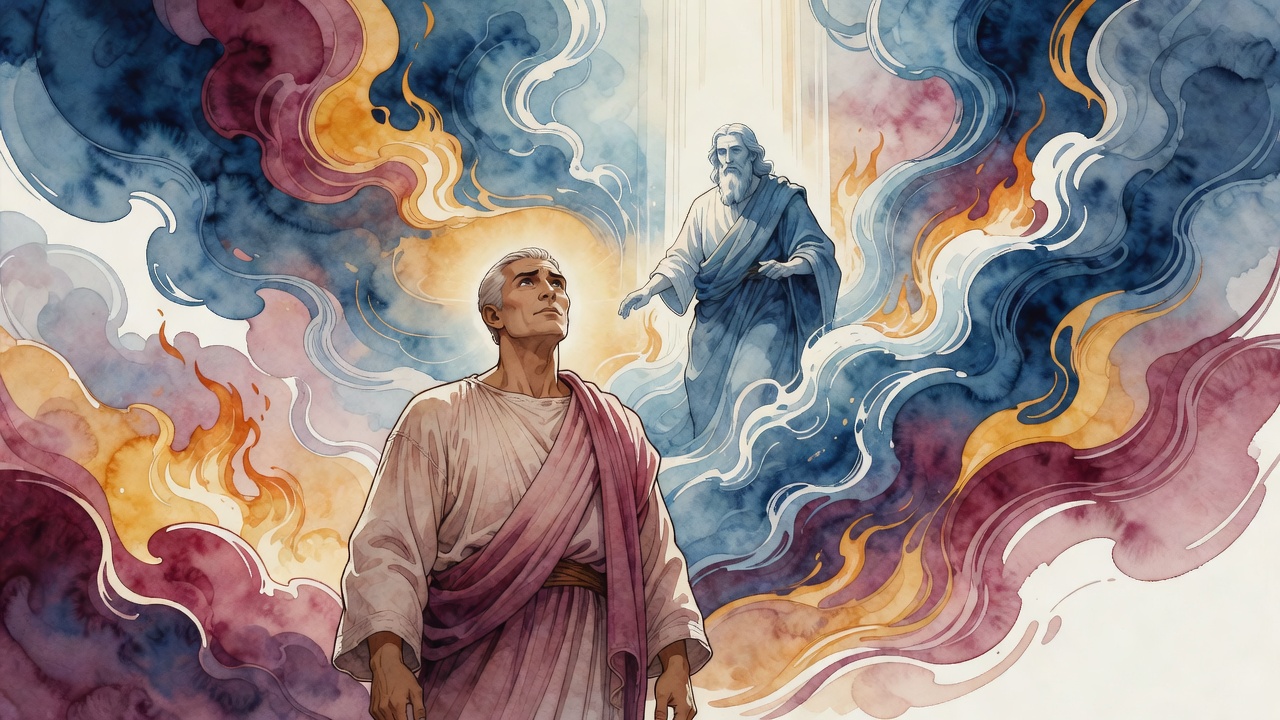
Moses came with patient words and tried to pull Korah back from the brink. Dust from the camp paths still clung to Moses' hem. He spoke as a brother, not as a wall. Korah gave him nothing. Not a curse. Not a claim. Not a debate. He stood mute on purpose, sealing his heart against rescue. Around them men waited for sparks. Sparks need air. Korah starved the fire of speech and let the rebellion burn inside where no answer could reach it.

Inside that silence ran a cold calculation. "Moses is a great sage. If I open my mouth, his speech will overpower mine, soften me, and bend me back against my own will. Better to give him no opening at all." Cunning wore the face of stillness. Moses watched for a crack of repentance and found none. He withdrew, because even a prophet cannot force a door a man has barred from the inside.

We Will Not Come Up

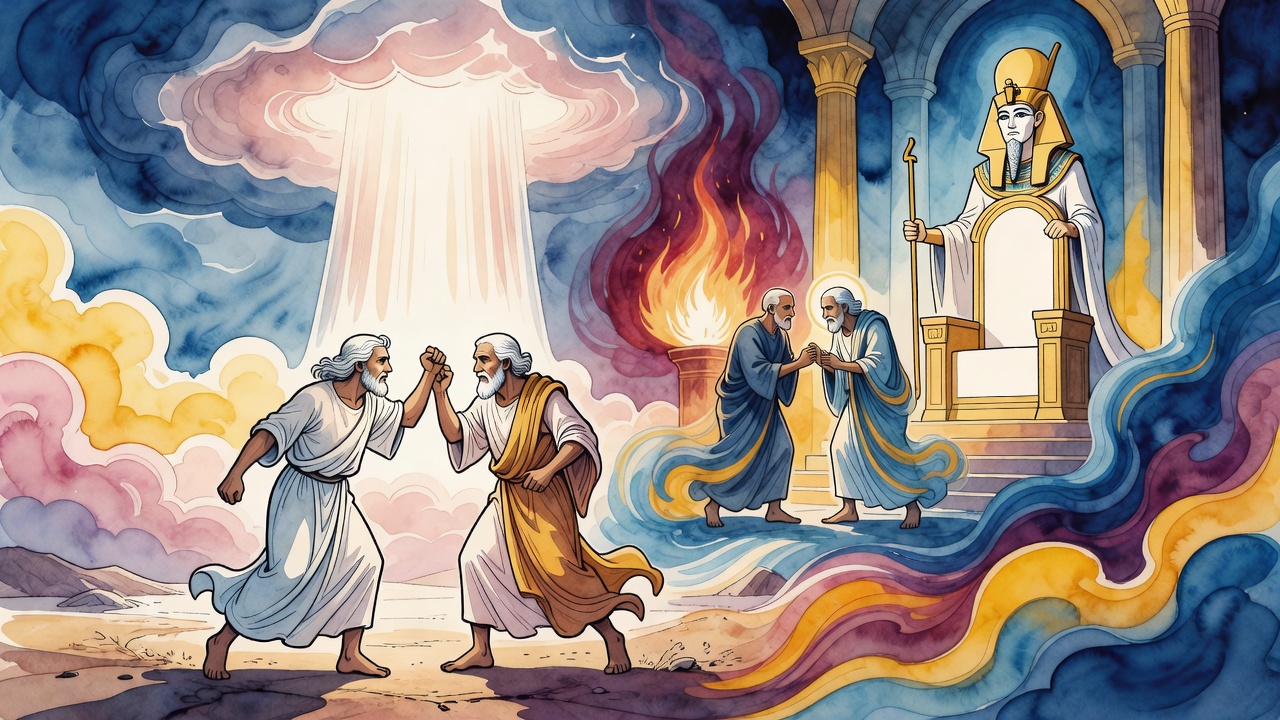
Then Moses sent to summon Dathan and Abiram. They would not even lift their faces. Their answer came like a thrown stone. "Is it too little that you have brought us up? On what do you exalt yourself over us? What good done for us?" The messengers stood between two stubborn houses and carried the insult back like a live coal.

They rewrote Egypt. The iron furnace became a garden of the Lord in their mouths. "You brought us out of a land like paradise," they sneered, borrowing language once used for the Jordan plain. Canaan, the land of milk and honey, they dismissed as a promise unpaid. "Here we die in the wilderness, and every day the plague is sent among us. Would you put out the eyes of these men? We will not come up."

The men who fled slavery wept for it. The men marching toward blessing cursed the road. Their lips sealed a covenant against themselves. What a man speaks in defiance can take hold of him. They named the pit with their refusal before the earth ever opened.

An Offended Brother

Before a single rebel speech, Proverbs had already named the danger. A brother offended is harder to win than a fortified city, and contentions are like the bar of a castle. The offended brother is Korah. He did not merely grumble. He quarreled against Moses and, in rebelling, toppled himself from the honor that had once rested in his own hand. Honor had been available. He chose grievance instead, and grievance thickened into stone.

The word the sages weigh is hard. Offended here is the language of revolt, the same root that marks a vassal king throwing off his lord, a city bolting its gate against the throne. Korah's strife was never only against a man. He set himself, barred and bolted, against the Holy One and against Moses His servant together. A brother's grievance hardened into war with Heaven. The bar of the castle was not wood. It was pride that would not risk being softened by truth.

The Name That Stops at Levi

Open the verse and see the missing crown. Korah son of Izhar, son of Kohath, son of Levi, and there the chain breaks. No son of Jacob. No son of Israel. Long before, Jacob had pleaded: "Master of the Universe, when the spies slander the land, and when Korah kindles his quarrel, do not sew my name into their disgrace. Let not my soul enter their council. Let not my glory unite with their assembly."

Heaven honored the plea. The rebel descends without his grandfather's name, cut off at Levi, his rebellion his own. Mercy still outlasts the pit. Korah's children would turn back in repentance. From them would rise the Temple singers. On the platform, when the voices lift, the broken chain mends: son of Asir, son of Ebiasaph, son of Korah, son of Izhar, son of Kohath, son of Levi, son of Israel. The name withheld in shame returns in praise. A genealogy can refuse a crime and still reclaim a song.

Down Alive

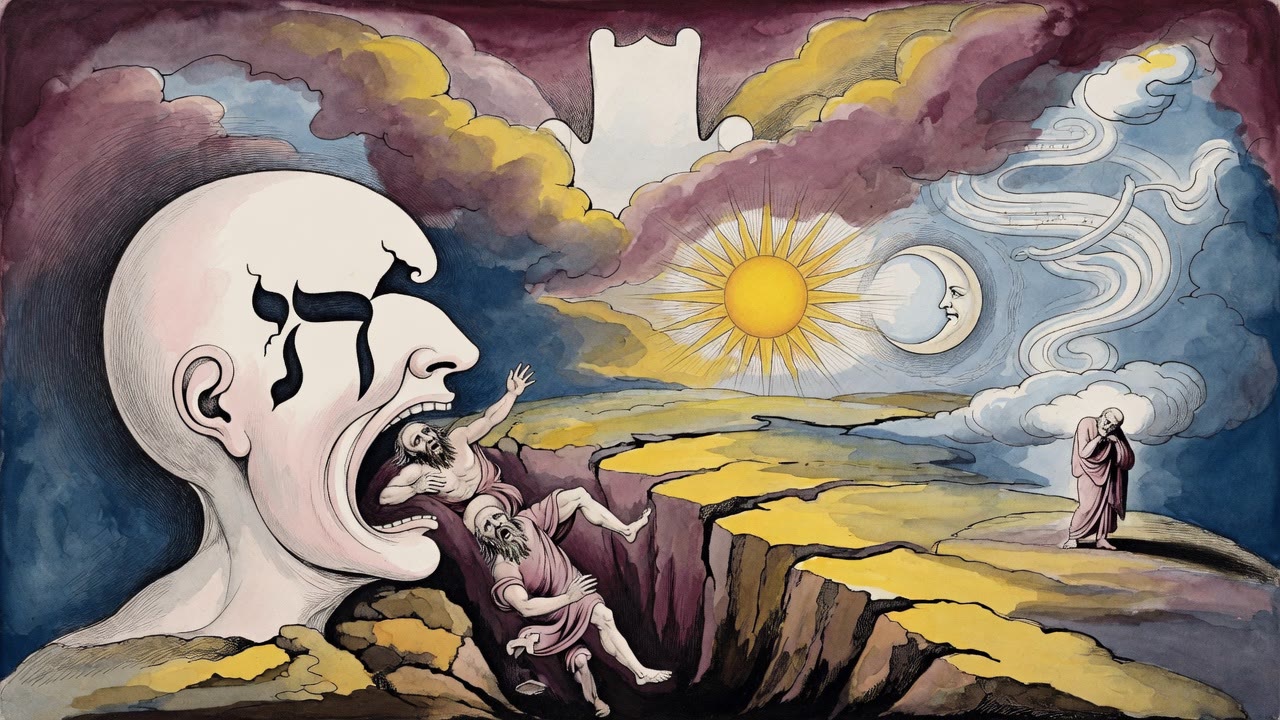
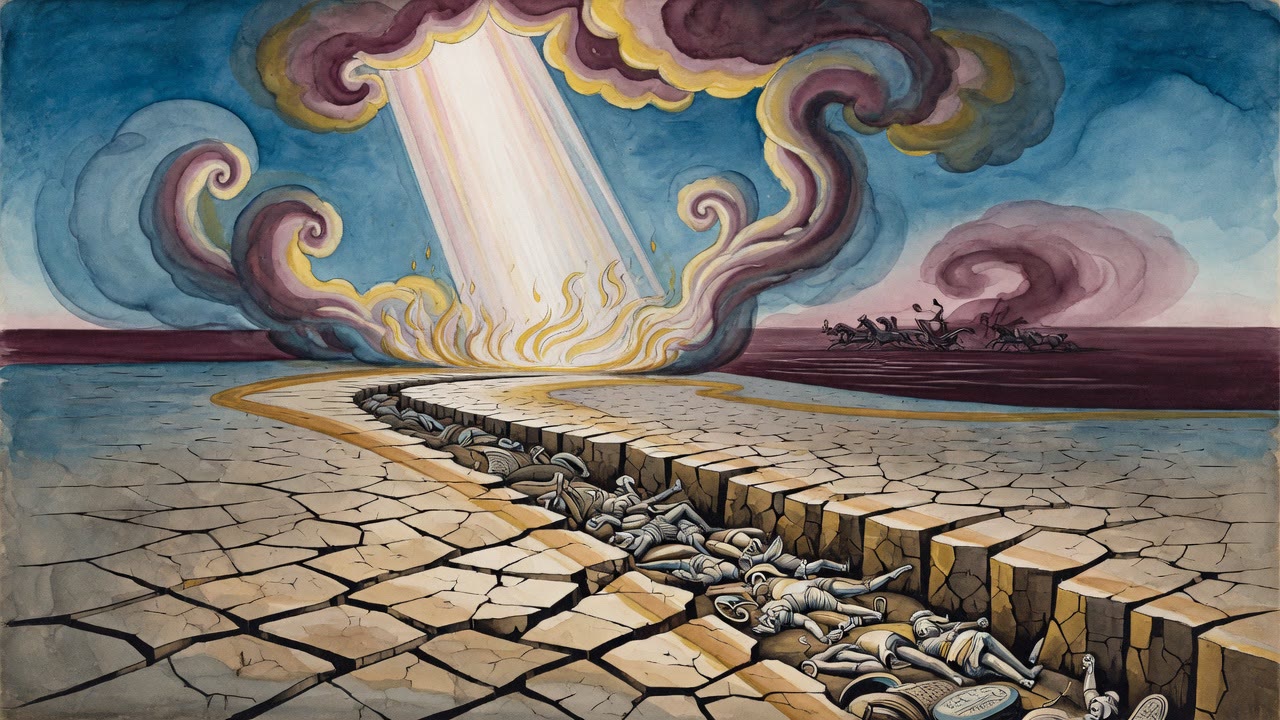
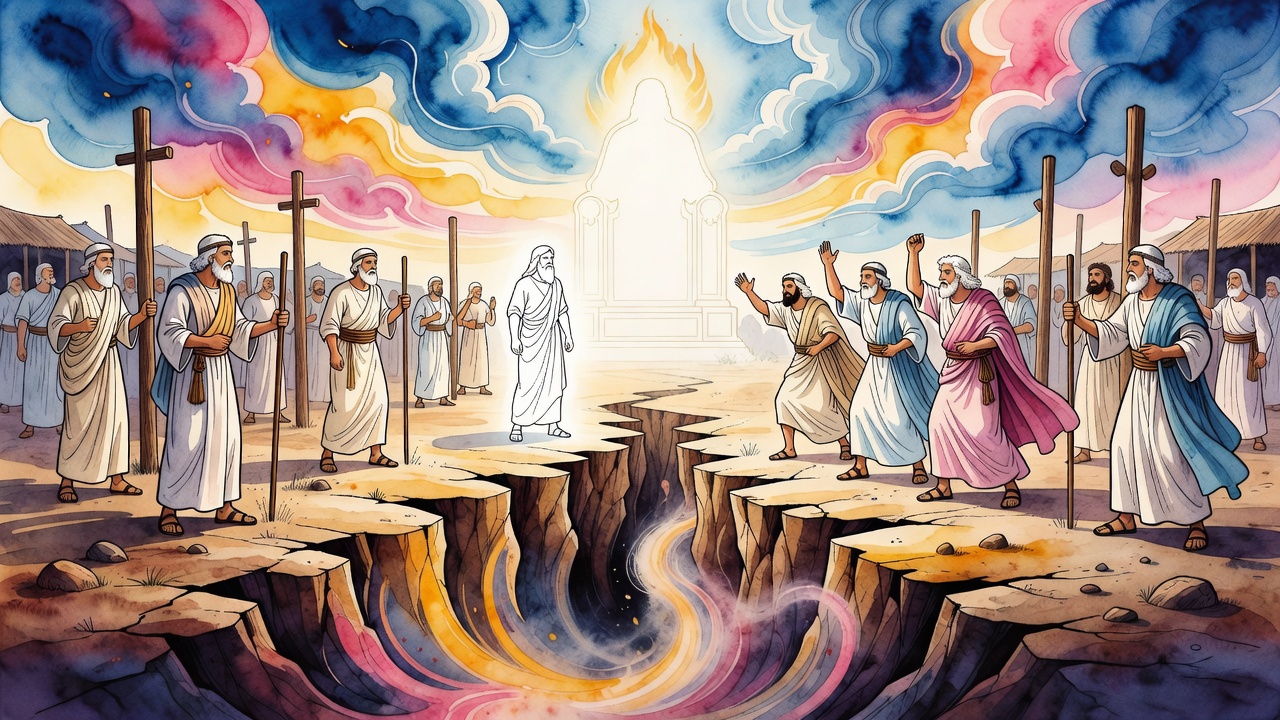
Silence and spit led the same way. When Moses saw no gain left in speech, the ground itself answered. They went down, they and all that belonged to them, alive into Sheol (the shadowy underworld of the dead). Only after the earth had taken them living did death arrive. Korah's sealed mouth and Dathan's open mockery both bought the same descent. Tents tipped. Household goods vanished into a throat of soil. The camp learned what a fortress of offense costs.

A man who will not risk being softened by truth may keep his pride for an hour, and lose the ground under his feet forever. Moses had offered words like a rope. Korah refused to grab it. Dathan and Abiram spat on the rope and called Egypt home. After the earth closed, children were pulled back from the rim. The argument ended where arguments end when Heaven takes the floor.


← All myths

From the tradition

Sources

4 sources

The texts behind this telling. Some cards carry a translation of the source; others are our own retelling of it, and each card says which. Every card links out to the original.

Midrash Tanchuma Buber, Korach 15:1Midrash Tanchuma Buber, Korach

Translation of the source text.Midrash Tanchuma (Buber), Public Domain, on Sefaria · CC-BY-SA

[(Numbers 16:11) "And Aaron, what is he that you murmur against him?"] With all these words Moses appeased Korah, but you do not find that he answered him a word, because he was shrewd in his wickedness. He said: "If I answer him, I know that he is a great sage; now he will overpower me with his words and corrupt me, and I will be reconciled to him against my will. Better that I not engage with him." When Moses saw that there was no profit in him, he withdrew from him.

"And Moses sent to call Dathan and Abiram" (Numbers 16:12). They too stood firm in their wickedness and did not bother to answer him. "And they said: 'We will not come up'" (ibid.). Their mouth caused them, the wicked ones, to stumble, for a covenant is made with the lips; and they went down to Sheol, as it is said: "And they went down, they and all that belonged to them, alive into Sheol" (Numbers 16:33). After they went down alive into Sheol, they died.

Full source
Midrash Tanchuma Buber, Korach 16:1Midrash Tanchuma Buber, Korach

Translation of the source text.Midrash Tanchuma (Buber), Public Domain, on Sefaria · CC-BY-SA

(Numbers 16:13:) "IS IT TOO LITTLE THAT YOU HAVE BROUGHT US UP, etc." (the same chapter, the same verse). On what basis do you exalt yourself over us? What good have you done for us? You brought us out from the land of Egypt, which is like the garden of the LORD (as in Genesis 13:10), but into the land of Canaan you have not brought us. Rather, behold, we are dying in the wilderness, and the plague is sent among us every day. (Numbers 16:14:) "WOULD YOU PUT OUT THE EYES OF THESE MEN? WE WILL NOT COME UP" (the same chapter, the same verse).

Full source
Midrash Tanchuma Buber, Korach 1:1Midrash Tanchuma Buber, Korach

Translation of the source text.Midrash Tanchuma (Buber), Public Domain, on Sefaria · CC-BY-SA

"Now Korah took" (Numbers 16:1). This is what Scripture says: "A brother offended is harder to win than a fortified city, and contentions are like the bar of a castle" (Proverbs 18:19). "A brother offended", this is Korah, who quarreled against Moses, and rebelled, and sank down from the honor that had been in his hand. And the word "offended" (nifsha') means nothing other than rebellion, as it is said, "The king of Moab rebelled (pasha') against me" (II Kings 3:7); and it says, "Then Libnah rebelled (tifsha')" (II Kings 8:22). "And contentions are like the bar of a castle" (Proverbs 18:19), for he quarreled against the Holy One, blessed be He, and against Moses.

Full source
Midrash Tanchuma Buber, Korach 7:1Midrash Tanchuma Buber, Korach

Translation of the source text.Midrash Tanchuma (Buber), Public Domain, on Sefaria · CC-BY-SA

(Numbers 16:1:) NOW KORACH BEN IZHAR BEN KOHATH BEN LEVI TOOK. But it is not written "ben Jacob" or "ben Israel." This is what Scripture says (Genesis 49:6): "LET NOT MY SOUL ENTER INTO THEIR COUNCIL", these are the spies. "AND LET NOT MY GLORY BE UNITED WITH THEIR ASSEMBLY" (ibid.), this is Korach. Jacob said before the Holy One, blessed be He: Master of the Universe, let not my name be remembered in connection with the spies, nor in connection with the dissension of Korach, with those wicked ones who are destined to provoke anger. And when shall my name be joined together? When they unite themselves to stand upon the platform (as singers): (I Chronicles 6:22–23:) BEN ASIR BEN EBIASAPH BEN KORACH BEN IZHAR BEN KOHATH BEN LEVI BEN ISRAEL.

Full source