Parshat Korach6 min read

Korah's Name Meant Baldness and the Earth Opened a Mouth for Him

Dathan and Abiram would not leave their tent doorways. They stood there and slandered Moses, so Moses asked God for a mouth in the ground, and got one.

Curated by Arthur · Told by Maggid ·
Table of Contents
  1. A Name That Meant a Hole
  2. Insults at the Threshold
  3. Sun and Moon Before the Throne
  4. The Slow Swallow
  5. What the Camp Kept
Korah's Name Meant Baldness and the Earth Opened a Mouth for Him Click for full size

A Name That Meant a Hole

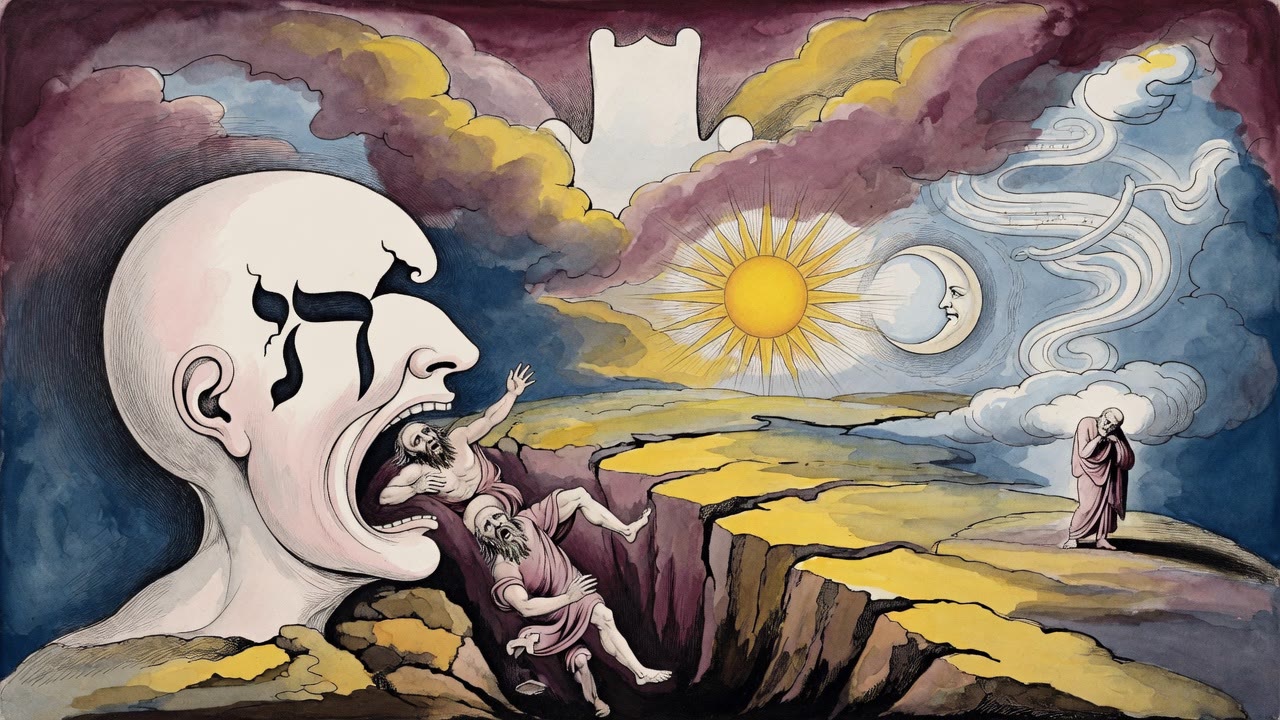
Korah did not invent rebellion from nothing. His name already leaned toward ruin. In Hebrew it means baldness, and the sages heard in that word the bald patch he would tear from Israel when the earth took his company. Izhar, his father, means the heat of noon. Under that blaze the ground would boil. Kohath, his grandfather, means assembly. From that assembly the rebels would be cut off. Lineage, heat, and bald earth stacked in three generations before a single pan of incense was lit.

Korah of Levi gathered two hundred fifty princes, men of renown, and set them against Moses and Aaron. He did not argue as a beggar. He argued as a man who thought birth and wealth made priesthood a shared right. The camp watched a cousin of the lawgiver turn kinship into a courtroom. The claim wore holy equality as a cloak. The method was a crowd at the tent door, pans in hand, voices loud enough to pull the whole congregation toward a cliff of status.

Wealth from Joseph's storehouses, legend says, had made Korah sure of himself. Silver can harden a neck faster than desert wind. He looked at Moses as a brother who had taken too much honor, and at Aaron as a priesthood he wanted opened like a market.

Insults at the Threshold

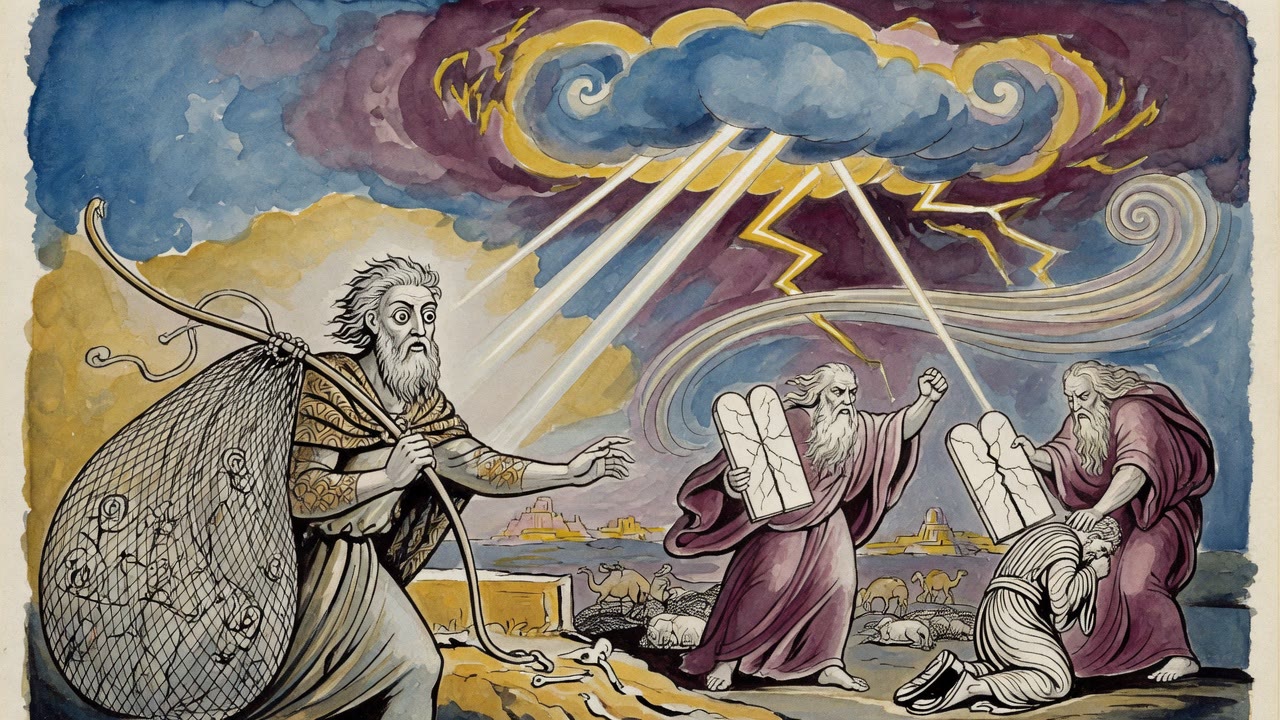
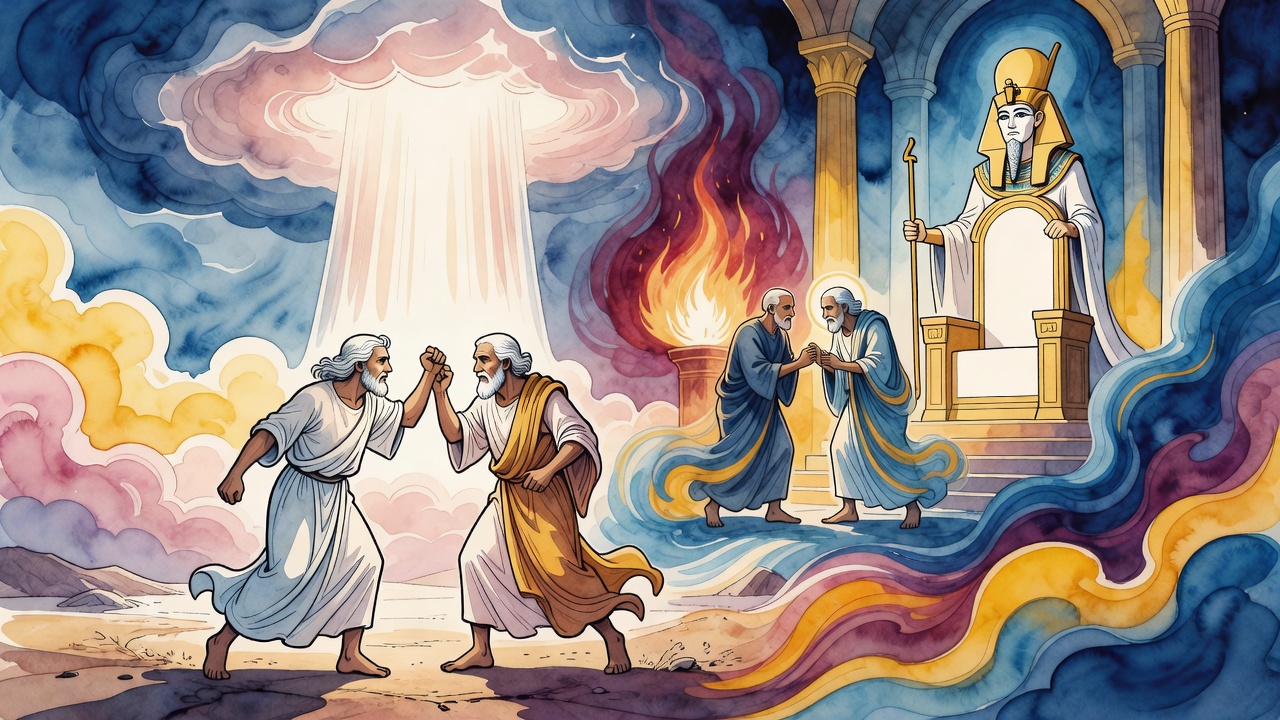
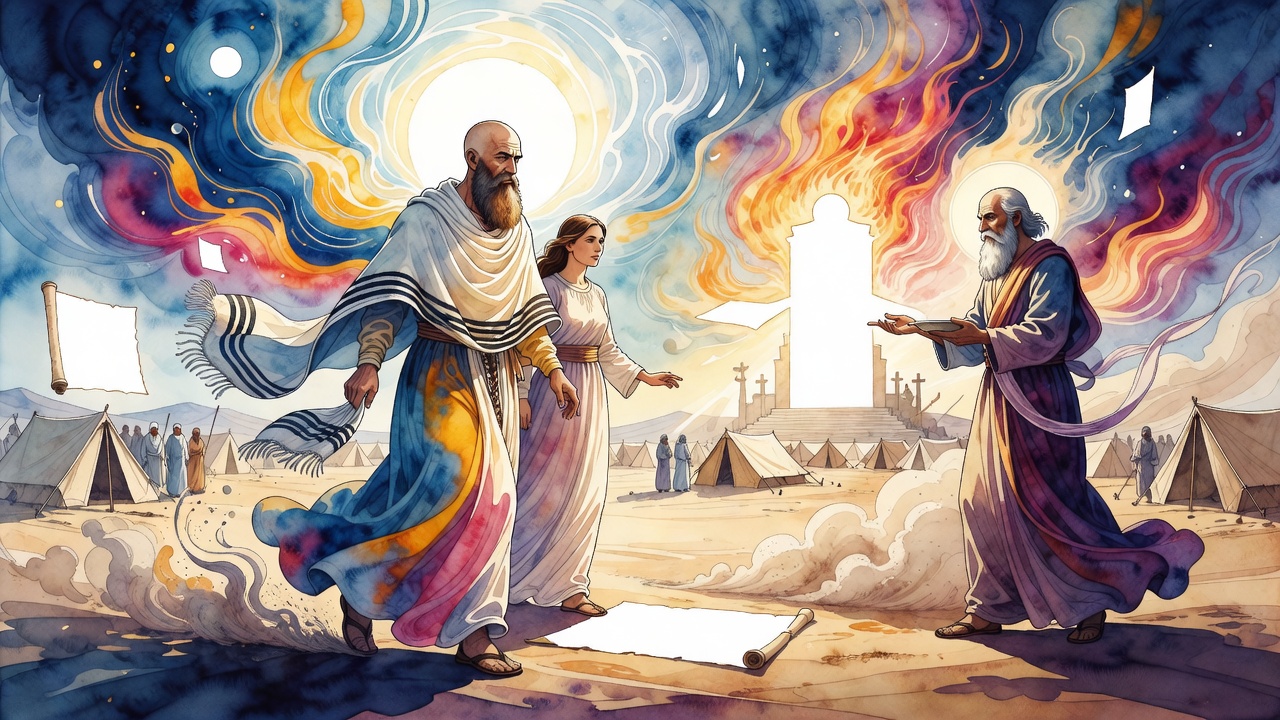
When God ordered the congregation to pull away from Dathan and Abiram, those two did not soften. They stood at the entrances of their tents and poured slander on Moses. Distance was offered as mercy. They chose spectacle. They would not even rise to meet the man they mocked. Doorways became stages. Moses lifted the quarrel to heaven and made his own office the stake. If those men died the common death of all flesh, he said, then he had not been sent by God.

He asked for more than ordinary judgment. If the Lord had already given the earth a mouth, let it open. If not, let one be made now. The request was not theater for the crowd alone. It bound the prophet's truth to a single miracle of soil. God answered by creating that mouth. Authority and ground became one case. The men who had mocked from their doorways would learn what a doorway into the deep looks like when heaven holds the hinge.

Around them the people stepped back, some in fear, some in half belief. A prophet who stakes his commission on a hole in the sand leaves no soft middle. Either the earth speaks or Moses falls. The camp held its breath the way a court holds still before a verdict.

Sun and Moon Before the Throne

Heaven did not stay quiet. The sun and the moon came before God and pressed for Moses, son of Amram. If he received no satisfaction in this suit, they said, they would refuse their work. Day and night tried to bargain like guilds on strike. God drove them back with lightnings. They had never championed the divine cause with such zeal before, and now they bargained for a mortal. Since that hour, the legend says, sun and moon do not run their courses of free will. They must be driven to duty.

Celestial bodies that tried to blackmail the Judge learned they were servants, not partners in revolt. The sky that lights every camp also keeps a memory of the day it argued for Moses and was rebuked. Rebellion below stirred a rebellion of light above, and both were answered with force that restored order rather than endless debate. Stars do not get a vote in the appointment of a prophet. They get a path they must walk.

The Slow Swallow

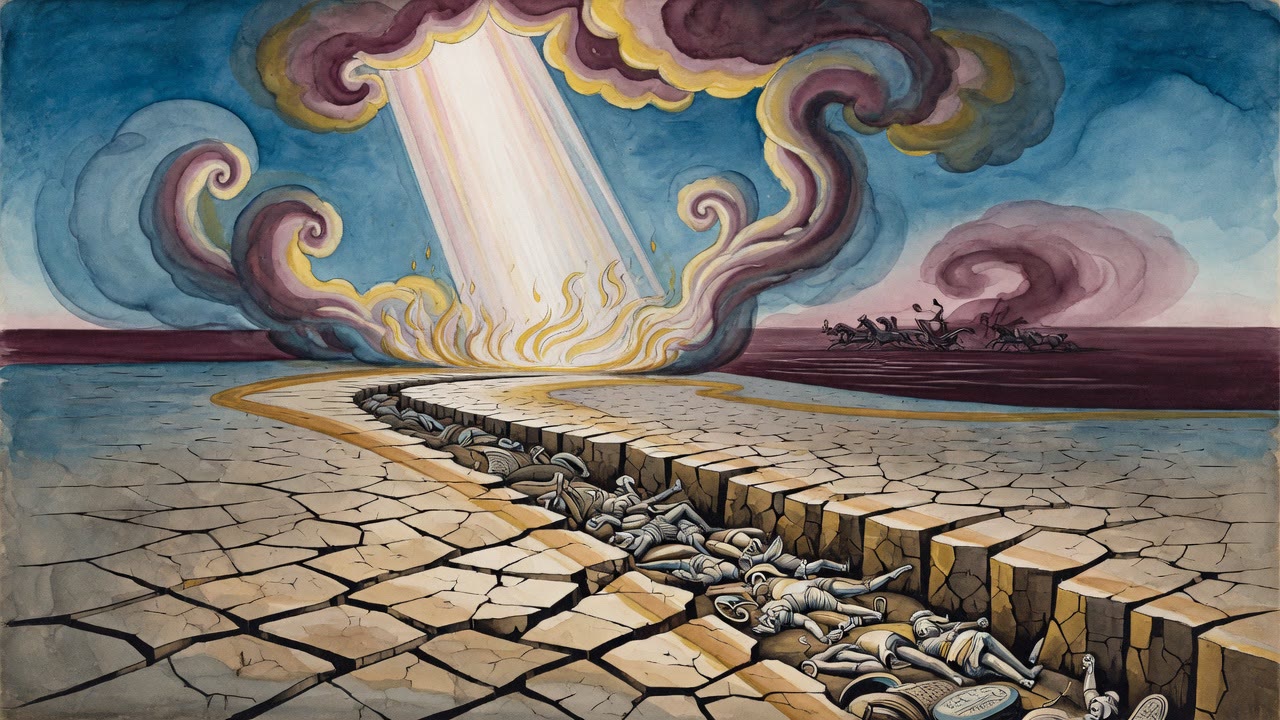
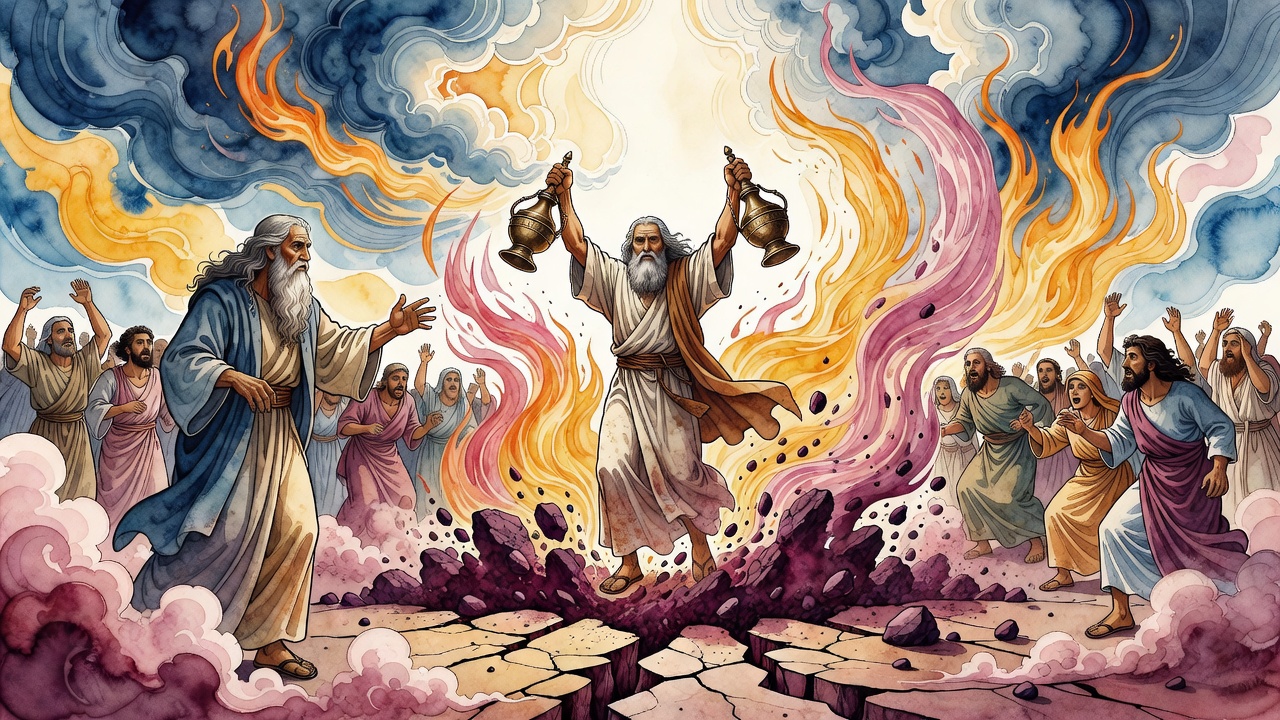
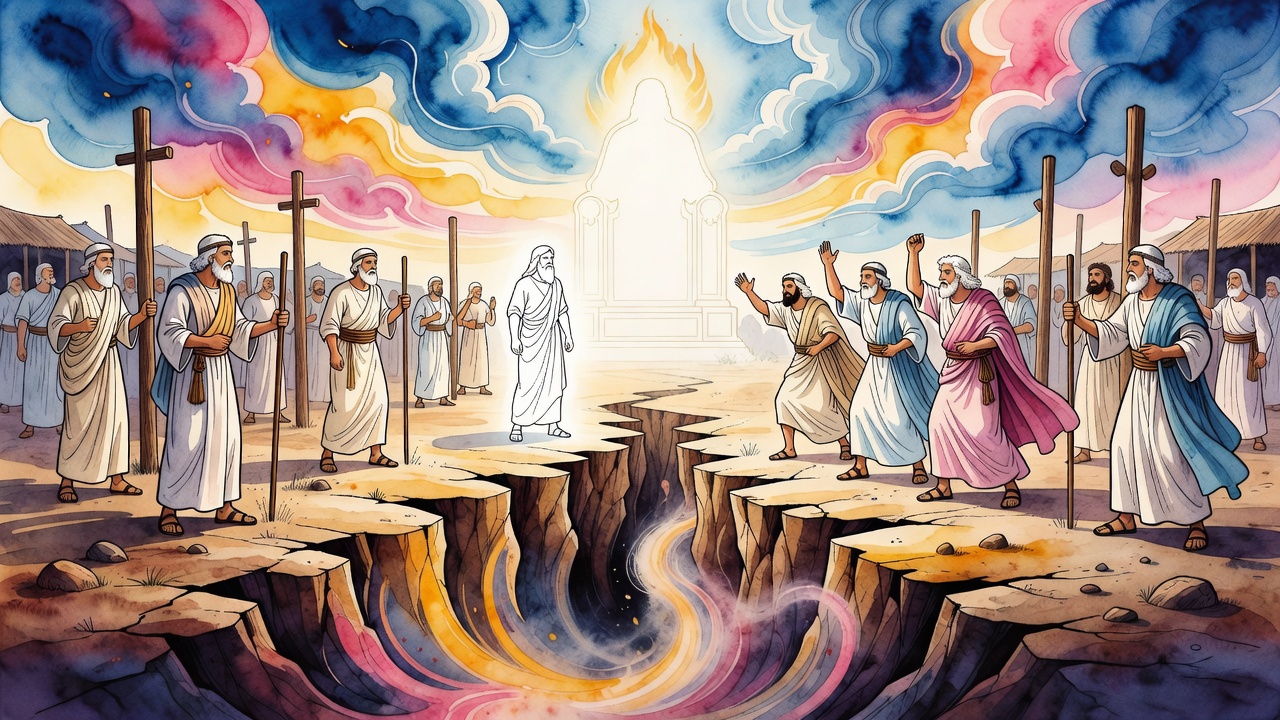
Under Dathan and Abiram the ground steepened until no foot could hold. They rolled toward a gap. Not only bodies went. Clothes, tools, even the smallest pin slid to the opening and vanished. Names dropped from documents. Erasure followed ownership into the dark. The descent was not a clean fall. The mouth fitted itself to each person, first the legs, then the trunk, then the rest, so that the camp could watch judgment measure a body the way a tailor measures cloth.

Korah's baldness became visible as absence. Followers gone. Wealth gone. The assembly of Kohath cut by a trench no shovel dug. Izhar's noon heat showed in earth that boiled. The men who had stood tall at tent flaps could not stand at all. Slow swallowing taught the onlookers that defiance of Moses was not a speech contest. It was a wager against the ground under their own beds, against the pins in their clothes, against the very letters of their names on any scroll that still listed the living.

Some traditions keep Korah crying from under the earth at set times. A hole can close in sand and stay open in law and fear.

What the Camp Kept

Israel stepped back from the tents that still argued and lived. The hole closed over names that would not bow. Moses had risked his commission on a mouth of earth and won. Aaron's priesthood stood because heaven would not let sun and moon rewrite the case. Korah's story remains the story of a man whose name and fathers already sketched the verdict, and who still chose to walk into it with two hundred fifty pans of incense and two brothers of strife at the door.

Baldness, noon heat, and a broken assembly are not ornaments on a midrash page. They are the map of how a challenge to the lawgiver ends when God answers with soil. The camp that saw limbs vanish one span at a time learned a fear no sermon could match. Leadership after that day walked past a scar in the wilderness floor, and every later grumble carried the echo of pins and people sliding toward the same dark. Power that claims holiness while refusing the appointed altar learns God can open other mouths.


← All myths
From the tradition

Sources

4 sources

The texts behind this telling. Some cards carry a translation of the source; others are our own retelling of it, and each card says which. Every card links out to the original.

Legends of the Jews 5:3Legends of the Jews

Retold in our words. Read the original at the link below.The Legends of the Jews by Louis Ginzberg (1909) · Public Domain

The ancient Jewish sages certainly thought so. Take the story of Korah, a name synonymous with rebellion. His very name, they believed, was a clue to his tragic fate.

The Torah tells us about Korah's uprising against Moses and Aaron, a challenge to their leadership that shook the very foundation of the Israelite community. But the Rabbis, in their infinite wisdom, went deeper, seeking meaning in every detail, every nuance.

Consider Korah's name itself. Korah, in Hebrew, means "baldness." But not just any baldness. According to the sages, it alludes to the "baldness" he inflicted upon Israel – the gaping hole left by the loss of his followers when the earth swallowed them whole. The Midrash (rabbinic interpretive commentary), in Numbers Rabbah, expands on this, painting a vivid picture of the consequences of his actions.

It doesn't stop there. His father's name, Izhar, meaning "the heat of noon," is also significant. Think of the midday sun, blazing and intense. The Rabbis saw this as a metaphor for the upheaval Korah caused, making the earth boil "like the heat of noon" with its fiery judgment. Powerful stuff!

Then there's Kohath, his grandfather. Kohath signifies "bluntness." Ginzberg, in his monumental "Legends of the Jews," explains that Korah, through his sin, caused his "children's teeth to be set on edge," a Hebrew idiom referring to the suffering and pain inflicted upon future generations because of someone's actions. The repercussions of Korah's rebellion rippled through time.

Even his lineage, as a son of Levi, a name connected to "conduct" or guidance, wasn't spared from interpretation. The Rabbis saw it as a grim foreshadowing: Korah, despite his Levitical heritage and its association with righteous conduct, was ultimately "conducted" to Gehenna, to hell. A stark warning about the path he chose.

So, what are we to make of all this? Were these just clever wordplays, or did the Rabbis genuinely believe that names carried such prophetic weight? Perhaps it's both. They used these interpretations, these drashot, to highlight the severity of Korah's sin and the lasting consequences of rebellion against divine authority. They reminded their listeners – and us – that our actions have meaning, that our choices echo through generations, and that even our names might be whispering our destinies, urging us towards good or, tragically, towards destruction.

What stories are our names telling? And what kind of story are we writing with our lives?

Full source
Legends of the Jews 5:17Legends of the Jews

Retold in our words. Read the original at the link below.The Legends of the Jews by Louis Ginzberg (1909) · Public Domain

Legends of the Jews turns to Moses's Transgression of Abiram.

So, Moses, following God's instructions, tells the community to distance themselves from Dathan and Abiram. You'd think, faced with the potential consequences of defying Moses, they’d have a moment of clarity. But no. According to Legends of the Jews by Ginzberg, drawing from various Midrashic (rabbinic interpretive commentary) traditions, these men remained defiant. They stood right at the entrances of their tents, hurling insults and slander at Moses.

Moses, witnessing this blatant disrespect, turns to God. His words are powerful, almost a test of faith. He says, essentially, "If these men die a natural death, like everyone else, then I'll admit I wasn't sent by God." The stakes couldn't be higher.

Then comes the truly astonishing part. Moses, in a moment of intense connection with the Divine, proposes a rather. unusual solution. "If the Lord hath already provided the earth with a mouth to swallow them, it is well; if not, I pray Thee, do so now." He's asking God to create a specific, miraculous event. He wants the earth itself to become an instrument of divine judgment.

And God's response? "Thou shalt decree a thing, and it shall be established unto thee." Wow. What does that even mean? God is essentially granting Moses the power to bring about this extraordinary event. It's evidence of Moses's unique relationship with God, his unwavering faith, and perhaps, the severity of Dathan and Abiram's sin.

What happens next? Well, that's a story for another time. But the setup, this moment of intense confrontation and divine response, leaves us with a powerful question: What happens when human defiance meets divine power? How far is too far? And what role do we play in shaping the world around us with our words and intentions?

Full source
Legends of the Jews 5:18Legends of the Jews

Retold in our words. Read the original at the link below.The Legends of the Jews by Louis Ginzberg (1909) · Public Domain

Remember him? He was the dude who led a massive rebellion against Moses’s leadership in the wilderness. It wasn't just a little grumbling; it was a full-blown challenge to Moses's authority as God's chosen leader. And the consequences, as we know, were The earth opened up and swallowed Korah and his followers whole!

Here's a wrinkle you might not have heard. It wasn't just Moses calling for justice. According to legend, even the Sun and Moon got involved! That's right, the celestial bodies themselves.

The story goes that the Sun and Moon actually appeared before God, saying, "Look, if you don’t give Moses, the son of Amram, satisfaction in this case, Can you imagine? Celestial blackmail!

God wasn't having it. He wasn't about to let the cosmos be dictated by the whims of even His most impressive creations. He hurled lightnings after them, essentially telling them, "Get back to work! You've never championed My cause, and now you're standing up for a mere mortal?"

It’s a pretty strong rebuke. As Ginzberg's Legends of the Jews retells it, since that incident, the Sun and Moon haven't exactly been enthusiastic about their jobs. They have to be driven to duty, never doing it voluntarily. Why? Because, according to the tradition, they don't want to look upon the sins of humanity. They're constantly witnessing our failings, our transgressions, and they're not exactly thrilled about it. Every sunrise, every moonrise – a reluctant act, a cosmic sigh. Of course, this is all legend, all aggadah (non-legal rabbinic narrative) – storytelling meant to teach us deeper truths. But what truth is this story trying to illuminate?

Perhaps it's about the weight of responsibility, both human and divine. Moses felt the weight of leading the Israelites, and the Sun and Moon felt the weight of witnessing our world. Maybe it’s also about the relentless nature of justice, that even the stars in the sky demand accountability.

Or maybe, just maybe, it's a reminder that even when things seem dark – when the Sun and Moon seem reluctant to shine – there's still a divine force pushing them forward, a force that ultimately believes in the possibility of a brighter day. And maybe, just maybe, that same force believes in us, too.

Full source
Legends of the Jews 5:20Legends of the Jews

Retold in our words. Read the original at the link below.The Legends of the Jews by Louis Ginzberg (1909) · Public Domain

These weren't exactly the heroes of our story, you see.

Remember Korah's rebellion? Dathan and Abiram were right there, stirring up trouble. They challenged Moses's leadership, questioned Aaron's priesthood, basically, they sowed discord and undermined the very foundations of the community.

God? Well, He wasn't exactly thrilled.

In legend, God decided to grant His faithful servant, Moses, satisfaction. Imagine the scene: the earth beneath Dathan, Abiram, and their families began to crumble. The ground became so steep that they couldn't even stand, losing their balance and rolling toward a gaping abyss.

It wasn’t just them, either. Everything they owned – their clothes, their tools, even the smallest pin – was drawn toward the opening, disappearing without a trace. Ginzberg tells us that not even their names remained on any documents. Erased. Gone.

But here's where the story takes an even darker turn. They didn't just instantly vanish. Oh no. According to the legend, their descent was slow, agonizing. The earth adjusted its opening to the size of each person, swallowing them bit by bit. First, their legs disappeared, then the opening widened to engulf their abdomens, and so on.

Can you imagine the horror?

And as they were sinking, as they were being consumed by the earth, they cried out. "Moses is truth, and his Torah is truth!" they wailed. "We acknowledge that Moses is rightful king and true prophet, that Aaron is legitimate high priest, and that the Torah has been given by God. Now deliver us, O our teacher Moses!"

A little late for an apology, don't you think?

The cry, according to the story, echoed throughout the entire camp. Everyone heard their desperate pleas, their belated recognition of the truth. It was a stark, terrifying lesson for all to witness. A public display of the consequences of their wicked actions.

What does it all mean? It’s a pretty extreme story. But maybe it's meant to be. Perhaps it's a reminder that our actions have consequences. That challenging legitimate authority, undermining communal trust, can lead to a pretty deep hole, sometimes literally. It also serves as a reminder of the importance of truth, of acknowledging the divine, and of the dangers of rebellion. It's a tough story, but one that sticks with you.

Full source