5 min read

The Camp Envied Moses Until the Earth Opened

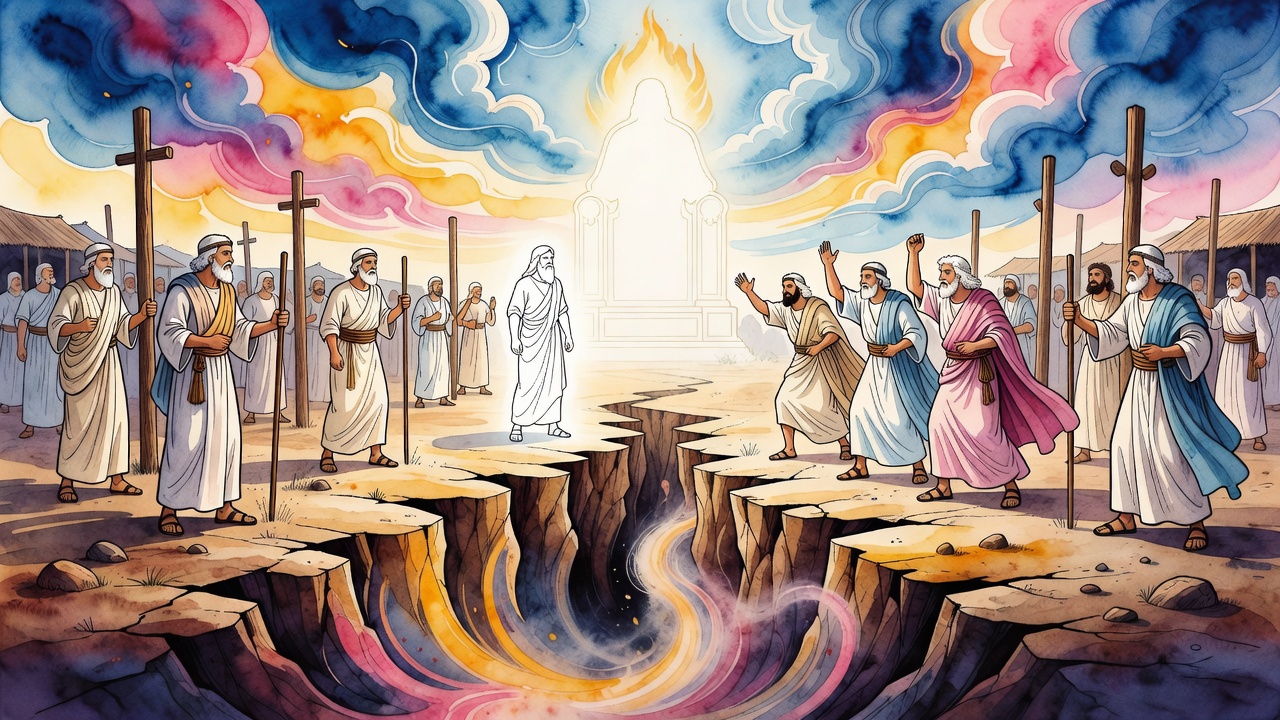
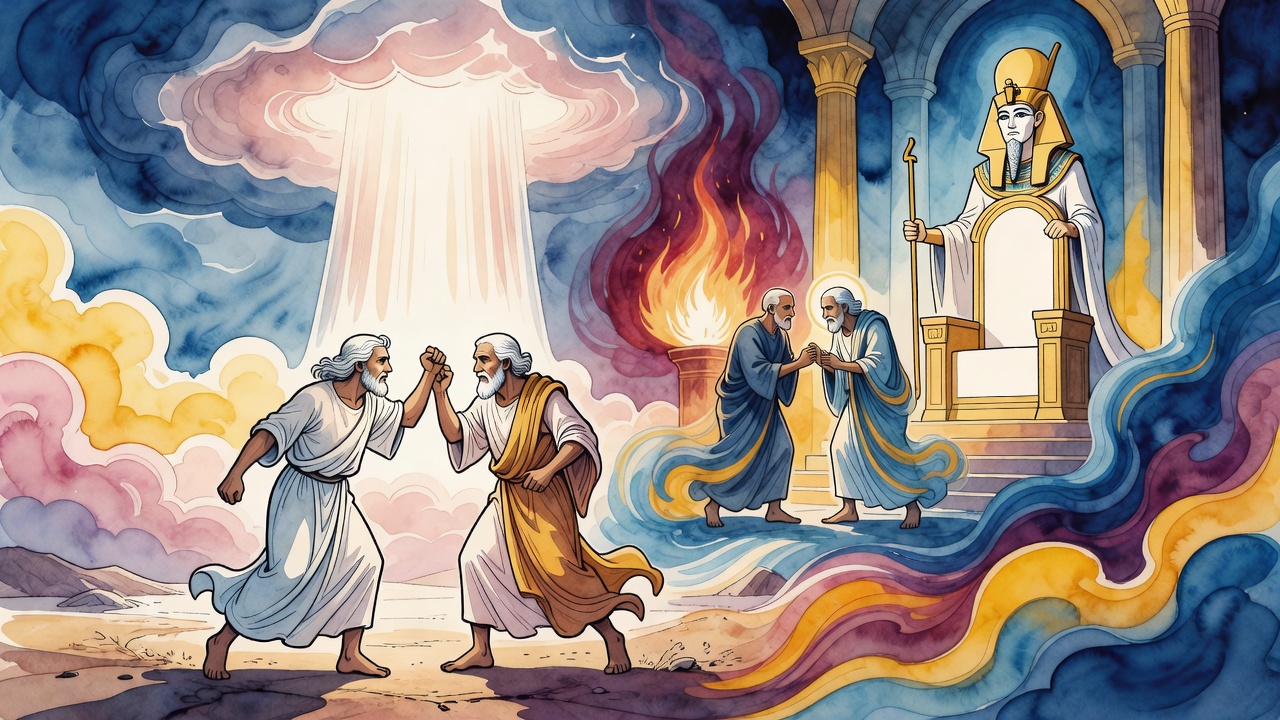
At the water jars they asked why it was always his face at the tent door. The ground opened, and mothers pulled their children back from the crack.

Curated by Arthur · Told by Maggid ·
Table of Contents
  1. Counting Without Moses
  2. The Ground That Listened
  3. Anger Cast in Gold
  4. The Word Then
  5. The Same Word Ahead
The Camp Envied Moses Until the Earth Opened Click for full size

Counting Without Moses

The camp learned to envy Moses the way a thirsty man envies the one who holds the skin of water. Miracles had not cured the habit. Manna fell and still the eyes slid sideways, counting who stood nearest the entrance of the tent, who spoke for the people, who seemed replaceable if the complaining grew loud enough to drown memory.

Psalm 106 remembers the envy in the camp. Midrash Tehillim presses harder. The people felt Moses was being edged out of his own place. Leadership posts shifted in rumor and in fact. Dathan and Abiram tasted appointment like wine left too long in the sun. Resentment thickened until it needed a mouth and a crowd willing to stand behind the mouth.

You could hear it at the water jars. Why him. Why always his face at the door. The desert had given them freedom and they spent it measuring ranks as if ranks could feed a child better than the manna already falling.

The Ground That Listened

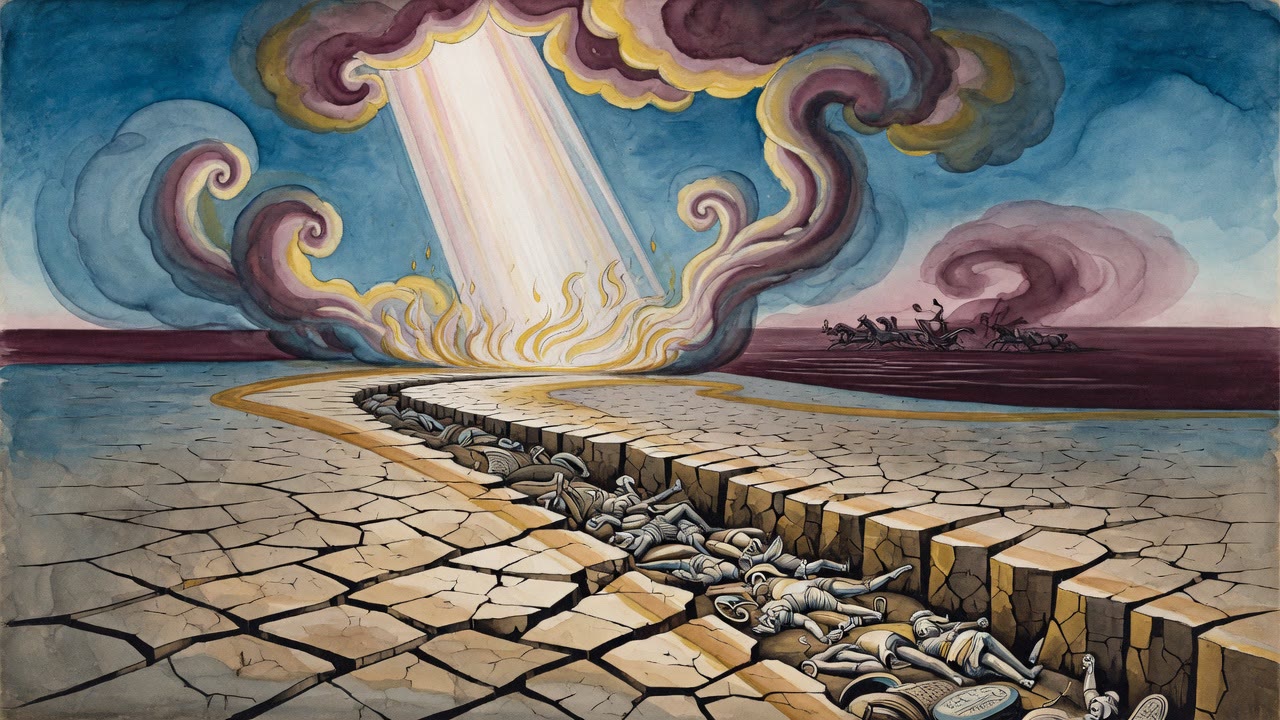
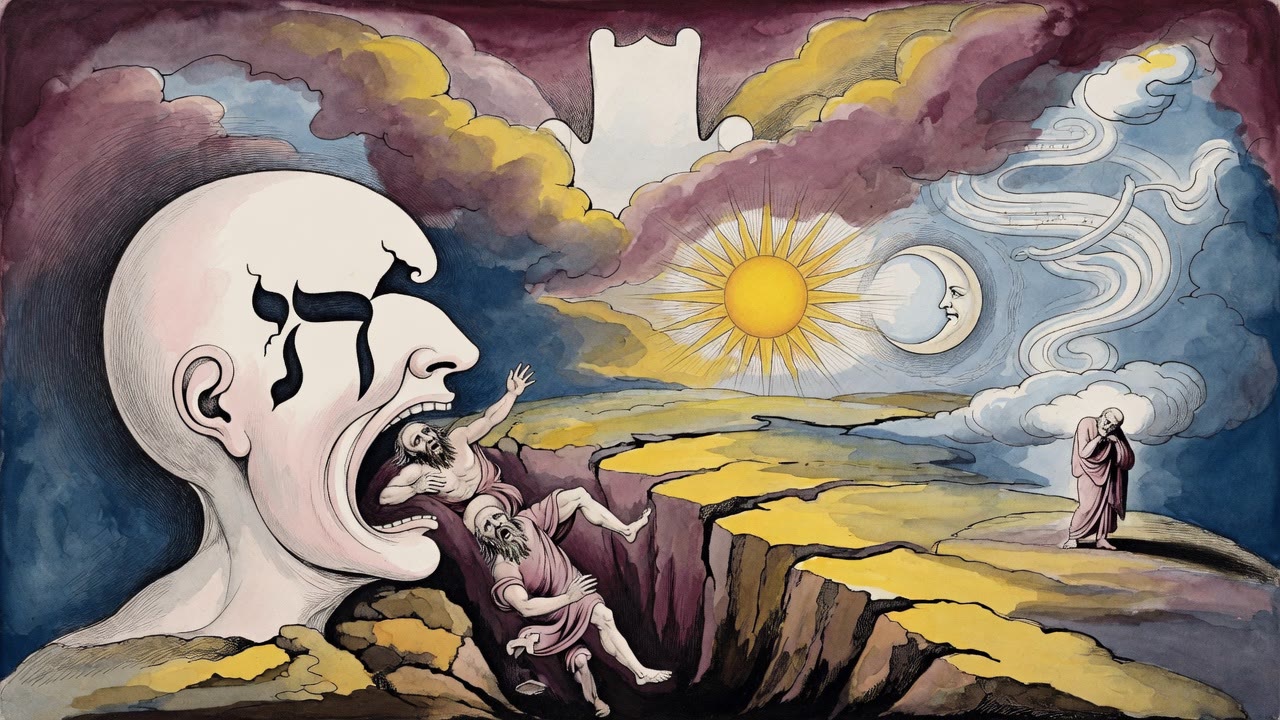
When the challenge rose fully, the earth did not argue. It opened. The midrash says the ground swallowed Dathan and covered the assembly of Abiram. Bodies that had stood tall in envy vanished into a seam of dust and dark, and the noise of self-importance became a silence with a hole in the middle of the camp.

Those who watched stepped back from the edge with a new kind of fear. You can envy a man who speaks with God. You cannot negotiate with a field that has decided you do not belong on its surface. Children were pulled behind mothers. The camp went quiet in the way camps go quiet after a public death that no knife performed.

Moses did not need to raise a sword. The ground had taken a side. At night the survivors whispered near the tents. Some said the earth had been waiting years for the moment. Others said the envy had been a second desert inside the first, dryer than any wadi. A few still muttered that Moses took too much space, then looked at the dark seam and shut their mouths. Fear can silence a complaint without curing it, and silence is not the same as song.

Anger Cast in Gold

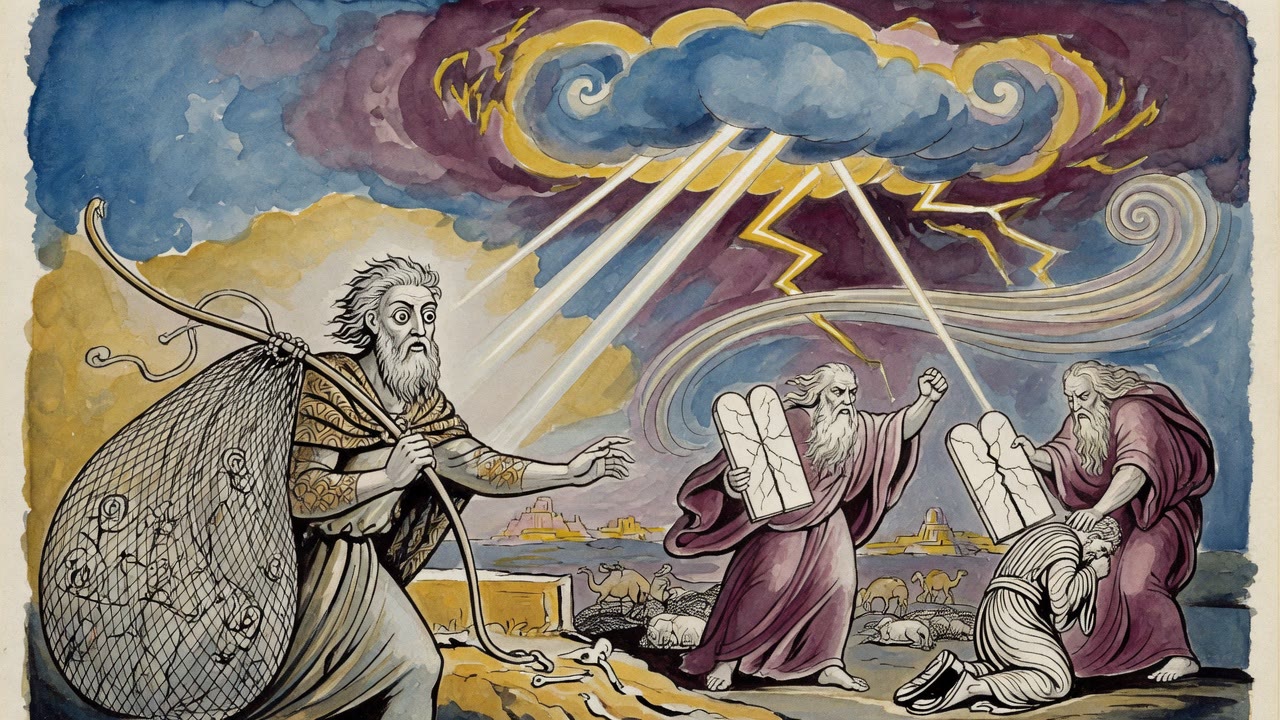
Envy was not the only fire. At Horeb they had already poured rage into a calf of gold, a bright animal that looked like certainty when Moses delayed on the mountain. Some called it a calf of anger, an idol forged from disillusion as much as from jewelry melted in haste while the mountain still smoked with presence.

Rabbi Shimon would say that at Horeb Israel both accused and was acquitted, a double motion only covenant can hold. Accusation without mercy ends in the pit. Mercy without memory invites the next calf. The wilderness kept offering both options on the same road, sometimes on the same afternoon, and the people kept choosing as if they had never seen the sea split or the bread arrive with the dew.

Miracles pile up behind a stubborn neck and still fail to bend it. That is the scandal the midrash refuses to hide when it retells the envy that opened the earth.

The Word Then

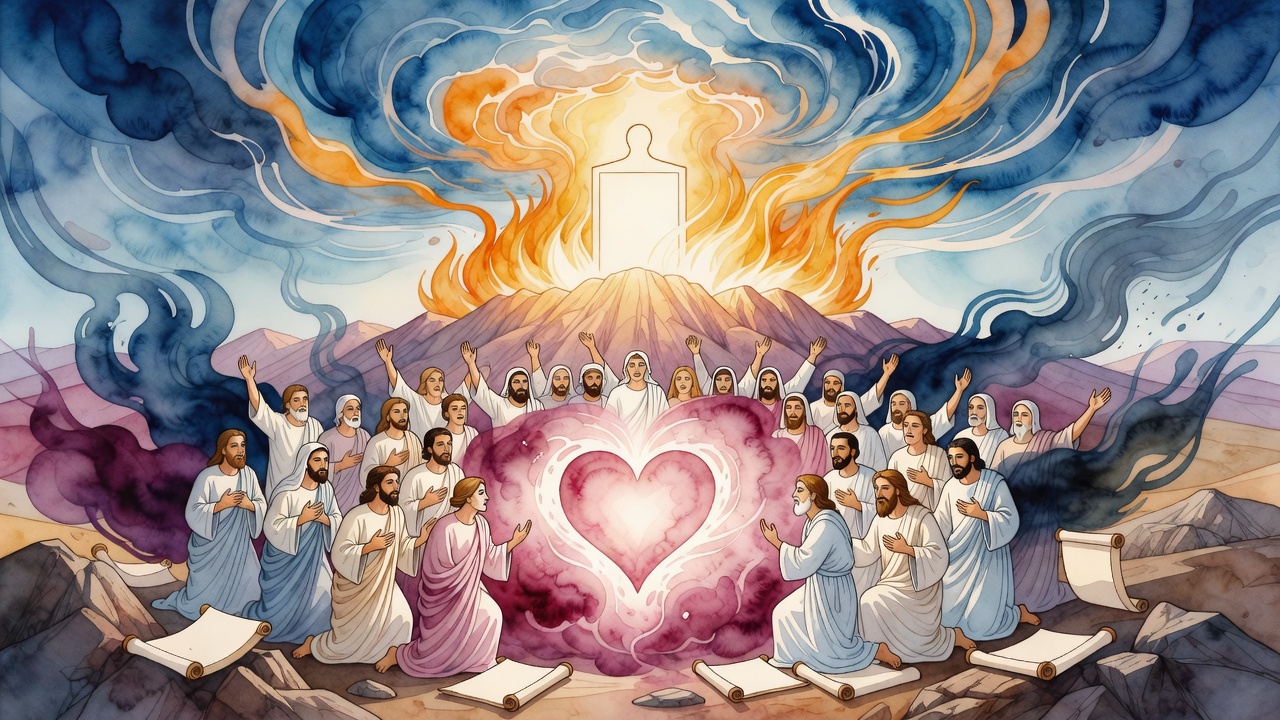
Hidden in a small Hebrew word, the sages hear the hinges of the whole story. Then people first called on the name of the Lord. Then Zipporah spoke at the night of blood. Then Israel sang at the well. Then Moses sang at the sea. Then Joshua spoke to the sun. Then David and Solomon lifted songs of dedication that filled houses of wood and stone with sound.

Every then is a doorway. Ordinary time tears, and God acts, and someone answers with a voice that was not possible the day before. The camp that envied Moses had walked through several of those doorways already and still wanted a different door with their own name carved above it in place of the Name that had brought them out.

The word is small enough to miss in a scroll and large enough to carry a people from slavery into song if they will open their mouths for praise instead of for complaint.

The Same Word Ahead

The prophets refuse to leave then trapped in memory. Then your light will break like dawn. Then the lame will leap. Then mouths will fill with laughter. The grammar itself becomes a promise that the God of the sea has not finished acting, and that the next hinge may open under feet that have not yet learned the new music.

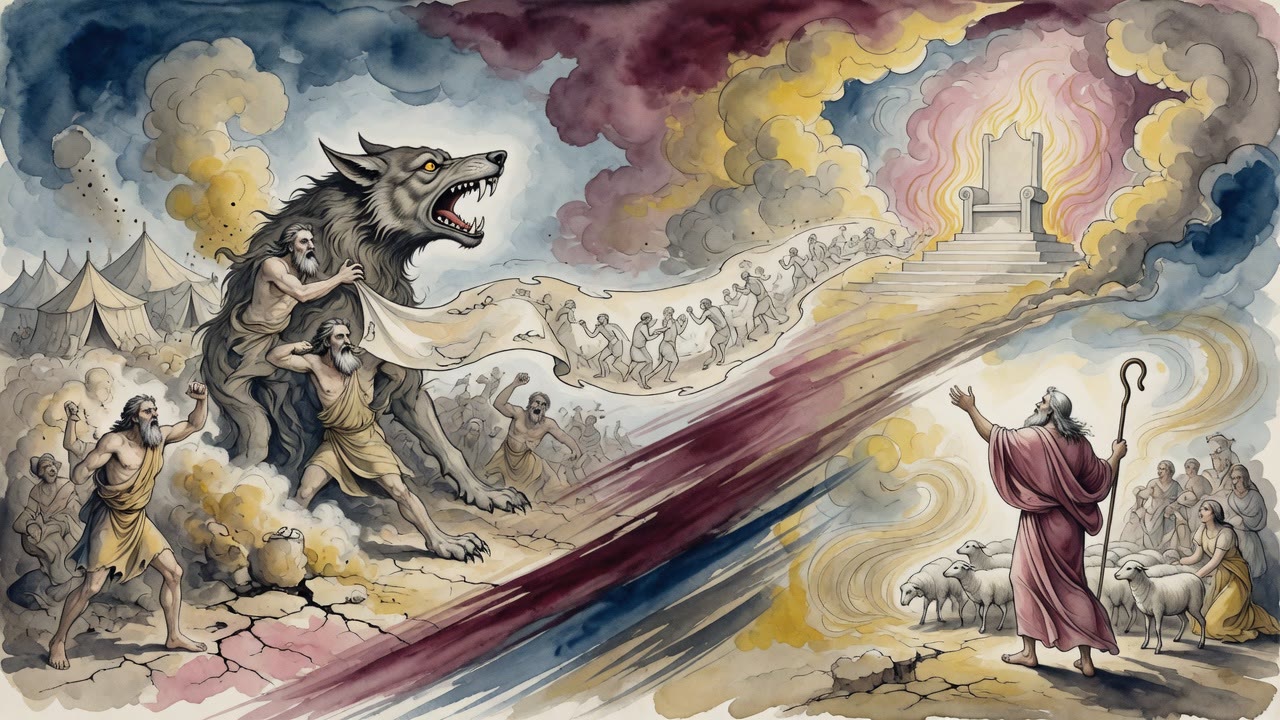
Between the pit that swallowed Abiram and the song still waiting, Israel lives in the tense space where envy and praise compete for the same breath. The earth can open under a rebel. It can also hold still under a people learning, again, to sing then as future rather than only as past. The difference is not the desert. The difference is which word the mouth chooses when the camp grows restless and the water jars begin to talk.


← All myths
From the tradition

Sources

2 sources

The texts behind this telling. Some cards carry a translation of the source; others are our own retelling of it, and each card says which. Every card links out to the original.

Midrash Tehillim 106:6Midrash Tehillim

Retold in our words. Read the original at the link below.Rabbi Mike Feuer, Jerusalem Anthology · CC-BY

The ancient rabbis certainly did. They saw it playing out in the story of the Israelites in the desert, a story brimming with lessons for us today.

Our jumping-off point is Psalm 106, and the Rabbis in Midrash Tehillim, a collection of rabbinic teachings on the Book of Psalms, dig deep into a particular verse that speaks of envy towards Moses. “And they envied Moses in the camp..." But what exactly were they envious of?

Rabbi Shimon ben Yochai offers a fascinating interpretation. He suggests that the people were envious because they felt Moses was being replaced, perhaps even usurped! He points out that the Israelites were counted in the wilderness instead of Moses. And even more, Dathan, a known troublemaker, was appointed in Moses' place, and Abiram in Aaron's. Midrash Tehillim quotes scripture stating, "It is a leadership position," implying that these appointments fueled resentment. feeling overlooked, sidelined, replaced… it’s a potent recipe for envy.

What was the consequence of this envy? Catastrophe. "The earth opened up," the Midrash (rabbinic interpretive commentary) tells us, "and swallowed Dathan, and covered the assembly of Abiram." A stark reminder of the destructive power of unchecked jealousy and resentment.

But the story doesn't end there. The Midrash then shifts to another infamous episode: the Golden Calf. "They made a golden calf in Horeb," it says, reminding us of that ultimate act of betrayal against God.

Rabbi Meir even calls it the "calf of anger" (though the Hebrew term is not provided in the original text). An idol forged not just from gold, but from simmering rage and disillusionment.

Rabbi Shimon offers a counterpoint. He says that at Horeb, the Israelites both accused and were acquitted. What a strange idea! He bases this on the verse, "And the children of Israel stripped themselves of their ornaments." In other words, they sinned terribly, yes, but they also showed remorse, a willingness to shed their material attachments and return to God.

The Midrash continues, "And they exchanged their glory for the likeness of an ox." But what kind of ox? This is where it gets really interesting.

Rabbi Papayas suggests it was the image of the "celestial ox." Now, this celestial ox is a figure from Jewish mystical tradition, a powerful, cosmic being. But Rabbi Akiba, a towering figure of Jewish law, cuts him off rather abruptly. “Enough, Papayas!” he exclaims. "Is it not written, 'He eats grass?'"

Rabbi Akiba's point is sharp: if the celestial ox eats grass, how can it be a perfect, untainted divine image? Surely it would have horns and hoofs! He brings the mystical speculation crashing down to earth with a simple, almost humorous, observation.

So, what are we left with? A whirlwind of envy, rebellion, repentance, and rabbinic debate. The Israelites, blinded by envy and frustration, traded their divine connection for a flawed, earthly imitation. The rabbis, in turn, grappled with the meaning of it all, offering interpretations that range from the mystical to the grounded.

Perhaps the enduring message is this: Envy, like a crack in the foundation, can lead to the collapse of everything. And while we might stumble and fall, as the Israelites did, the possibility of repentance, of stripping away our own “ornaments” and returning to what truly matters, always remains.

Full source
Yalkut Shimoni on Torah 241:5Yalkut Shimoni on Torah

Translation of the source text.Torat Emet (Yalkut Shimoni) · CC-BY-NC

There is a "then" referring to the past, and there is a "then" referring to the future. "Then began men to call upon the name of the LORD" (Genesis 4:26); "then she said, A bridegroom of blood" (Exodus 4:26); "then sang Israel" (Numbers 21:17); "then sang Moses"; "then spoke Joshua"; "then David said" (1 Chronicles 15:2); "then Solomon said" - these refer to the past.

And there is a "then" referring to the time to come: "then you shall see and be radiant" (Isaiah 60:5); "then shall your light break forth like the dawn" (Isaiah 58:8); "then shall the lame leap"; "then shall the eyes of the blind be opened" (Isaiah 58:5); "then shall the virgin rejoice" (Jeremiah 31:12); "then was our mouth filled with laughter; then they said among the nations" (Psalms 126:2) - these refer to the time to come.

Full source