At Sinai the Kiss of Torah Slipped From the Heart
When Israel heard God directly, Torah stuck in the heart and the evil urge fled. They asked for Moses instead, and both gifts began to fade.
Table of Contents
 Click for full size
The First Hearing
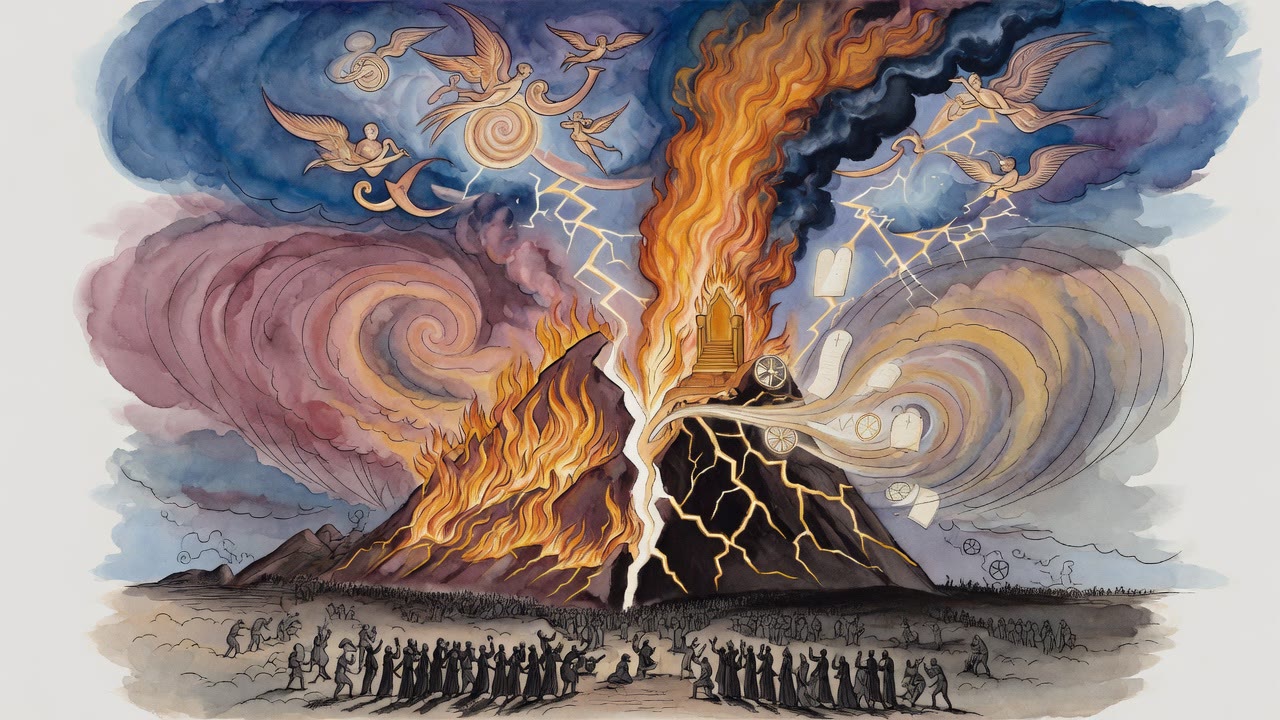
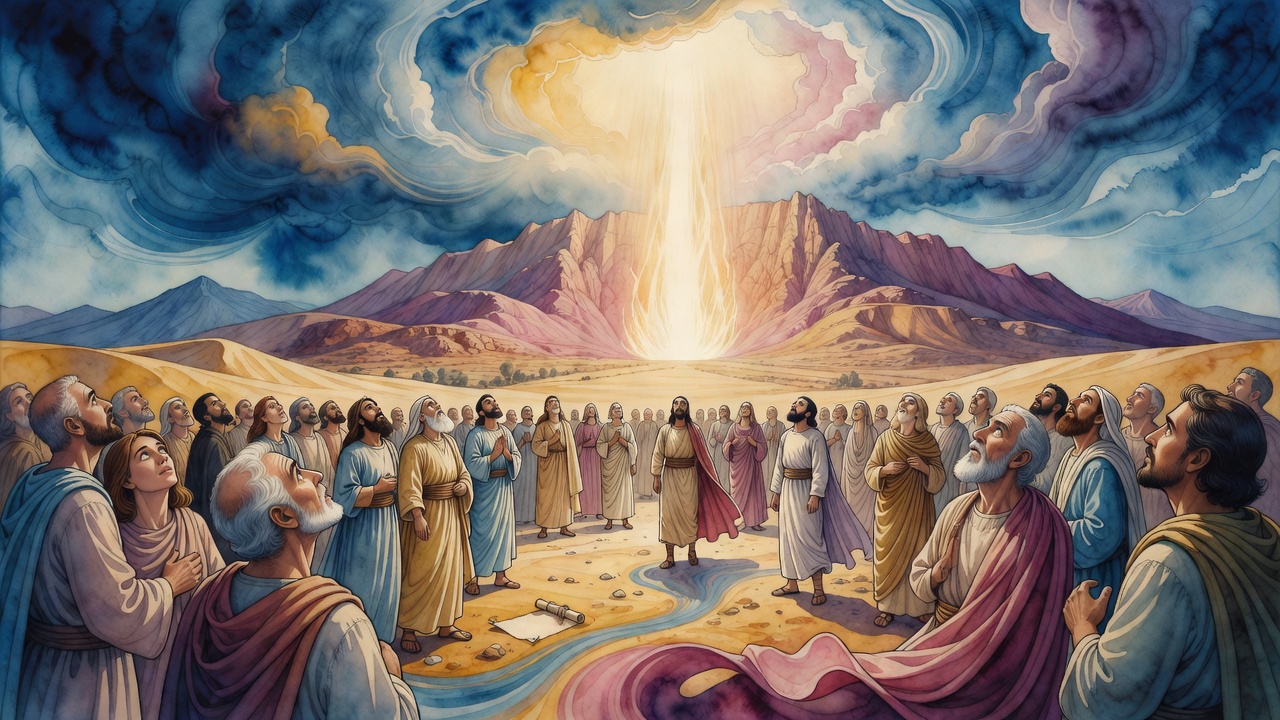
When Israel first heard "I am the Lord your God," Torah did not sit on the surface of the mind (Exodus 20:2). It sank. Rabbi Yehuda said the words fixed themselves in the heart so that understanding came the way breath comes, without strain, and memory held without a rope.
The mountain still smoked. The people's bodies shook, yet inside a strange calm had opened: law as intimacy, not as lecture. For a span of heartbeats the nation knew what it knew without distance.
That calm terrified them as much as the thunder.
Bodies that had built bricks under taskmasters were not trained for unfiltered speech from the Maker of speech. The midrash does not mock the fear. It tracks what the fear cost. Safety purchased with distance always invoices later.
Moses stood where they pointed, a man becoming a wall and a window at once. Behind him, fire. Before him, faces that wanted both intimacy and insulation. No prophet is built for that geometry, and still he held it.
Send Us a Man
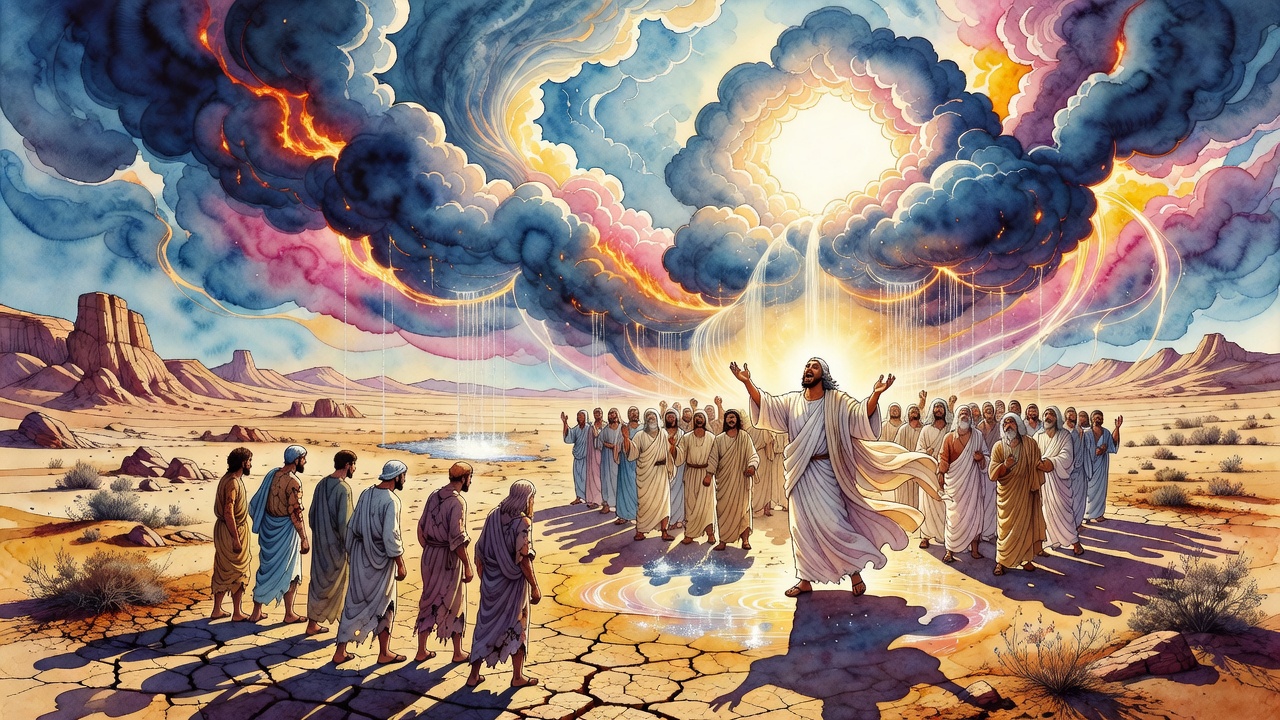
"You speak to us and we will hear," they told Moses (Exodus 20:16). "Why should we die?" Distance looked like safety. A human voice looked like a filter for a fire too pure.
Moses took the middle place because they asked. The Holy One allowed the arrangement. At once the perfect stickiness of the first hearing began to loosen. What had been written on the heart started to behave like words learned for a test.
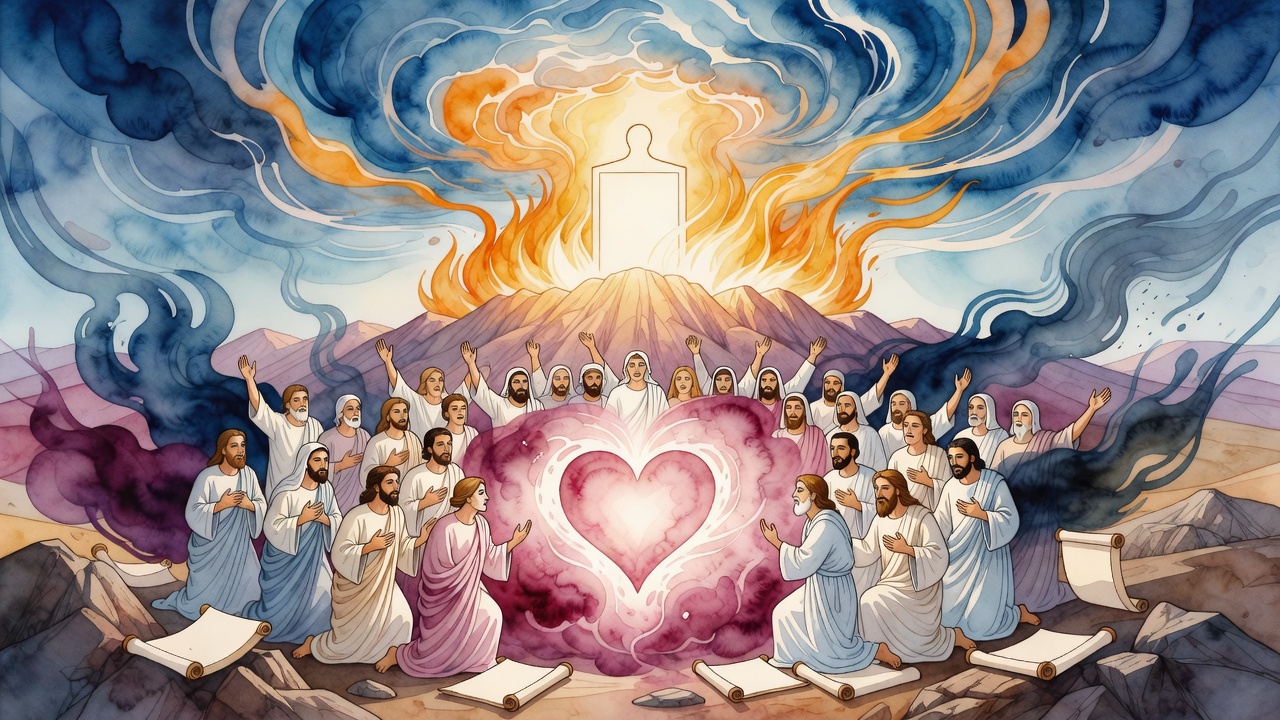
They felt the fade and grieved it. "Just as Moses is flesh and blood and passes," they reasoned, "so his teaching may pass." They longed for the direct kiss again: "Let him kiss me with the kisses of his mouth," the Song's cry read midrashically as a plea for Torah restored to the insides (Song of Songs 1:2).
The Urge That Returned
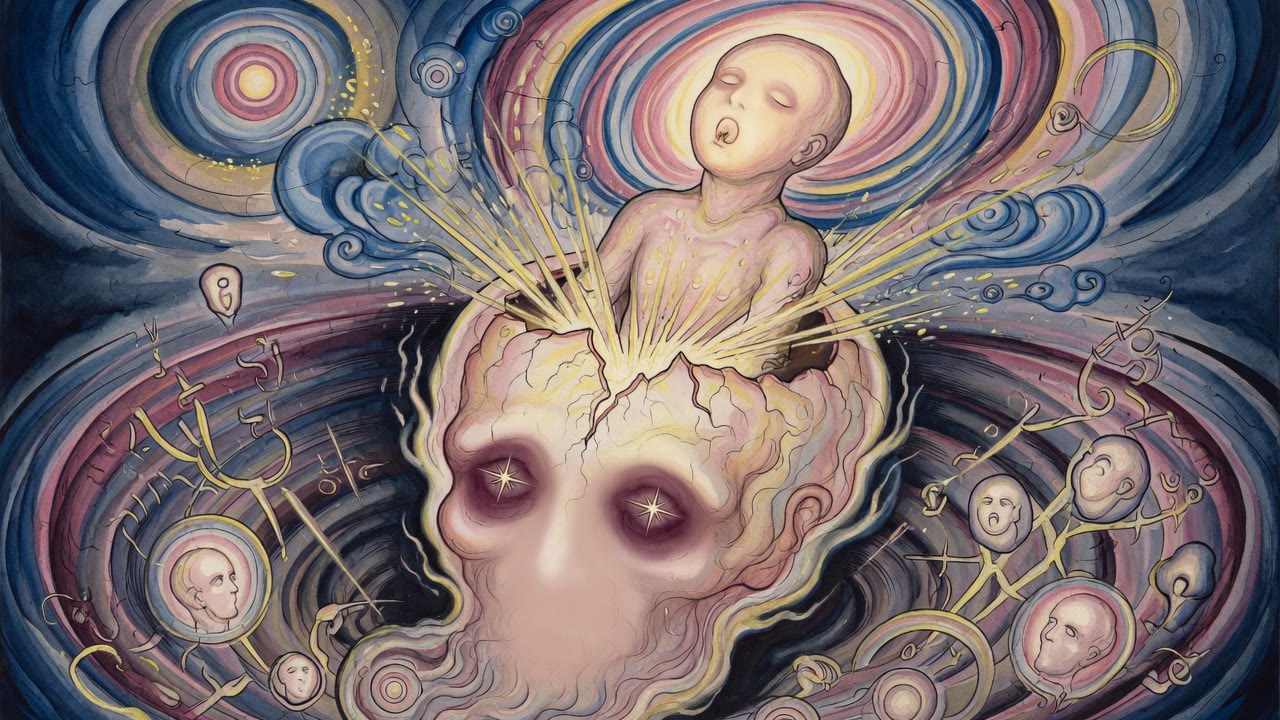
Rabbi Nehemiah told the twin story. When they heard "You shall not have other gods," the yetzer hara, the evil inclination, was uprooted from the heart (Exodus 20:3). Desire's sabotage went quiet. For a moment a whole people stood without that inner saboteur.
Then they asked for Moses to stand between, and the yetzer climbed back into its old seat. Freedom from temptation proved as fragile as perfect memory. Both gifts had hung on unmediated speech. Both slipped when mediation was chosen out of fear.
Again they cried for a second appearing, a second kiss. Moses could only point forward, to a promise larger than the afternoon: Torah written on the heart again, a stone heart removed from the flesh (Jeremiah 31:32; Ezekiel 36:26).
Songs in a Woman's Voice
Shemot Rabbah hears Israel's long history of trouble in the grammar of song. Through Babylon, Media, Greece, and Edom, the nation sang shirah, song in a feminine form, the form of cycles, labor, repeated birth, pain that returns and still produces life.
Each empire was another contraction. Each survival was another delivery. The songs did not deny the pain. They rode it.
Isaiah points past the cycle: earlier troubles forgotten, gladness reached, a new song, shir, in the masculine form that the midrash hears as a break in the loop (Isaiah 65:16; Isaiah 35:10; Psalms 98:1). Not resilience only. Resolution.
What the Fade Demanded
At Sinai they tasted unmediated Torah and unrooted evil, then chose a human buffer and watched both wonders thin. The longing that followed is not failure alone. It is the engine of every later return.
Moses did not scold them out of the future. He carried their fear and still spoke of writing that would not depend on a mountain's volume. The kiss would come back as inscription, not as a one-time shock.
Until then, Israel sings shirah through the empires, holding the melody together until the day the song changes gender and the heart no longer needs to ask for a filter.
That night, around low fires, people tried to recite what they had known perfectly at noon and found the edges already soft. Panic is a poor scribe. Distance is a poorer one. They looked at Moses sleeping with his face still marked by light and felt both gratitude and grief.
The yetzer's return was quieter than thunder. A petty envy here. A sharp word there. The old machinery of self restarting after a holy power outage. Parents noticed it in children first, then in themselves.
Across later centuries the grammar of song would track the same pattern: cycles of trouble and birth, shirah after shirah, until a final shir breaks the loop. Sinai's fade is the first verse of that long melody. Redemption's grammar is the last.
Jeremiah's promise of Torah written on the heart is not a denial of Moses. It is the repair of the hour Israel chose a buffer. Ezekiel's promise of a heart of flesh is not sentiment. It is surgery on the organ that let the yetzer back in.
← All myths