God Healed the Blind Before He Gave Torah
Israel left Egypt blind, deaf, and lame. Before Sinai, God burnished the people like a king's old hall so a perfect Torah met a whole generation.
Table of Contents
 Click for full size
The Hour Moses Had Been Counting
Moses stood in the camp and counted moons on his fingers until the skin of his thumb went white. At the bush the Holy One had promised: bring the people out of Egypt, and you shall serve Me upon this mountain. He waited, counting days the way a man counts breaths under a low ceiling. When the hour came, God said, "The new moon has come, the one you have been awaiting." Rabbi Judah the Levite heard renewal in the wording. "I am renewing things," said God, "and I am renewing you."
Moses looked at the camp that had walked out of brick and whip. Among those who left Egypt were the blind, the deaf, and the lame. A perfect Torah waited on a mountain. A marked generation stood in the sand. The gap between promise and people still needed a miracle that was not water or bread.
The King and the Borrowed Hall
A king whose son has come of age longs to marry him off, but has only an old banquet hall. "It dishonors my son to wed him in an aged hall," the king says, "and to wait for a new one delays his joy." So he summons smiths to burnish the copper and craftsmen to carve the wood until the old hall gleams as if newly built.
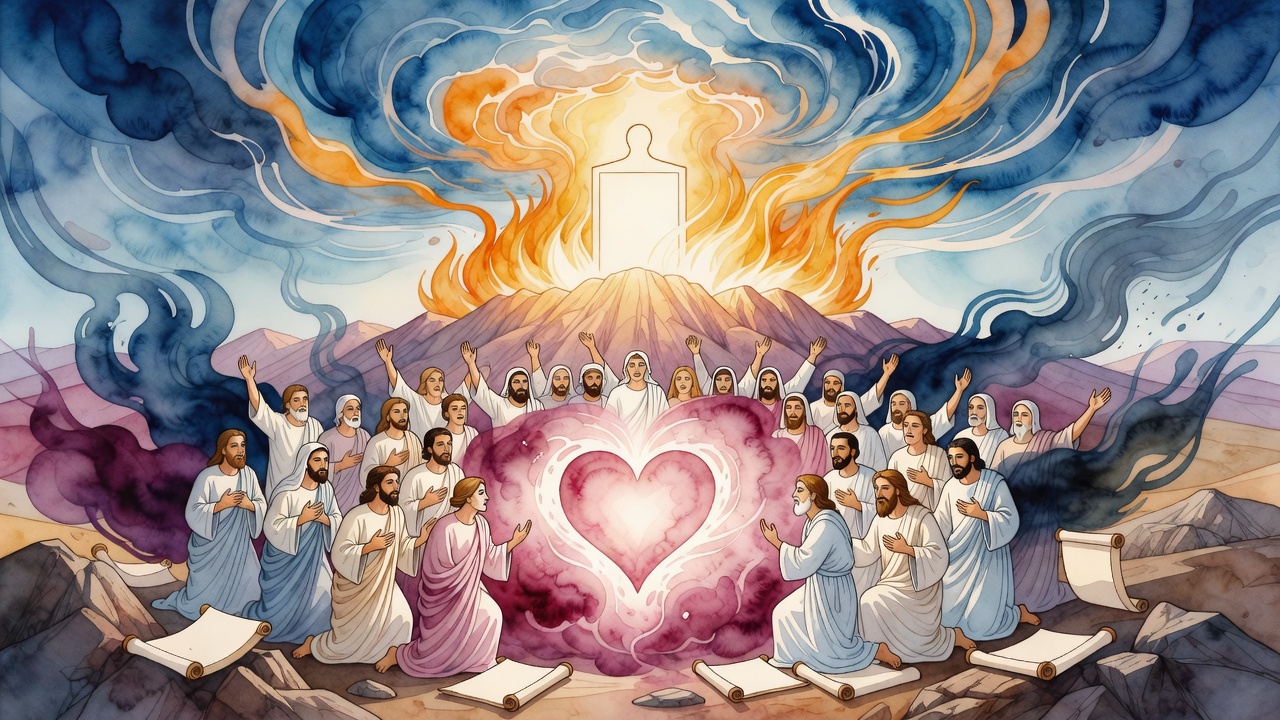
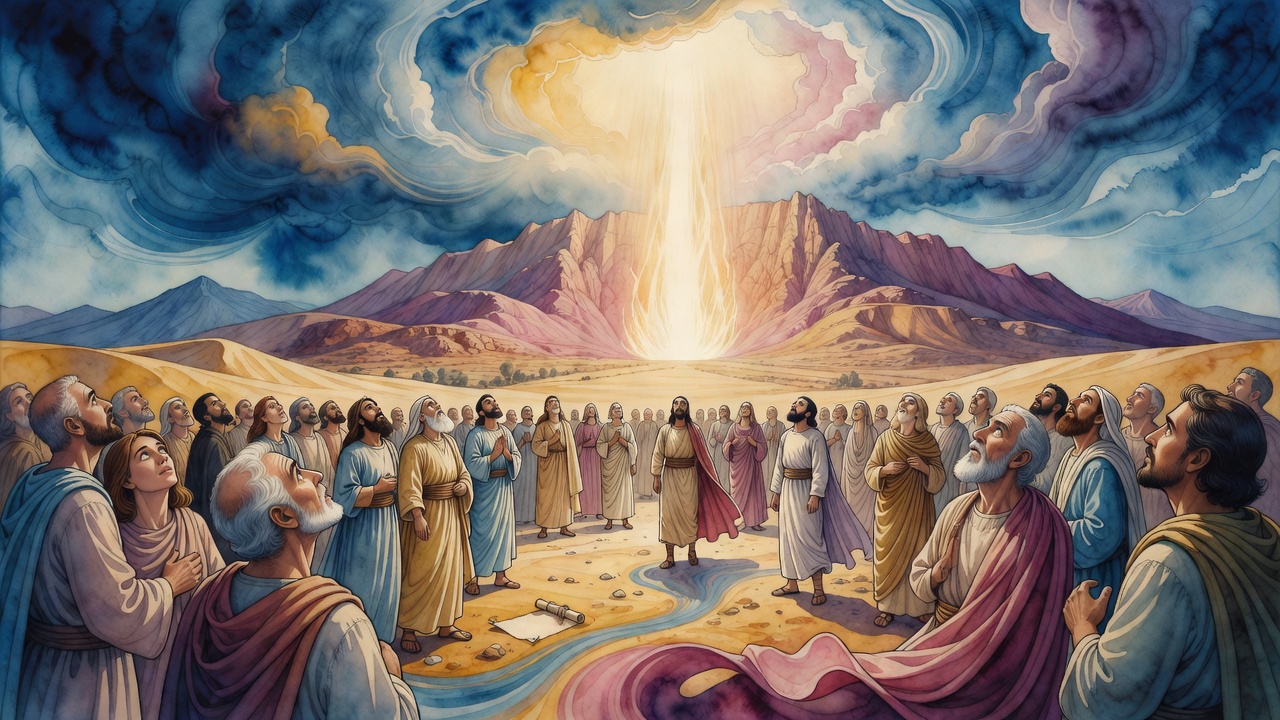
So it was with Israel. The Holy One said, "The Torah is perfect; shall I give it to a generation marked by blemish, or delay its joy until their children rise?" He chose neither shame nor delay. He healed them. The blind saw the thunder. The deaf heard and answered, "We will do and obey." The lame stood whole at the foot of the mountain. A renewed people to receive a perfect Torah.
They Walked Into a Land Not Sown
Before that mountain, after the Sea of Reeds, Moses told the people to set out into the wilderness. Rabbi Eleazar of Modiim insisted they did not move at a mere man's bidding. They journeyed at the command of the Gevurah, the Almighty Himself. Why, then, does Scripture credit Moses? Because of what the people did not say.
They did not press him. They did not ask, "Where are you taking us? Into the wilderness? Perhaps there is nothing there, no water, no bread, nothing at all." They asked nothing. They rose and went on faith alone. Generations later, when Israel had grown faithless, Jeremiah was sent to cry in Jerusalem's ears: "I remember in your favor the devotion of your youth, your following Me in the wilderness, in a land not sown." The bride who once followed her Beloved into a trackless desert, asking nothing, trusting everything: that is how God remembers Israel.
Whole Bodies Under a Burning Sky
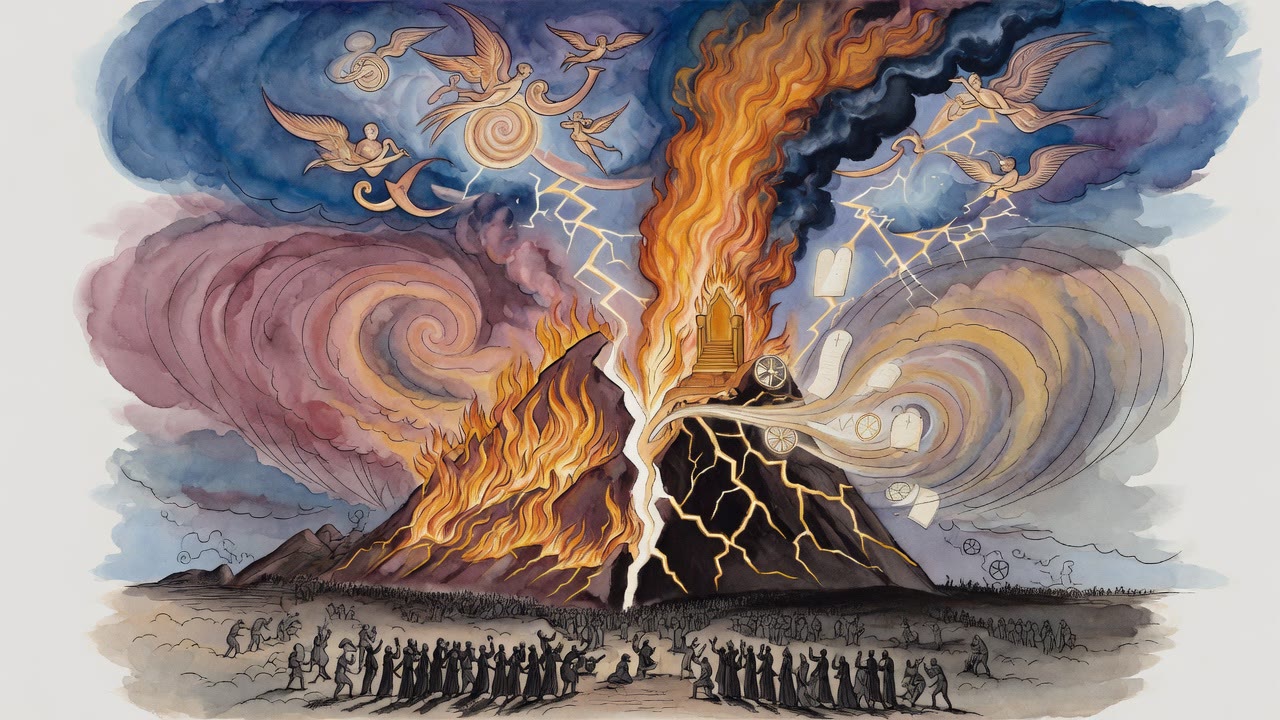
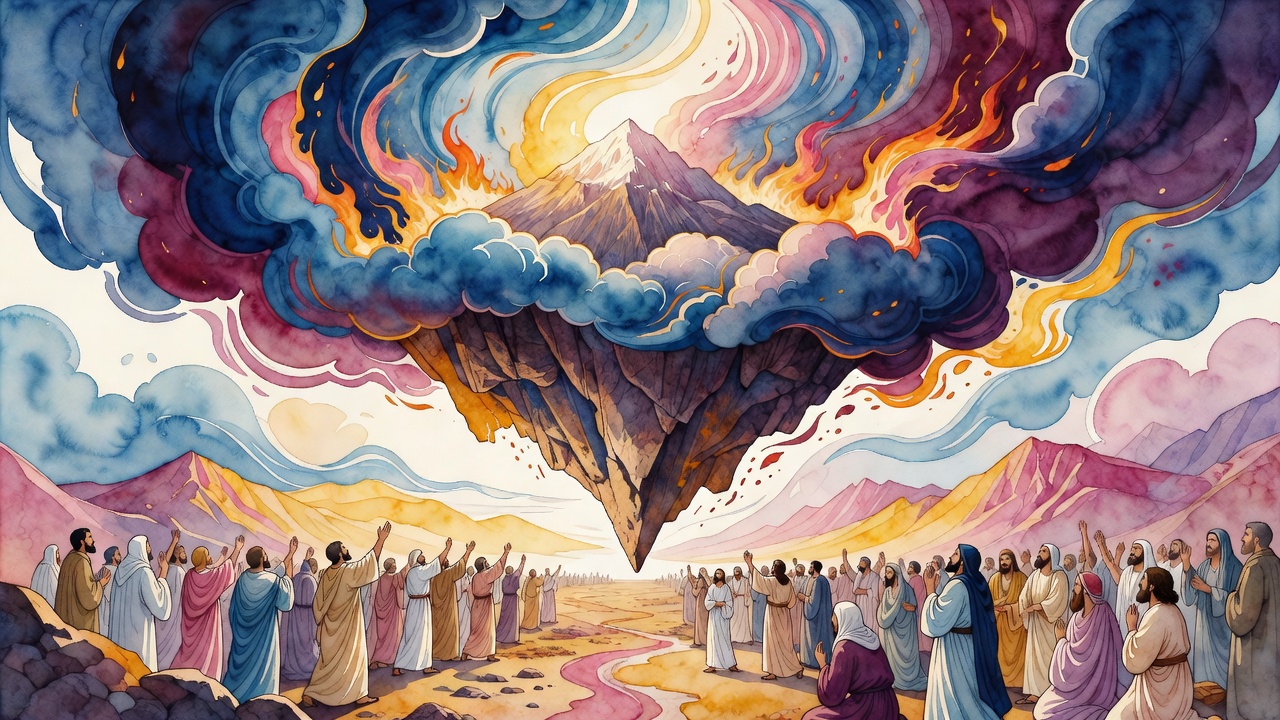
Healing and faith met at the same ridge of history. Feet that had been lame took the first steps of a desert that offered no planted field. Eyes that had been dark opened on a mountain smoking like a furnace. Ears that had been shut filled with a voice that shook stone. The people who had walked out on trust became the people who could see, hear, and stand for the wedding of Torah.
Moses, who had counted moons since the bush, watched the camp become a hall fit for the King. No delay until a cleaner generation. No lowering of the Torah to match broken bodies. Heaven fixed the guests and then served the feast.
When the thunder rolled, a man who had been blind flinched and laughed because flinching meant sight. A woman who had been deaf mouthed the words with the crowd and felt the vibration in her teeth. A boy who had limped from Goshen stood without a staff and forgot, for one hour, that he had ever needed one. The wilderness still had no sown land. It had a people finally able to receive what waited on the rock.
Moses moved through the camp the day the healings ran like quiet fire from tent to tent. He saw a man touch his own eyelids as if checking a door latch. He saw a woman tilt her head toward a child's voice and cry because the voice had edges again. He saw a limping elder stand, sit, stand again, laughing at the insult of sudden balance. The borrowed hall was being burnished in human skin.
Some asked why God had not healed them in Egypt, under the whips, when sight and strength might have made escape cleaner. The midrash's answer is timed to the wedding, not to the brick. The King would not delay the son's joy, and would not shame the son with a ruined hall. Torah's hour fixed the calendar. Bodies were made fit for that hour. Faith had already moved those same bodies into a land not sown, asking nothing. Healing crowned trust; it did not replace it.
At the mountain, when the voice came, the newly seeing did not look away. The newly hearing did not cover their ears. The newly standing did not sit because fear made sitting easier. They had been repaired for reception. Moses, who once claimed slow speech, watched a nation answer with whole throats: we will do and we will obey. The bush's promise had come due on a peak that smelled of smoke and rain. He counted no more moons toward this. The count had landed.
← All myths