Parshat Vayetzei5 min read

On the Fiftieth Day the Shekhinah Was Called the Giving of the Torah

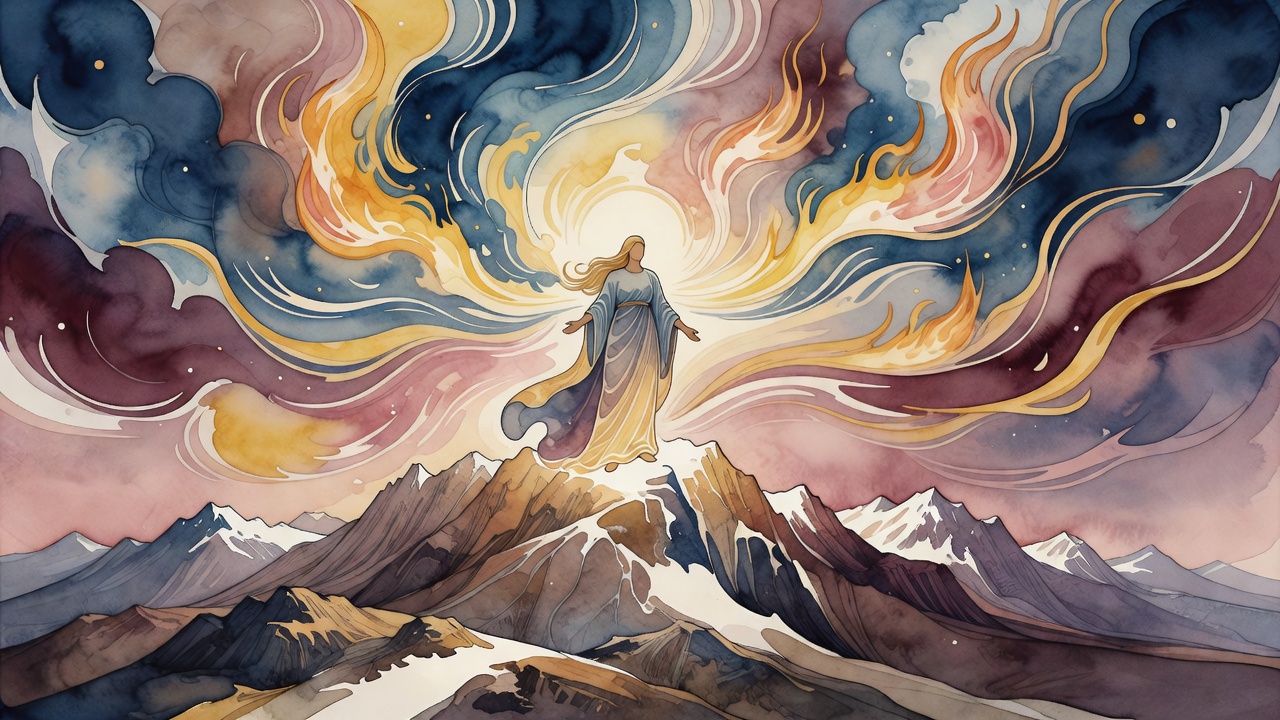
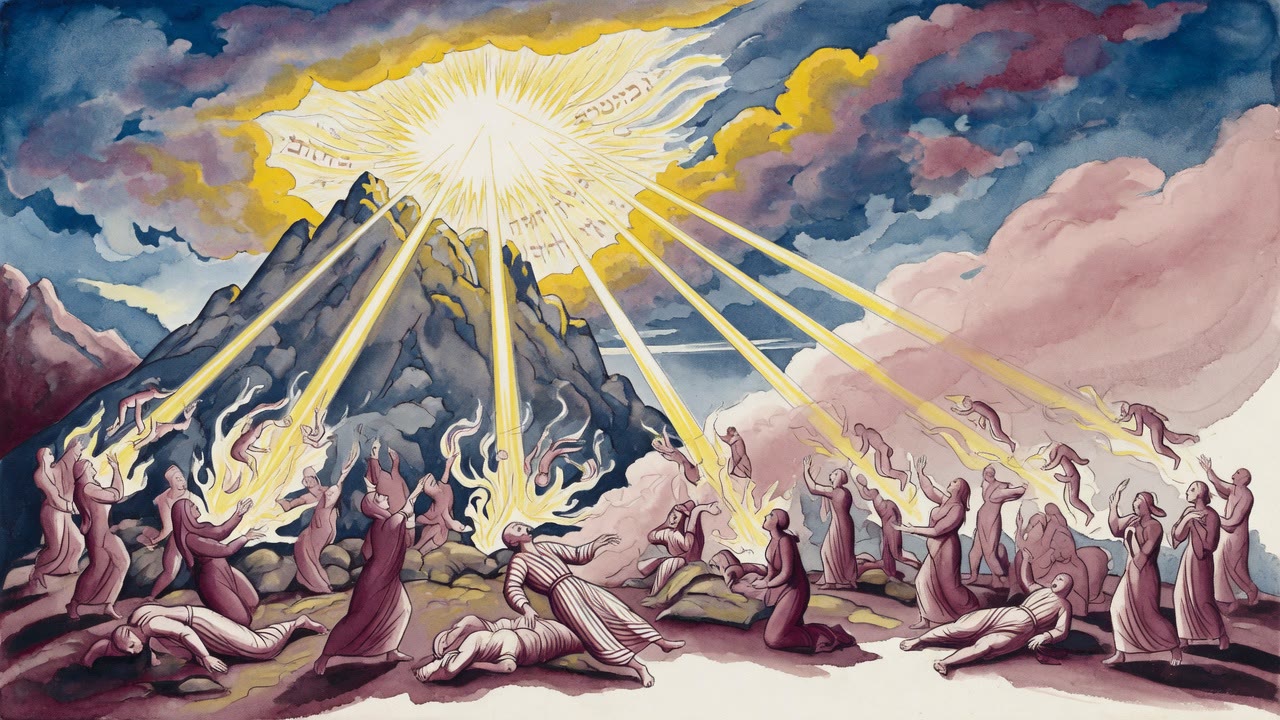
After forty-nine counted nights the mountain held its breath. On the fiftieth day the higher Shekhinah, the Divine Presence, rested on her as Giving of Torah.

Curated by Arthur · Told by Maggid ·
Table of Contents
  1. Middle Pillar Standing as Torah
  2. Ark, Scroll, Menorah
  3. What the Count Was For
  4. After the Fire Cooled

Forty-nine nights of counting had sanded the camp raw. Israel slept light. Children woke asking if today was the day. On the morning of the fiftieth, the mountain did not look different at first light. Then the air thickened as if someone had poured weight into emptiness and asked lungs to learn a new density.

On the Fiftieth Day the Shekhinah Was Called the Giving of the Torah Click for full size

Higher Shekhinah (the indwelling Presence of God) rested upon her, and she was called the Giving of the Torah.

Not only a book arriving. A naming. The Presence that dwells received a new title for the hour, as if the event and the Presence became one noun. Sinai was geography. The name was marriage under a canopy of smoke that refused to be only weather.

Middle Pillar Standing as Torah

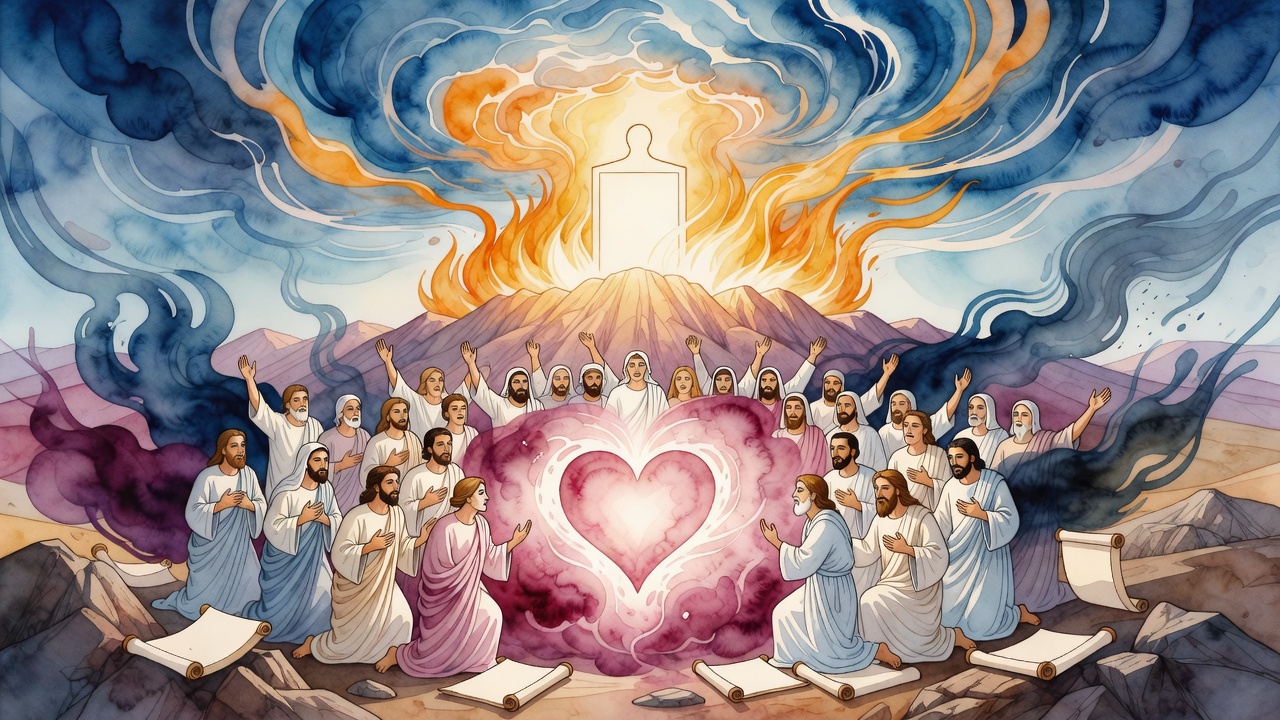
The fiftieth day ties to the Middle Pillar of the sefirot (divine emanations), and the teaching says that pillar is Torah itself. Right and left pull: kindness and severity, milk and fire. The middle holds without becoming bland. Torah is not a compromise. It is the spine that lets both arms move without tearing the body of the world.

Proverbs warns not to despise your mother when she has aged (Proverbs 23:22). The tikkun (a repair) reads the mother as Shekhinah (the Divine Presence) and hears fifty years of understanding in the number. Binah's depth is not youthful flash. It is aged clarity that still births. Israel had counted toward a mother who would not be despised when the thunder began and the easy metaphors failed under real sound.

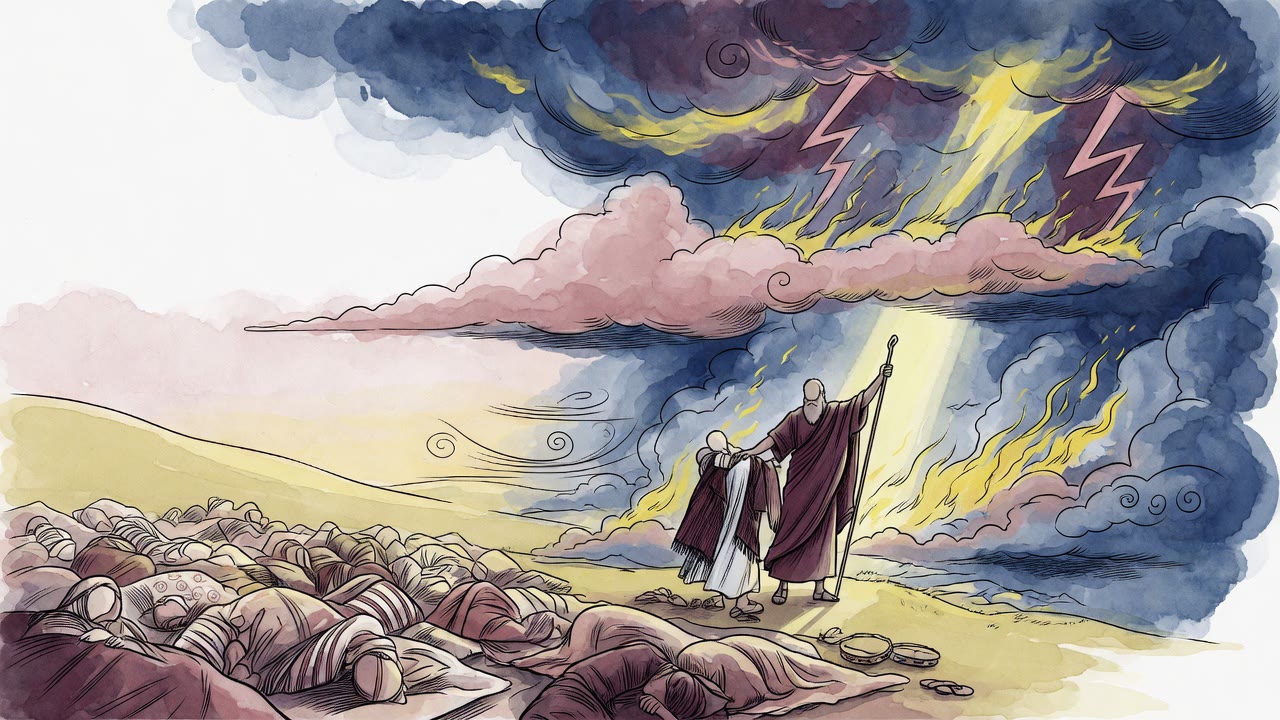
Moses climbed into weather that peeled paint from ordinary words. Below, the camp shook. Above, the ark and the scroll prepared their eternal grammar: she is his ark, and he is the Torah scroll concealed inside her, wood and parchment as cosmic roles that would outlast the camp's fear and the mountain's temporary fire.

A man near the edge of the camp pressed a child's face into his cloak and still felt the count finish in his own teeth. Numbers can become flesh when nights have been numbered with intention.

Ark, Scroll, Menorah

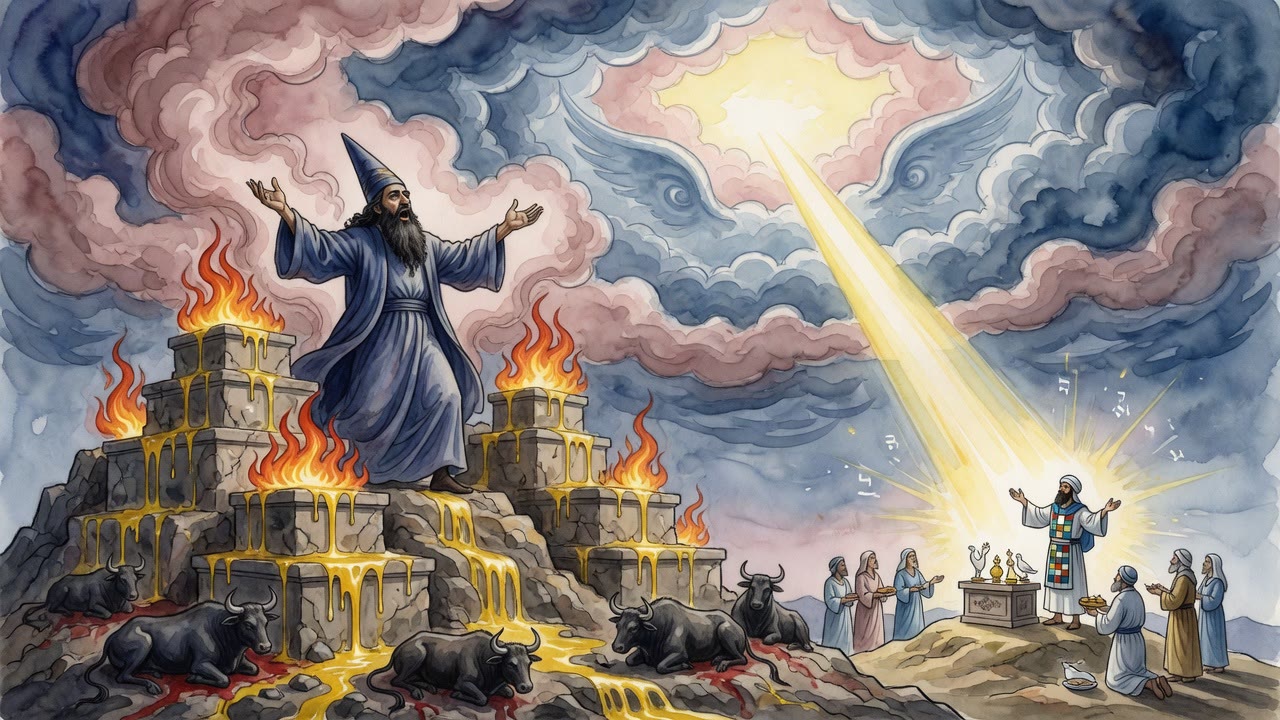
She is his menorah (the lampstand) and the illumination of which it is said that Torah is light. The Presence does not only house the scroll. She radiates it. Without vessel, light blinds and scatters. Without light, vessel is elegant emptiness. Shavuot (the fiftieth-day festival of the Torah's giving) is the hour the two stop pretending they are separate careers with separate offices in heaven and no shared table.

Later, on Simchat Torah, crowns rest on the heads of the righteous in heaven, a diadem drawn from the Song: the crown with which his mother crowned him on his wedding day (Song of Songs 3:11). The wedding language is not decoration. Giving of Torah is nuptial. Crowns are the public sign that the private joining has been sealed and may be danced without apology before the court of fire.

A child in the camp covered his ears and still heard. A woman raised her face and felt the count finish in her bones. The law would come as words. First it came as weight on the mountain and a new name on the Presence that would follow them into every later study house with a cracked table and a stubborn lamp.

What the Count Was For

Forty-nine is seven sevens, a full field of emotion refined night by night. The fiftieth is not one more. It is the gate after the field. People who skip the count and demand the gate find the mountain closed even when the calendar says open. Israel did not invent the arithmetic. They obeyed it with blistered patience and questions that outlasted their own sleep and their own excuses about readiness.

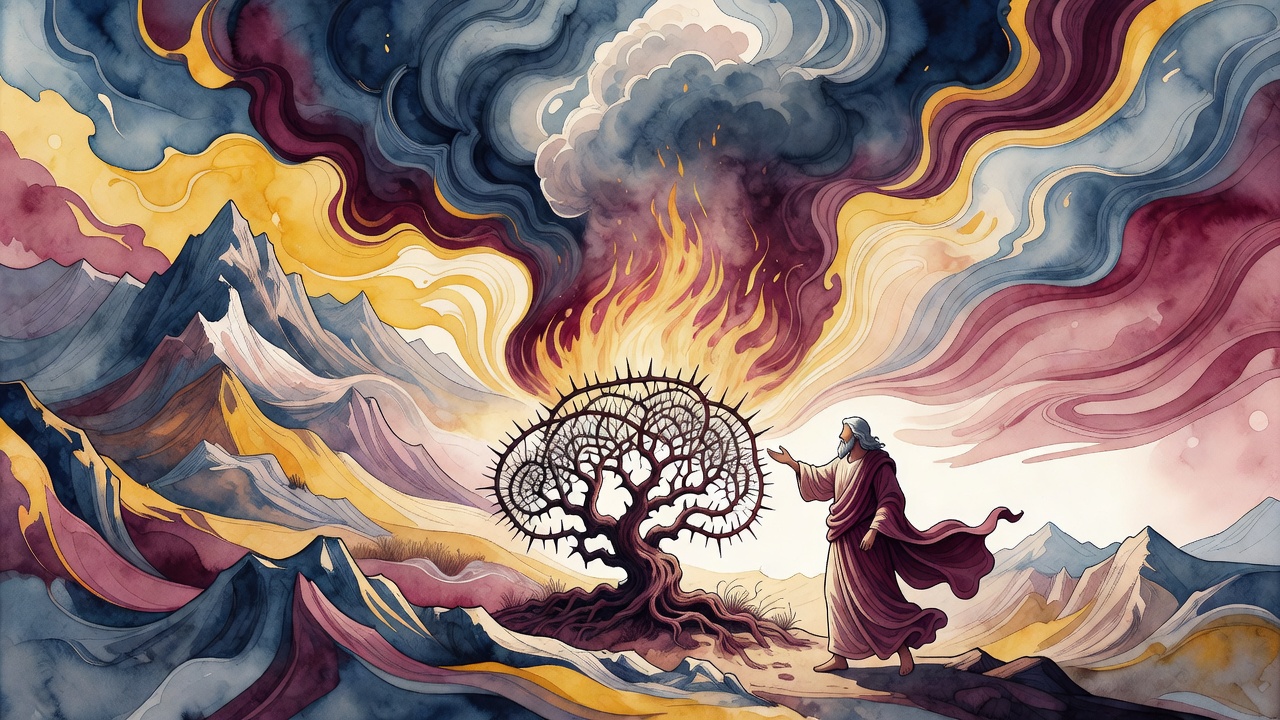
Thunder. Smoke. The sound of a shofar (a ram's horn trumpet) that grew stronger instead of fading. God spoke and the world learned that speech can found a people. The Shekhinah's new name held: Giving of the Torah. Every later dawn that opens a page is trying to stand again under that name for one more hour before breakfast returns the mountain to memory and dust and ordinary hunger.

Someone tried to look away and found that looking away still required a direction, and every direction pointed back to the middle pillar that had just been named Torah.

After the Fire Cooled

The camp eventually cooked meals again. Golden calves would come. Tablets would break and return. None of that erases the fiftieth day's naming. A marriage can be betrayed and still have been real on the day of the canopy. The Middle Pillar does not dissolve because the camp builds a foolish idol of impatience out of gold and noise.

In heaven the righteous would later dance under crowns. On earth Israel would bind words to arms and doorposts. Between crown and strap runs the same spine: Torah as pillar, Shekhinah as ark, light as the thing that refuses to stay only above while bodies walk dust and raise children who ask if today is the day.

The mountain went quiet. The name did not. Somewhere a child asked again, and a parent, years later, would answer by opening a book at first light with hands that still remembered the count and the smoke that had once been a wedding canopy.


← All myths
From the tradition

Sources

3 sources

The texts behind this telling. Some cards carry a translation of the source; others are our own retelling of it, and each card says which. Every card links out to the original.

Tikkunei Zohar 111:13Tikkunei Zohar

Retold in our words. Read the original at the link below.Sefaria-hosted English translation · CC-BY

Shavuot, the Festival of Weeks. It's a holiday commemorating the giving of the Torah at Mount Sinai, a pivotal moment in Jewish history. But the Tikkunei (spiritual repair) Zohar, a central text of Kabbalah, doesn't just see it as a historical event. It sees it as a cosmic one.

The text says, "On the fiftieth day, Higher Shekhinah (the Divine Presence) resides upon Her, and She is called 'the Giving of the Torah.'" Who is this "Her"? The Shekhinah (שכינה) is the divine feminine presence, God's immanent presence in the world. The Kabbalists saw the Shekhinah as a kind of cosmic mother, nurturing and sustaining creation. And on Shavuot, this divine presence is particularly potent, becoming known as "the Giving of the Torah."

Why the fiftieth day? That’s where it gets interesting. The Tikkunei Zohar connects the fiftieth day to the "Middle Pillar" of the Sefirot, the ten emanations through which God manifests. This Middle Pillar, the text says, is the Torah itself!

Wait, there's more. The number fifty is also linked to wisdom and understanding. The passage quotes (Proverbs 23:22), "...do not despise your mother when she has aged." This verse, according to the Tikkunei Zohar, is actually about the Shekhinah. It goes on to say: "Fifty years for old age… of that of which it is stated:...do not despise your mother when she has aged." Now, some versions read "understanding" (binah) instead of "old age" (ziqnah), which gives us an even deeper insight.

The text further connects the Shekhinah to the Hebrew letter Hei (ה). This letter, it says, "ascends through the letter Yod (י) to fifty – five times ten." The numerical value of Yod is ten. So five times ten brings us to fifty. This is not just math. It's a coded message, a way of understanding the divine structure of reality.

Why is this important? What does it all mean? The Tikkunei Zohar is telling us that the giving of the Torah isn't just about receiving a set of laws. It's about connecting with the divine feminine, with the Shekhinah, with the source of all wisdom and understanding. Shavuot becomes a celebration of divine motherhood, a time to honor the source from which we all spring.

And that verse from Proverbs? It's not just good advice for how to treat your earthly mother. It’s a reminder to cherish and respect the Shekhinah, the divine mother who sustains us all. By connecting with Her, we can gain access to the deepest truths of the Torah and unlock the hidden wisdom within ourselves.

Full source
Tikkunei Zohar 110:9Tikkunei Zohar

Retold in our words. Read the original at the link below.Sefaria-hosted English translation · CC-BY

The mystical text Tikkunei (spiritual repair) Zohar, a companion to the Zohar, that foundation of Kabbalah, hints at just such a mystery. It speaks of a relationship, an intimate connection, using imagery that's both beautiful and deeply symbolic.

It says: "She is His ark, and He is the Scroll of the Torah, concealed inside Her."

What does this mean? Who are "She" and "He"? Kabbalistic texts often use metaphors to describe the complex relationship between God and the Shekhinah – the Divine Presence, often considered the feminine aspect of God. Here, "She" represents the Shekhinah, the vessel that holds and protects the divine wisdom embodied in the Torah scroll, which is "He."

Think of the ark in the synagogue. It houses the Torah scrolls, the physical embodiment of God's teachings. The Tikkunei Zohar suggests something similar on a cosmic scale: the Shekhinah is the sacred space where the divine word resides.

But the imagery doesn't stop there. The text continues, "She is His ‘menorah’ – candelabrum, and... the candelabrum of ‘illumination’ – ma’or, of that of which it is stated: … and Torah is light – aur.”

The menorah, with its seven branches, is a potent symbol of divine light and wisdom. The Shekhinah, as the menorah, emanates this light, a reflection of the Torah's illuminating power. Notice the connection between ma’or (illumination) and aur (light). It emphasizes how the Torah's wisdom shines forth through the Shekhinah.

And then, a more intimate detail: "And She is a candle, that burns before Him, as it says: … to kindle a perpetual candle, and She is Bathsheba – daughter of-seven, the candelabrum comprising seven ‘lamps’. She is a candle to Him from the side of the left. And He is a light to Her from the side of the right, and of both-of-them it is stated: For a candle is precept and Torah is light..."

Here, the Shekhinah is not just a candelabrum, but a single candle, perpetually burning. The text even identifies her with Bathsheba, a figure from the Bible whose name means "daughter of seven," linking her to the seven lamps of the menorah. The left side is often associated with gevurah (judgment, severity) and the feminine, while the right side is associated with chesed (loving-kindness, mercy) and the masculine.

So, the Shekhinah, on the "left," offers her light to God, while God, on the "right," illuminates her in turn. It's a reciprocal relationship, a dance of light and wisdom. And the verse from Proverbs ties it all together: "For a candle is precept and Torah is light..." The commandments, the precepts, are like the candle, guiding us. And the Torah, the divine teachings, is the light that illuminates our path.

What's so striking about this passage from Tikkunei Zohar is its emphasis on the dynamic interplay between the divine and the human, between the masculine and feminine aspects of God. It invites us to consider how we, too, can be vessels for that divine light, like a candle burning brightly in the darkness.

Full source
Tikkunei Zohar 111:23Tikkunei Zohar

Retold in our words. Read the original at the link below.Sefaria-hosted English translation · CC-BY

The Tikkunei (spiritual repair) Zohar teaches that during Simchat Torah, a crown, a spiritual diadem, rests upon the head of every righteous person in the heavens. A crown, a symbol of honor and completion. Where does this image come from? The Tikkunei Zohar directs us to the Song of Songs (3:11): "...with the crown with which his mother crowned him, on the day of his wedding, and on the day of his heart’s rejoicing."

What does this verse really mean? The Tikkunei Zohar breaks it down. "The day of his wedding" refers to the Shekhinah, the Lower Shekhinah. Now, the Shekhinah is a complex concept, often understood as the divine feminine presence, God's immanent presence in the world. The Lower Shekhinah is seen as closer to our earthly realm, more accessible.

"the day of his heart’s rejoicing?" That, my friends, is the Higher Shekhinah. So, on Simchat Torah, we're connecting with both aspects of the Shekhinah. The earthly and the sublime.

Connecting with the Torah, connecting with God, connecting with each other.

The text goes on to say that Israel, the Jewish people, should be crowned in everything, with a crown upon their heads. What does it mean to be "crowned in everything?" Perhaps it means carrying the wisdom and joy of the Torah with us, not just on Simchat Torah, but in every aspect of our lives.

It’s a reminder that the joy we experience on Simchat Torah isn't just a fleeting feeling. It's a potential, a possibility, a way of being that we can carry with us throughout the year. It’s about recognizing the crown that already rests upon our heads, the inherent dignity and potential for holiness within each of us.

So, the next time you’re dancing with the Torah on Simchat Torah, remember this teaching from the Tikkunei Zohar. Remember the crowns, the presence of the Shekhinah, and the invitation to carry that joy and connection with you always. Maybe, just maybe, you’ll catch a glimpse of that crown resting on your own head.

Full source