Parshat Yitro5 min read

Israel Slept While the Bridegroom Waited at Sinai

On the morning Torah was given, Israel slept late after a short summer night. Moses woke them as a bridegroom wakes a bride, and heaven walked out to meet them.

Curated by Arthur · Told by Maggid ·
Table of Contents
  1. A Short Night and a Late Camp
  2. Bridegroom and Bride on the Plain
  3. The Ram That Would Not Be Wasted
  4. How Quickly the March Turned Sour
Israel Slept While the Bridegroom Waited at Sinai Click for full size

A Short Night and a Late Camp

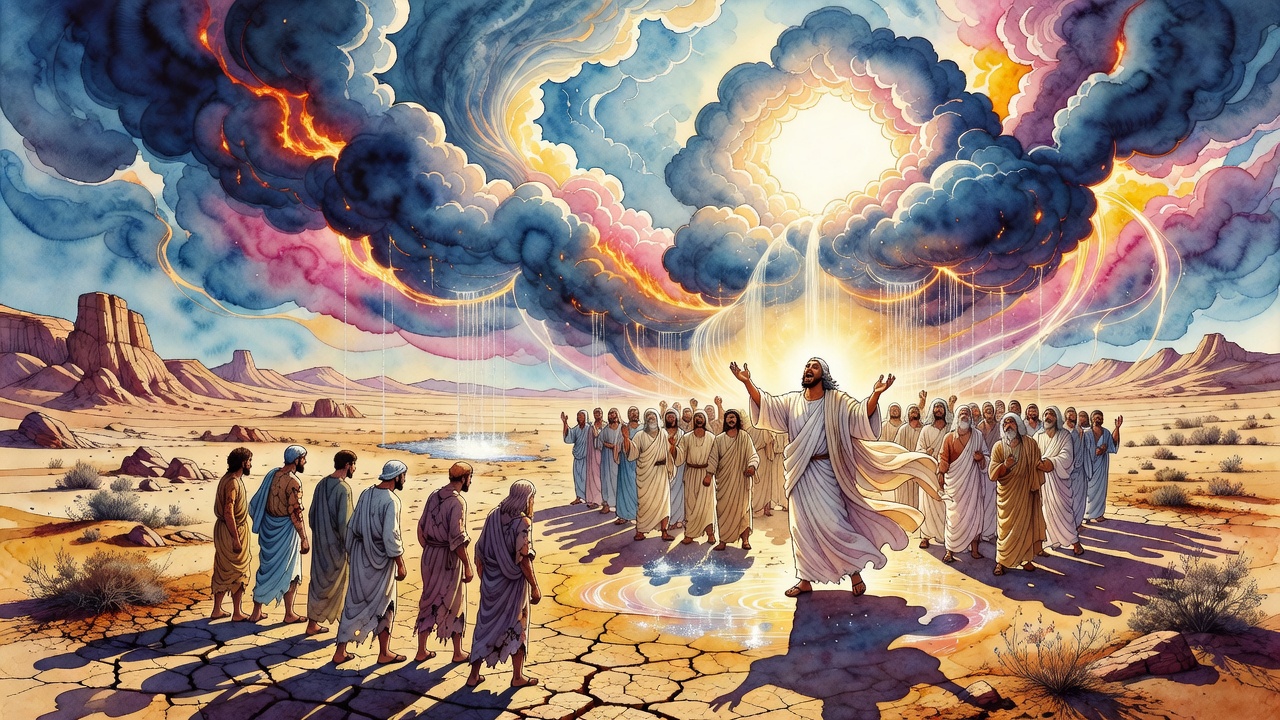
Sivan days run long. The nights before the feast of Azereth run short. Rabbi Chanina said sleep that morning is pleasant, and Israel took the permission with both eyes shut. They slept until two hours into the day while heaven arranged a wedding no human cantor could have staged. The mountain waited. The cloud waited. The people dreamed ordinary dreams after an extraordinary night.

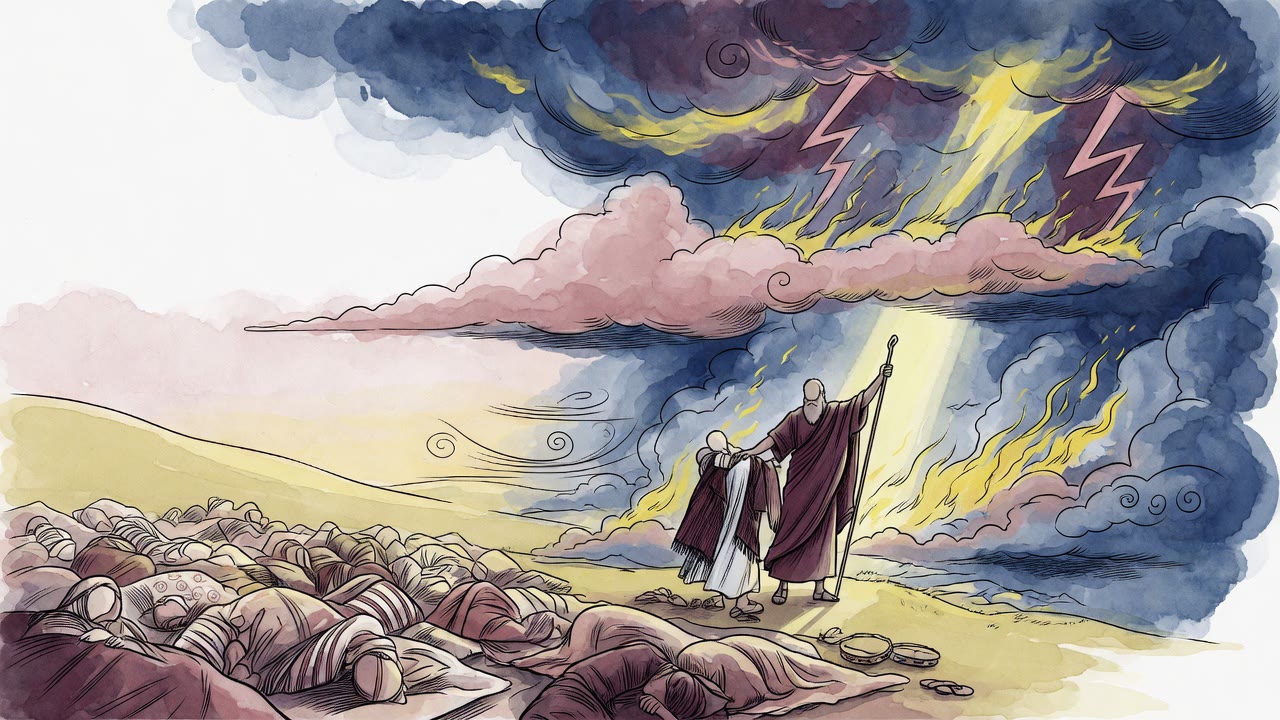
Moses went through the camp without a whip. "Arise ye from your sleep," he called, "for behold, your God desires to give the Torah to you. Already the bridegroom wishes to lead the bride and to enter the bridal chamber." Tents opened. Faces blinked. The man who had climbed fire now knocked on poles like a friend late for a joy that would not delay forever.

Bridegroom and Bride on the Plain

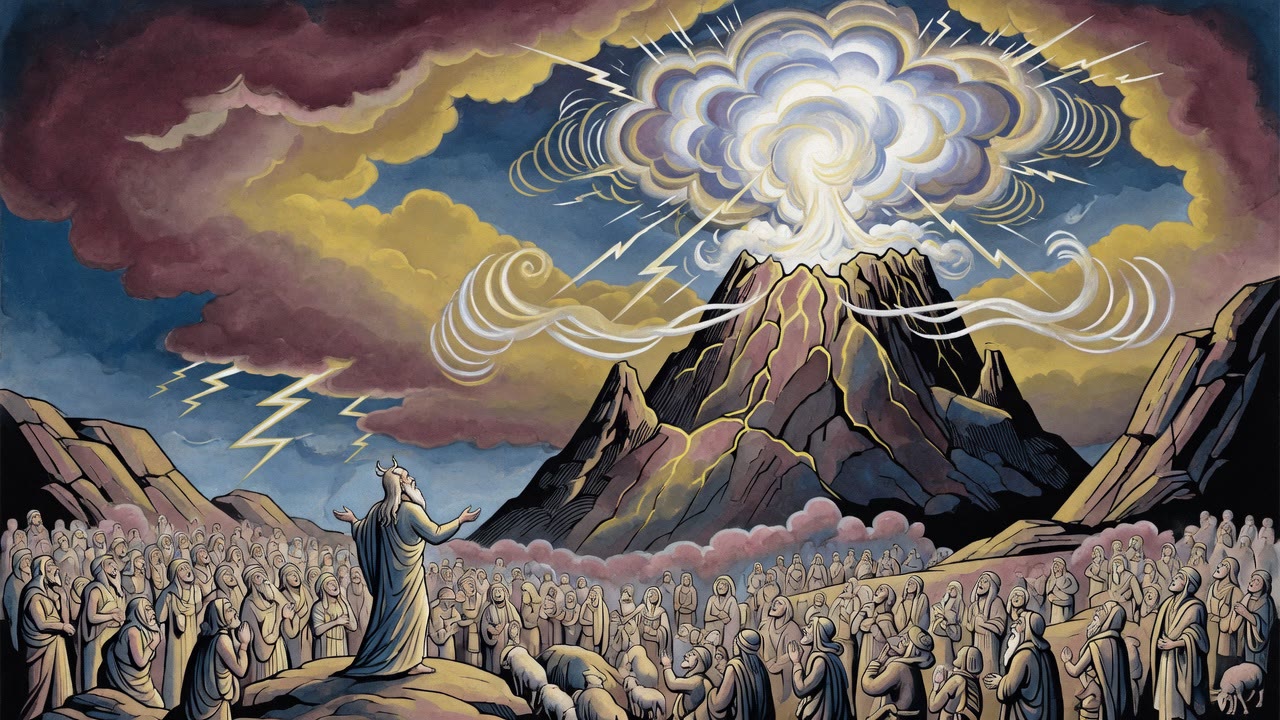
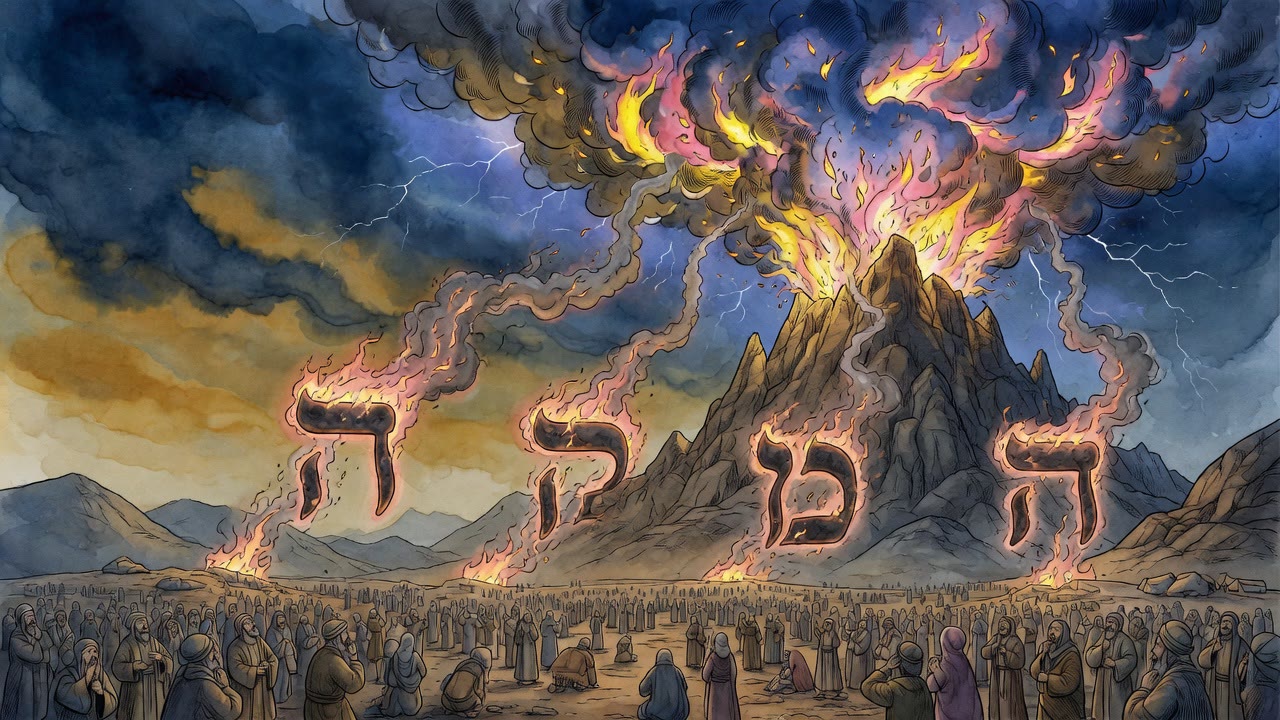
He brought the people out of the camp to meet God. Pirkei de-Rabbi Eliezer does not leave the Holy One seated and remote. Like a bridegroom who goes forth to meet the bride, so the Holy One went forth to meet them to give them the Torah. Psalm speech of God going before His people became feet and dust and a mutual approach. Israel walked toward the mountain. Heaven walked toward Israel. The covenant was not only delivered. It was greeted.

When the words began, Moses ascended as go-between and returned as a voice equal, the legends say, to the voice he heard. Conduit and source shared voltage long enough for a nation to answer. The people who had overslept stood under thunder and learned a marriage contract that would outlast every later quarrel with the same Partner.

The Ram That Would Not Be Wasted

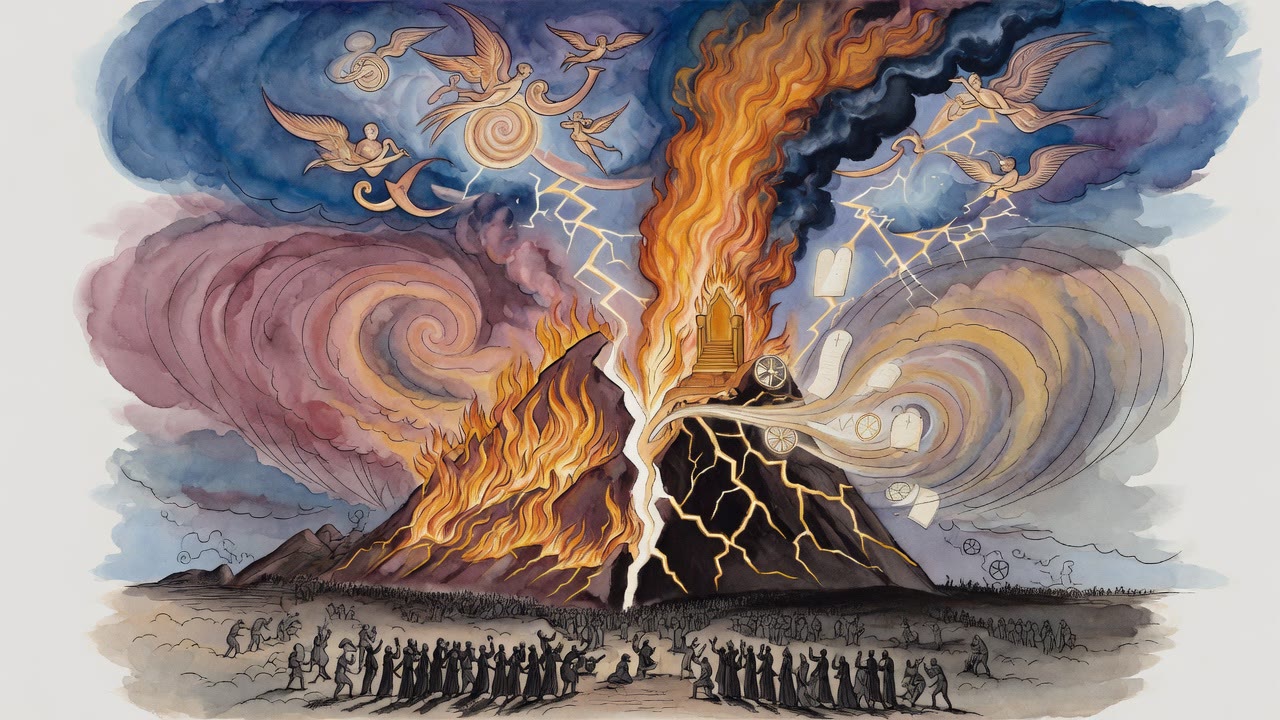
Rabbi Chanina ben Dosa taught that the ram of the Binding of Isaac, made at twilight before the first Shabbat, wasted nothing across history. Its ashes underpinned the inner altar. Its sinews became the strings of David's harp. Its skin girded Elijah. The left horn sounded at Sinai when Torah was given. The right horn waits for the end of days, when a great trumpet will gather the scattered and the Lord will be king over all the earth.

So the morning of the bridegroom was also the morning of an old horn. The near-sacrifice of Isaac traveled through time as music, belt, altar base, and blast. Israel heard more than commandments. They heard a sound prepared before their ancestors were born, cut from a creature heaven refused to waste.

How Quickly the March Turned Sour

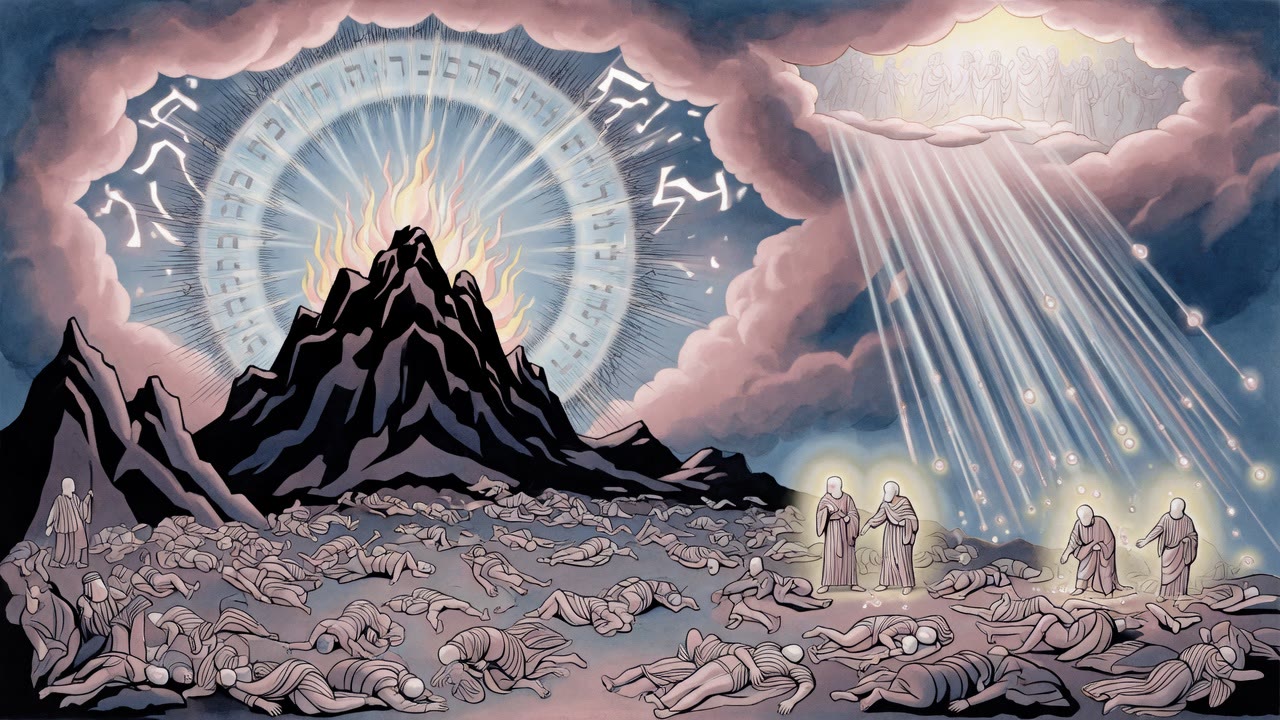
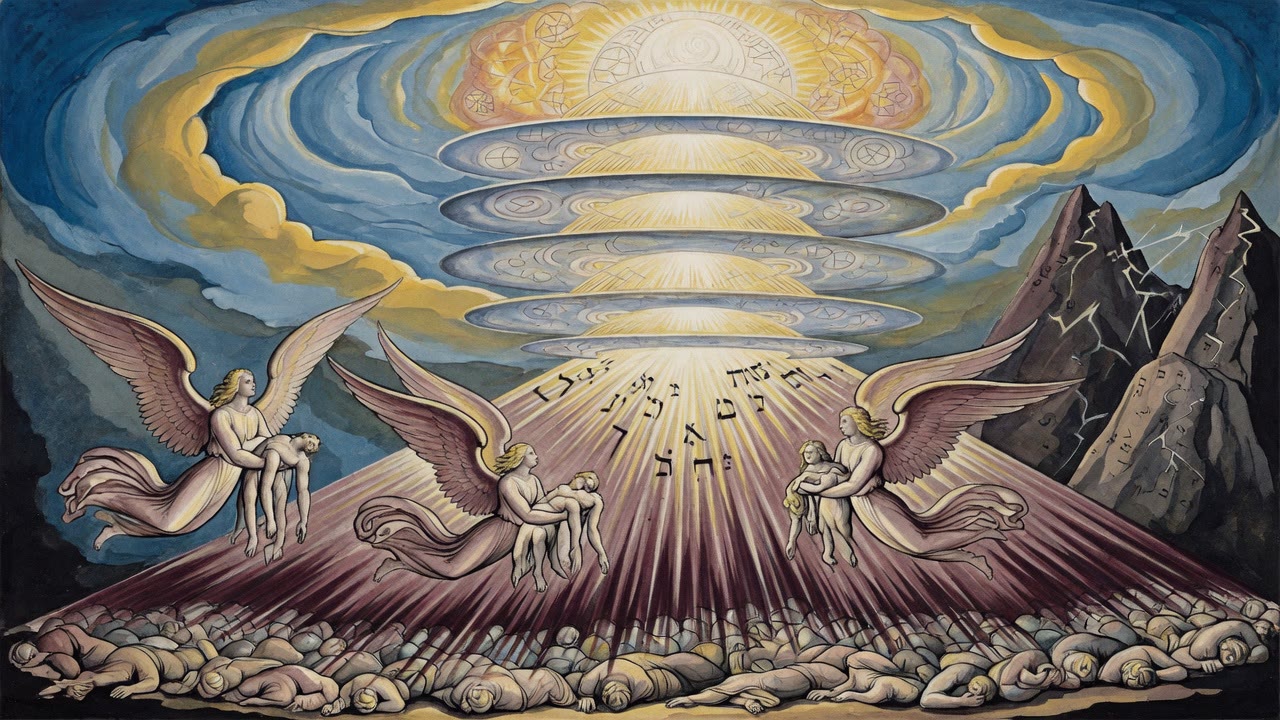
The ink of the covenant was barely dry when complaint found its voice again. Barely had they left Sinai when the legends say they sought excuses to reject the gift. Forced marches folded what should have been eleven days into three. Instead of gratitude for speed toward the land, they shouted hardship and were anxious that God should hear their wicked words. Fire answered, a fire said to emanate from the glory itself.

The people who had been woken as a bride became, within days, a camp that preferred the comfort of grumbling to the strain of holiness. The horn still echoed. The feet still blistered. Between bridal chamber and desert fire stands the whole later history of a people who can sleep through the start of revelation and still be claimed by it.

The three months after Egypt had already dressed Israel like a bride with gifts. Manna sweetened the mornings. A well followed the camp. Quail filled the evenings when meat was craved. The legends treat those provisions as betrothal presents from a King who refuses to wed a people still wearing only the dust of the brick pits. Moses had waited for this mountain since the bush first burned without ash. When the hour came, the people were asleep, and the prophet had to become an alarm of love rather than a judge of laziness.

The left horn of Isaac's ram made the air itself into memory. What almost died on Moriah became the soundtrack of Sinai, as if the near-loss of the beloved son were the only sound large enough to introduce a law that would claim every son and daughter after. Israel heard commandments and also heard a rescue older than their slavery. That is why the later fire of complaint stings harder. They had been woken for a wedding and soon shouted as if the road were a new Egypt. The glory answered with heat because the mouth that had said "we will do" had already begun to rehearse older hungers.

Still the covenant held. Bridegrooms do not always find perfect brides, and heaven does not always find perfect camps. The midrash insists on mutual walking, God going forth and Israel going forth, because love in this telling is motion from both sides. Sleep delayed them. Fire scorched them. The horn and the words remained, waiting for the next generation that would rise earlier and still need mercy.


← All myths
From the tradition

Sources

3 sources

The texts behind this telling. Some cards carry a translation of the source; others are our own retelling of it, and each card says which. Every card links out to the original.

Pirkei DeRabbi Eliezer 41:7Pirkei DeRabbi Eliezer

Retold in our words. Read the original at the link below.Pirke de Rabbi Eliezer, trans. Rabbi Gerald Friedlander, London (1916) · CC-BY

It might even have deep roots in Jewish tradition!

Pirkei DeRabbi Eliezer, a fascinating early medieval text, gives us a glimpse into a very human moment surrounding one of the most momentous occasions in Jewish history: the giving of the Torah at Mount Sinai.

Rabbi Chanina, a sage whose words echo through the ages, tells us something intriguing. He notes that in the third month – that's Sivan on the Jewish calendar, the time of Shavuot – the day is literally longer than the night. And, get this: the Israelites? They slept in. Until two hours into the day!

Why? Because, according to Rabbi Chanina, "sleep on the day of the feast of 'Azereth is pleasant, the night being short." 'Azereth, often understood as another name for Shavuot (the Feast of Weeks), was a day of celebration, of anticipation. A short night, filled with perhaps late-night study or festive meals, naturally leads to a desire for a little extra rest.

But here's where the story takes a turn, a beautiful, almost cinematic one. Moses, our leader, our teacher, the one who communed with God, he goes forth and comes to the camp. He rouses the Israelites from their slumber.

The tents, the quiet of the morning, the still-sleepy faces blinking in the light. And Moses, with a message of profound importance: "Arise ye from your sleep, for behold, your God desires to give the Torah to you."

He uses the language of love, of intimacy. "Already the bridegroom wishes to lead the bride and to enter the bridal chamber." The Torah, the covenant, is about to be given! The hour has come, he proclaims, echoing the urgency and excitement of the moment. "And Moses brought forth the people out of the camp to meet God" (Exodus 19:17).

But the imagery doesn't stop there. It gets even more breathtaking.

Pirkei DeRabbi Eliezer draws a powerful parallel: "And the Holy One, blessed be He, also went forth to meet them; like a bridegroom who goes forth to meet the bride, so the Holy One, blessed be He, went forth to meet them to give them the Torah..." God, not just waiting passively, but going forth to meet His people. It's a reciprocal act of love, a divine dance. The text even quotes (Psalm 68:7): "O God, when thou wentest forth before thy people."

It paints a picture of a God who is active, engaged, and eager to connect with humanity. The giving of the Torah wasn't just a legal transaction; it was a sacred marriage, a moment of profound intimacy between God and Israel.

So, next time you're tempted to hit snooze on Shavuot, remember this story. Remember the Israelites, roused from their slumber by Moses. Remember the bridegroom God, going forth to meet His bride. And ask yourself: am I ready to meet the moment, to receive the gift, to participate in this ancient, ongoing covenant?

Full source
Pirkei DeRabbi Eliezer 31:13Pirkei DeRabbi Eliezer

Retold in our words. Read the original at the link below.Pirke de Rabbi Eliezer, trans. Rabbi Gerald Friedlander, London (1916) · CC-BY

Pirkei DeRabbi Eliezer turns to Mount Sinai in the Days of Moses.

Rabbi Chanina ben Dosa, a renowned first-century Galilean sage known for his piety and miracle-working, had some fascinating ideas. He saw profound purpose and connection even in what might seem like the remnants of the event. As we find in Pirkei DeRabbi Eliezer 31, nothing from that ram went to waste. Absolutely nothing. this wasn't just any ram. Jewish tradition teaches that it was created specifically for this moment, at twilight – that liminal space between day and night, a time ripe with possibility and divine intervention. So, what became of this special creature?

In Rabbi Chanina, the ashes of the ram formed the very base of the inner altar in the Beit Hamikdash, the Holy Temple in Jerusalem. A foundation built on sacrifice.

It doesn't stop there. The sinews, those tough, fibrous tissues? They became the strings of King David's harp.

And Elijah, that fiery prophet? The ram's skin, we’re told, became the very girdle around his loins. Remember the description in (2 Kings 1:8)? "He was a hairy man, with a leather belt around his waist." That belt, connecting him to the Akedah, the Binding of Isaac, in a tangible way.

Now, for the really powerful part: the horns.

Rabbi Chanina tells us that the left horn was blown on Mount Sinai, the very moment God revealed the Torah to Moses and the Israelites. That earth-shattering blast that accompanied the giving of the Ten Commandments? It came from this ram. "And it shall come to pass, that when the ram's horn soundeth long" (Josh. 6:5), a verse that echoes the power of that original moment.

But what about the right horn, the larger one? That, according to Rabbi Chanina, is reserved for the future. It is destined to be sounded in the world to come, ushering in an era of universal peace and divine sovereignty. "And it shall come to pass in that day, that a great trumpet shall be blown" (Isa. 27:13), heralding the time when "the Lord shall be king over all the earth" (Zech. 14:9).

So, what does this all mean? Rabbi Chanina's teaching, preserved in Pirkei DeRabbi Eliezer, reveals a profound interconnectedness. It suggests that even the smallest, seemingly insignificant details can have lasting impact, echoing through history and shaping the future. The echoes of the Akedah, it seems, are still reverberating. Are we listening?

Full source
Legends of the Jews 4:53Legends of the Jews

Retold in our words. Read the original at the link below.The Legends of the Jews by Louis Ginzberg (1909) · Public Domain

You’ve stood at the foot of Mount Sinai, heard the very voice of God, and entered into a covenant promising to be His people. You’re practically glowing with spiritual energy…. Well, not everyone was.

The ink wasn't even dry on the Ten Commandments when things started to go south. According to Legends of the Jews, barely had the Israelites left Sinai than they began reverting to their old ways. After such a profound experience?

Why? What drove them to turn away so quickly?

They were looking for an excuse to reject God, to return to idolatry. They started complaining, and what they complained about is fascinating. They grumbled about the forced marches. God, eager to get them to the Promised Land, had them covering what should have been an eleven-day journey in just three days! You'd think they’d be grateful. They were getting there faster!

But instead, they saw it as a hardship. They focused on the discomfort, the challenge, rather than the divine purpose behind it all. Their ingratitude, fueled by a desire to return to their old idols, festered.

And here's the kicker: they weren't whispering their complaints under their breath. Oh no. They were shouting them, practically begging God to hear their wicked words. It's like they were daring Him, testing the limits of His patience. The text emphasizes that they were “anxious that God should hear their wicked words.” Why this detail? It suggests a deep-seated rebellion, a conscious rejection of the divine favor they had just received.

So, what happened? Well, God heard them. And He wasn't pleased. As punishment for their "defamation of the Divine glory," a fire descended upon them. Legends of the Jews describes it as a fire "emanating from the very glory" of God. Imagine that, a fire born not of anger, but of holiness itself. image. It's not just a random act of divine retribution. It's a consequence of rejecting the light, the very glory that was offered to them. It's a powerful reminder that even after the most extraordinary experiences, we still have the choice to turn towards or away from the divine. And sometimes, the consequences of that choice can be… fiery.

What does this short episode tell us? Perhaps it's a reminder that faith isn't a one-time event, but a continuous journey. And even when we stumble, even when we complain, we can always choose to turn back towards the light.

Full source