Dew of Life Falls on Israel at Scorched Sinai
There was no shade at the foot of the mountain, and every neck was burning. Then God told the clouds to let go, and cool water hit the whole camp at once.
Table of Contents
 Click for full size
The Third Hour Under the Mountain
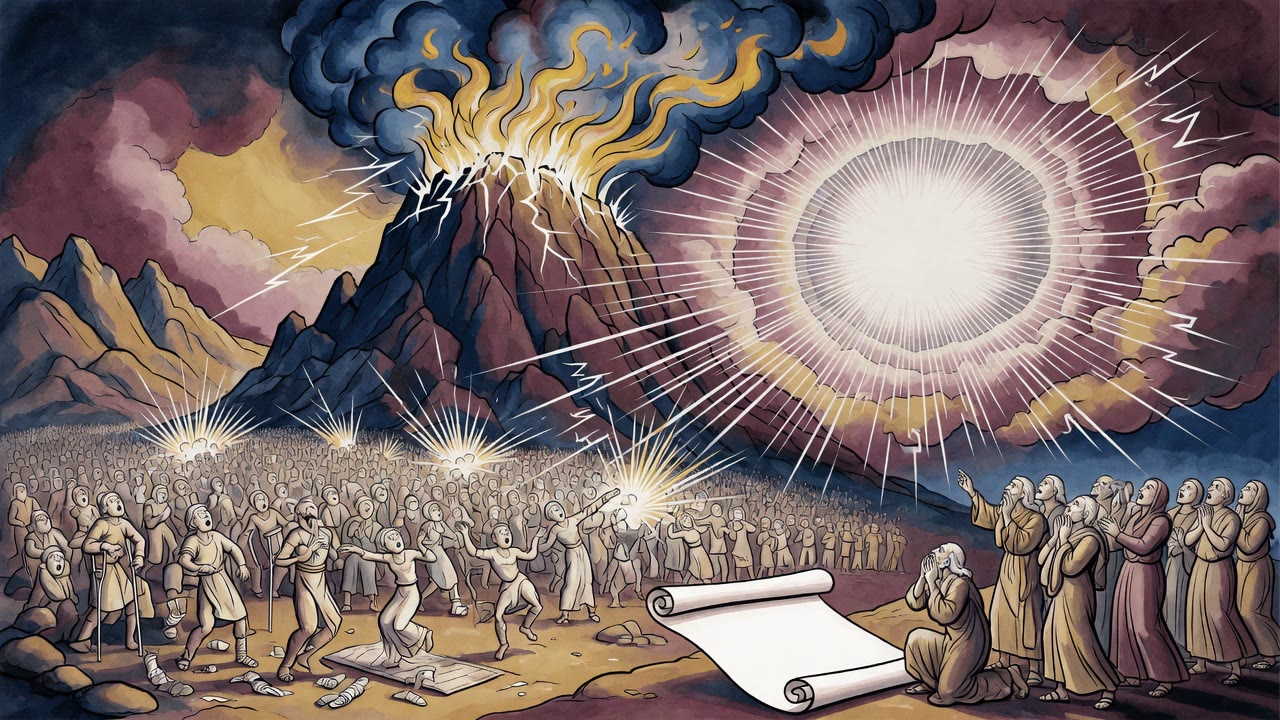
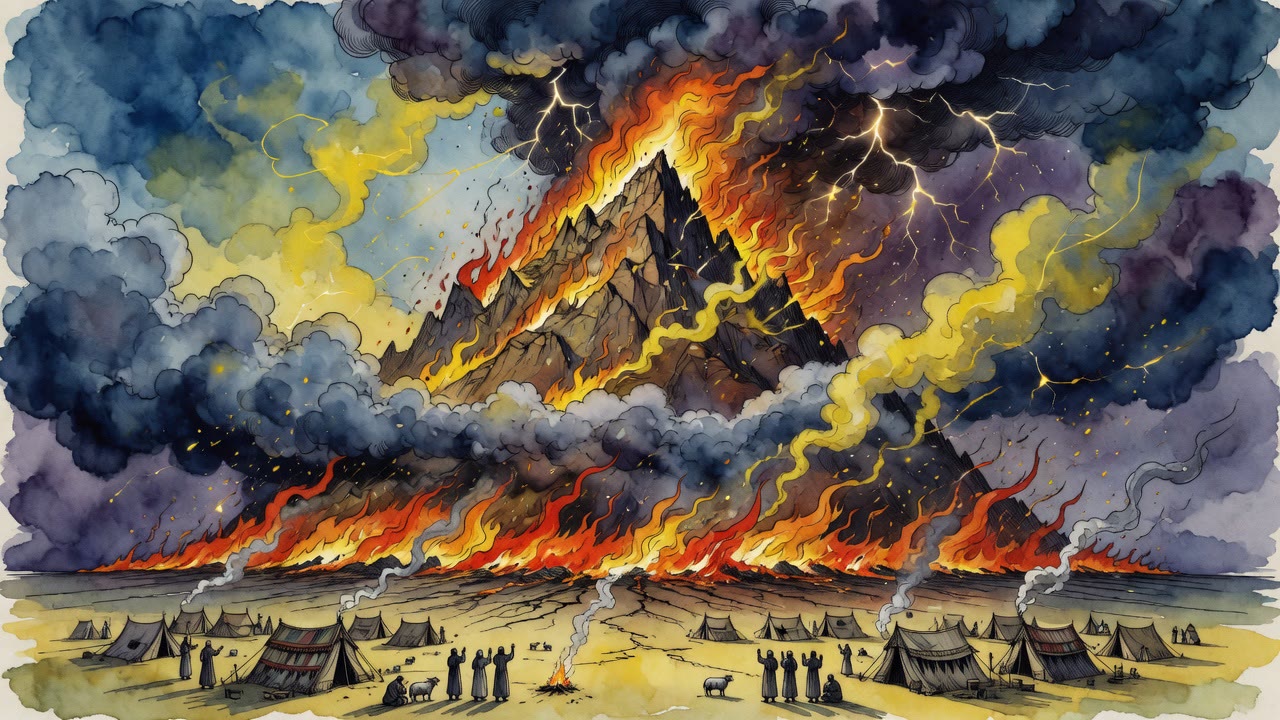
By the third hour there was no shade anywhere at the foot of the mountain, because everyone in Israel who could stand was standing, and not one of them had thought to bring a cloth for his head. The sun sat directly over the peak. It came down on the back of a man's neck and stayed there, and the skin went from hot to tight to a kind of numb that is worse than the pain was, since numb skin is skin that has stopped arguing.
A man near the front had expected to hear more by now. He had walked out of Egypt on his own legs, and two months earlier he had sung at the sea, where Moses pitched his voice over against the whole nation so that one throat stood opposite all the rest and the people came in underneath it. That was the second song the people had ever sung together, after the one in Egypt on the night of the festival, and it had cost him nothing at all. Standing here was costing him everything he had left.
He did not want a miracle. He wanted a wall to lean on, and there was no wall.
What the Clouds Were Told
The clouds of glory were not far off. They had walked with the camp the whole way up from the sea, and now that the marching had stopped they sat off the shoulder of the mountain with nothing to do, the way an escort stands around once the road runs out.
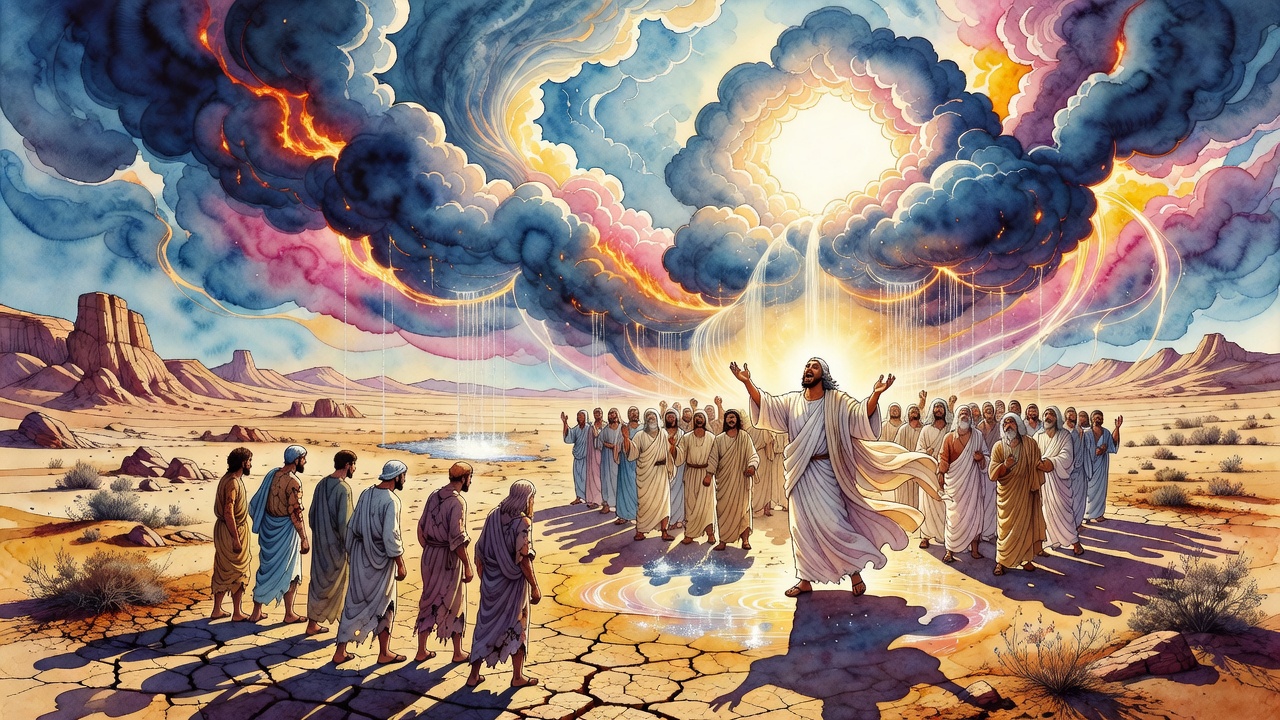
God turned to them and gave an order about the people burning underneath. Drip the dew of life upon My children.
Not rain, which arrives as a threat and drowns the barley it was asked for. Dew, though not the ordinary kind a farmer finds on his field at dawn. Dew of life, which is the kind that gets inside a body that has stopped arguing and makes it argue again.
The Drop That Found His Collarbone
His left knee went first, the way a knee goes when it has been locked too long. He felt himself starting back a half step toward the tents, where there was canvas and water and somewhere to sit down, and the half step was already loaded into his foot. But the voice out of the mountain had not finished, and a man who steps back at Sinai has stepped back for good, so he put his weight forward onto the bad knee and locked it again and stayed where he was.
The first drop hit him on the collarbone. He took it for blood from somewhere until the second one landed on his eyelid and ran, and then the whole sky let go cool over ten thousand burned necks at once. The earth shook and the heavens dripped (Psalms 68:9). Somewhere behind him a child laughed out loud, because a child does not yet know that water falling from a cloud is supposed to mean a flood.
An old woman two rows over caught what she could in her palm and put it on the forehead of the boy beside her, and neither of them said a word about it.
Why the Sky Answered
The cloud had not opened because the sun was cruel. The sun had been cruel over that wilderness for a year and the cloud had shaded them the whole time and never once dripped. It opened now because of what the people were doing while the sun was cruel, which was standing still and holding a word in honor at a real cost to their own skin, and there was no nation on the earth that looked better doing it.
Beauty in that hour had nothing to do with faces. Every face in the front ranks was raw and swelling and would peel within a week. The comeliness was in the ranks not breaking, and if the ranks had broken the clouds would have gone on shading and nothing more.
A bounteous rain did You drip, O God (Psalms 68:11). It fell on people who had earned it by not moving.
What He Carried Down
Soldiers know a feeling that nobody else is entitled to. It comes when a city has fallen and a man walks into a room and finds something that no one on his side has counted yet, and for a moment the thing is entirely his to take home. The man near the front of Israel had never sacked anything in his life.
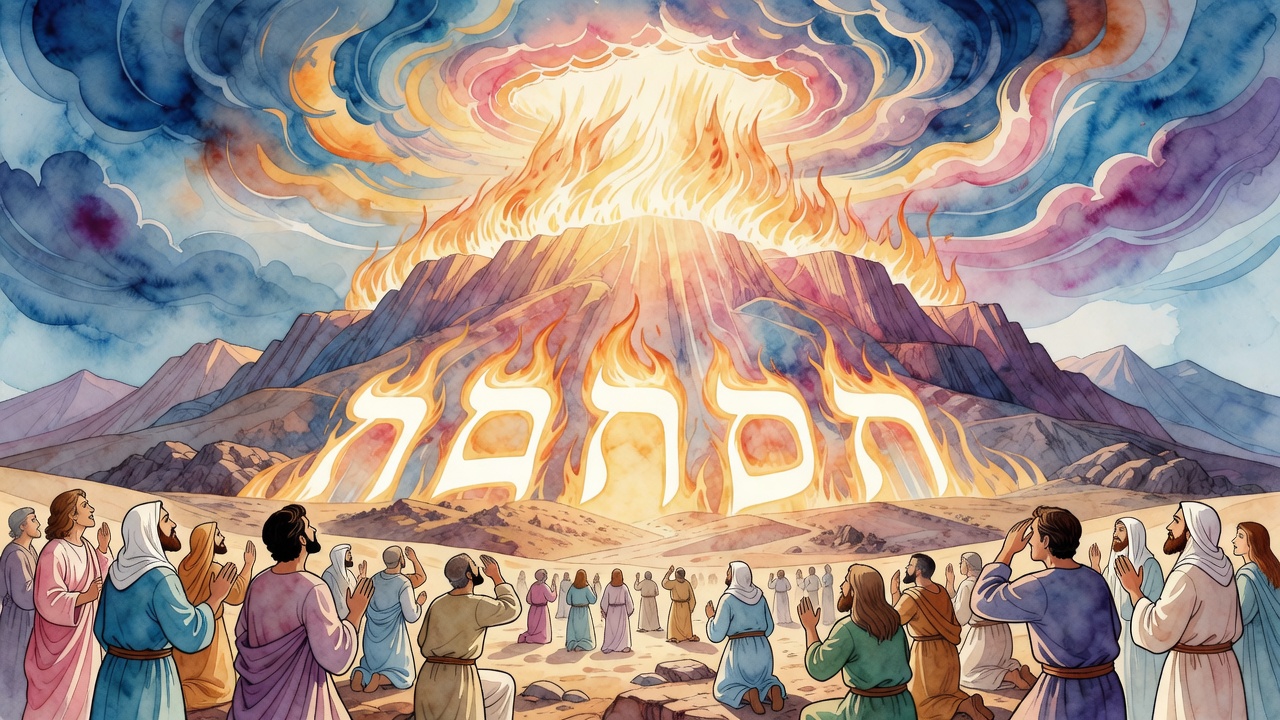
He got the feeling anyway, standing on scorched ground with his eyelids wet, when the words came down off the mountain and it went through him that they were being handed out and that a portion of them was his. I rejoice over Your word as one who finds great spoil (Psalms 119:162). That was the division of the plunder at Sinai, and it was the only plunder taken there.
By evening the dew had dried off the rock and the ground was hot again under his sandals. His neck peeled for a week afterward and came away in sheets he pulled off without looking. The words stayed where they had landed. Years later, at the end of his life, Moses would write out one more song and set his voice against the whole people again so they could learn it by heart, and the men teaching it to their children were the sons of men who had stood in that sun and not stepped back.
← All myths