Israel Asked to See the King Then Fell Back
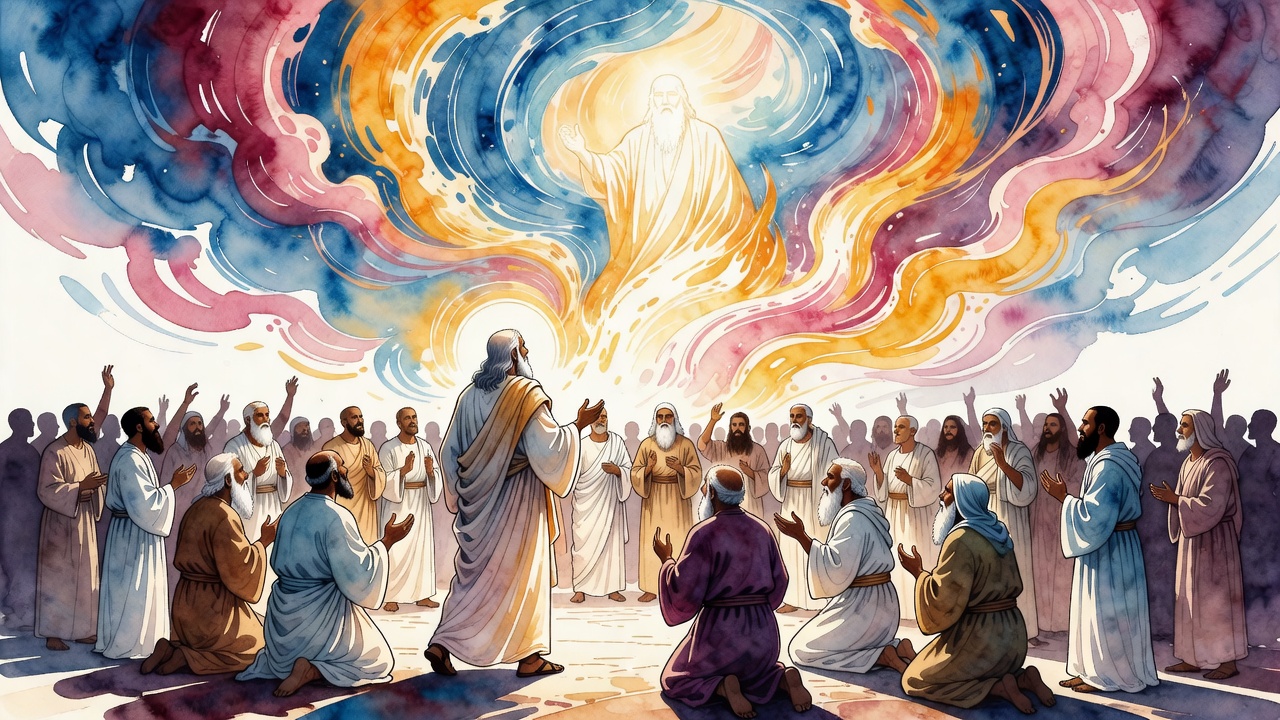
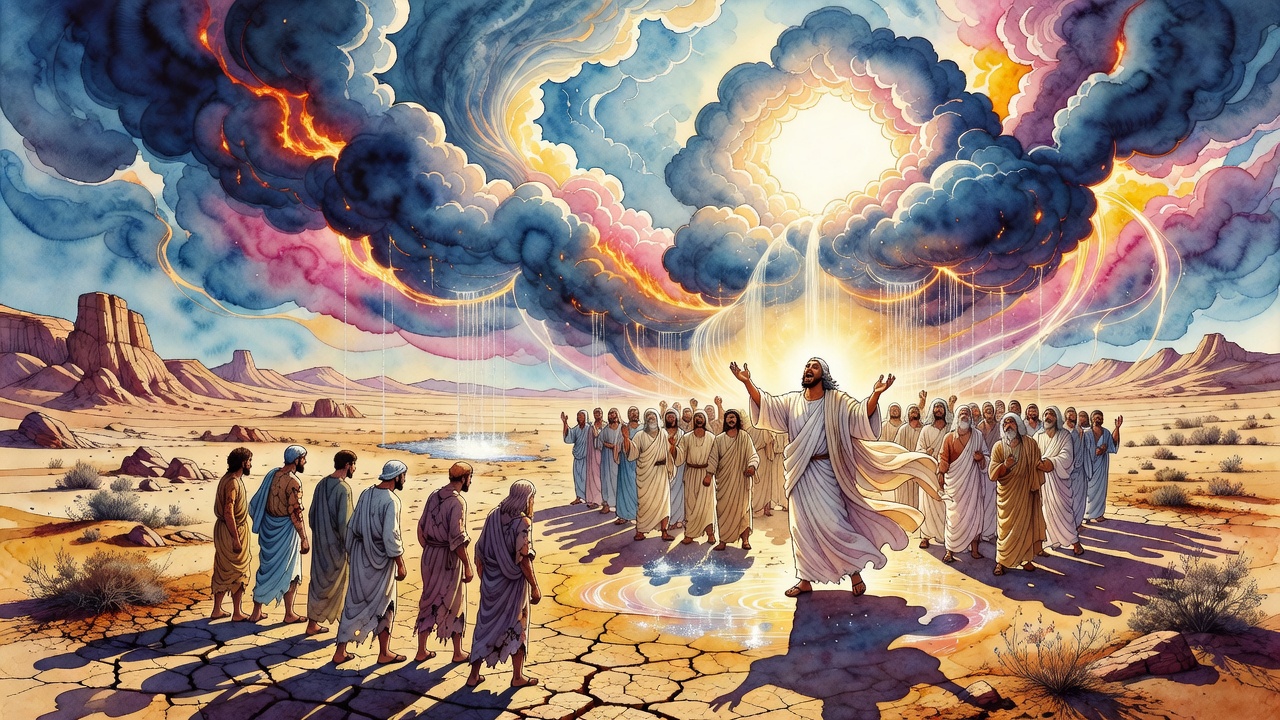
At Sinai the camp demanded to hear and see the King, not a messenger. God said yes. The voice then drove them the full length of their camp.
Table of Contents
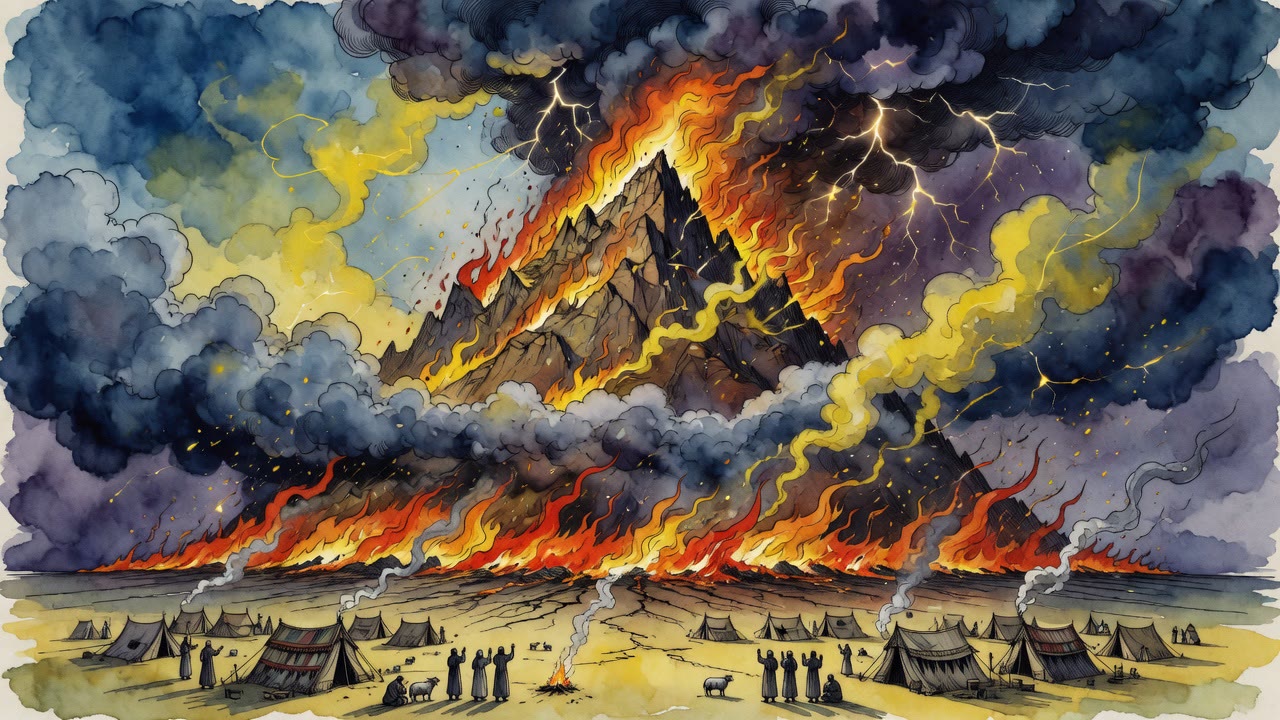
The mountain smoked and the camp still tried to bargain. Moses ran messages between the ridge and the tents like a court runner with burned lungs. Sand stuck to the sweat under his collar. The people were not content with a secondhand king. They wanted the voice and the face that attendants only describe.
 Click for full size
"We want to hear it from our King," they said. In another telling they pushed further. "We want to see our King."
The Request at the Foot of the Ridge
Rebbi, Rabbi Yehudah HaNasi, framed the traffic of speech. What exactly did God tell Moses to carry down? What did Israel send back up? The answer came blunt from the dust of the camp. Hearing a servant repeat a decree is not the same as standing where the King speaks. A messenger can get every word right and still leave the room cold. Israel wanted the heat of the source.
Moses climbed with their demand in his mouth. He did not soften it into a polite preference. God did not scold them for presumption. He did not remind Moses that prophecy was a closed guild. He told Moses to grant what they asked. The public thunder of Sinai was not only a plan imposed from above. It was also a yes to a demand from below.
So that the people would hear when God spoke with Moses (Exodus 19:9). The verse became a contract. The nation would not be left outside the door while a single man took dictation in private. Elders who had expected to receive tablets secondhand now washed clothes and set boundaries for a meeting they had forced into the open.
Hearing Was Not Enough
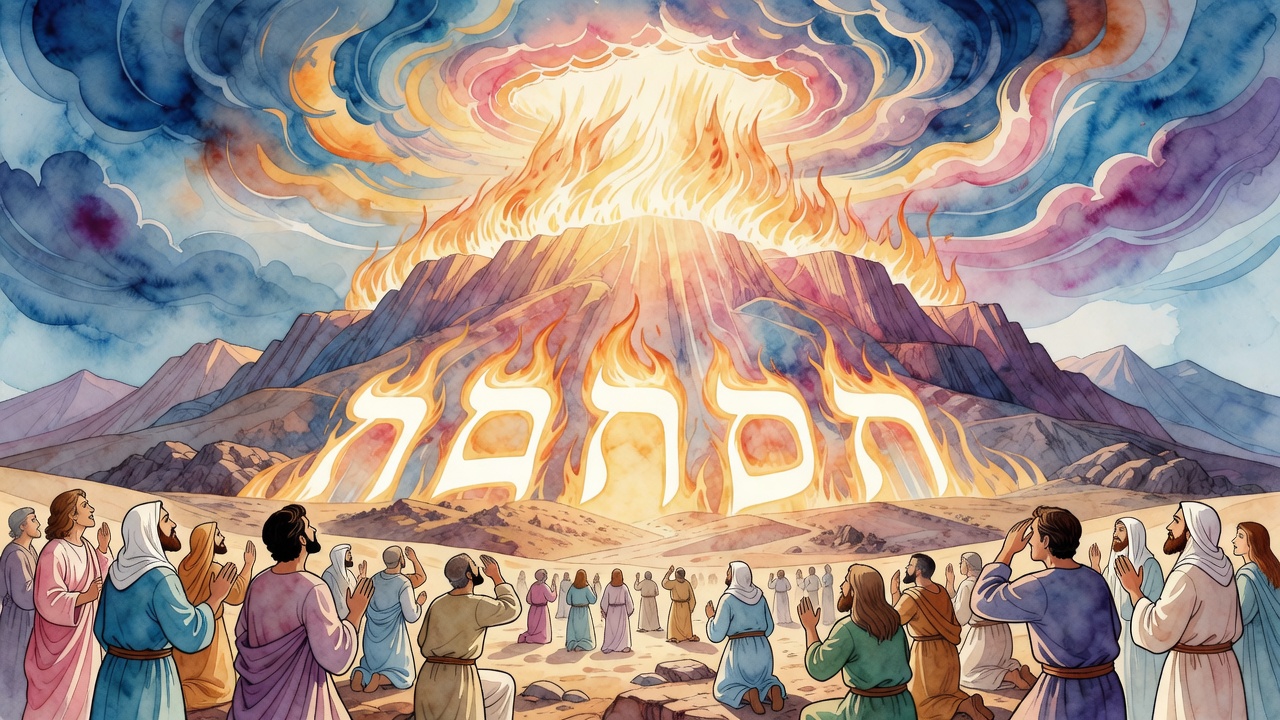
The variant cut deeper. Seeing is not like hearing. A report of a king builds belief. A face builds a different certainty. Israel wanted that certainty in their bones. They wanted the King before their eyes, not only in their ears. Mothers pulled children forward in the ranks so no one would claim later that only the front row had witnessed.
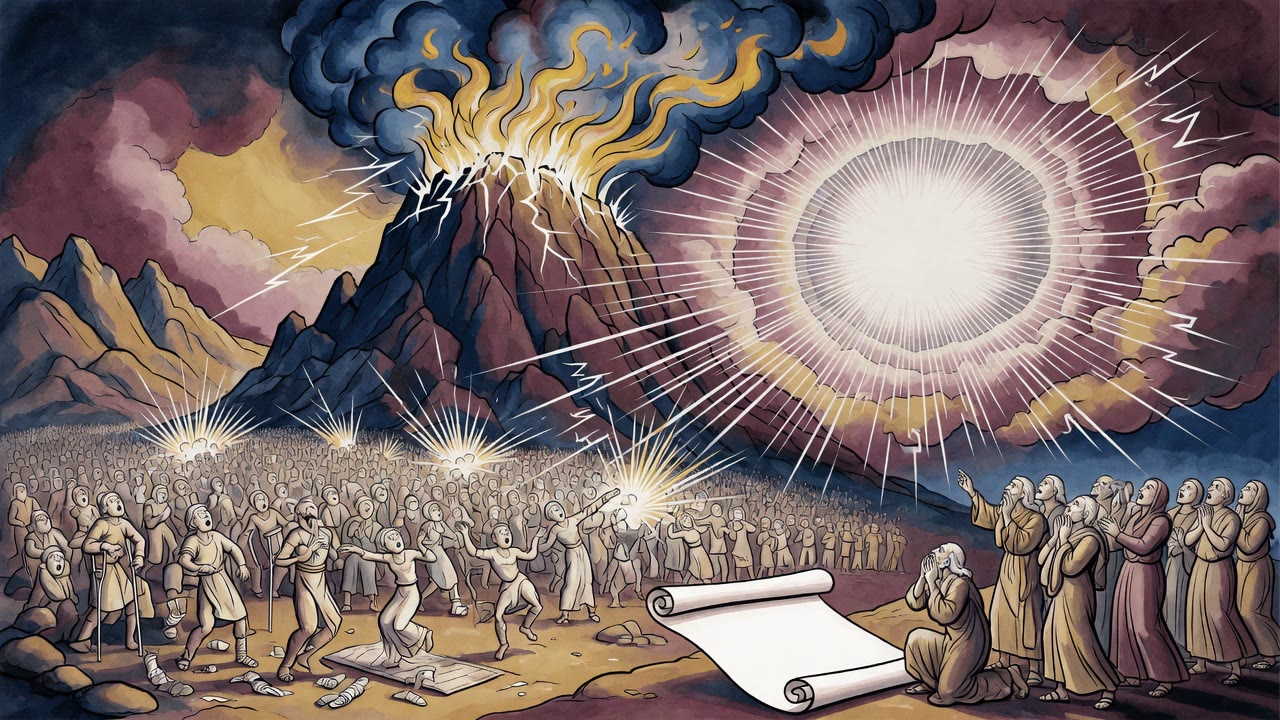
On the third day the Lord would go down before the eyes of all the people on Mount Sinai (Exodus 19:11). Before the eyes. Fire, cloud, and smoke took the ridge. Thunder stacked on trumpet blast until animals strained at their tethers. Men, women, and children stared until their necks ached. For one morning an entire people saw what prophets usually carry alone.
Moses still stood between, but the middleman role thinned. The camp had forced the revelation into the open. The King had agreed to be public. No one could later say the covenant arrived only as rumor from a prophet's private tent.
Twelve Mil of Recoil
Then the voice landed.
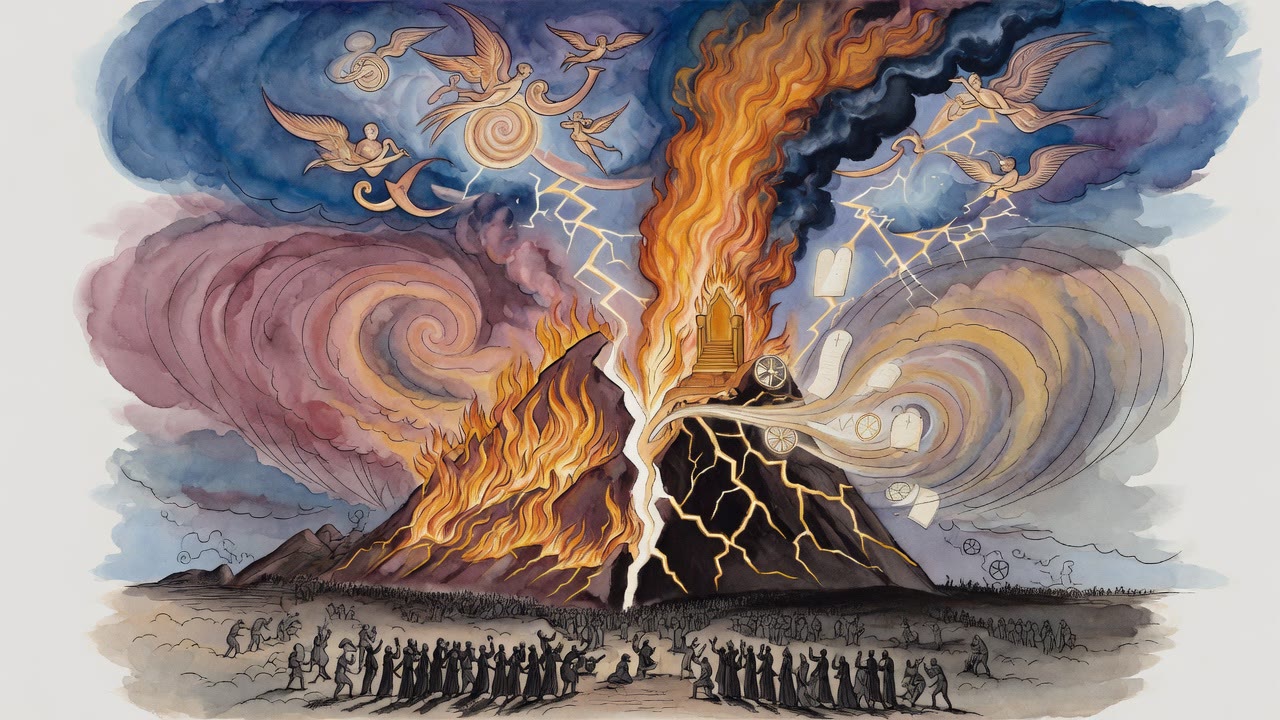
After the commandments shook the air, the people stood from afar (Exodus 20:18). The Mekhilta measures the distance. Twelve mil. That was not a polite step backward. Twelve mil was the length of Israel's own encampment, the span later marked from Beth Hayeshimoth to Aveil Hashittim on the plains of Moab (Numbers 33:49 in the midrashic reading). The shockwave of the word shoved the nation to the far edge of its own map.
Feet tore at gravel. Infants wailed in arms that would not stop retreating. Someone tried to plant a staff and found the staff still moving with the crowd. A water jar cracked and no one stopped to bind it. They did not choose a scenic overlook. They were blown to the only distance their camp still owned.
The popular picture of neat rows at a mountain foot does not survive this measure. Order broke. Bodies learned how much divine speech a human frame can hold, and the measure was written in miles of churned sand between the ridge and the last tent peg.
The Price of a Granted Wish
They had asked to hear the King. They had asked to see the King. Both requests were answered. The answer included fire on the peak and a retreat measured in the full size of their home on the sand.
Moses would still climb and descend with tablets and arguments. The people would still beg for a softer interface afterward, a prophet's mouth instead of raw glory. But the irreversible beat had already happened. Israel forced an unmediated encounter and then discovered that mediation had been a mercy as much as a barrier.
At the far line of the camp, dust settled on hair and water skins. The mountain still burned in the distance, small now because of how far the voice had pushed them. No one mistook the glow for a story told by a servant in a quiet tent. They had gotten what they demanded. Their legs kept the receipt.
Years later, when anyone spoke of Sinai as orderly rows and a calm amen, the old ones who had been there could still feel the twelve mil in their calves.
← All myths