The Mountain That Burned When God Arrived at Sinai
Israel had three days to wash their clothes and keep off the mountain. On the third morning the peak went up like a furnace and the horn would not stop.
Table of Contents
 Click for full size
Three Days to Wash Their Clothes
Moses came down off the mountain with an order that sounded like housekeeping. Wash everything. Keep away from your wives. Be ready on the third day.
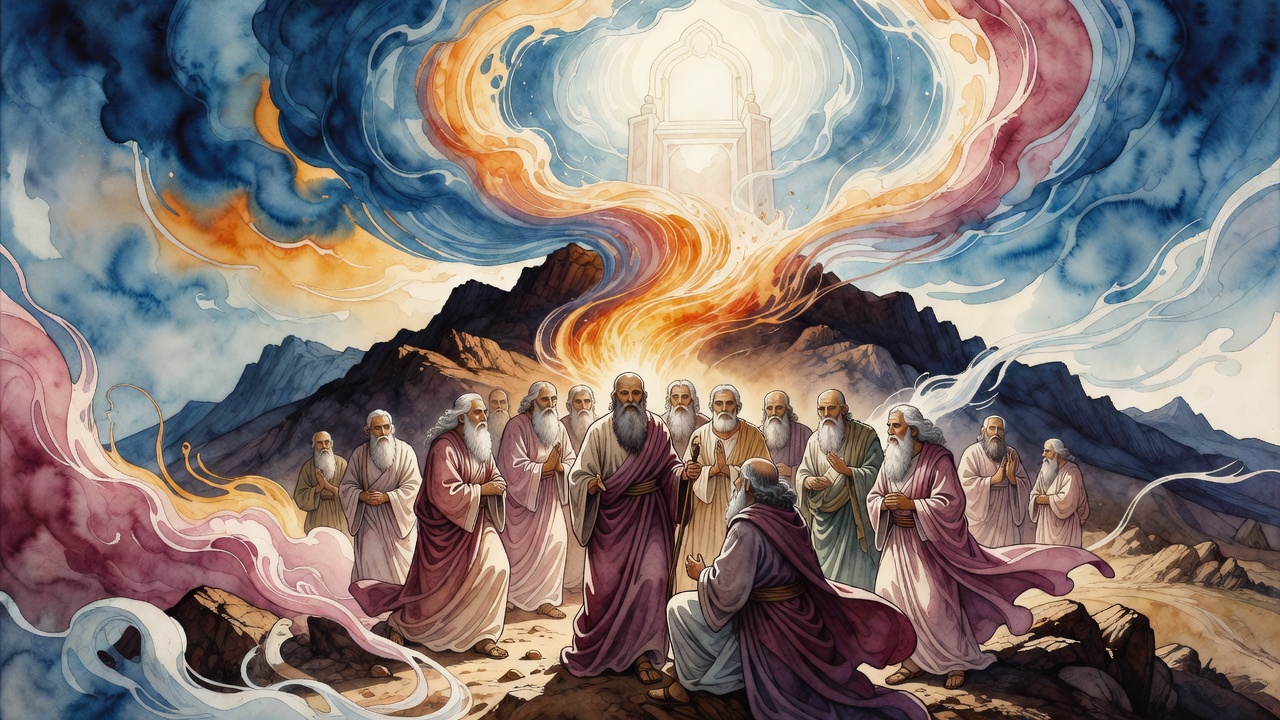
He had gone up alone and come back carrying words. The Lord had called to him out of the rock and told him what to set before the house of Jacob. You saw what I did to Egypt. You saw how I carried you out as if on eagles' wings and brought you near to serve Me. Listen to My Word and keep My covenant, and out of every people on the earth you will be the one I hold dearest. Kings and priests. A holy nation.
Moses laid it out for the elders first, in order, exactly as it had been handed to him. Then the whole camp answered at once, in a single voice, without going away to talk it over. Everything the Lord has spoken, we will do.
They did not know what they were agreeing to. Neither did he, entirely. He had been told only this much: I am going to be revealed to you inside the darkness of the cloud, so that the people hear Me speaking with you and trust you afterward, always.
So the camp washed. Every garment in a nation of that size beaten and rinsed and spread out until it dried white.
The Line Nobody Was to Cross
Then Moses walked the perimeter and set a boundary around the foot of the mountain, and the terms that came with it were not gentle.
Do not climb. Do not touch the edge of it. Whoever touches the mountain dies, and no hand is to be laid on him to pull him back, because the hand that reaches in after him dies too. Stone him from where you stand, or bring him down with a shaft, and it makes no difference whether the thing that wandered across the line is a man or somebody's goat. Nothing that touches the mountain lives.
There was one exception, and it was strange enough that people remembered it. When the horn sounds long and keeps sounding, you may come forward.
Two days the camp lived beside a mountain it was forbidden to touch, waiting for a horn nobody was blowing.
The Third Morning
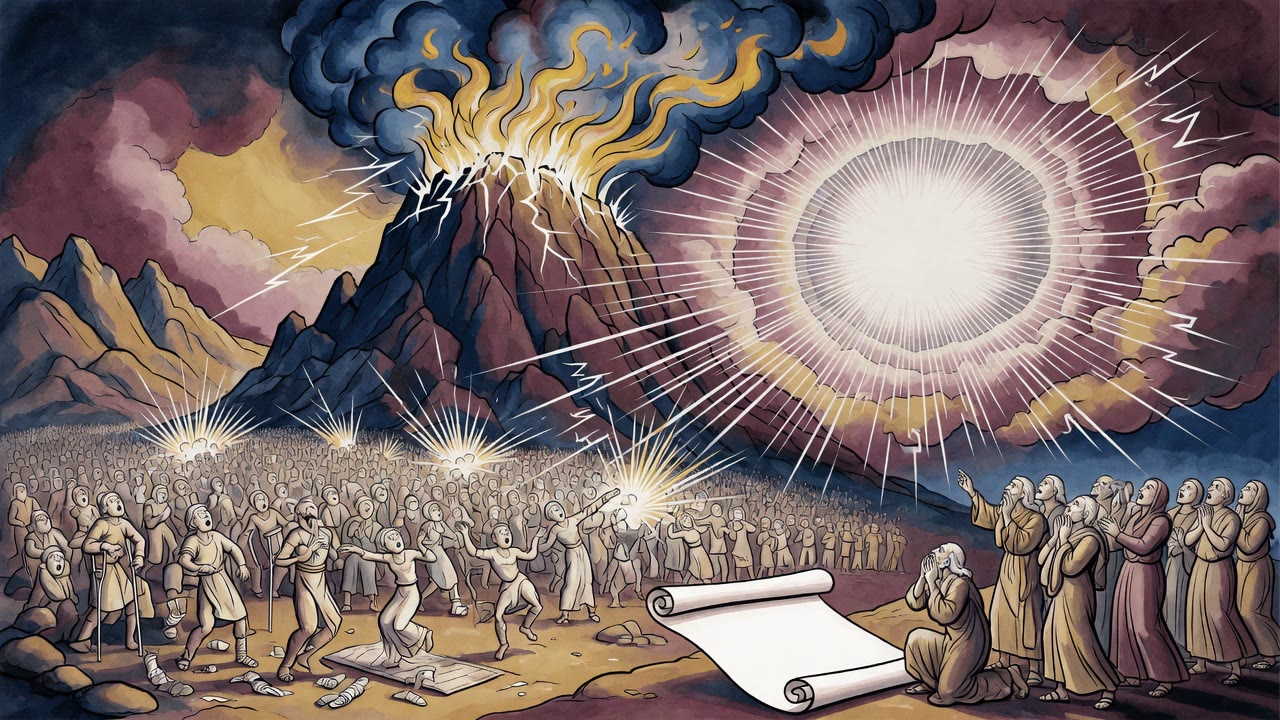
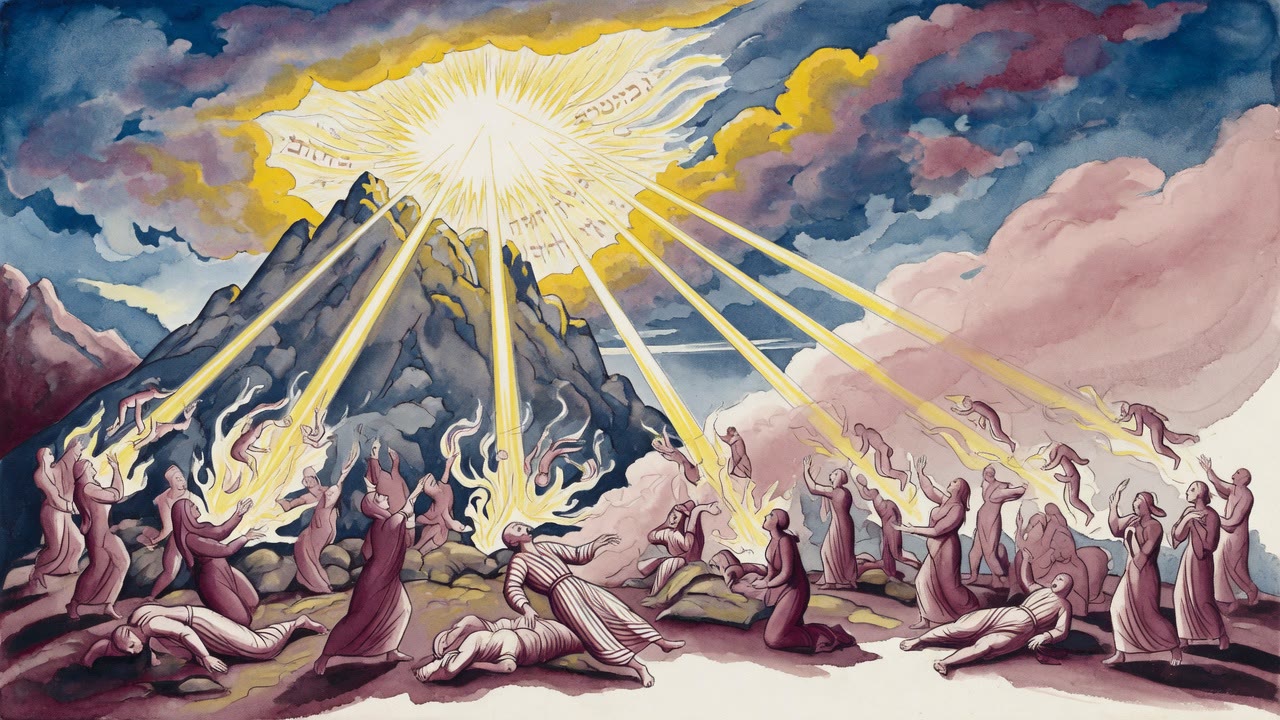
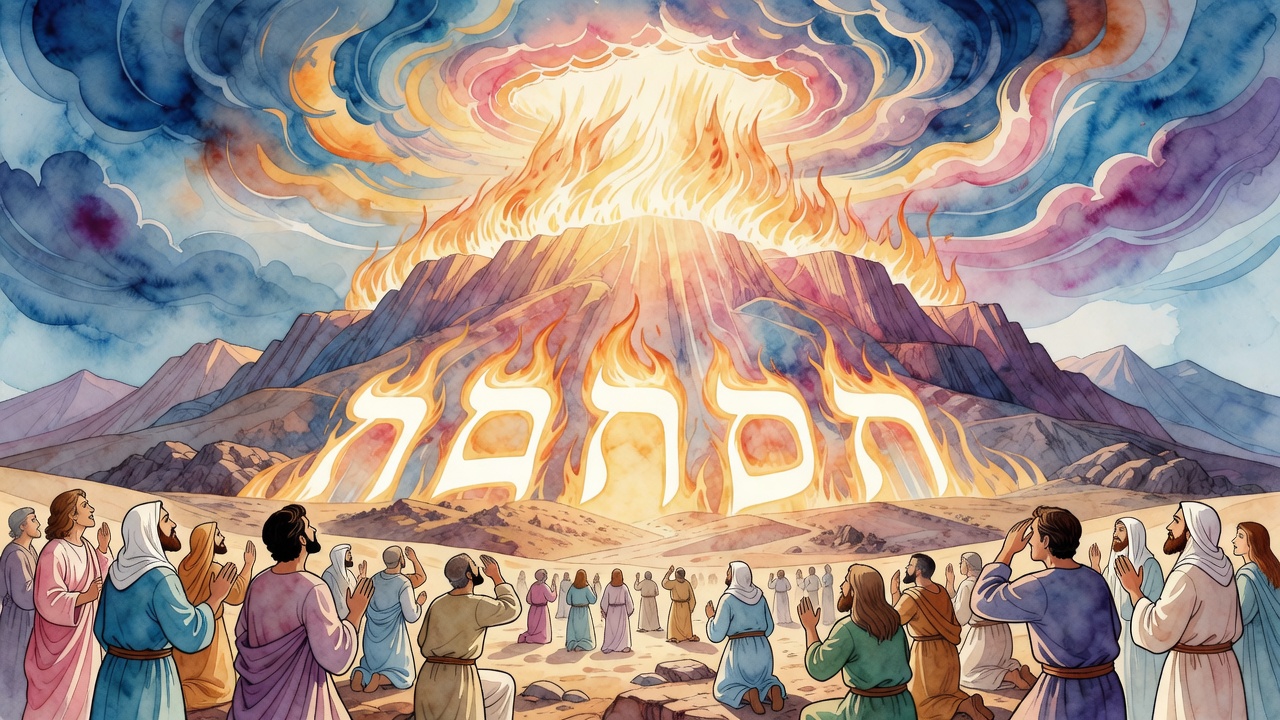
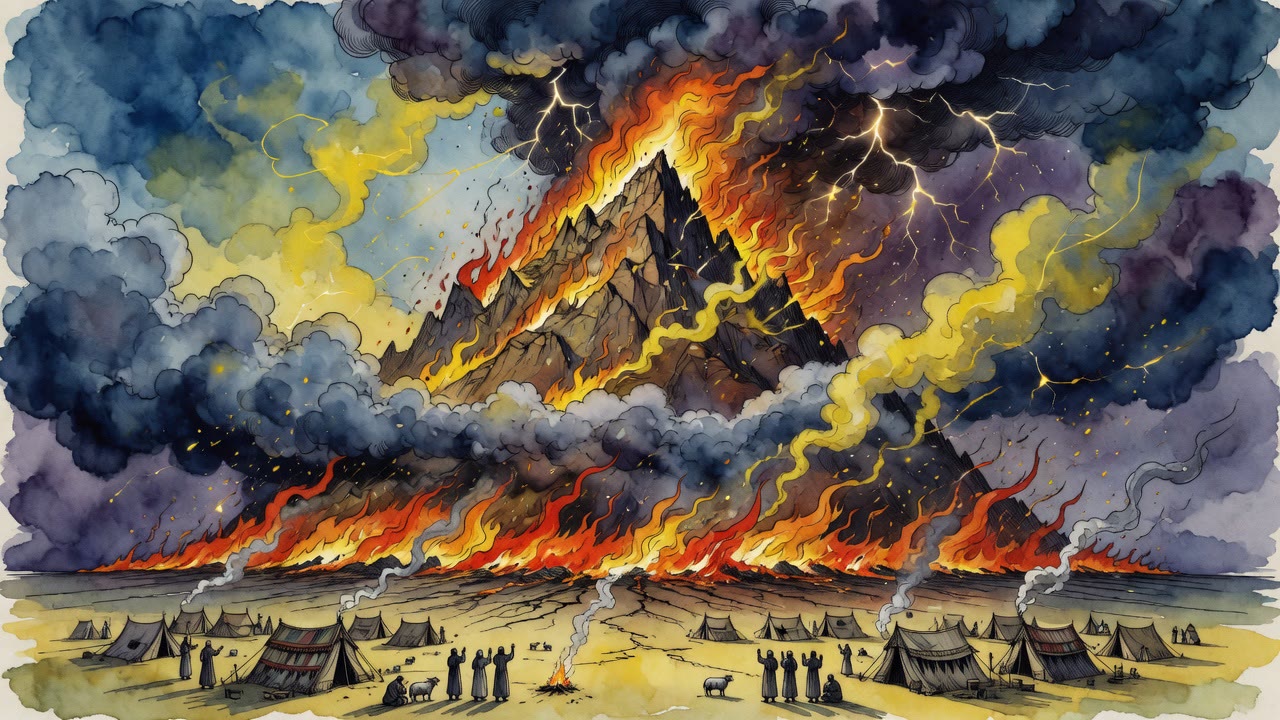
It started before full light. Thunder first, and lightning, and cloud piling up on the peak, heavier than weather. Then the horn, already loud, and getting louder. Every person in the camp was shaking, and they had not gone anywhere yet.
Moses brought them out of the tents to meet the Word of the Lord, and they stood at the lowest part of the slope, as close as the line allowed.
Above them the mountain was fuming end to end. Not a fire on the summit with cold rock beneath it. The whole of Sinai smoking, from the ground they stood on to the top they could no longer see, and the smoke going up in a single column the way it goes up out of a lime kiln.
Everyone there had stood near a lime kiln. It is the biggest smoke a person in that country ever gets close to, a white pillar you can smell from the next field over. It was the only thing anyone had to measure this against, and it was nowhere near. A kiln burns stone in a pit. Here the mountain was the thing burning, and the ground under their feet was shaking hard.
Moses Spoke Into the Noise
The horn kept climbing. A man blowing a ram's horn runs out of breath and the note thins and dies. This one did not thin. It went on getting stronger, past the point where any chest could have been behind it, until it was the loudest thing in the world and the people at the line had their hands over their ears.
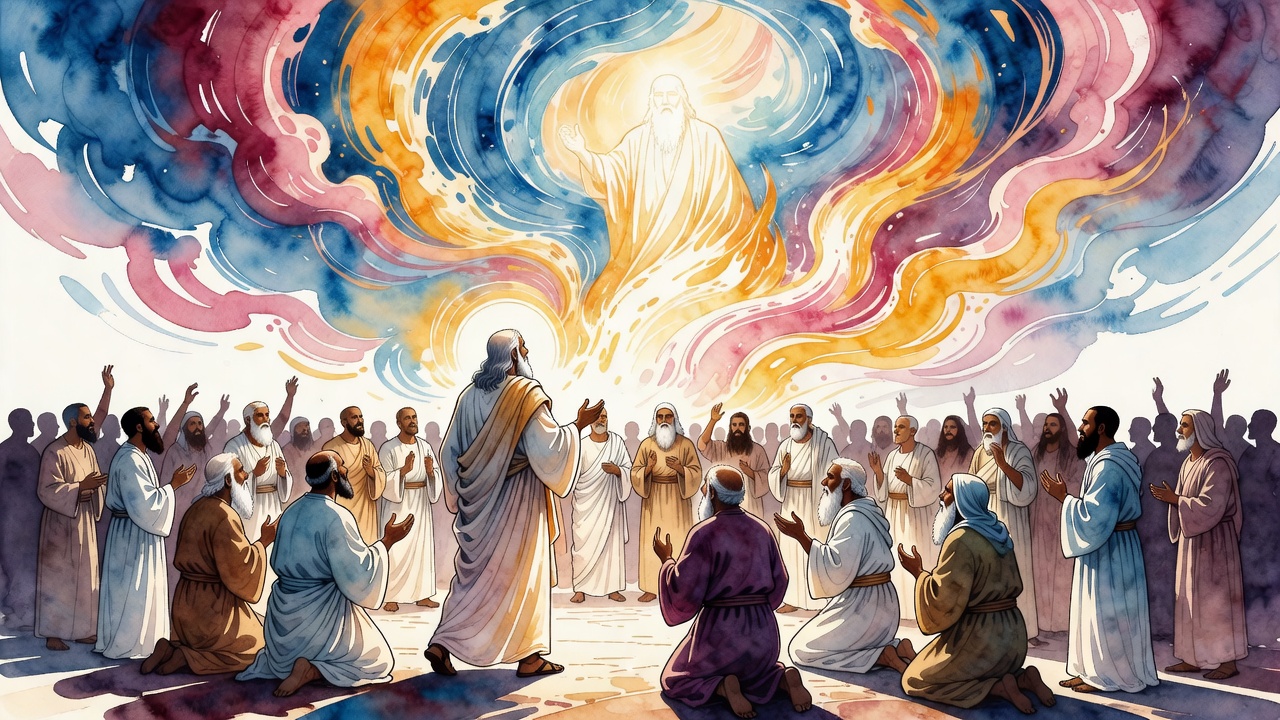
Into that, Moses spoke.
Out of the Presence a voice answered him. Everyone heard it happen. A man said something to the fire and the fire said something back, in front of six hundred thousand people, and the covenant they had agreed to two days earlier stopped being a rumor carried down by their leader.
Then the Lord was revealed on the head of the mountain and called Moses up, and Moses walked past the line he had drawn and climbed into the smoke.
Sent Back Down the Burning Mountain
He did not get to stay.
The first thing said to him at the summit was: go down. Warn them. They are going to break through to look, and if they do, many of them will fall. And the priests, who think their office covers them, are to sanctify themselves, or the Lord will break out against them too.
Moses argued. He had just come up. He said the plain thing, that the people cannot climb Sinai, that the warning had already been given and the boundary was already set, that he had fenced the mountain himself because he had been told to.
He lost. Go, he was told. Go down, and then come up again, and bring Aaron with you, but do not let the priests or the people break through.
So Moses turned around at the top of the mountain, in the middle of the loudest morning in the history of his people, and went back down through the smoke to the line at the bottom, where the crowd was standing on the safe side of a rule they were already leaning against. He stood in front of them and told them again what would happen if they crossed. Behind him the mountain went on burning.
← All myths