Moses Set Sinai Before the Elders Then Heaven Bent
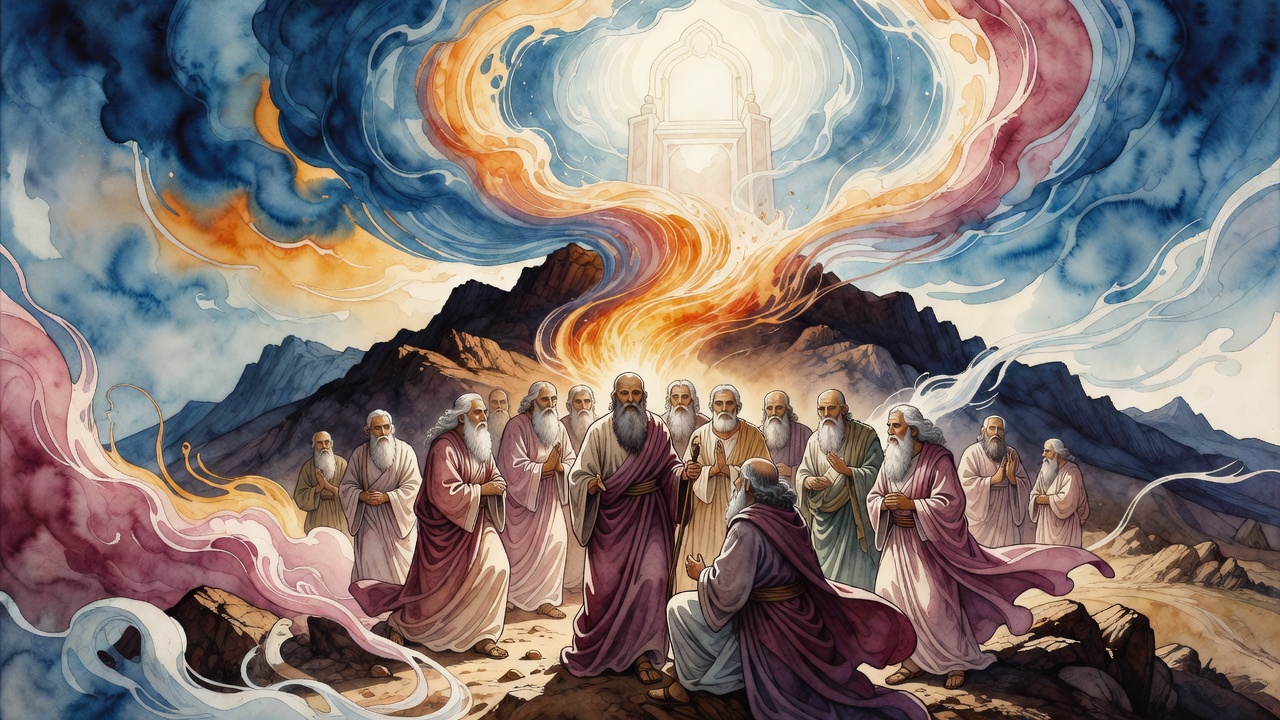
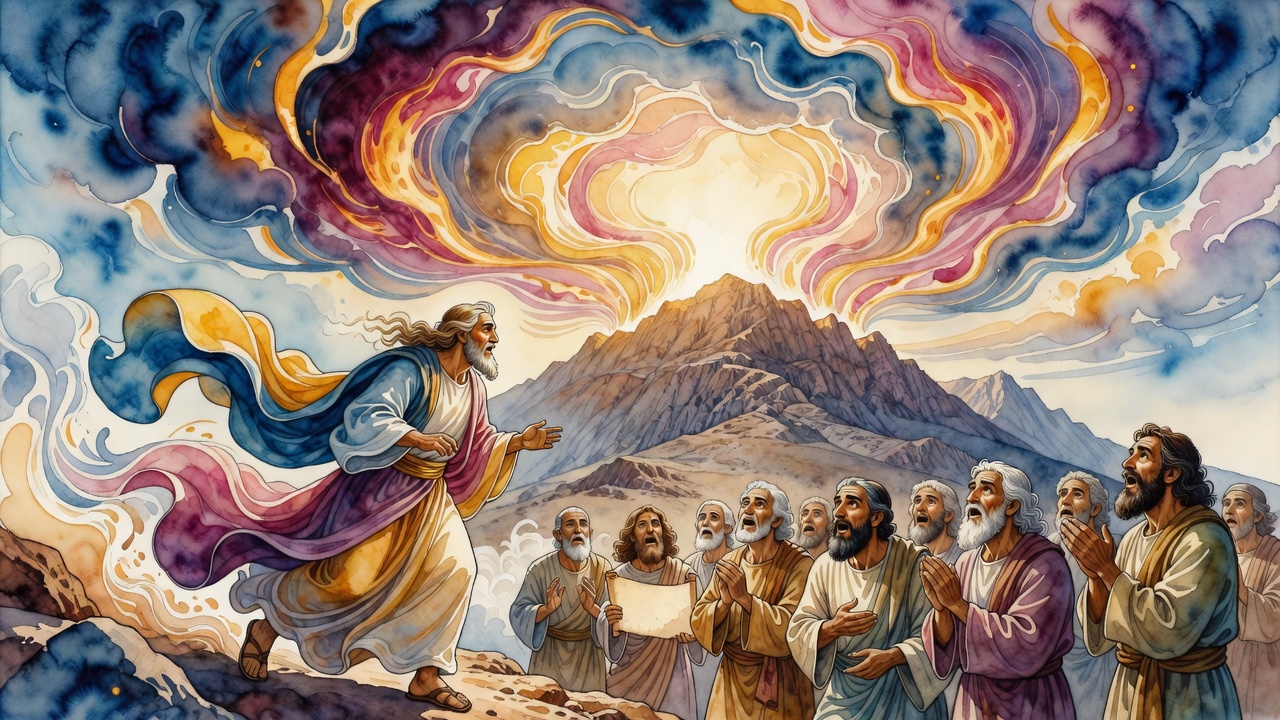
The elders came with dust on their beards, some leaning on staffs. Moses laid the covenant words out for them like a table set for honored guests.
Table of Contents
 Click for full size
Straight to the Elders
Moses did not go home. When God finished speaking on the mountain, the prophet turned on his heel and walked straight back into the camp with the words still hot in his mouth. No meal, no rest, no private council with Aaron first. He called the elders of the people before anyone else could claim him.
They came with dust on their beards and the smell of the wilderness still in their clothes. Some leaned on staffs. Some brought younger men to steady their elbows. Moses set the words before them the way a man lays a table for honored guests, first things first, last things last, nothing scrambled. He arranged the teaching until their eyes shone. He held nothing back. He left nothing murky. The seasoned heads of Israel received the covenant before the throng pressed in, and in that order the people learned that elders take precedence over all Israel.
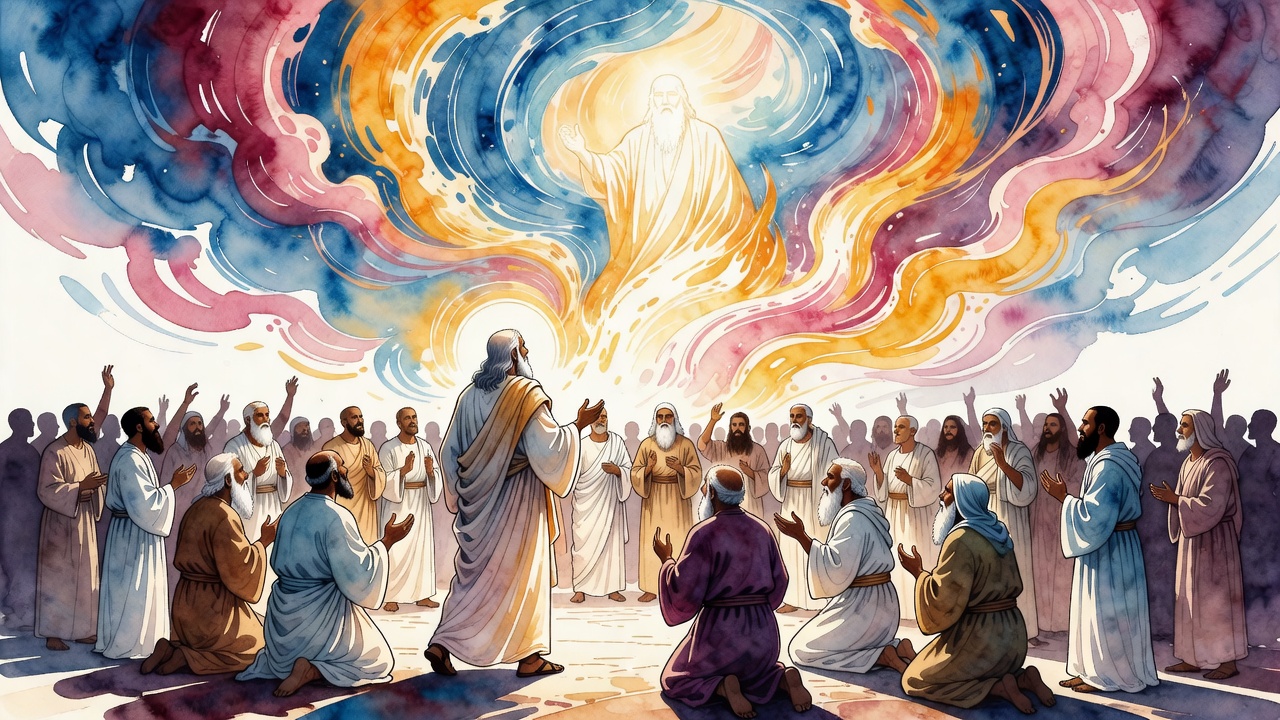
Then came the phrase that opened the whole mountain wide. He delivered the words even to the women. Sinai was not a council of men alone. Mothers who had packed dough for the flight from Egypt stood in the hearing. Girls who had never seen a brick pit heard the same clauses as the men who still carried whip scars. The Holy One had spoken for the entire people, and Moses made sure the entire people heard.
Three Days of Washing
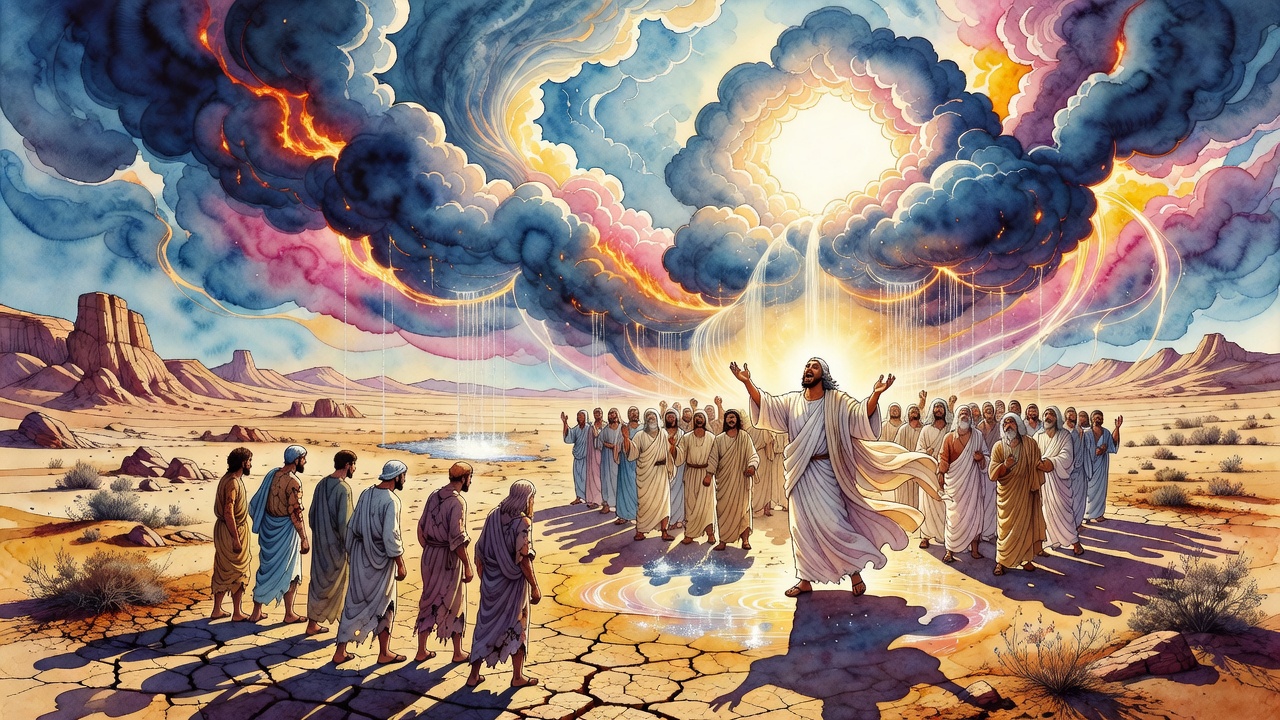
God told Moses to sanctify the people today and have them wash their garments. "Today" was the fourth day of the count. On that day Israel went down into water. Immersion marked the body for the mountain. Counting forward any other way would have shoved their purity against the dawn of the great sixth day, when heaven itself would arrive, so the calendar was drawn tight as a bowstring.
The fifth day had quieter work. While the camp waited in clean clothes that still felt strange on skin used to dust, Moses sat writing the words of the covenant onto scrolls, a scribe setting down a record that could not be paraphrased later. Ink dried. Lines of parchment stacked. Children watched a prophet do clerk's labor and did not understand that the future would need the exact letters.
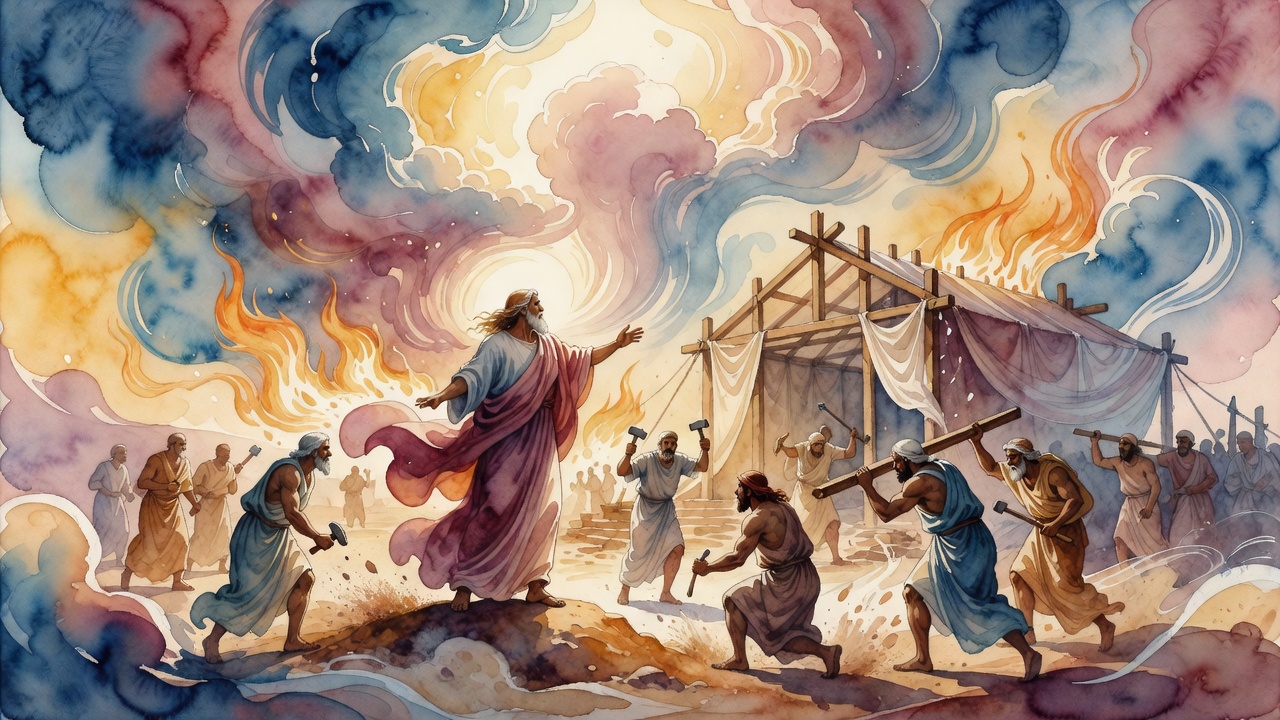
The sixth day rose early. Moses built an altar at the foot of the mountain and raised twelve pillars. Rabbi Yehudah said the pillars stood for the twelve tribes. Other sages said they stood for all Israel together. Young men offered burnt offerings on behalf of the whole nation. Smoke climbed. Blood marked stone that had never known a temple.
With three things Israel entered the covenant: circumcision, immersion, and offering. Only afterward was the Torah given. Circumcision reached back to Egypt, where Moses had circumcised the people so they could eat the Passover. Ezekiel's doubled phrase, "in your blood live," was read as two bloods, the blood of circumcision and the blood of the lamb. The offering smoked at the mountain's foot. The immersion hid inside the command to wash garments. If a person must immerse even when no laundering is required, how much more when clothes must be washed for the Presence about to bend low.
Thus and Nothing Else
"Thus you shall say to the children of Israel." The single word thus tightened into a whole code of transmission. Moses was to teach in the holy tongue, in this exact manner, in this order, with these pauses, in these very sections, adding nothing and subtracting nothing. Revelation was not a gist to be improved by a clever tongue. It was a precise text to be passed on word for word, pause for pause.
The verse insisted on directness. "You yourselves have seen that I spoke with you." Israel did not inherit a report of revelation. They stood inside it. No witness chain, no secondhand document, no court clerk reading minutes of a meeting held elsewhere. The mountain itself was the courtroom, and the people were the jury that could never claim it had only heard rumors of God.
Moses felt the weight of that precision in his throat. He had argued with God at a burning bush. He had struck a rock. He had pleaded for a stiff-necked people. Now he was ordered to become a perfect conduit, not an editor. The honor of the elders and the clarity of the teaching were the same discipline under two names.
Heaven Rests on Stone
One verse said God came down upon Mount Sinai. Another declared, "you have seen that I spoke with you from heaven." Earth or heaven? The sages refused to discard either line. A third verse broke the tie: from heaven He made His voice heard, and on earth He showed His fire. Both claims stood.
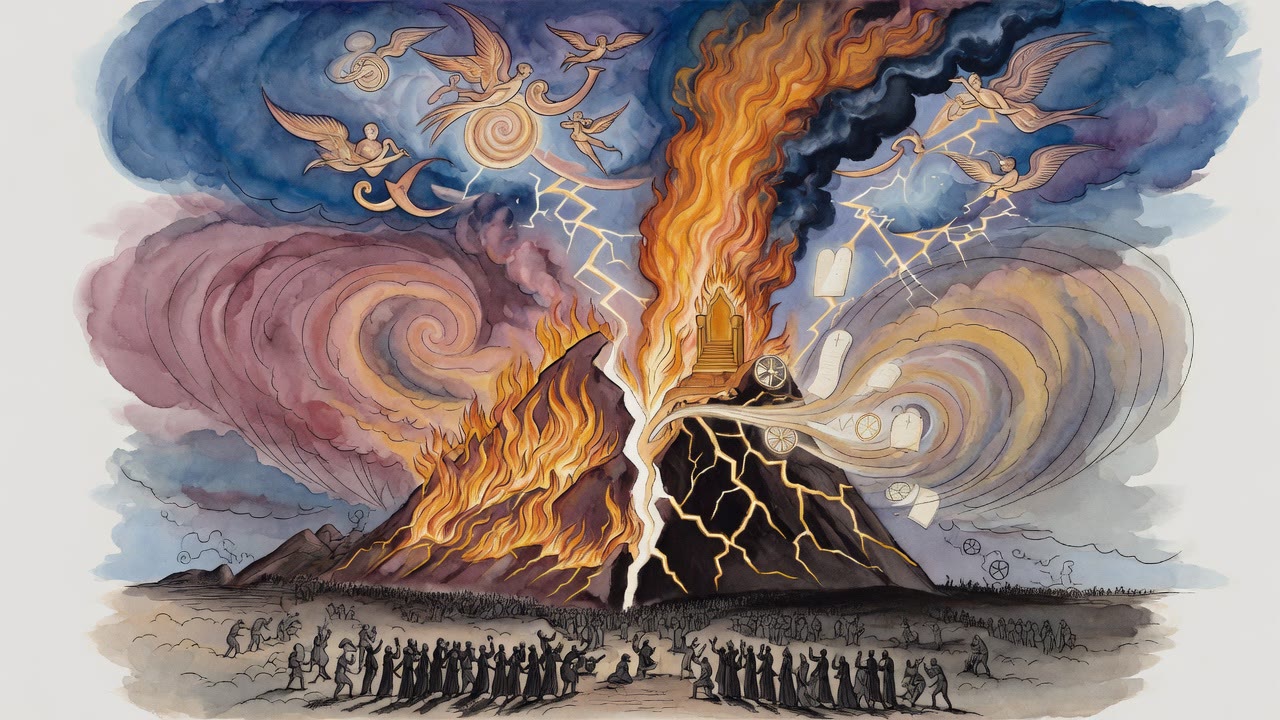
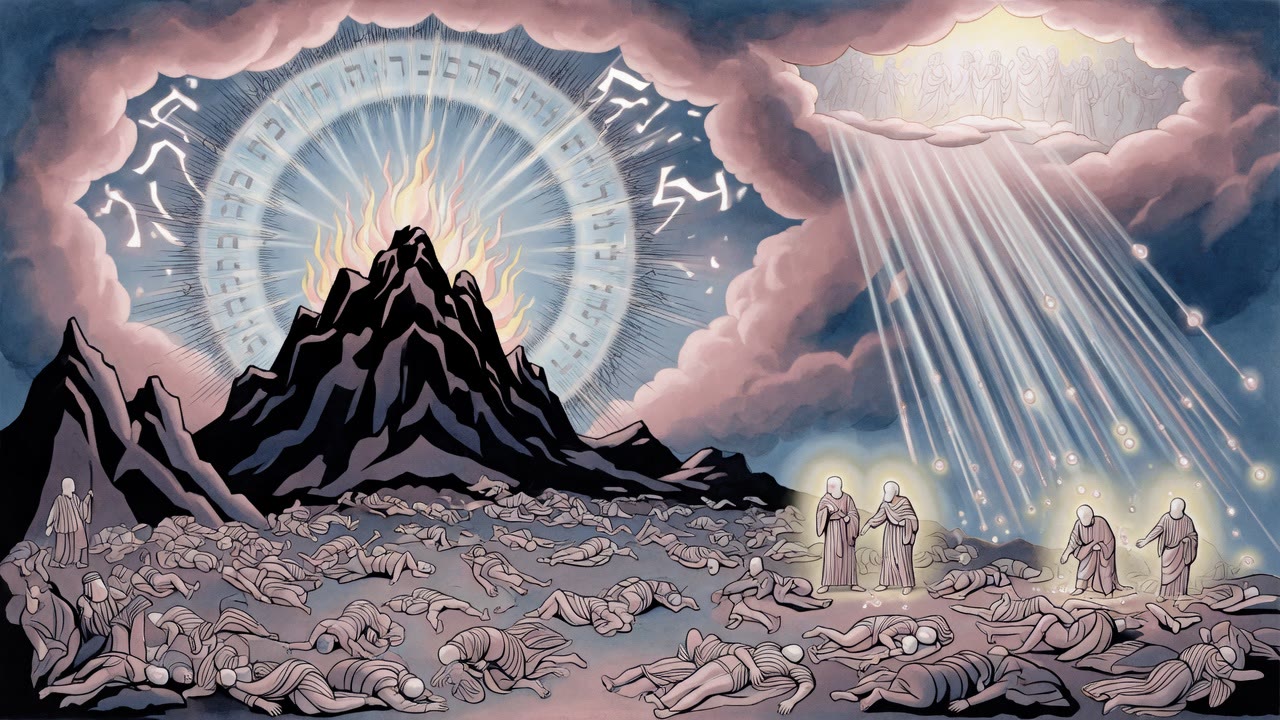
The resolution was a single image no body in Israel would forget. God bent the upper heavens down until they rested upon the peak of the mountain, and from those lowered heavens He spoke to the people standing on the summit. Heaven and earth met at one point of stone. Thick darkness moved under His feet the way a carpet is dragged across a floor. The gap between the divine and the human closed for the length of a voice.
Animals bolted. Pregnant women gripped one another. The elders who had received the words first now received the sound with the rest of the nation, and the order of honor did not protect them from awe. Fire showed on earth. Speech came from a heaven pressed against rock. Moses, who had begun by skipping supper and calling gray heads, stood under a sky that had come down to listen with the people.
The first covenant day ended not with a legal summary but with washed bodies, ordered words, and a mountain wearing the upper heavens like a crown forced to bow.
← All myths