Moses Stopped the Tabernacle When Shabbat Arrived
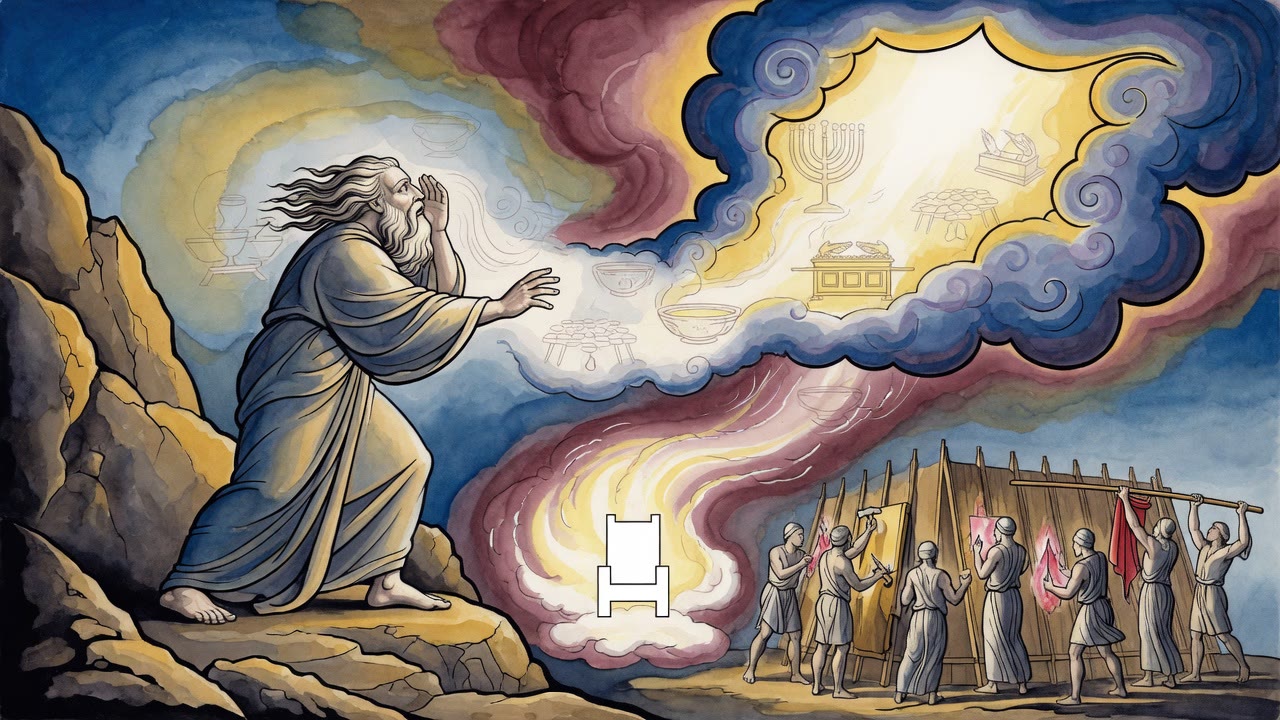
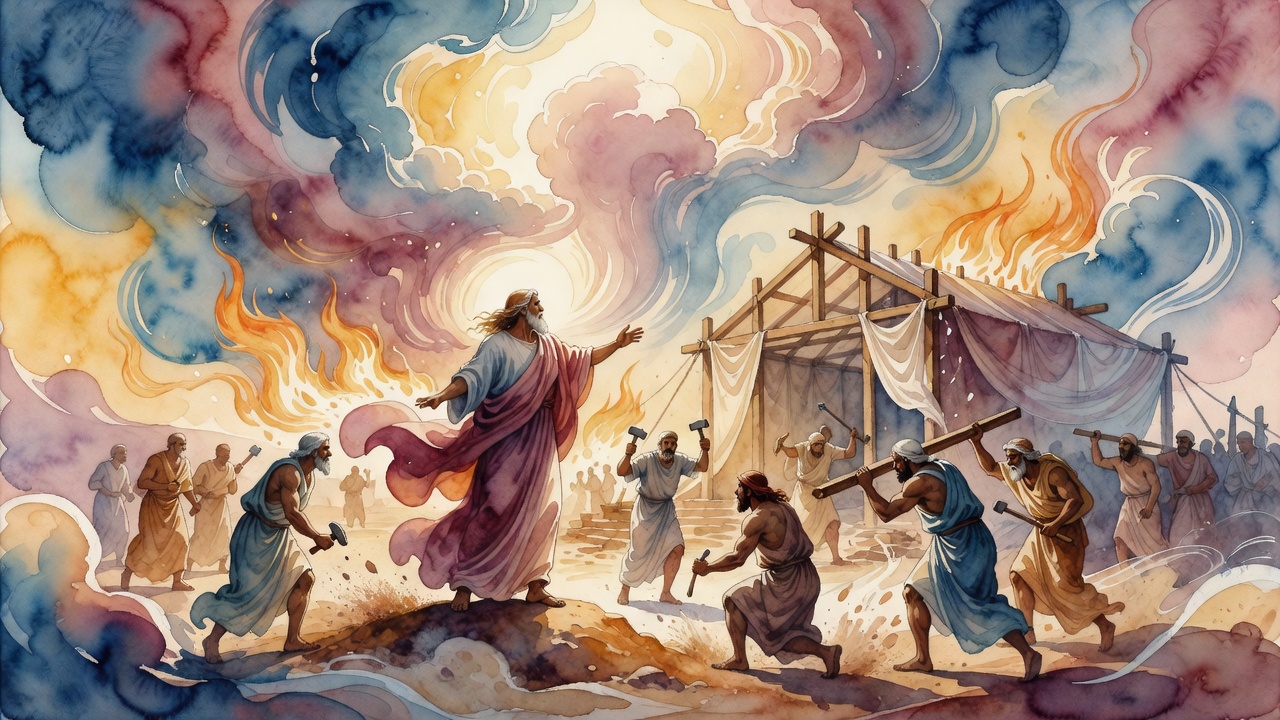
Half-built boards at dusk on the sixth day. Gold rings still waiting for their poles. One man reached for a mallet. Another man set it down.
Table of Contents
 Click for full size
Two Commands on a Collision Course
Build Me a sanctuary. Rest on the seventh day. Both orders came from the same mouth on the same mountain's authority. Craftsmen with gold in their hands and planks on their shoulders felt the clash in their muscles before any sage named it. Does the house of God push the Sabbath aside, or does the Sabbath halt the house mid-beam?
The tempting logic ran tight as a well-tied knot. Temple service overrides Shabbat; offerings rise even on the seventh day while other fires stay cold. Whatever enables that service is itself called service in a certain way of speaking. If a tool breaks, if the altar's horn chips, if the slaughtering knife fails on a Friday afternoon, should a worker not repair it so the sacred work can go forward without shame?
The argument wanted yes. It wanted hammers on the holy day in the name of the holy house. Scripture cut the knot. The house would wait. The day would not.
The Assembly on a Weekday
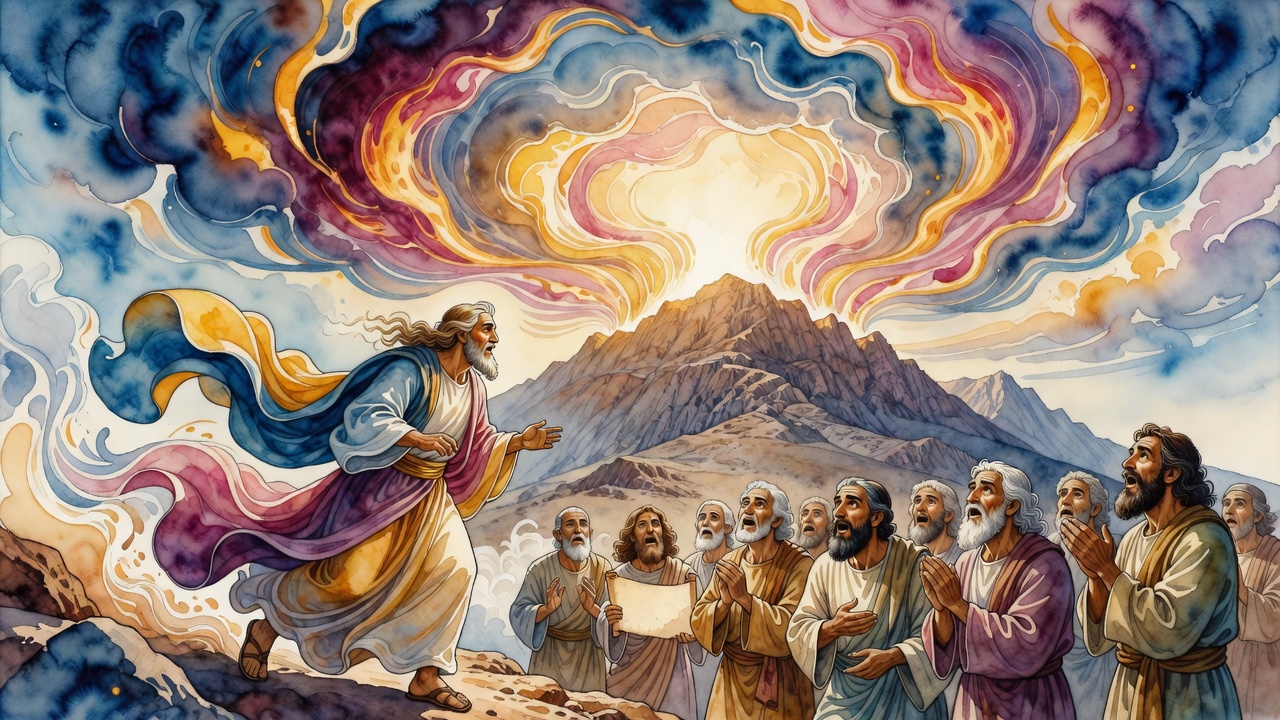
Moses gathered the whole congregation and spoke to them on a weekday, not on the Sabbath. The timing itself was the lesson before a single law was parsed. He did not model sanctuary urgency by teaching rest while hammers still rang behind him. He stopped the camp, set the words in order, and made the boundary audible before the next sunset could test it.
He had done this kind of ordered delivery before. At Sinai he went straight to the elders, laid the teaching out first to last, refused to scramble what God had said, and made sure women heard the covenant with the men. The same disciplined mouth now told Israel that however holy the Tabernacle, it does not outrank the day God set apart at creation and again at Sinai.
Elders nodded. Young builders shifted on their feet, hands still smelling of acacia and dye. The Mishkan (the portable sanctuary they were building) was their masterpiece. Moses told them mastery includes stopping.
Thirty-Nine Labors Under One Phrase
"These are the things." Rabbi heard the plural stretch toward the thirty-nine categories of forbidden labor, the ones delivered to Moses by word of mouth at Sinai and now bound to this command of rest. Sewing, hammering, kindling, carrying, writing, building: the sanctuary's crafts sat inside a list larger than any single workshop, a map of human making that Shabbat freezes in place.
Silver trumpets would later call the camp to gather, to journey, to war (Numbers 10:2-3). Assembly itself is a holy technology. The blast that gathers Israel for Torah is not a small sound. But no trumpet blast authorizes melachah once the seventh day locks the tools. The instrument that gathers the people cannot outvote the day that gathers creation back to stillness.
Moses' weekday assembly and the trumpet assemblies of the wilderness share a grammar: gather for speech and movement when the day allows, and do not pretend urgency is the same as permission.
Hands Open, Tools Down
Imagine the half-built boards at dusk on the sixth day. Bezalel's patterns still incomplete on a curtain edge. Gold rings waiting for poles. A man reaches for a mallet because God's house is almost ready and his pride is almost satisfied, and another man, remembering Moses' assembly, sets the mallet down with a sound softer than work and louder than argument. The unfinished wall becomes a sermon.
Holiness is not only what you build. It is what you refuse to finish on the wrong day. The altar will have its Shabbat offerings. That is service commanded for the day. Repairing the knife that enables service is not a loophole big enough to rebuild the world between sunset and sunset.
Moses closed the loophole while the wood was still fragrant and the people still eager enough to work through the night if zeal alone were law. Children learned by watching hands open. Tools slept. The Presence would not be homeless for lack of one more hour of labor.
The Day That Outranks the House
When Shabbat arrived, the sanctuary waited like a guest who understands the host's table rules. God can live in a tent that pauses. Israel cannot live in a zeal that never pauses. The prophet who climbed Sinai and bent under thunder also taught a quieter courage: stop. Even for the Mishkan. Especially for the Mishkan, because a house built by breaking the day would teach the wrong name of God.
The camp learned that rest is not the enemy of holiness. Rest is the first holiness that judges every other project, including the project of housing the Presence. Hammers would rise again after the stars of the outgoing day. For twenty-five hours, the only work was to remember who had spoken both commands, and which one rules the hands when they collide.
← All myths