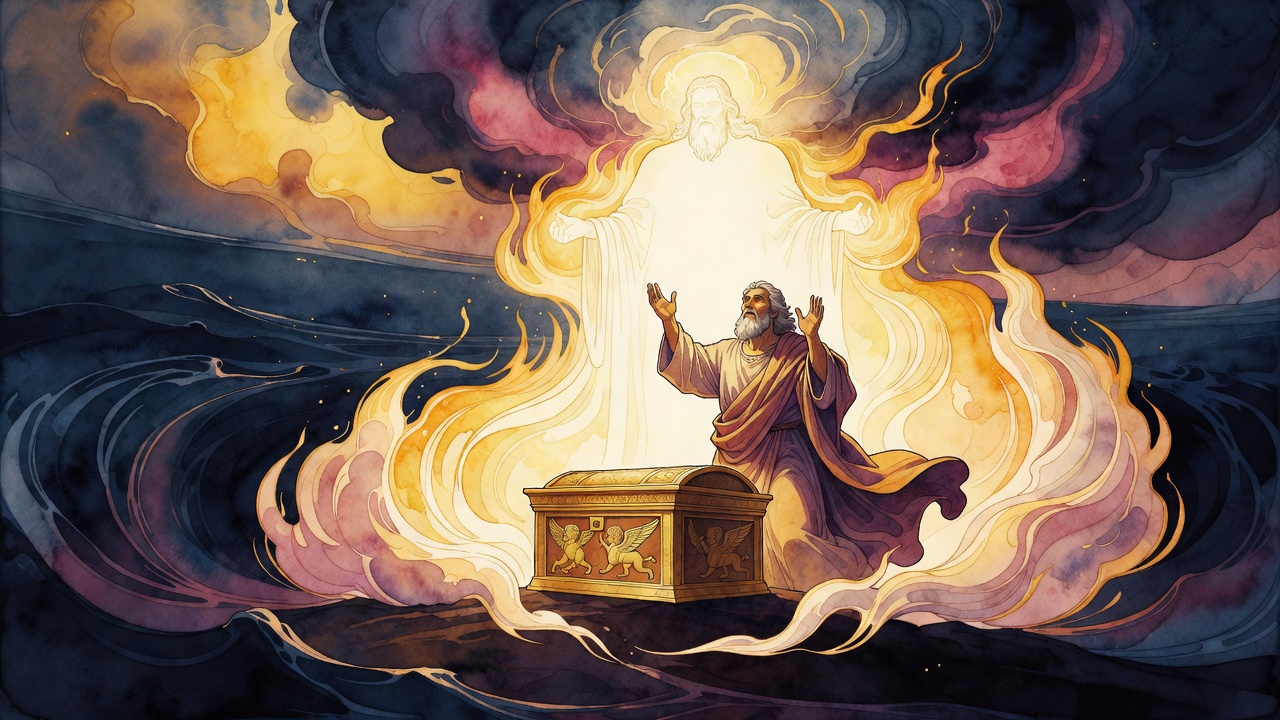
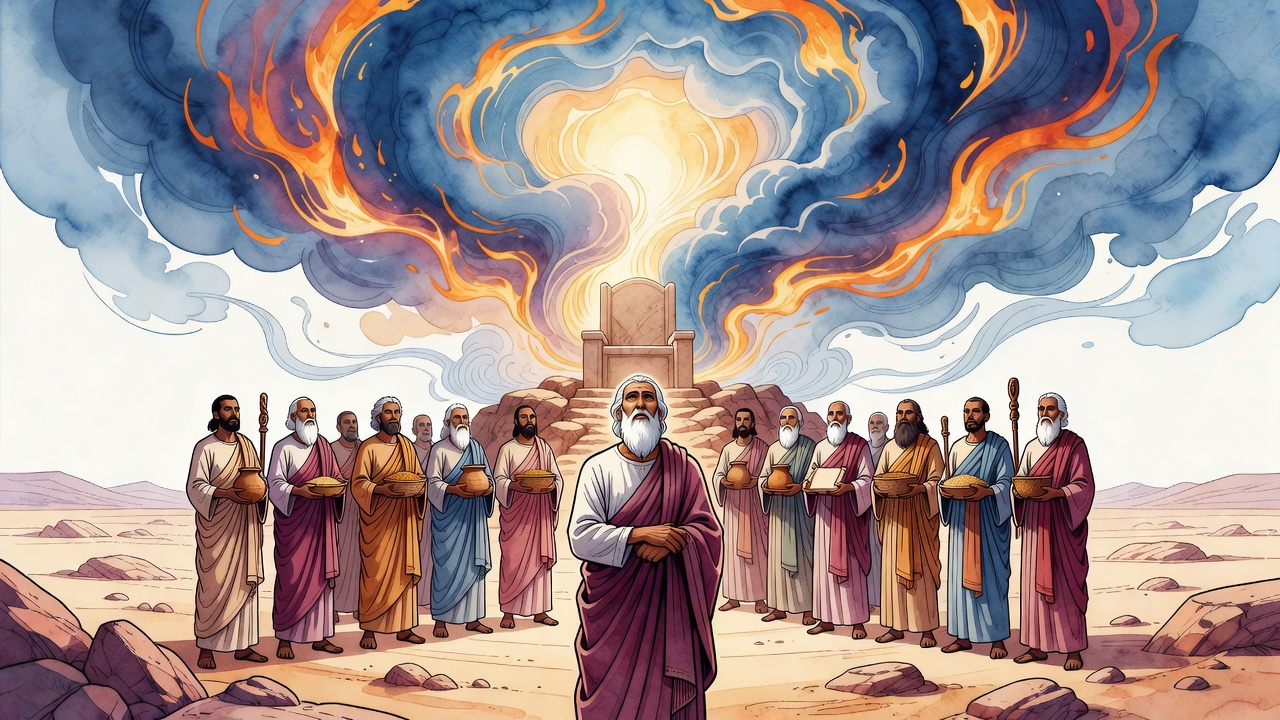
Moses Heard Every Pattern, but God Named Bezalel as the Builder
The camp said Moses had given the Sanctuary to his own blood. He opened the words from the mountain and showed them Bezalel's name already written.
Table of Contents
On the mountain the Voice did not say they. It said thou.
 Click for full size
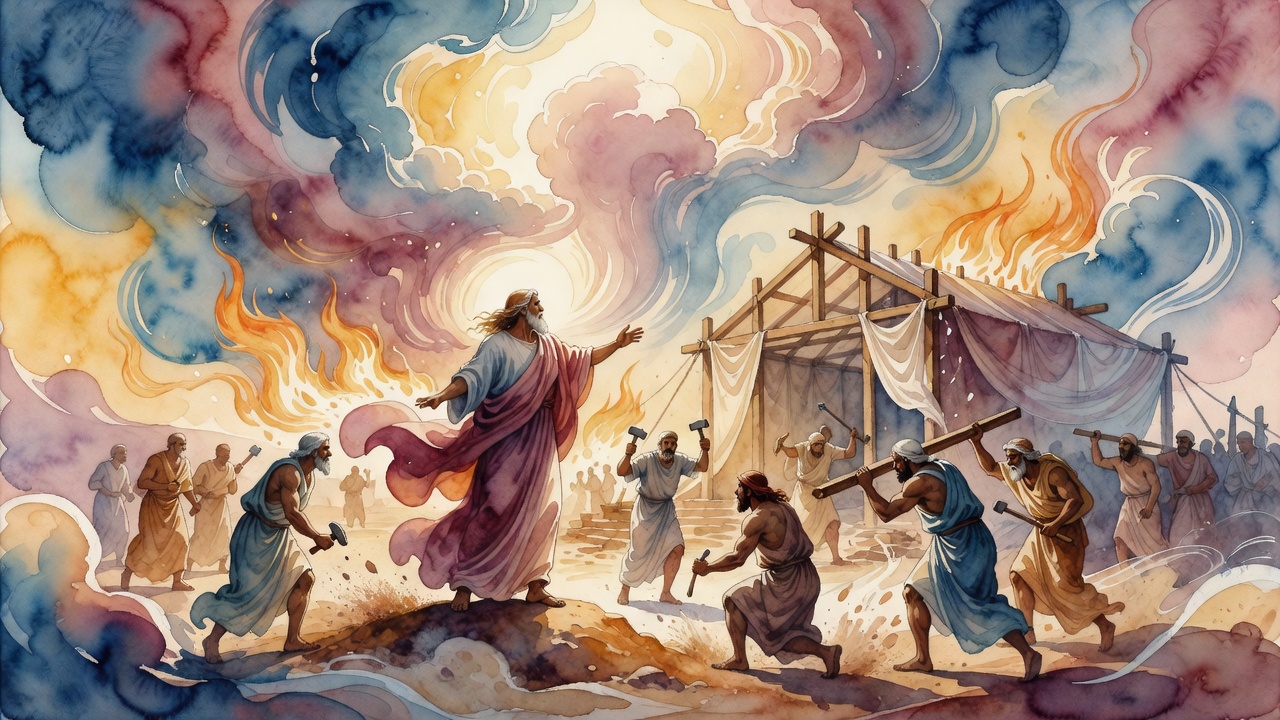
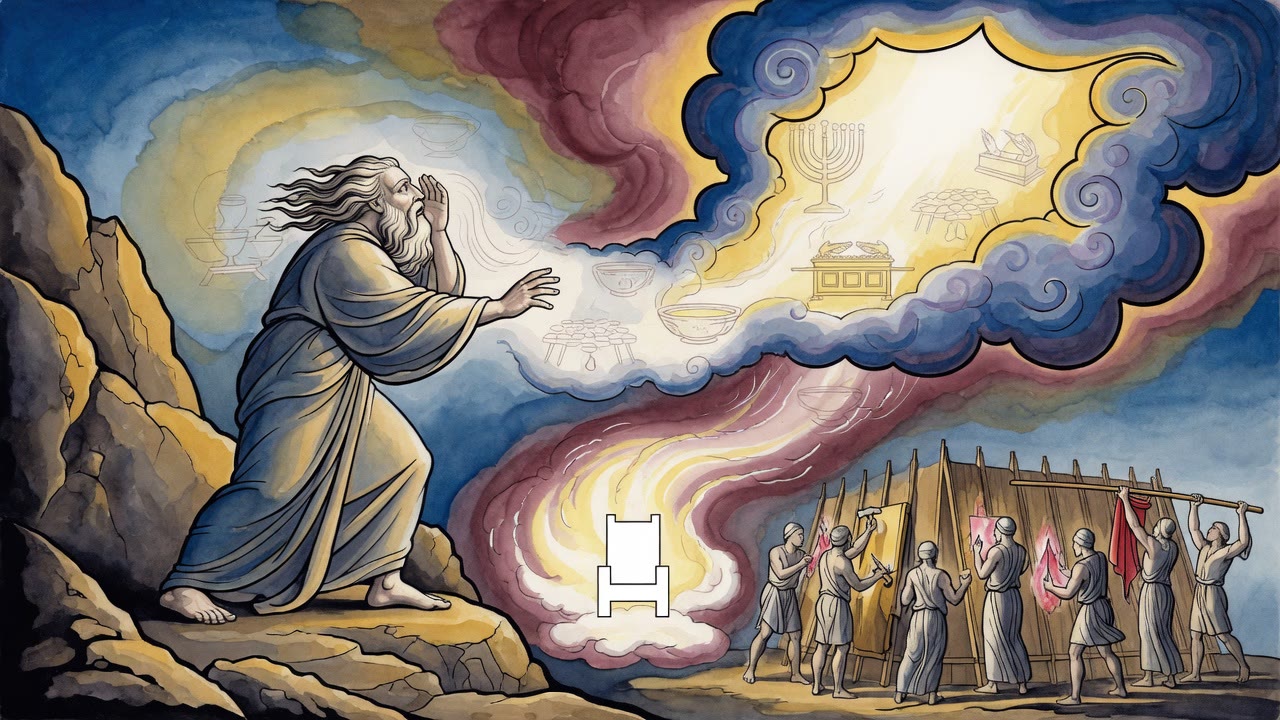
Moses stood in cloud and counted the jobs as if they were his. Thou shalt make the staves. Thou shalt make a table. Thou shalt make an altar. Thou shalt make an ark-cover. Thou shalt make a basin. See that you make them after their pattern (Exodus 25:40). Gold thickness. Acacia joints. Sockets that would have to hold glory without a wobble. He closed his hands on air, as if the staves were already there, and the heat of the mountain made the pictures sharp enough to build from.
He Asked Who Would Do All This
When the last basin had been named, the question that had been sitting under the instructions came out of him.
"Master of the Universe, who will do all this?"
He expected his own name. He had taken the people out. He had gone up. His hands already knew the weight of tablets. Building felt like the next work of the same pair of hands.
The Holy One answered with a different name.
"I have called by name, Bezalel."
The prophet who spoke with God face to face learned he was not the hands. A young artisan from Judah already owned the call. Moses lowered the pictures in his mind and made room for another man's fingers. He did not argue. He stored the name the way he stored law, to be spoken later in a camp that had not stood in fire.
The Camp Called It Kinship
He came down and told Israel what he had been shown. A sanctuary. An altar. A table. They asked the same question he had asked on the mountain.
"Who will do all this?"
"Bezalel," he said.
The camp did not bless the name. It counted blood. Moses was king in the wilderness. His brother Aaron was high priest. Aaron's sons held the priesthood. Eleazar stood over the Levites. The sons of Kohath carried the Tabernacle on their shoulders. Now this kinsman, Bezalel, would raise the house itself. The muttering had a shape, and it walked from tent to tent before it reached Moses' ears.
"The Holy One did not tell Moses that Bezalel would build. Moses chose him because they are related. He is giving him honor the way a family gives honor."
Moses did not defend himself with a speech. He opened the words he had been given while the mountain still held fire.
"See, the Lord has called by name Bezalel" (Exodus 35:30).
See. Not guess. Not appoint. Called by name, above, before a single board was cut. He showed them the line so that grace and good favor would sit in the sight of God and man (Proverbs 3:4). In the sight of God: Bezalel, already named. In the sight of man: Israel, who had to watch a prophet hand the tools away.
Shade for the Name
Why was he called Bezalel? Because he would make a place of shade for God, a covert of the Most High, a shadow of the Almighty (Psalm 91:1). Prophecy had carried blueprints. Craft would turn them into gold leaf and joints that did not lie. Moses could speak with God and still need a man whose fingers understood acacia.
Israel watched the transfer. The man who brought tablets now brought a name. Holiness would have sawdust on it. A lesser leader would have hoarded "thou shalt make" as private glory. Moses let the camp see that the second person singular had never been a private commission.
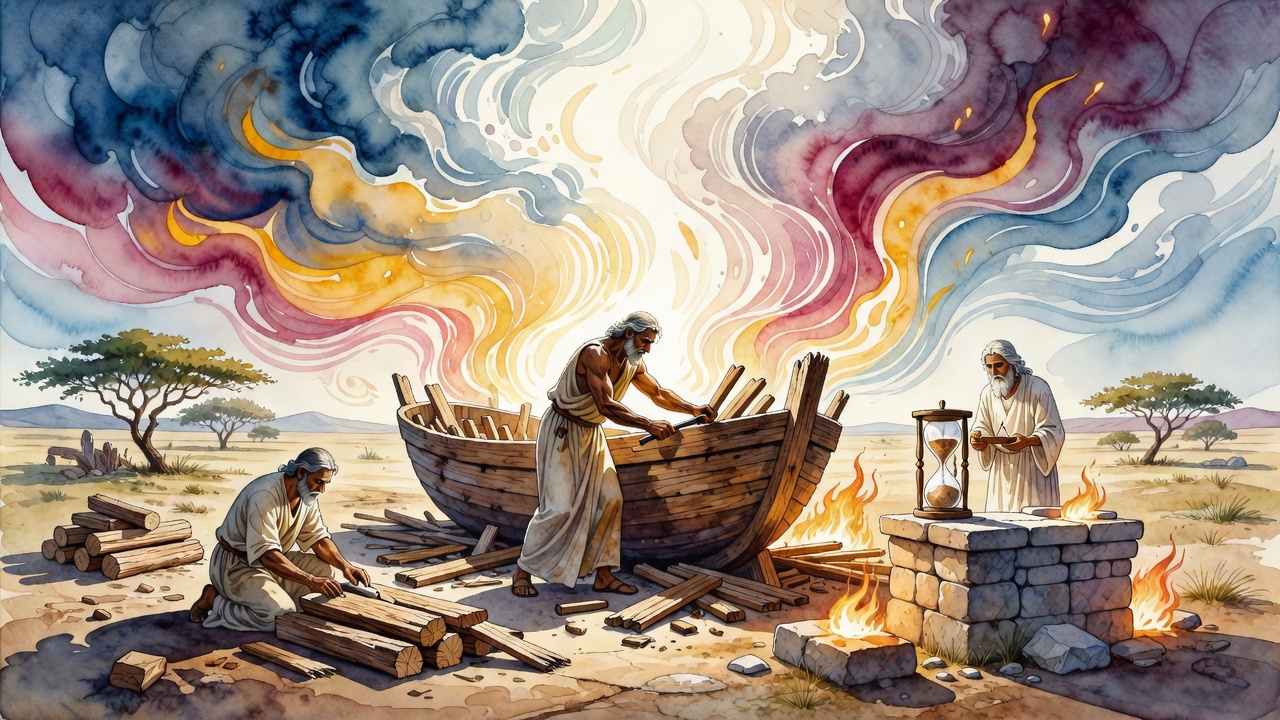
Bezalel took the patterns and went to work. He measured. He cut. He beat gold thin enough to cover wood without smothering it. A few tents away Moses taught law. The two labors shared a camp and did not compete.
They Shall Make, for Reward
The command still sat on the whole people, not on one artisan. They shall make for Me a sanctuary, and I will dwell among them (Exodus 25:8). Some in the camp pressed the old question under their breath. Why does the Infinite need wood? Jeremiah had already put that question in God's own mouth. Do I not fill heaven and earth? (Jeremiah 23:24).
The answer did not add cubits to God. It added labor to Israel. They shall make for Me a sanctuary for the sake of receiving reward for making it. God did not lack a house. Israel lacked a work that would leave calluses. Every donated beam of acacia, every woven curtain, every gold fitting beaten into shape was not material heaven was missing. It was a share.
Bezalel was named for skill. The nation was commanded for participation. Moses stood between them as the ear that had heard patterns and the mouth that announced the craftsman. Children who never stood in the cloud later carried boards. Their claim was not wages in silver. It was that their hands had helped raise a place where the Presence chose to rest among them.
The Cloud Covered More Than One Pair of Hands
When the cloud finally covered the finished work, no one could say only a prophet had made it. A named artisan and a giving camp had answered the mountain with sore palms. Moses walked the length of the courtyard and did not pick up a tool. He had heard every pattern. Another man had built what he heard.
The sockets held. The curtains hung. Sawdust still lay in the seams. Moses stopped at the place where Bezalel's shade met the cloud, and he left the work in the hands that had been called by name while he was still mistaking thou for mine.
← All myths