Korah Counted Birth Order and Split Israel
Korah measured Kohath's sons and decided Elizaphan's prince-seat belonged to him. From that envy he tried to unmake Moses, Aaron, and the boundaries of light.
Table of Contents
 Click for full size
The Seat That Went to a Cousin
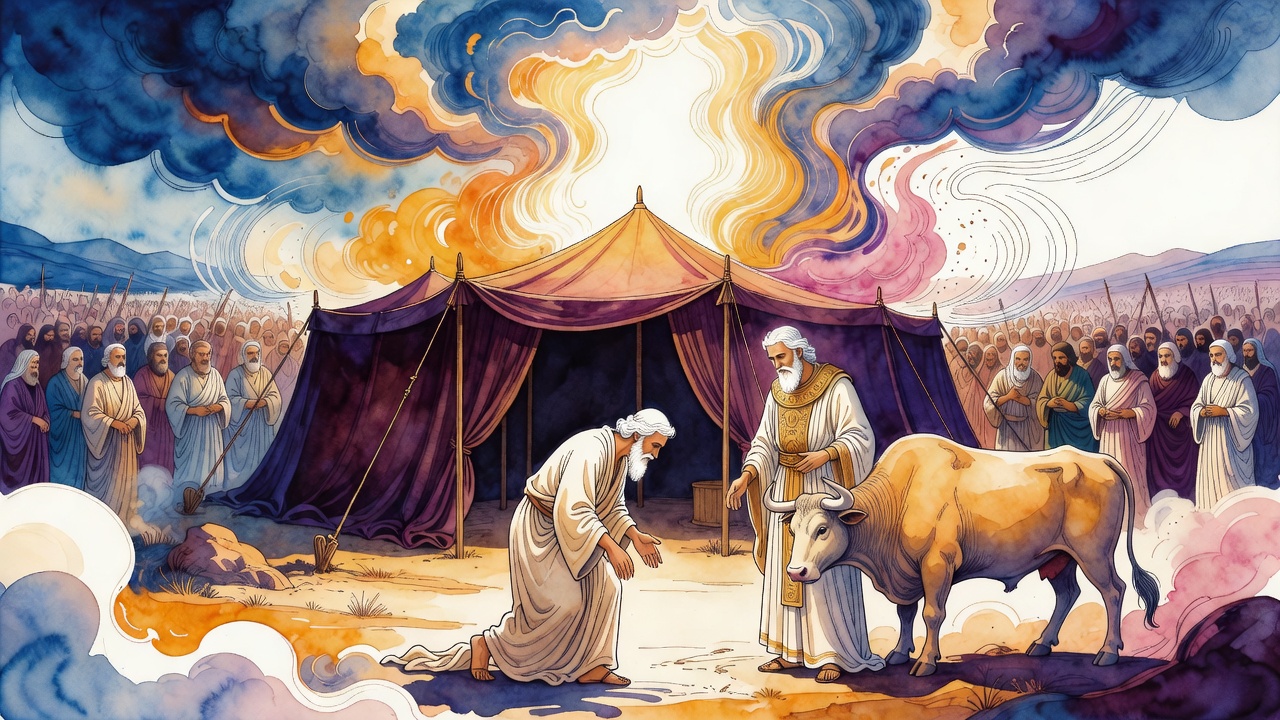
"Now Korah took." He took the people the way a man takes a knife from a table. Over what? Over a seat. The sons of Kohath were four brothers: Amram, Izhar, Hebron, and Uzziel. From Amram the firstborn came two crowns, Aaron the high priest and Moses the king. So far, said Korah, well and good; the firstborn's line takes the firstborn's honor.
But who should take second place if not the line of the second brother? "I am the son of Izhar," Korah declared, "the second of Kohath's sons. By every reckoning of birth and rank, I should have been made prince of my clan." Instead the office fell to Elizaphan son of Uzziel, the youngest of the four. "Shall the child of my father's youngest brother be set above me?" The spark caught. Not over Torah, not over altar. Over a seat of honor passed to a cousin. "Behold," said Korah, "I dissent. I nullify all his words, everything he has done." From one wound of envy the great rebellion grew.
All the Congregation Are Holy
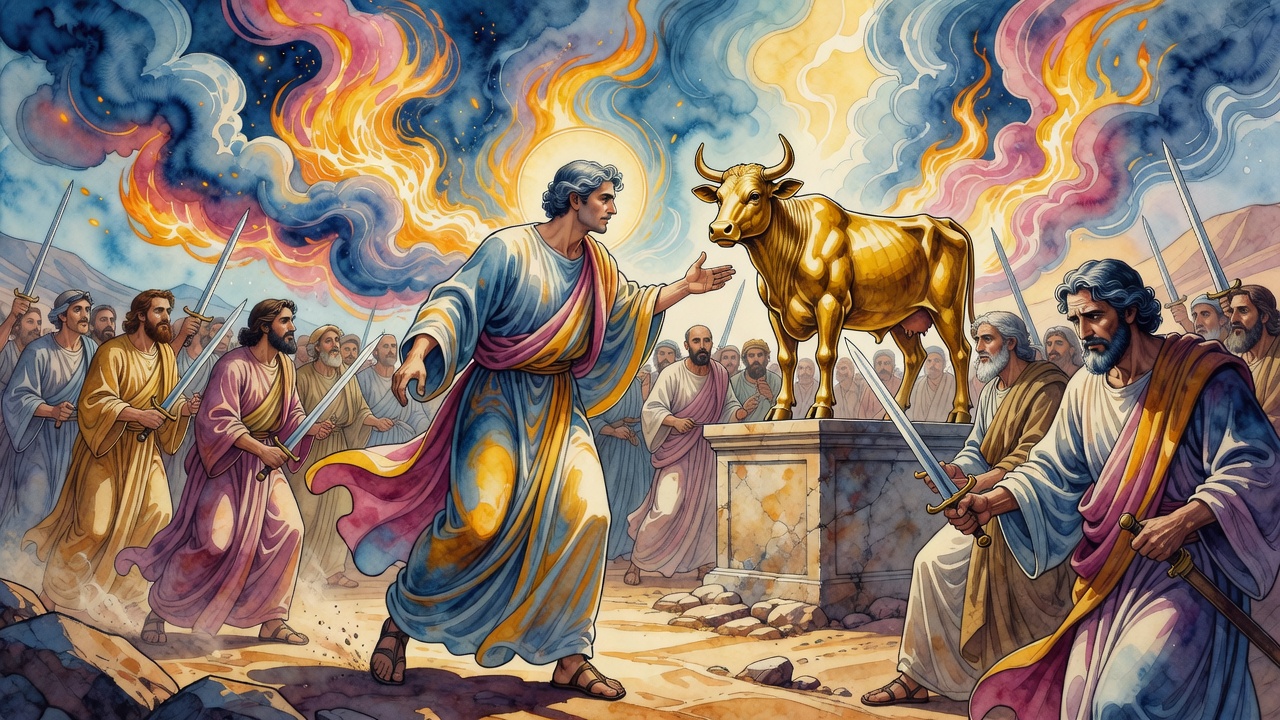
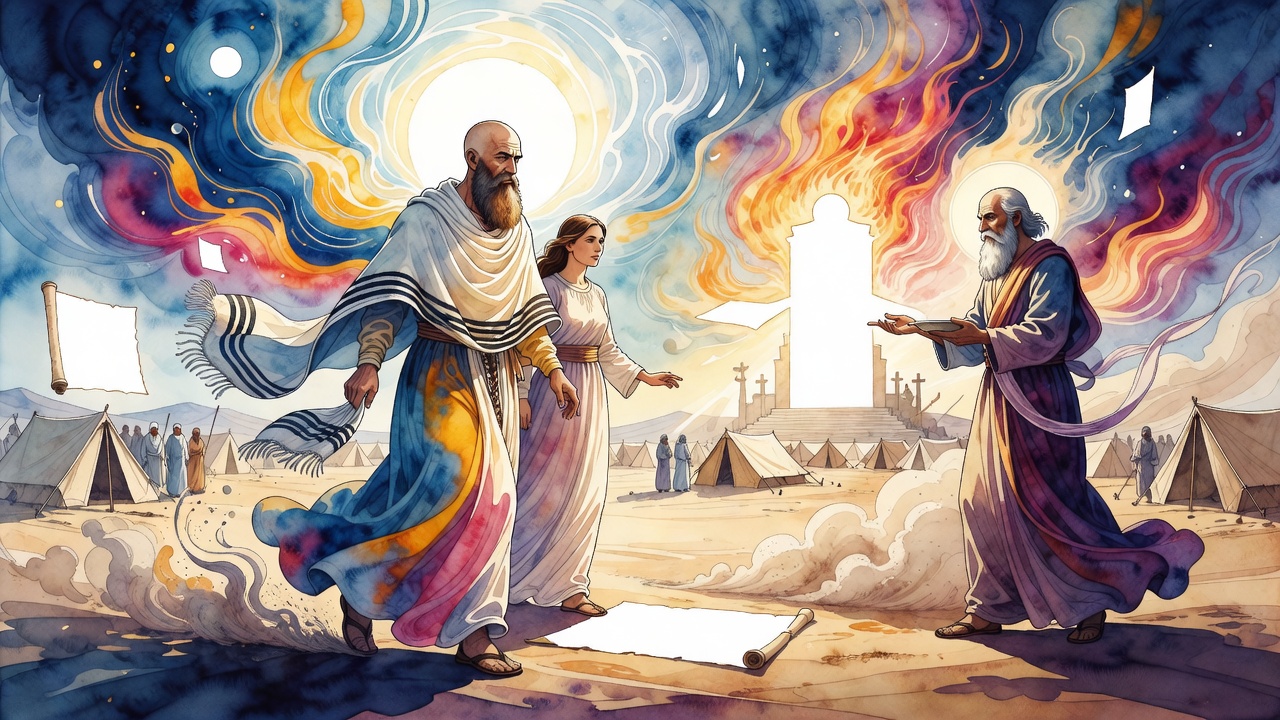
Korah gathered the people and turned their holiness into a weapon. "All the congregation are holy, and the LORD is among them. Every one of us stood at Sinai and heard, 'I am the LORD your God.' So why do you raise yourselves above the assembly of the LORD?" The sentence was true enough to cut. It was aimed like a knife at two brothers who had not elected themselves.
Moses trembled, not from fear of the mob alone, but from a heavier count. This was the fourth time Israel had broken faith. A king's son offended his father, and the king's dear friend made peace once, twice, a third time. At the fourth, the friend's hands fell slack. "How many times can I keep troubling the king?" So it had been with Moses: calf, murmurers, spies. Now Korah. "How long can I keep troubling the Omnipresent?" And so, where once he would have argued, Moses heard and fell upon his face.
Boundaries Written Into Morning
When Moses rose to answer, he did not argue rank first. He pointed to the architecture of the world. "Can you mix morning into evening?" At the beginning it was written that there was evening and morning, and God separated light from darkness. That first separation was the pattern of all separations to come. By that same hand He separated Israel from the nations. By that same hand He separated Aaron as most holy for the altar.
"If you can blur the line between day and night," Moses said in effect, "then perhaps you can undo the priesthood. But you cannot. The boundaries hold. In the morning the LORD will make known the one who is His. The one whom He will choose, He will bring near." Korah had counted birth order. Moses answered with creation's own edges.
The Ground That Would Not Stay Flat
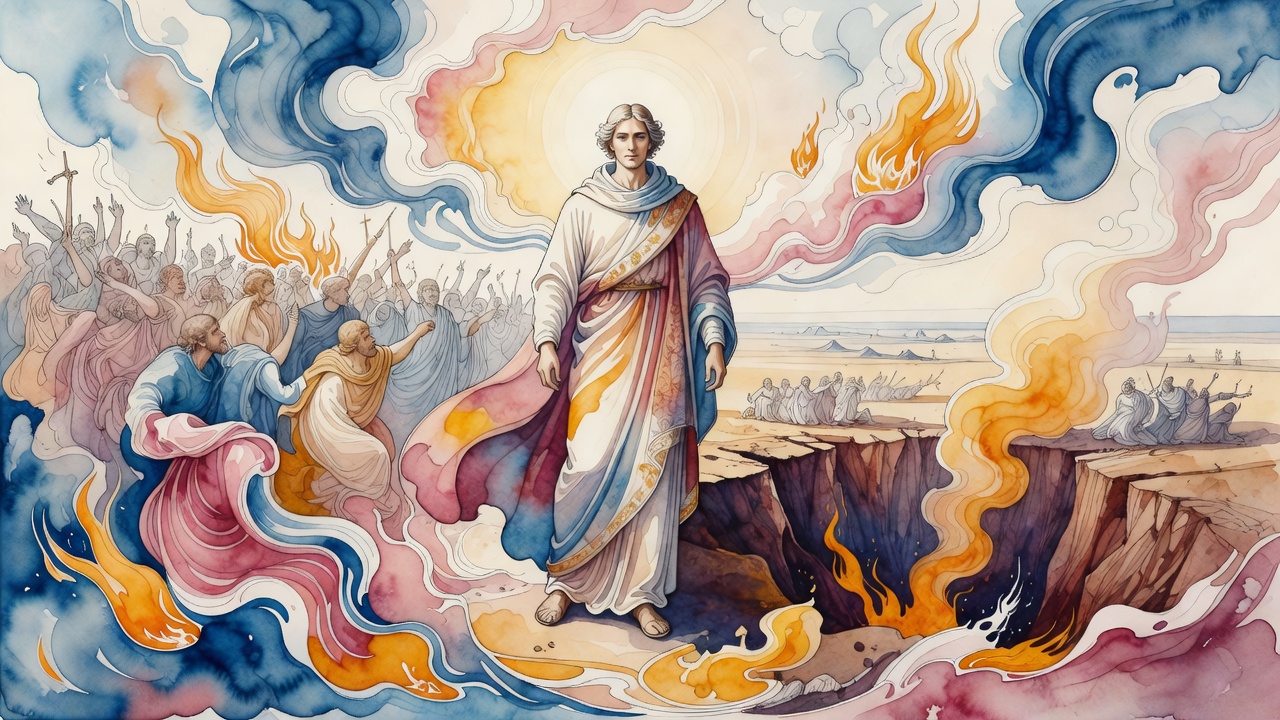
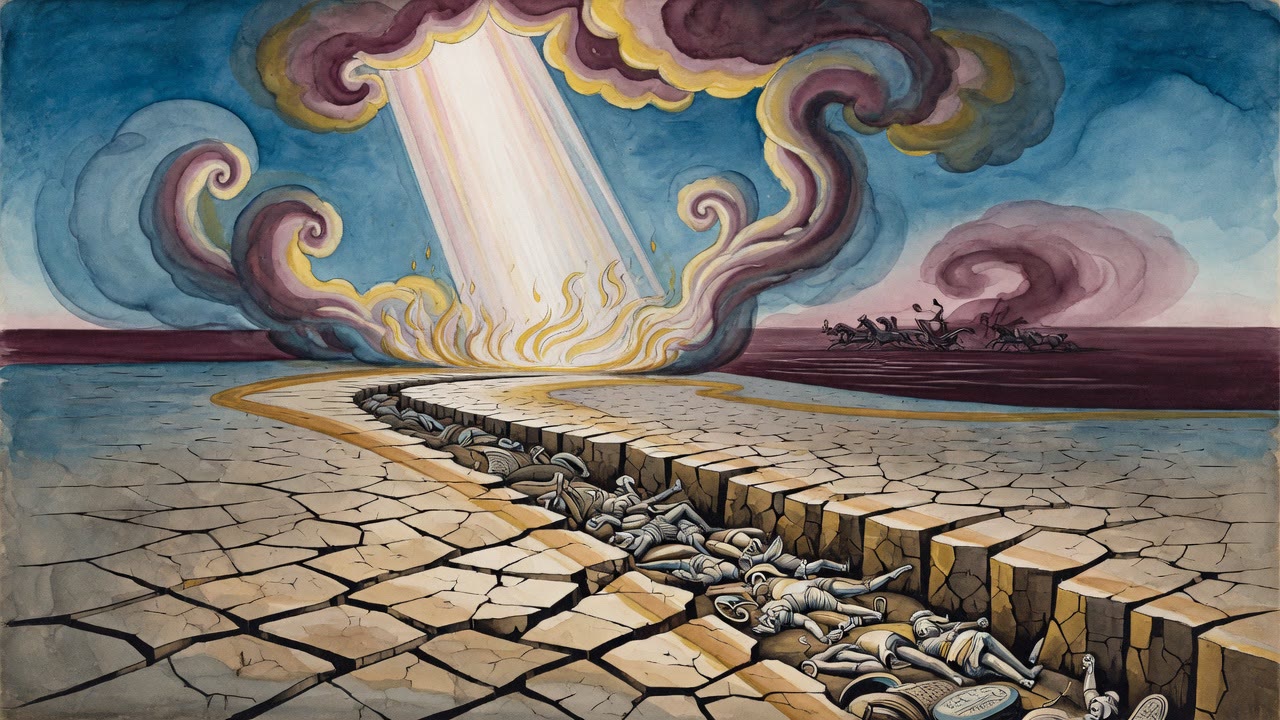
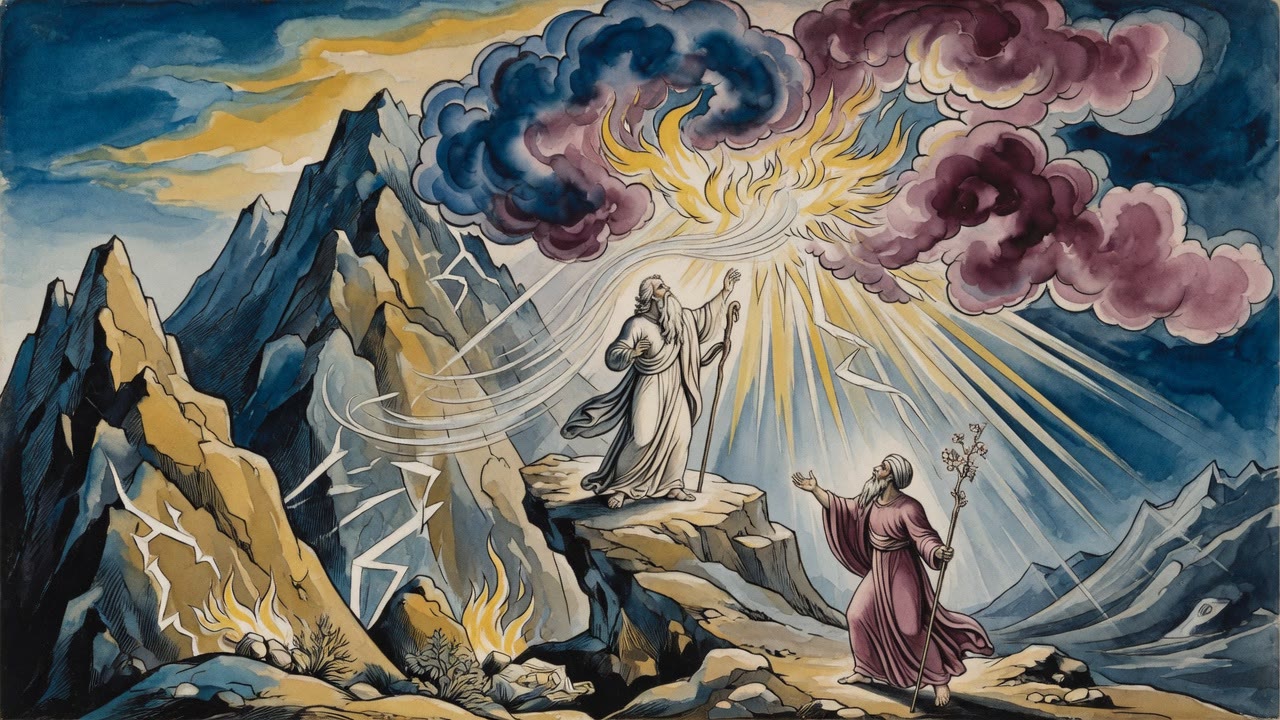
The morning came. Fire and earth did work no committee can reverse. Korah's claim to a cousin's seat had become a claim against the King who assigns seats. A man who would not bear Elizaphan above him tried to pull Aaron down and found the ground unwilling to stay polite under that project.
Moses, face once in the dust, stood again with a staff that was not a campaign tool. Aaron did not crow. The people who had cheered "all are holy" learned that holiness is not a slogan for envy. Birth order is real. Envy that baptizes itself in Sinai's memory is still envy.
At night the camp was quieter by the number of mouths the earth had closed. Someone whispered Elizaphan's name without spit in it. Someone else refused to count Kohath's sons again as if the Torah were a club ledger. The rebellion had begun with arithmetic. It ended with a boundary no rebel could redraw.
Korah was not a fool about pedigrees. Izhar second, Uzziel fourth: the chart was real. What he refused was the possibility that God might place a younger line above him without insulting the chart's every line. He turned a personnel decision into a theology of offense. "All the congregation are holy" was the banner; Elizaphan's seat was the wound under it. Crowds will always cheer the banner louder than they inspect the wound.
Moses on his face was not abdication forever. It was the exhaustion of a mediator who had already spent three full pleas. The parable of the king's friend is mercilessly accurate about burnout in holy work. Still, when he rose, he did not answer envy with envy. He answered with evening and morning, light and dark, Israel and the nations, Aaron and the rest. Creation's separations became a courtroom exhibit. Korah could not mix day into night. He would not be allowed to mix priesthood into a free-for-all because his cousin held a staff of office.
The next day did not end with a committee report. Fire and earth closed the file. Survivors learned that Sinai's memory can be quoted in a coup and still not bless the coup. Birth order matters until Heaven assigns otherwise. Holiness of the many does not cancel consecration of the few. Moses walked back through a quieter camp with the taste of dust still in his mouth from the hour he had fallen, and with the harder taste of a victory that had cost Israelites who had believed a grievance was a revelation.
← All myths