Moses Bows Before Aaron at the Tent Door
God orders the whole camp to the Tent. Moses bows to Aaron in public, warns against Korah's path, and Aaron later confesses over a bull that is only his.
Table of Contents
 Click for full size
The Camp Crowds One Doorway
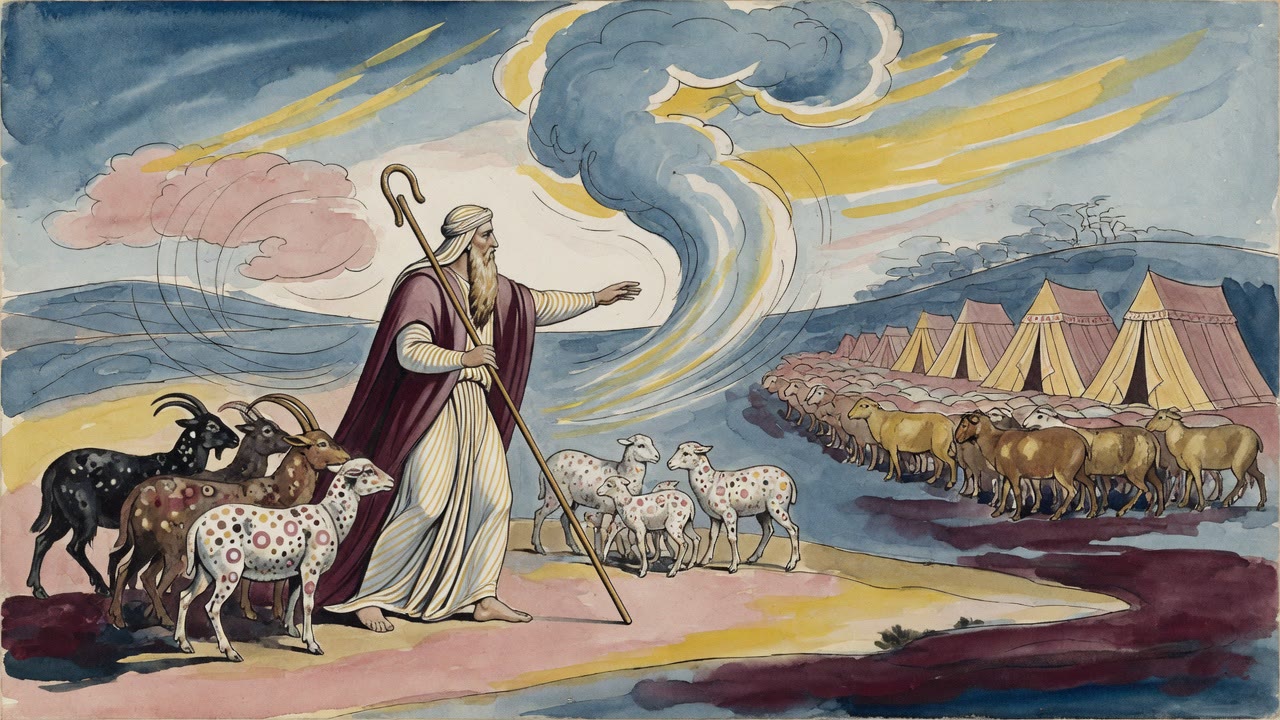
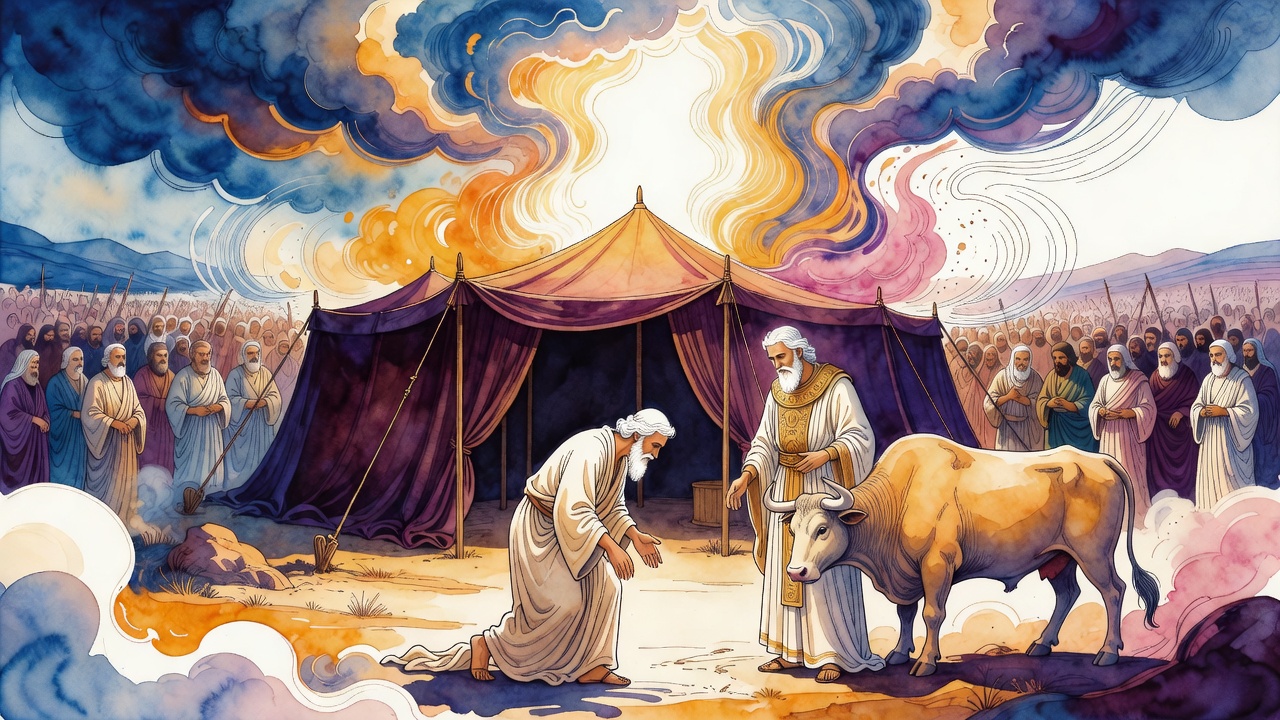
Moses stared at the Tent of Meeting and measured the doorway with his eyes. The whole congregation had been summoned. Six hundred thousand men, plus women and children, pressed toward a single opening that looked too narrow for a wedding party. Dust rose between sandals. Infants wailed against their mothers' shoulders. Elders leaned on staffs and muttered that the place could not hold them. Moses lifted his face and asked the Master of the universe how a mustard seed of canvas could swallow a nation.
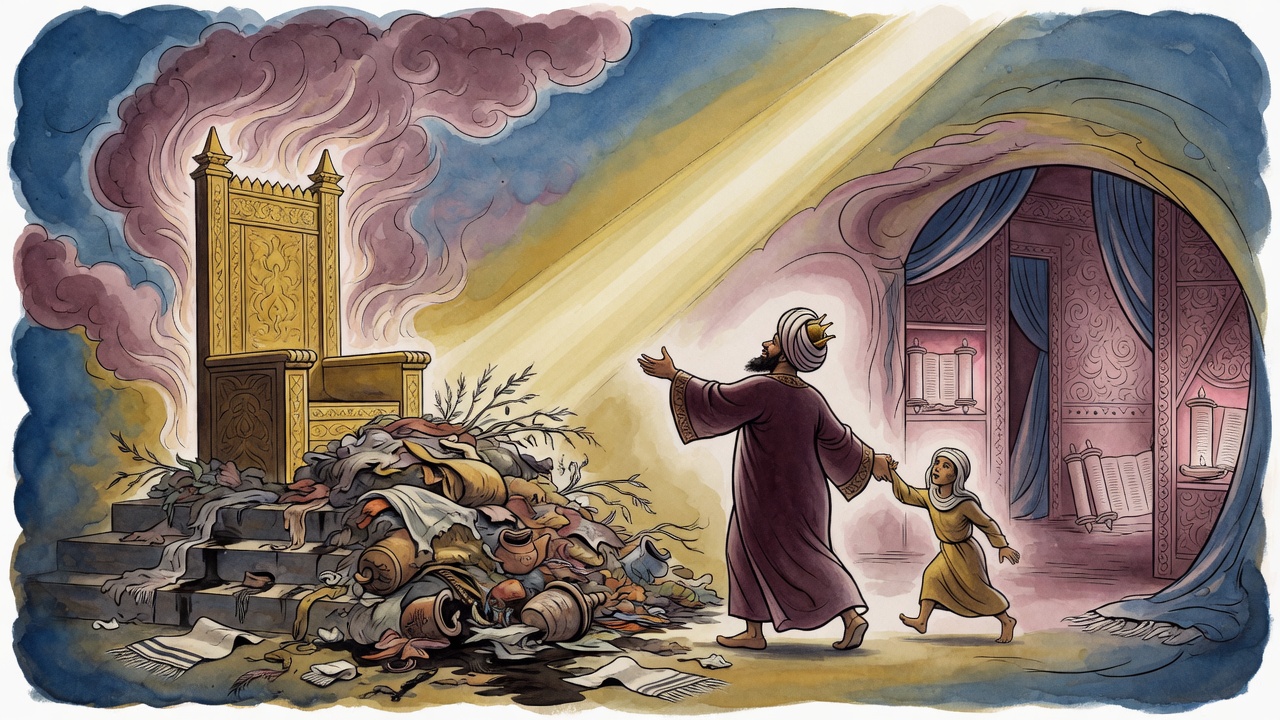
The answer came with Sinai still warm in memory. The whole earth is a mustard seed before the heavens, and the heavens sit inside the black of an eye. At Sinai twenty-two thousand chariots of fire had descended, each like the vision Ezekiel would later see, and the mountain could not contain them until God ordered it to widen. So the Tent would hold them. So Zion would one day stretch until it touched the Throne of Glory. Clouds like doves would carry the righteous to their windows, each under his own canopy, and the nations who scoffed, "Where is their God?", would fall silent. Moses stopped arguing geometry and opened the assembly.
Bow So No One Contests the Censer
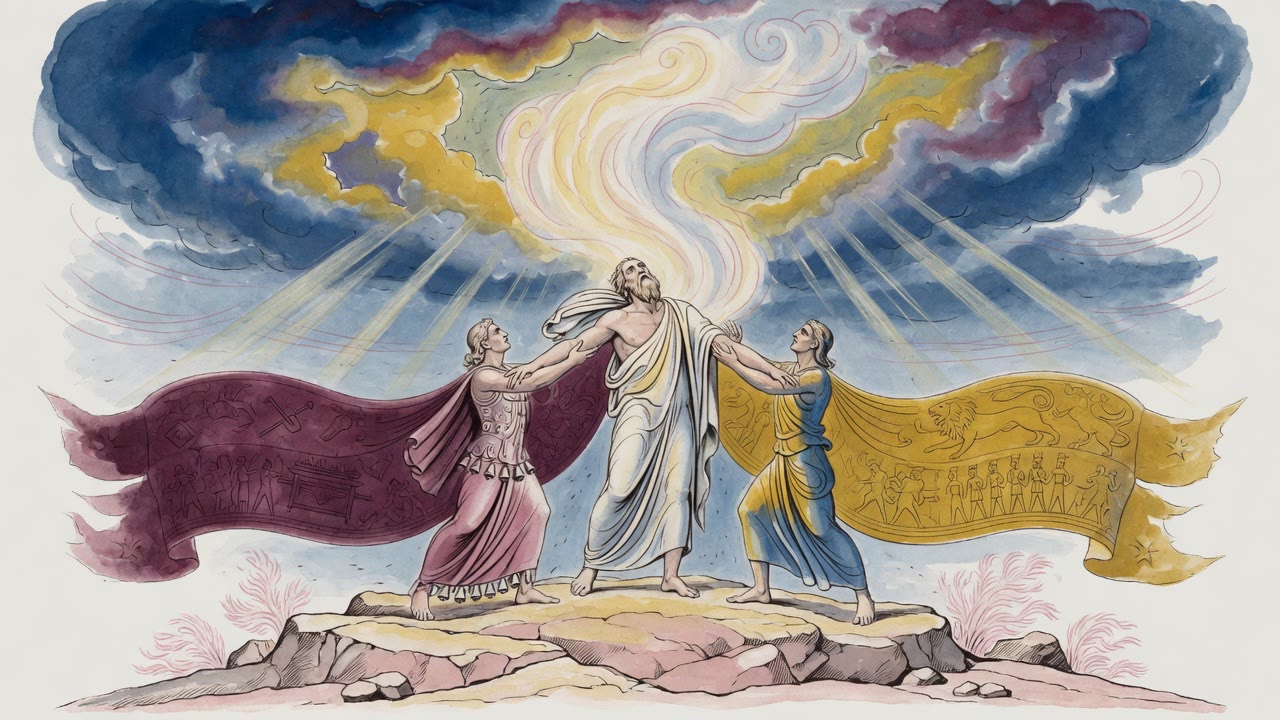
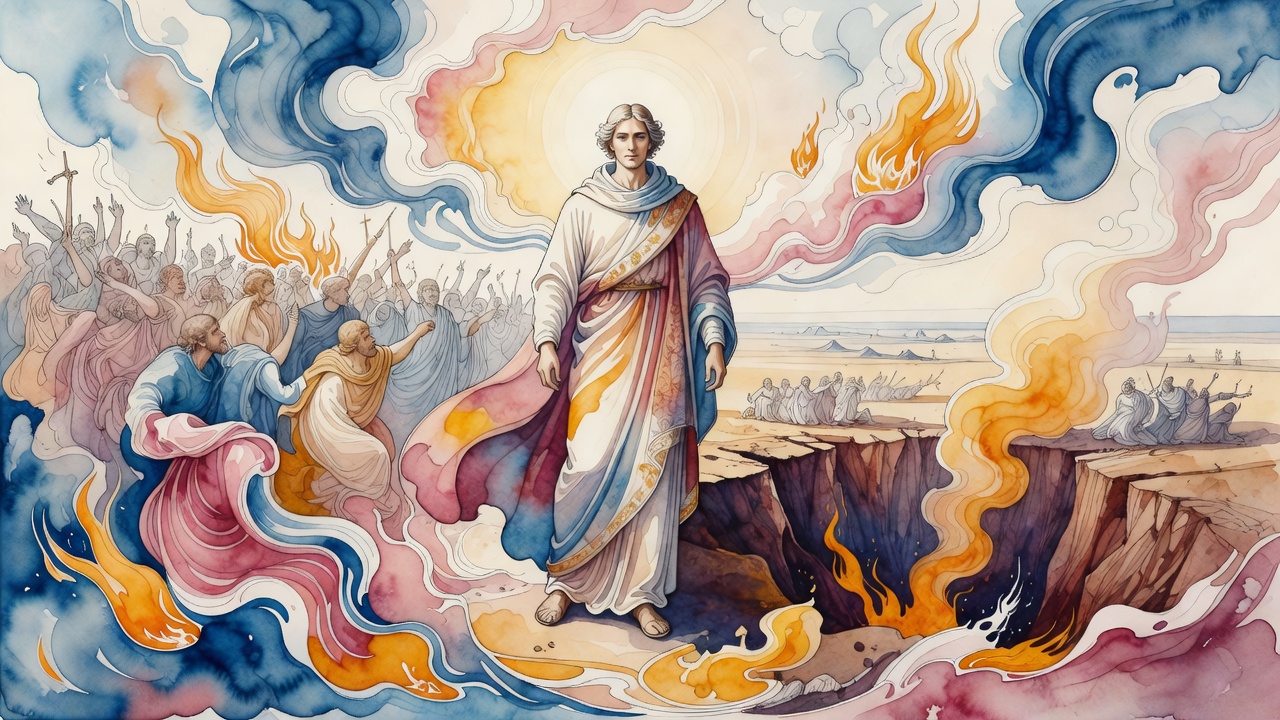
The summons had two purposes, and neither was soft. First, honor your brother Aaron. Let all Israel see you yourself bow to the priesthood. Second, warn them not to contest it. Remember Korah, who disputed and was swallowed by the earth. Know that a king named Uzziah is destined to seize a censer in arrogance, and leprosy will blaze across his forehead the way white fire once flashed on Moses' own hand at the bush. Whoever contends against the priesthood is struck with leprosy.
Moses bowed. The camp watched the lawgiver lower himself before his brother. Hands that had held the tablets folded against his chest. Knees that had climbed Sinai bent toward a man in priestly linen. The priesthood was not a private family arrangement whispered in a side tent. It was a public refusal of rebellion, performed where every eye could see. The men who had watched Korah vanish into soil now watched Moses choose Aaron with his whole body, and the choice landed heavier than any speech.
An Uncle Who Chased Peace
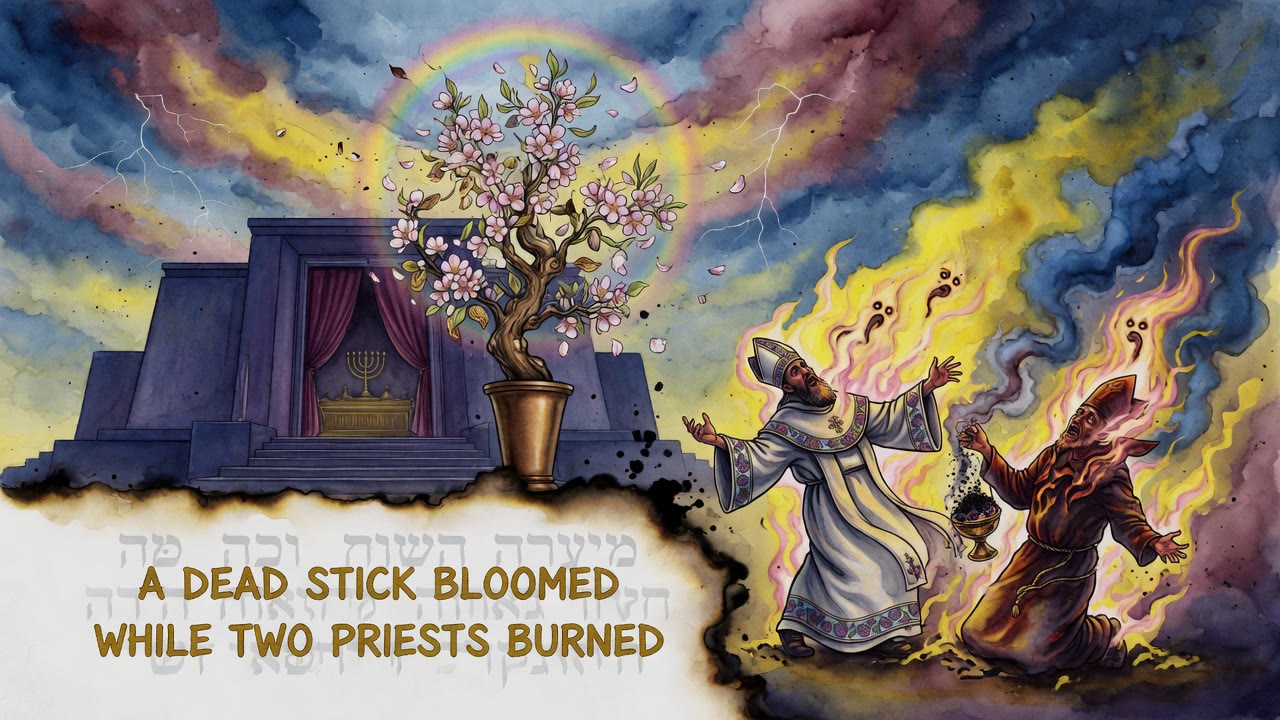
When Aaron's sons later fell before the Lord, Moses summoned Mishael and Elzaphan to carry the bodies away from the sanctuary. Scripture names them the sons of Uzziel the uncle of Aaron, though their descent among Kohath was already known. The title measures Uzziel against Aaron. The uncle walked the nephew's path.
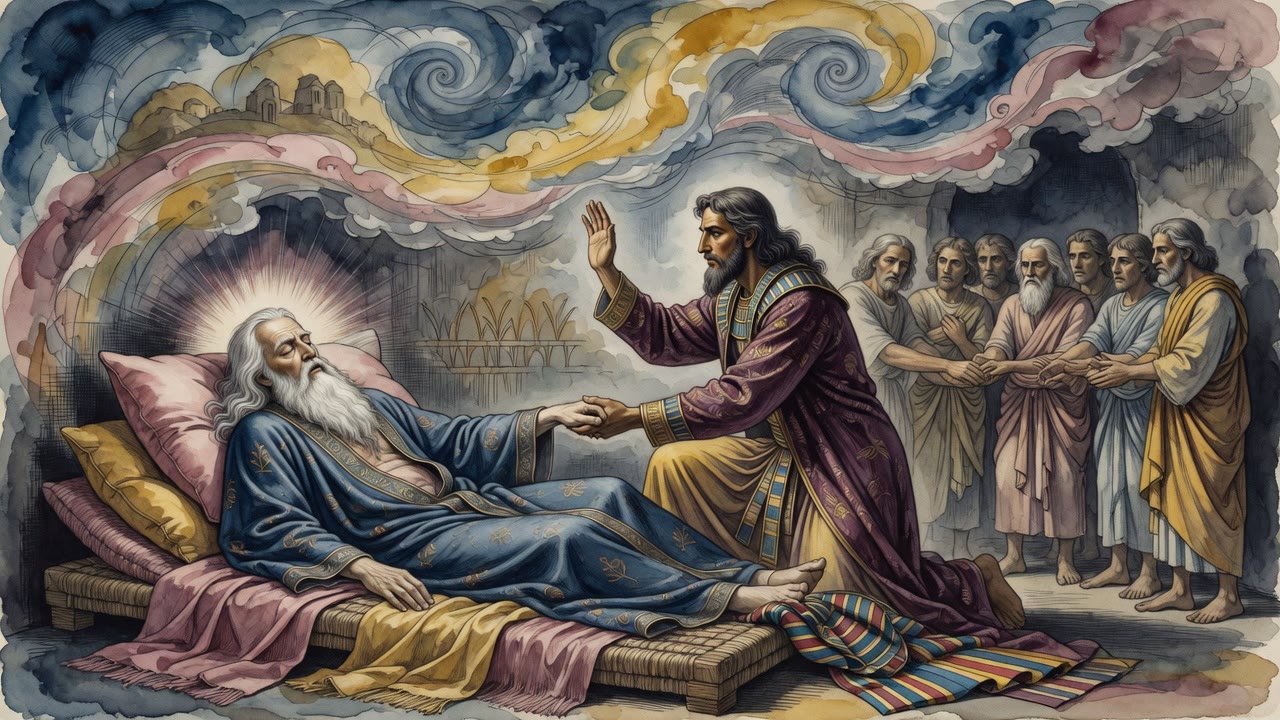
Aaron had been a pursuer of peace in Israel. When he died, all the house of Israel wept thirty days, and the women wept too. Over Moses only the men mourned, for his was the harder hand of law and rebuke. Over Aaron every household had cause to grieve, for he had reconciled husband to wife and neighbor to neighbor until quarrels cooled under his voice. Malachi would say of him, "in peace and uprightness he walked with Me." Even when his own sons fell, Aaron did not question the Omnipresent. Silence under decree was its own uprightness. Uzziel carried that same quiet into the work of carrying the dead, a peace that did not argue with Heaven even when Heaven took blood from his house.
A Bull That Is Only His
On the Day of Atonement the High Priest brings near the bull of the sin offering "which is his." The two small words fence the rite. He must atone with his own bull, never one drawn from the community's purse. A man cannot buy his pardon on his neighbor's account. Before he stands for all Israel, he stands naked before God for himself, pockets empty of other men's silver.
Atonement is not silent slaughter. "He shall make atonement for himself and for his household" means confession of words. Aaron opens his mouth over the bull that cost him. "Please, HaShem, I have sinned, I have transgressed, I have committed iniquity before You, I and my household." He names the failings three ways, hides nothing, then begs for cleansing sealed with the Torah's own promise that on this day Israel is cleansed of all its sins before HaShem. The animal waits. The people wait. The words have to come first.
The Name and the Answer
When the Ineffable Name passes the High Priest's lips, the people answer as one voice. "Blessed be the name of the glory of His kingdom forever and ever." The bull is his alone. The confession is his alone. The response belongs to all Israel, a roar that makes the courtyard shake.
Back at the Tent door on the day of assembly, the same logic already stood. Moses' bow was personal honor made public. Aaron's later confession would be personal guilt made public. The priesthood never floats free of the man who wears it. The nation that saw Moses bend would one day hear Aaron confess, and the doorway that looked too small would keep holding them until the scoffers learn the answer to their own question. This God is our God forever, and the man at the door has already bowed.
← All myths