Translation of the source text.Pesikta Rabbati, ed. Meir Friedmann (Ish-Shalom), Vienna 1880 · Public Domain
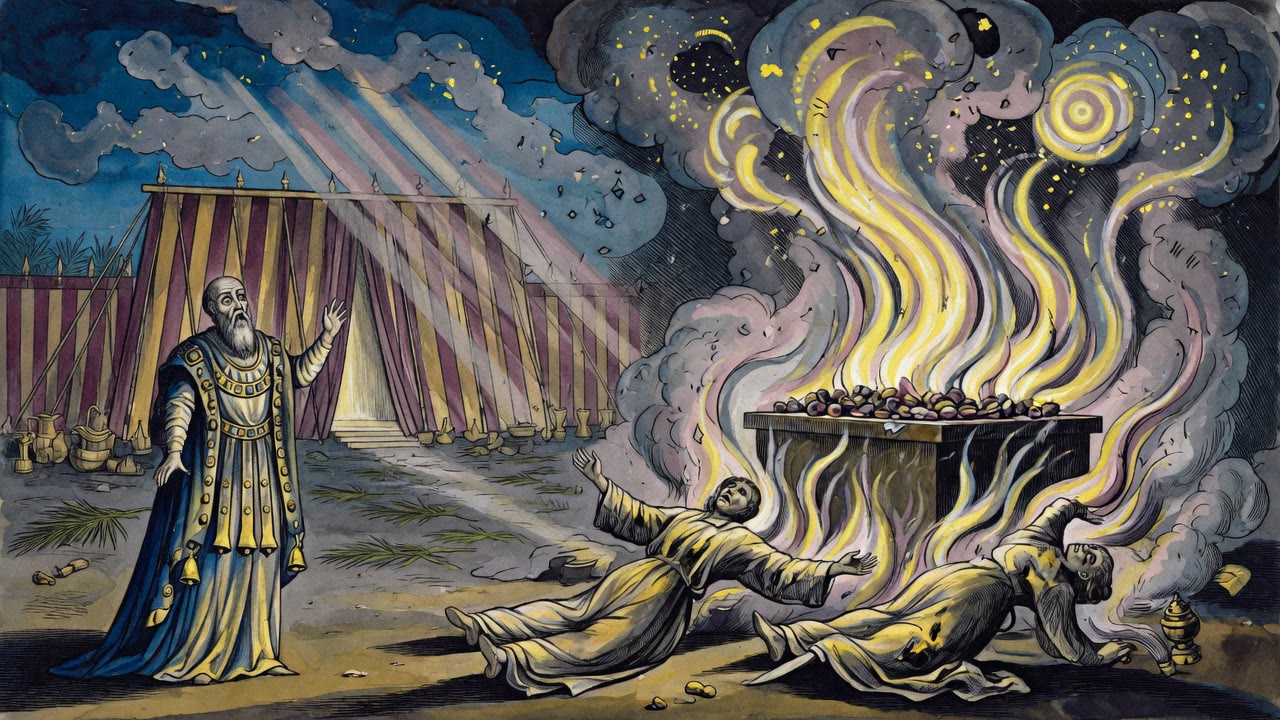
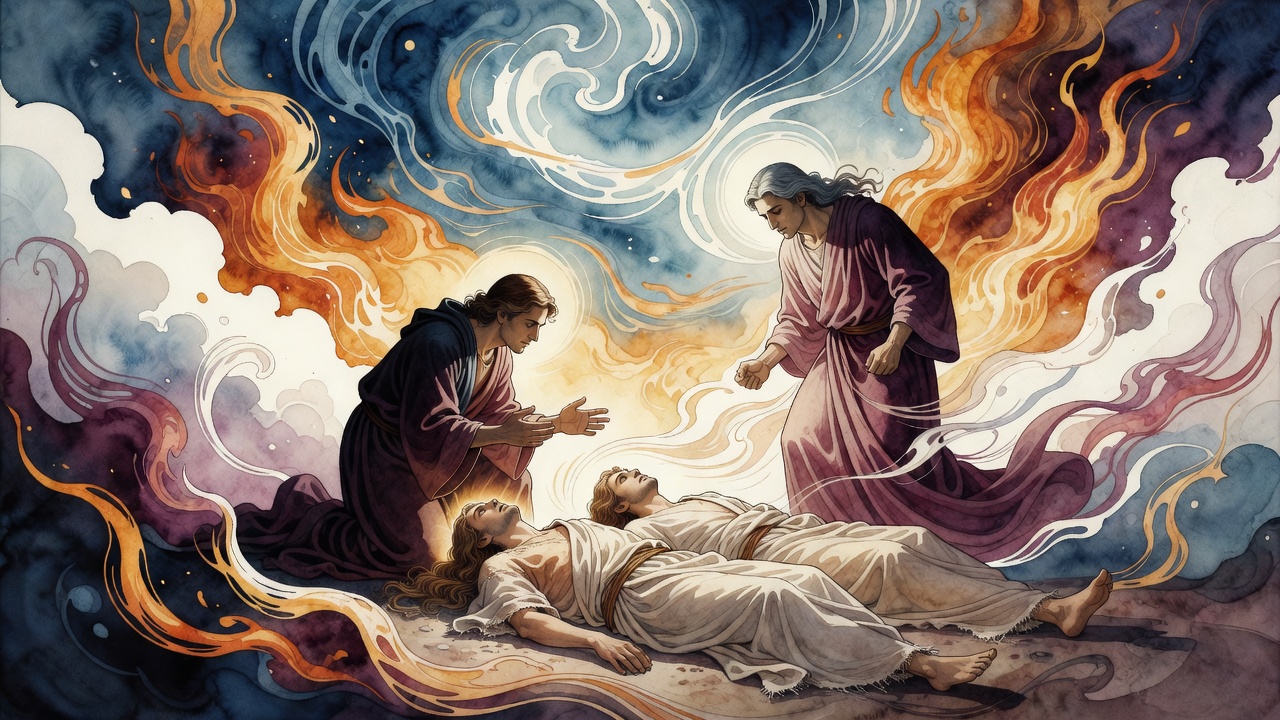
"And the LORD spoke to Moses after the death of the two sons of Aaron" (Leviticus 16:1). Let our master teach us: which is greater, prayer or repentance? Our masters taught us: Rabbi Yehudah son of Rabbi Chiya says, repentance annuls half the decree and prayer annuls the whole decree; and Rabbi Yehoshua ben Levi says, prayer annuls half the decree and repentance annuls the whole decree. Rabbi Yehudah bar Chiya said: from where that repentance annuls half the decree? As it is said of Cain, "a fugitive and a wanderer shall you be on the earth" (Genesis 4:12); once he repented, "my iniquity is greater than I can bear" (Genesis 4:13), half the decree was annulled from him, as it is said, "and he dwelt in the land of Nod, east of Eden" (Genesis 4:16). Rabbi Yehoshua ben Levi said: repentance annuls the whole decree and prayer half the decree, for so you find with Jeconiah king of Judah, that the Holy One, blessed be He, swore, "as I live, says the LORD, though Coniah son of Jehoiakim king of Judah were" (Jeremiah 22:24). Rabbi Meir said: He swore by His right hand, as it is said, "by My right hand, for thence I will pluck you out" (Jeremiah 22:24). And what was decreed upon him? That he die childless, as it is said, "write this man down as childless" (Jeremiah 22:30); and once he repented, the Holy One, blessed be He, annulled the decree, as it is said, "and the sons of Jeconiah: Assir, Shealtiel his son" (1 Chronicles 3:17), and so it says, "on that day... I will take you, Zerubbabel son of Shealtiel... and make you like a signet" (Haggai 2:23). Thus repentance annuls the whole decree. And from where that prayer annuls half the decree? For so you find with Aaron, as it is said, "and the LORD was very angry with Aaron, to destroy him" (Deuteronomy 9:20). Rabbi Yehoshua of Sikhnin said in the name of Resh Lakish: "to destroy him" means nothing but the uprooting of sons and daughters, as it is said, "and I destroyed his fruit above and his roots beneath" (Amos 2:9). He did not do so, but once Moses prayed for him, as it is said, "and I prayed also for Aaron at that time" (Deuteronomy 9:20), the Holy One, blessed be He, said to him, since you prayed for him, you have annulled half the decree from him. "And to Eleazar and to Ithamar, the ones who remained" (Leviticus 10:12) teaches that they too were included in the decree. Rabbi Mana of Shaab said in the name of Rabbi Yehoshua ben Levi, "rescue those being taken to death" (Proverbs 24:11); you find that through prayer Eleazar and Ithamar were saved. The Holy One, blessed be He, said: by your life, so was the decree, that all your sons should die, and since Moses prayed, behold I annul half the decree, and I annul two and leave two. From where? From what we read in this matter, "after the death of the two sons of Aaron."
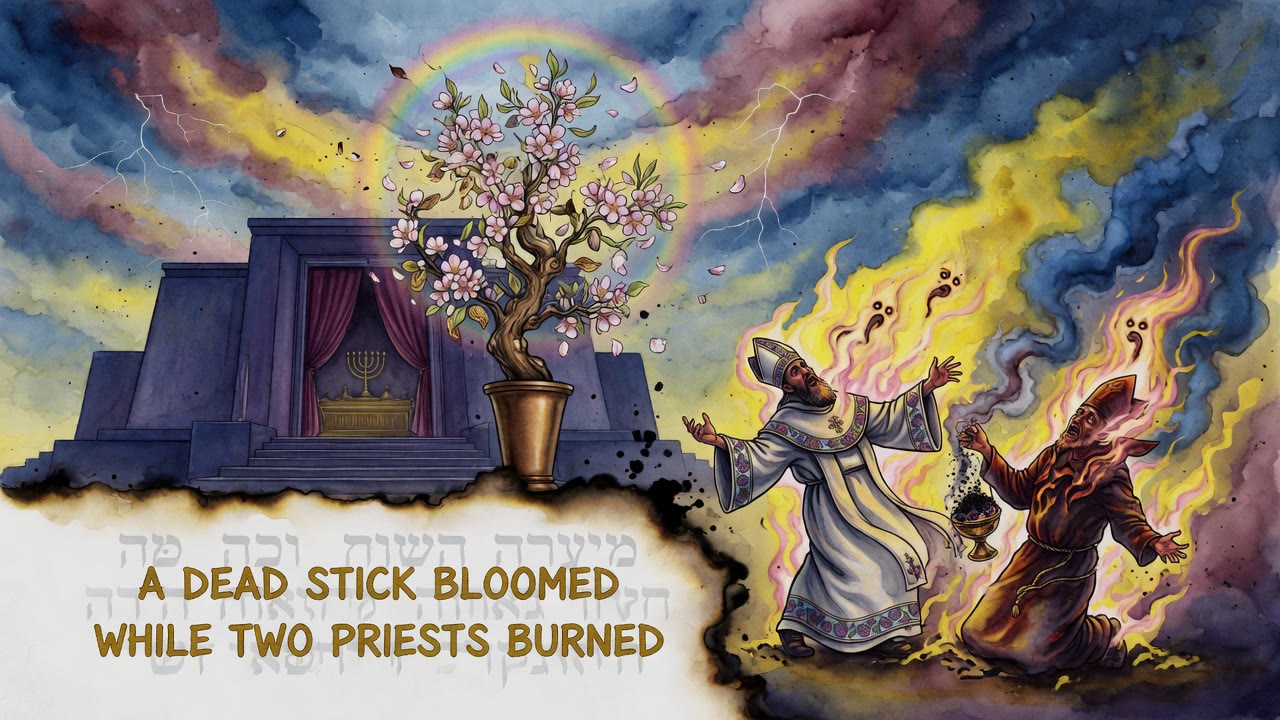
"After the death of the two sons of Aaron." Thus Rabbi Tanchuma son of Rabbi Chiya opened: "O God, You are my God, earnestly I seek You; my soul thirsts for You... so I have looked upon You in the sanctuary... because Your steadfast love is better than life, my lips shall praise You" (Psalms 63:2-4). What is "O God, You are my God"? When the Egyptians decreed upon Israel, "every son that is born you shall cast into the river" (Exodus 1:22), a daughter of Israel, when she felt herself near to giving birth, would go out to the dunghill and give birth there, and immediately the Holy One, blessed be He, would come down and wash it and clean it and clothe it, "and I washed you with water and rinsed off your blood from you and clothed you with embroidered cloth and shod you with fine leather" (Ezekiel 16:9-10). Therefore David said of the assembly of Israel, "O God, You are my God, earnestly I seek You": when You executed judgment in Egypt, at the sea, and we saw You and said, "this is my God and I will glorify Him" (Exodus 15:2), and we sought You earnestly and were not harmed when You executed judgment in Egypt; You apportioned to us Your glory, and our soul thirsted to see You. So "my flesh longs for You"; and where? "In a dry and weary land without water." "So I have looked upon You in the sanctuary": just as I saw You at the sea, so I saw You at Sinai, and "sanctuary" means nothing but Sinai, as it is said, "the LORD is among them, Sinai is in holiness" (Psalms 68:18), and just as I saw You at the sea and was not harmed, so "I have looked upon You in the sanctuary," as it is said, "and upon the nobles of the children of Israel He did not lay His hand, and they beheld God and ate and drank" (Exodus 24:11). What is "to see Your strength and Your glory"? Aaron said: Israel, who were common folk, saw You at the sea and at Sinai and were not harmed; and I, whom You brought near to You in the Tabernacle, "and from the entrance of the tent of meeting you shall not go out" (Leviticus 8:33), and You warned Israel, "the stranger who comes near shall be put to death" (Numbers 1:51), my sons entered to see Your strength and Your glory, and they died. The Holy One, blessed be He, said to Moses: say to your brother Aaron, a great kindness I have done with you and a great honor I have apportioned to you, that your sons were burned. I placed them within all the partitions, even more inward than Moses your brother. How? Israel surround the Levites, and Moses is a Levite, and "the Levites shall camp around the Tabernacle of the testimony" (Numbers 1:53). You find that Aaron and his sons are inside and Moses is outside. And see what is written above this passage, the passage of those with discharges and the lepers, and anyone who enters the tent of meeting without permission was stricken with leprosy. Would you then wish that your sons be lepers, sitting apart outside all the partitions, when they sit inside all the partitions? Would you wish that they sit by themselves outside all the partitions, "and the leper in whom the plague is... he shall dwell alone" (Leviticus 13:45-46)? When Aaron heard this, he said, I thank You for what You have done with me, that it is good for me, for the kindness You did with me that they died and were not living lepers; therefore I am bound to thank You and praise You, "because Your steadfast love is better than life, my lips shall praise You"; and all this is from You, that one should say that of Aaron Scripture speaks. See what is written after it, "so I will bless You as long as I live; in Your name I will lift up my hands" (Psalms 63:5). The Holy One, blessed be He, said to Moses: since the attribute of judgment touched Aaron and moreover he thanks Me for the kindness I did with him, go and comfort him, "and the LORD said to Moses, speak to Aaron your brother" (Leviticus 16:2); and "speak" means nothing but words of comfort.
"And the LORD spoke to Moses after the death." Happy is the man whom sufferings have touched and who restrained his anger and did not complain against the attribute of judgment. When sufferings came upon Job, had he restrained his anger and not complained against the attribute of judgment, it would have been a great and praiseworthy thing. Rabbi Chanina bar Pappa said: had he not complained, just as they now say in prayer, the God of Abraham, the God of Isaac, and the God of Jacob, so they would say, and the God of Job. For the Holy One, blessed be He, took counsel in the sight of the holy ones above; He said to them, this Job, My servant, has four great qualities in him: "a man blameless and upright, fearing God and turning from evil" (Job 1:1); let all these sufferings come upon him; if he stands firm in them and does not complain, I hope to set My name upon him as I set it upon the patriarchs. He did not do so; but once the sufferings reached him he began to kick and say, "oh that I knew where I might find Him" (Job 23:3). Immediately the Holy One, blessed be He, said to him, Job, you have darkened the counsel that I took above, "and the LORD answered Job" (Job 38:1). And what did He say to him? "Who is this that darkens counsel by words without knowledge" (Job 38:2)? How you have darkened the counsel by words you brought forth from your mouth! You said, "if I find Him", what is there for Him to answer me? "I would learn the words He would answer me and understand what He would say to me" (Job 23:4-5). Job said, I went everywhere to seek Him and did not find Him; I went east and did not find, as it is said, "behold, I go forward, but He is not there" (Job 23:8); I went west to seek Him and did not find, "and backward, but I do not perceive Him" (Job 23:8); I went north to seek Him and did not find, "on the left when He works, but I do not behold Him" (Job 23:9); I went south to seek Him and did not find, "He turns to the right, but I do not see Him" (Job 23:9). The Holy One, blessed be He, said to him: why do you keep wearying yourself? Behold, I reveal Myself to you. Tell Me from where I should reveal Myself to you, the upper and lower worlds cannot contain the glory of the Holy One, blessed be He, yet He confined Himself within the storm, "and the LORD answered Job out of the whirlwind" (Job 38:1). Another interpretation: from every single hair of his head the Holy One, blessed be He, spoke with him. The Holy One, blessed be He, said to him: why do you complain that sufferings have reached you? Are you greater than the first man, the work of My hands, upon whom for one commandment he annulled I decreed death, upon him and his descendants, and he did not complain? Or than Abraham, whom I tested with several trials, who because he said, "how shall I know" (Genesis 15:8), I said to him, "know surely that your seed shall be a stranger" (Genesis 15:13), and he did not complain? Are you greater than Isaac, who because he loved Esau, I dimmed his eyes, "and it came to pass when Isaac was old, his eyes were dim from seeing" (Genesis 27:1), and he did not complain? Or greater than Moses, who because he said, "hear now, you rebels" (Numbers 20:10), I decreed upon him that he should not enter the land, and he did not complain? Or greater than Aaron, to whom I apportioned honor like to no creature in the world: he was clothed in eight holy garments and entered the Holy of Holies, and the ministering angels fled before him, "and no man shall be in the tent of meeting" (Leviticus 16:17), these are the ministering angels whose faces had the likeness of a human face (Ezekiel 1:10), who apportioned him honor and fled before him; and My glory filled the house, "and the priests could not stand to minister because of the cloud, for the glory of the LORD filled" (1 Kings 8:11); and when he entered I apportioned him honor and withdrew My glory from between the two cherubim. This is what Job said, "does the eagle mount up at your command" (Job 39:27)? Rabbi Tanchuma said: at your command the Holy One, blessed be He, lifted up His glory from between the two cherubim at Aaron's entry; "the eagle mounts up," this is the Holy One, blessed be He, "like an eagle that stirs up its nest" (Deuteronomy 32:11). And does He "stir up its nest"? "He dwells on the rock and lodges [on the crag of the rock and the stronghold]" (Job 39:27-28); even though I would lift up My glory at his entry, yet "He dwells on the rock", once he went out He would return and fill the house. Another interpretation: "He dwells on the rock," in the first building where the ark was, and even in the second building where the ark was not but only a stone was there, My glory was "on the crag of the rock and the stronghold." Another interpretation: "He dwells on the rock" is an answer to those who say that the Holy One, blessed be He, said, I am building the Temple, and He built it, and they sinned and destroyed it, and it is not rebuilt again. Say to him: it does not say "a rock that dwells" but "He dwells on the rock," and it does not say "lodged" but "and lodges"; where? "He lodges on the crag of the rock and the stronghold." And what is the stronghold? It is the stronghold of Zion, as it is said, "and David captured the stronghold of Zion" (2 Samuel 5:7). "From there he spies out food" (Job 39:29); from there He scouted out the year, whether good or bad; and when the priest prayed he would say, may it be Your will, O LORD, that this year be... "and from there he spies out food" means nothing but the language of scouting, "and they shall scout out the land for us" (Deuteronomy 1:22). "His eyes behold from afar" (Job 39:29), for I would reveal to him what I am destined to do in the distant future. And after all this honor, when his sons entered to offer before Me without permission, I did not deal harshly with them but strangled two fledglings, as it is said, "and its young ones suck up blood" (Job 39:30); and even so I did not withdraw My glory from them, "and where the slain are, there is He" (Job 39:30). "Draw near, carry your brothers from before the sanctuary" (Leviticus 10:4), like a man who says to his fellows, enter, carry away the dead from before the mourner. "And the LORD said to Moses, speak to Aaron your brother."
Another interpretation. "After the death." Thus Rabbi Tanchuma son of Rabbi Abba opened: "for by wise guidance you shall wage your war" (Proverbs 24:6). "Guidance" [tachbulot] is rendered "and the captain of the ship called to him" (Jonah 1:6). Why does this ship travel the sea? If it has no captains it is lost. So Israel, even though they are many multitudes, if they have no leader they cannot stand. "For by wise guidance," this is Moses in his generation, Joshua in his generation, Samuel in his generation. Another interpretation: "for by wise guidance," this is Aaron in his generation; even though several troubles come upon them they wage their battle. And so Aaron, when he would enter the Holy of Holies, had it not been for the many merits that entered with him and helped him, he could not have stood for a single hour because of the ministering angels who were there; and moreover he entered on the Day of Atonement, and Satan would come to accuse, and when Satan saw him he would flee before him. Why? Because many merits entered with him: the merit of the fathers entered with him, and the merit of the mothers entered with him, and the merit of Manasseh and Ephraim entered with him, and the merit of the tribes entered with him, and the merit of circumcision entered with him, and the merit of the Torah entered with him, and the merit of Israel entered with him. The merit of Abraham, from where? As it is said, "with this shall Aaron come into the holy place, with a young bull" (Leviticus 16:3), and "Abraham ran to the herd and took a calf" (Genesis 18:7). "And a ram for a burnt offering" (Leviticus 16:3), the merit of Isaac, "and Abraham went and took the ram and offered it as a burnt offering instead of his son" (Genesis 22:13). And from where that also by the merit of Jacob? As it is said, "and from the congregation of the children of Israel he shall take two he-goats" (Leviticus 16:5), those that his mother said to him, "and take me from there two good kids of the goats" (Genesis 27:9). What is "good"? Rabbi Berekhiah said, Rabbi Chelbo said: good for you and good for your sons, good for you, that you enter and feed your father and take the blessings from him; good for your sons, that they are soiled with iniquities all the days of the year, and they bring two he-goats on the Day of Atonement and they are offered and atonement is made for them. And from where that also by the merit of the mothers? As it is said, "he shall put on the holy linen tunic, and linen breeches... and a linen sash... and a linen turban" (Leviticus 16:4), behold four mothers. Another interpretation: "with this shall Aaron come." Rabbi Berekhiah said, He hinted to him a hint that the Temple would last only four hundred and ten years; "with this" [bezot]: bet is two, zayin is seven, alef is one, taf is four hundred. He said to him, "with this shall Aaron come", but did Aaron live four hundred and ten years? Rather He said to him, eighteen priests served in the first building, because he is your son and your son's son, behold he is like you, "with this shall Aaron come." And in the second building, because the priests would advance themselves one over another, eighty priests served in it. Thus, "the fear of the LORD prolongs days" (Proverbs 10:27), the priests of the first building, "but the years of the wicked shall be shortened" (Proverbs 10:27), the priests of the second building. Another interpretation: "with this shall Aaron come." Rabbi Yitzchak said: the merit of the tribes entered with him, the twelve stones that were set upon Aaron's heart; what is the reason? That the Holy One, blessed be He, would look upon them at Aaron's entry on the Day of Atonement and remember the merit of the tribes, as it is said, "and these stones shall be for a memorial", and "these" [zot] means nothing but the tribes, as it is said, "all these are the tribes of Israel, twelve, and this" (Genesis 49:28). Another interpretation: "with this," the merit of the Torah entered with him, "and this is the Torah" (Deuteronomy 4:44). Another interpretation: by the merit of Israel, as it is said, "this your stature is like a palm tree" (Song of Songs 7:8). Rabbi Pinchas said: even Moses, who went up on high and captured the Torah and brought it down, not by his own strength but by the merit of Israel, as it is said, "You ascended on high, You captured captives, You received gifts among men" (Psalms 68:19), by the merit of Israel, as it is said, "and you, My flock, the flock of My pasture, are men" (Ezekiel 34:31). Another interpretation: "with this shall come," by the merit of Manasseh and Ephraim that entered with him. Rabbi Yoshiah said: the two onyx stones that were set upon Aaron's shoulders corresponded to Manasseh and Ephraim. And why onyx stones? Because they grew up in the midst of Egypt and did not learn from their deeds. Another interpretation: "with this shall Aaron come." Rabbi Chanina son of Rabbi Yishmael said: the merit of circumcision entered with him, "and this is My covenant which you shall keep" (Genesis 17:10), and it is written, "My covenant was with him, life and peace" (Malachi 2:5).

 Click for full size