The Brothers Who Could Not Carry Nadav and Avihu
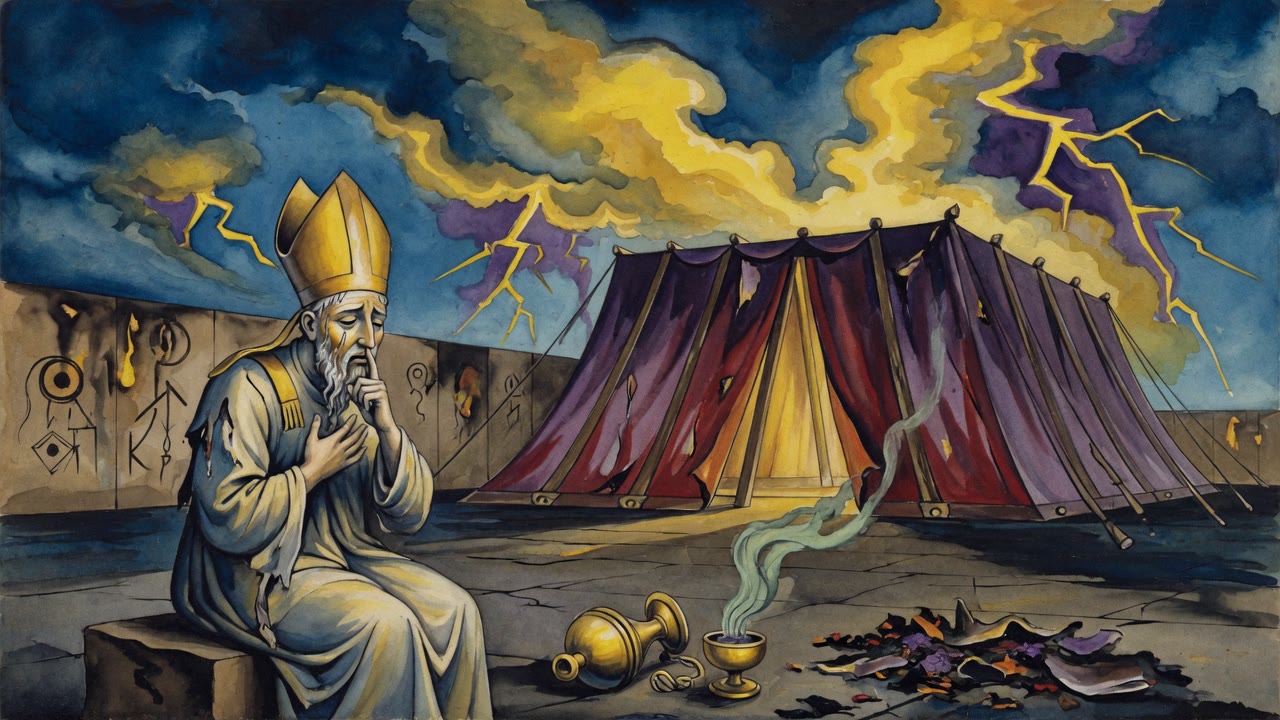
Fire from before God took Aaron's eldest sons. Elazar and Ithamar longed to lift the bodies, and holiness forbade their hands.
Table of Contents
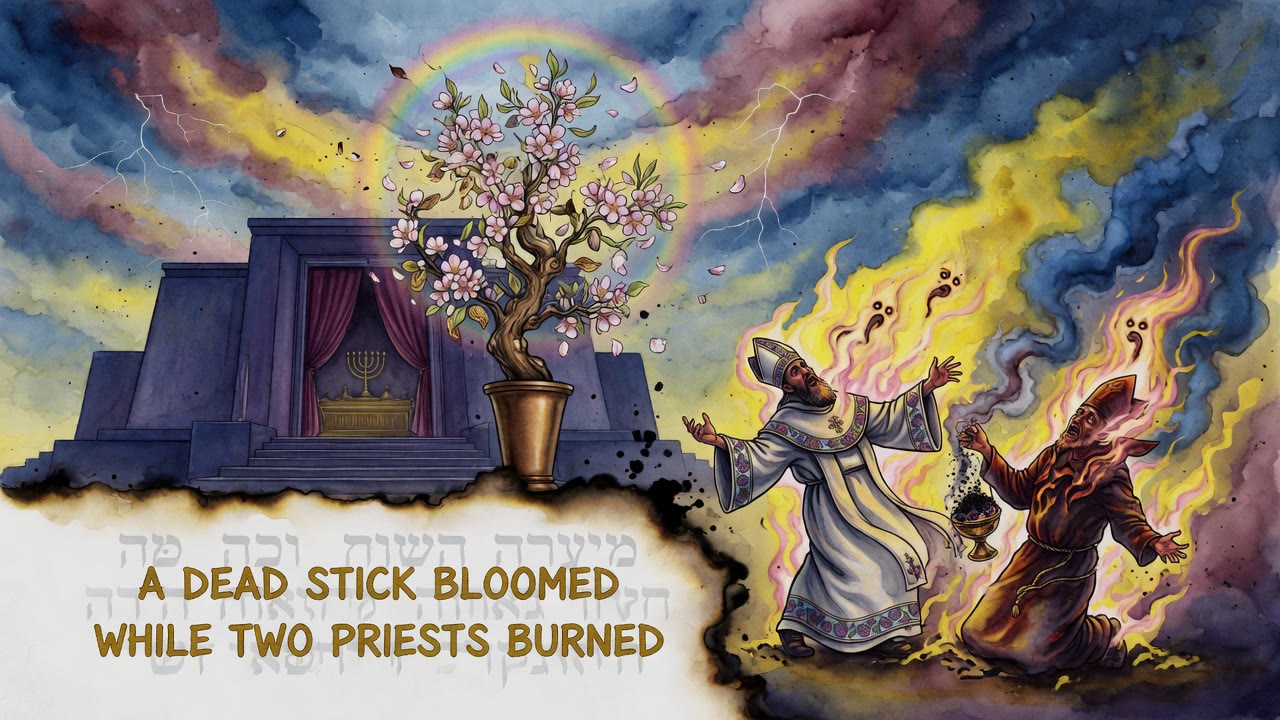
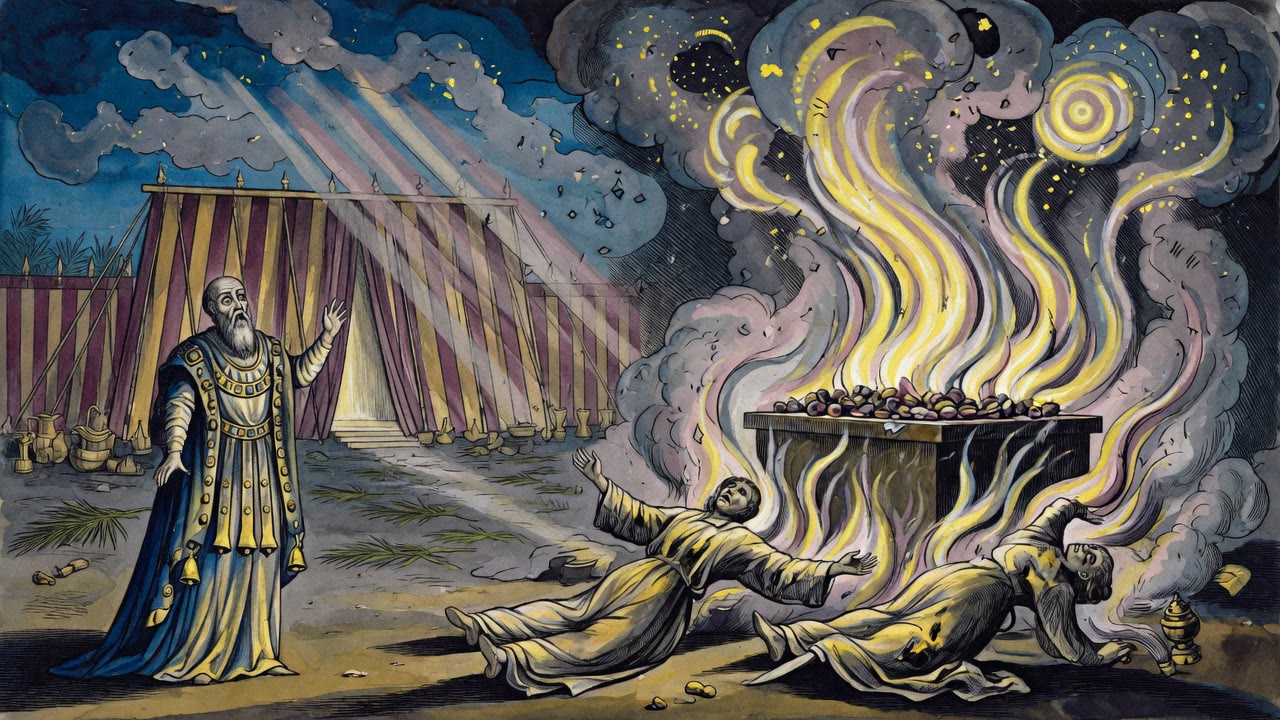
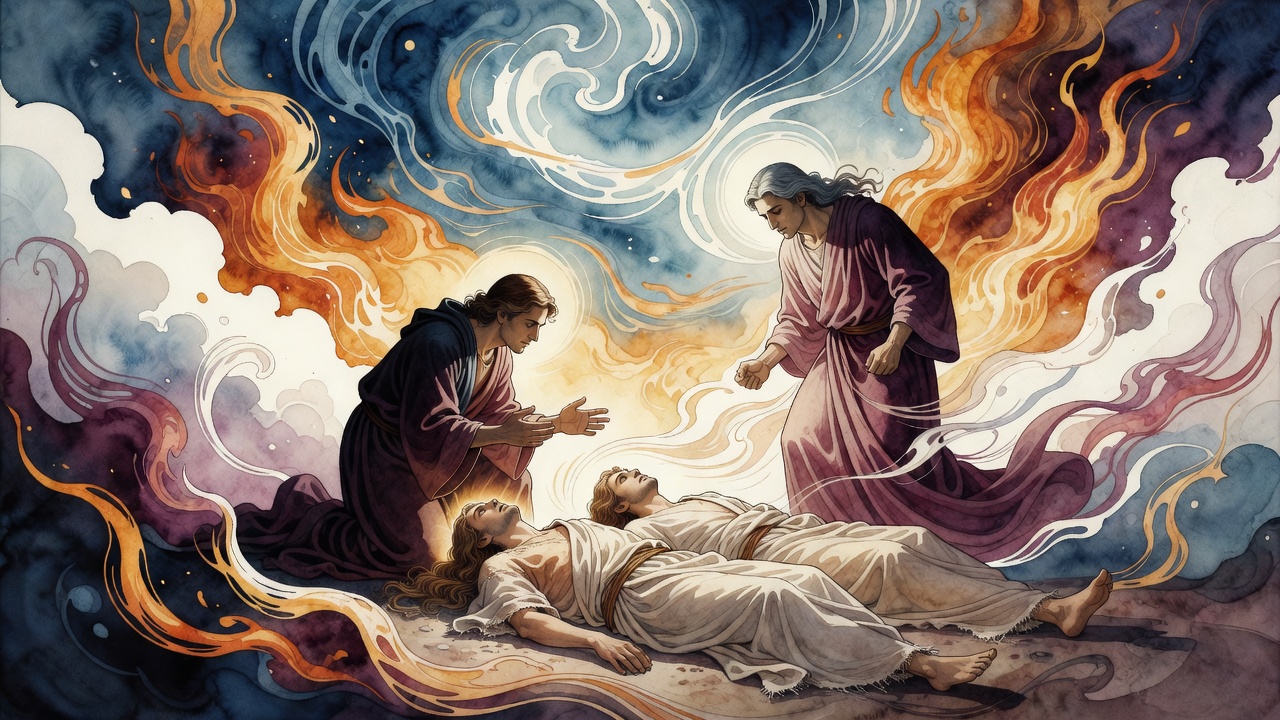
On the day the Mishkan (Israel's portable desert sanctuary) was consecrated, fire leapt from before the Holy One and devoured Nadav and Avihu, the two eldest sons of Aaron. The dwelling-place of glory became, in a breath, a house of death. Smoke still rose. The camp had been singing. Then the singing stopped, and a question hung sharper than the smoke: who would draw near the fallen?
 Click for full size
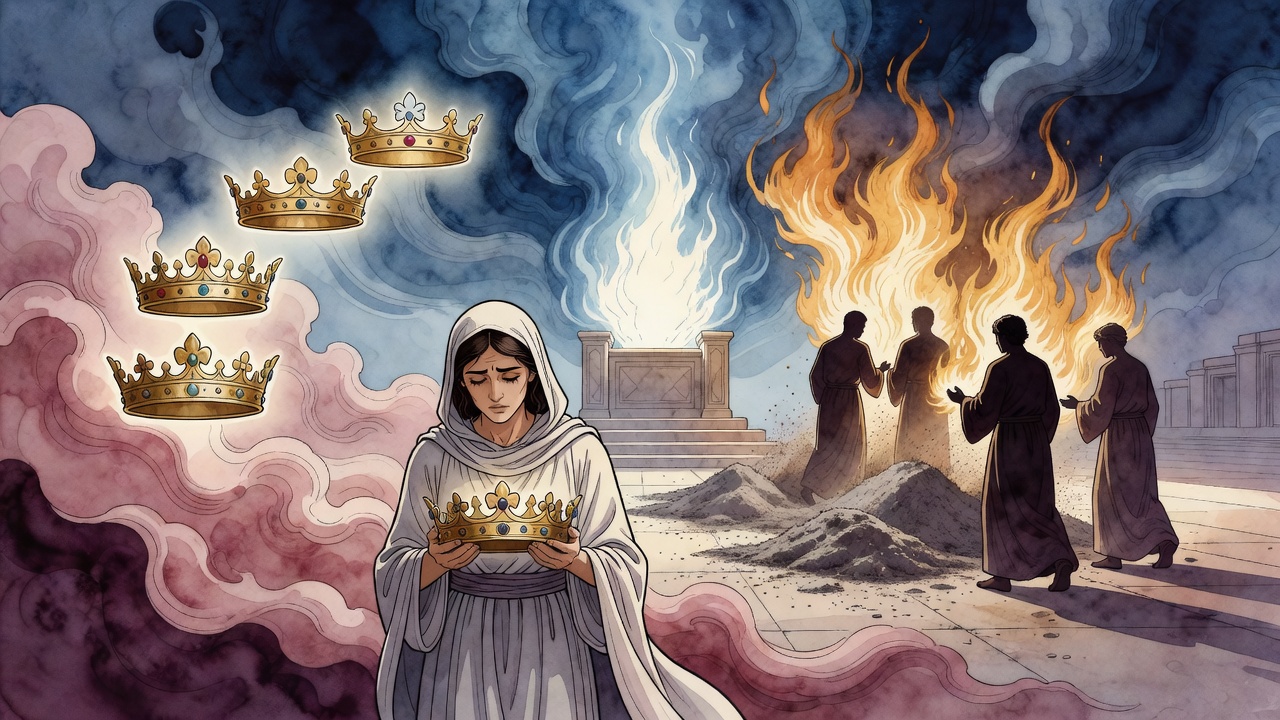
Their own brothers stood close. Elazar and Ithamar longed to gather the bodies, to weep over them, to carry them as a brother carries a brother. But they were kohanim, anointed and set apart, and a kohen does not make himself tamei for the dead. So they held back their hands. From their restraint the sages learned a law that endures. The priests of Israel do not defile themselves for the dead, even when the dead wear their own bloodline.
Where the Kohen Could Not Go
Moses called instead upon the Levites, Mishael and Eltzafan, kinsmen who bore no such sanctity of the altar. They came forward, lifted Nadav and Avihu in their tunics, and carried them outside the camp. Where the kohen could not go, the Levite went. Even grief was ordered. The holiness of the priesthood was guarded on the day it bled.
Aaron was silent. Scripture later notes that silence. Silence is not emptiness. Silence is a man swallowing a scream so that the service of a nation does not collapse with him. The fire that took his sons was the same fire that had accepted the offerings. Holiness does not always arrive as comfort. Sometimes it arrives as a boundary that cuts through a father's arms.
The Ox and the Calf
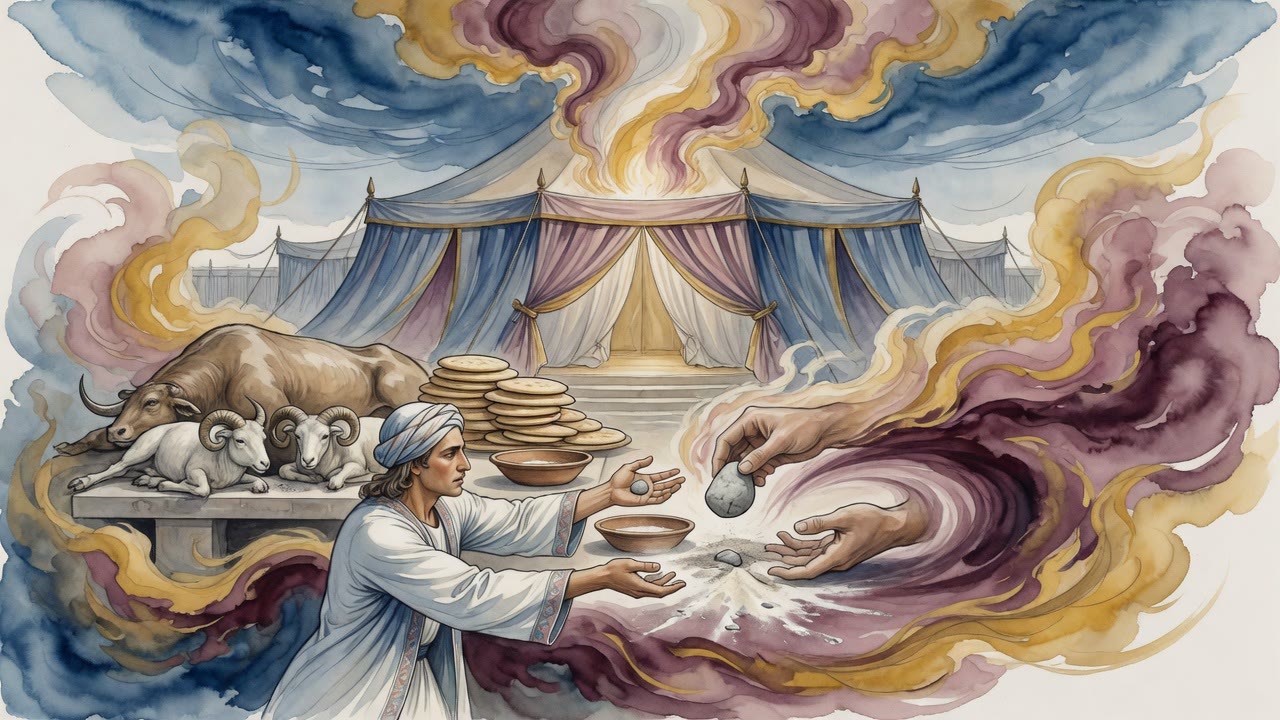
Before that eighth day of fire, the consecration itself had already been speaking about sin and repair. Israel brought an ox and a calf for atonement at the Mishkan. The ox remembered the golden calf's weight. The calf remembered the shape of the betrayal. Offerings do not erase memory. They turn memory into smoke that rises instead of into idols that stand.
When the day came at last for Aaron to serve, he did not begin with the people. He took up first the calf that was his own, his sin-offering, and slaughtered it for himself. Only when he had finished with his own offerings did he turn to present the offering of the assembled people. The teachers of Israel drew a lesson sharp as flint. Aaron's offering carries a heavier weight of atonement than the people's own. The offering the people bring atones for the people alone, and not for the priests. Aaron's offering reaches farther. It makes atonement for himself and for the whole congregation together. When he slaughtered the people's sin-offering, he did it like the first, his own calf. As his own had required the blood pressed by finger upon the horns of the altar, so did theirs. As his own required four touches, one for each corner, so theirs received four. The pattern of the first became the pattern of all that followed.
One Heart Before the Fire
Earlier that day Moses had risen before the waiting nation and said more than the list of offerings. He told them to tear the evil inclination from their hearts, the old hunger for strange gods carried out of Egypt and through the wilderness. Cast out the idol that crouches within. Stand as one, with a single fear and a single counsel, to serve before the Place. Just as He is One in all the world, so let your worship be one before Him, undivided, unmixed with any other. Do this, Moses promised, and the glory of the Lord shall appear to you.
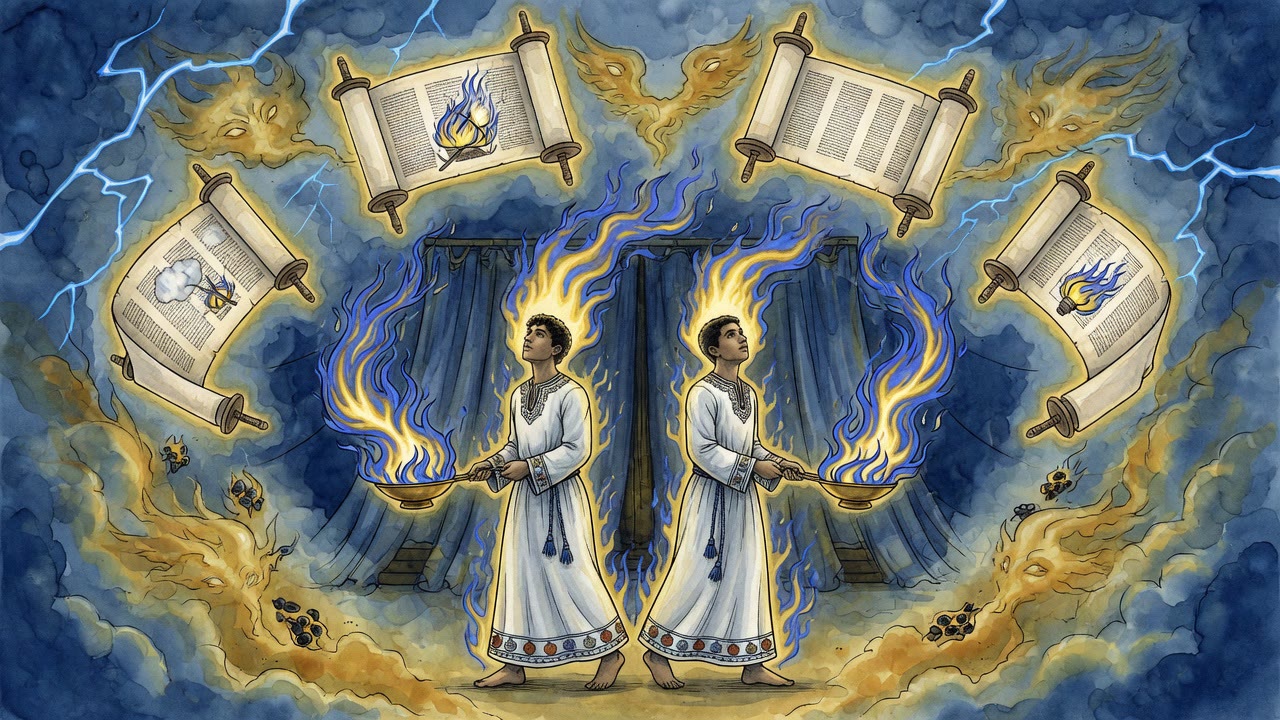
The glory appeared. It accepted. It also judged. Two sons of the high priest brought strange fire, and the fire of heaven answered with a finality no argument could soften. Israel learned in one day that nearness to the Holy is not a privilege without cost. Elazar and Ithamar learned that priesthood is a vow that outranks even the body of a brother. Aaron learned that joy at the altar and grief outside the camp can share the same hour, and that the service continues because the people still need a priest who has not made himself unclean for love.
The brothers who could not carry Nadav and Avihu carried something heavier. They carried the office. They carried the boundary. They carried the knowledge that holiness, once accepted, does not bend for family when family falls inside the flame.
There is a severity in law that is also its mercy. If Elazar and Ithamar had been allowed to become tamei for their brothers, the people might have lost all four sons of Aaron in a single hour, two to fire and two to impurity that barred the altar. The Levites' hands became the hands of family for a day. Outside the camp the bodies were laid down. Inside the camp the service had to continue because a nation still needed priests who could stand near the fire without uncleanness. Love wants to carry. Holiness sometimes assigns the carrying to someone else.
Moses's call for one heart before the glory appeared was not cancelled by the deaths. It was proven. A divided heart builds calves. A single heart can still be shaken by fire from before the Lord. Unity does not mean safety. It means the people stand together under a holiness that both accepts offerings and judges strange fire without asking the camp's permission first.
Aaron's silence after the fire is remembered as a form of strength. He did not argue with the decree. He did not demand that Elazar and Ithamar break their anointing for the sake of tears. He let the Levites work. He let the law hold. Grief lived in him, and the office lived in him, and for that day the office spoke louder.
What the Camp Remembered
← All myths