Aaron Could Not Fill His Hands With Half an Offering
At the Mishkan, Aaron needed bullock, twin rams, and bread whole, while one pebble in his fistful spoiled the meal-offering for Heaven.
Table of Contents
 Click for full size
Seven Days of Filling Hands
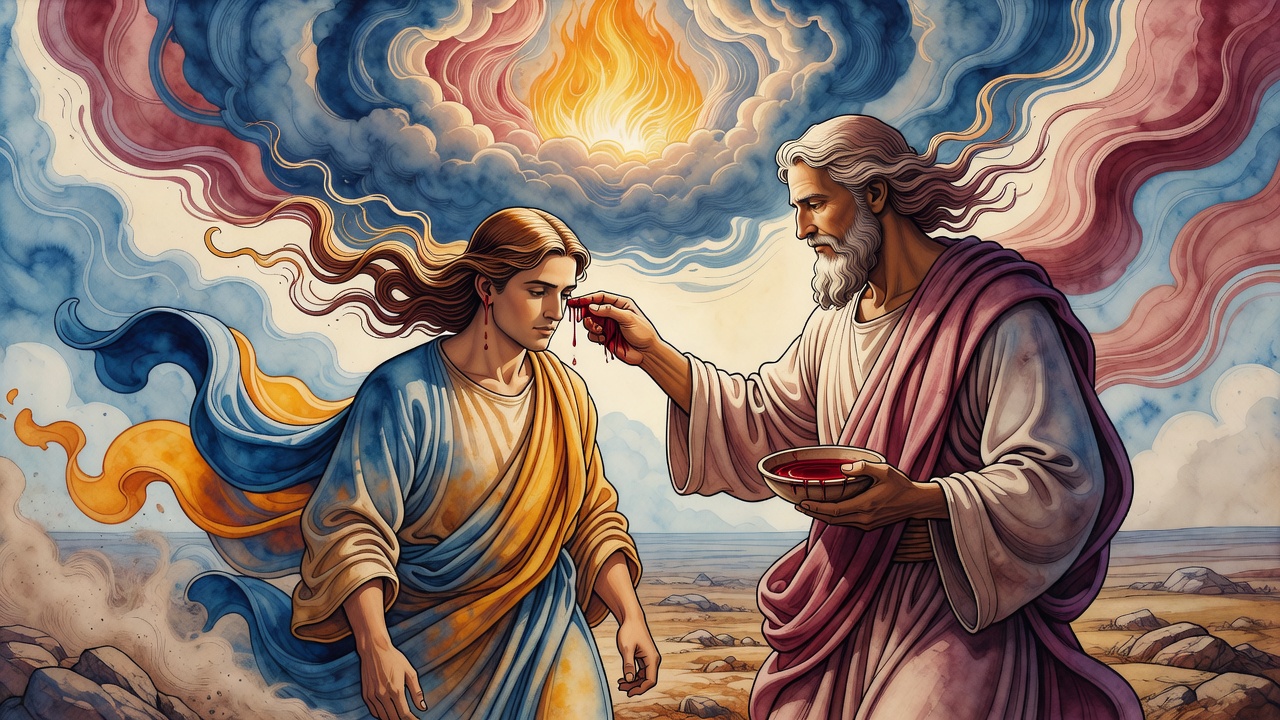
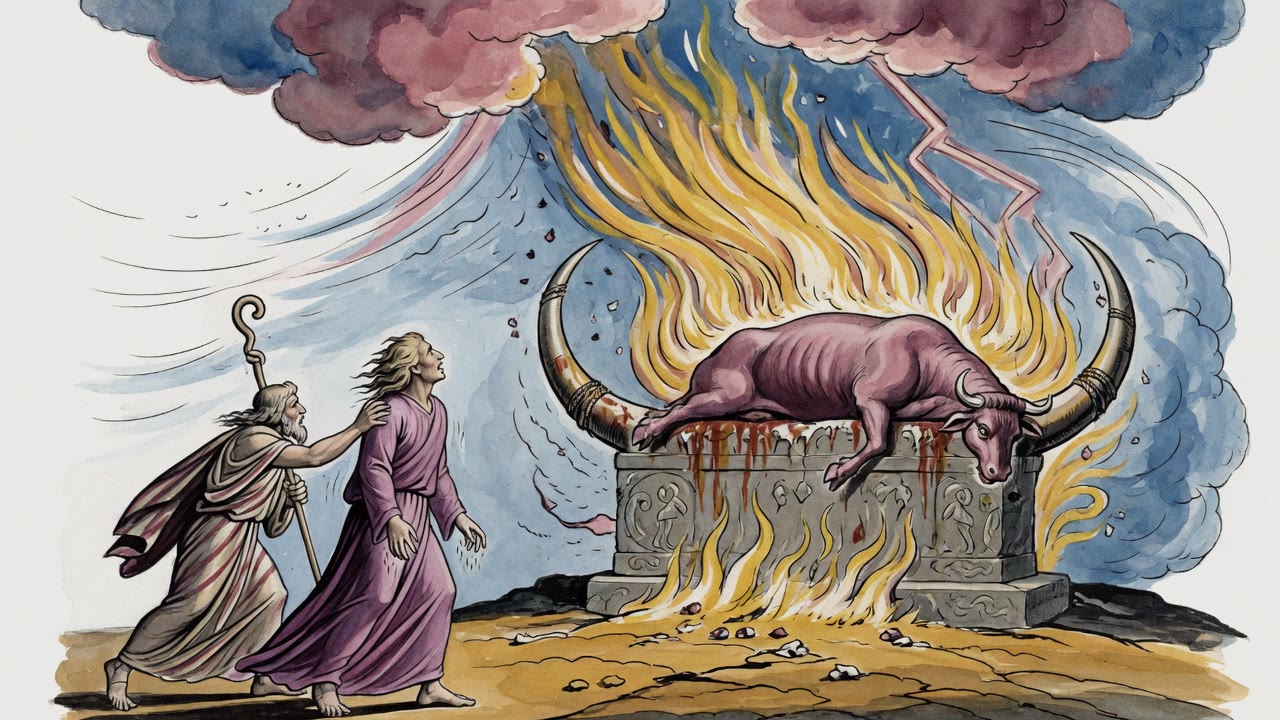
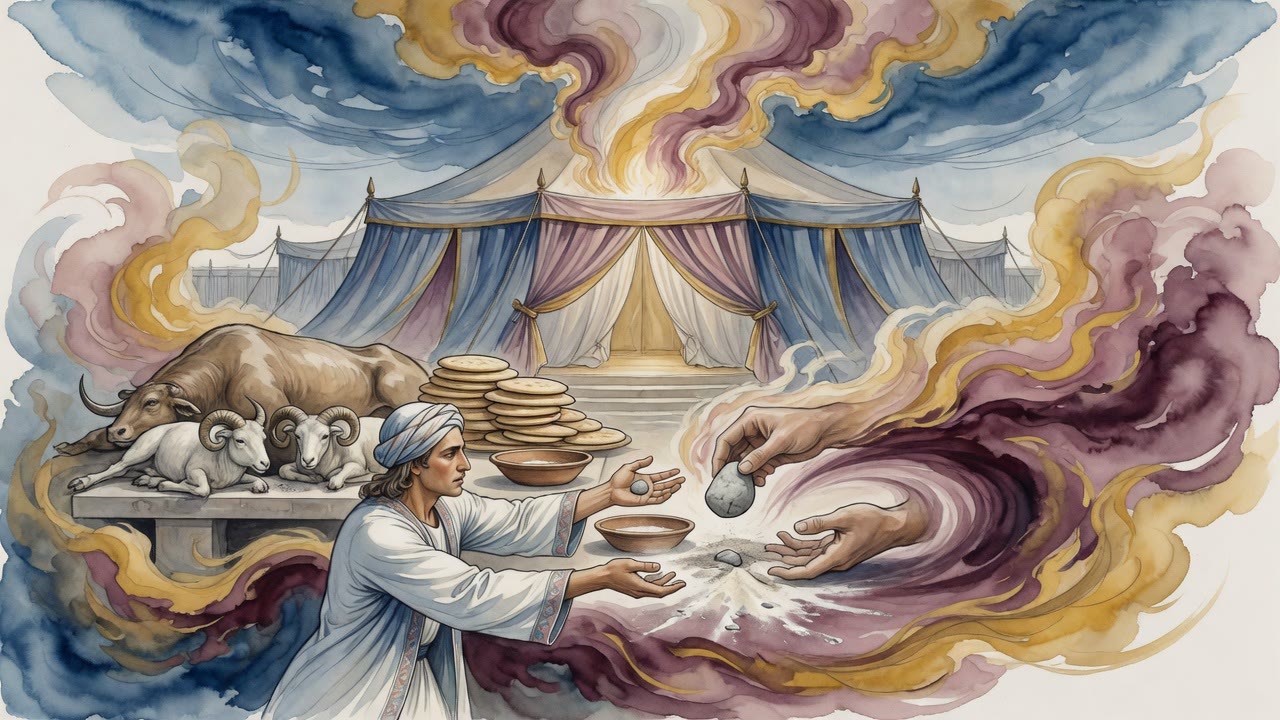
At the threshold of the Mishkan, during the seven days of filling the hands, Moses drew near the offerings that would set Aaron apart. Scripture had already named the two rams together as twins, alike in every way. Then the Torah paused and said again, "And he presented the second ram." The Sages heard a warning in that extra naming. Consecration was not a work of pieces. It was one whole, or it was nothing.
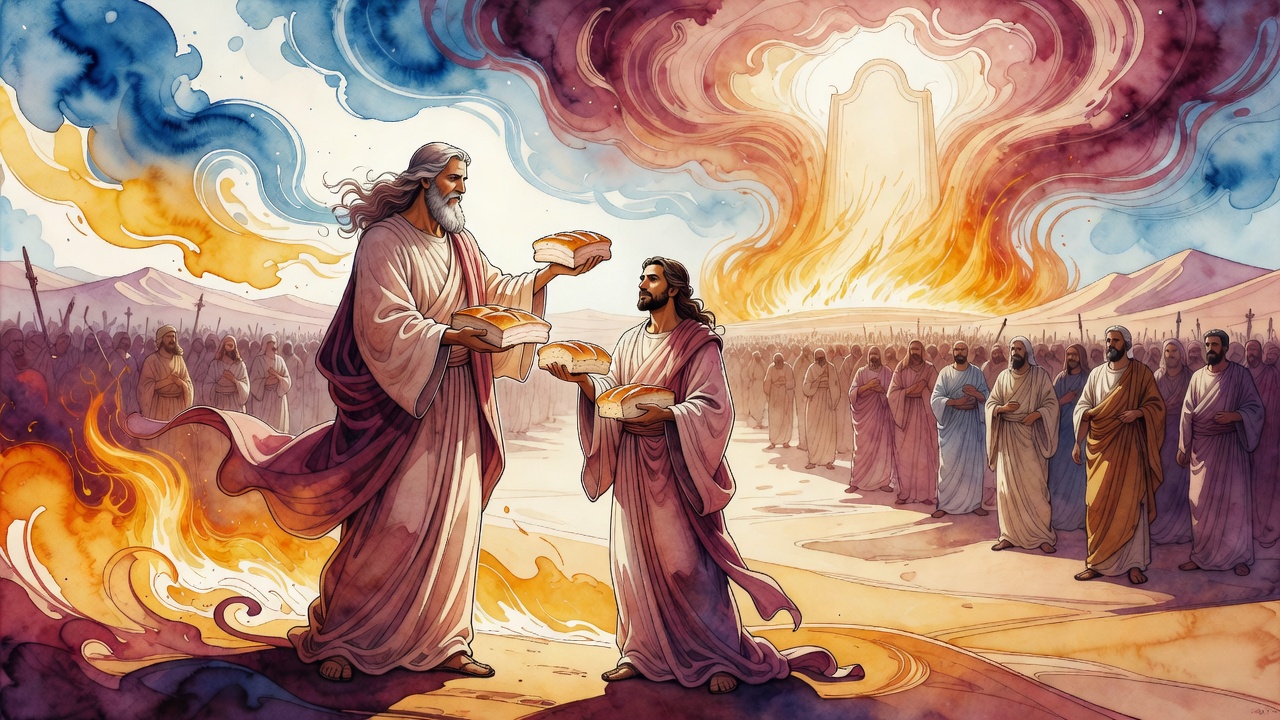
Bring the bullock and a single ram, and the hands are not filled. Bring two rams and forget the bullock, and the sanctification does not take hold. Bring bullock and rams both, yet leave the basket of unleavened bread behind, and Aaron still stands outside the finished holiness. Each offering was a thread. Only when every thread was woven did the garment of priesthood hold.
Sacred work begun must be carried to its fullness, or it is not yet begun at all. Half a dedication is not half a priest. It is a man still waiting while the altar pretends he is ready.
The Fist That Could Hold Nothing Extra
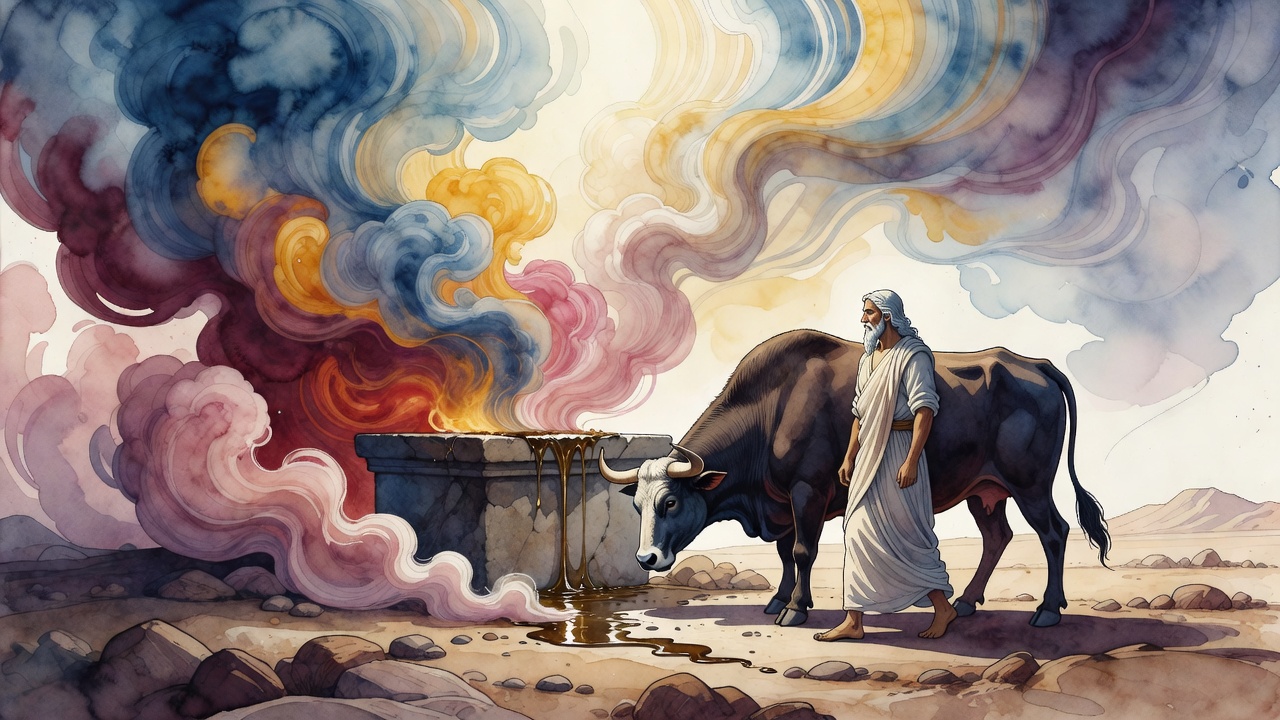
On the day the Mishkan rose and Aaron first stood as priest, he reached into fine flour for the meal-offering. The Torah says he "filled his hand." The Sages would not let the plain word pass unweighed. Scripture speaks of filling here, at consecration, and of filling in the daily offering. One word ties two laws like a thread drawn through both.
Filling is not a careless scoop, not a heap, not a stinted palm. It is the full measure of a closed fist, the kometz, three middle fingers pressed down upon the palm. As the older law demanded an exact handful, so Aaron's hand at dedication had to be exact. If, when he closed his fist, a single pebble slipped among the flour, or a stray grain of salt, or one crumb of frankincense, the handful was spoiled, unfit for the altar.
At the founding of the service, Heaven asked not for abundance but for purity: a fistful holding nothing but what belonged. The man clothed for glory could still ruin the day with a stone the size of a thought.
Cloth That Speaks Before Speech
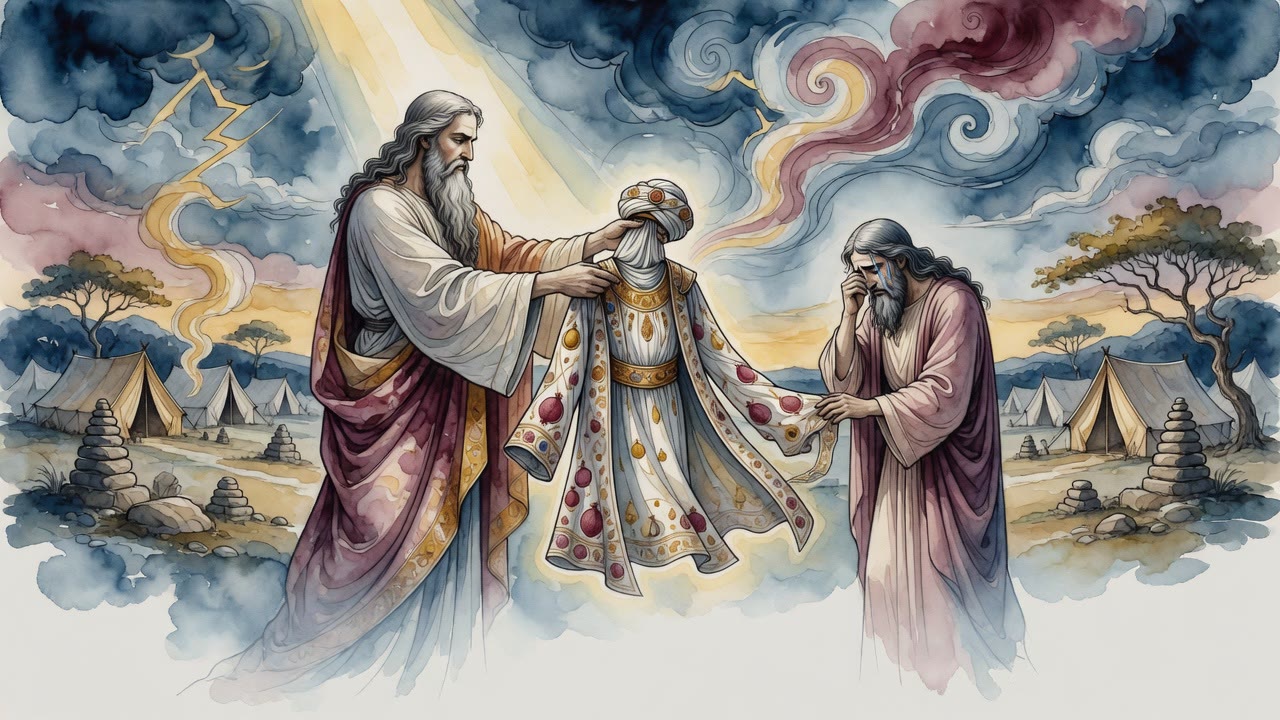
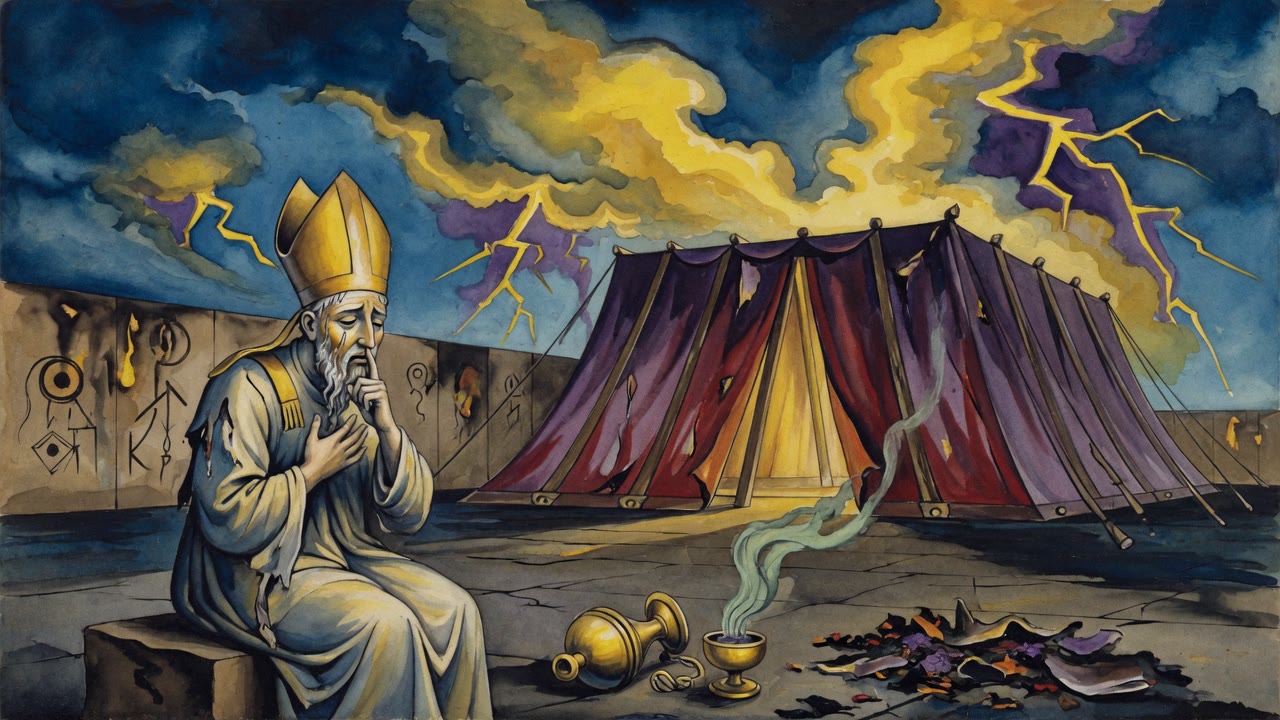
When Aaron was clothed for service, the Sages saw commandments folded into every cloth. A robe is never only a robe. The thread that wraps a body can bind that body to its Maker. There is a mitzvah (a commandment) sewn into what a person may not wear: "You shall not wear sha'atnez," the mingling of wool and linen. There is a mitzvah sewn into what a person must wear: fringes knotted on the corners of the garment.
One thread refused, one thread required, and between them the soul is dressed in obedience. As Moses robed his brother in the vestments of priesthood, so every child of Israel is robed, each day, in the quiet commandments of the cloth. The garment speaks before the wearer says a word. It declares whose servant he is and whose law he wears against his skin.
Aaron's blue and gold were a louder version of the same claim. Priesthood began at the skin, not at the speech.
Even the Donkey Carries a Command
Nothing in creation was made to stand empty of holiness. Even the donkey, an unclean beast, carries a commandment on its back, for its firstling must be redeemed with a lamb. The wild creature and the bird that cuts the open air may rise toward the altar when the hunter's hand receives them under the law. Holiness is not a club for the pure species alone. It is a pressure that presses every creature toward service or toward the edge of service.
Aaron's full offerings and exact fistful stood inside that larger map. If a donkey has a mitzvah, a high priest cannot treat a missing ram as a detail. The world leans toward the altar. The man who serves that altar must lean without remainder.
Wholeness or Nothing
So the second ram is named alone, that no man imagine dedication could stand on part of itself. So the fist closes empty of pebbles. So the garment refuses mixed weave and requires fringes. The drama of the week of filling hands is not pageantry for its own shine. It is a public proof that God will not accept a priest who arrives half-prepared and calls the half enough.
Moses completed what Aaron could not begin alone. Israel watched a brother clothed, a hand measured, and animals presented without subtraction. From that hour the priesthood knew its first law was not clever improvisation. It was fullness. A pebble in the flour and a missing loaf in the basket teach the same sentence: Heaven's work is whole, or it is refused.
← All myths