Moses Waved Consecration on Aaron's Open Palms
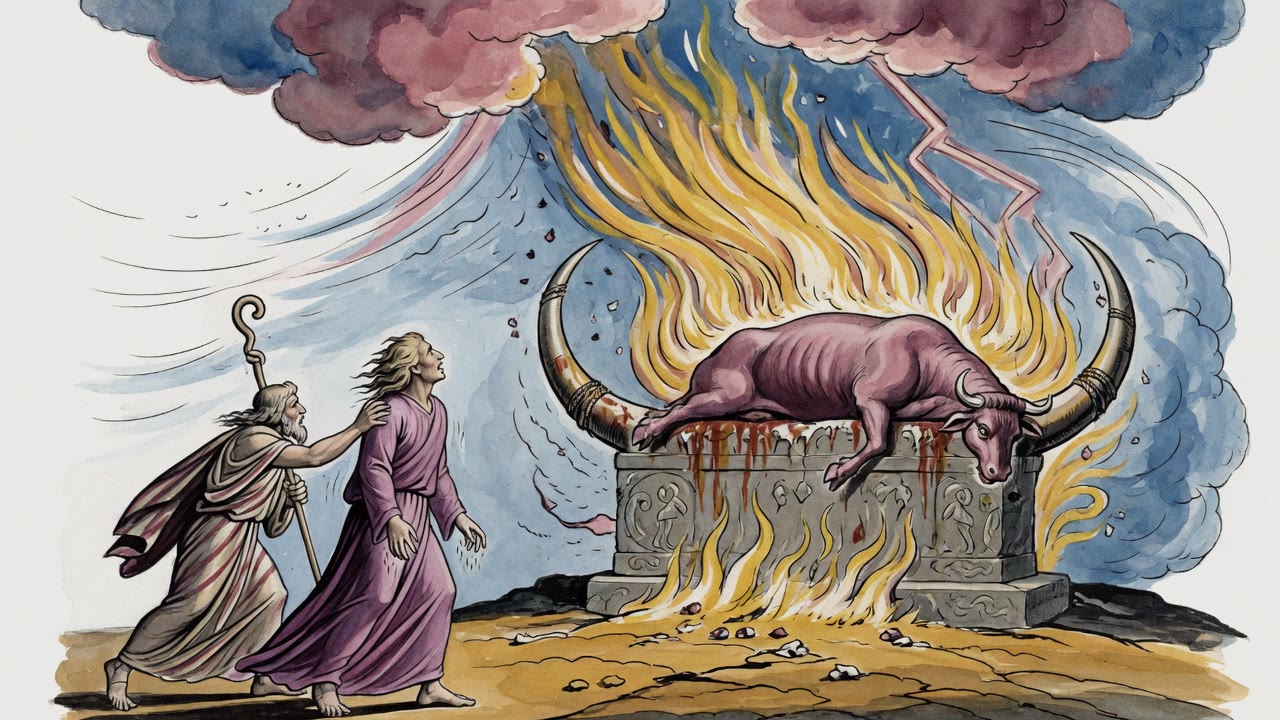
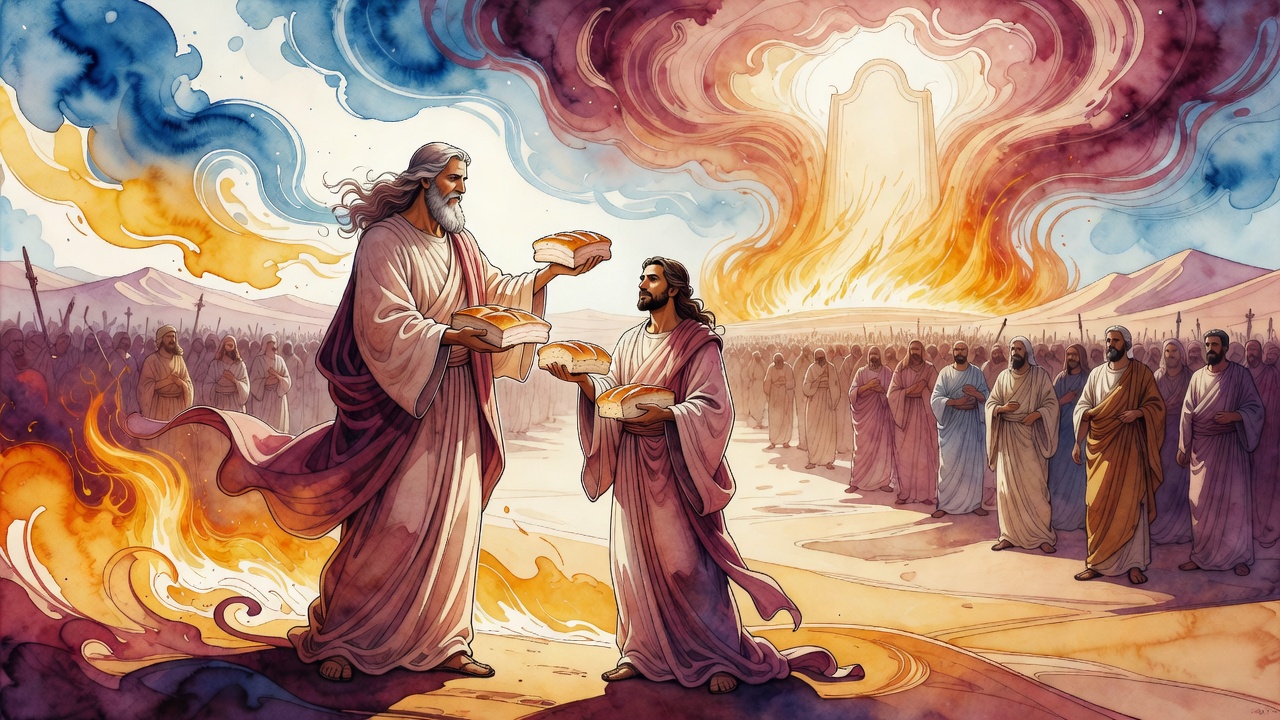
The courtyard filled until children sat on shoulders. Fat and bread sat on Aaron's palms. Moses swung them, then took them back for the fire.
Table of Contents
 Click for full size
Assemble Them All
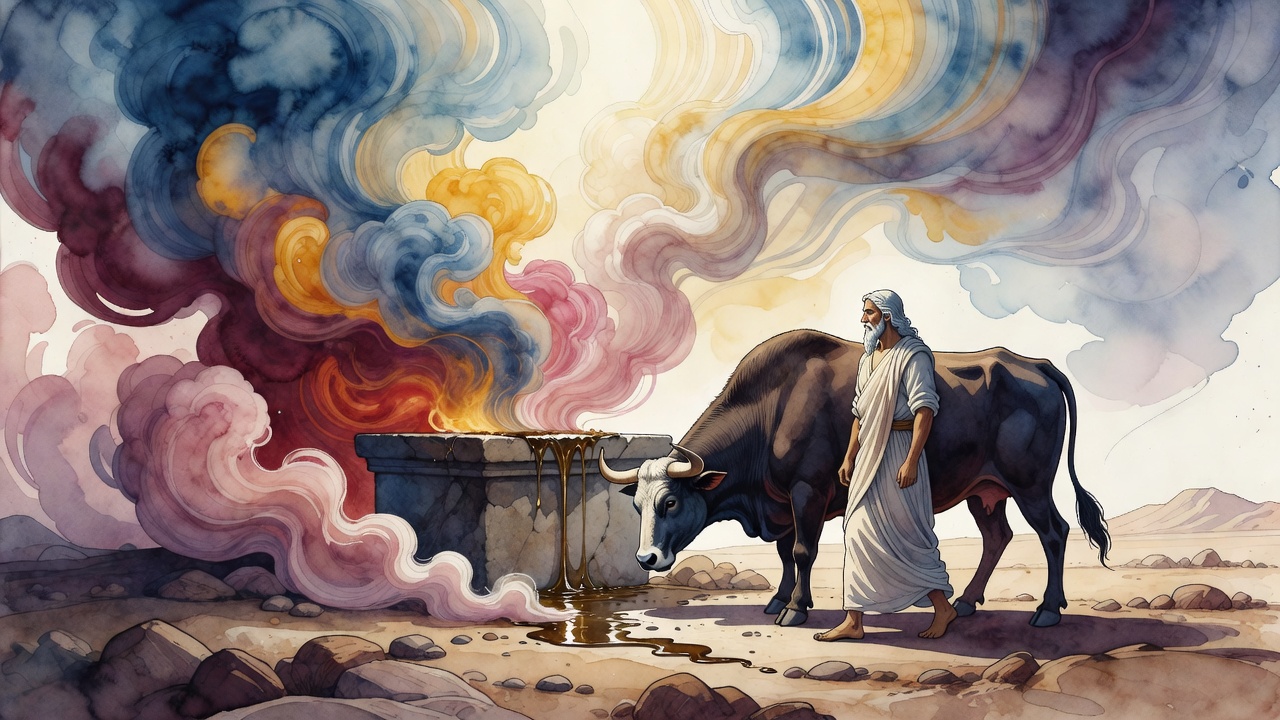
Smoke from the first offerings climbed the air of the new Mishkan (משכן), the portable sanctuary Israel carried through the wilderness. Aaron stood at the door with his sons, palms open. The congregation pressed close enough to see every finger.
Moses did not hide the making of priests behind a curtain. The Holy One's word had been strange in its publicity. Do not robe Aaron in secret. Assemble the entire congregation at the Tent of Meeting, every tribe, great and small. What is done in secret invites later doubt. What is done before eyes becomes a memory the people cannot undo when jealousy rises.
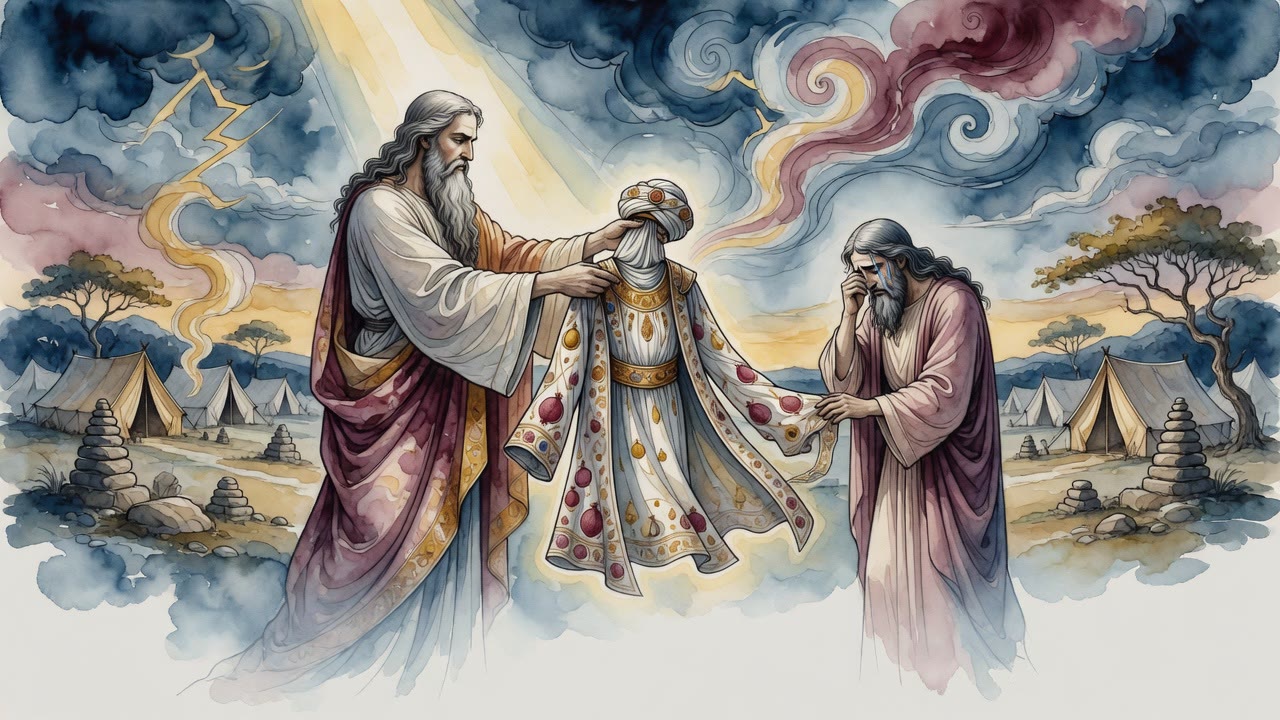
So the courtyard filled. Children sat on shoulders. Elders leaned on staffs. The man who would wear the breastplate of judgment received his office under a thousand stares, because the priesthood would belong to Israel as a holy fact, not as a private family rumor. Moses moved among them as prophet and dresser, brother and herald. Holiness that day had sleeves, hems, oil, and blood. It also had an audience.
Fat and Bread on Open Palms
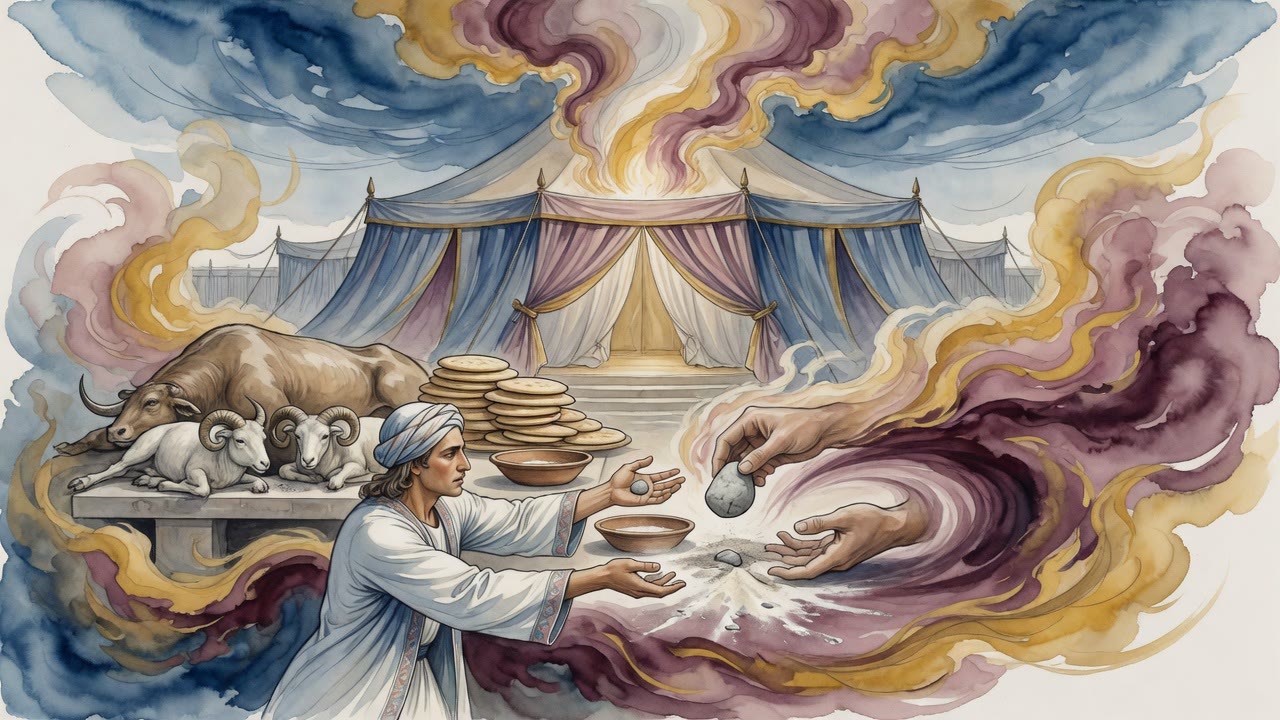
Consecration pieces waited: fat, bread, choice portions. Moses did not toss them on the altar fire. He set them on the open palms of Aaron and his sons. Then he lifted. He swung the load outward and back, forward and inward, a tenufah (תנופה), a wave offering, before the Holy One who fills the four directions, the heights, and the depths.
The motion was law in gesture. From that swaying, every later wave offering in Israel would learn its choreography. The body teaches what a paragraph cannot. Lift toward the One who owns every side of the map. Do not clutch the gift as private property. Let it travel the air before it travels into flame.
Then Moses took the portions back from their hands. Receiving and releasing both belong to the rite. The priest is not a warehouse. He is a station on the gift's path to God. Aaron's shoulders ached from holding still while the portions rose and fell. A high priest's first training includes the muscle of not grabbing what is only passing through.
Blood on Ear and Thumb
A ram of consecration died. Moses gathered blood. Three bloods of that day were not alike. The first required six placings. The second asked two. The third required thirteen. When he took of its blood, he took this blood, weighted, not mixed in the mind with any other.
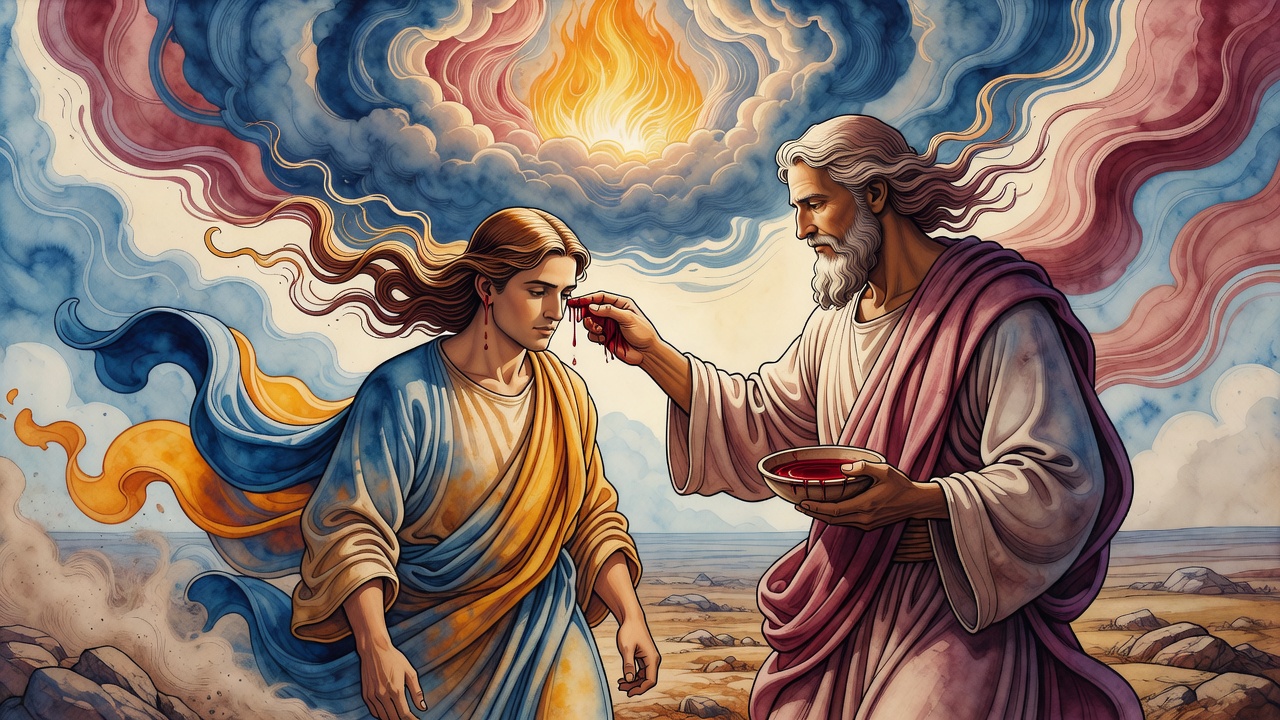
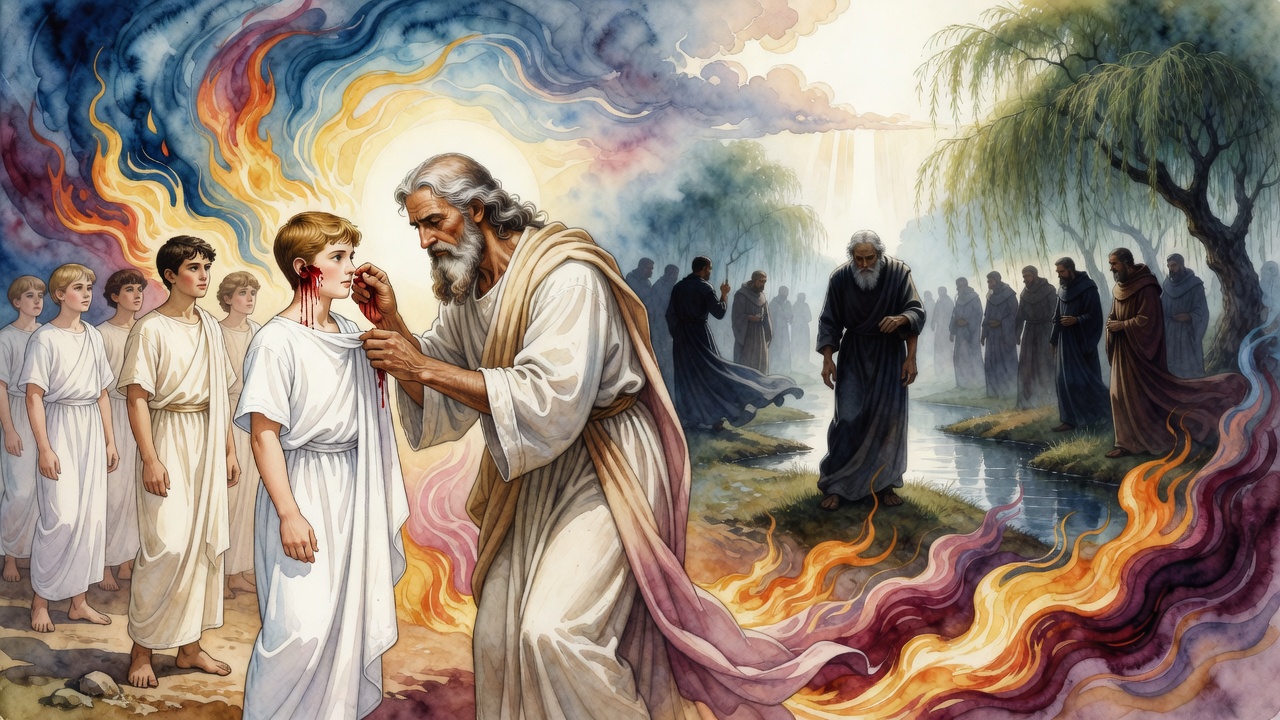
He touched the soft ridge of Aaron's right ear, where sound gathers, so the high priest's hearing would stay tuned to heaven. He touched the thumb of the right hand at its middle joint, so the grip that lifts offerings would be holy in the bone. Ear for listening. Hand for acting. The body of the priest became a tool set apart inside the Mishkan.
The sons watched their father marked. Their own palms still remembered the weight of fat and bread. The house of Aaron was being written in blood and wave and public sight at once. Nadab and Abihu felt oil on their skin. The hour of strange fire had not yet come. This hour was only consecration, only beginning, only the public yes.
Empty Hands After the Wave
When Moses took the portions back, Aaron's palms cooled in the sudden lightness. Empty hands after sacred weight is also a teaching. Service will fill a priest and empty him in the same hour. The altar receives what the wave has already directed upward.
Among the crowd, someone from the tribe of Judah watched with a farmer's eye and understood wave as offering, not as theater. Someone from Levi watched with a kinsman's pride and fear. Israel went to its tents with an image fixed: Moses' arms swinging sacred portions on a brother's open hands, then reclaiming them for the fire. No one could later say the priesthood arrived by night theft or private bargain. The whole people had seen the wave.
Night came to the camp with the smell of roasted fat and new fabric. Aaron's ear still held the memory of blood. The four directions of the wave were not decoration. East toward the camp's entrance light, west toward the Holy of Holies' future weight, north and south toward the full width of a people that must trust this house of Aaron with its sins and its thanks. Moses' arms drew a map of belonging in the air above open hands.
The smoke thinned. Somewhere a child who had watched from a shoulder would grow old telling how a prophet made a priest by lifting gifts toward every direction heaven owns, then giving them back to the altar that does not return them.
← All myths