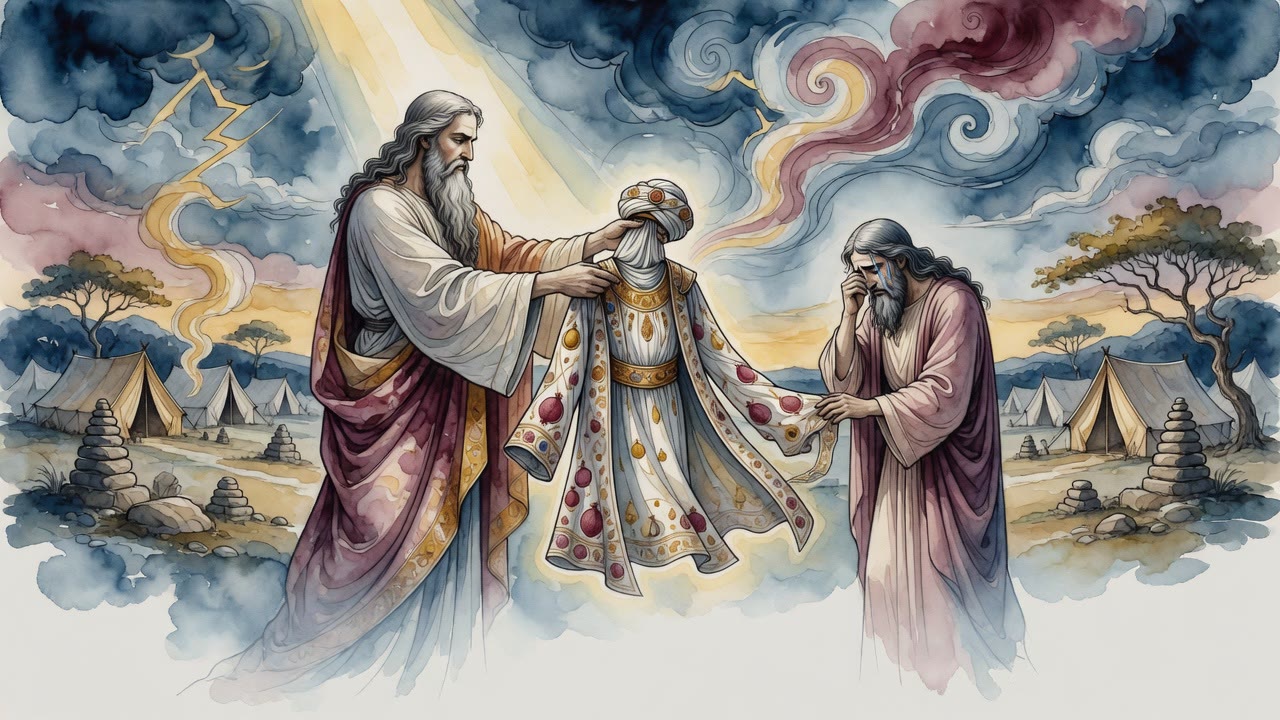
Moses Dressed Aaron's Sons in White Linen
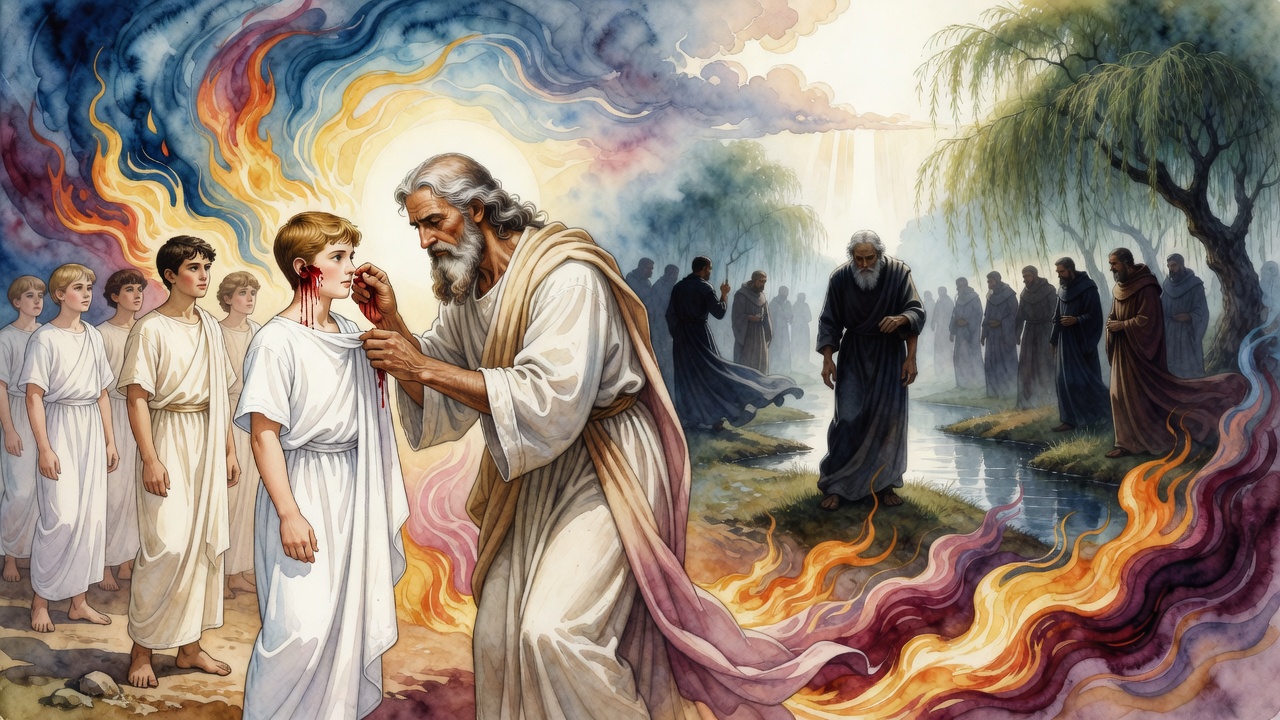
Moses bent to tunic each son of Aaron, painted blood on ear and thumb, and centuries later Simon still stood ringed by priests like willows at the brook.
Table of Contents
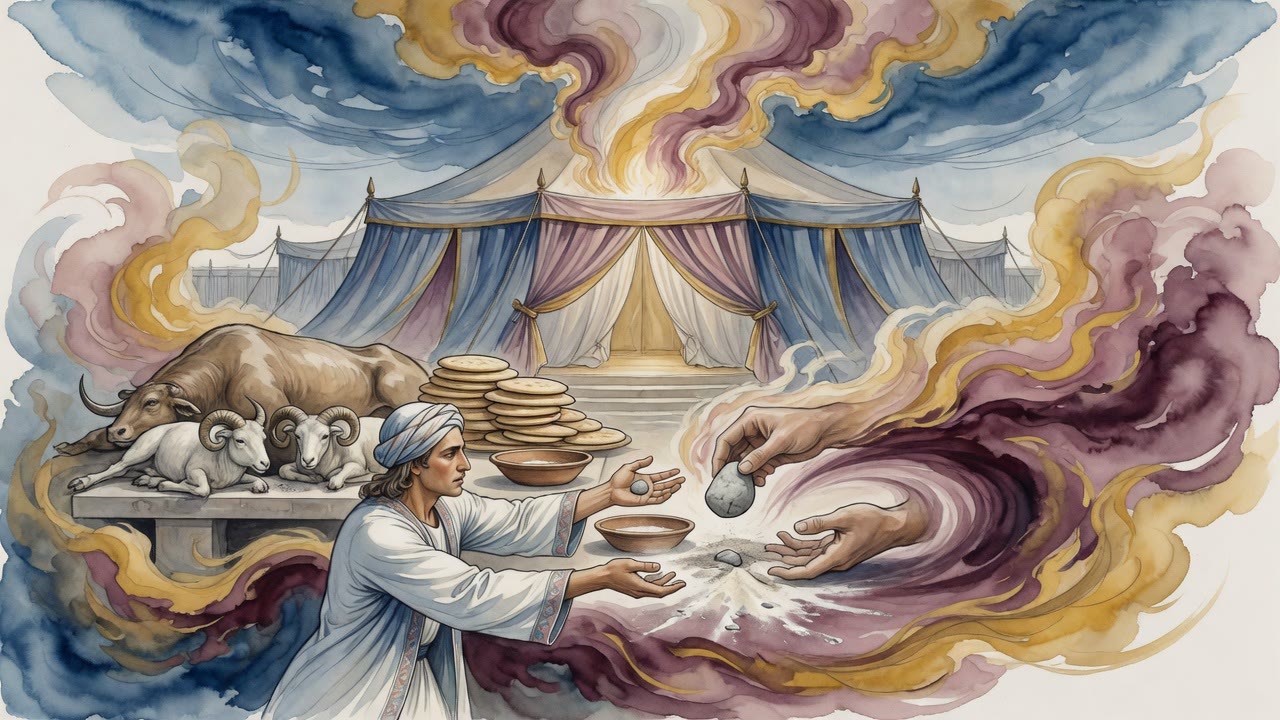
Moses smoothed linen across a young shoulder and felt the cloth catch on heat and fear. The doorway of the Mishkan (the portable sanctuary Israel carried through the wilderness) held the sons of Aaron in a tight line. Outside, Israel watched a priesthood being born with hands, not speeches.
 Click for full size
He had already robed his brother for honor and for glory. Now he turned to the boys as Heaven had turned him into a helper, not a spectator.
Tunics Drawn On by a Prophet's Fingers
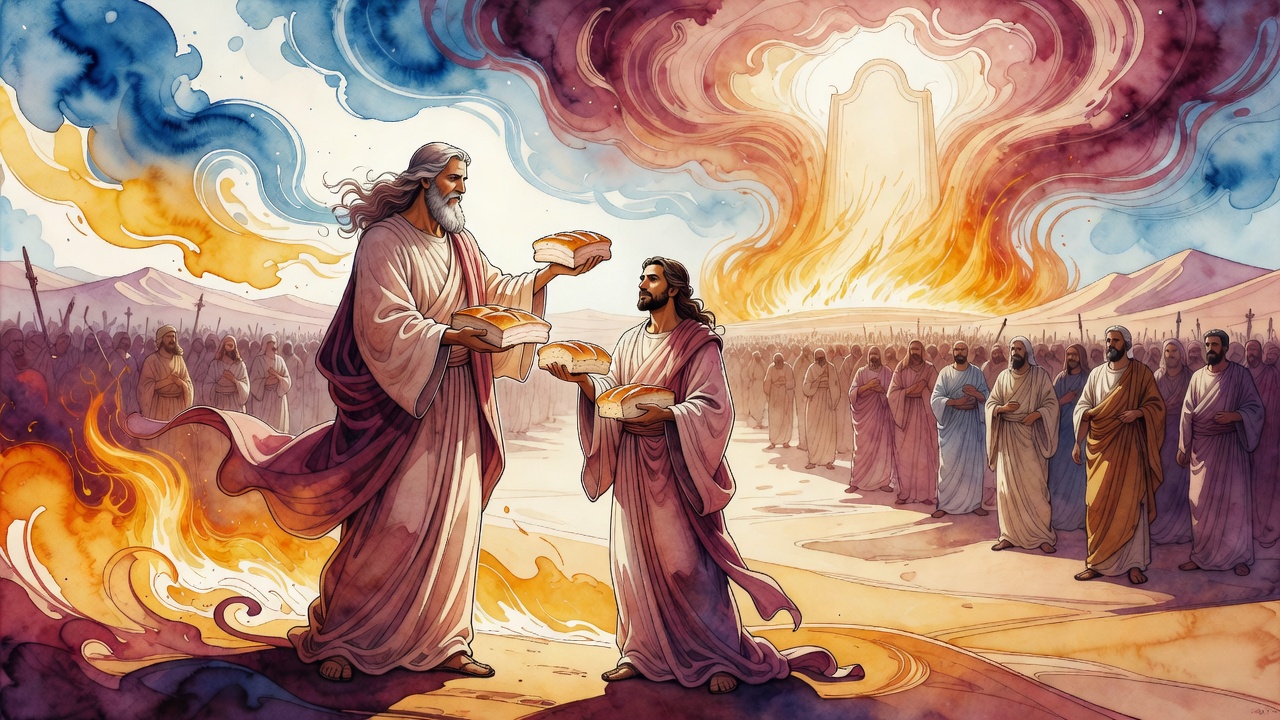
The same care given to the father was given to the sons. Moses did not call lesser hands. He drew each youth near, lifted the white tunic, and settled it so the linen lay clean on skin that had never yet carried the day's blood and smoke. What was commanded for Aaron was commanded again for his house. Greatness bent. The prophet who spoke with God's face to face became a dresser of children who would one day stand between Israel and the altar fire.
That lowering is the teaching. Holiness does not arrive only as thunder. It arrives as a sleeve pulled straight, a collar fixed, a man who could have stayed above choosing to stand beside. The sons waited at the door and learned, before any sacrifice, that service begins when the great one kneels to the small. Dust from the courtyard stuck to Moses' knees. He did not brush it off before the next son stepped forward.
Israel saw the gesture and stored it. A prophet can split seas and still know how a tunic should hang if the work of the day is to make priests rather than spectacles.
Three Bloods and a Right Ear
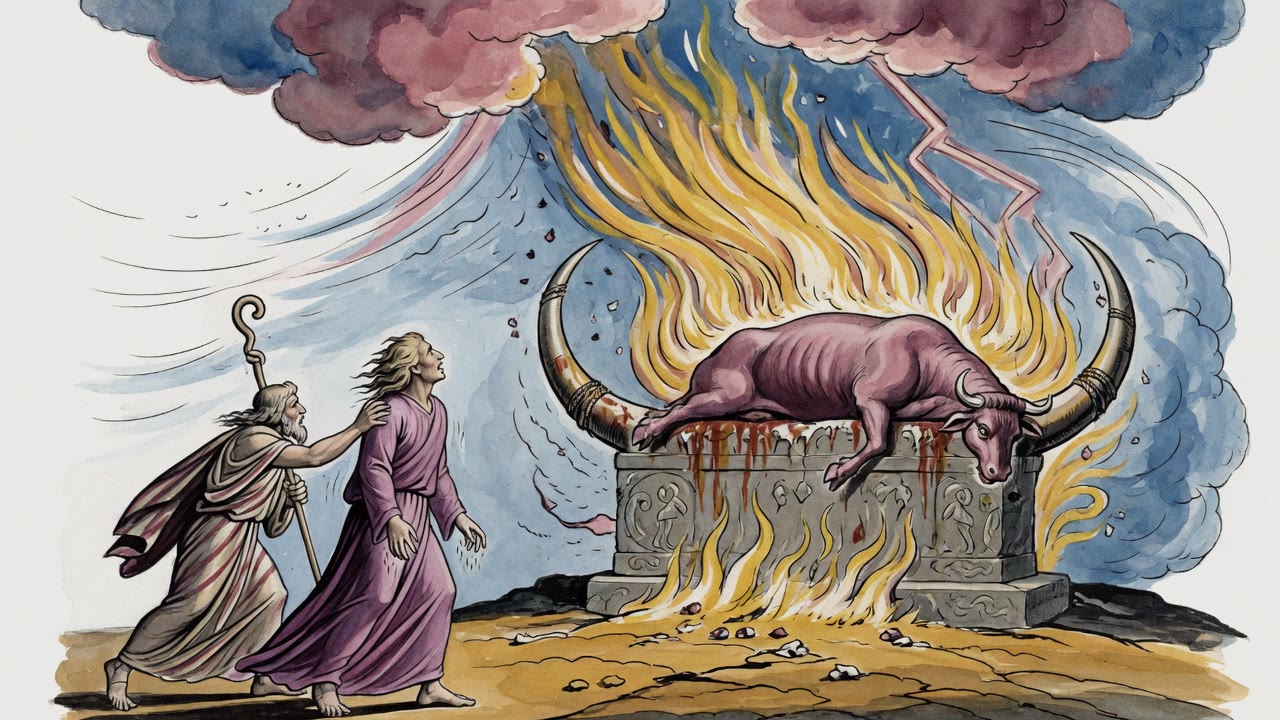
A ram died for the consecration, and Moses gathered blood that the later masters refused to treat as one simple liquid. Three bloods of that day, they said, each with its own count of placings: six for one, two for another, thirteen for the third. When Scripture says he took of its blood, it means a particular blood, weighted, not mixed in the mind with any other.
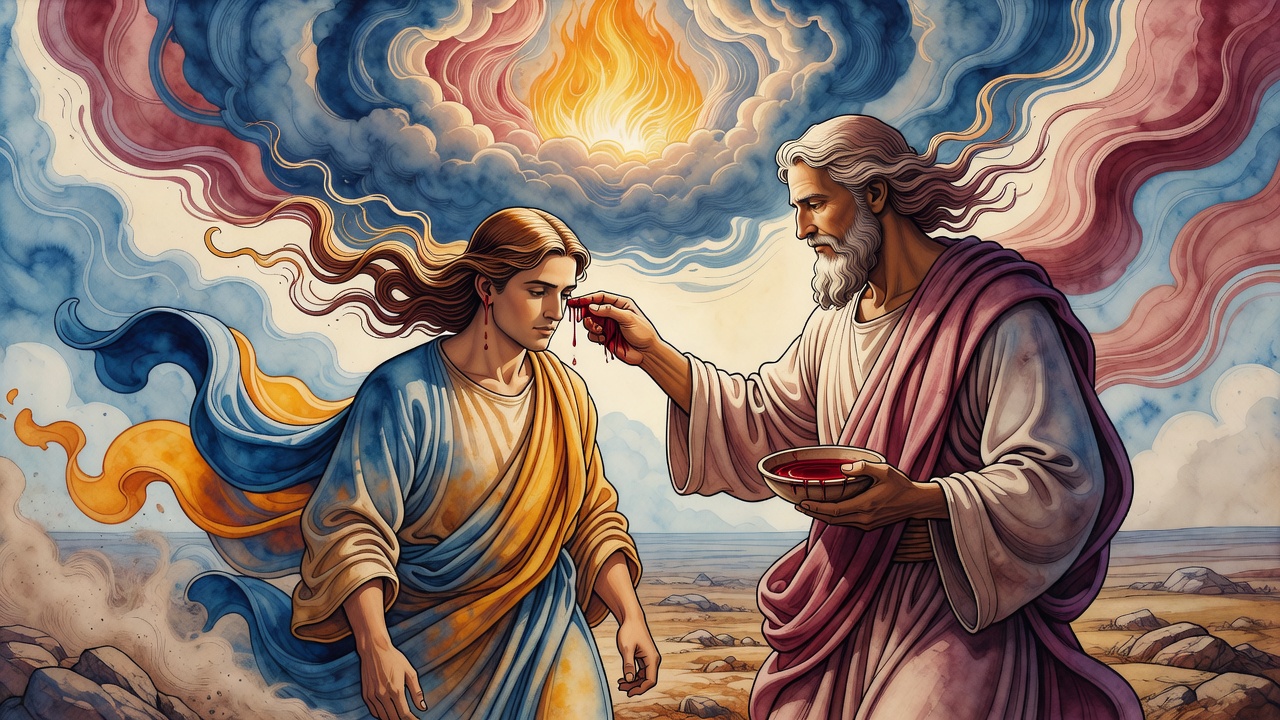
Then Moses turned to Aaron. He touched blood to the soft ridge of the right ear, where sound gathers, so the high priest's hearing would stay tuned to Heaven. He touched the thumb of the right hand at its middle joint, so the grip that lifts offerings would be holy in the bone. Ear for listening. Hand for acting. The body of the priest became a tool set apart inside the Mishkan.
The sons watched their father marked. Their own tunics still smelled of new cloth. The house of Aaron was being written in blood and linen at once. No trumpet had sounded yet. The quiet of the consecration was louder than festival noise. Every later blast of priestly silver would ride on this mute geometry of ear, thumb, and fabric.
Firstborn of Herd and House
The same wilderness law that claimed the firstborn of herd and flock claimed these first servants of the altar. Every male firstling among cattle and sheep is set apart for the Lord. The calf a herdsman most wants to keep is the one given over. The world begins by surrendering its beginnings.
In that light the consecration of Aaron and his sons is not a career launch. It is firstfruit logic applied to men. Nothing truly belongs to its keeper. The first of increase returns to the One who made the herd fruitful. So the boys in white are Israel's answer in human form to the law of the firstborn beast: we hand over what opens the line.
A herdsman outside the camp might grumble when a strong male is claimed. Inside the courtyard the grumble becomes liturgy. Moses dressing Aaron's sons is the human echo of that claim. The first of the priestly house is not hoarded by family pride. It is presented, clothed, and blood-marked for public use under God.
Simon Still Ringed by Sons
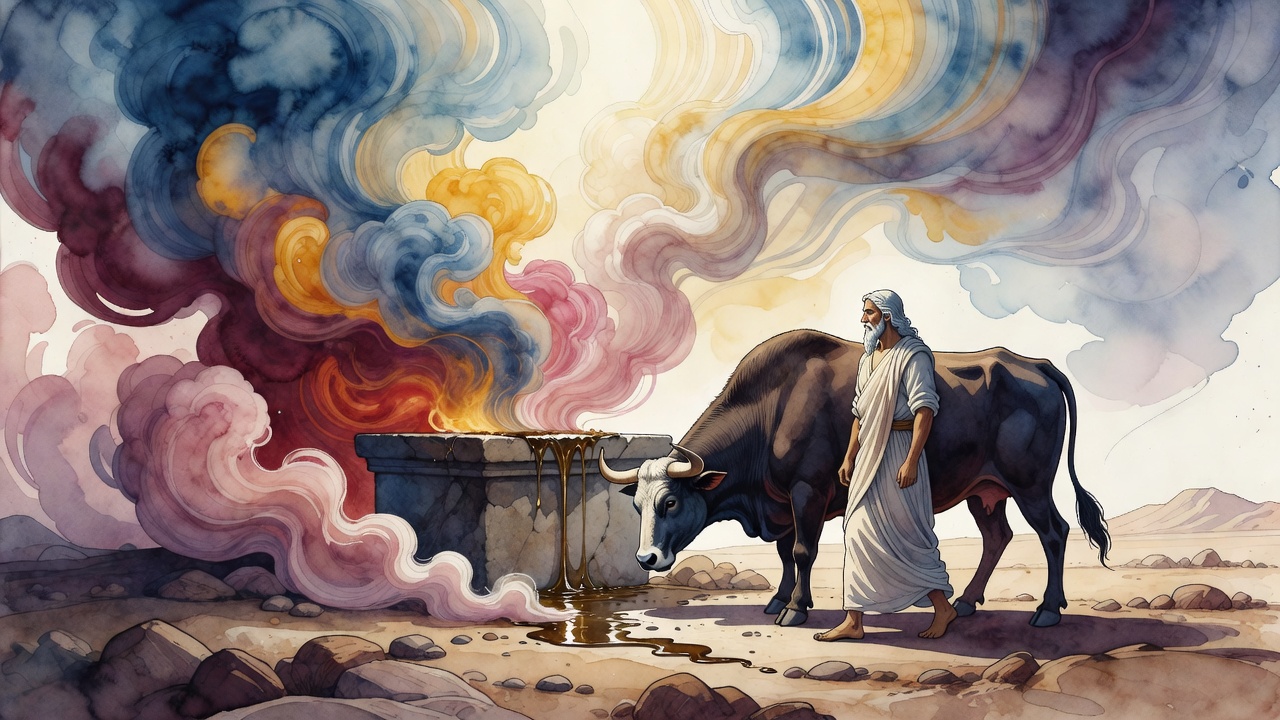
Centuries later, in the Second Temple's roar of fire and crowd, Simon the High Priest stood at the altar receiving pieces from his brethren. Around him a crown of sons rose like cedars of Lebanon. The sons of Aaron ringed him like willows by a brook, holding the fire-offerings of the Lord before the whole congregation. Trumpets of fine work lifted, and the blast brought Israel to remembrance before the Most High.
The scene is the long echo of Moses' fingers on a tunic hem. What began as one man dressing boys at a tent door becomes a forest of priests around a later high priest, still Aaron's line, still glory and heat and public service. Continuity is not an abstract word here. It is cedar height and willow closeness and the same blood-house still standing when empire after empire has tried to flatten it.
When the trumpets fade in the mind's ear, the death of the consecration ram still smells sharp. Moses still bends. Aaron still holds still under the thumb's touch. The firstborn law still claims what opens. And Simon still arranges the fires while his sons hold the edge of the circle, proof that the linen of that first day never fully left Israel's shoulders. A child in the crowd that day would have seen only smoke and gold. The older story under the smoke is a prophet on his knees with a tunic in both hands.
← All myths