Moses Marks Aaron's Ear With Consecration Blood
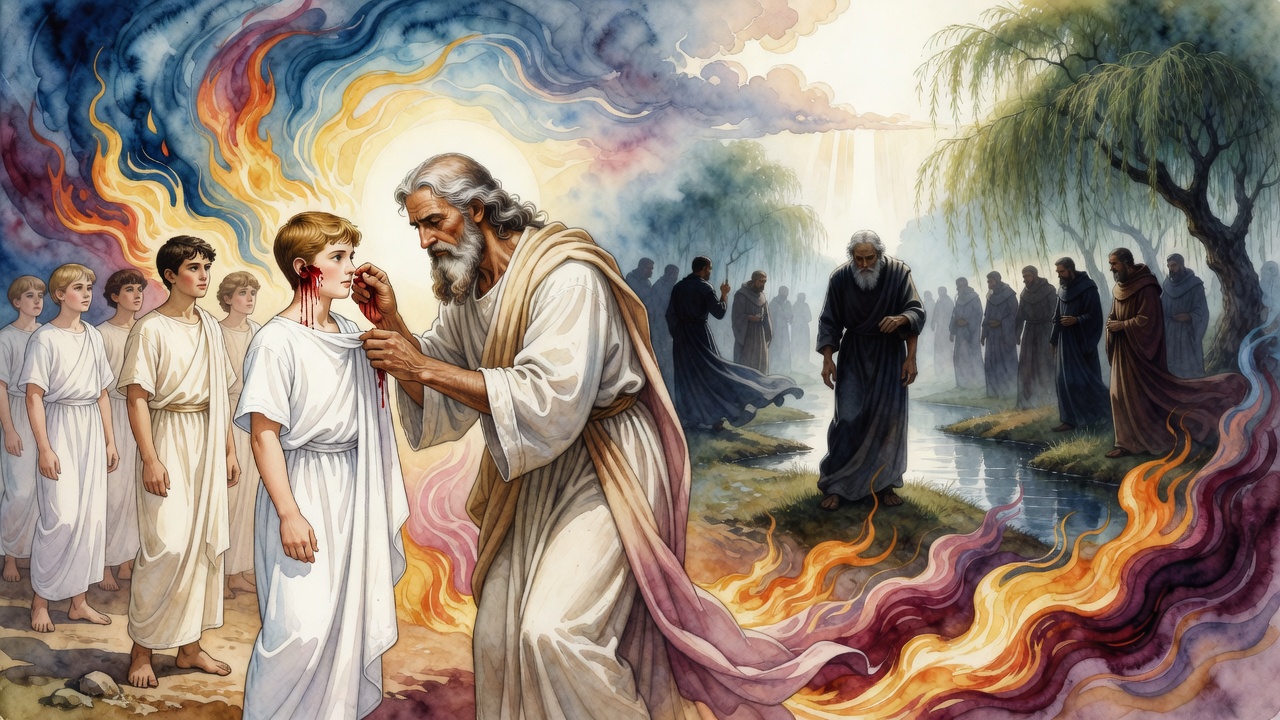
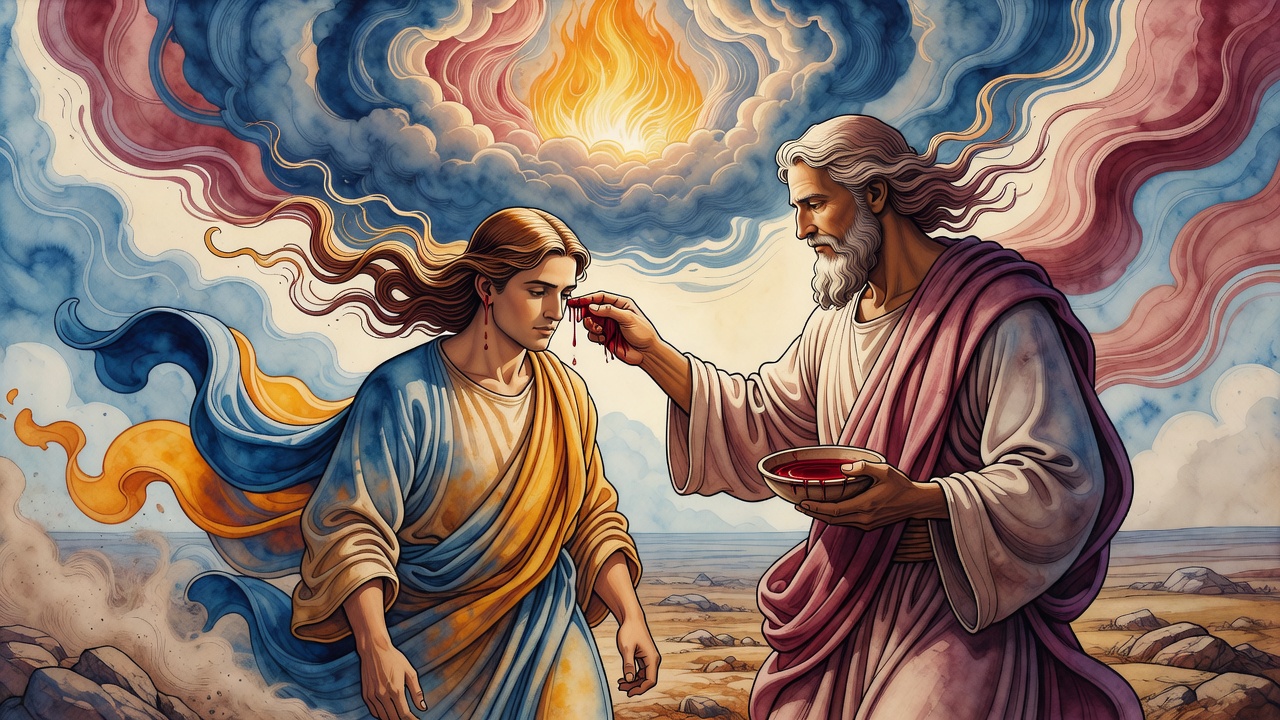
Moses takes ram's blood to Aaron's right ear, thumb, and toe. Three bloods, three measures, one brother made high priest.
Table of Contents
 Click for full size
The Day the Dwelling Rose
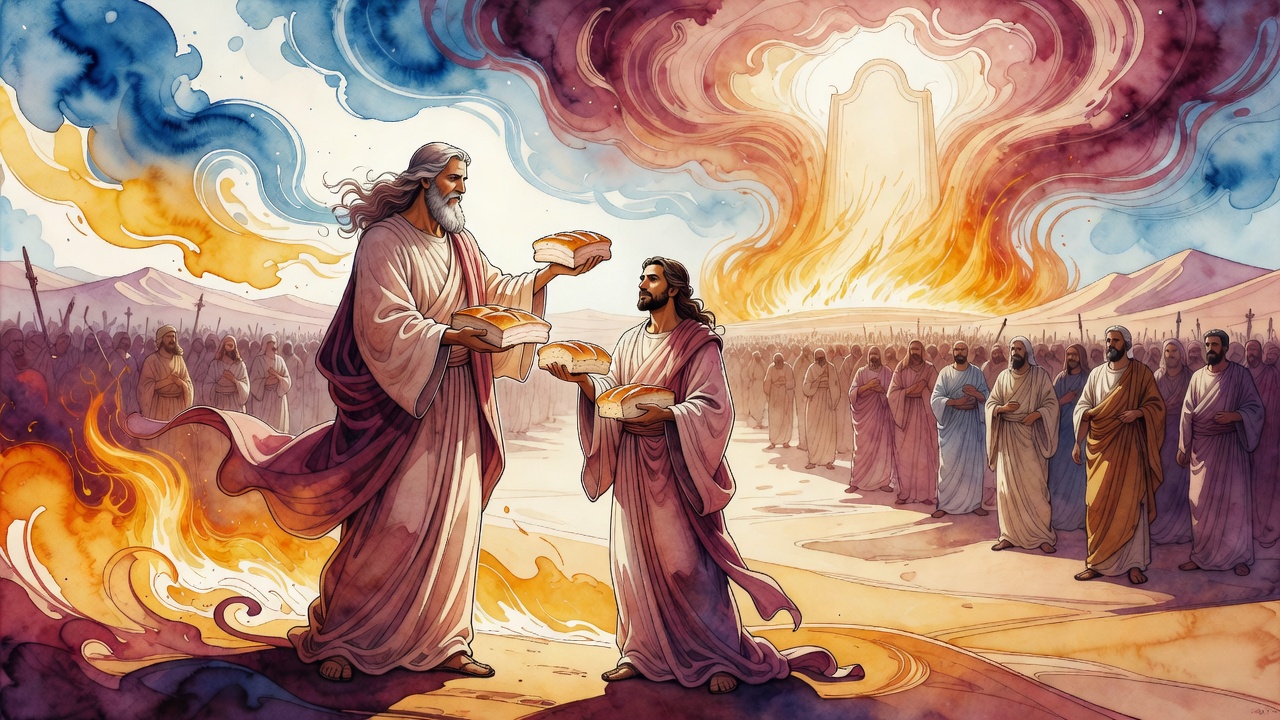
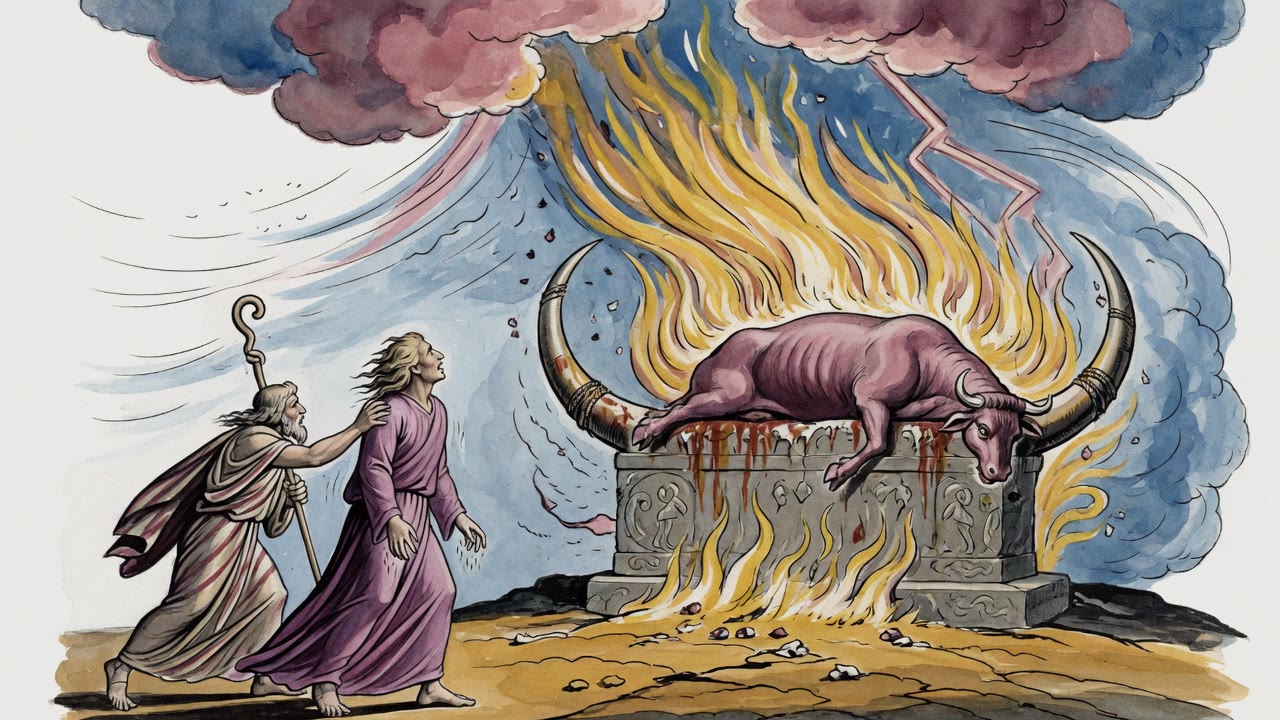
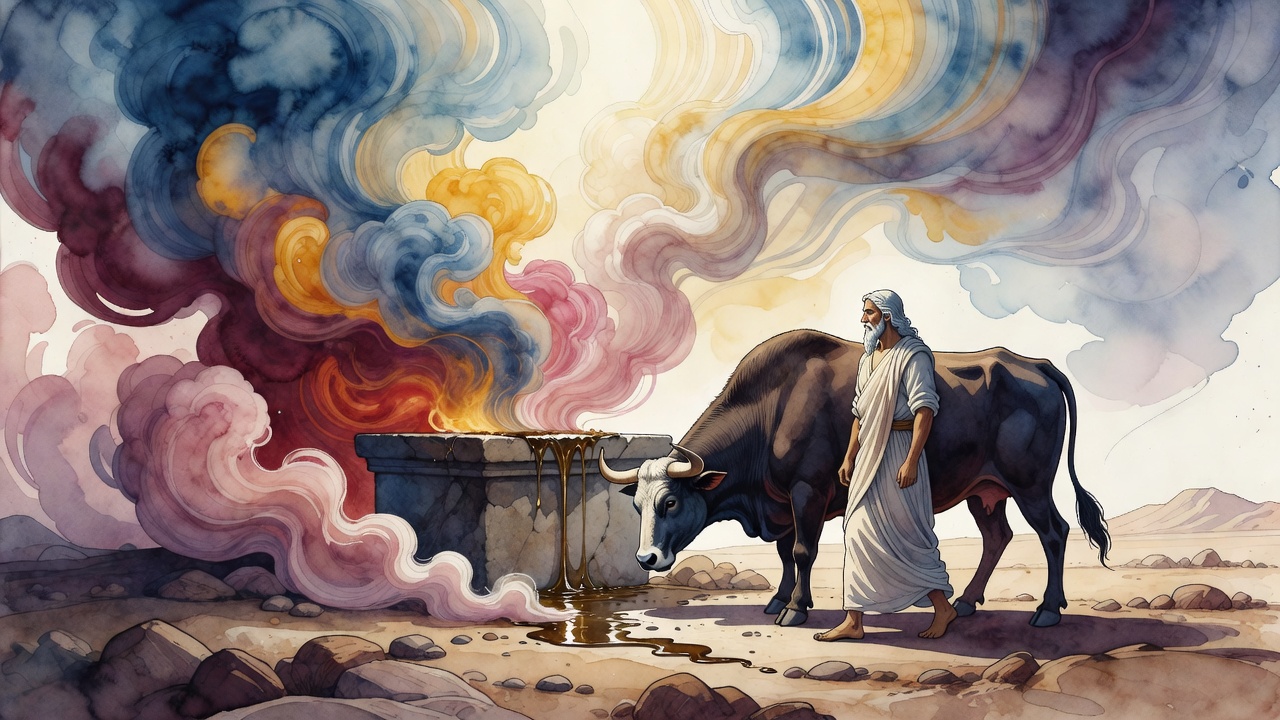
On the day the dwelling of God rose in the wilderness, Moses stood as priest before his brother. Smoke from the offerings hung low. The camp pressed close enough to see and not close enough to touch. A ram was slaughtered. Blood filled the basin, dark and alive with purpose. The man who had spoken with God on the mountain now touched the body of Aaron the way a craftsman marks wood for a permanent joint that must never slip.
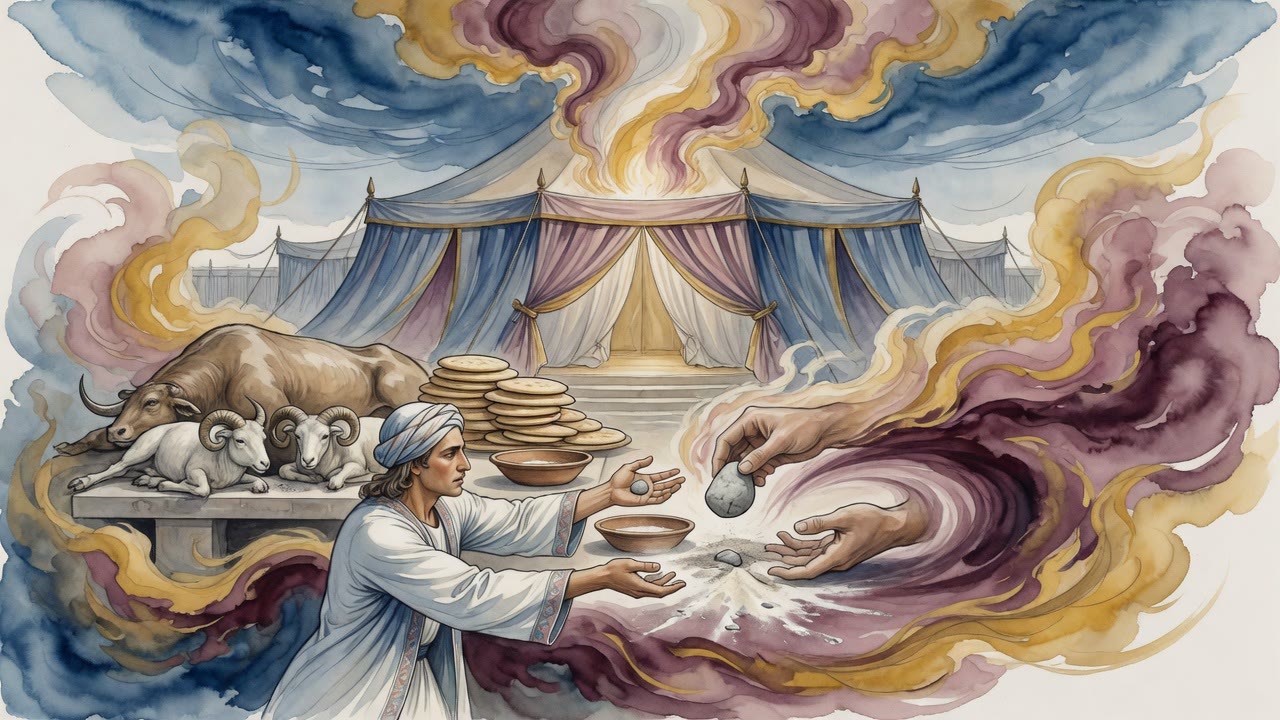
No two bloods of that day were alike. Three bloods were spoken of in the consecration, each with its own measure and its own work. The first demanded six placings. The second asked only two. The third required thirteen. When Scripture says Moses took of its blood, it means this blood, particular and apart, not to be confused with any other stream from the same altar. Holiness here is not a blur. It is inventory.
Ear, Thumb, Toe
Moses came first to the soft ridge of Aaron's right ear, the inner wall of cartilage where sound is gathered before it becomes obedience or refusal. He set the blood there so the high priest's hearing would stay tuned to a single voice and not to the louder noise of the camp. Then he found the thumb of the right hand, the middle joint, the hinge where the hand bends to lift, sprinkle, and bless. Last he marked the right toe, because a priest walks between curtain and altar, and the path itself must be claimed before the first errand begins.
Whatever you hear. Whatever you handle. Wherever you walk. The right side was chosen as the side of strength. God was not asking for Aaron's weakness, the left-hand excuses of a tired man. He was asking for Aaron's best points, sealed in blood before the first public service began. Aaron did not flinch. The brother who once built a calf now offered his ear to be rewritten.
The Sons Under the Same Hand
Moses turned to Aaron's sons. He did not anoint them with words alone, as if a speech could make a priest. He took blood from the altar and wrote on their flesh what no scroll can hold for long in the mind. Right ear first, middle ridge. Right thumb next, middle joint. Ear and hand, hearing and doing, claimed together so that the priests of Israel might listen rightly and act rightly, their whole bodies turned toward the holy before they turned toward the people.
The sons felt the wet mark cool in the desert air. Flies found the smell and were waved away. They were not being decorated for a parade. They were being bounded. From this hour their bodies belonged to the service of the Mishkan (the portable sanctuary Israel carried through the wilderness) in a way no garment alone could enforce. Cloth can be removed. Blood teaches the skin it has been spoken for.
Three Curricula in One Touch
The ear learns before it rules. A priest who cannot hear will fill the court with his own cleverness. The thumb measures every act of offering; a careless hand spills more than wine. The foot keeps the walk between holy and common from going slack, from wandering into curiosity that kills. Blood on these three points meant the whole route of a priest's day had been signed in advance, like a map drawn on living skin.
The strange tenderness of the rite is that Moses, the brother, performed it with his own hand. Greatness did not arrive as a coronation speech from a balcony. It arrived as contact, as the older brother who led them out now leading Aaron into a office that would one day cost him sons. Aaron stood still and received it. The man who would later stand between the living and the dead on other days first stood and let his brother claim ear, hand, and foot for heaven.
After the Marking
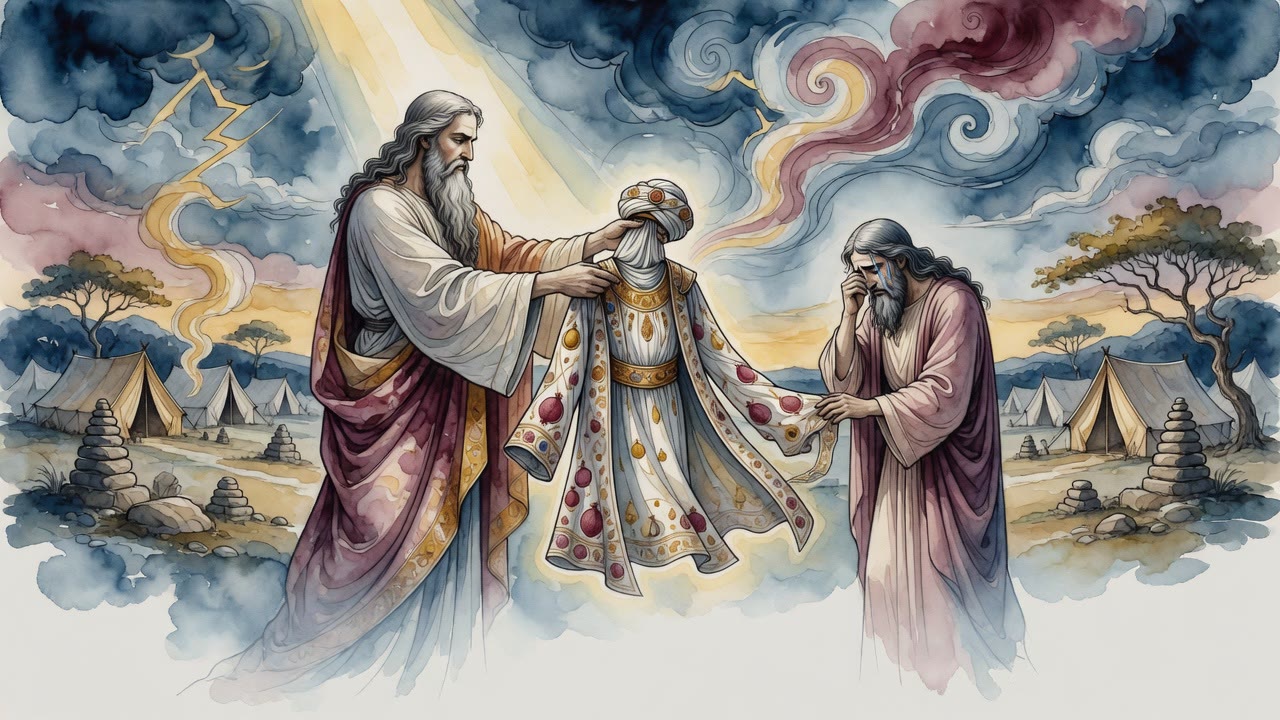
When the placings were done, the ram's blood had finished its particular work. Oil would also come, and vestments heavy with gold and blue, and the seven days of filling when the new priests learned the rhythm of the court. But this was the moment the body itself became an instrument. The high priest would hear accusations, lift offerings, and walk where others could not. The consecration had already decided which ear, which hand, which foot would do it when the noise of the camp rose.
Israel saw a priesthood begin not with a crown of metal but with three small stains that would dry and disappear while the office remained. The blood taught what the office costs: attention, labor, and every step inside the court. Long after the red marks faded, the memory of the touch would not. Moses had made his brother a high priest the only way the sources trust: not by title alone, but by marking the places where a man hears, works, and walks.
← All myths