Aaron Trembled Until Heaven Lit the Altar
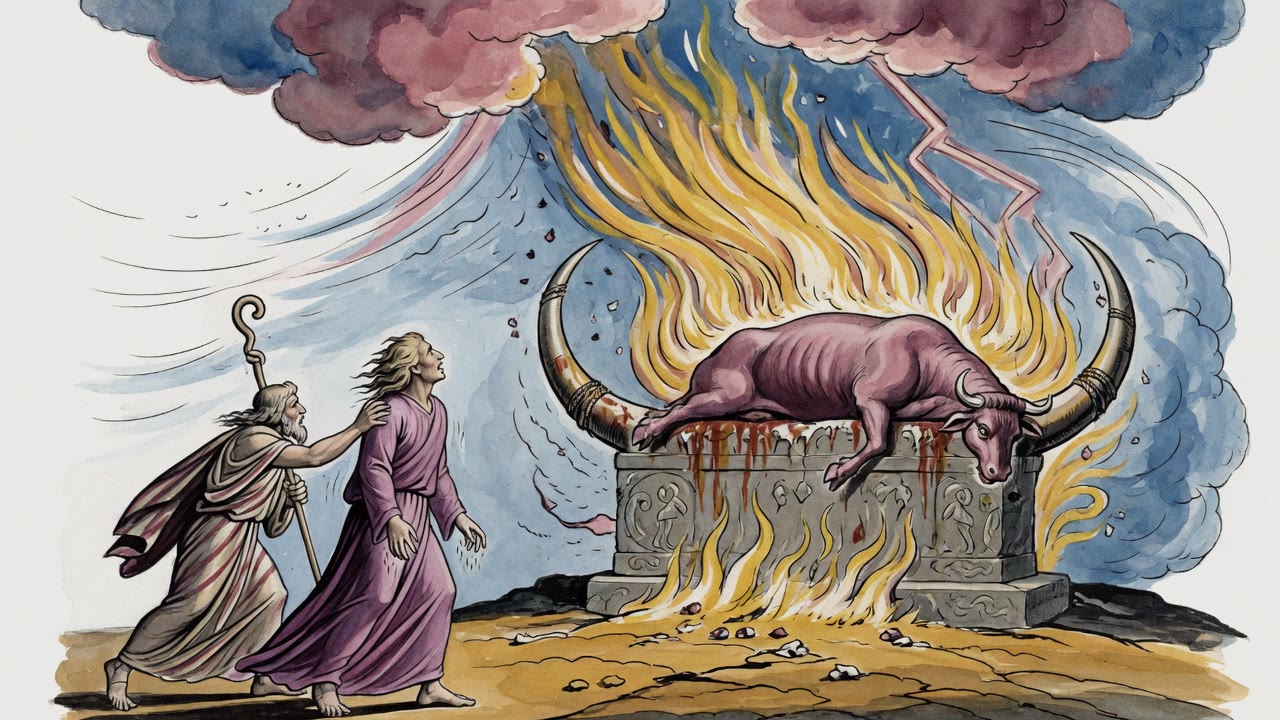
On the eighth day Aaron saw an ox in the altar horns and could not move, until Moses pushed him forward and fire fell that no human hand had kindled.
Table of Contents
 Click for full size
The Feet That Would Not Reach the Horns
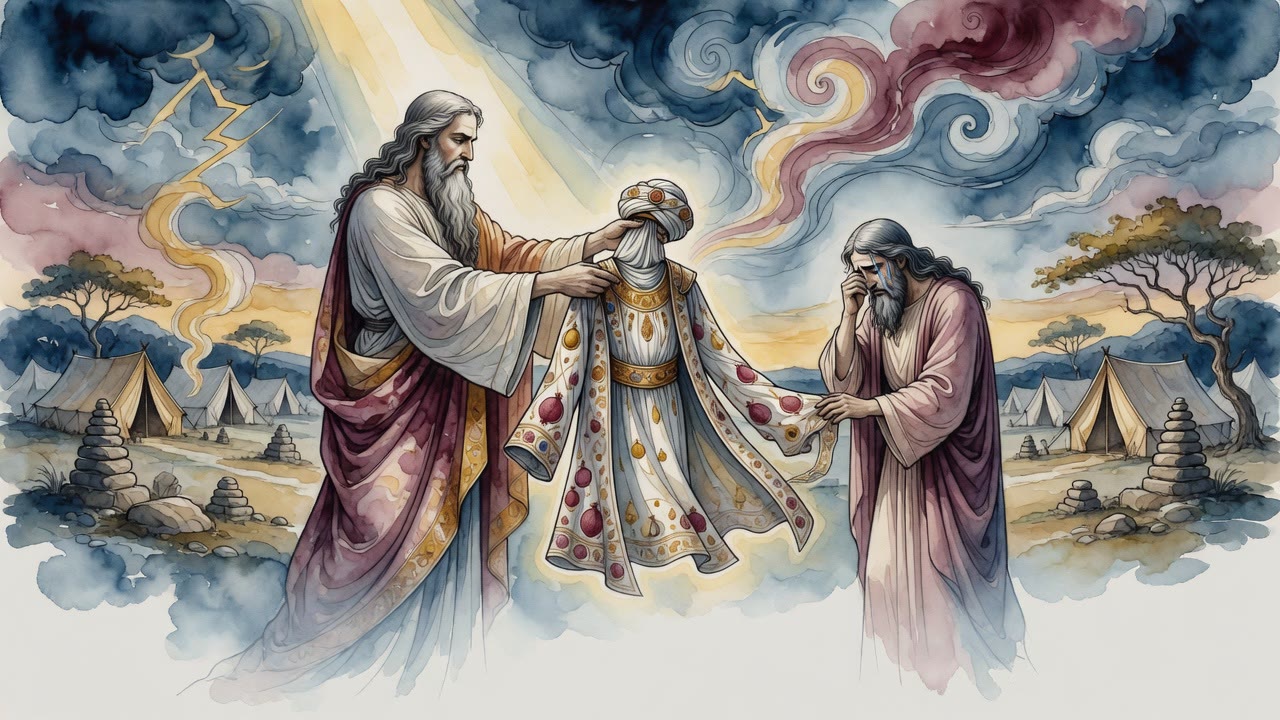
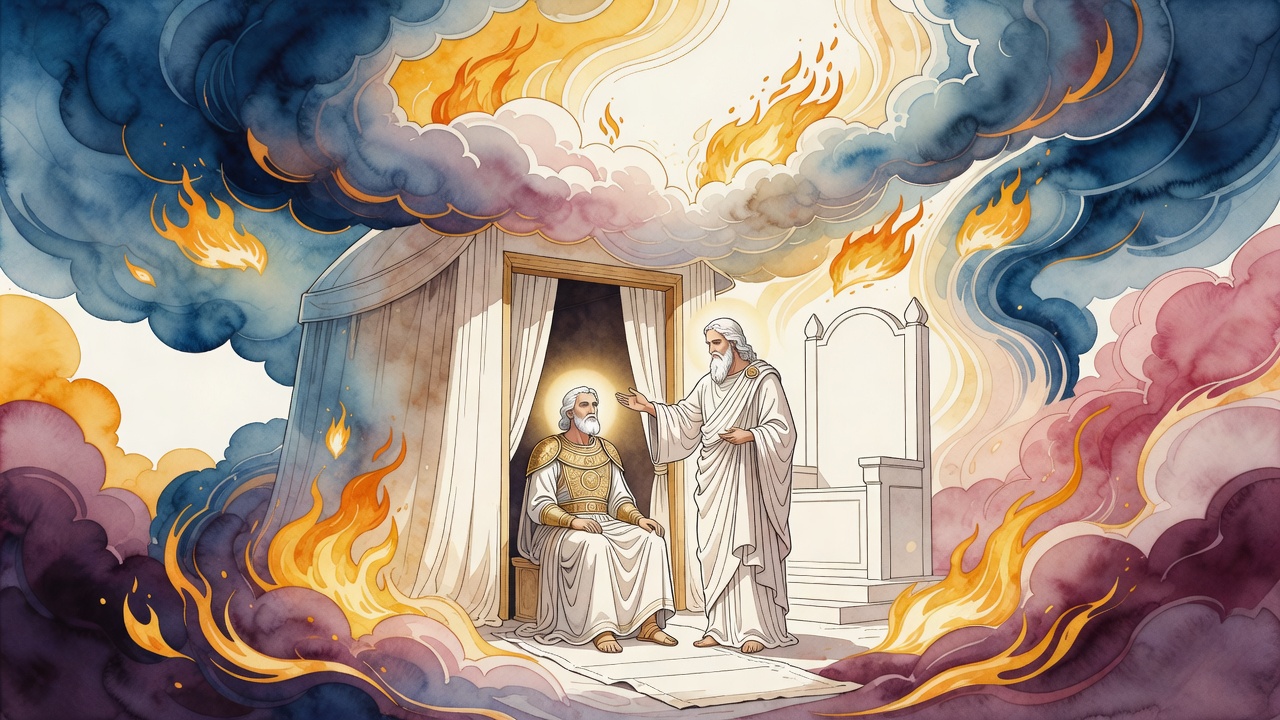
Seven days of consecration were finished. The Mishkan (the portable sanctuary Israel carried through the wilderness) stood ready, boards and sockets still smelling of new oil and desert wind. On the eighth day Aaron was to begin the service as high priest, and his feet refused the last few steps. The whole camp held its breath as if the air itself were waiting for a body to move. Incense recipes waited. Blood waited. The people waited for a man who could not yet walk toward the place that had been built for him.
Moses watched his brother freeze and told a parable. A king of flesh and blood took a wife, and on the day she entered the palace shame sealed her eyes so tightly she could not lift them to the one who had chosen her. Her sister said, "Why did you enter this marriage, if not to stand beside the king and serve him? Take heart, and go." "So it is with you," Moses said. "Why were you chosen, if not to minister before the Holy One? Embolden your heart, and come." The words were soft, but they were also an order dressed as comfort.
Aaron still stood between the courtyard and the work. The distance was only steps. The distance was also years of a golden calf that would not leave his eyes.
The Ox That Rose From the Altar
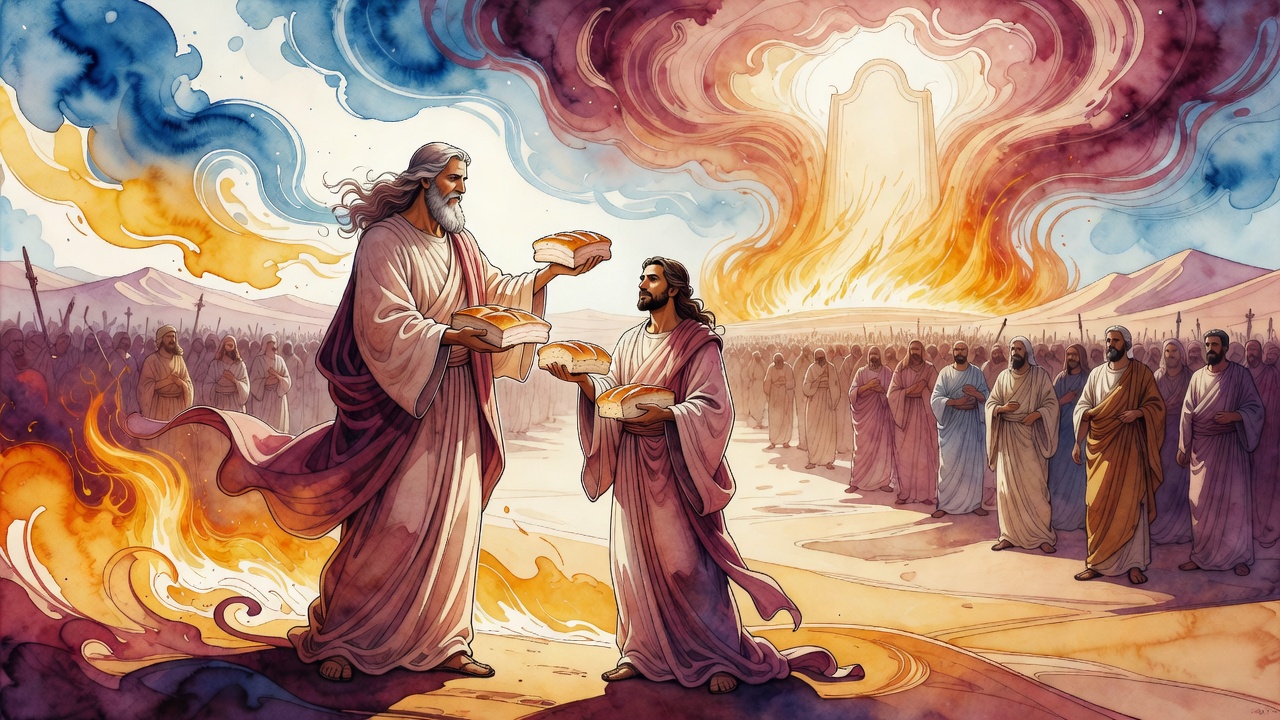
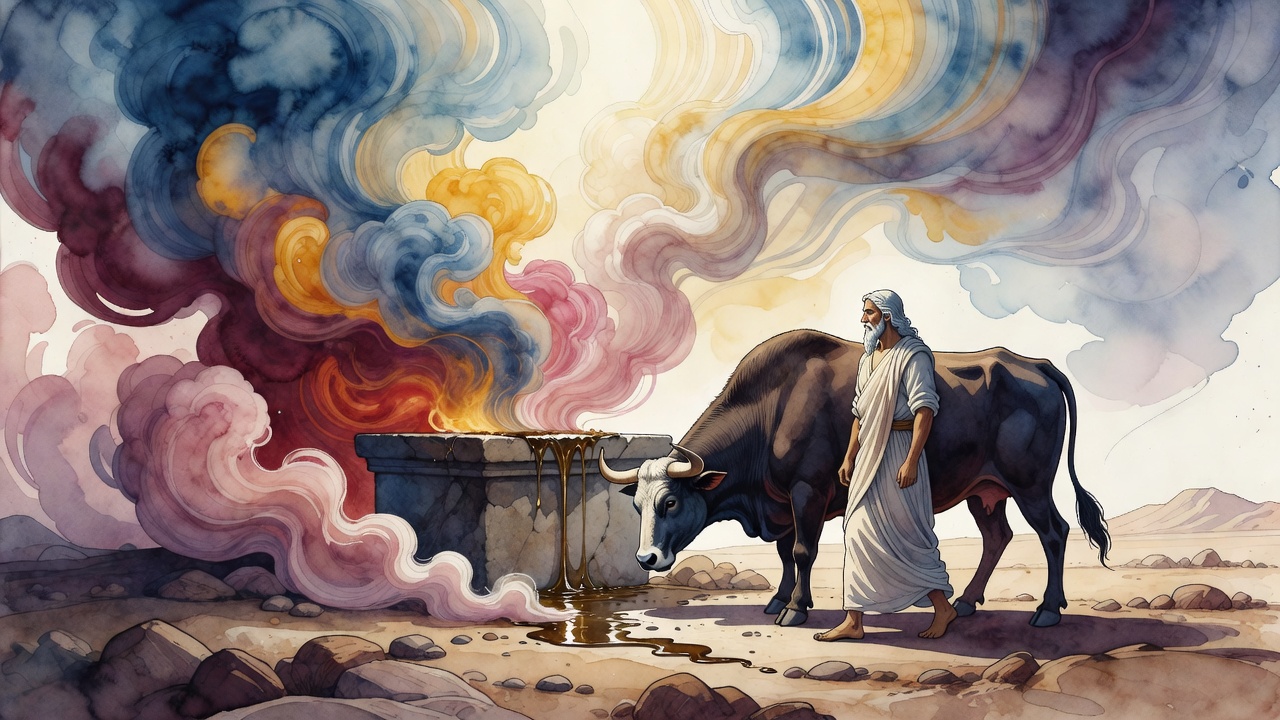
Others tell a harder version of the same hour. Aaron looked at the horns of the altar and saw in them the shape of an ox, the calf of his old sin risen up to accuse him. Terror folded his knees. The horns that should have meant atonement looked like the face of the crime. Moses said, "My brother, are you afraid of this? Do not fear it. Strengthen yourself, and draw near." Draw near to the altar. The command was also a pardon spoken in the language of feet.
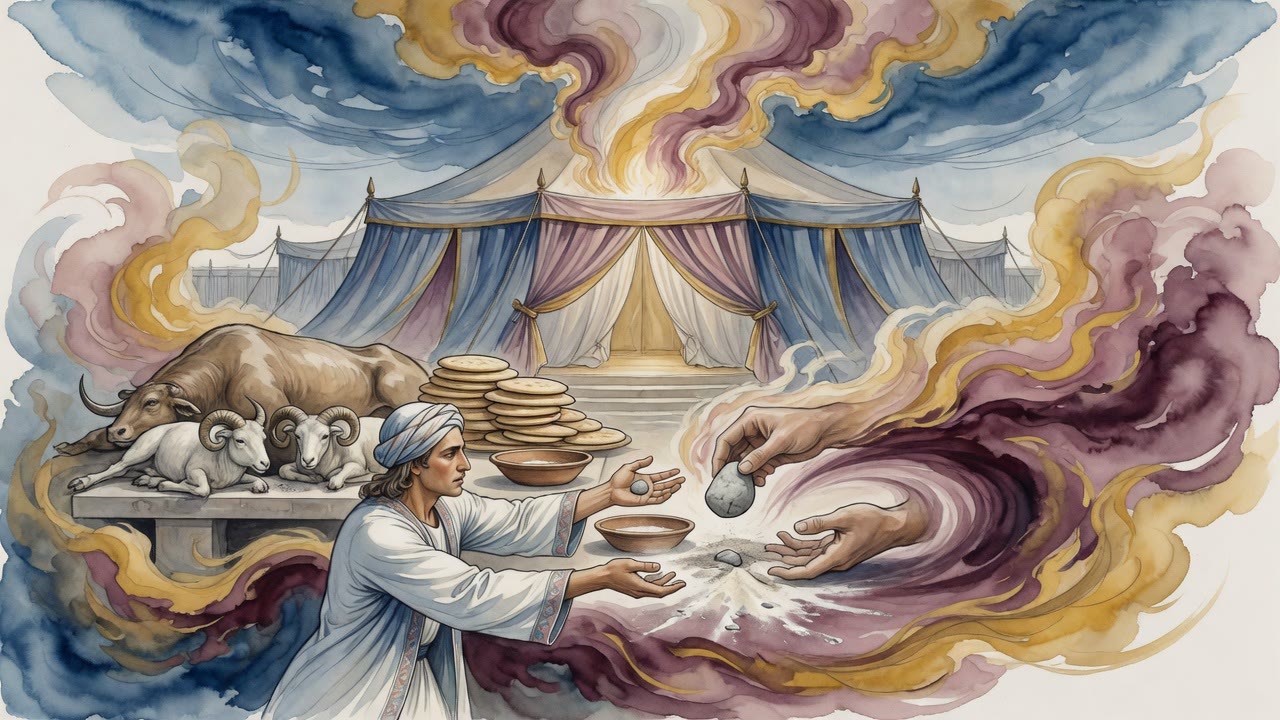
Before he crossed the threshold empty-handed, Moses urged a gift of repair. Heaven had already consented to forgive the calf at the mountain, yet Aaron must not walk in as if nothing needed answering. Send a calf for a sin-offering first, so the Accuser would find no open charge waiting in his mouth when he crossed into holy space. Israel too must bring atonement, a kid of goats and a calf together, because their guilt ran from the brothers who dipped Joseph's coat in goat's blood to the camp that melted gold into a god. Let a kid answer for a kid. Let a calf answer for a calf. Symmetry became mercy's architecture.
The offerings were not theater for a nervous priest. They were the only way the eighth day could open without the past standing on the threshold like a creditor.
The Wedding Day of the Presence
The sages heard a lovers' verse and mapped it onto that morning. "Go out and gaze upon the crown his mother set on him on the day of his wedding, on the day of the rejoicing of his heart." The day of the wedding, they said, was the day the Shekhinah (God's indwelling presence) came down to dwell in the Tent. Heaven narrowed the distance to dust and took up residence among a people of flesh. The house Moses and Aaron had raised became a chamber for a Presence that chose neighbors over distance.
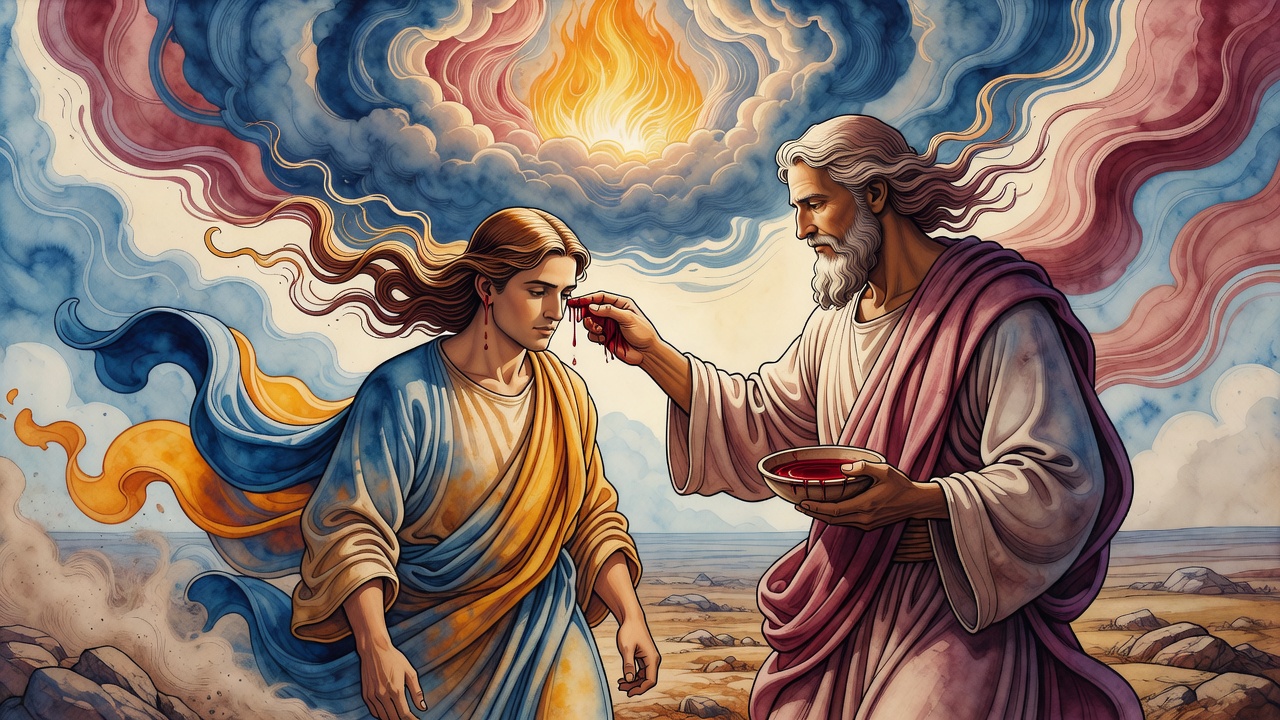
The rejoicing of the heart was fire. Not flint-struck, not borrowed from a kitchen, not smuggled from an Egyptian oven. A new flame poured from above, licked the burnt offering and the fats, and swallowed them whole. The camp shouted and fell on its faces. Acceptance had a color, and the color was heaven's own. Earth had built a house. Heaven had moved in, and the rent was a life of service paid daily in blood and silence and exact hands.
Aaron finally moved. The trembling did not make him unfit. It made him exact. A man who has seen his sin in the horns of the altar does not treat blood and incense as decoration. He treats them as the only language left between a forgiven priest and a Presence that has consented to live next door.
Service After Terror
What the camp saw was a successful consecration. What Aaron carried into the service was a memory of an ox that almost stopped history. Holiness does not always arrive as confidence. Sometimes it arrives as a brother saying draw near, and a fire that answers when the nearness is finally real. The eighth day is remembered not only for what was offered, but for who almost could not offer it.
Later priests would wear the same vestments and stand at the same blood-marked horns. Few would know how close the first high priest came to turning back. The tradition keeps the almost, because a priesthood that forgets terror becomes careless, and carelessness around fire from heaven is not courage. It is a different kind of golden calf, quieter, made of routine.
← All myths