Aaron Walked Freely to the Oil and Bullock
Moses was told to take Aaron, not by the arm, but with speech that turned a heart. Oil, a sin-bullock, and rising smoke finished the hour.
Table of Contents
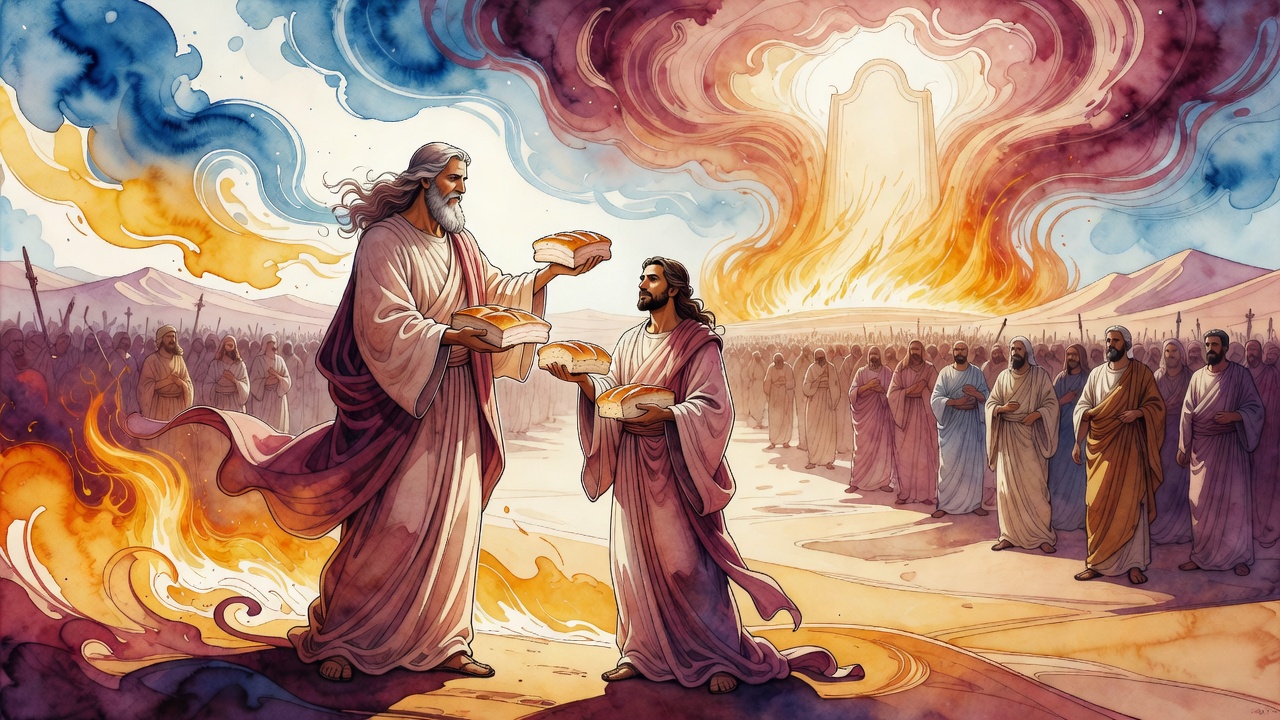
The hour of consecration had a small word at its center. The Holy One said to Moses, "Take Aaron and his sons with him." Moses did not reach for a brother's arm as if Aaron were a bundle of wood. He had been told to take Levites, elders, named men, and later Joshua. Never once did that verb mean a haul. It meant speech that draws the heart until the heart walks of its own will.
 Click for full size
"Win them," said the Holy One, "with speech that draws the heart, so that their hearts will not wander after other things." Aaron came to the Mishkan (the portable desert sanctuary) not as a man under rope. He came as a man already turned.
The Oil Found a Dressed Head
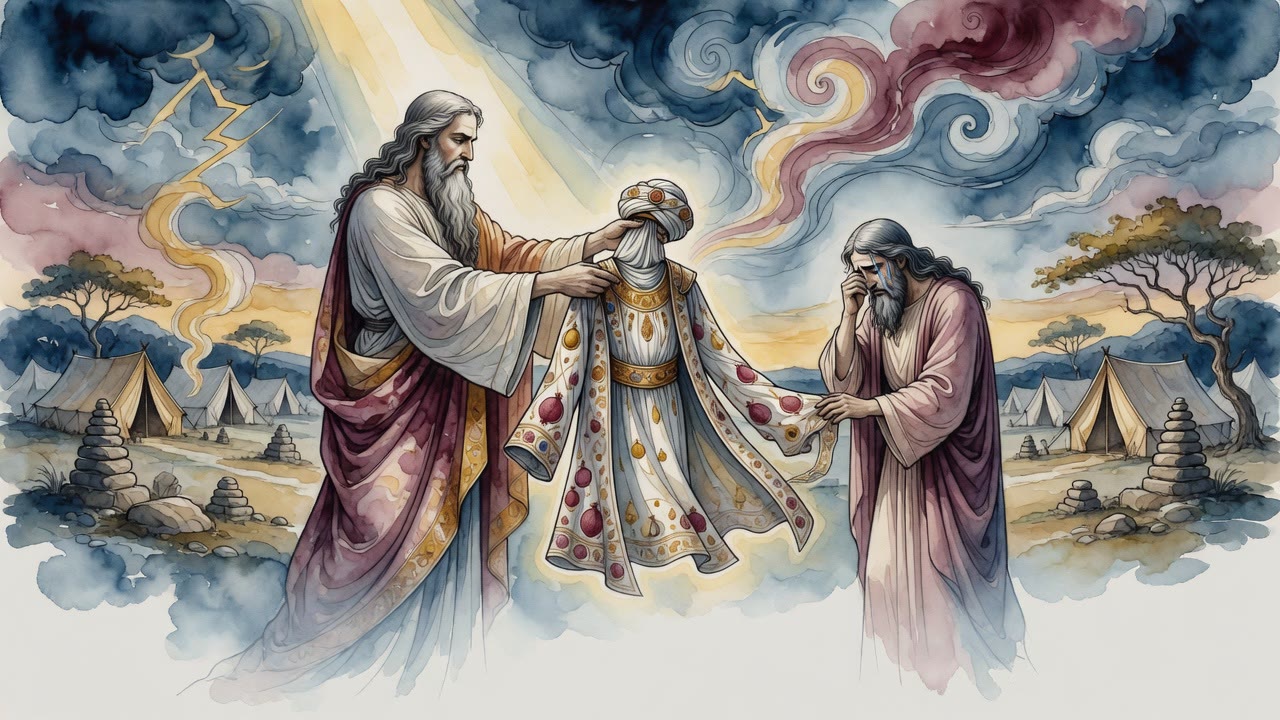
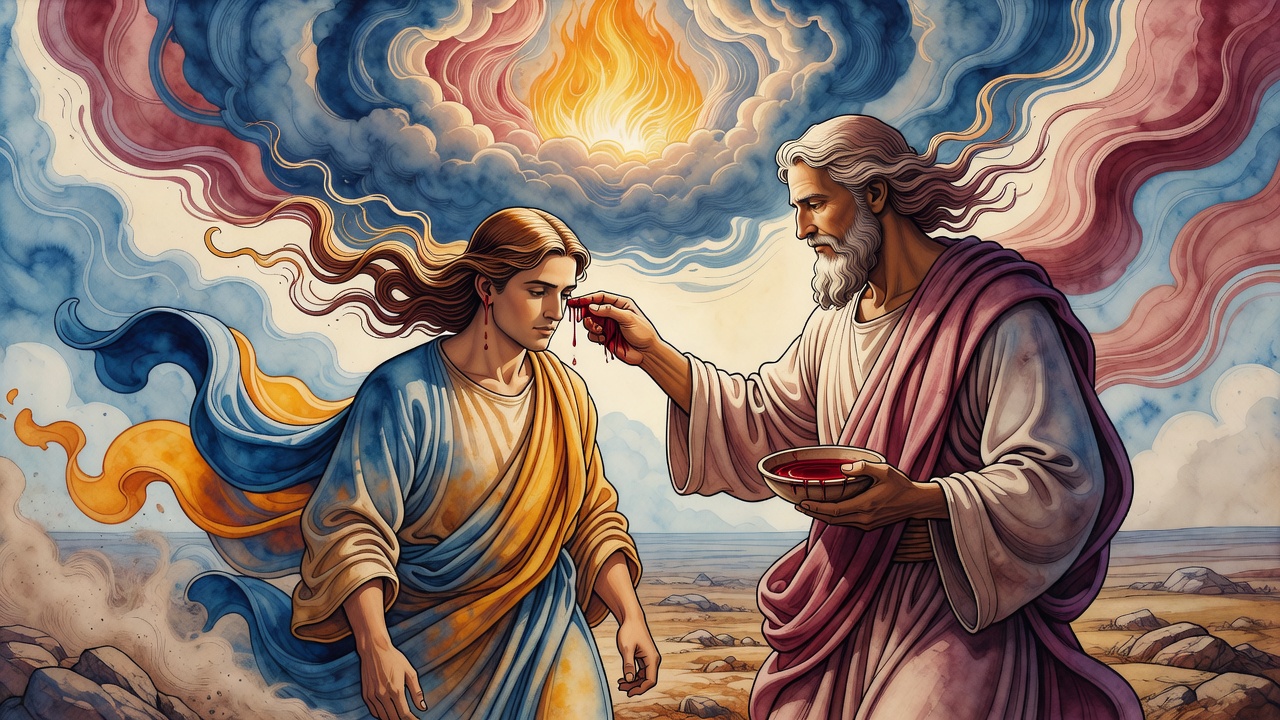
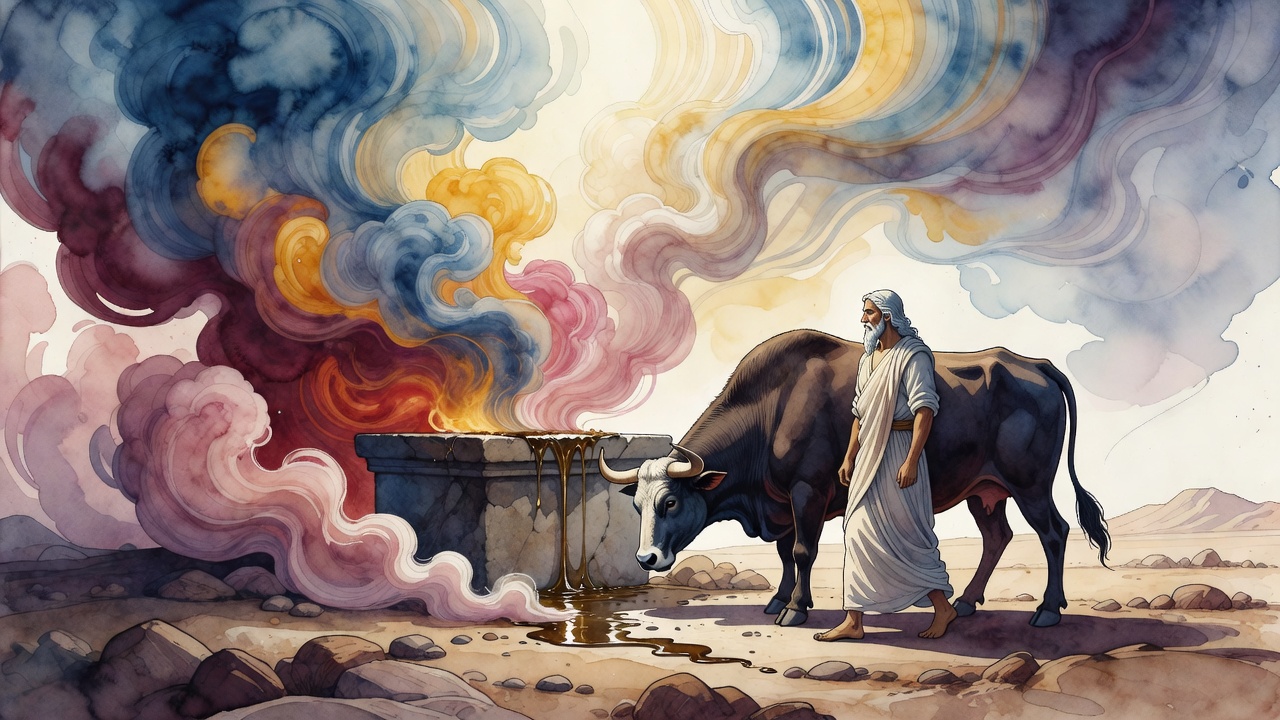
Moses clothed Aaron and his sons first. Vestments closed around bodies before any drop of oil left the flask. Only then did Moses pour upon Aaron's head. The goodly oil ran from crown to beard and from beard to the hem of garments already holy. The man was dressed, then sealed. Naked flesh did not receive the anointing and dress itself afterward.
The vessels of the Mishkan were treated otherwise. Altar, instruments, laver, and base each received its own touch of oil. No single pour could borrow holiness from a neighbor and finish the work for all. A man could be crowned as one whole. Each vessel demanded its own name in oil. Aaron stood under a continuous stream. The furniture stood under separate kisses of consecration, one by one, until every surface set for Heaven had been claimed.
Oil on a dressed priest and oil on a lonely vessel taught the same lesson from two angles. Holiness can fall as a single cascade or as many exact touches. Both are full. Neither is casual.
Hands Pressed a Private Sin Away
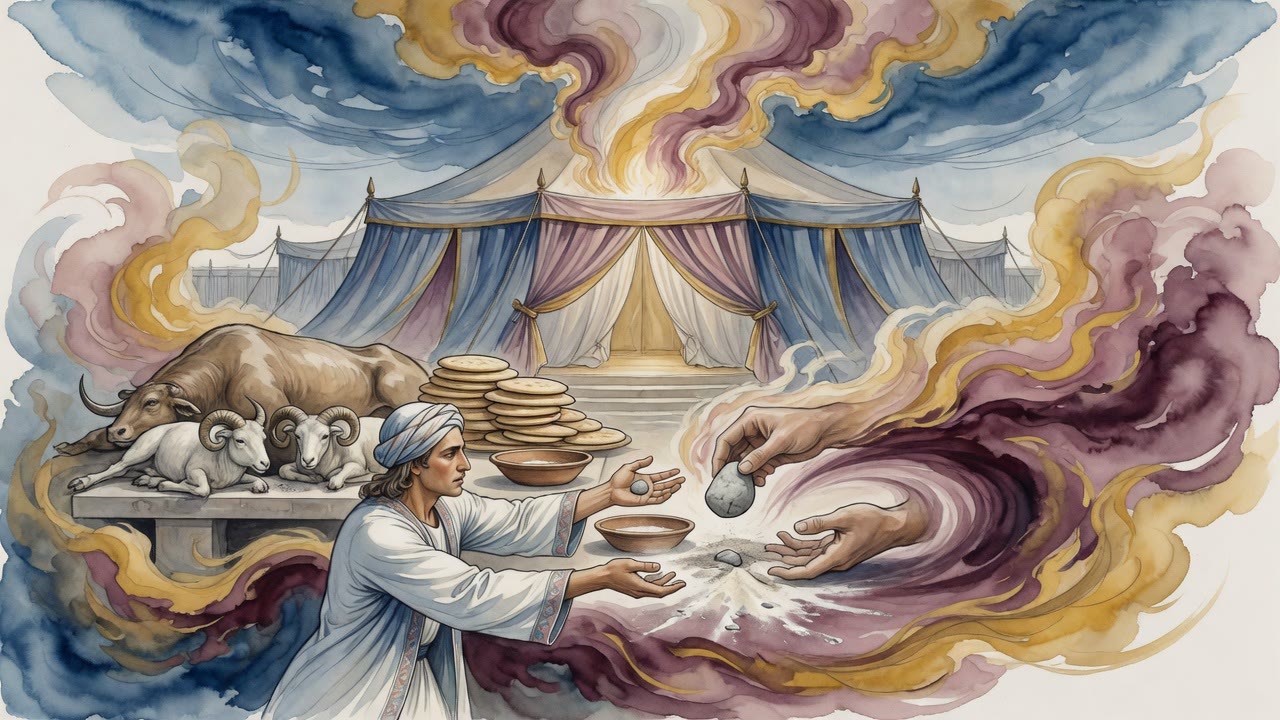
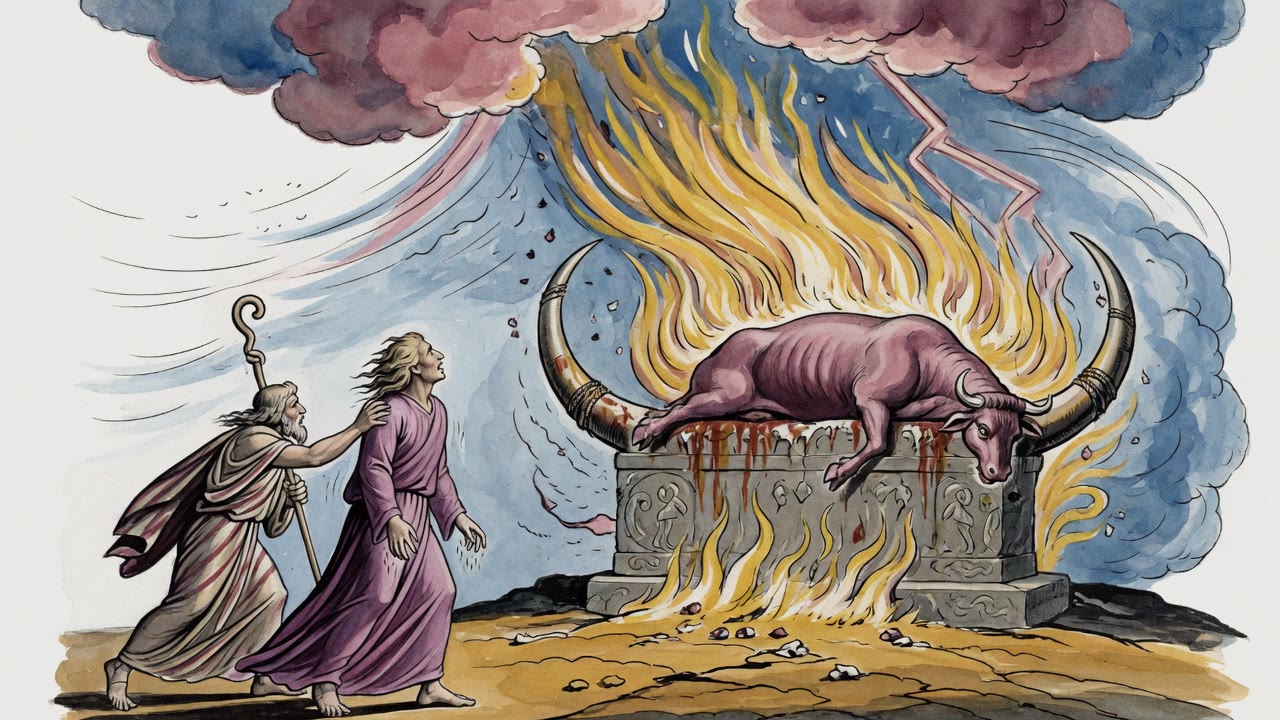
Moses led a young bullock to the door of the Mishkan. Aaron and his sons pressed their hands upon its head and leaned the weight of all they had been into the beast that would carry it. When the command first sounded, Scripture named only a young bullock. In the doing, the text suddenly called it the bullock of the sin-offering, flesh and hide and waste burned beyond the camp.
Whose sin rose with that smoke? The congregation's bulk, or the private trembling of men stepping into service? The first command had already bound the answer. "Take Aaron and his sons with him, and the bullock of the sin-offering." The animal was knotted to their hearts by name. It was not Israel's general load. It was the cleansing of the men who would stand between Israel and Heaven before they ever raised a hand for another soul.
They leaned. The bullock took. Fire outside the camp ate what the camp could not keep. Only after that private burning could public atonement begin without a cracked foundation.
Smoke Rose as a King's Festival
When fire took the altar and the investiture smoke climbed straight, the verse named the miluim offering a sweet savor. A mortal king who gains one beloved friend sets a feast and rejoices that this one companion is now his own. The King of kings had raised a priest for His own service through Moses' hands. If a small king feasts over one friend, how much more does Heaven delight when it acquires a priest to stand forever in the Presence?
That delight was the sweet savor itself. Not flattery. Not empty perfume. The smell of a house finally staffed, of oil that had found its head, of a sin-bullock already ash outside the ropes of the camp. Aaron's freedom to walk toward the altar and Heaven's joy over his arrival were one event told from two sides of the smoke.
The Taking That Left No Rope Marks
Leaders who drag leave bruises. Moses left none. He persuaded until Aaron's feet chose the threshold. Oil met cloth, not naked fear. Sin left the private ledger before public work began. Heaven answered with a savor that the Sages read as festival joy in the court above.
Later generations would argue ranks and offices. On that day the grammar was simpler. Take meant win. Oil meant seal a dressed man. Bullock meant clear the path of the first priest. Sweet savor meant the King was not bored by the appointment. He was glad.
Aaron did not become holy by force. He became holy by a heart that had been spoken into willingness, then clothed, then oiled, then purged, then welcomed by rising smoke that smelled, to Heaven, like a feast for a friend newly claimed.
The courtyard held its breath while Moses searched for words equal to the command. He did not rehearse a threat. He spoke of the service waiting inside the curtains, of garments prepared, of a people that needed a priest who arrived with an open chest rather than a dragged heel. Aaron listened until the fear of unworthiness loosened. Only then did his steps match the summons.
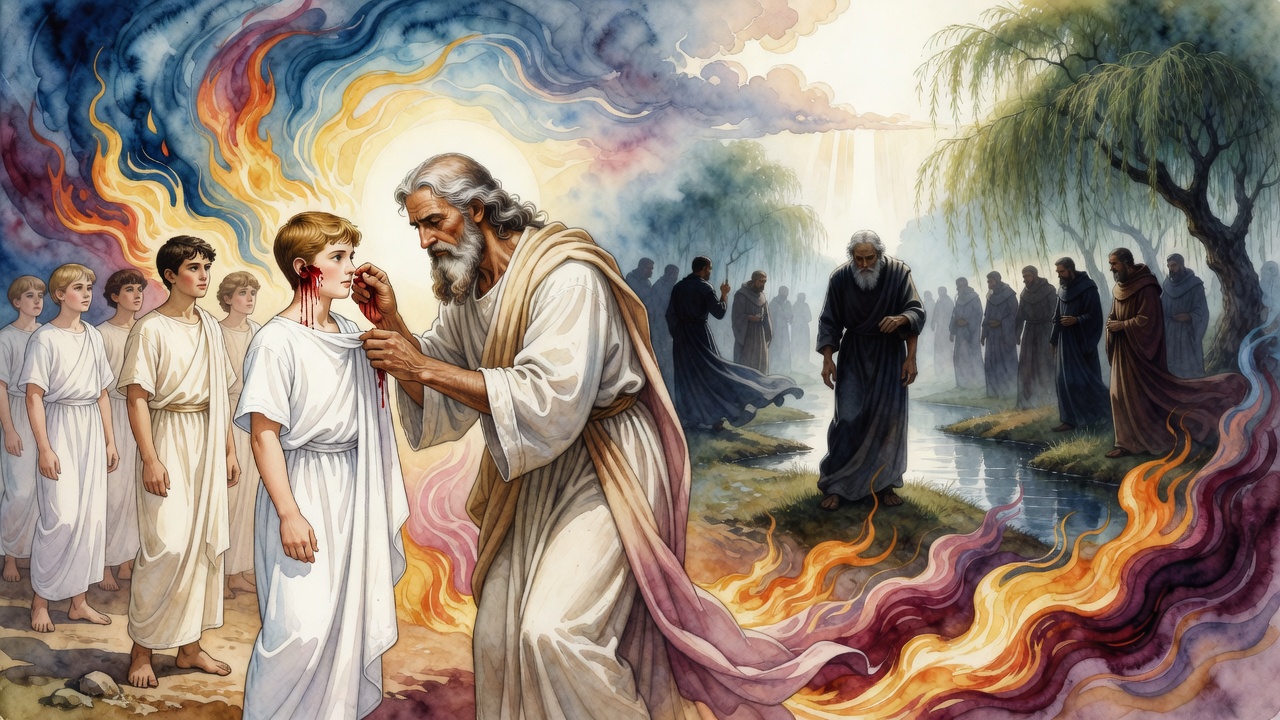
Outside the circle of oil and blood, ordinary Israelites watched a brotherhood rewritten. Moses, who had once fled and stammered, now spent his strength on persuasion. Aaron, who had once waited in Egypt's brick dust for news of a brother, now waited for the pour that would mark him forever. The space between them filled with a tenderness the desert rarely permits. Holiness, in this telling, began as kindness spoken well.
When the smoke finally rose, it carried more than fat and spice. It carried the memory of a verb correctly understood. Take. Not seize. Win. The priesthood entered history on that corrected verb, and every later high priest who forgot persuasion and reached for force forgot the first hour of his office.
← All myths