718 related texts · 10 related myths · Page 1 of 15
The robe of the high priest rang when he walked. The Targum Pseudo-Jonathan on (Exodus 28:34) gives a specific count: a golden bell, then a pomegranate of hyacinth and crimson, alt...
The verse Now, tumim and urim? These were objects, perhaps stones or inscriptions, placed in the breastplate of the High Priest, used for divination, for seeking divine guidance. B...
The most electric line in this chapter of the Targum Pseudo-Jonathan is hidden inside a description of a priestly accessory. On (Exodus 28:30), the text explains what the Urim and ...
When God commissioned the priestly wardrobe, He did not sketch a uniform. He named eight specific garments, each with a job. The Targum Pseudo-Jonathan on (Exodus 28:4) lists them ...
Even the best judge eventually meets a case he cannot crack. Two witnesses contradict. A motive stays buried. A theft leaves no trail. The Targum Pseudo-Jonathan on (Exodus 28:15) ...
Why did the high priest's robe need bells at all? The Targum Pseudo-Jonathan on (Exodus 28:35) gives the quiet, terrifying answer. Its voice shall be heard at the time that he hath...
The last of the priestly garments was the most private. The Targum Pseudo-Jonathan on (Exodus 28:43) explains that Aaron and his sons had to wear the fine linen undergarments, the ...
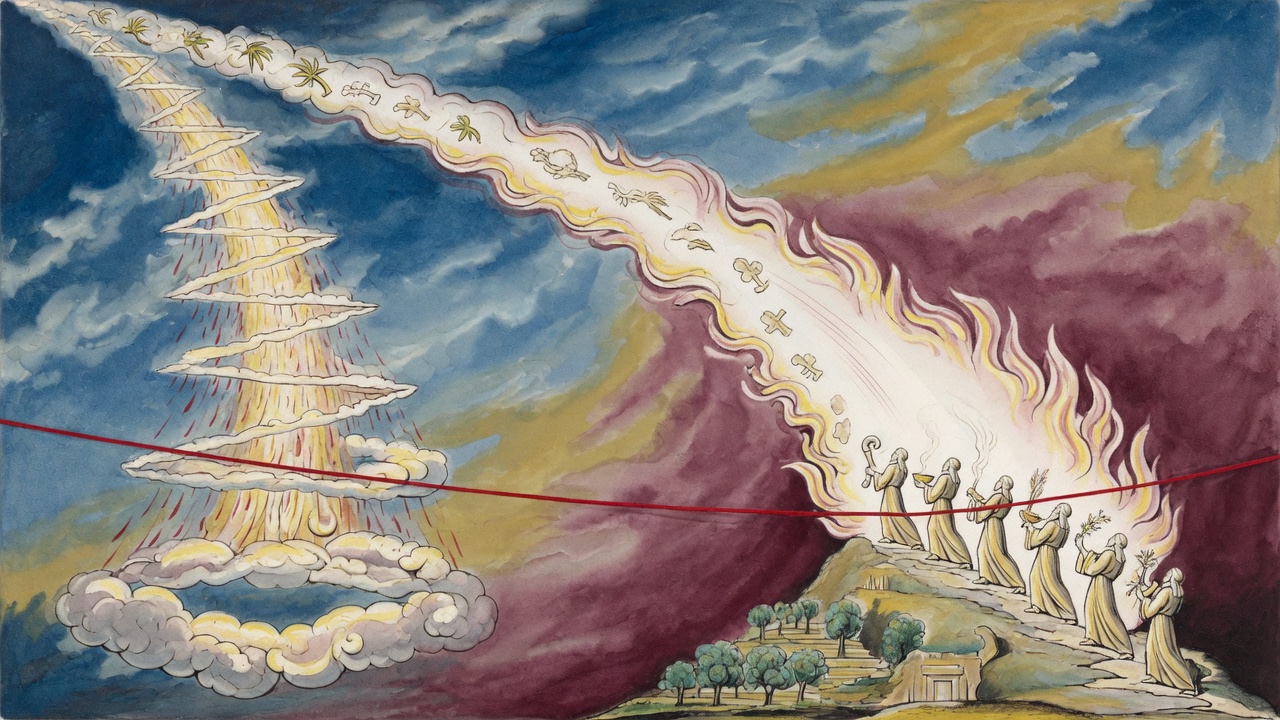
Once a year, only once, Aaron approached the golden incense altar with a different purpose. Targum Pseudo-Jonathan preserves the command that on the Day of Atonement, Yom Kippur, t...
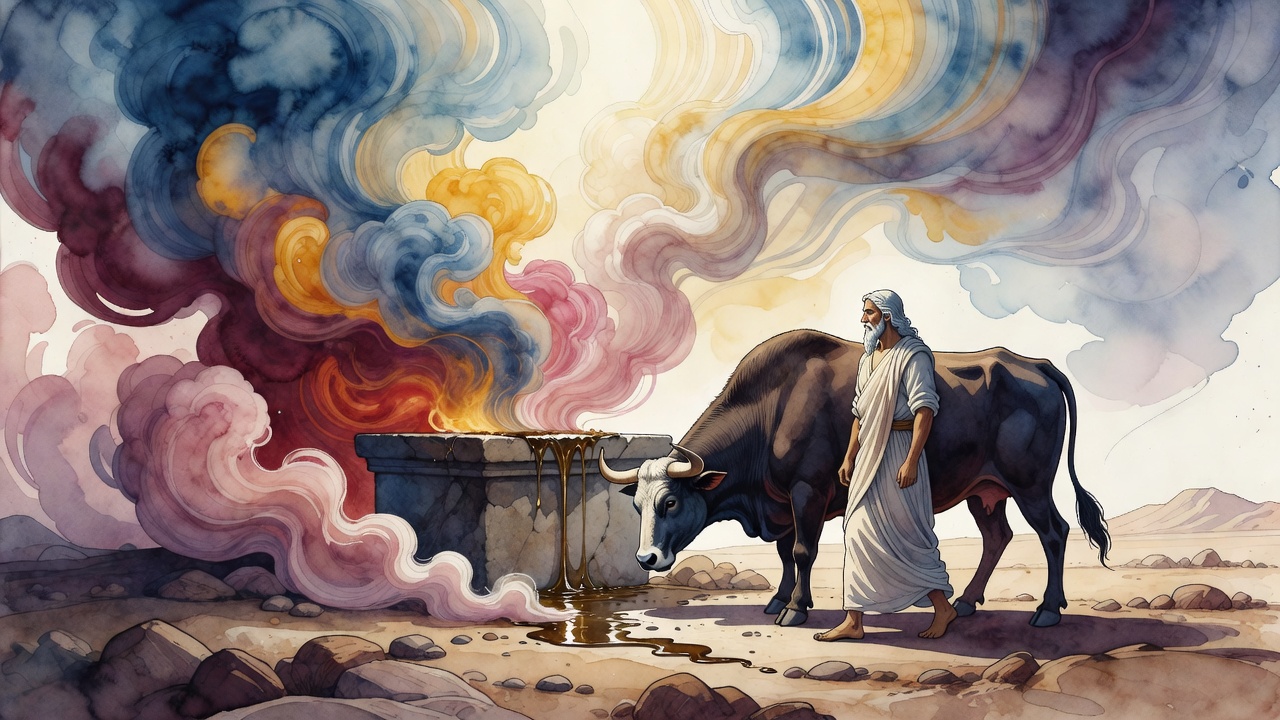
The recipe for the holy anointing oil is exact and extravagant: five hundred minas of myrrh, two hundred and fifty of sweet cinnamon, two hundred and fifty of sweet calamus, five h...
Joseph survived the slander, and Targum Pseudo-Jonathan explains why. "He returned to abide in his early strength, and would not yield himself unto sin, and subdued his inclination...
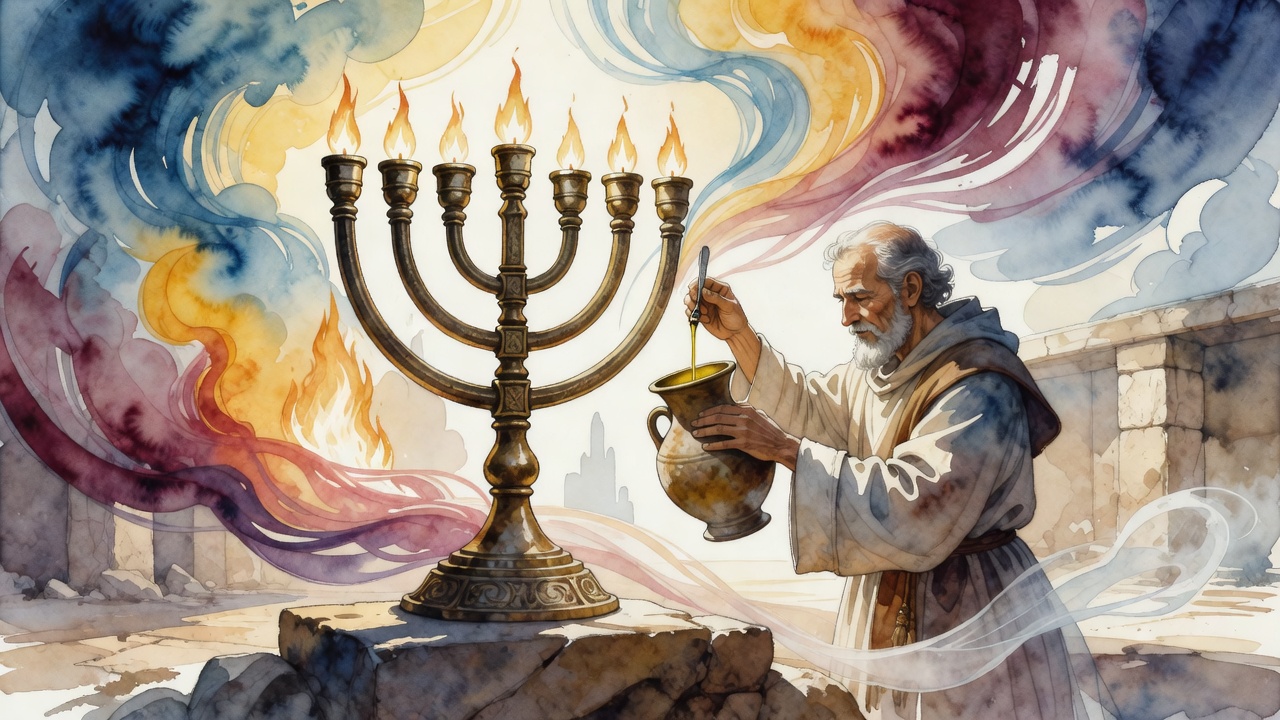
The Torah closes the Tabernacle construction chapters with a quiet command. In the Tent of Meeting, outside the parochet that conceals the Ark, Aharon and his sons are to tend a la...
(Exodus 28:1) names the first family of Jewish priests. Aharon, brother of Moses, is brought near with his four sons: Nadab, Abihu, Elazar, and Itamar. The Targum Pseudo-Jonathan p...
The shoulder stones were a memorial. The breastplate was something more intimate. The Targum Pseudo-Jonathan on (Exodus 28:29) insists that Aaron bore the names of the sons of Isra...
Of all the ordination rites, this one is the strangest. Moses slaughtered the second ram, and the Targum Pseudo-Jonathan on (Exodus 29:20) tells us exactly what he did with the blo...
Seven days of atonement, and then the altar was something else entirely, not a piece of furniture, not a table of stone, but kodesh kodashim, the altar of the Holy of Holies. Targu...
When the Tabernacle stood finished in the wilderness and every board was raised into place, the Holy One turned Moses's attention from the walls to the men who would serve inside t...
When God commanded Israel to give a half-shekel for the census, Moses was confused. Not by the amount, half a shekel was nearly nothing, a laborer's loose change. What baffled him ...
The Talmud in Kiddushin 31a tells the story of Dama ben Netina, a gentile merchant of Ashkelon who became, in the rabbinic imagination, the standard for filial honor. The exempla c...
Picture the Israelite camp in the wilderness, not a dusty blur, but a blaze of color. Bamidbar Rabbah, a collection of rabbinic teachings on the Book of Numbers, gives us a vibrant...
These are the generations of Aaron and Moses. [Betai Midrashot (rabbinic interpretive commentary) Third Chamber] Our rabbis taught: Brothers who are partners and who increased asse...
A worshipper brings an offering but his heart is not really in it. He makes a vow and regrets it mid-sentence. He dedicates a field and secretly hopes to walk it back. What happens...
The golden incense altar stood just outside the veil, not inside the Holy of Holies, but as close to it as any vessel of daily service could come. Targum Pseudo-Jonathan places the...
Between the altar of sacrifice and the Tent of Meeting stood a basin, not of gold, not of silver, but of bronze. Targum Pseudo-Jonathan names its purpose simply: the kiyor was for ...
The spices were weighed. The oil was gathered from the twelve tribes. But the mixture itself required something the Torah calls "the work of the perfumer." Targum Pseudo-Jonathan p...
The shoulder-stones of the ephod were not to be carved roughly. The Targum Pseudo-Jonathan on (Exodus 28:11) insists the engraver work as the engraving of a ring, every letter dist...
The Targum Pseudo-Jonathan on (Exodus 28:17) reads the gemstones as geography. The breastplate held four rows of precious gems, answering to the four regions of the world. When Aar...
The Targum Pseudo-Jonathan on (Exodus 28:18) names the second row of the high priest's breastplate: smaragd, and sapphire and chalcedony. On them were engraved Judah, Dan, and Naph...
Once the anointing oil had been compounded and the vessels of the sanctuary had been touched with it, they were no longer ordinary. Targum Pseudo-Jonathan describes what happened t...
If the anointing oil was for people and vessels, the incense was for the air itself. Targum Pseudo-Jonathan preserves the command to Moses: take spices, balsam, onycha, galbanum. A...
“Her impurity is on her hems, she had not considered her end; she has declined extraordinarily, there is no one to comfort her. See, Lord, my affliction, for the enemy has expanded...
The High Priest's breastplate could predict the outcome of wars. Josephus states this not as legend but as historical fact, the twelve gemstones mounted on the breastplate of the K...
Moses, in his final blessings, had some pretty powerful things to say about the Levites. He specifically calls out Aaron, prince of the tribe, praising his unwavering service to th...
It’s a fascinating subject, and one that the ancient Rabbis pondered deeply. In fact, Shemot Rabbah, a classic collection of Midrashic (rabbinic interpretive commentary) interpreta...
The familiar version gives us about the Exodus, the parting of the Red Sea, and even receiving the Ten Commandments. But what about the nitty-gritty details of setting up their new...
More than just coverings. They can signify status, profession, even our mood. Now That’s the story of the garments worn by Aaron, the first High Priest, and his sons. In Jewish tra...
It wasn't just about hammering tent pegs and hanging curtains. There was a whole ritual, a consecration, full of wonder and divine intervention. One of the most fascinating aspects...
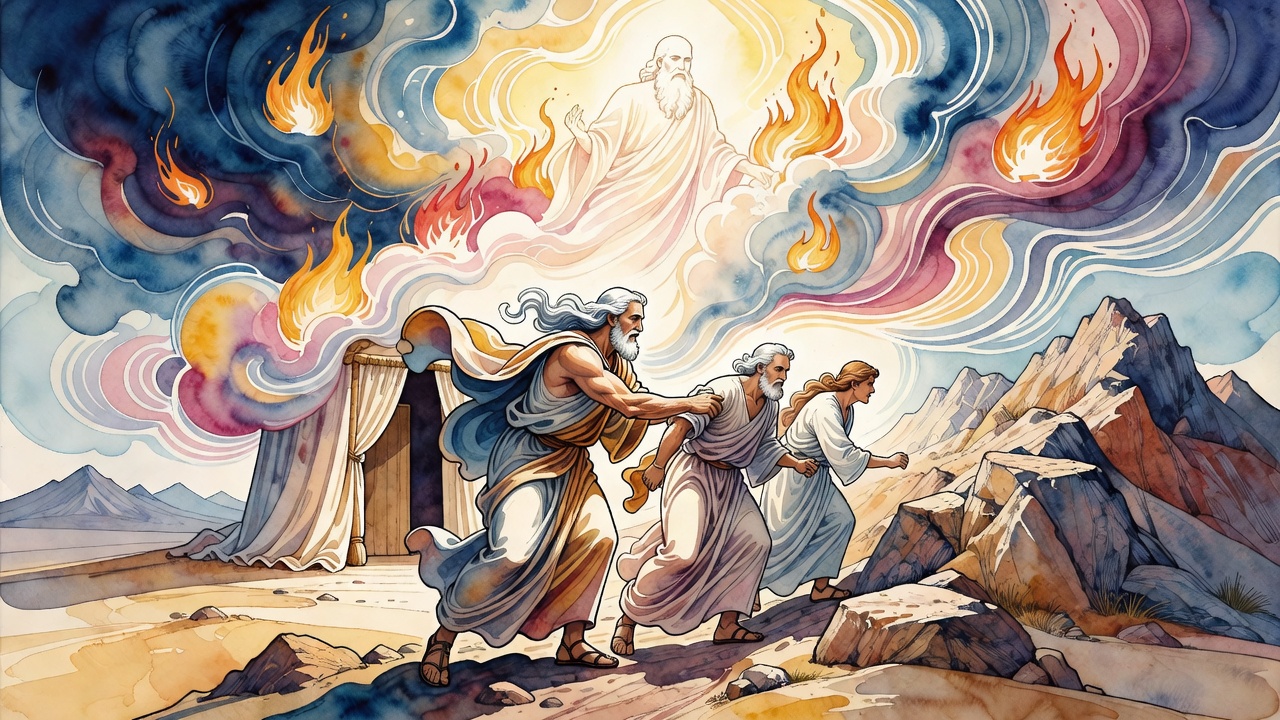
The Torah tells us of Aaron's death atop Mount Hor (Numbers 20:22-29), but it leaves out some fascinating details that our tradition fills in. Specifically, what happened when Mose...
Our source today is Sifrei Bamidbar, and it unveils a remarkable array of gifts bestowed upon the Cohanim – the priests. These include terumah (the priestly offering), terumath ma'...
The ancient rabbis did. And they found profound meaning in the garments worn by the priests in the Beit Hamikdash, the Holy Temple. It's a story woven with symbolism and the desire...
(Numb. 20:25-26:) “Take Aaron [and his son Elazar] […,] And strip Aaron.” The Holy One, blessed be He, said to Moses, “See, you may console him that he is bequeathing his crown to ...
The priestly garments in (Exodus 28:1-43) are already elaborate in the Hebrew Bible. The Targum Jonathan turns them into theological weapons. Every piece of clothing becomes an ins...
God's instruction to Moses at Sinai comes with a precise choreography. "Go down, and then ascend, thou and Aaron with thee; but let not the priests or the people directly come up t...
We see it used for anointing, for lighting, for cooking. but what's the deeper symbolism? to a fascinating exploration from Shir HaShirim Rabbah, a collection of rabbinic interpret...
The book of Ben Sira, also known as Sirach or the Wisdom of Yeshua ben Sira, belongs to the Apocrypha, writings associated with the Hebrew Bible but not formally canonized in the J...
Overwhelming. Now, How would you react? That's the scene we find ourselves in as Aaron sees Moses again after decades apart. The text we are looking at comes from Ginzberg's Legend...
Forget polls and focus groups. In ancient Israel, sometimes the answer came from… a breastplate. Specifically, the breastplate of the Kohen Gadol, the High Priest. This wasn't just...
The story The midrash (rabbinic interpretive commentary) starts with an intriguing premise: someone suggested to Saul that David should be made king while Saul was still alive. Why...
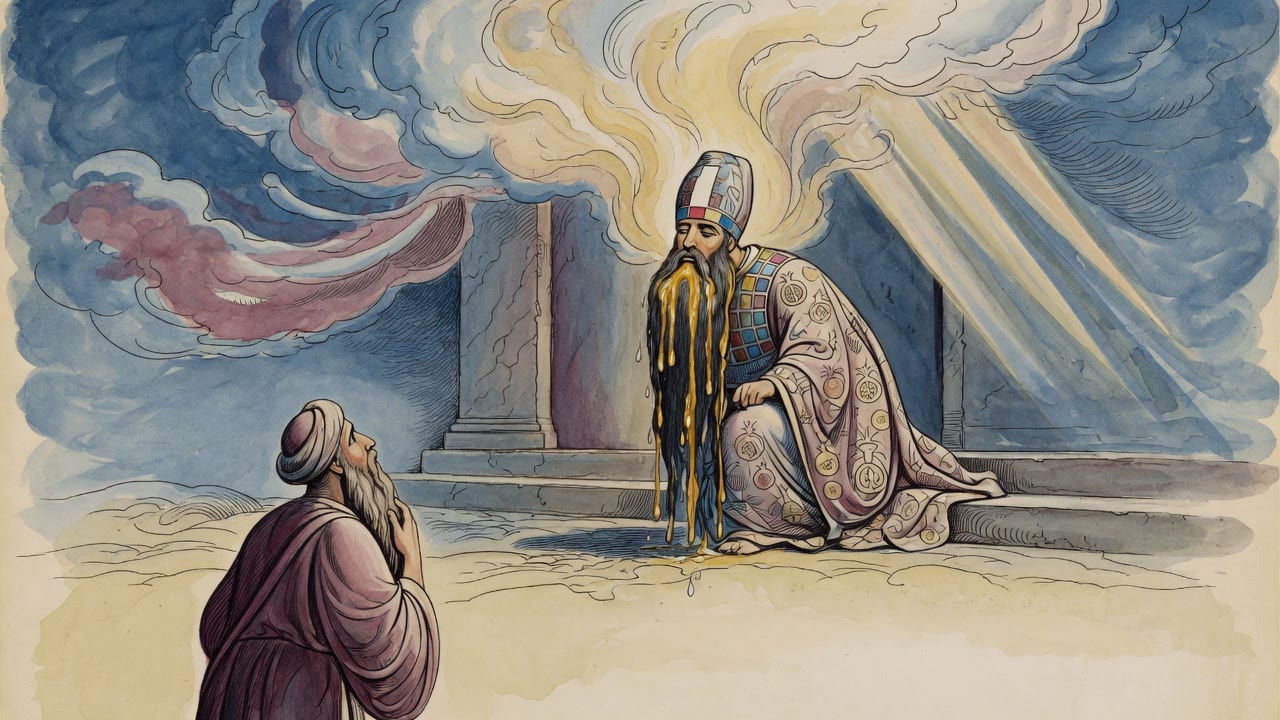
Psalm 133 captures that perfectly, and the Midrash Tehillim, a collection of rabbinic commentaries on the Book of Psalms, beautifully unpacks its meaning. The psalm itself begins, ...