The Beams of Kimchit's House Never Saw Her Hair
Seven of her sons wore the eight garments of the High Priest. Jerusalem watched them climb the Temple steps, and the sages came to her door to ask why.
Table of Contents
The walls of her house had a secret, and they kept it for a lifetime.
 Click for full size
No beam in the upper room, no whitewashed stone in the courtyard, no rafter over the loom had ever once caught sight of the hair on her head. Kimchit wound the cloth before the lamp was lit and unwound it after the lamp was dark, so that not even the timbers above her bed could swear they had seen her uncovered. She did it when guests filled the house. She did it when the house stood empty and silent, when there was no eye in any direction but the eyes of the wood itself. The covering never slipped. Year after year the beams looked down on a woman whose glory was folded inward, kept where only she and heaven could find it.
Seven Sons Climbed the Temple Steps
Out of that hidden woman came a procession.
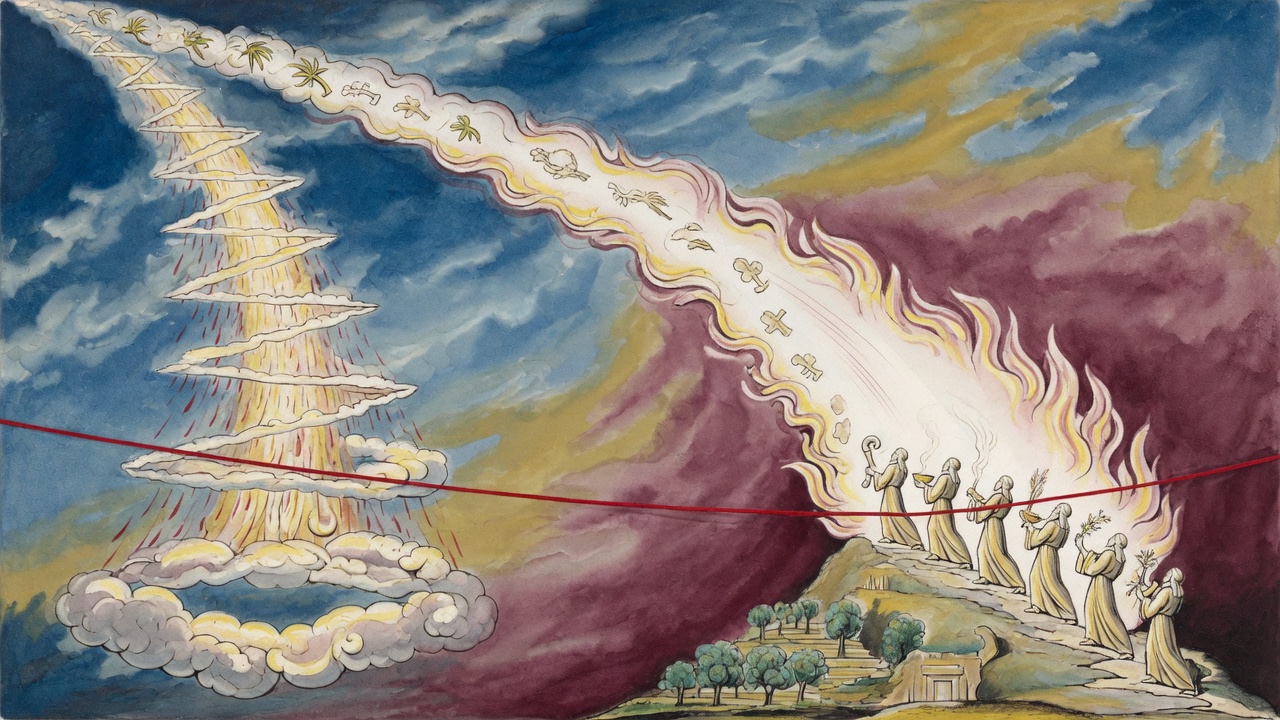
One by one her sons grew tall and were chosen, and one by one they put on the eight garments of the High Priest. The blue robe with its hem of golden bells and woven pomegranates. The breastplate set in its frames of gold, twelve stones burning with the names of the tribes. The forehead plate engraved Holy to the Lord. Seven sons of Kimchit, and every one of them carried the incense into the sanctuary, sprinkled the blood, lifted his hands over Israel to bless them. Jerusalem watched the same mother's children ascend the steps of the Temple for a generation, and the watchers began to count, and to wonder.
A household had been raised up to the highest place a man could stand before God. And the woman who bore them was the one person in that household no stranger ever saw.
The Sages Came to Ask Her Secret
So the sages sent to her.
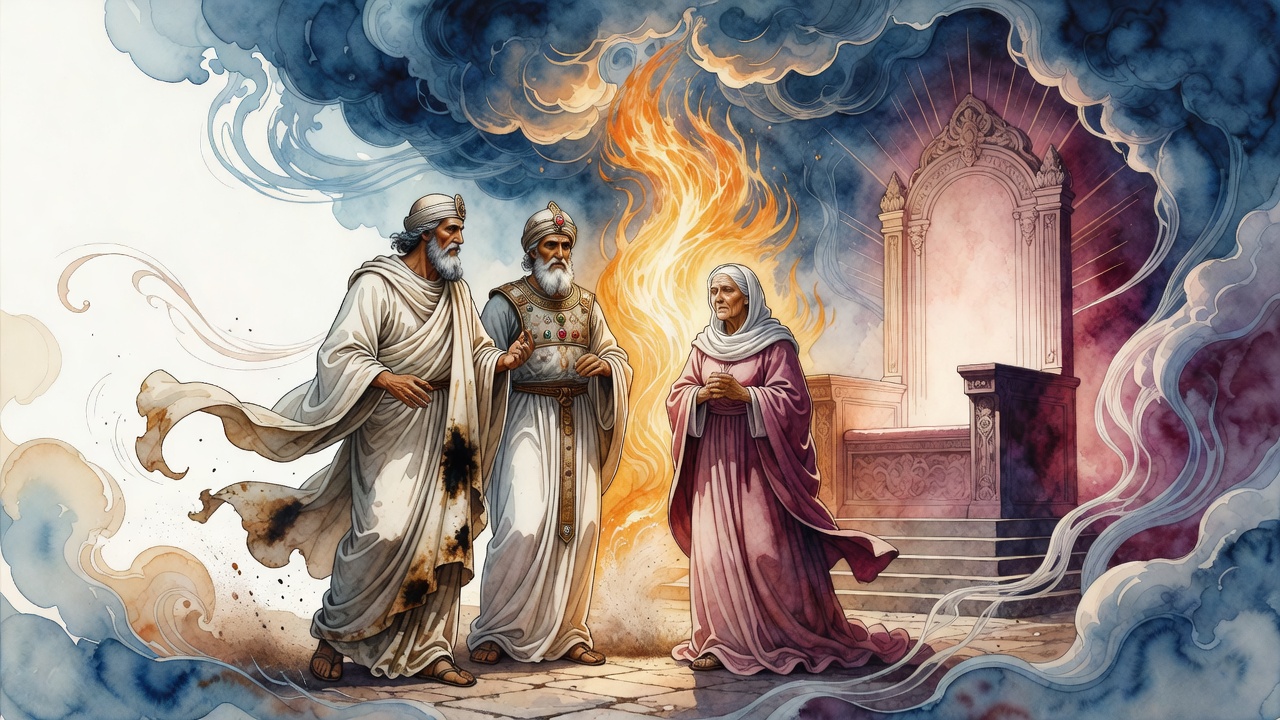
They came to learn what no academy could teach, what merit a mother spends to buy seven high priesthoods out of heaven. They stood in her doorway, the place where her covered head met the world, and they asked her plainly. "What are your deeds," they said, "that you should be given this?"
She did not boast. She gave them an oath instead, the kind a person swears only when the words are exactly true. "May such and such come upon me," she said, "if the beams of my house ever saw the hairs of my head in all my days." That was the whole of it. No fasting she named, no charity, no vigil. Only the cloth wound tight in an empty room, the modesty practiced where modesty wins no witnesses and no praise.
The sages turned it over among themselves, and they answered her with a saying that has outlived the Temple. "All flour is flour," they said, "but the flour of Kimchit is fine flour." Other women were modest. Other women covered their hair. But hers was sifted finer, milled down to the grain that no eye would ever reward, and that, they judged, was the thing that moved heaven. And they laid upon her a verse out of the Psalms. All glorious is the king's daughter within. Her splendor lived inside the walls. So heaven hung her splendor on her sons, and dressed it in gold.
Spittle on the Yom Kippur Robes
The proof came on the one day that allowed no second chance.
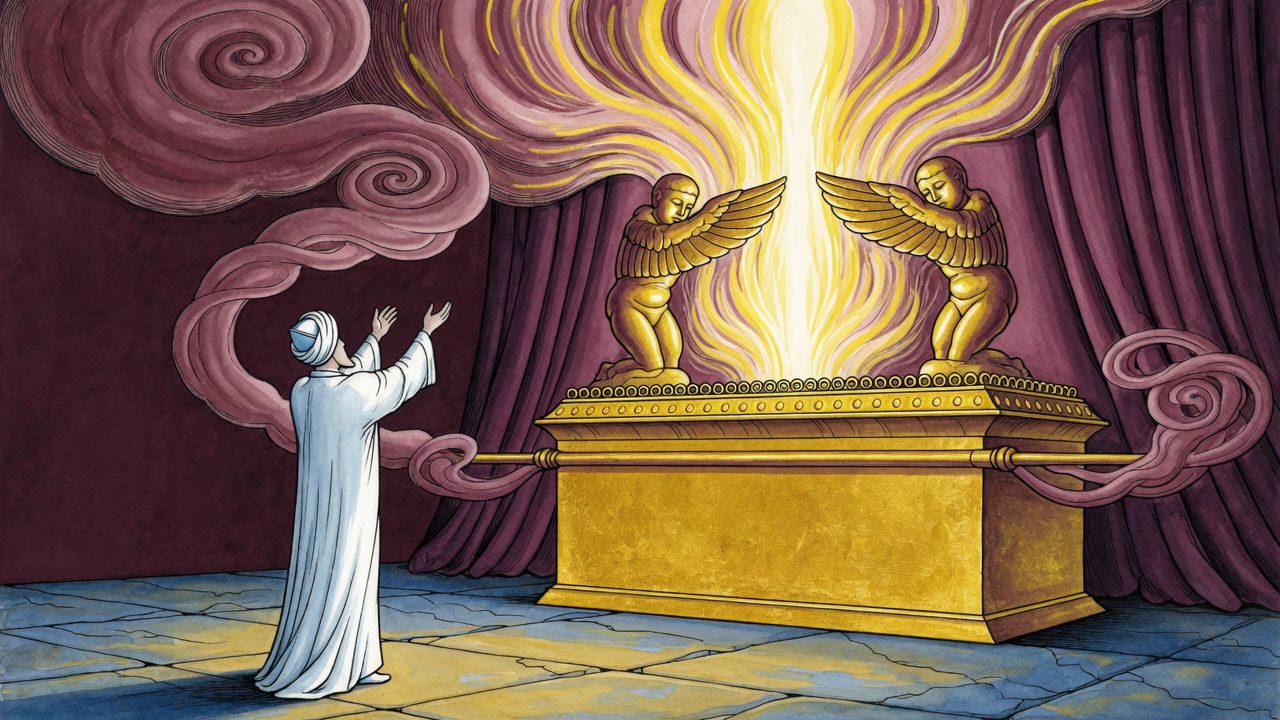
It was Yom Kippur, and her son Yishmael wore the white linen of the day, the garments the High Priest puts on to enter the Holy of Holies where no other man may go. The fate of Israel's atonement rode on his body staying pure from dawn until the service was done. He went out, near the king or near the crowd, and a passerby spoke too close, and a fleck of spittle struck his garment. In an instant the High Priest was unfit. He could not carry the incense behind the veil. He could not finish the day.
On any other day, in any other house, the service would have collapsed and the people would have stood without atonement.
But this was the house of Kimchit. A second son stepped forward, already a priest fit to serve, and put on the white linen his brother had laid down. He went where his brother could not, behind the veil, into the dark room where the Presence dwelt, and he finished the day of pardon for all Israel. Before the sun went down, the mother who had never let a rafter see her hair had seen two of her sons stand as High Priest between God and the people in the space of a single Yom Kippur.
The Mothers Who Asked the Same Question
Word of it spread, and other mothers came.
They were modest women too, mothers of good sons, and they wanted to know the secret as the sages had wanted to know it. "What did you do," they asked her, "to deserve such sons?" She gave them the same answer she had given the sages, the only answer she had. "In all my days," she said, "the walls of my house never saw my hair."
And they went away unsatisfied, because they could say the very same of themselves. Many women had been just as covered, just as careful, and none of them had raised seven High Priests, none had watched two sons serve on a single Day of Atonement. The reckoning between her modesty and her reward never quite balanced on the page. Something was weighed in that empty room that no other room could supply, the righteousness done where no beam, no wall, no witness, and no woman waiting at the door would ever see it.
The walls kept her secret to the end. Heaven dressed it in gold and gave it back to Israel seven times over.
← All myths