What the High Priest Did Alone in the Holy of Holies
Once a year, one man entered the most sacred space in the world. No one followed him. The Talmud records every step, and why Aaron nearly refused to go in.
Table of Contents
 Click for full size
The Man Who Had to Go In Alone
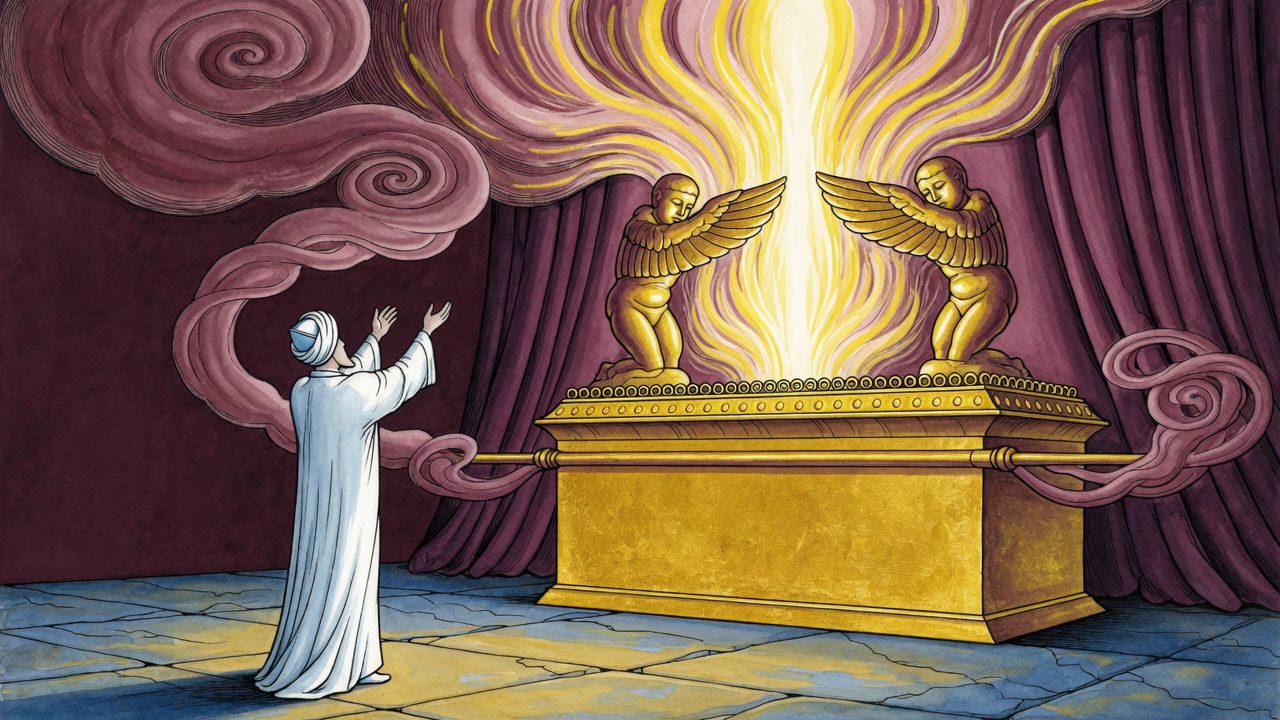
Once a year, on Yom Kippur, the high priest was allowed to enter the Holy of Holies. No one else entered that room. Not the other priests, not Moses while he lived, not Solomon when he built the Temple that housed it. The Ark of the Covenant stood inside, the Cherubim with the faces of boys spread their wings above it, and the space between their wings was the only location in the physical world where God spoke to Moses' face to face. The high priest entered that room once a year and emerged alive or did not emerge at all.
The preparations before entry lasted months. From the seventeenth of Tammuz until Yom Kippur, the high priest studied every detail of the service's requirements. In the final seven days before the holiday, he moved out of his own home and into a chamber in the Temple complex so that he would remain in a state of ritual purity without any risk of accidental contamination. He was reviewed by the elders on every element of the service. On the eve of Yom Kippur, the young priests kept him awake through the night by reading scripture to him, because a man who fell asleep might dream and become ritually impure, and an impure high priest who entered the Holy of Holies on Yom Kippur would not come out.
What Aaron Carried In
The specific requirements for entry were fixed by the verse in Leviticus: with a young bull as a sin-offering and a ram as a burnt-offering. The bull was Aaron's personal sin-offering. He was not entering the Holy of Holies as a flawless representative on behalf of Israel. He was entering as a man who had sinned, confessing over a bull on behalf of himself and his household before he could confess over a goat on behalf of the nation. The sequence was mandatory. He could not atone for Israel without first atoning for himself.
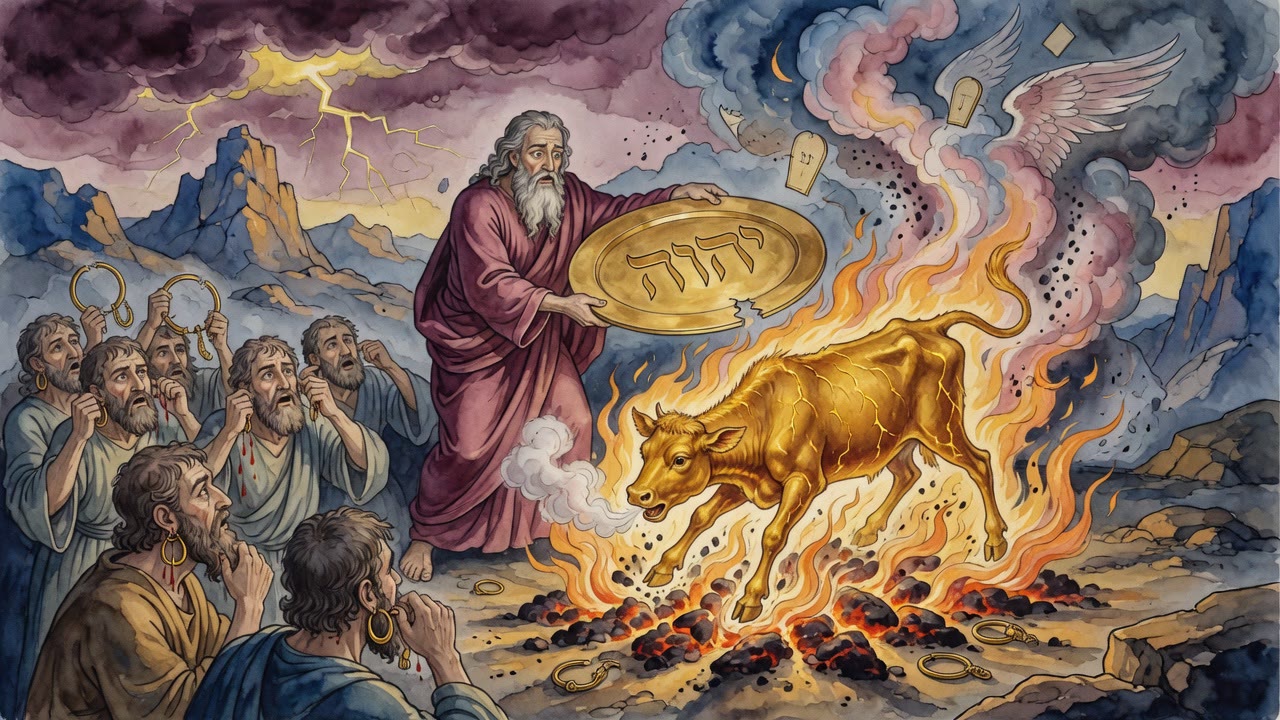
The Rabbis in Vayikra Rabbah read the specification of the bull through the lens of Aaron's worst moment, the Golden Calf. They connected the bull he carried on Yom Kippur to the bull he had built in the wilderness, the idol made of gold that Israel had worshipped while Moses was on the mountain. The atonement he was performing every year was still, on some level, an atonement for that. The bull was not a neutral animal in Aaron's service. It was a specific reminder, an intentional echo. He walked into the holiest room in the world carrying, as his admission ticket, the species of animal that represented his most catastrophic failure.
Aaron Objects and Moses Answers
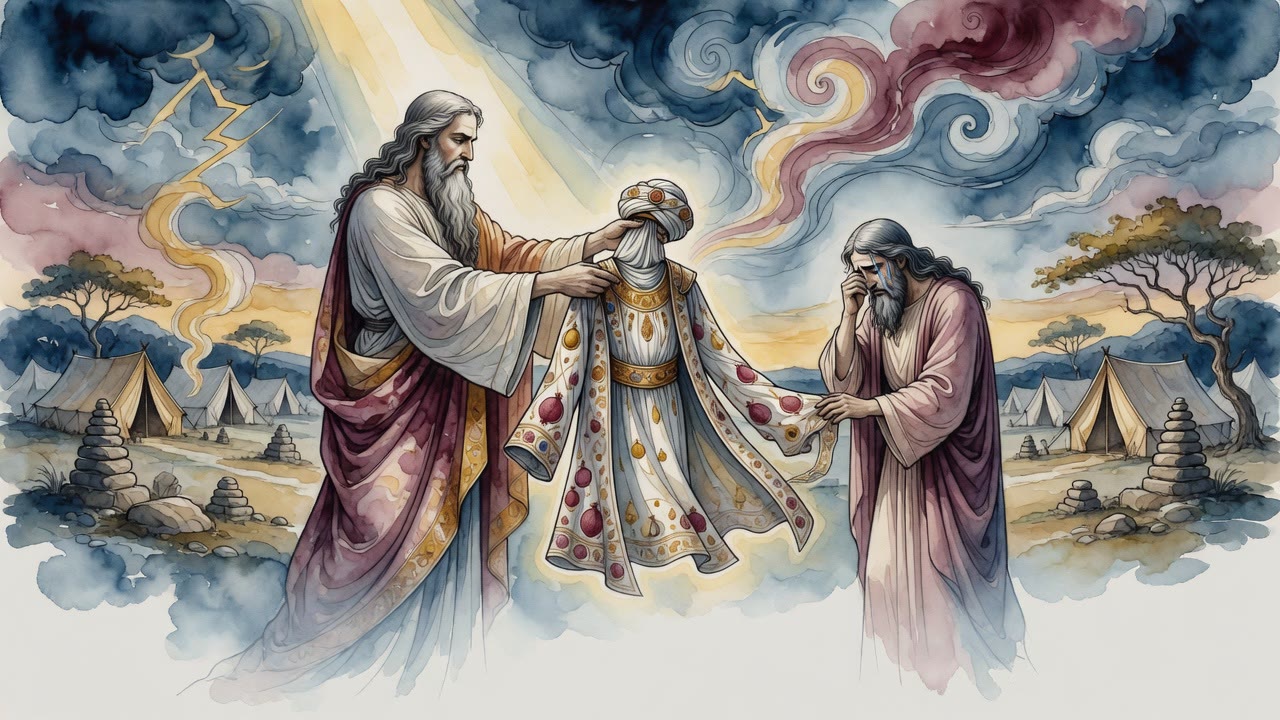
When Moses first told Aaron he would be the high priest, Aaron's response was not gratitude. He pointed out that Moses had done all the actual work of building the Tabernacle and Aaron was being handed the position its completion created. He felt the injustice of it. Moses told him: as truly as you live, I am as happy as if I had been chosen myself. As you rejoiced in my elevation when God chose me at the burning bush, I now rejoice in yours. The response was diplomatic and genuine, and it contained a specific memory. Aaron had rejoiced for Moses at the burning bush. The tradition preserved in Exodus says God told Moses, when you go to your brother Aaron, he will see you and his heart will rejoice. He was not jealous. He was glad. Moses was returning the gladness.
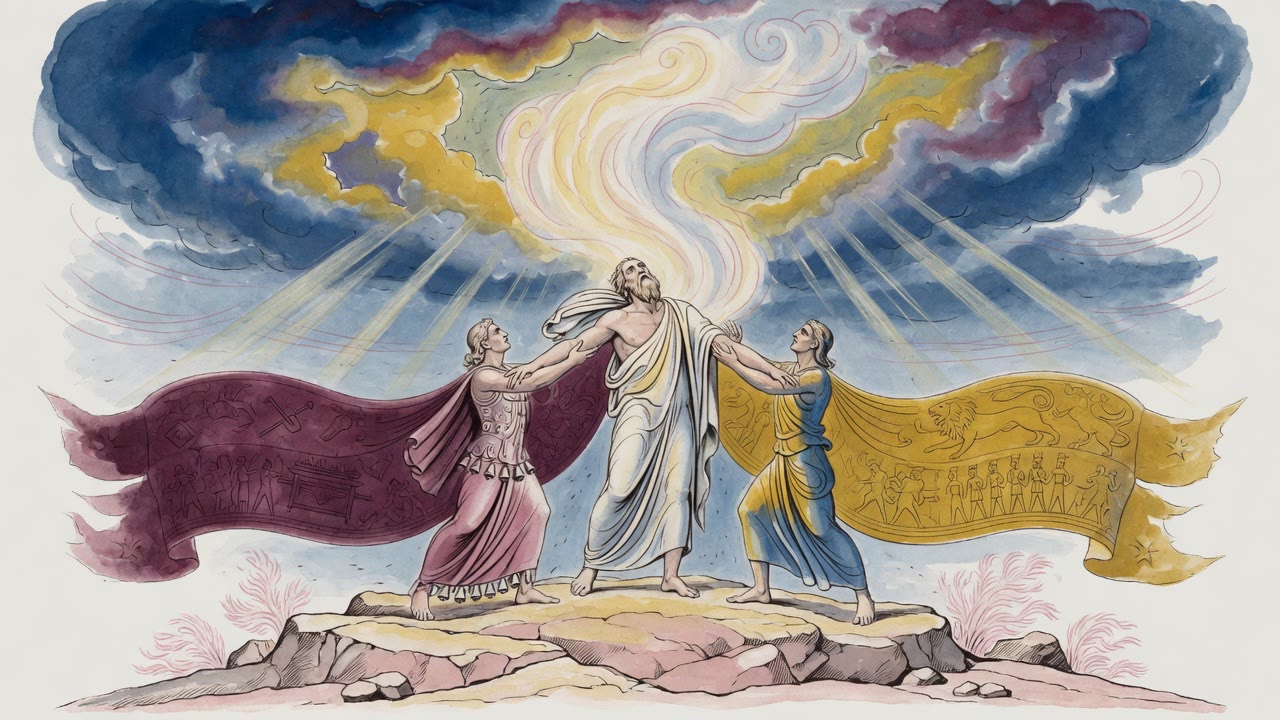
Moses gave Aaron practical guidance about the terror of the office: when you see the altar and imagine yourself cut off from it by your sins, let David's words be in your mind: The Lord is my light and my salvation, whom shall I fear? The fear was real and expected. The high priest did not enter the Holy of Holies with confidence in his own righteousness. He entered with confidence in the purpose he was serving and the One who had assigned him to it.
The Moment No One Could Follow
When the high priest went in with the incense pan and the coal and the cloud of incense rose to fill the space between the Ark and the ceiling, he was alone in a way that no other human being is ever alone. No one outside could hear or see what happened in that room. The priests who waited outside the inner curtain during the service were listening for the sound of the bells on his robe's hem. The bells rang as he moved. As long as they could hear the bells, he was alive. If the bells stopped and the curtain did not part, they would know what had happened without going in to confirm it. The stories of precaution, a rope tied to his ankle so he could be pulled out if he died inside, are not found in the Talmud but reflect how fully people understood the stakes of what the day required.
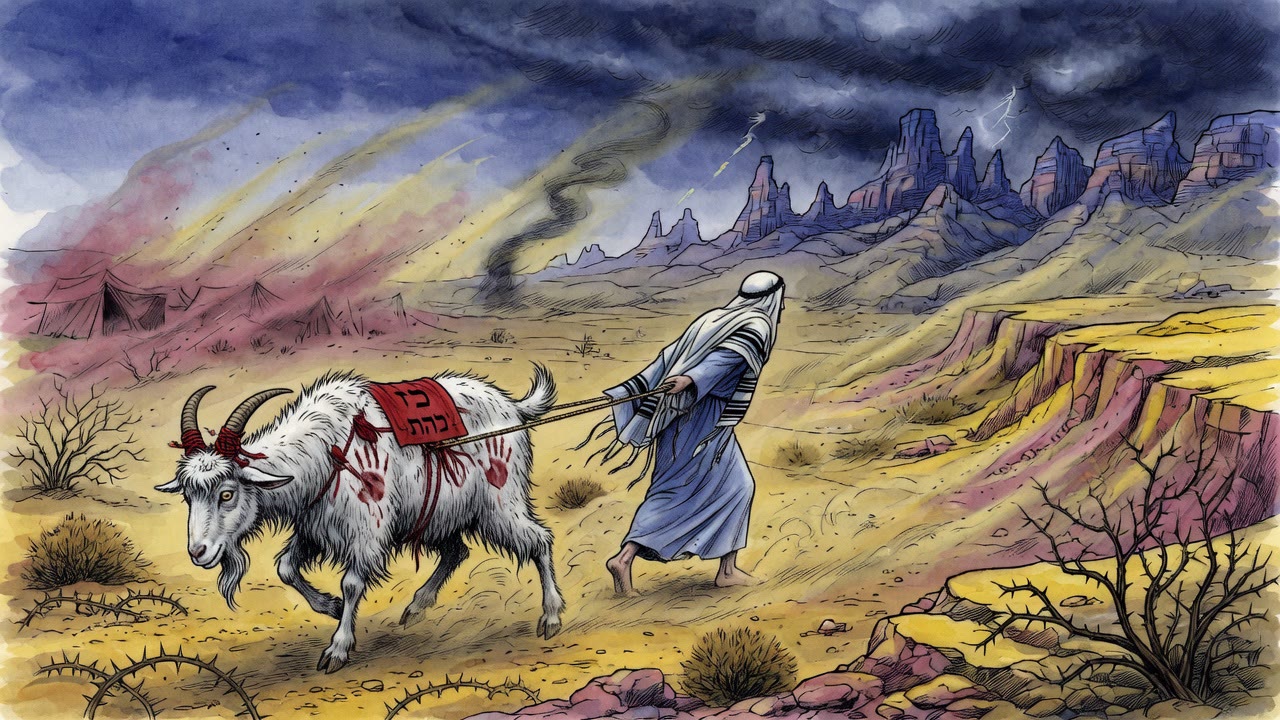
When he emerged, the people standing outside the Temple courts erupted. He was alive. He had been in the presence of the Name. The year's account between Israel and its God had been addressed, the confession offered, the blood sprinkled on the right surfaces in the right sequence, the incense cloud in place, the goat sent to the wilderness bearing whatever it carried. What had happened in the room between the high priest and the Cherubim was his alone to know. He came out and blessed the people, and the day continued, and the world continued, and the bells had not stopped ringing.
← All myths