The Scapegoat Carried Israel's Sins to Azazel in the Desert
The High Priest drew lots over two identical goats. One went to God and one went to Azazel. The second goat went to the edge of the world and was destroyed.
Table of Contents
 Click for full size
The Lot Decides
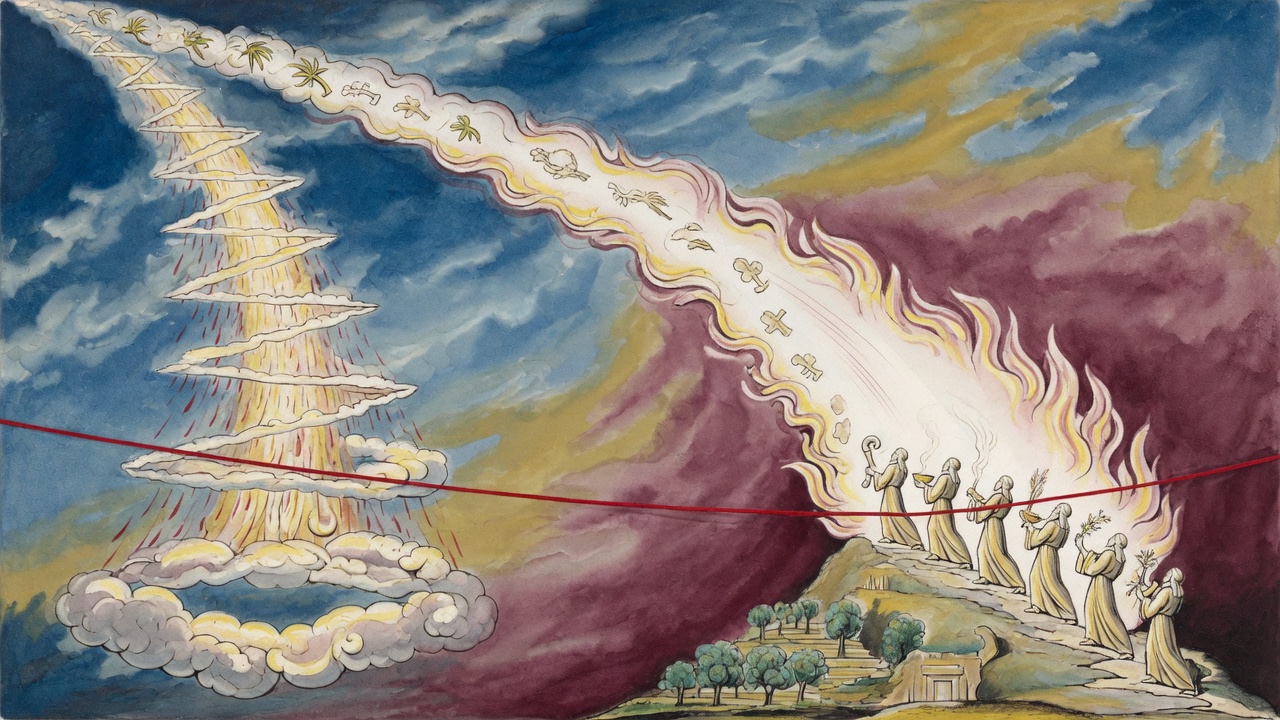
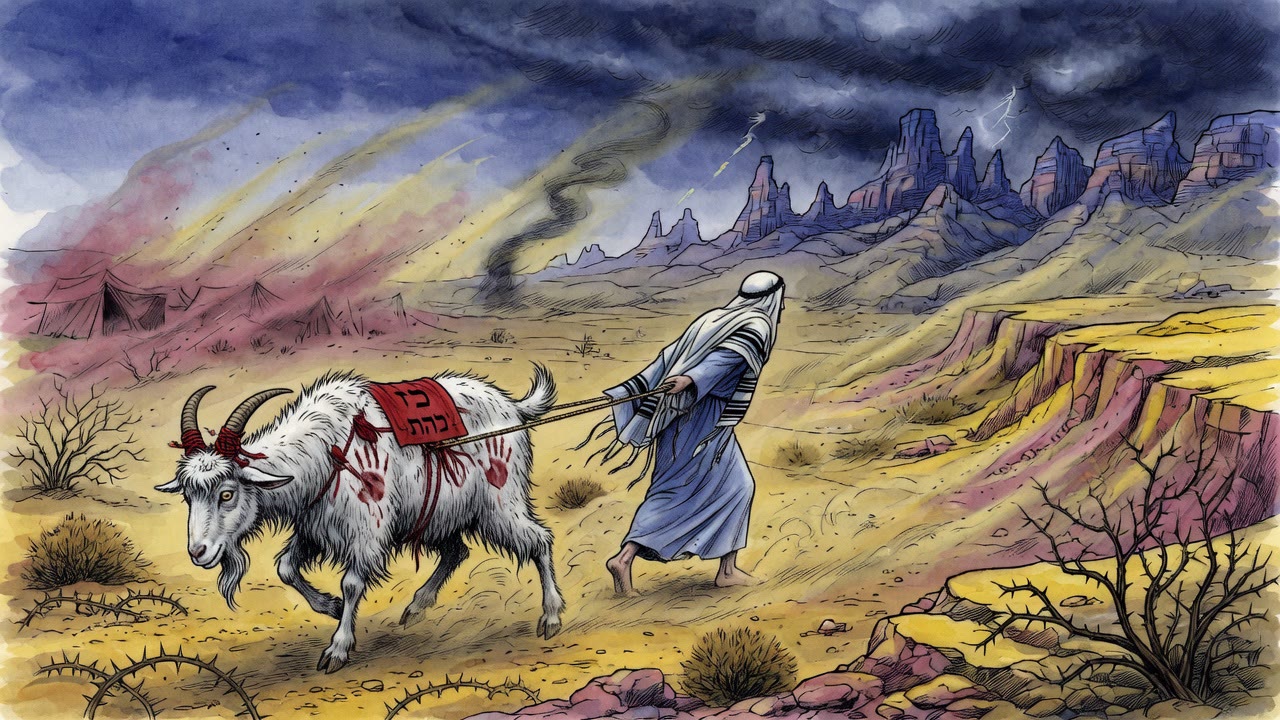
Two goats stood before the High Priest in the Temple court on the morning of Yom Kippur. The Targum Jonathan adds a detail: they were placed into a vase, and Aaron drew the lots out one by one, assigning the fate of each animal by the mechanism of chance that was actually divine will. One lot said "for the Lord." The other said "for Azazel." The goats stood there, identical, while the lots fell and their destinies separated.
The goat designated for God moved inward toward the altar and the sanctuary. The goat designated for Azazel moved outward, toward the wilderness, toward a place called Beth-Hadurey in the Targum's naming, a rocky region where the cliff waited. The High Priest laid both hands on the second goat's head and confessed over it all the iniquities of the children of Israel, all their transgressions, all their sins. The animal bore them.
Why No Golden Vestments
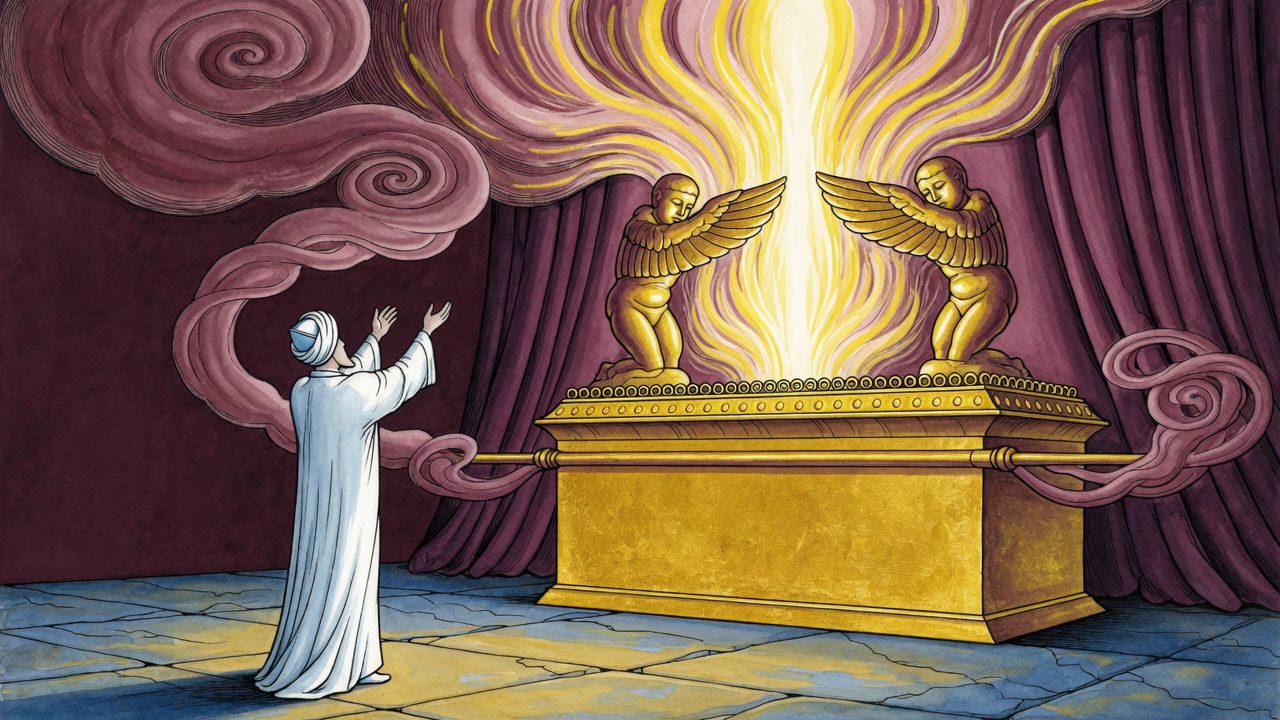
Aaron did not wear his golden robes on Yom Kippur. He wore plain white linen. The Targum Jonathan explained why: gold, on this particular day, would bring to mind the golden calf. The memory of Israel's worst sin could not be permitted to hover over the ritual meant to atone for all sins. The High Priest's wardrobe was a legal argument. By wearing the color of purity rather than the color of that ancient failure, Aaron was keeping the defense clear.
This attention to the implications of material details shaped the whole ceremony. Everything on Yom Kippur was designed so that no inadvertent element could give the accuser a foothold. The clothing, the order of the ritual, the specific words of confession, the direction the goat was sent: nothing was accidental, because on this day the cosmic accounting was too precise for accidents.
What Azazel Was
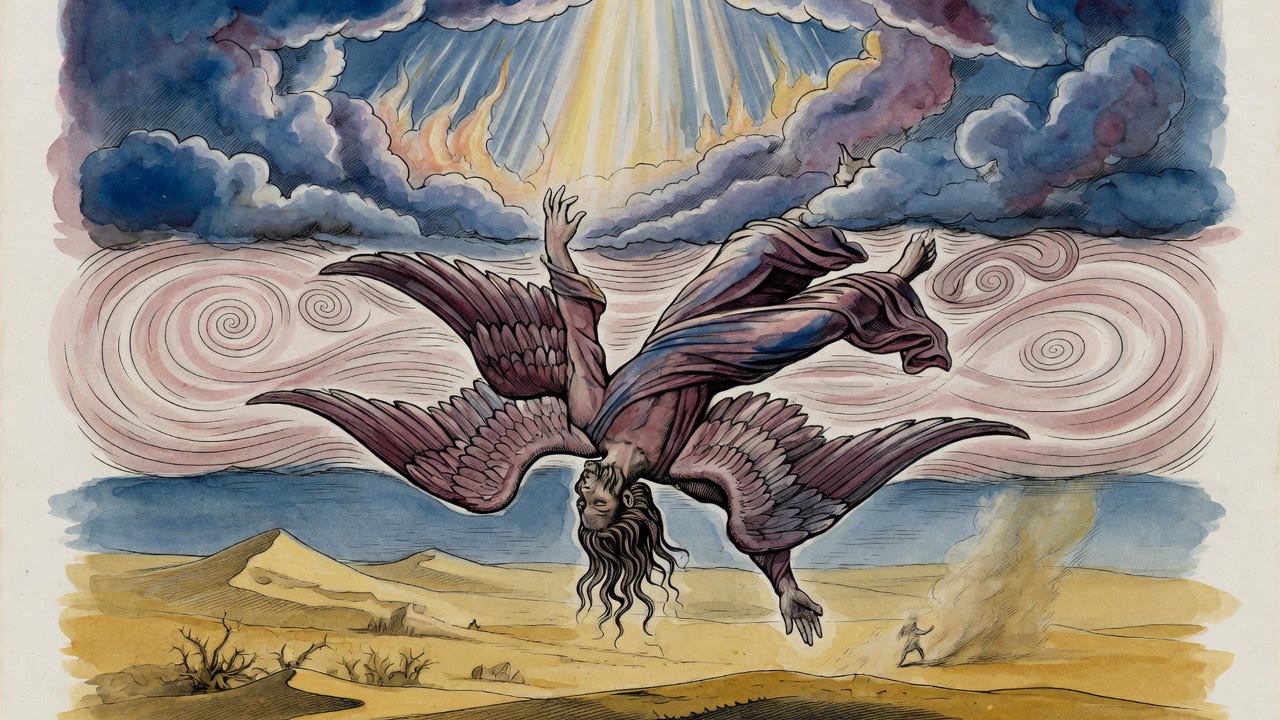
The rabbis knew the ritual looked archaic. Sending a laden goat into the desert as an offering to Azazel, a name outside the ordinary theological categories, felt like a remnant from before, a gesture toward something that predated the Sinaitic covenant. The Talmud in Yoma 67a described the destination: a high cliff in the rocky desert, and the goat pushed off the edge, tumbling down until it was torn into pieces, nothing of it left whole.
Some understood Azazel as a name for the rocky terrain itself. Others saw in it a reference to the Watcher tradition, a being from before the flood who had descended with the sons of God and whose domain was the wilderness. Sammael himself complained to God about the arrangement: "You have given me power over all the nations but not over Israel." God replied: on Yom Kippur, if Israel has sinned, you have power. If they are pure, you have none. The goat was not payment to a rival. It was a demonstration, every year, of what purification could accomplish against the accuser's claim.
The Prayer in the Breaking
The midrash asked why the ritual had to be so violent. Why did the goat have to be thrown from a cliff and shattered rather than simply released into the desert? The answer was a prayer hidden inside the destruction. As the goat's body broke apart on the rocks, leaving nothing whole, the people were asking God for the same fate for their transgressions. Let our sins fall like this, they were saying. Let them break until no trace remains, no substance, no standing, nothing left to present against us in your ledger.
Others heard a different message in the goat sent away alive. Cast off the evil inclination the way you cast off this goat. Drive it out into the wilderness where it cannot find purchase. The body breaking on the cliff and the goat disappearing into the desert offered two images of the same thing: complete removal, total distance, the sins of a nation carried away from the place where God dwells.
The Accuser's Silence
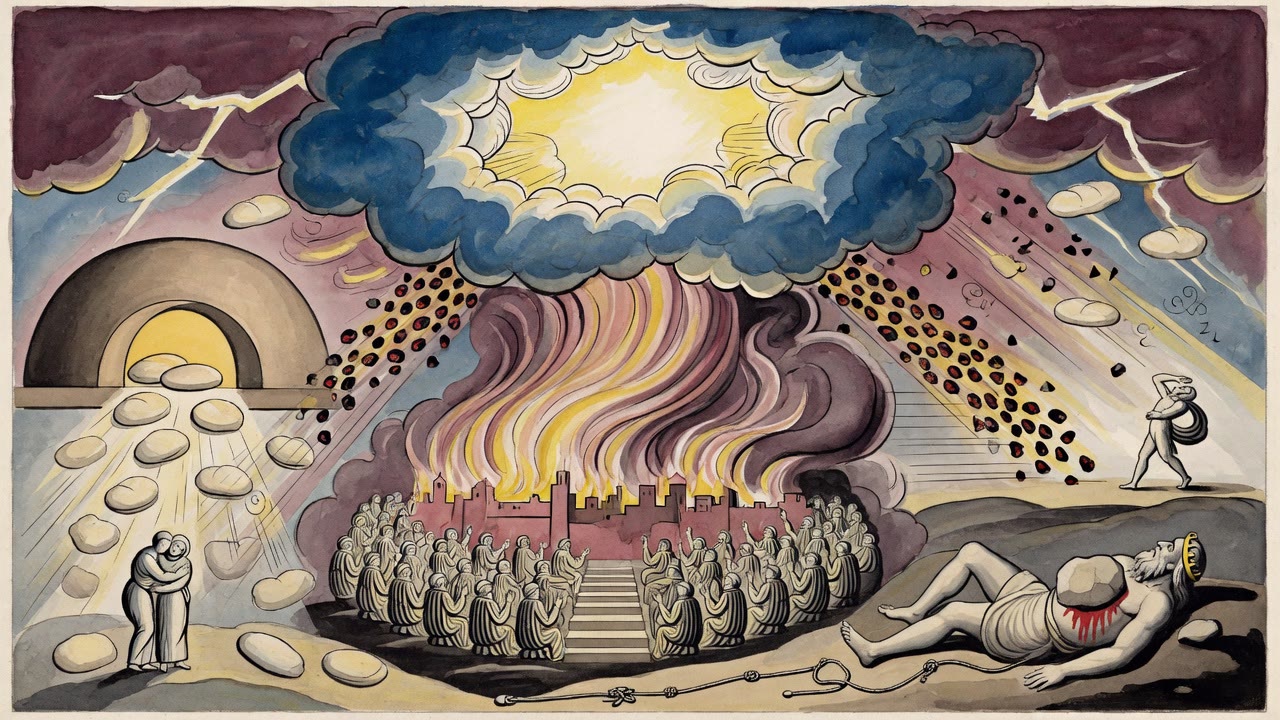
Pirkei DeRabbi Eliezer, an early medieval midrashic text, described what Sammael saw on Yom Kippur and why it stopped him. He watched Israel fasting and praying and saw something that confused his calculations. They looked like angels. They were not eating or drinking. They stood in white. The energy of accusation requires something to accuse, and on this day the people had made themselves temporarily unreadable to him. The accuser had no material to work with.
The goat was sent to him, and receiving it, he became for a moment an advocate rather than an accuser. He accepted the offering and was silenced. What had been his tool became the instrument of his disarmament. This was the deeper strategy of the Yom Kippur ritual: not merely to atone for sins in the divine ledger, but to occupy the accuser so thoroughly with the ceremony that he had no standing from which to prosecute.
← All myths