Alexander Bowed to the High Priest He Had Already Seen in a Dream
Jaddua had sworn not to fight Darius. Alexander came to punish him. He went down in the dust before the Name on the gold.
Table of Contents
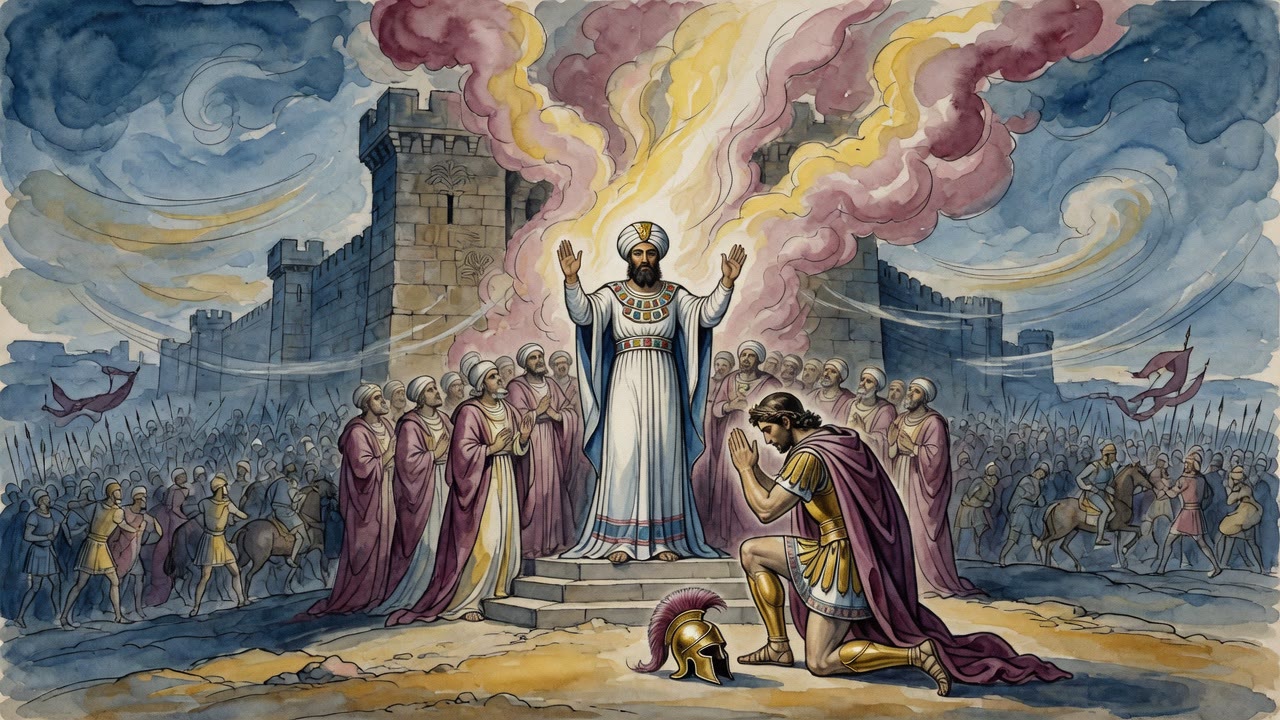
The gold plate on the old man's forehead caught the sun. Alexander walked out in front of his own army, alone, and went down in the dust. The Name was cut into that plate. He greeted the priest before anyone had greeted him.
 Click for full size
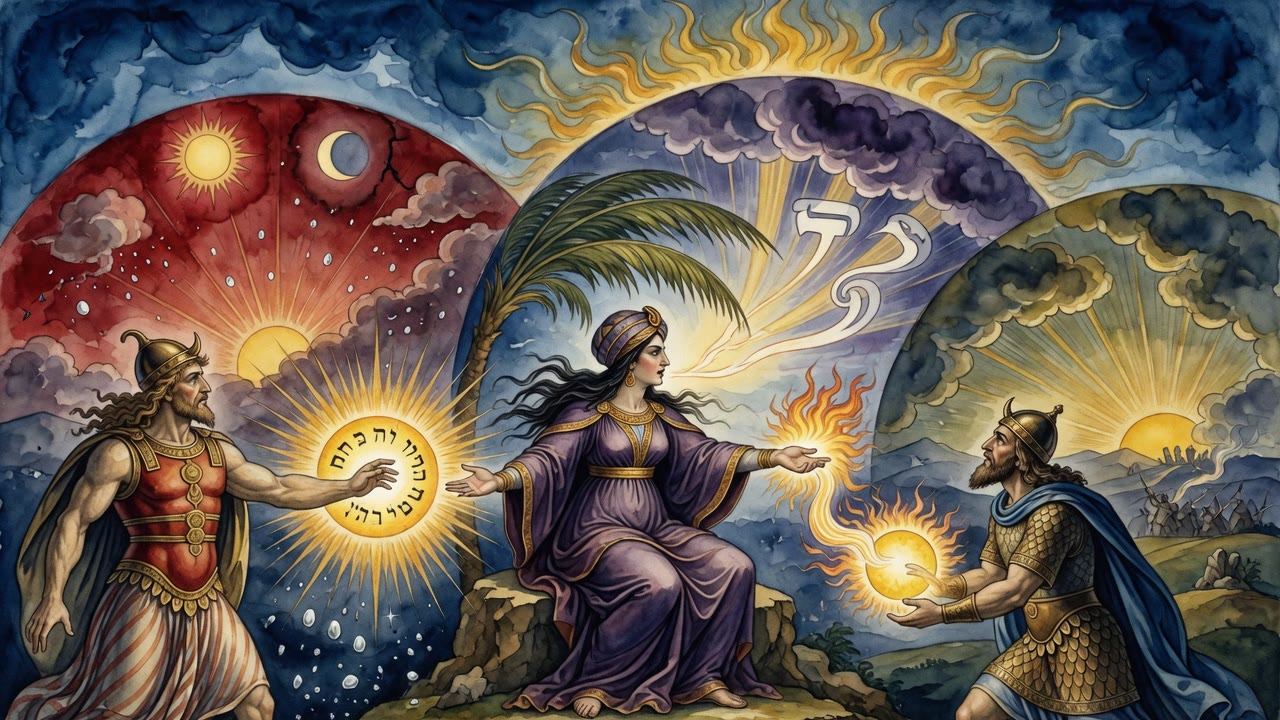
Behind him the Phoenicians and the Chaldeans had already divided the city in their heads. They had followed him from Tyre and Gaza. They wanted the plunder of Jerusalem and the High Priest to kill slowly. The king's anger had promised both.
The Oath That Would Not Bend
Seven months into the siege of Tyre, Alexander had sent a letter up to Jerusalem. Send troops. Send supplies. Send the tribute you have been sending to Darius. Choose the Macedonians, the letter said, and you will never regret it.
Jaddua sent the messengers home. He had given Darius his oath not to take up arms against him. He would not break it while Darius was still breathing.
Alexander did not shout. He finished taking Tyre, which cost him a great deal, and then said what he meant to do. He would march on the Jewish High Priest and teach every man alive whose oaths were worth keeping.
Sanballat Bought a Second Temple
Jerusalem was already splitting from the inside. Jaddua's own brother Manasseh had married Nicaso, daughter of Sanballat the governor of Samaria. The elders ruled that a man with a foreign wife does not come near the altar. Jaddua enforced it on his brother and drove him away from the altar himself.
Manasseh went to his father-in-law. Sanballat made him a better offer than the one he had lost. Keep the girl, and I will get you a high priesthood of your own and a temple to go with it, built on Gerizim, the highest mountain in Samaria. Priests and Levites who had married the same way went over with him. Sanballat handed out money and farmland to hold them.
Then Sanballat abandoned Darius. He walked seven thousand of his own subjects into Alexander's camp at Tyre and made the case that a king is better served by a nation divided in two than by one that acts with a single mind. Alexander gave him permission. The temple went up. Manasseh got his priesthood. Sanballat died two months later, while Gaza was still under siege.
The Dream Said Open the Gates
Gaza fell. Alexander turned up the road toward Jerusalem. Jaddua came apart. He had refused the king to his face. The king had promised to make an example of him. There was no army in the city. He put the whole population to prayer and went up to offer sacrifice with them.
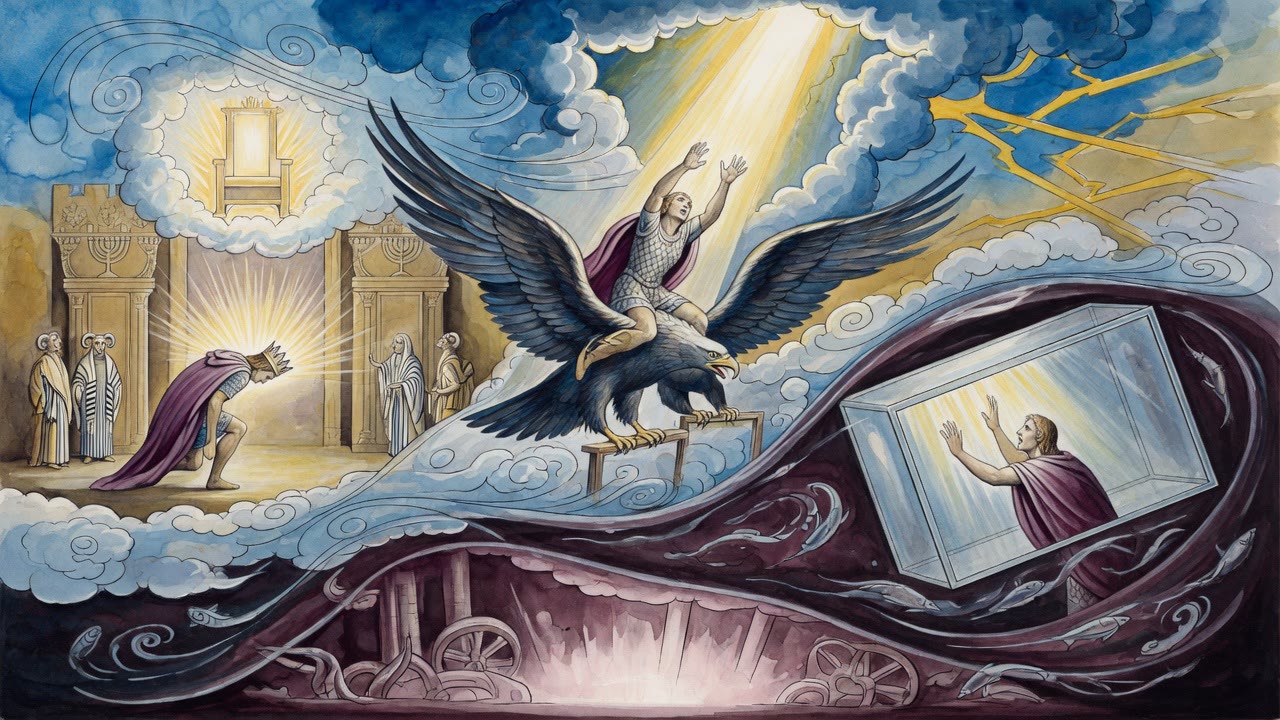
The answer came that night in a dream. Take courage. Dress the city. Open the gates. Put the people in white. Bring the priests out in the clothes of their order. Walk out to meet him. Nothing will happen to you.
He woke glad, which nobody around him could account for, and told them all what he had been shown. They dressed. They opened the gates. They walked.
Parmenio Asked Why He Went Down
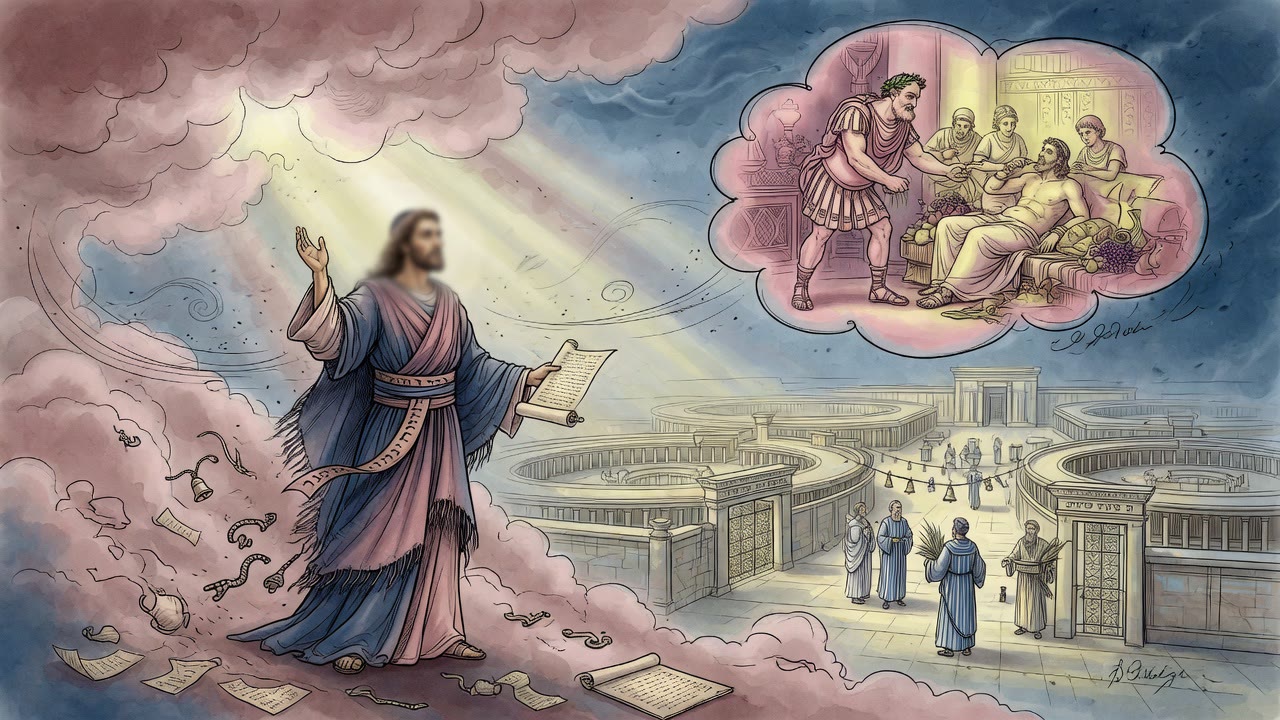
The procession went out to a rise called Sapha, which means the lookout, because from there a man can see both the city and the Temple at once. A crowd in white. Priests in fine linen. One old man in purple and scarlet with the mitre on his head and the plate of gold across his forehead.
Alexander went down. The Jewish crowd shouted a salute and closed around him. The Syrian kings in his train decided he had gone out of his mind. Only Parmenio had the standing to walk up and ask it. Every man on earth prostrates himself in front of you. Why are you on the ground in front of a Jewish priest?
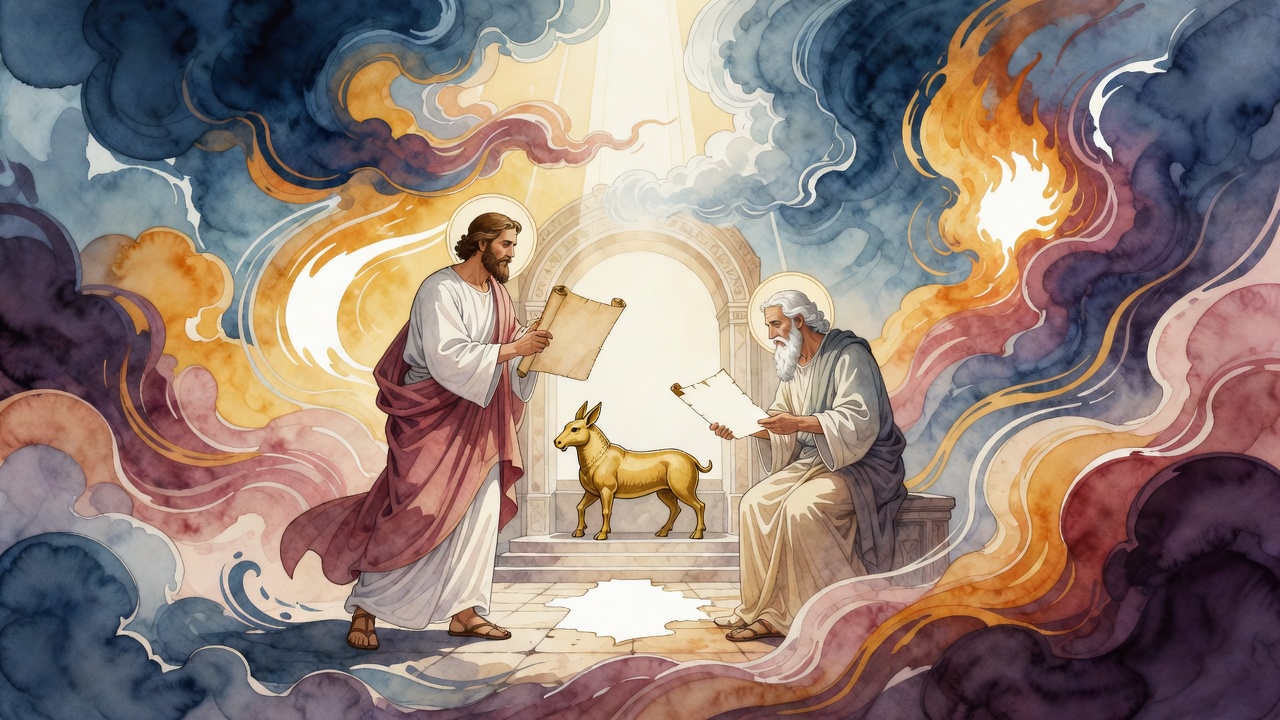
"I did not go down to the man. I went down to the God who put that priesthood on him. I saw this exact person, in these exact clothes, in a dream at Dios in Macedonia, when I was sitting up at night working out how to take Asia. He told me not to wait. Cross the sea, he said. I will go in front of your army and I will hand you the Persians. I have never seen another man dressed like that, and now I am looking at him. I know whose command I am marching under. I know Darius is finished."
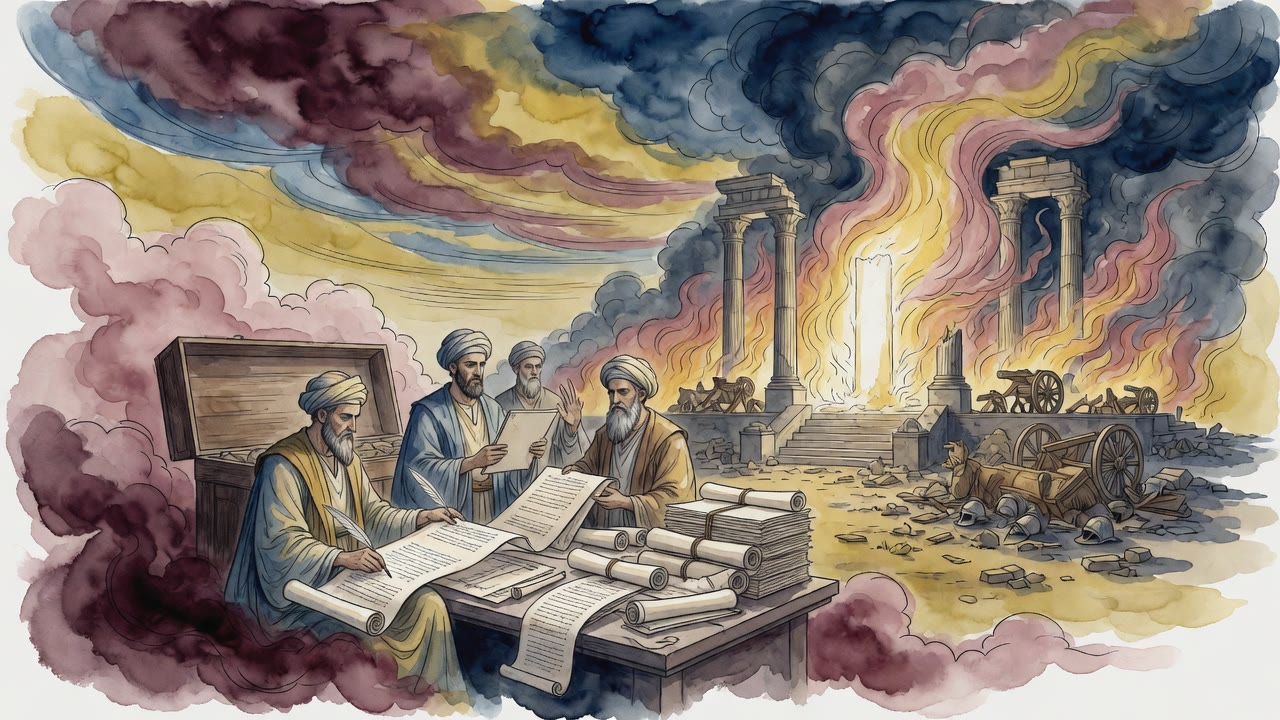
He gave Jaddua his right hand. The priests ran alongside him. He went up into the Temple and sacrificed there under the High Priest's direction. They brought him the book of Daniel and showed him the Greek who would break the empire of the Persians. Alexander read it and decided the Greek was himself.
The next day he told them to ask him for whatever they wanted. They asked to keep the laws of their fathers and to pay no tribute in the seventh year, when the fields lie unworked. He granted it. They asked the same for the Jews of Babylon and Media. He granted that too. Then he offered to enlist any man who wanted to march with him and keep his own law inside the army, and a great many went.
Torches on the Road at Night
The city kept another picture of the same hour. In that telling the man in the garments is Simeon the Just. The Samaritans, the Kutim, had sent word to Alexander asking him to destroy the Temple as the seat of rebellion. Alexander had agreed. He was coming to raze it.
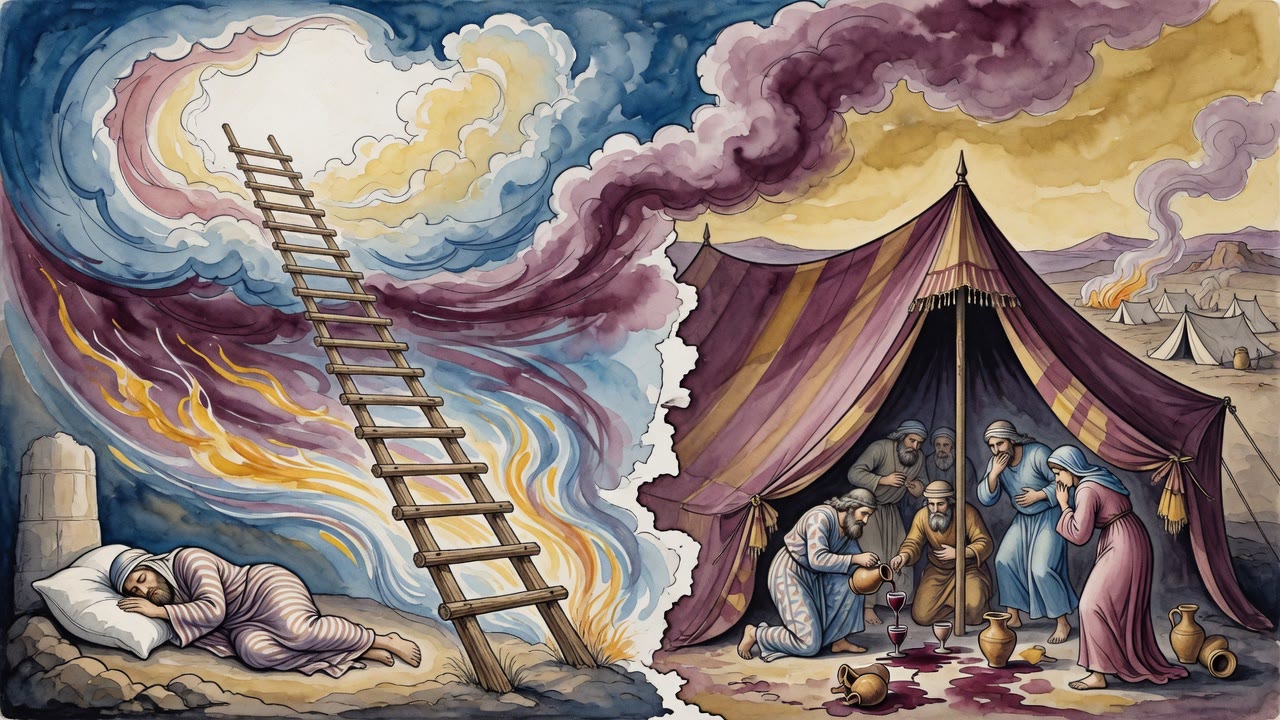
Simeon put on the eight garments of the high priesthood: the breastplate with its twelve stones, the tzitz (ציץ) with the Name on his forehead, the blue robe, the tunic, the belt, the turban, the priestly linen. He took the leading citizens and walked out of the city at night, torches in their hands, toward the approaching army.
When the two companies met, Alexander dismounted and bowed. He said the face in those clothes had gone in front of him into every battle and given him victory. He refused the Samaritans. He handed the men who had asked for the Temple's ruin over to the Jews. The rival sanctuary on Gerizim came down. The day was kept as a festival.
At Shechem the Samaritans came out in splendour after the peaceful entry and explained that they had been Jews all along. Alexander asked if they were Jews. They said they were not. "It was to the Jews," he said, "that I granted that privilege." He took Sanballat's troops on into Egypt and left the lookout behind him. The gold plate had already done its work.
← All myths