Four Stones That Told Uncomfortable Truths
Dan's stone showed an inverted face. Naphtali's held a running deer. Gad's blazed with justice. Each stone said something its tribe could not hide.
Table of Contents
 Click for full size
Six Names on Each Shoulder
The two stones for the shoulders had to carry all twelve tribes between them, six a side, and the engraver had the order settled before he ever picked up a tool. Reuben, Levi, Issachar, Naphtali, Gad and Joseph on the right. Simeon, Judah, Zebulun, Dan, Asher and Benjamin on the left.
Then he counted the letters, because the two stones would sit on one man's shoulders at the same height in front of the whole court, and a stone carrying fewer letters than its twin would show it from across the yard. The left side came out even. The right side came out one letter short.
He went down the right-hand list looking for a name that could be stretched without becoming somebody else's name, and there was only one on it.
The Letter He Added
Joseph's name has a longer spelling that turns up in the Psalms, with an extra letter set into the middle of it. It is the same name and any scribe would have told him so.
He put the point of the tool against the stone and then did not cut for a moment. The man in question had been sold by his brothers, renamed by a Pharaoh, and buried in Egypt, and his bones were somewhere in the baggage of the camp outside. Now his name was going to be lengthened by one letter so that one shoulder would balance against the other.
He cut it. Jehoseph, five letters, and the two stones matched.
The Stone That Would Not Turn Right Side Up
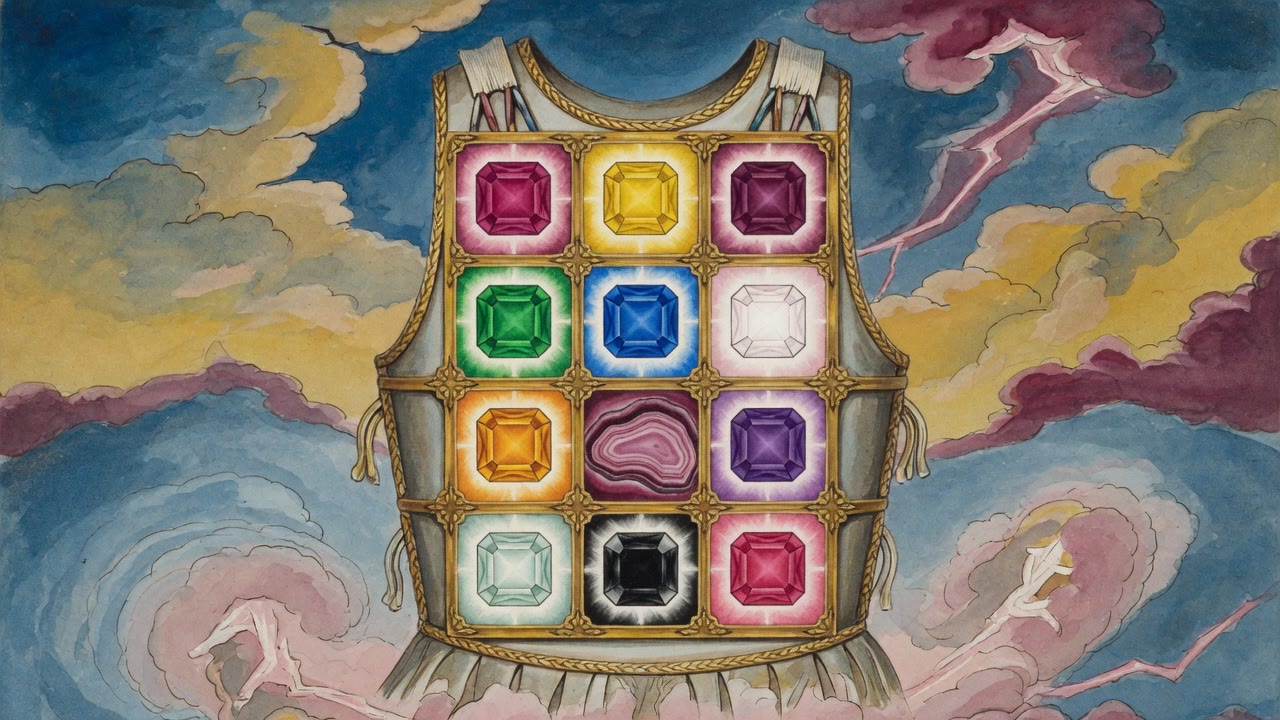
The breastplate was the harder work: twelve stones in four rows, with the names of Abraham, Isaac and Jacob set in ahead of the tribes, and at the end of all of it the line, "All these are the twelve tribes of Israel."
Dan's stone was a topaz, and there was a man's face in it, and the face was upside down.
He turned it. He turned it toward the light and away from the light and put it down and picked it up from the other side, because a mark inside a stone will sometimes read differently depending on where a man stands when he looks at it. The face stayed inverted. That was what the tradition said about the Danites, that they had a habit of taking a good thing and turning it toward evil, and the tribe that produced judges was the tribe whose gift came out backward most often. The stone was not accusing them of anything they had not done, so he set it in its row and left it.
The Ones That Gave Him No Trouble
Naphtali's turquoise went in beside it without any argument. Turquoise was held to give a rider speed, and Naphtali was the hind let loose, the tribe that carried messages ahead of an army, so the stone and the man agreed with each other.
Gad got the crystal, which was believed to put courage into whoever carried it into a fight, and the Gadites went into fights readily and did it for the Lord. Asher got the chrysolite, a stone credited with keeping a body fed and well, because Asher's ground in the north grew oil and grain rich enough that the men who ate it came out heavy and strong.
Elsewhere in the plate the sapphire had already gone in for Issachar, who sat over the Torah, since sapphire was supposed to sharpen a man's sight. Next to it lay Zebulun's pearl, and that one had bothered him. Zebulun kept ships and a pearl comes up out of the sea, which is neat enough on its own. But a pearl is round like a wheel, and a wheel turns, and Zebulun was the tribe with money. His men sailed at night and traded all year so that Issachar could stay in the study house, and the stone they wore over the High Priest's heart was shaped like the thing that takes a fortune away.
The Morning It Was Worn
The priest put it on in the morning and the twelve stones came up against his chest in their four rows, with the three fathers named ahead of them and the whole nation named at the end.
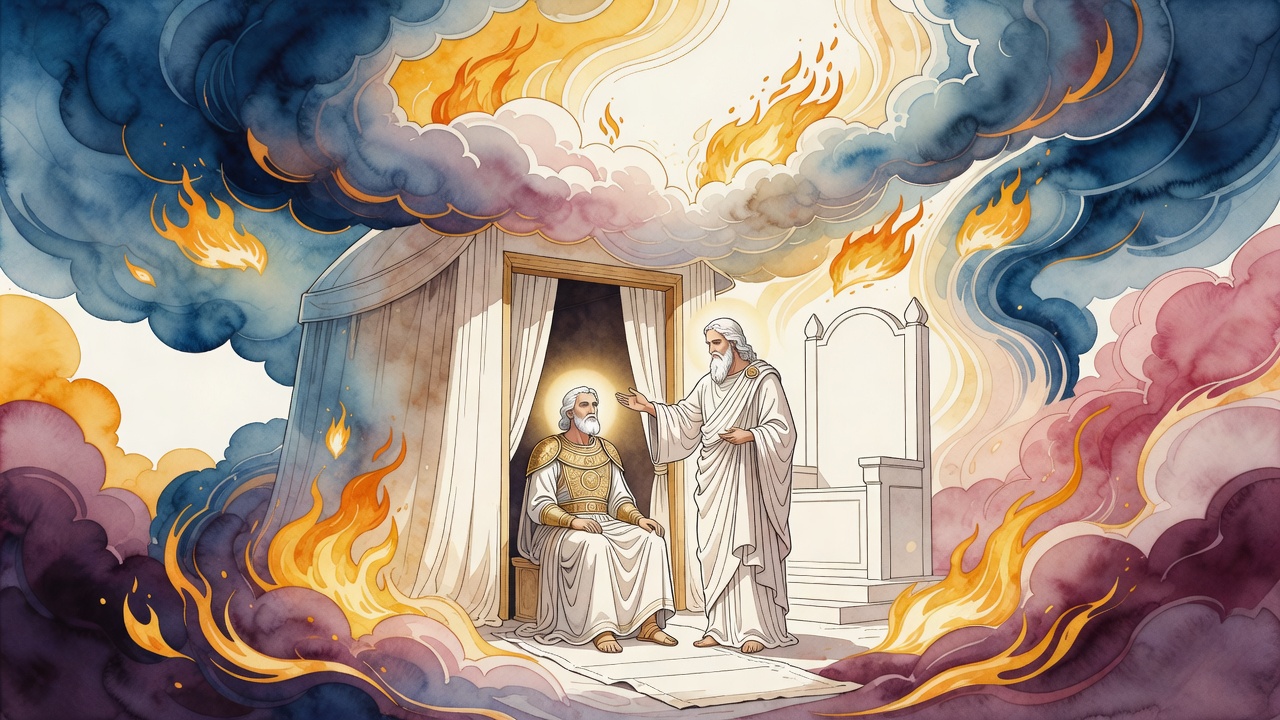
Then he went in. On his shoulders were six names and six names, matched to the letter, one of them stretched to make the count come out. On his chest a man's face looked out of a topaz at everybody in the court from upside down, and it went through the doorway of the sanctuary exactly as it was.
← All myths