Hillel Answered the Strangers Shammai Drove Away
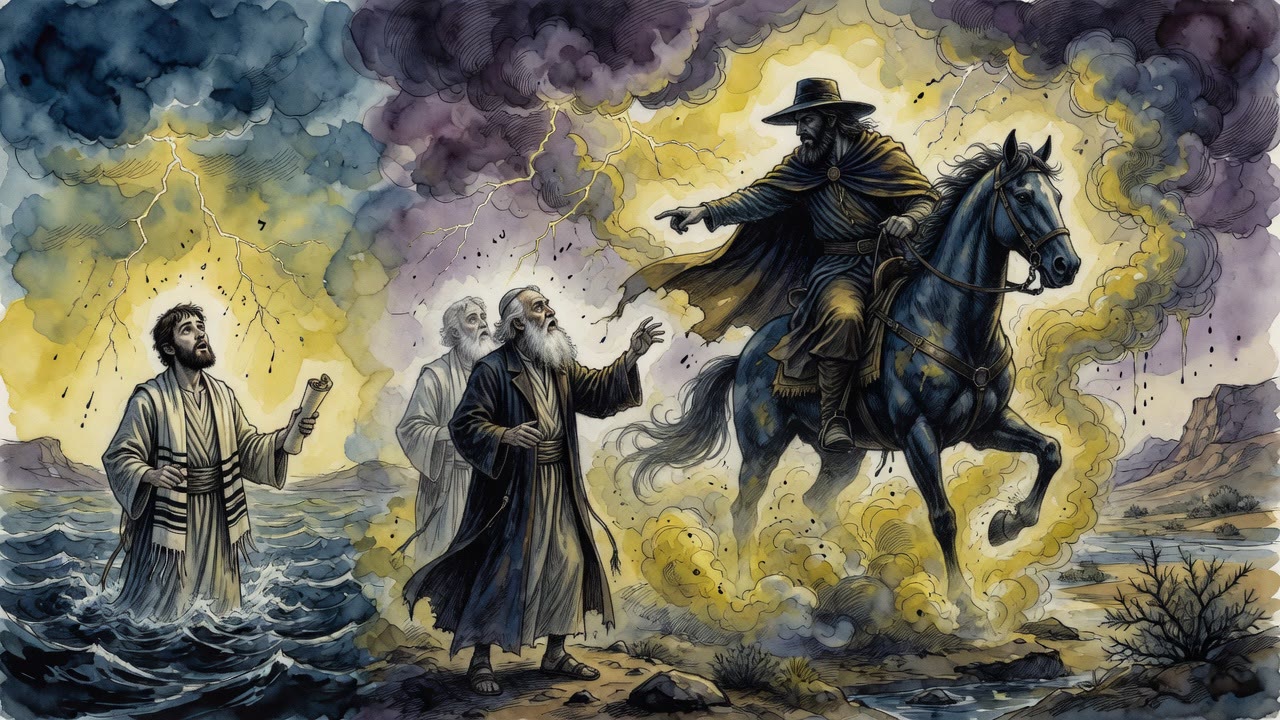
A man bet four hundred zuz he could make Hillel angry. On Shabbat eve Hillel wrapped his cloak and still called him my son.
Table of Contents
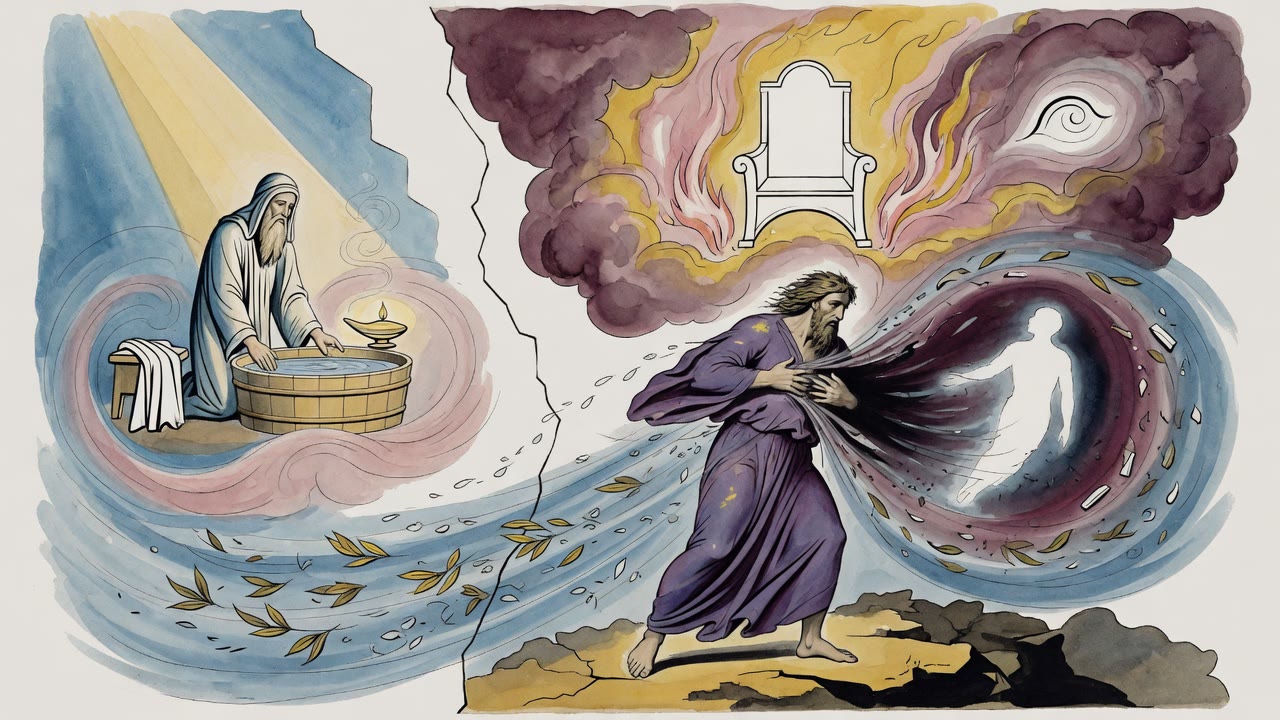
The water was still in Hillel's hair when the shouting started.
 Click for full size
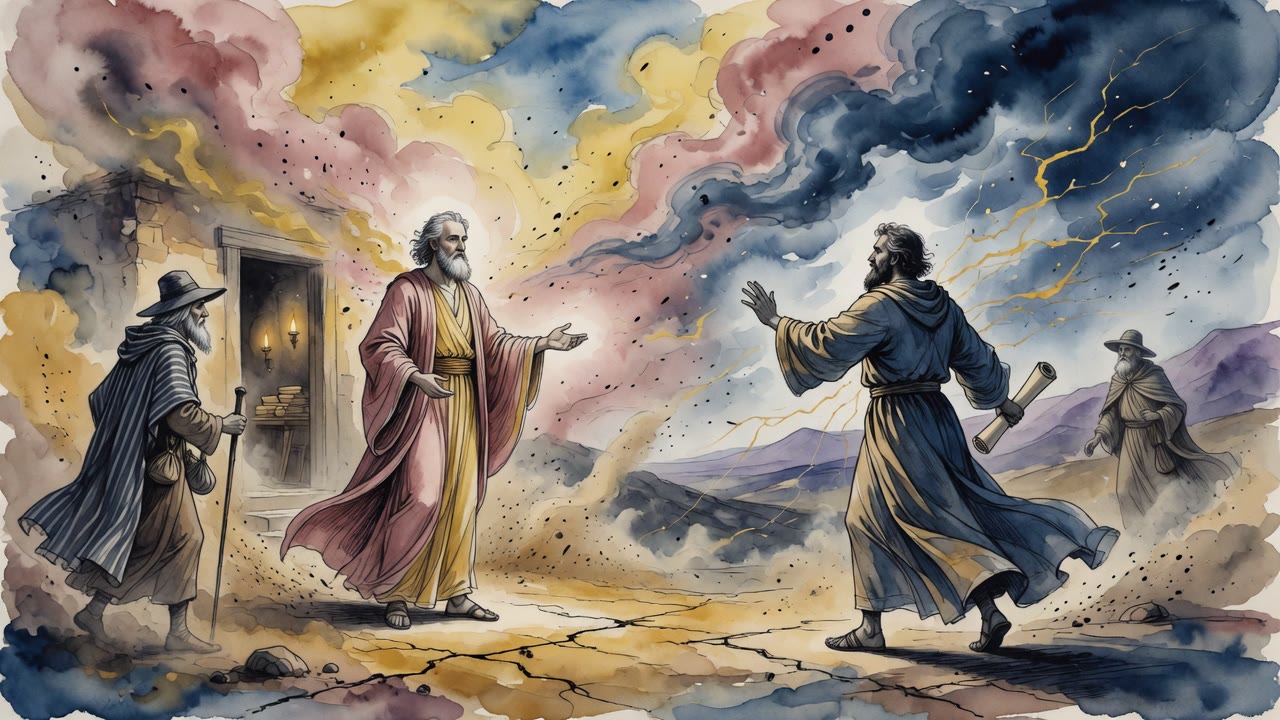
It was the eve of Shabbat. He had been washing. The house was already leaning toward candlelight. Then a voice at the door called his name twice, loud enough for the street. "Who is Hillel? Who is Hillel?"
He wrapped himself and went out.
"My son," he said, "what do you seek?"
The man had a question ready. Why do Babylonians have round heads? Hillel answered as if a student had brought a hard case from the study house. "My son, you have asked a great question. Because their midwives are not skilled."
The man walked off. He waited an hour. He came back and shouted the name again. Hillel wrapped himself a second time and came out into the cooling air. Why do the people of Tadmor have weak eyes? Because they live among the sands. An hour later: why do Africans have wide feet? Because they live among the marshes.
The man had wagered four hundred zuz he could make Hillel angry. He had chosen the worst hour on purpose. Now he tried a last cut. "I have many questions, and I am afraid you will lose your temper."
Hillel wrapped himself, sat down in front of him, and said, "Ask all you have."
The man looked at the wet hair, the patience, the open door. "Are you Hillel, the one they call prince of Israel?"
"Yes."
"If you are, may there not be many like you in Israel. Because of you I have lost four hundred zuz."
Hillel did not rise. "Better that you lose four hundred zuz, and four hundred more, than that Hillel should lose his temper."
The Measuring Rod at Shammai's Door
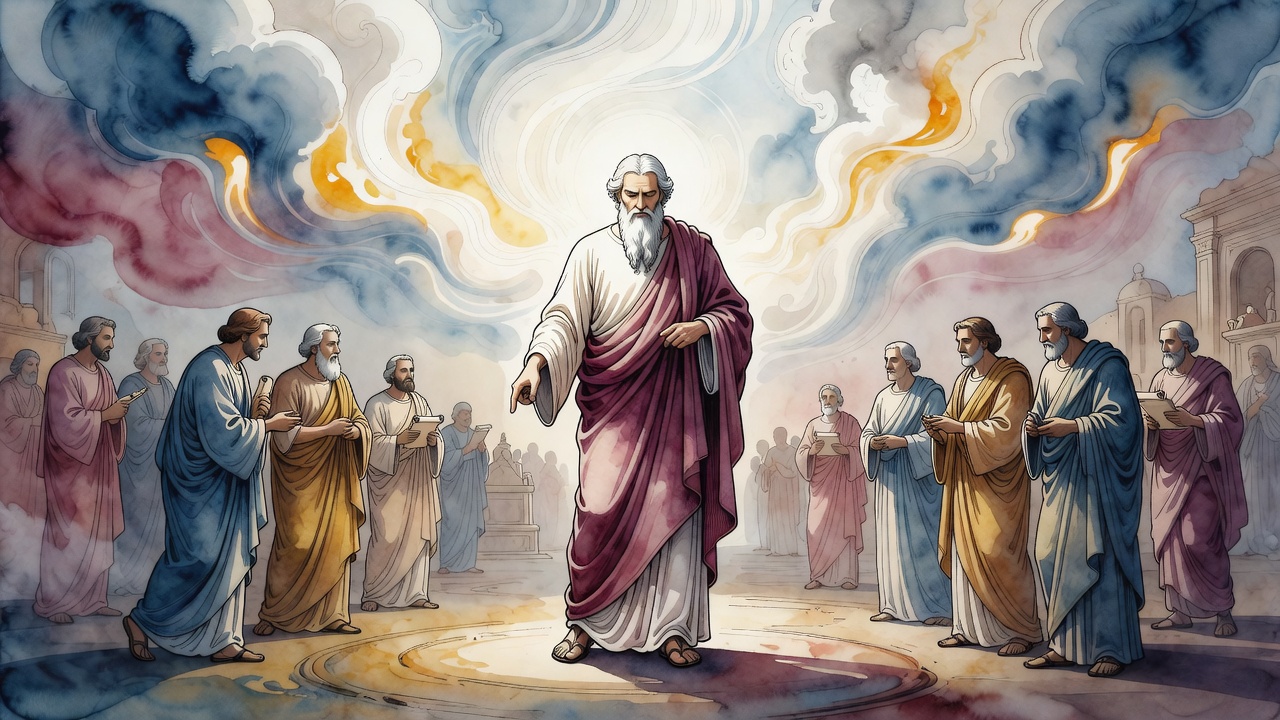
Then the strangers came who wanted Torah on a condition.
The first stood before Shammai with a builder's demand. Convert me, he said, but make me high priest. He had already dressed himself in his mind: gold, blue, purple, scarlet, stones on the breastpiece carrying the names of Israel. He wanted the robe more than the yoke.
Shammai was a builder. He had a measuring rod in his hand. He drove the man out with it.
The stranger went to Hillel. Hillel accepted him and sent him to study the laws of priesthood. The man sat with the verse that a stranger who comes near the holy service shall die (Numbers 18:7). He learned that even King David, who ruled Israel, could not put on those garments unless he had been born of Aaron. The robe he wanted was not a prize. It was a fence.
He came back changed. "Hillel," he said, "may blessings rest on your head. You brought me under the wings of the Shechinah (שכינה), the Presence, without handing me a coat I was never meant to wear."
The Whole Torah on One Foot
The second stranger made the request sound like a joke. Teach me the entire Torah while I stand on one foot.
Torah had years in it. Arguments stacked on arguments. A man balancing on one foot while asking for all of it seemed to be mocking the house. Shammai reached for the rod again and drove him away.
Hillel did not pretend the request was wise. He made it useful.
"What is hateful to you, do not do to your fellow. That is the whole Torah. The rest is commentary. Go and learn."
The man put his foot down. He had asked for everything in a breath. He received a sentence that could bear his weight, and an order that would take the rest of his life. Love your neighbor as yourself (Leviticus 19:18) had been pressed small enough to hold in one stance, then handed back as work.
The Letters That Changed Overnight
The third stranger would take only what was written.
"How many Torahs do you have?" he asked Shammai.
"Two. The Written Torah and the Oral Torah."
"I believe you about the one in ink. I do not believe you about the one in the mouth. Convert me on condition that you teach me the Written Torah alone."
Shammai rebuked him and put him out. Hillel took him in and began with the alphabet.
On the first day Hillel taught him aleph, bet, gimel, dalet. On the second day he reversed the letters. The student struck the table with his hand.
"Yesterday you taught me differently!"
Hillel had him. "Are you not relying on me? Rely on me also for the Oral Torah."
Black marks on parchment do not name themselves. A living mouth has to say: this is aleph, and this is bet. The stranger had wanted a book that would not need teachers. Hillel placed two letters in front of him and made him feel the need in his own mouth.
The Converts Named the Difference
Later the three met in one place. Each remembered the rod and the open door.
Shammai had guarded the boundary by pushing them away. Hillel had guarded it by letting them come close enough to find where the boundary really stood. He did not make the first man a priest. He did not flatten Torah for the man on one foot. He did not throw away the Oral Torah for the man who feared it. He trusted Torah more than he trusted his own irritation.
They said it aloud, the way new students do when they finally know what happened to them. "The sternness of Shammai sought to drive us from the world. The patience of Hillel brought us under the wings of the Shechinah."
The man who had lost four hundred zuz never collected. The men who had arrived as tests stayed. Hillel's door was still open when they left, and the measuring rod was still a measuring rod. Hillel had used patience as a gate.
← All myths