The Man Who Bet He Could Make Hillel Lose His Temper
A man wagered four hundred gold coins he could provoke the great sage Hillel into anger, asking absurd questions on a Friday afternoon.
 Click for full size
The Bet
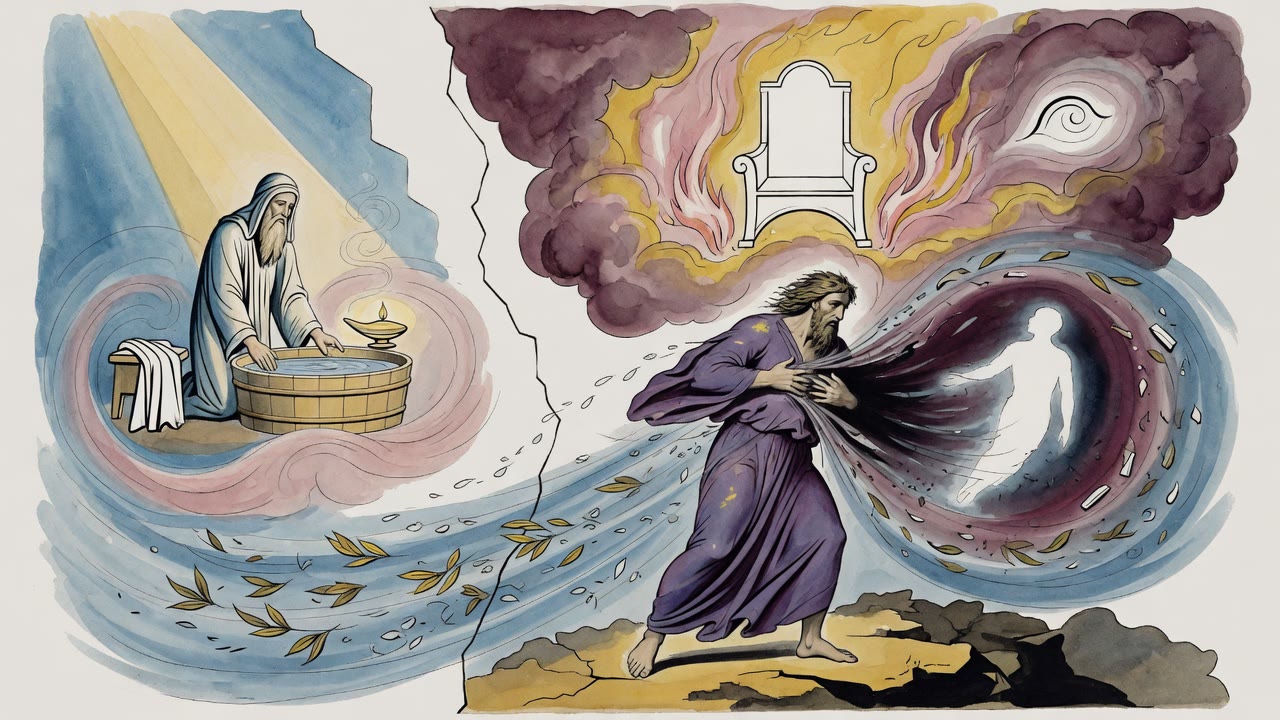
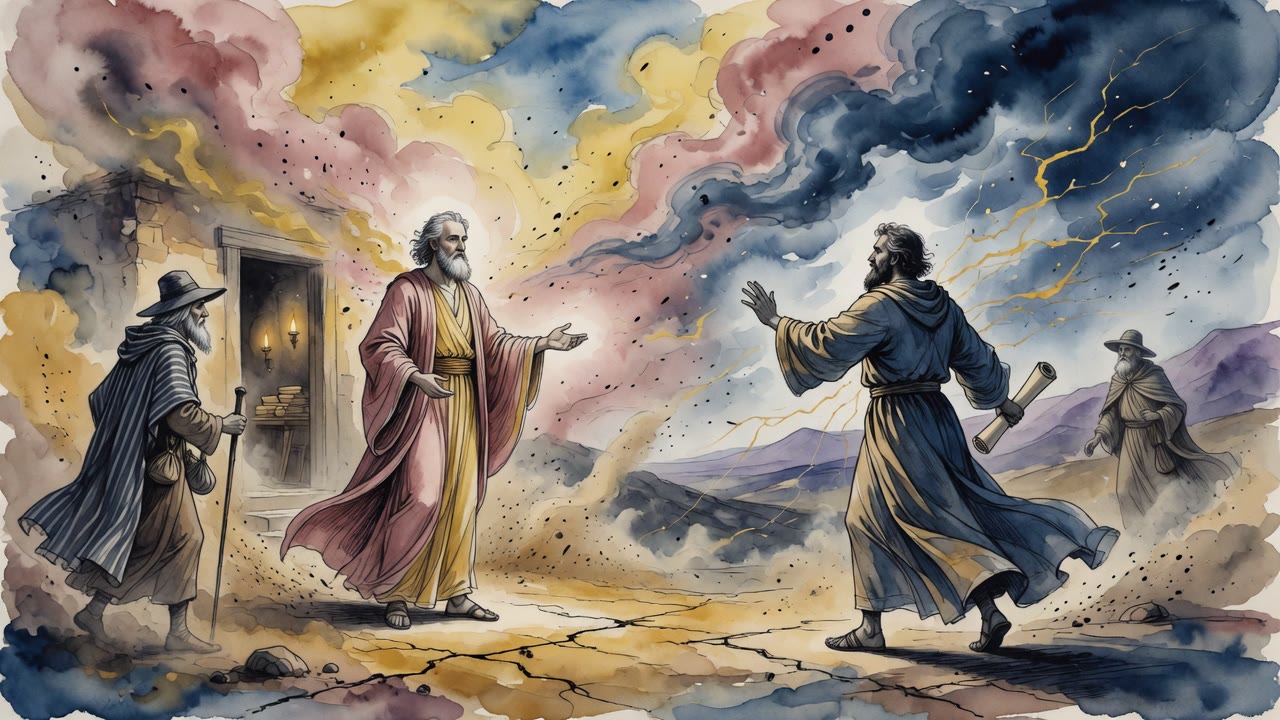
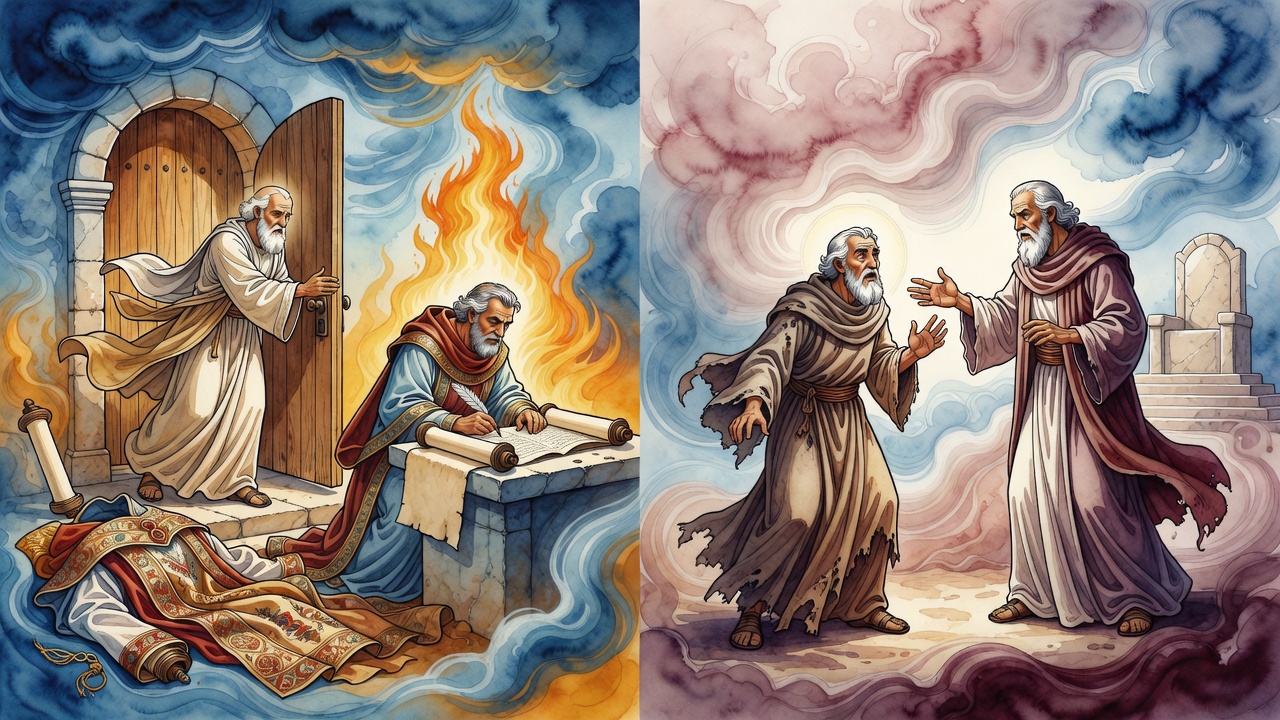
Someone once wagered four hundred gold coins that he could make Hillel lose his temper. He chose a Friday afternoon for the attempt, knowing that Hillel would be in the middle of Sabbath preparations, bathing, arranging the meal, shifting mentally from the week's legal work into the sacred pause that the day of rest required. The interruption was calculated. The man knocked on the door.
Hillel appeared wrapped in a towel. He had been bathing. He looked at the man and waited.
The question: "why do the Babylonians have round heads?"
Not a legal question. Not a theological question. An anthropological provocation, the ancient equivalent of asking a distinguished scholar why people in some distant city have a funny accent. The man expected ridicule, or impatience, or at least a flash of irritation at being interrupted for something so trivial.
The Questions That Would Not Land
Hillel answered with complete seriousness. "Because they lack skilled midwives," he said. Then he went back inside.
An hour later the man returned. Another question: "why do the people of Tadmor have small eyes?" "Because they live in sandy places," Hillel said, "and the wind irritates the eye." The man went away. A third time he returned: "why do Africans have wide feet?" "Because they walk through swampy ground," Hillel said.
Each answer was precise, calm, offered as though the question deserved nothing less. The man had brought absurdity and been treated as a genuine inquirer. This was itself the most deflating possible response. Dismissal would have confirmed his theory about scholars and their pretension. Serious engagement dismantled it.
The Admission
The man finally dropped the pretense. He told Hillel he had wagered four hundred coins on making him angry. He was going to lose the bet.
Hillel said: "it is better that you lose four hundred coins than that I lose my composure."
What Hillel was saying was that his equanimity had a value he had already calculated, and four hundred gold coins does not approach it. He is not being modest. He is being precise about what things cost. The man had come with money. Hillel had something worth more than money, and he knew exactly what it was.
What the Students Learned
Eighty students sat under Hillel, arranged in a hierarchy. The greatest of them, Shimon ben Gamliel, would one day lead the generation. The least of them, Yohanan ben Hahoranit, was great enough that the sun stood still for him. Hillel produced this range not by selecting only the brilliant, but by receiving everyone who came. The patience with the gold-coin man at the door was not a different character than the patience in the study hall. It was the same quality applied to a different kind of visitor.
A person's true character shows in three things: their cup, their wallet, and their temper. Hillel's test, applied from outside by a stranger with money and mockery, covered all three. He had been at the wine and the meal preparations. He had been interrupted at an expensive time. He had been provoked repeatedly. He passed on all three counts without appearing to try.
← All myths