Hillel the Elder and the Guest Who Arrived After the Food Went Cold
Hillel answered absurd questions three times without losing his temper, then served a cold meal to a very late guest and called it a pleasure.
Table of Contents
 Click for full size
Four Hundred Zuzim on a Friday Afternoon
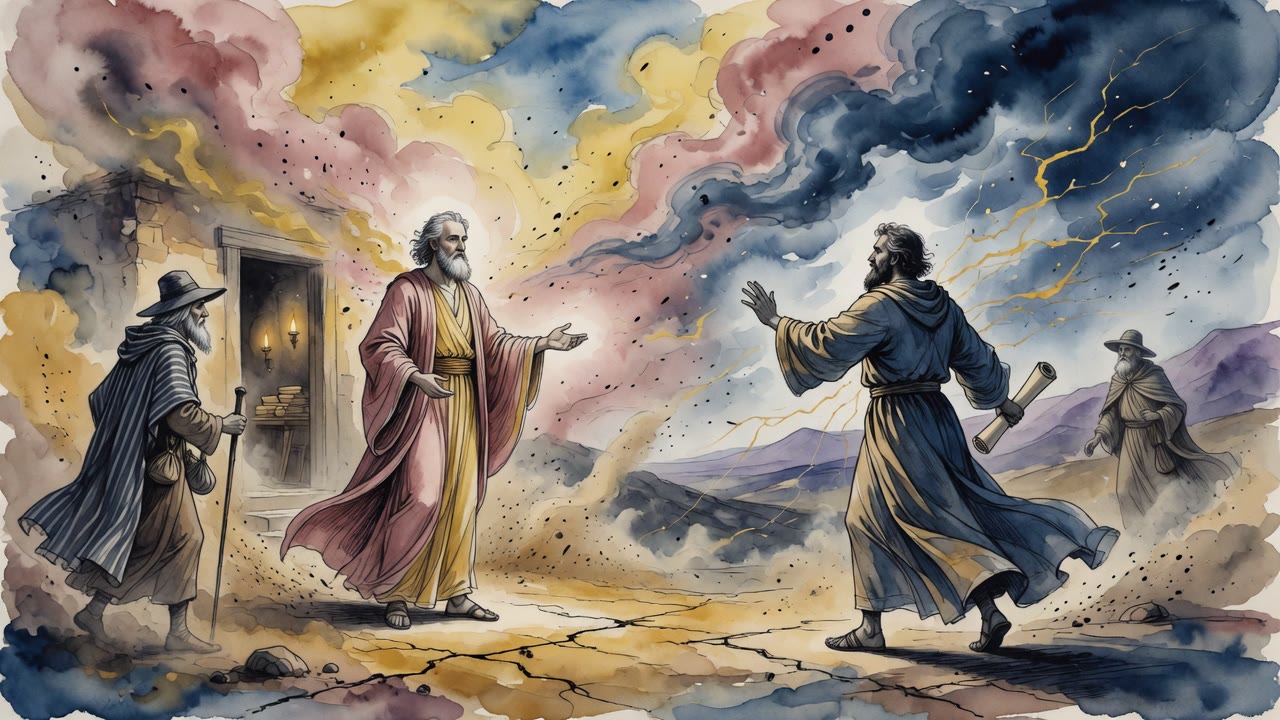
The man had a plan. He would arrive at Hillel's door on a Friday afternoon, when the greatest sage of the generation was deep in Sabbath preparations, bathing, arranging the meal, shifting mentally from the legal arguments of the week into the sacred rest that was approaching. He would knock, disrupt the preparation, and ask a question so deliberately absurd that no scholar could answer without irritation.
He knocked. Hillel appeared at the door wrapped in a towel, dripping.
"Why do the Babylonians have round heads?"
Hillel considered this. "Because their midwives are not sufficiently skilled," he said. He went back inside.
An hour later the man knocked again. "Why do the people of Tadmor have small eyes?" "Because they live in sandy places," Hillel said, "and the wind irritates the eye." A third time: "why do Africans have wide feet?" "Because they walk through swampy ground." The man had come with a wager of four hundred zuzim on the proposition that he could make Hillel lose his composure. He lost the wager. He also lost, or rather, he spent, a Friday afternoon being treated as a genuine inquirer by the man he was trying to embarrass.
What Hospitality Actually Requires
Patience held at the door. It held again at the table, on a different day, with a different visitor who tested it without a wager.
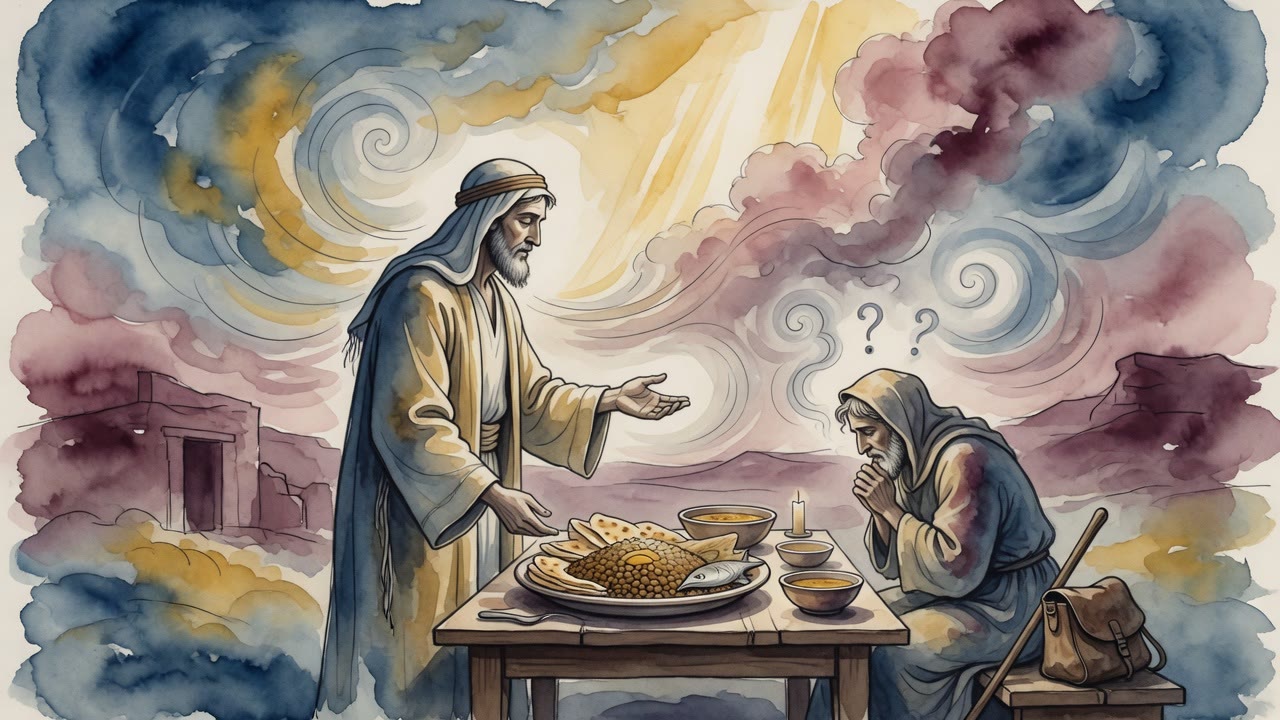
Hillel had invited a guest to his home for a meal. He prepared the food and set the table. The guest was late. Not slightly late. The food went cold. The Sabbath began, and the guest had still not arrived. When the man finally appeared, he said nothing by way of explanation, no apology, no acknowledgment that his host had been waiting. He sat down.
Hillel welcomed him. He served the cold food without comment. When the guest finally asked whether anyone had been troubled by his lateness, Hillel said: "we had prepared for you earlier, but for a distinguished guest like you, the waiting is a pleasure."
The Discipline Behind the Patience
These two stories turn on patience, and they are patient stories. But the tradition that preserved them alongside each other set them together for a more precise reason: Hillel's equanimity was not temperamental. It was the product of a decision he had made in advance about what things were worth.
He knew the man with the wager was trying to provoke him. He chose to treat the provocation as a genuine question, not because he was naive but because treating it that way cost him nothing and told the man something. He knew the late guest had been discourteous. He welcomed him warmly, not because he was unaware of the discourtesy but because hospitality had a value he had already calculated, and wounded dignity did not approach it.
The tradition attached to these stories notes that a person's character is revealed in three things: the cup, the wallet, and the temper. The cup is how you behave with wine, when inhibition lowers. The wallet is what you do with money, when the pressure of cost makes people compromise. The temper is what you do when you are annoyed. Hillel passed all three tests, not once but repeatedly, across different kinds of provocations, under different kinds of pressure.
The Students Who Learned This
Hillel produced eighty students. The tradition arranged them in a hierarchy: the greatest was Shimon ben Gamliel, who would lead the next generation; the least was Yohanan ben Hahoranit, who was nonetheless great enough that the sun stood still for him. This range was not accidental. Hillel received every kind of student because he approached every kind of person with the same quality of attention he gave the man with the absurd questions and the guest who arrived after the food was cold. The patience and the pedagogy were the same discipline applied to different situations.
The students he produced were not copies of each other. They were people who had been, each of them, treated as though their questions deserved serious answers and their presence deserved genuine welcome, regardless of how they arrived or what they brought with them. The welcome Hillel gave the late guest was not only hospitality. It was a teaching method.
← All myths