Elisheba's Four Crowns Collapsed into One Grief
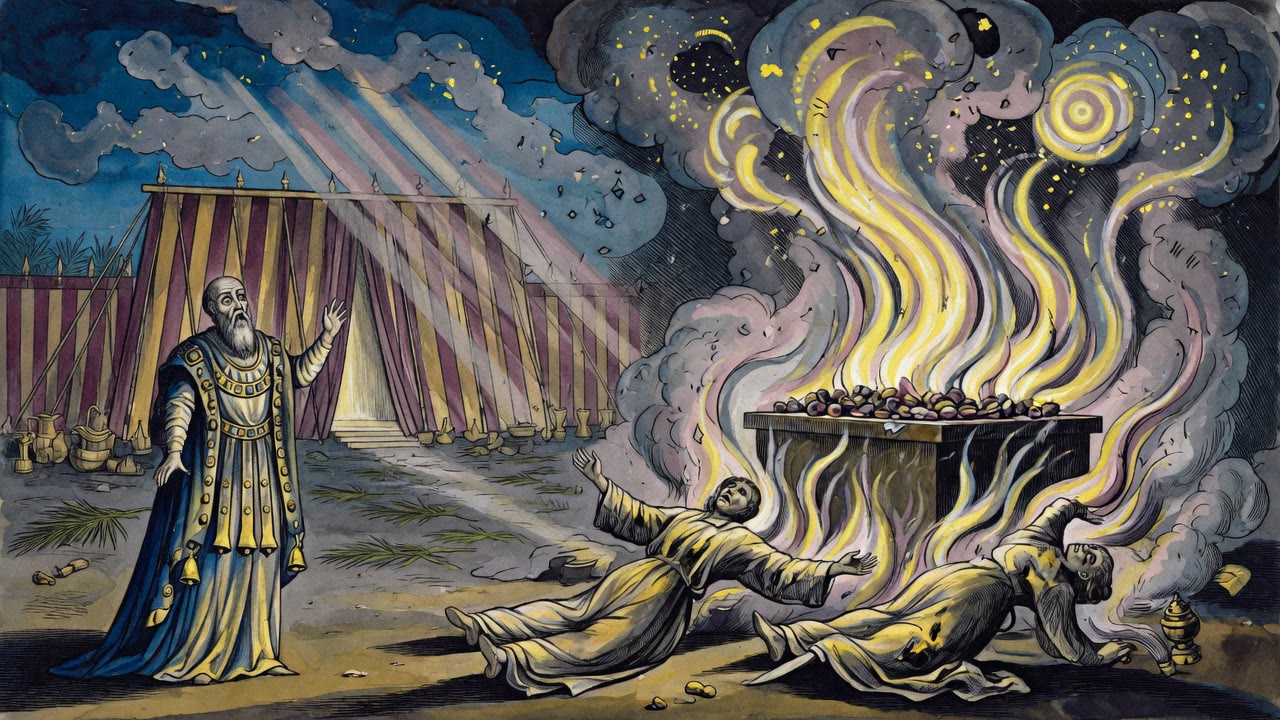
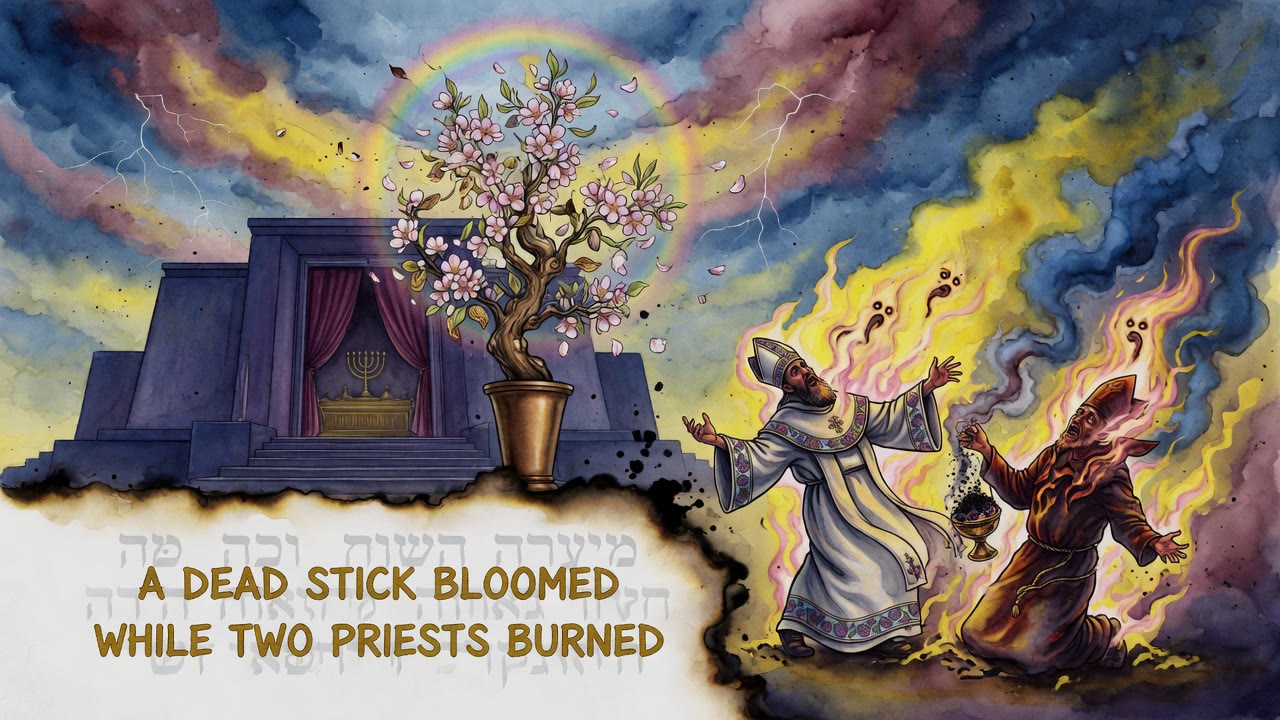
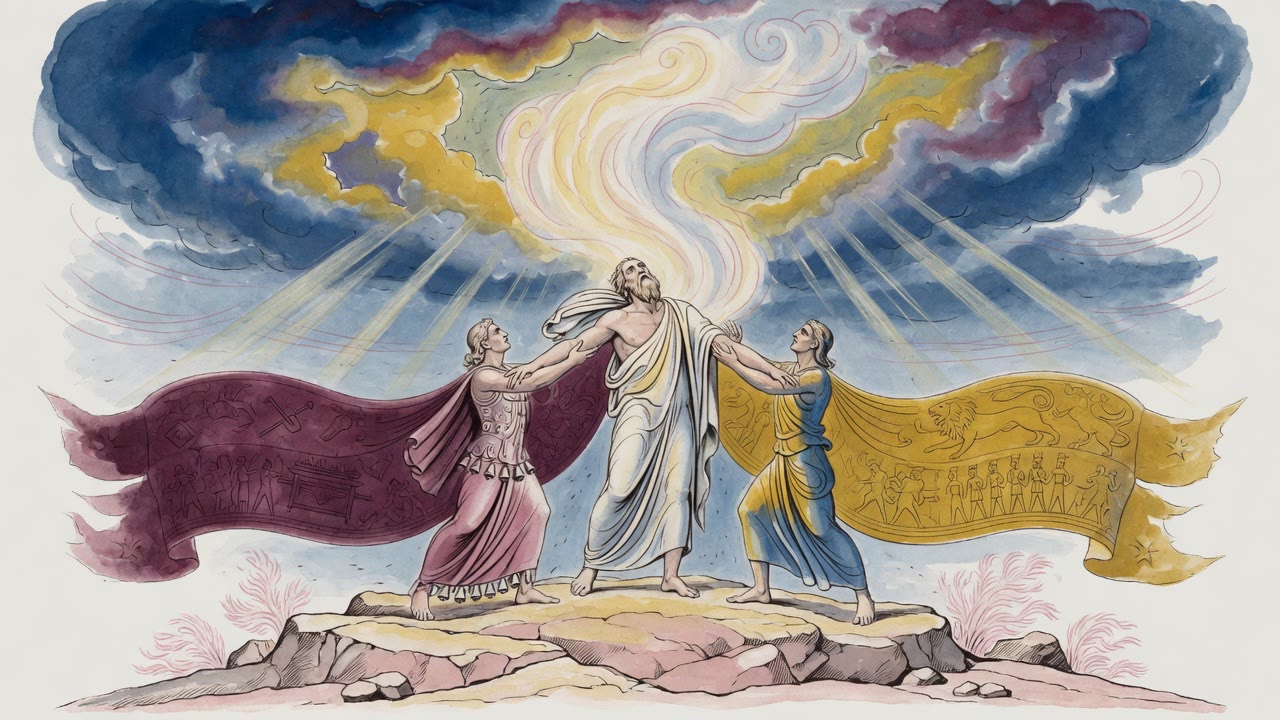
Oil still shone on Aaron's beard. By nightfall Nadab and Abihu lay as ash at the Tent, and Elisheba's hands were empty.
Table of Contents
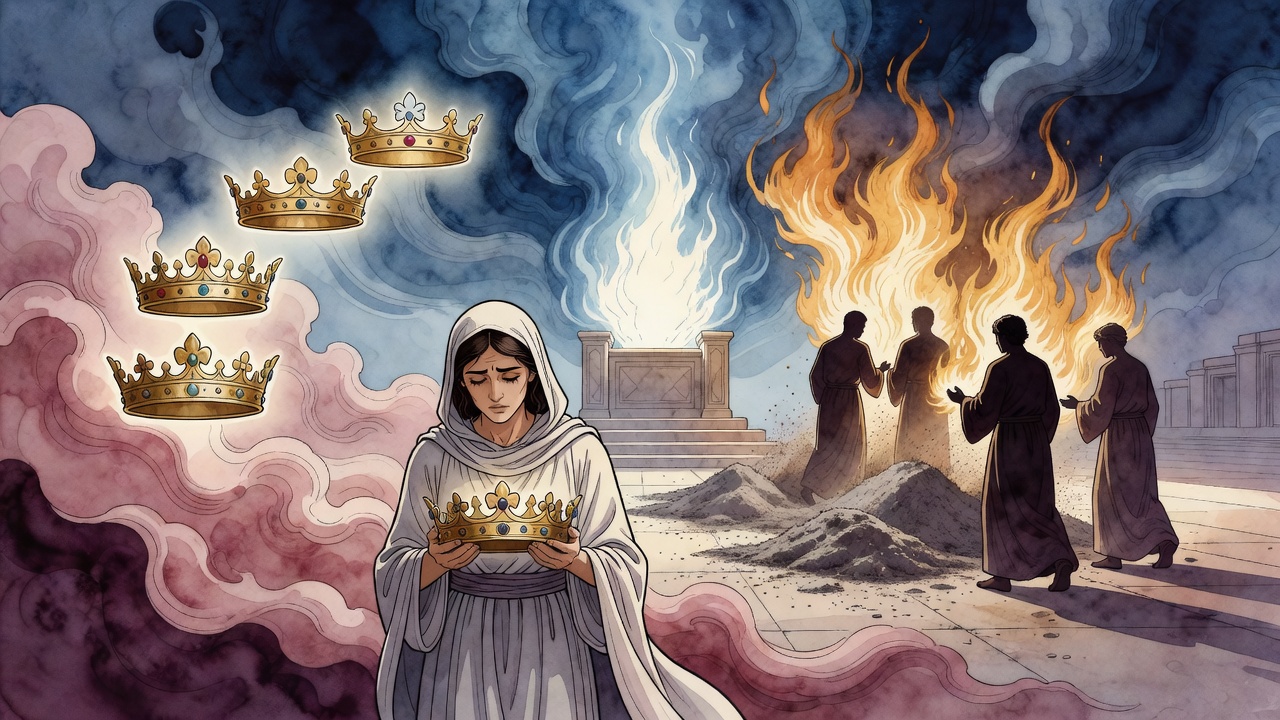
Elisheba, daughter of Amminadab, stood in the smell of new oil and counted. Her brother-in-law Moses stood as a king over Israel. Her husband Aaron had just been anointed High Priest. Her brother Nachshon had been raised as a prince of Judah. Her two sons, Nadab and Abihu, served as deputies of the priesthood.
 Click for full size
Four joys on one day. The camp still smelled of linen and the blood of offerings. She held more gladness than any woman in Israel had held so thickly at once.
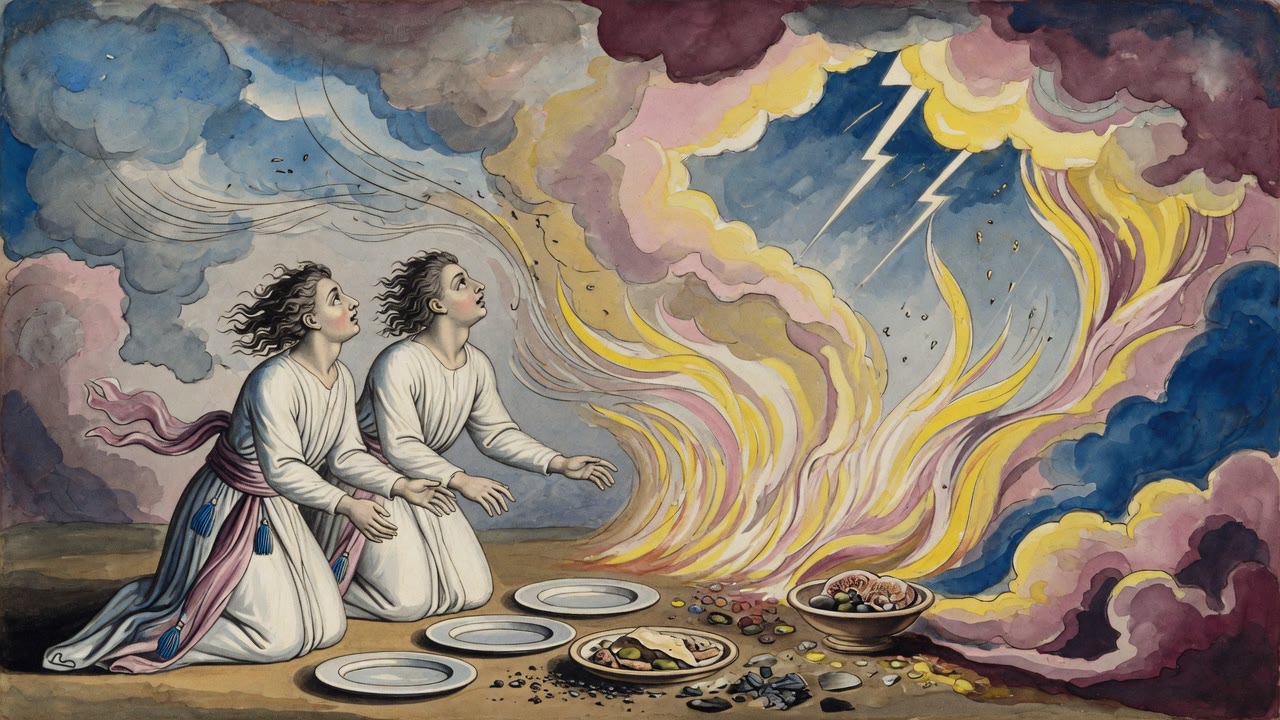
Then her sons stepped forward to bring an offering before the Lord.
Four Joys Before the Offering
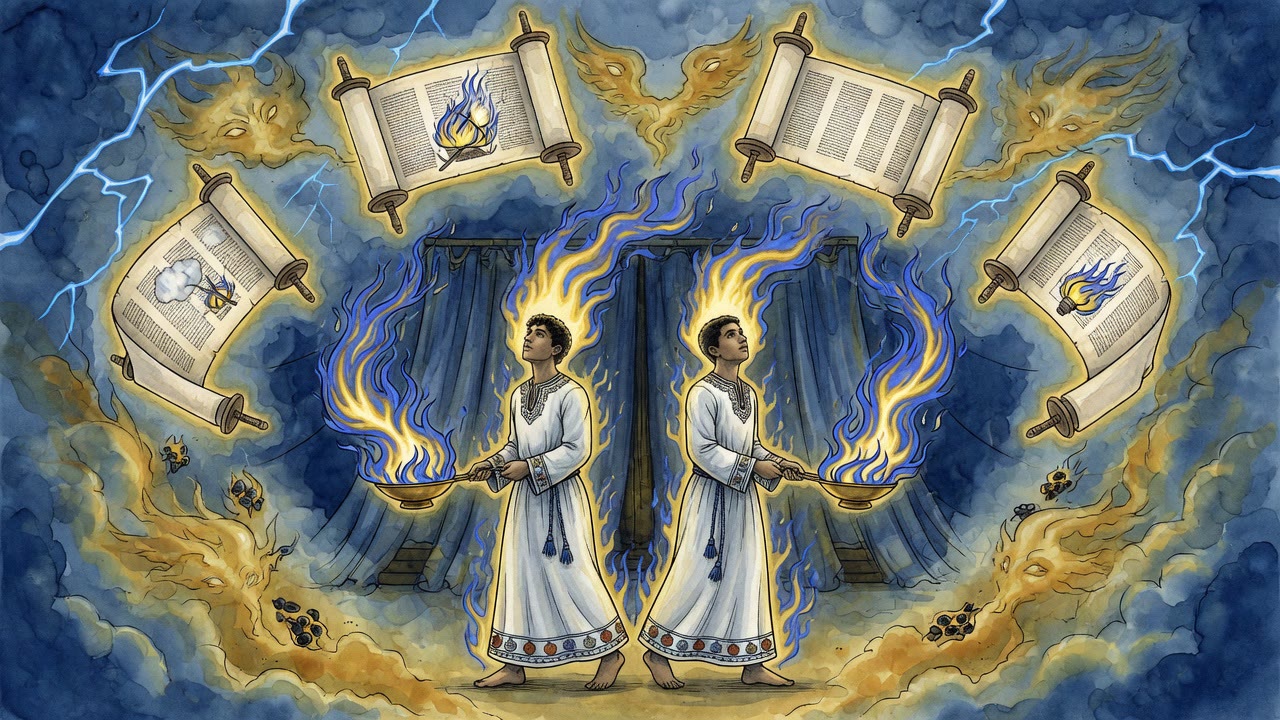
They entered in joy. They came out as ash, burned by the fire they had drawn too near. The Attribute of Justice laughed in the courtyard, a hard sound under the festival noise. Of laughter a verse had already said it is mad (Ecclesiastes 2:2). The laugh did not care that the oil was still wet.
Elisheba's mouth opened. The screaming started while Aaron's beard still shone. Four joys collapsed into one grief so fast the air held both scents at once, anointing and burned hair.
Outside the Tent the people still hummed. Inside, two bodies did not get up.
Sinai's Sentence Waited
The camp would later say they died in the wilderness of Sinai. The blow did not fall at the mountain. At Sinai they were only sentenced. The sentence waited for the Tent of Meeting.
A king was marrying off his daughter. On the wedding day he found something foul in his own groomsman, the man trusted to escort the bride. If I strike him now, the king reasoned, I darken my daughter's joy. My own celebration is coming. Settle it then, not on her day.
So too the Holy One. Nadab and Abihu had earned death already at Sinai. To kill them then would have stained the joy of the giving of the Torah, the wedding of God and Israel. "Better," said the Holy One, "to wait for My own festival." Song of Songs sings of the day of his wedding and the day of the gladness of his heart (Song of Songs 3:11). The wedding is Sinai. The gladness of His heart is the dedication of the Tent. There the sentence finally fell.
Sinai's joy was protected. The Tent's gladness carried the cost. Elisheba had not been told there was a delay. She learned it when the fire was done.
Heaven Wept Twice
God cried the death twice. The sound went through the upper court before it reached the Tent floor. Aaron's grief came once, a single break in a man who had just been dressed as High Priest. Two cries in Heaven. One in the father's throat.
Elisheba heard the human sound. She did not hear the other two. They happened above her, where the Holy One counts the righteous, and they did not bring her sons back.
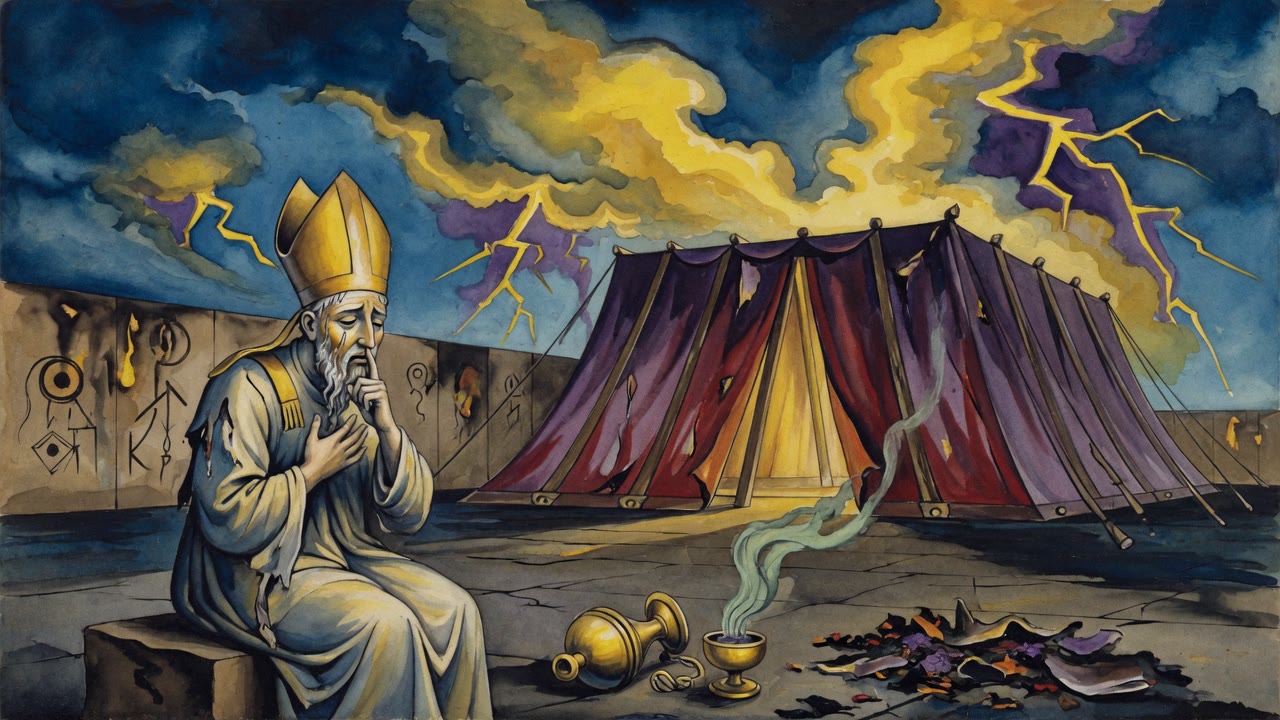
Aaron stood with a silence the camp could hear. Elisheba stood with four joys turned to dust. Heaven's tears outnumbered the father's. That did not make his cheaper, and it did not fill her hands.
Nestlings in the Blood
Aaron had spent the morning like an eagle on a high watch. From there it digs out food; its eyes behold from afar (Job 39:29). He read the year's fortune in the rising smoke of the altar. Smoke leaning south meant plenty in the south. North, west, east, each told its tale. When the column rose straight toward the firmament, the whole world would be fed.
Then the watch turned. Its nestlings lap up blood. After all that glory he beheld his own nestlings, his sons, cooing in their own blood. And he was silent. Where the slain are, there it is. Where Nadab and Abihu lay struck down, there too was the Divine Presence, the Shechinah (שכינה).
Moses did not say, carry your brothers away from the holiness. He said from before the holiness. It is like one who says to his friend, remove the dead from before his father. How long must a father look upon his dead son? For this reason it is written: after the death of the two sons of Aaron.
Elisheba's hands, which had held four joys, held nothing that would not sift through the fingers. Moses still ruled. Nachshon still stood as prince. Aaron still wore the breastplate. Two sons were gone. The Attribute of Justice did not explain itself. It only finished what Sinai had postponed.
Outside, the people still hummed. Inside, the Holy One counted sorrow twice, and a mother learned how quickly a single day can turn from coronation into ash.
← All myths