Moses Asked to Crawl Under the Land in a Tunnel
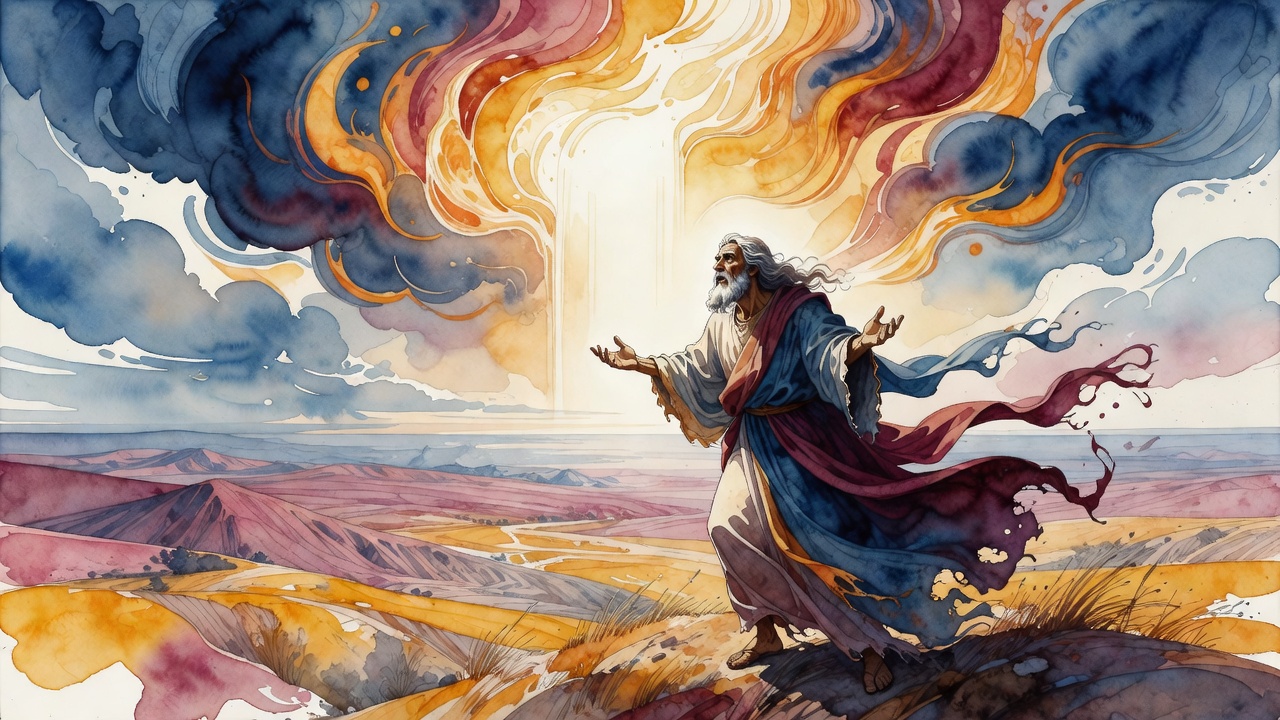
He would not plant a heel on the holy dirt. He asked to move under it like water through a hidden channel. God said no to the tunnel too.
Table of Contents
 Click for full size
Neither King nor Commoner
Moses stood before the Holy One with dust still on his sandals from the last camp and refused to accept a closed map. The decree had already named two forbidden doors. He would not enter the land as a king. He would not enter as a commoner. He came back anyway, breath short, voice steady, looking for a third way through stone.
He had argued over Egypt's plagues. He had argued over the calf. He knew how to stand and keep standing. God knew how to close a door without contempt. Advocate and Judge met each other in a negotiation that never turned cruel and never turned loose.
The Tunnel Under Caesarea
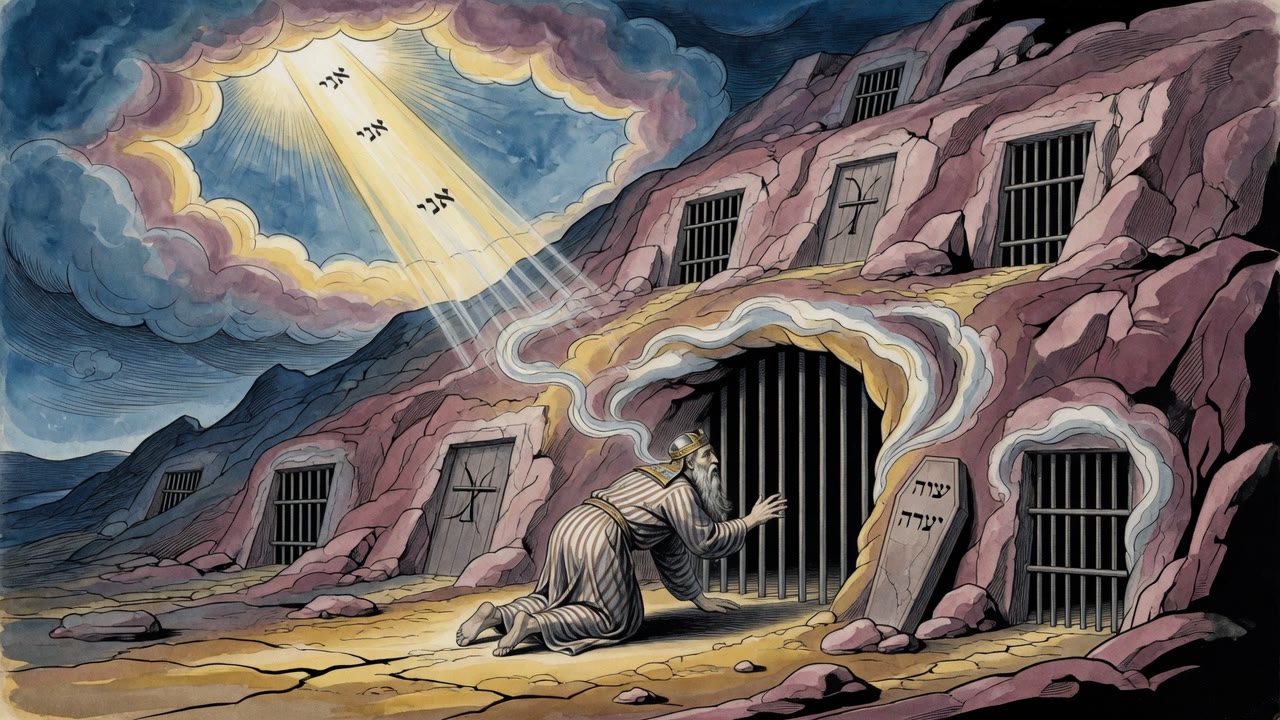
"Lord of the universe," he said, "since I cannot enter as a king, and I cannot enter as a commoner, let me enter through the tunnel of Caesarea that runs beneath the land."
He was not joking. If the ban was written for the surface, perhaps the soil still lay open underneath. He would never plant a heel on the holy dirt. He would move under it like water through a hidden channel, eyes lifted toward a roof of earth he was not allowed to touch.
The answer came from the verse itself. "But there you shall not pass through" (Deuteronomy 34:4). The word "there" covered every sense. Not on the land. Not under the land. Not through the land. The decree was total, and the tenderness of the refusal did not soften the seal.
Moses kept standing. He kept asking. God kept closing doors.
Joseph's Coffin in the Camp
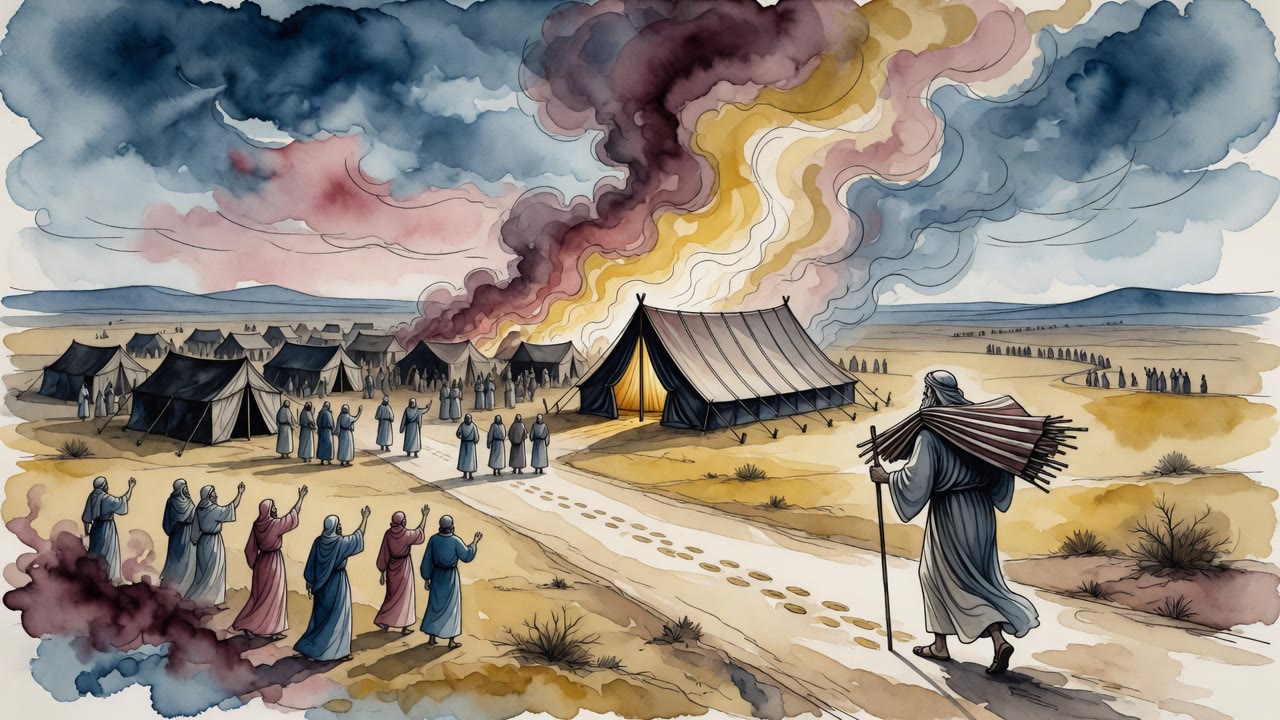
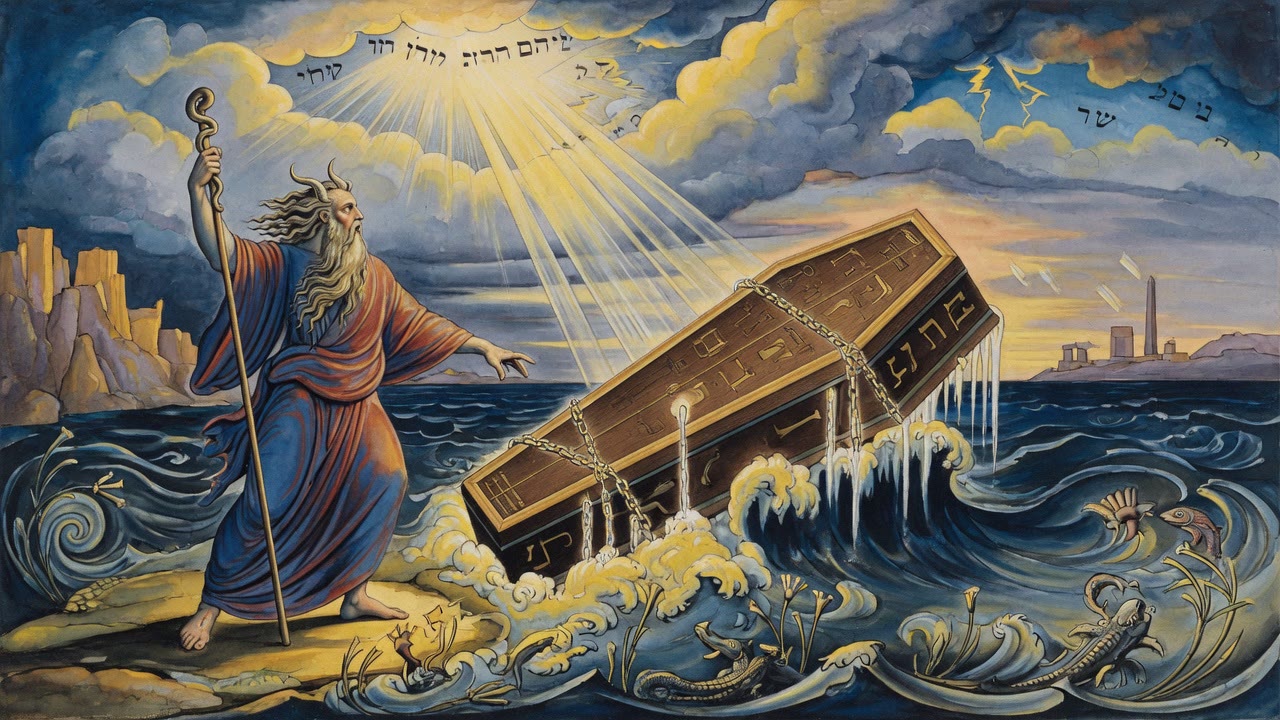
Joseph's remains left Egypt in a coffin and waited for burial in the land God promised the fathers. Moses walked past that coffin among the wagons. A promise on the move. He knew his own remains would not share the destination.
He had already said it himself. "For I shall die in this land. I shall not cross the Jordan" (Deuteronomy 4:22). A dead man does not ford a river. The second decree was not about breath. It was about bones. If the ban was only for the living, a coffin could still ride west with Joseph's. Heaven closed that door too.
The jealousy, if it was jealousy, was holy. He wanted the land the way a shepherd wants the pasture he has only smelled on the wind.
He Kept Standing
Each proposal Moses made was a technicality born of love, not of pride. He did not want a throne. He wanted the soil. He wanted one look at the hills Abraham walked, one breath of the air Isaac knew, one path Jacob had named with tears.
Heaven did not mock the hunger. Heaven also did not yield. Mercy had already filled the wilderness with manna and water and second chances. The border of the land remained a wall.
Moses knew the people would cross. Joshua would lead. The children would plant. The Song had already slipped into "You will bring them in," not "us." The shepherd heard the pronoun and still begged for a tunnel.
He hunted for any geometry that would let him taste the land without violating the letter of the ban. Kingship denied. Common status denied. Underground passage denied. Coffin denied. "There you shall not pass through" left no residual path for cleverness. Sight from a height remained.
The View from Nebo
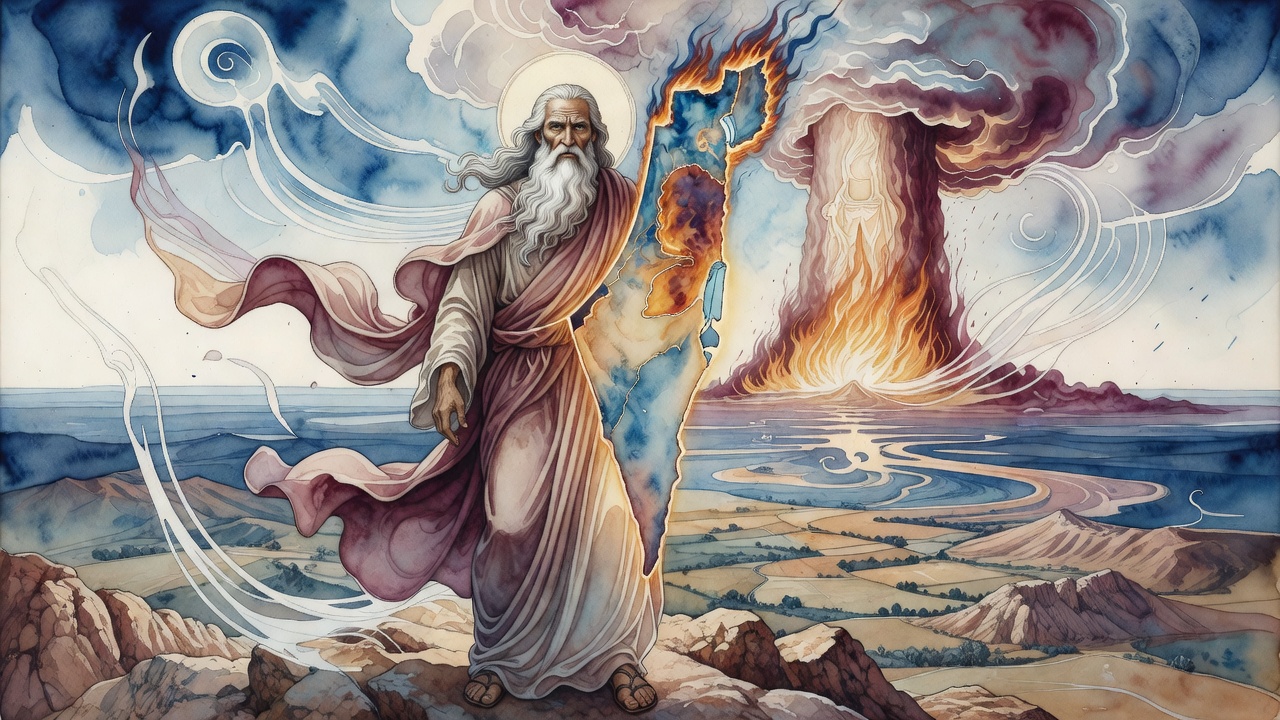
On the ridge of Nebo the view opened like a gift and a wound. He would see what he could not touch. No tunnel opened. No bones would ride in a coffin across the water. The law of the decree held, and the man who taught Israel how to argue with Heaven accepted the final ruling with a heart that had already spent itself in love of a country he would only ever see from a height.
Below him the Jordan kept its green line. Across it the land waited for other feet. He stood. He looked. He did not step.
Wind came up the face of the ridge and pulled at his cloak. The camp behind him was already packing for a crossing he would not join. He had carried them forty years to this overlook. The overlook was the gift. The wall was the gift's edge. He did not ask again. He had already asked every door he could name.
← All myths