Moses Sees the Whole Land Before He Dies
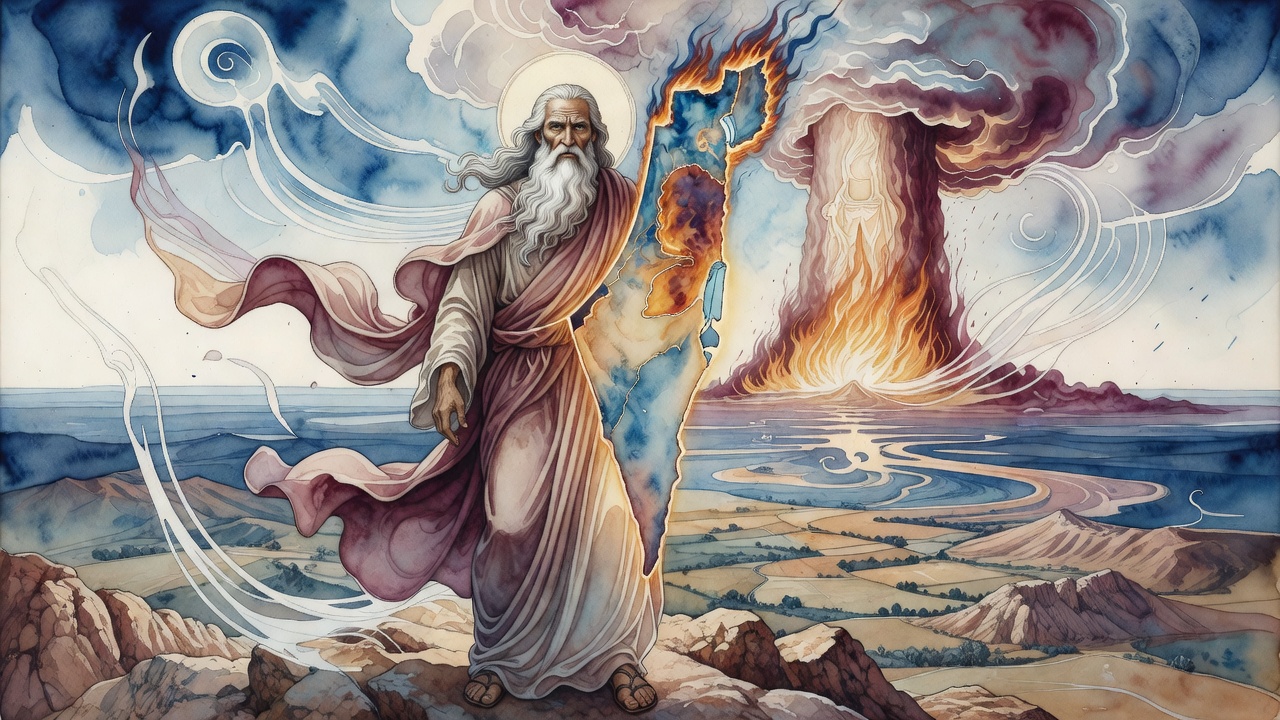
On Nebo, Moses is one hundred twenty and still sharp. God shows him fields and futures. He dies with Israel's map burning behind his eyes.
Table of Contents
 Click for full size
One Hundred Twenty Years
Moses climbed the mountain with legs that still obeyed him. The Torah is blunt about the wonder. "Moses was one hundred and twenty years old when he died; his eye was not dim, nor his natural force abated" (Deuteronomy 34:7).
The Sifrei gathers other lives into that number, as if one hundred twenty were a seal pressed on a certain quality of service. Moses receives the seal first and most publicly. He does not die of thin blood or a soft mind. He dies because the hour has arrived, and because the land he may not enter still has to be seen.
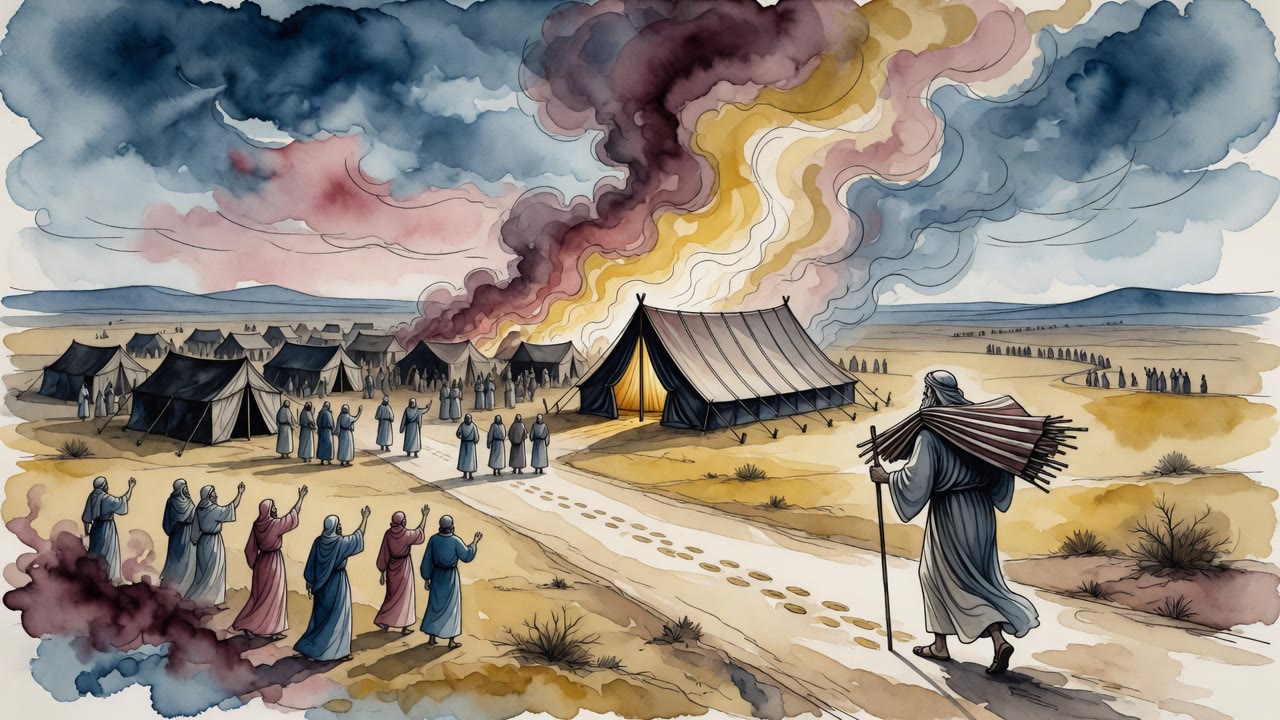
Below the ridge the camp breathes like a single animal. Tents. Smoke. The low sound of people who know a transfer of power is coming and cannot joke it away. Joshua waits with a face trained for obedience and not yet fully trained for loneliness.
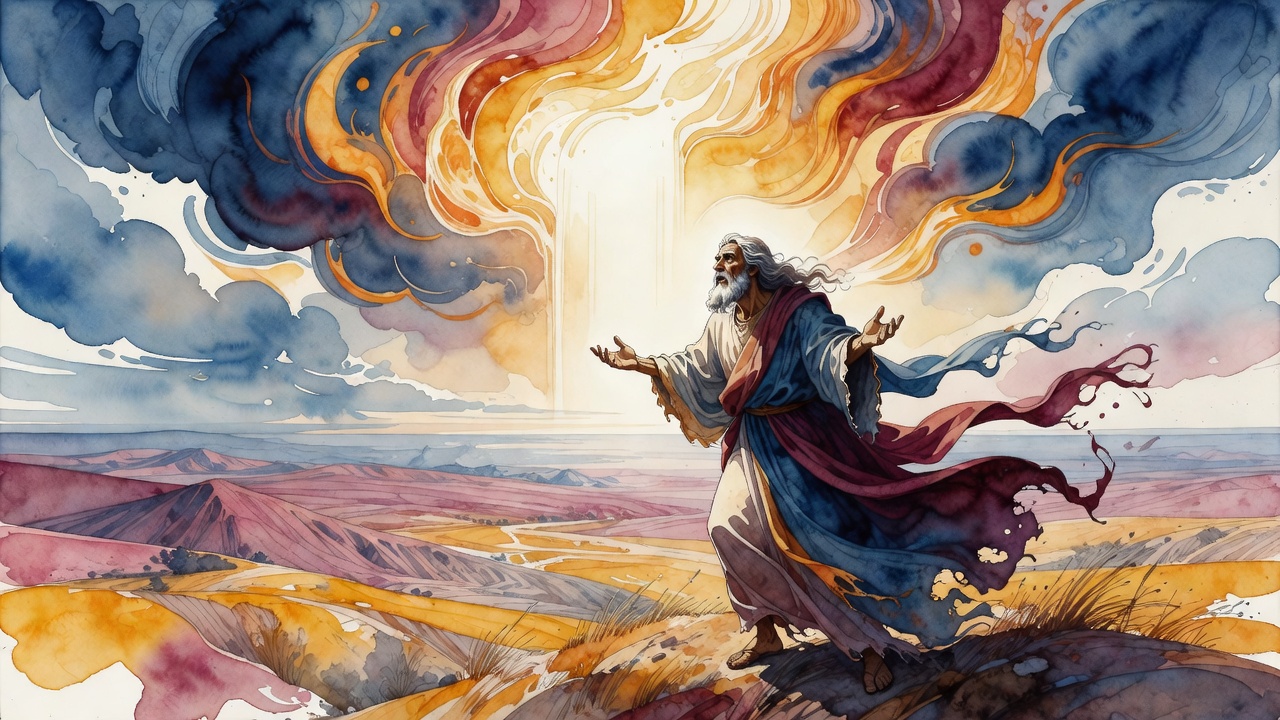
Wind moves over the ridge and does not ask permission. Moses's cloak lifts once and settles. He has argued for entrance and been refused. He has begged to cross as a private man and been refused. Sight is the mercy that remains, and he takes it without pretending it is the same as arrival.
The Entire Land
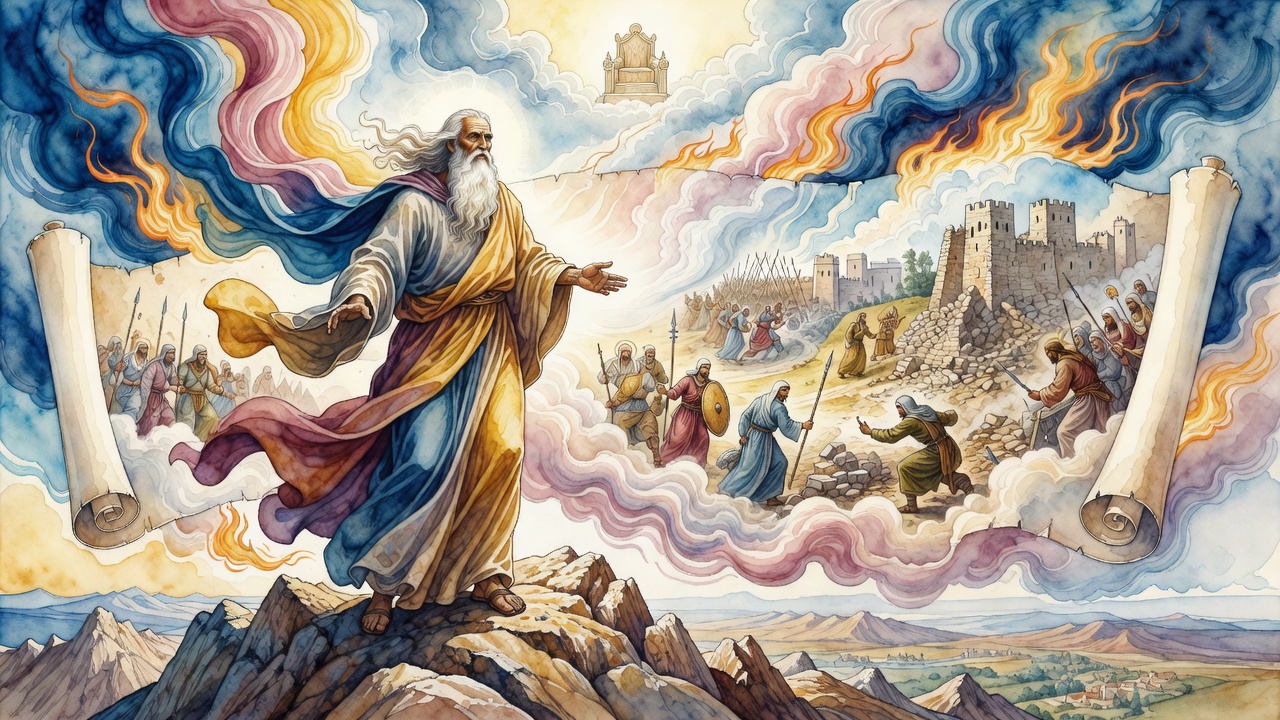
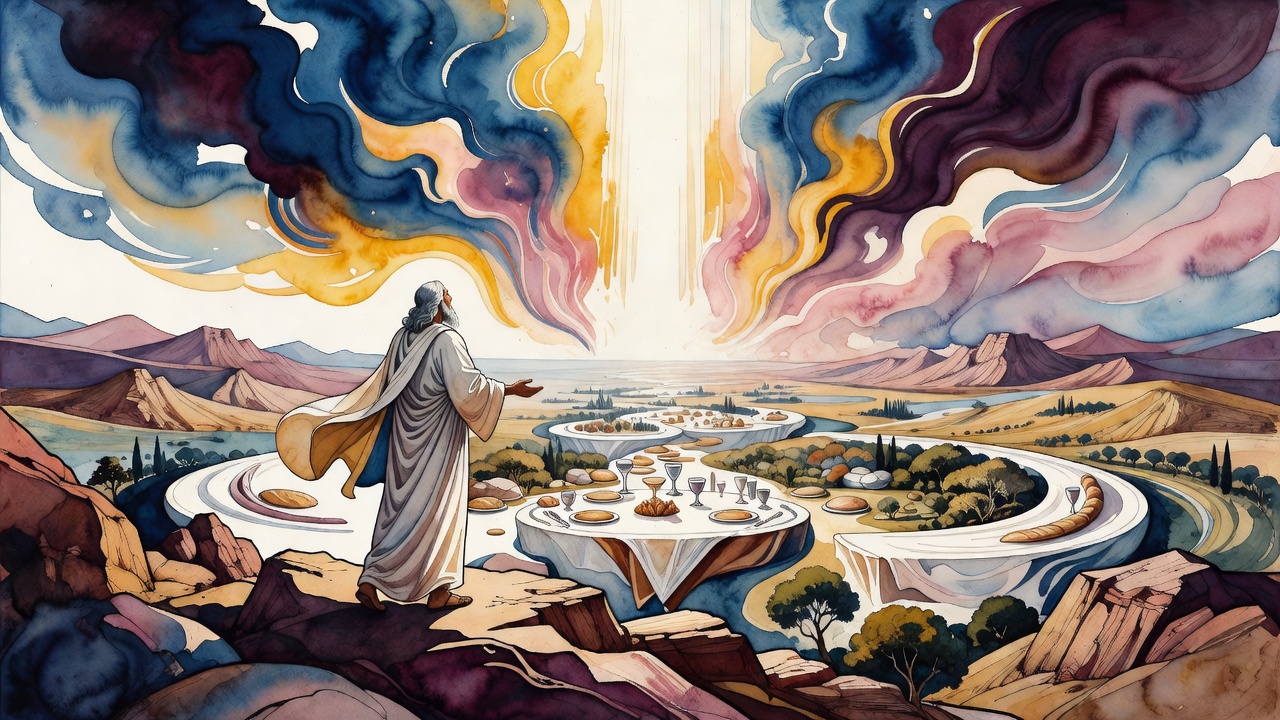
God shows him "the entire land" (Deuteronomy 34:1). The phrase is larger than a scenic overlook. The midrash refuses to leave it as tourism. Moses is given vision that eats distance. He sees valleys and hills, and he sees what those valleys will become when tribes pitch their tents and plant their first grain.
He sees the land as promise and as burden. Inheritance is not a gift with the price tag torn off. It is a map of wars not yet fought, of altars not yet built, of failures that will make later prophets tear their clothes. Jericho still has walls. The hills of Judah still hold a silence that will later hold kings and then lose them.
Moses stands on Nebo as a man who has already carried a nation through sea and sand. Now he carries the nation's future for a few last minutes of sight, then sets it down for Joshua to lift. The transfer is almost physical. You can imagine the weight leaving his hands and not leaving his heart.
Leadership That Outlives the Body
Death, for most men, is a curtain. For Moses the midrash opens a second door. Song and teaching do not stop when the mouth stops. Great is song, says the tradition, for it obtains in the past, in the future, in the time of the Messiah, and in the world to come.
Moses still leads after death because the Torah he placed in Israel's mouth keeps speaking in his cadence. Children learn verses he shaped. Courts rule by paths he cut. When a generation forgets, the words wait like a staff leaning against a wall, ready for the next hand.
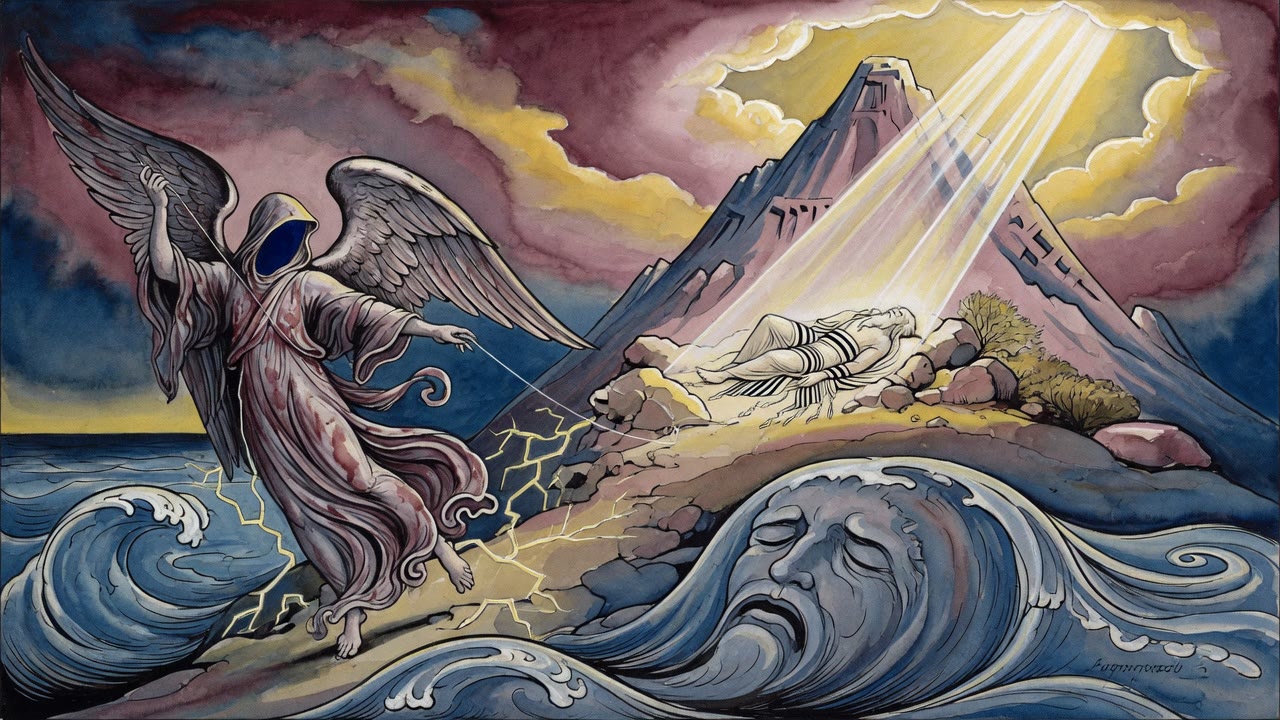
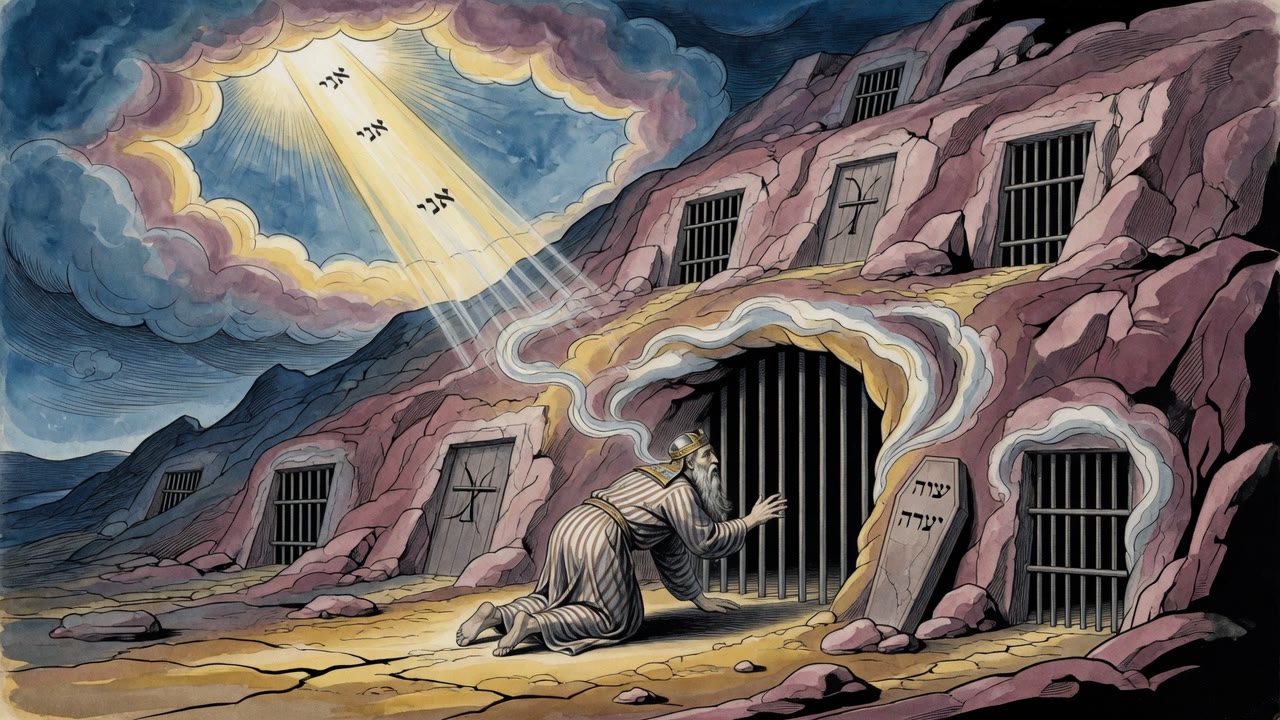
The body of Moses is buried in a valley in the land of Moab, and no one knows the place to this day (Deuteronomy 34:6). The absence of a shrine is itself a teaching. Do not worship the grave. Follow the voice that still commands from the page. A known tomb would become a magnet for pilgrims who prefer stone to statute. An unknown tomb forces the people back toward the words.
What the Eyes Take Home
Imagine the last look. Not a soft farewell. A hard inventory. North, south, east, west. The Jordan glints like a cut of metal. Canyons open like open books. Somewhere a future vineyard is only scrub. Somewhere a future battlefield is only grass moving in wind Moses will not feel next season.
Moses does not get to put a foot on that soil. He gets something stranger. He gets certainty that the soil is real, measured, waiting, and not a dream the desert invented to keep slaves walking.
That certainty is a form of leadership. A people that has seen its guide see the land will cross with fewer excuses. If Moses saw it, the land is not a rumor. If Moses died outside it, the land is still not canceled. Both truths travel together into the water.
The Debt and the Blessing
Before the mountain, Moses had already begun to hand the people their future in words. He blessed them. He warned them. He named their crookedness and their beauty in the same long breath. The seeing on Nebo is the last physical seal on those words.
He dies with the map behind his eyes. Israel moves on with the map in its feet. That is how a leader finishes without finishing the work. He transfers vision into motion and accepts that motion will outrun him.
The eye was not dim. The force was not abated. The land was shown. Then the mouth that spoke with God closed, and the people lived by what that mouth had already given them. Every later generation that opens Deuteronomy climbs Nebo for a moment and looks out through borrowed eyes.
← All myths