The Angel of Death Left Nebo Without Moses
Death climbed Nebo for Moses soul and fled empty-handed. Sea and mountain refused his questions until God hid the grave and buried His servant.
Table of Contents
 Click for full size
The Order on the Mountain
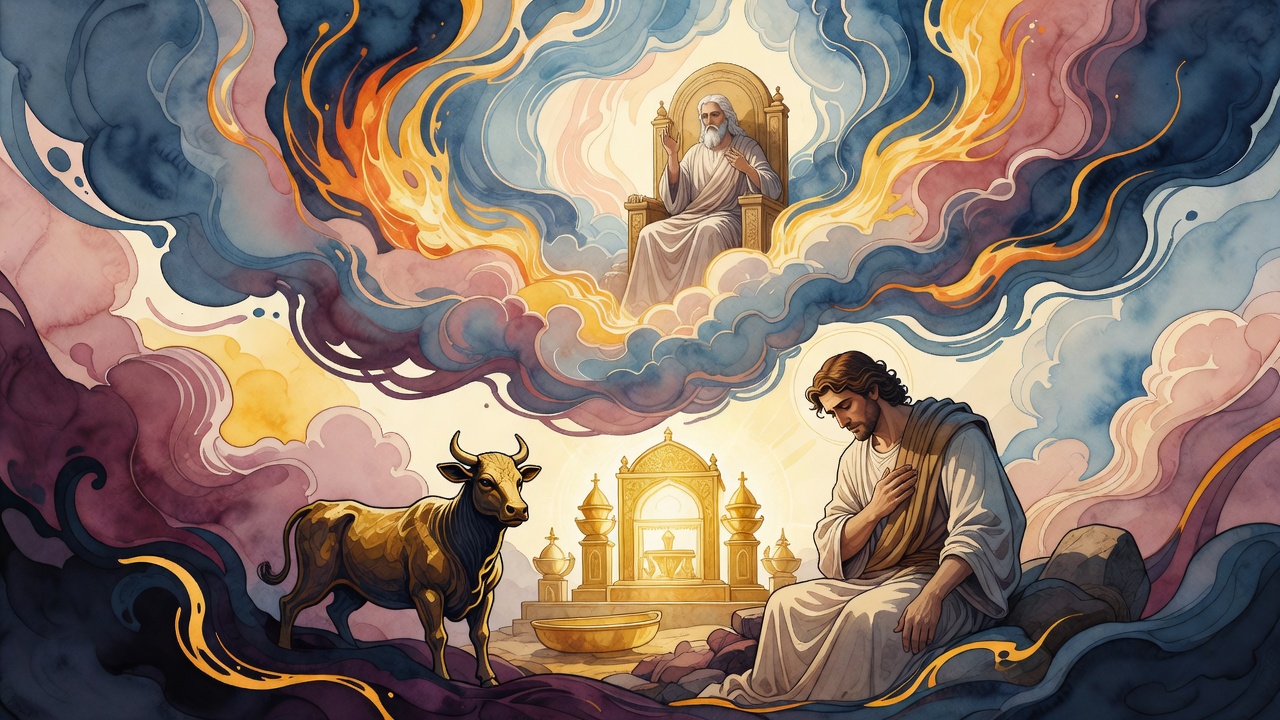
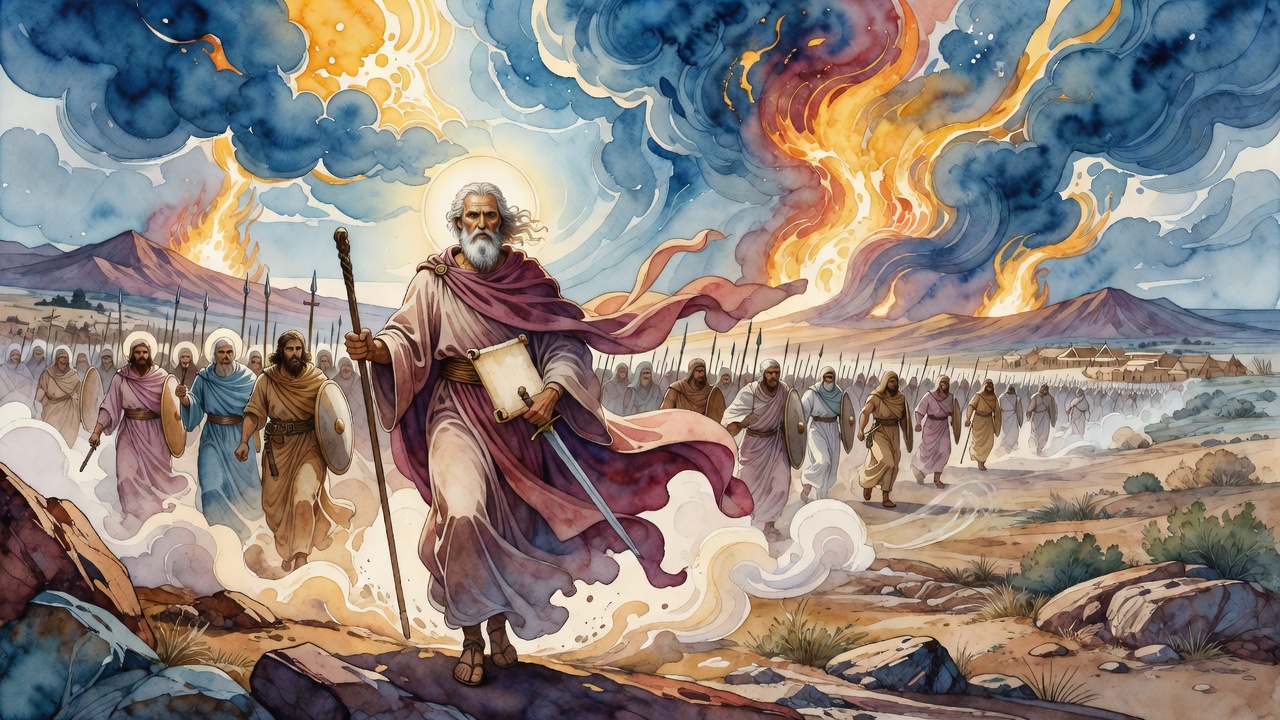
The malach ha-mavet, the angel of death, received a simple charge: take the soul of Moses. He climbed toward the height with the confidence of a collector who has never been refused. Below him the camp of Israel spread like a dark field of tents. Above him the air thinned. He found the man who had spoken with God face to face, and he put out his claim as if the universe were a ledger and this line were overdue.
Moses looked at him the way a master looks at a servant who has entered the wrong room. "You have no right to stand where I stand," he said, "and no right to demand what you cannot hold." The rebuke landed hard enough that the angel left, empty-handed and shaken, to report upstairs. Death is used to doors that open. This door stayed shut on the first knock.
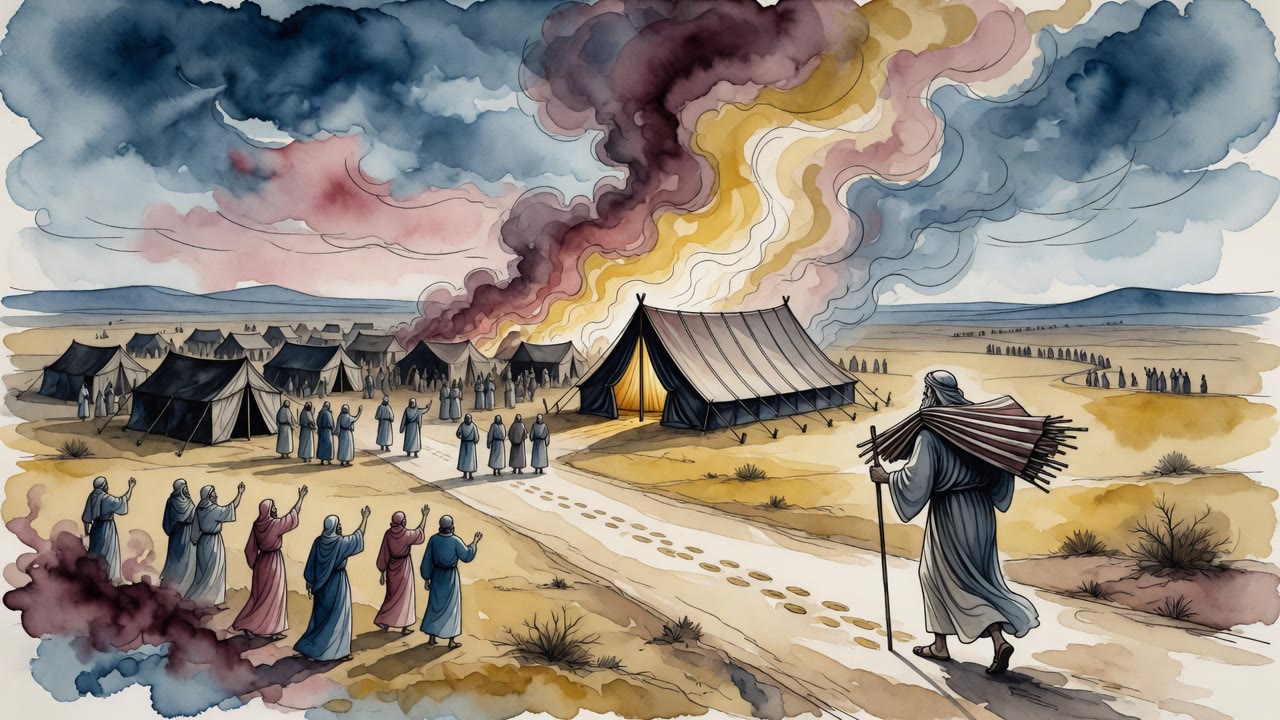
In the camp below, no one saw the confrontation. They only felt a strange stillness on the mountain, as if the air itself had been ordered to hold its breath. Mothers quieted children without knowing why. Joshua paced at the edge of the tents, already tasting a leadership he did not want.
The Search That Found Nothing
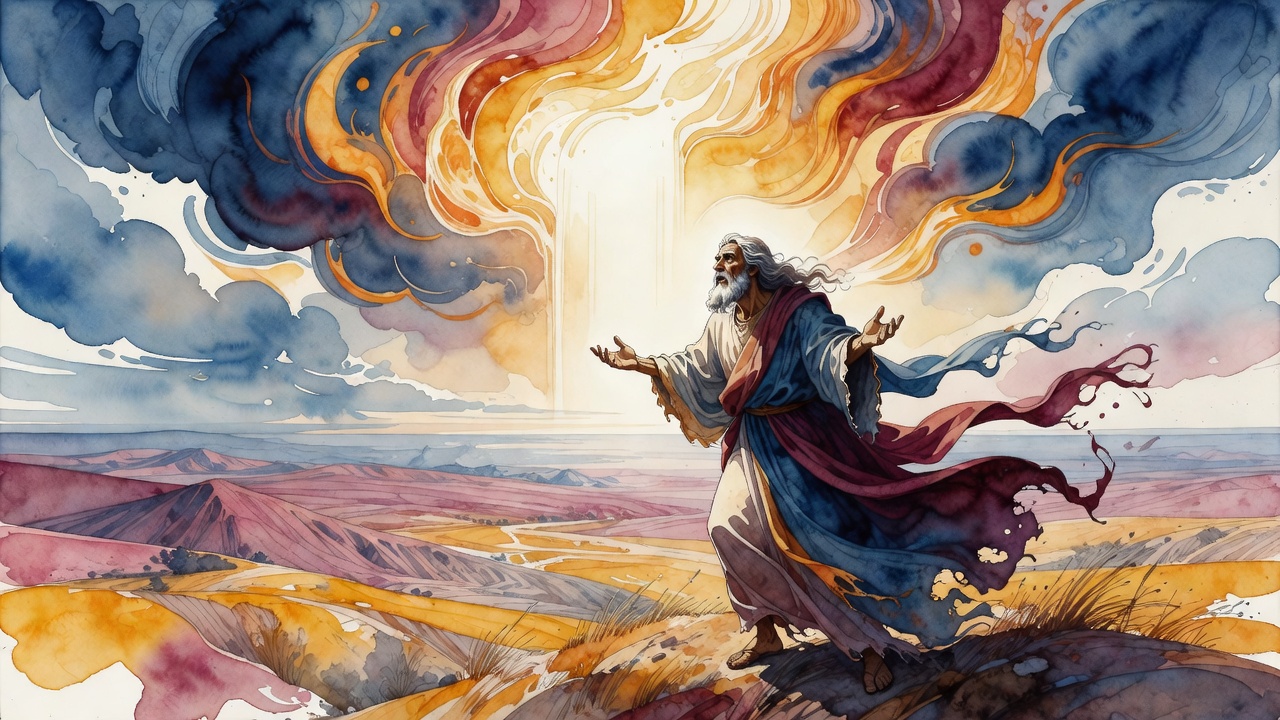
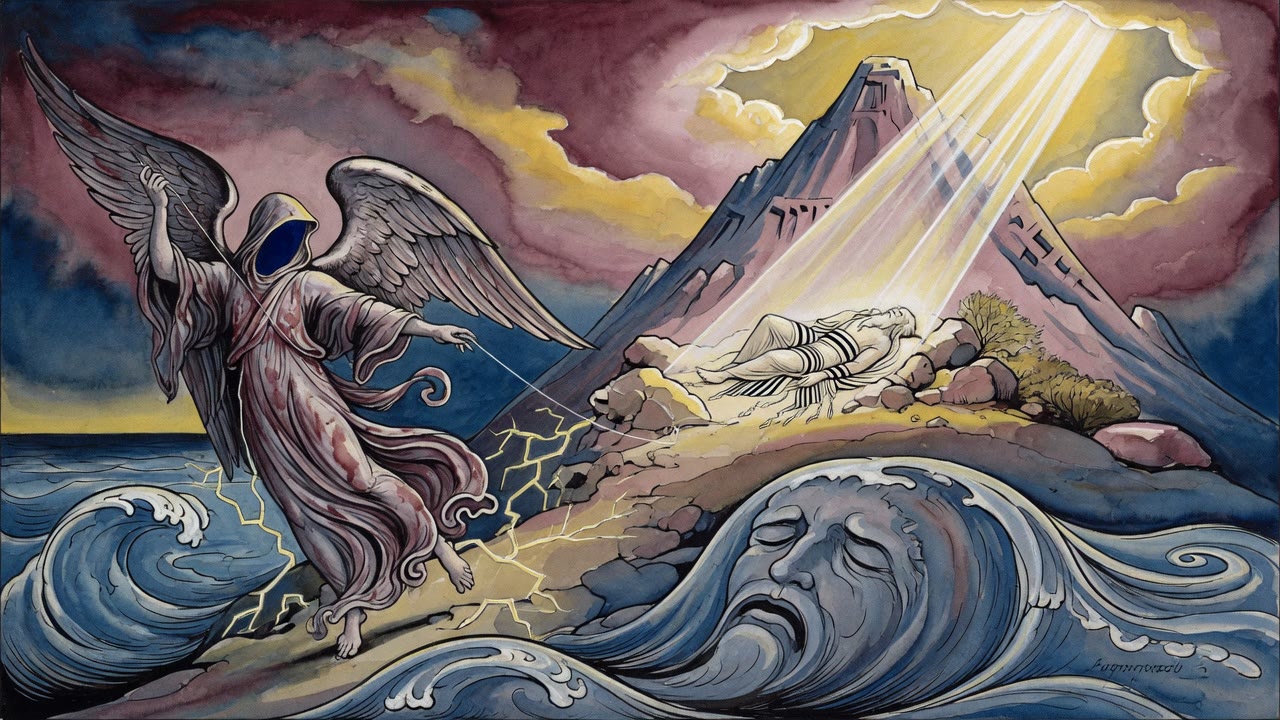
Go again, came the word. So the angel searched. He asked the Red Sea if it had seen Moses. The sea answered that it had not seen him since the day the waters stood like walls and a nation walked between them on dry ground. He asked the mountains and the valleys. They answered with the hush of (Job 28:23), that God alone understands that path. The prophet had been hidden for the world to come, and the maps of earth would not give him up.
The angel learned a new geography. There are places even he cannot inventory. He had taken kings and slaves and children without debate. Here the debate ended before it began, and the silence of sea and stone was the only answer he would get from creation.
He returned again and again to empty coordinates. Every route that usually ends in a soul ended instead in a closed fist of divine secrecy. The collector had become a lost messenger on a mountain that refused to cooperate.
Four Names of One Ridge
The mountain itself carried four names: Avarim, Nevo, Hor haHar, Rosh haPisgah. Avarim, from transgressions, because three who died without private sin were bound to that border: Moses, Aaron, and Miriam. They had carried a nation to the edge and would not cross it. The ridge held their unfinished road like a scar that still itches in the weather.
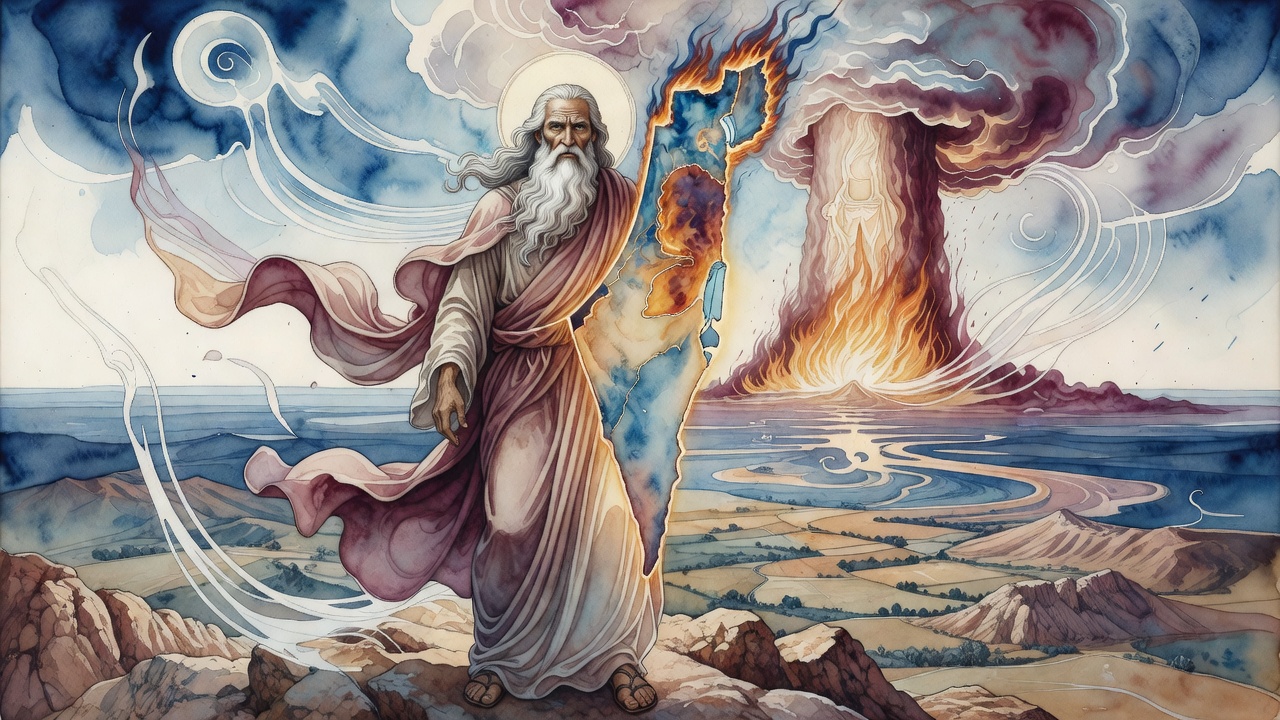
From that height Moses was told to see. One teaching says the angel Metatron pointed out the borders of Ephraim and Menasheh with a finger of fire, a tour guide made of light. Another says God put such power in Moses' own eyes that he saw from one end of the world to the other without a guide. Either way the view was full and the entry was forbidden.
He could count the future fields. He could not step into one of them. The four names of the ridge pressed on him like four seals: this is where seeing ends and crossing never begins.
God Buries His Own
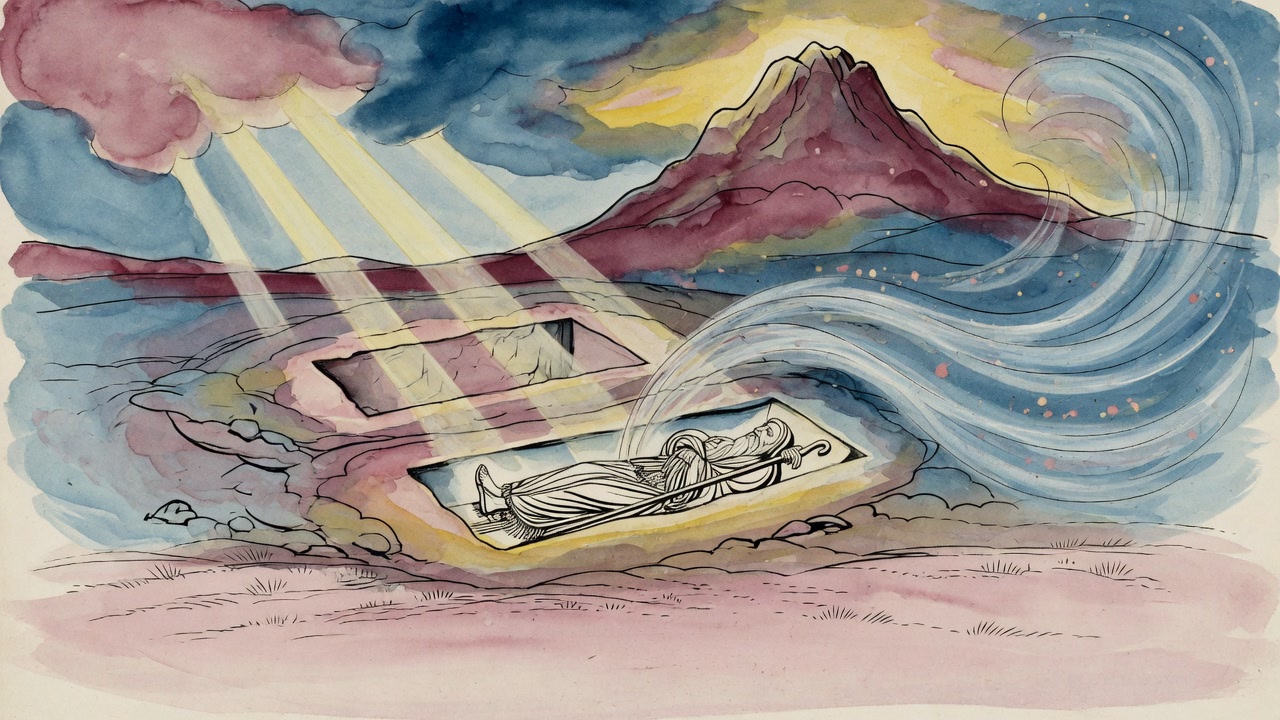
"And He buried him in the valley" (Deuteronomy 34:6). The Holy One did not hand the body to a squad of diggers. He took the burial into His own care so that no shrine could be built and no nation could own the bones. The grave stayed secret. The soul stayed claimed by the One who had spoken through the bush and the mountain and the tent of meeting.
When Joshua could not stop mourning, God said, "Do you think Moses died only for you? He died for Me too. I am also in mourning." The loss ran upward as well as outward. Heaven kept a place for him among the fathers (Deuteronomy 31:16), and earth kept no address. The new leader had to walk forward carrying a grief that Heaven admitted sharing.
Later they would learn only the outline: a grave no eye could map, a burial no hand performed, a teacher taken by the King who had first called him from a bush. The angel of death returned to his other routes. Nebo kept the secret.
What Remained in the Camp
Israel woke to a world without the man who had knocked on every door for them. The angel of death had been humbled. The mountain kept its four names. The people kept a teacher who could no longer be touched and could not be forgotten. Moses had refused the first claim on his soul, and when the final claim came it came from God alone, not from a messenger who had already fled once.
That is how the greatest of prophets left the ridge: not collected like a debt, but taken like a secret, buried by the King, mourned by the King, and hidden until the world to come opens its own maps. The camp broke for the morning march with wet faces and dry orders. Behind them a valley held a grave no one could visit. Ahead of them the Land waited for feet that were not his.
← All myths