When Joshua Could Not Stop Mourning Moses
Days after the burial, Joshua still would not rise from the dust. God spoke into it. Moses died for Me too, He said, and Joshua lifted his head.
Table of Contents
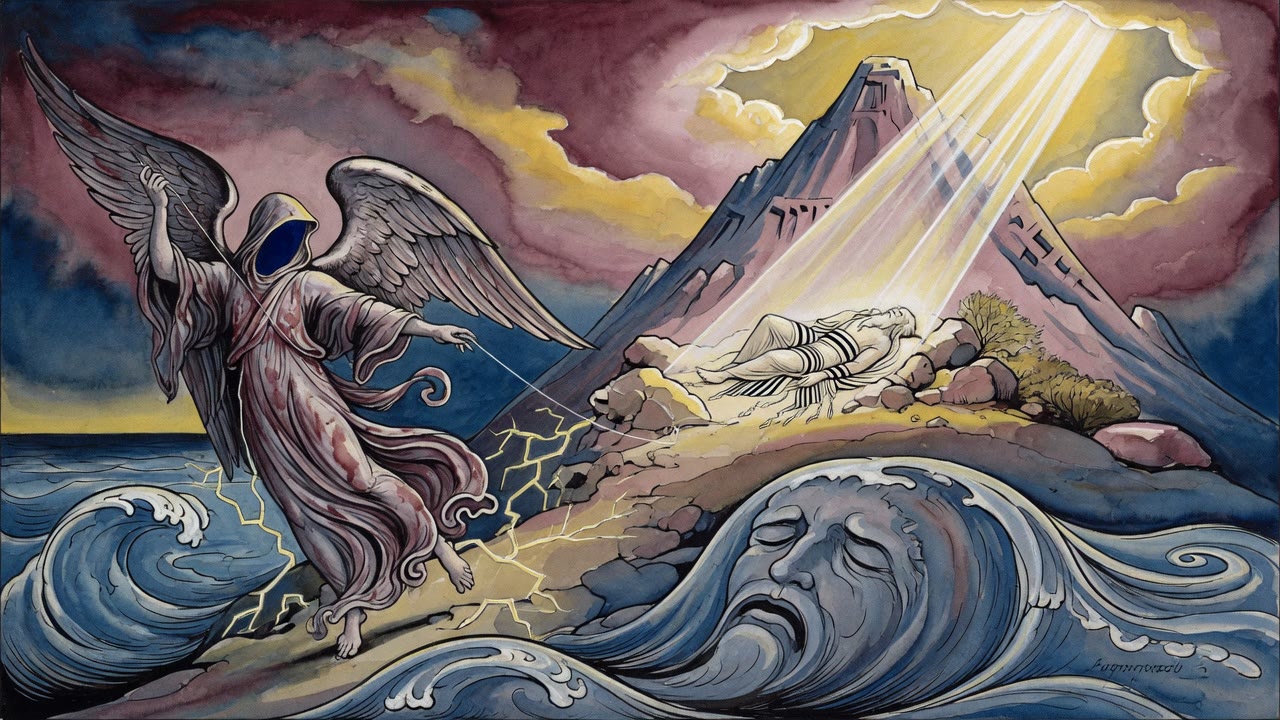
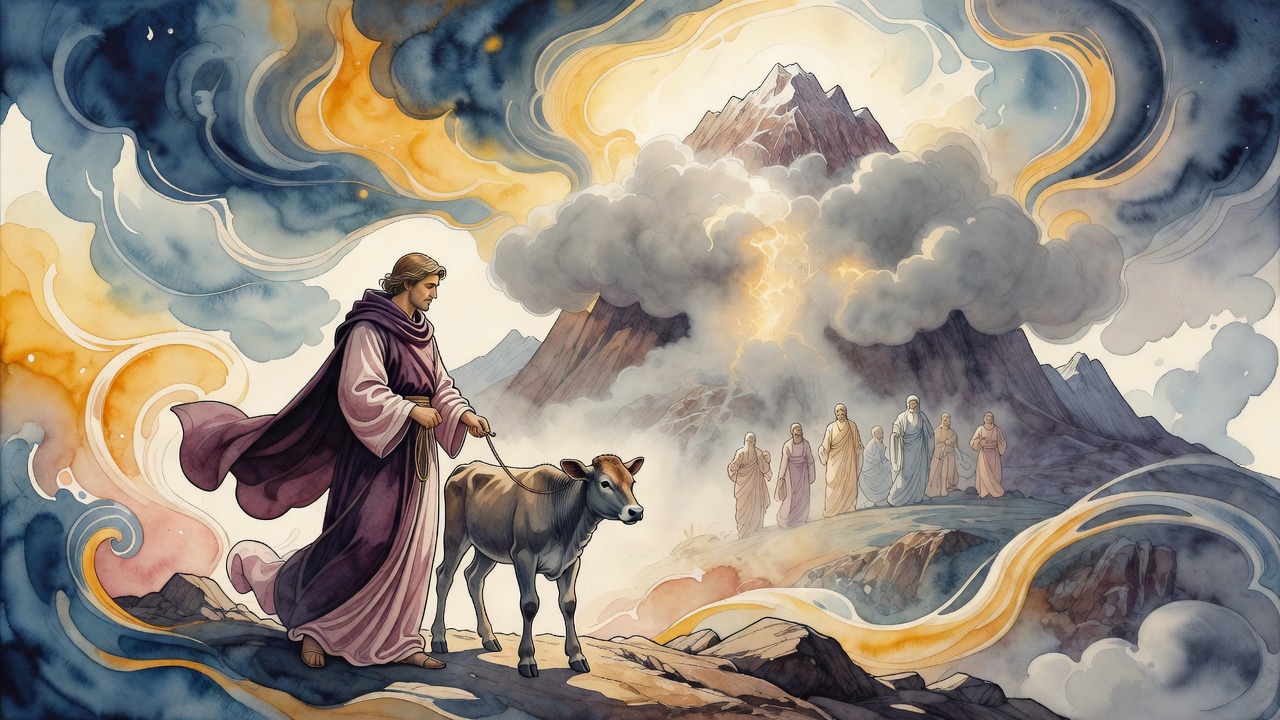
Joshua would not rise from the dust. Days after the burial east of the Jordan, his voice still tore when he tried to say the name. The camp moved around him with the small noises of survival. He stayed low, as if standing would admit the empty place at the tent flap where Moses had always been.
 Click for full size
Moses was gone. The hands that had held the tablets, the staff, the long defense of a stiff-necked people, lay still under stone. Joshua had been trained for command on the mountain of the Lord and in the tent of meeting. Training did not stop the hole in the middle of the day.
God Claimed the Mourning Too
God spoke into the unbroken grief and did not scold it away like a child's noise.
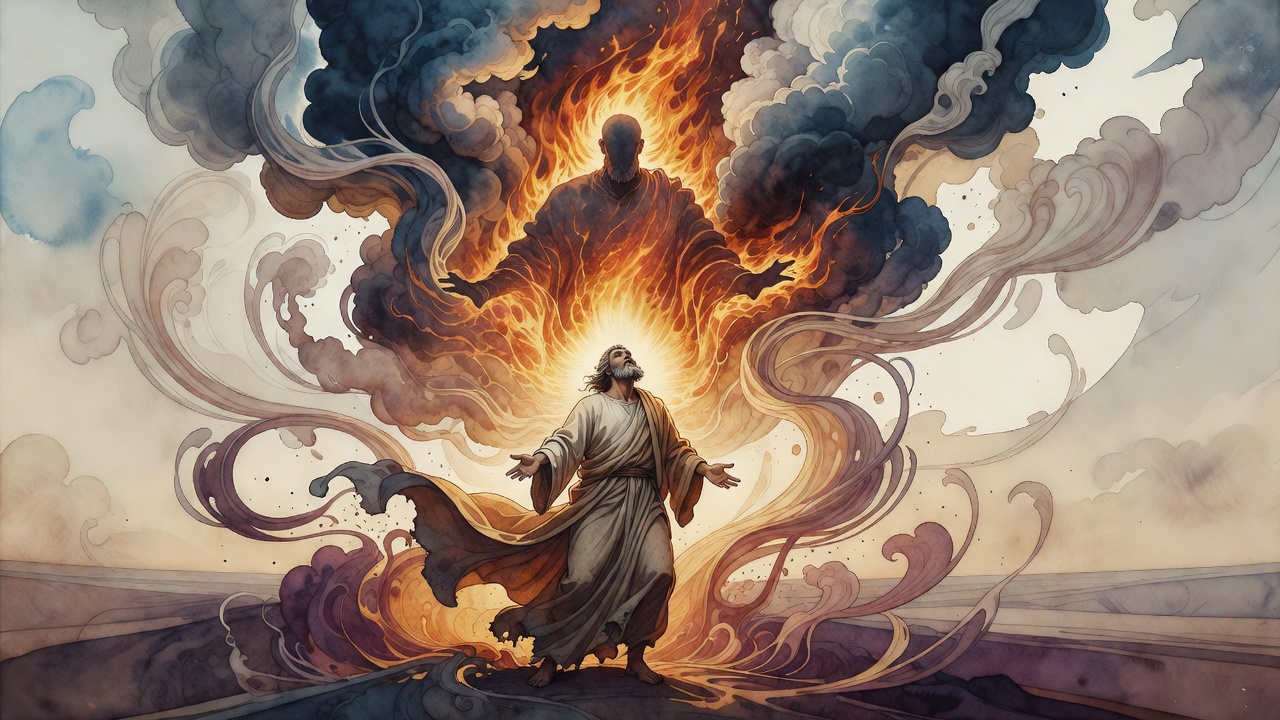
"Do you think Moses died only for you? He died for Me too. I am also in mourning."
Joshua's head lifted a fraction. Heaven was not a wall of pure decree in that hour. Heaven was a mourner standing with him in the same dust.
God did not leave the death as a blank end. "Behold, you shall lie down with your fathers" (Deuteronomy 31:16) turned toward life in the world to come. Moses had crossed out of the wilderness of office into a rest the living could not arrange for him. Joshua still had to walk the land Moses would not enter. Moses was not erased from God's side of the ledger.
The dust stayed on Joshua's clothes a while longer. Then he stood, because a God who mourns also assigns the next step and will not let the living bury themselves with the dead.
The Gold That Outweighed Everything
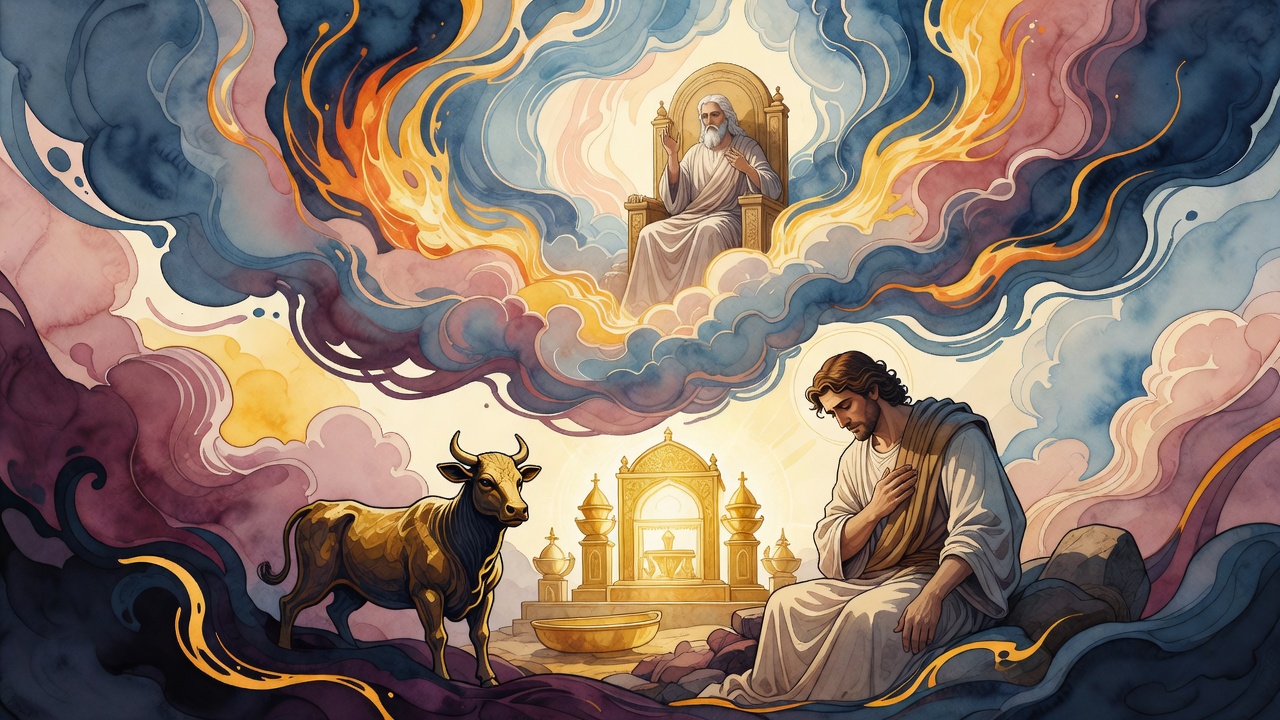
Long before that grave, another weight had sat on the people Moses led through sand. An abundance of gold. Earrings. Rings. Metal soft enough to pour into a calf and hard enough to damn a generation that had already seen the sea split.
God's verdict on that hour cut past a list of lesser failures at the sea, at Marah, at Refidim. "This thing outweighs all that you have done."
Rebbi set the picture in a courtyard under hard light. A man troubles his neighbor again and again with small harms. Then he adds one last offense, and the neighbor finally breaks. "This outweighs everything you have done to me." The calf was that last strike. Prior mercies did not cancel the crack of that day when gold took a face.
Rabbi Shimon ben Yochai sharpened it another way. A host earns praise for welcoming sages and disciples to his table. Then he opens the same door to idolaters and people who drag foreign worship into the house. The praise flips in the street. People say his nature was always to receive everyone, purity and pollution alike, and the earlier honor turns suspect. So too the gold: the same hands, the same metal, the mishkan (the portable desert sanctuary) and the calf. Intention splits the ore that looks identical when it melts.
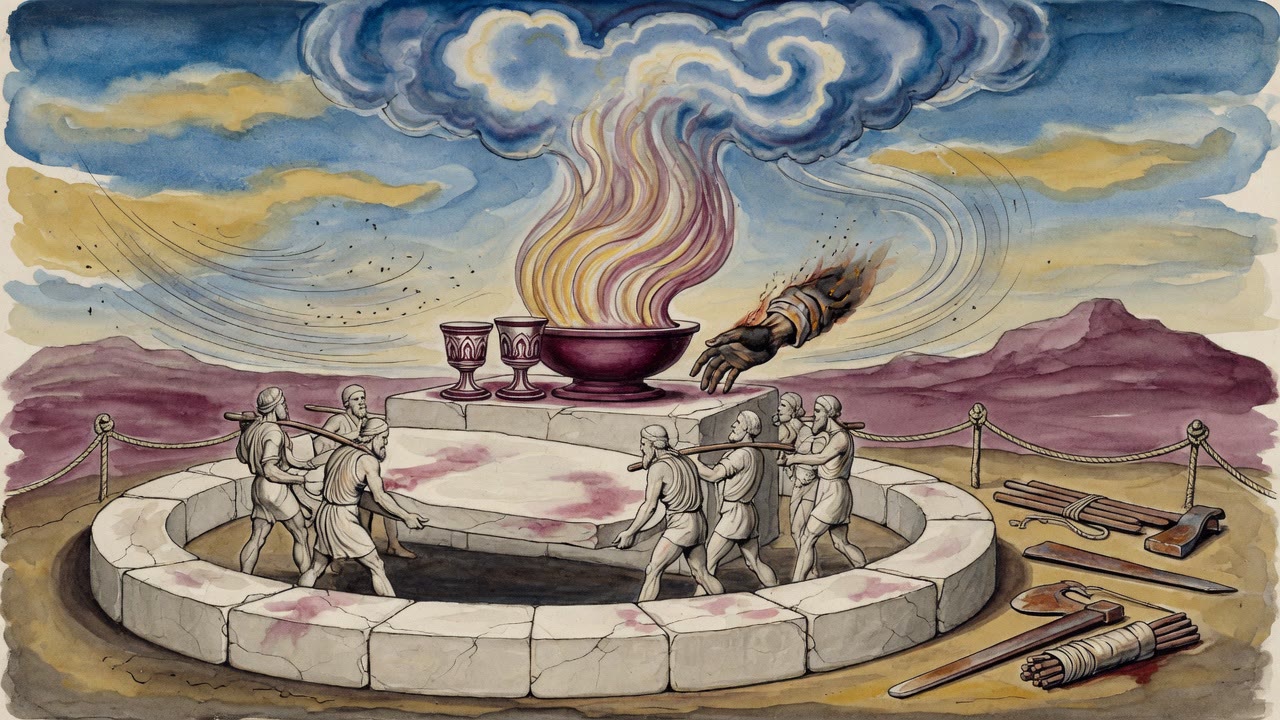
Rabbi B'na'ah pleaded the other ledger with both hands open. Let the gold of the mishkan atone for the gold of the calf. Extinction was the sentence for idolatry. Boards and curtains and a work of meeting might stand as ransom if Heaven accepted the exchange and let metal answer metal.
The desert held both piles in memory for forty years: metal that became a face that eats grass, and metal that became a place where God would speak between the cherubim.
Witnesses Stack Against a Drifting People
After Moses, the danger was not only grief. It was drift. Rabbi Meir stacked the witnesses that rise when Israel leaves the path and will not turn back for softer voices.
First the people testify for themselves when they are righteous, as at Shechem when they said, "We are witnesses" (Joshua 24:22) and chose service with open mouths. When they stray, Judah and Benjamin stand against them with the vineyard charge on their lips. When those tribes falter, the prophets rise from every vision. When the prophets are ignored, the heavens themselves are called to the stand (Deuteronomy 4:26; 30:19), a vault that does not blink.
Joshua heard that ladder in his bones while the dust still clung. Moses had stood between Israel and worse decrees more times than the camp could count. Now the sky could be sworn in. The world to come held Moses. The living still walked under a ceiling that could speak against them if they chose the calf's logic again.
What Counted as Tzedakah in the Sand
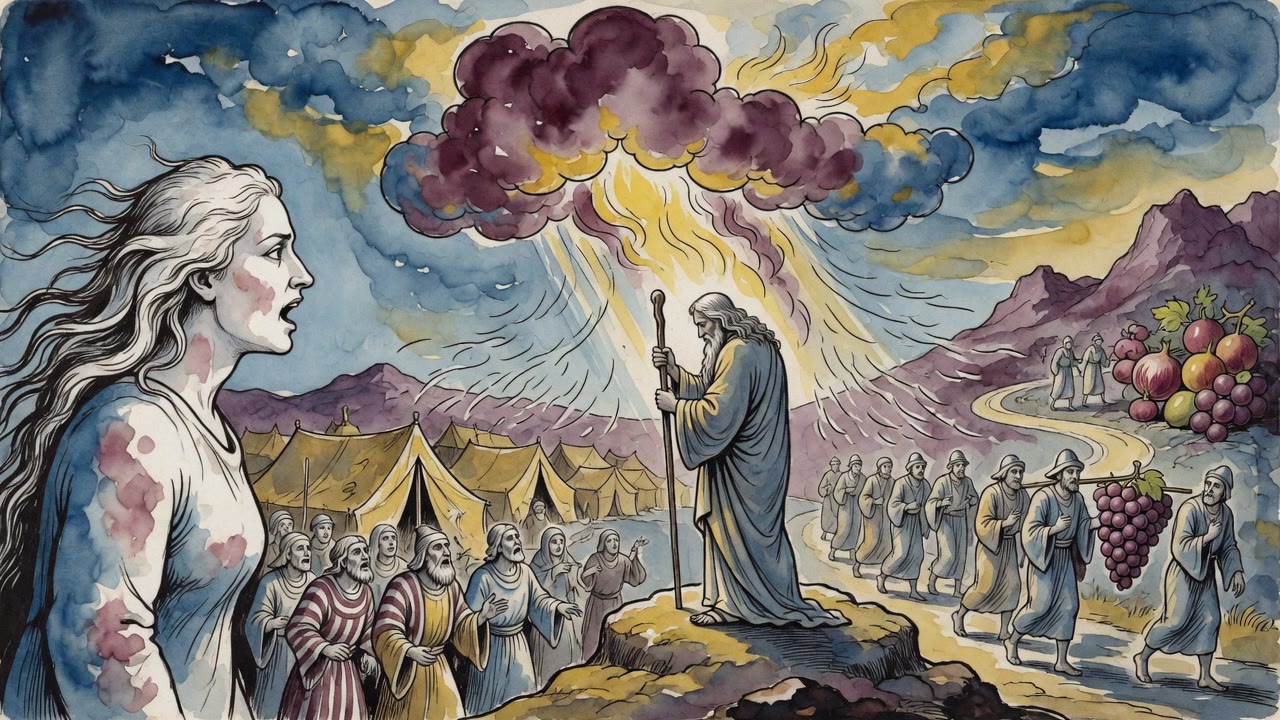
Forty years of road had not been empty of gifts that kept bodies upright. Miriam's well followed the camp and gave water when rock and sky refused. Manna fell in the morning like a decision renewed. Quail covered the ground when meat was demanded. Clouds of glory wrapped the rows of tents against heat and hate. Anyone could call those gifts kindness and stop there.
The teaching pressed harder on the word. "He did the righteousness (tzedakah) of the Lord" pointed past water and bread to the act of giving Torah itself into Israel's mouth. "And it shall be tzedakah to us if we observe to do all the words of this Torah" (Deuteronomy 6:25). Feeding a body kept the march alive for another day. Teaching the Word built a people who could outlast the march and the man who led it.
Tzedakah bound to mishpat, justice, under the throne where both sit as foundations. "Tzedek and mishpat are the foundation of Your throne" (Psalm 89:15). Moses had done both until his last breath: he judged, he taught, he carried gold toward a mishkan after gold had gone wrong, and he died with Heaven claiming a share of the tears that fell for him.
Joshua wiped his face with a sleeve that still held desert grit. He set his palms on his knees, rose fully, and faced the tents. The camp needed water, law, and a leader who would not pretend the calf's metal never shone in the sun. He stepped toward the work Moses could no longer do, under a God who had admitted mourning and still demanded the road.
← All myths